Monthly Archives: October 2015

27. That Was My Childhood

1280px-Apollo_11_Lunar_Module_Eagle_in_landing_configuration_in_lunar_orbit_from_the_Command_and_Service_Module_ColumbiaIt was pledge week at PBS. They ran the biography of Neil Armstrong for the upteenth time. My wife and I watched it for about the third time, and when it was over, she said, “That was my childhood.”

I knew exactly what she meant. She and I were soul mates long before we met. Pardon the corn, but it’s true. She grew up in Michigan and I grew up in Oklahoma; we met in college. But when we were children, we were both science nuts long before Sputnik. We both repeatedly checked out Vinson Brown’s How to Make a Home Nature Museum and followed the instructions. We both checked out books on how to grind the lens on your own reflecting telescope, but neither of us made one because we didn’t have the money to buy the glass blanks.

On October 4, 1957, Russia orbited their first satellite. I was in fifth grade when the teacher went up to the front of the room and wrote Sputnik on the board. She said it meant Earth-moon in Russian. It didn’t, but we knew almost nothing about the Russians then. A few days later, she wheeled a cart into the room. It had beakers beneath, a tiny sink, and a hand pump. Oklahoma schools had instituted science as a middle school and elementary subject for the first time.

I kept track of every satellite we launched and every rocket that blew up on the pad. There were a lot of them. When the Russians launched Muttnik (the nickname was American) I was fascinated to see a living creature in space. All my schoolmates said only the stinking Russians would send a dog up there to die.

I watched the Mercury astronauts first press conference and quickly got to know them all. I was thrilled when Yuri Gagarin orbited the Earth. Everybody wrung their hands because a Russians got there first, but I didn’t care. We were in space – and we meant people, not Americans.

I watched Shepard’s and Grissom’s launches, and cheered when Grissom didn’t go down with his capsule. In Michigan, my future wife was collecting every magazine that covered the Mercury program.

I was at school while John Glenn was in orbit, so I missed something monumental in our family history. My father, who thought the space program was a waste of money, got off his tractor and came in to watch the televised coverage. He later said, “I just couldn’t work until we got that old boy back safe.”

The rest of Mercury, Gemini, the beginnings of Apollo – I never missed a mission.

I had discovered ecology, at a time when nobody knew what the word meant. I spent my junior year building an Ecosystem Operable in Weightlessness for the regional science fair. It was complicated, cutting edge, and more than I could actually complete by fair day. I won’t bore you with the details, but it helped get me a Fleming Fellowship the following summer. That gave me a chance to work with real scientists and to see some of the world beyond my tiny town. Those were the people who suggested I should apply to Michigan State.

At MSU the Biology department cared nothing about ecology. I was a few years too early; if you didn’t need an electron microscope to see something, it wasn’t interesting – to them. The closest thing to behavioral biology was Anthropology, and that is where I ended up. And where I found my wife.

We married in 1969 and took off for a long drive around the US, visiting relatives and national parks. We got back to to East Lansing in mid-July, following Apollo 11 on the car radio. On July 20 went went in to the student lounge of her old dorm and sat with dozens of college students watching a grainy black and white TV as Neil Armstrong set his foot on the moon.

*****

If you are old enough to remember those days, or younger and want more information, I recommend Jay Barbree. For fifty years, he was the voice of the space program for NBC news. In 1995 he received an award from NASA for being the only reporter to cover every manned spaceflight in US history. More importantly, he was the reporter the astronauts trusted.

Barbree has written Neil Armstrong (2014) and Live from Cape Canaveral (2007). His prose is only workmanlike, but his first hand knowledge is unparalleled.

Barbree’s personal friendship with Armstrong gives his biography an authenticity and intimacy that could not be provided by any other writer, and the same is true of Live from Cape Canaveral. Chapter nine of that book, ”I’ve got a fire in the cockpit!”, is required reading for anyone whose heart broke the day of the Apollo One fire, and a sharp reminder that we later lost two space shuttles because of lessons not learned.

26. False Fame

Spirit_of_St._Louis

True or false: Charles Lindbergh was the first man to fly across the Atlantic.

False. He was the ninth.

True or false: Charles Lindbergh was the first man to fly nonstop across the Atlantic.

False. He was the third.

The first flight across the Atlantic was by the NC-4, a flying boat with a crew of six, which left New York on May 8, 1919 and arrived at Lisbon, Portugal on May 27, after several stops and numerous problems.

Less than three weeks later, John Alcock and Arthur Whitten Brown flew nonstop from Newfoundland to Ireland in a converted WWI bomber.

Lindbergh flew nonstop from New York, north to Newfoundland, then across the Atlantic ending up in Paris. His flight was longer, but the Atlantic crossing was identical to the one made by Alcock and Brown eight years earlier.

Ask anyone in America today who was the first to fly across the Atlantic, and they will either say nothing or name Lindbergh. Alcock, Brown, and the crew of the NC-4 have all been forgotten.

It’s not enough to be first, or best, if you don’t also catch the public imagination, or fall under the anointing power of the press.

*****

John Glenn was the most famous astronaut until Neil Armstrong replaced him. If you asked anyone in America during the sixties who was the first man in space, they would have said John Glenn. Nope, he was fifth.

All right then, he was the first man in orbit. Nope, he was third.

Russian Yuri Gegarin was the first man in space and in orbit. Alan Shepard’s sub-orbital flight was next, followed by Gus Grissom, also in a sub-orbital flight. Russian Gherman Titov orbited next, then Glenn. For the completist who is reaching for his reference materials, the first X-15 pilot to win his astronaut’s wings came in just after Glenn.

John Glenn earned his fame, and he never asked to be better remembered than his fellow astronauts. But he was.

Gegarin is still remembered by a very few, but ask any American who Gherman Titov was and you will either get a blank stare or be told that he was the Communist dictator of Yugoslavia.

*****

Okay, let’s not be sexist. True or false: in 1928 Amelia Earhart became the first woman to fly a plane across the Atlantic.

False. She was only a passenger on that flight; the pilot was Wilmer Stultz and the copilot was Louis Gordon. The flight was a bit of a stunt, and a successful one. On arrival in England, Earhart became instantly famous. There was a ticker tape parade and a reception at the White House when she returned to America. The press called her Lady Lindy. She wrote a book, went on tour, designed luggage and clothing, and generally became rich and famous – essentially before she had done anything.

But that’s not the whole story. Earhart later came to deserve the fame she had already gained. She became the first woman to fly solo across the North American continent, participated in the Santa Monica to Cleveland Woman’s Air Derby, and in 1932 she became the first woman to fly nonstop alone across the Atlantic, finally earning the fame she had received four years earlier.

It is a final irony in the fame-for-the-wrong-reasons game that Earhart is best remembered today for the flight in which she died, while failing to finish.

25. Columbus, King of Explorers

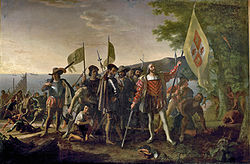
250px-Landing_of_Columbus_(2)Poor Columbus; he has taken a beating over the years. We don’t see him for what he was, with all his strengths and weaknesses, but through the lens of our own times.

This excerpt from my upcoming novel Cyan gives a picture of how we might view him a century from now, when we have to change our calendar to meet the demands of the rest of the world.

Anno Domini
A Latin phrase meaning the Year of our Lord.

Before sunrise on October 12, 1492, Anno Domini, a lookout for Columbus’ expedition sighted land. Columbus had found two new continents (although he did not know it), following his own powerful vision of how the Earth was constructed (a vision that was wrong), and began a five hundred year reign as king of explorers.

Half a millennium later, Columbus was dethroned. Even school children were now being taught that Columbus was not the only one who knew the world was round. Sailors and scholars had known that for hundreds of years before him.  Columbus’ great vision was that the Earth was small, and in that he was wrong. By the late twentieth century, it was certain that the Vikings got to America first, likely that St. Brendan beat Columbus there, and there were a dozen other putative explorers who had their champions.

Besides, American popular thought was in one of its Noble Savage stages, and it was politically correct to echo the Native Americans who complained that Columbus was a destroyer of races and cultures.

But even at the height of Columbus bashing, it was apparent that his voyage had differed in one significant detail from the other explorers who had preceded him. After Columbus, America was never lost again. After Columbus, and those other explorers who sailed close on his heels, the Earth became entirely known and entirely interconnected for the first time.

*****

In the year A. D. 2037 (as Christians measure time), at the Conclave of Mecca, the Islamic world announced that they would no longer recognize, speak with, acknowledge, or deal with any person, nation, or document which forced them to use a calendar based on Christianity.

At the International Bureau of Weights and Measures Convention in Buenos Aires two months later, a new calendar was established, based on a sidereal year. It would have neither weeks nor months since Islam and the rest of the world could not compromise on the issue of lunar months. It could not start at Jesus’ putative birth, nor at Mohammed’s, and it quickly became apparent that the new Standard Year should date from the midnight preceding the day the Earth became one planet for the first time.

This whole Standard Year business came about by accident. When I wrote Jandrax thirty plus years ago, I had no idea that I would write other stories in the same universe. After all, I stranded all those poor people so far out that no one would ever find them.

However, I began wondering what circumstances, beyond what I had already written, might cause Dumezil to invent his pan-Earth religion, and I wondered what Jan Andrax’s ancestors were like. That led me to make Stephan Andrax, Jan’s multi-great grandfather, spaceside commander of the Cyan expedition.

In Jandrax, I had pulled the date Standard Year 873 out of thin air. Now I had to backtrack and make it work for Cyan, which I did my making Standard Year Zero start with Columbus’ discovery of America.

24. Following the Market

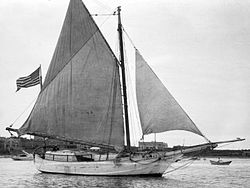
250px-SpraySome say write what you know. Some say, follow your passion. Some say find your natural readers.

Others say follow the market, write what the reader wants to read, position yourself just back of the leading edge of the latest trend.

I only followed the latter advice once, and did it without selling out. At a point in the late eighties, when my science fiction and fantasy work was hitting a brick wall for sales, I decided to write a contemporary adventure story.

I had always wanted to write my own equivalent of Travis McGee. Who wouldn’t? Neither detective nor spy, he went his own unique way and provided adventure for a generation of readers.

McGee was too much of con man for me, and he wasn’t enough of a loner. His buddy Meyer accompanied him in every other story. My guy, Ian Gunn, would be younger, better educated, but very much at odds with the world his education had prepared him for.

Here is the pitch:

Ian Gunn has a lot on his mind. He is facing a storm in mid-Atlantic, enroute to deliver a sailboat, a replica of Joshua Slocum’s Spray, to Marseille. He has just rescued Raven Cabral after someone tossed her off a cruise ship, and she hasn’t told him why that happened. Ian knows that if you rescue a mermaid, you are supposed to fall for her. No problem there, but her response is not quite so encouraging.

Raven’s attackers continue to pursue her after she arrives in Europe. Ian attempts to protect her until she leaves him in Paris, then finds himself tracking her across western Europe, trying to get to her before her attackers do.

What he discovers leads him back to California where he tracks down the man behind the attacks and wins immunity for Raven. Ian then returns to Europe to continue his search, needing to find her before rogue members of his enemy’s organization do. The search ends with a fire fight in a Norwegian fjord where . . .

I think I had better stop there, to avoid having to issue a spoiler alert.

When it was finished, I sent Raven’s Run to my agent. He was full of praise, especially for the exciting opening chapter. Then he said, “. . . but I’m afraid I can’t sell it. The bottom has completely fallen out of the men’s adventure market, and nobody is buying.”

So much for following the market.

I recently updated Raven’s Run a bit and sent it out to seek a home. What was once a contemporary adventure is now a historic one, and the new sales pitch begins:

It was April, 1989. Ayatollah Kohmeni had a few months left to live, and no one had yet heard of Osama ben Ladin. There were still two Germanies, two Berlins, and a wall; I had had my dealings with that wall a few years earlier, in uniform, when the cold war was even colder than today . . .

When it sells, I’ll tell you here. I don’t give up easily.

23. Star Drives

Wormhole_travel_as_envisioned_by_Les_Bossinas_for_NASAAssembled odd bits of other equipment, looking more like the product of a boy’s workshop than the output of a scientist’s laboratory, the gadget which Libby referred to as a “space drive” underwent Lazarus’s critical examination. Against the polished sophisticated perfection of the control room it looked uncouth, pathetic, ridiculously inadequate.

Heinlein had a technical background, but when he needed something to move a story forward, he invented it in the fewest possible words. He didn’t waste a lot of time consulting his slipstick.

Slipstick. Archaic. Slide rule; a device with two fixed and one sliding rectangles of wood or plastic, with scales attached, used to estimate mathematical calculations to three significant figures. Origin of the nickname Slipstick Libby, who invented the stardrive mentioned above after about an hour’s  thought.

I learned to use a slide rule in high school physics in 1965-6, just before Texas Instruments’s hand held calculators became cheap enough to toss the slide rule into the ash bin of history. In the movie Apollo 13, you will see all the engineers at mission control using them as they try to figure out how to save the crew.

The quotation at the head of this post is from Methuselah’s Children. The Number of the Beast was full of pseudo-mathematical jibber-jabber but the actual description of the space-time machine was simple.

”It’s on that bench, across the table from you.”

“All I see is a portable sewing machine.”

“That’s it.”

FTL star drives are so far beyond present knowledge that they are easy to invent. In my first science fiction novel Jandrax, I used an FTL drive to strand my colonists, and never referred to it again after the first two paragraphs. If I ever write another novel in that era, I’ll have to reverse engineer the thing to figure out how it works.

Getting to the stars without FTL is much harder for a writer. He has to work within the parameters of relativity and Newtonian mechanics. Lightspeed sets a limit, and getting near to it causes no end of fuel mass problems. Again from Methuselah’s Children, referring to the ship before Libby’s space drive was added:

The New Frontiers had no such limits, no tanks; her converters accepted any mass at all and turned it into pure radiant energy.

Although Heinlein is a little vague, it seems that he is referring to a kind of ram scoop, something much loved by hard science fiction writers.

Here we go again, cribbing from Einstein. Matter can be converted to energy, but how? With present day technology, you can’t burn a rock unless it’s coal, and you can’t convert mass to energy unless you start out with one of a very few elements. Science fiction writers, even in a relativistic universe, require a breakthrough allowing any element to be converted to energy. Usually, as in the New Frontiers, that breakthrough is simply assumed.

In my novel Cyan, due out in January, I wanted to do more than assume. I had an ulterior motive. As a non-physicist, I have been underwhelmed by the last half century of theoretical physics. It looks like as a lot of brilliant people running up blind alleys. If that seems disrespectful, I have three words for you – ether (the concept, not the gas), phrenology, and phlogiston. The history of science has more blind alleys than a slum in Calcutta, and a healthy disrespect is the only thing that keeps us from turning it into a religion.

My real world expectation is that the next great breakthrough in physics will come out of left field, violating our present understanding of the universe so completely that we cannot anticipate it. I built Lassiter’s anomaly out of that belief:

In 2048 Lassiter discovered that the Luna fusion reactor was producing a fraction of a percent more power than Einstein’s equations allowed. After a decade of research, he concluded that reduced gravity was the reason. Nothing in any theory supported him, and he was all but laughed out of physics, until the deep space probe Dirac settled the controversy.

Once the scientific community had recovered from the shock, these facts had emerged: that the power overage came from a larger portion of the reactor’s fuel being converted into energy, that gravity was indeed the inhibitor to the reaction, and that anyone who could provide sufficient heat to initiate a nuclear reaction beyond thirty-seven light minutes from Sol would have a self sustaining nuclear torch that would eat ice, asteroids, cosmic dust . . . anything. And it’s efficiency would rise with further reduction of gravity so that within a half light year it would approach one hundred percent conversion.

Total annihilation of matter. A power source for attaining near light speeds. A stardrive.

In an essay I read in high school, it was postulated that a race of creatures living on the bottom of a sea of mercury (the metal, not the planet) could never predict the existence of electricity, because an unbalanced charge could never build up. Exchange mercury for gravity, and you will see where I stole Lassiter’s anomaly. If anyone recognizes that essay, probably from Arthur C. Clarke, let me know. I would love to read it again.

22. Deathstar Drones

1280px-IAI_Heron_1_in_flight_1

Prediction in novels quickly becomes outdated. 1984 isn’t the future any more. Neil Armstrong, not Leslie LeCroix, was the fist man on the moon.

Historical novelists don’t have to deal with that problem. The North always wins the Civil War. Caesar always dies on the Ides of March. Contemporary novelists can stream any consciousness they want and nobody cares, but if you write science fiction and you don’t keep up to date, you look like a fool.

That can be a problem if there is a long time between first draft and publication.

In fact, this post is a prime example. You should realize by now that A Writing Life is not a normal blog; it isn’t about day by day events. I revise and revise and revise. Then I polish. Before my first post hits the internet, I will have sixty or seventy posts in the can. I don’t like working without a net.

The first draft of this post was written on May 20, 2015. I am polishing it now on August 13. It is due to appear in your computer on October 6.

This morning (i.e. May 20, not October 6) I saw a story on Good Morning America in which drones were being tried out to carry life rings to drowning victims at the beach. I applaud the idea, of course. Drones are everywhere and everybody is talking about them. Miniature drones, that is. Drone target aircraft have been around since the very early twentieth century, and relatively sophisticated ones at least since Viet Nam. Only the little ones are new.

They weren’t even a gleam in a designer’s eye when I put them into the first draft of my upcoming novel Cyan.

Keir was down by the river with Viki, beginning a bridge. They had swum the walker-crawler drone across, towing a strong, light line, and Viki was trying to get it to climb a tree. The tree bole leaned over the water at a sharp angle, and the track treads of the little drone could just grip the bark. Viki was manipulating the controls with deft care, heading for a crotch five meters above the water. Keir was on guard. His pistol was in its holster, but he was on alert, scanning the treetops above them, the grass at the break of the bluff, and the dark swirling waters. Twice the thought he saw something large and swift move beneath the surface, but it was hard to look through the sparkling, shade-dappled surface.

Viki’s face was drawn with concentration as her blunt fingers struggled with the controls. The drone was only a meter short of the crotch, and wobbling. Viki grimaced with unconscious fierceness.

The drone wavered and slipped. Viki twisted the controls viciously, grunting encouragement and insults in an undertone.  With a last effort, she coaxed it through the crotch so that it leaped forward and fell; splashed and bobbed to the surface; then began to churn through the water toward her like a playful dog, trailing the line out behind it.

I also gave them flying drones for aerial surveillance. They are both still in the final novel, because explorers will certainly use them, but they don’t look new like they did when I put them into the first draft.

It could be worse. In fact, it once was nearly a lot worse.

The year was 1977. I was writing my fourth novel, A Fond Farewell to Dying, and I had just gotten to the part where India was about to launch an orbital bomb platform. A friend and his wife took my wife and me to see a new movie called Star Wars. When we left the theater, he was bubbling. I wasn’t impressed.

But I was depressed, because I was going to have to go home and change the name of my orbiting bomb platform from Deathstar to something else. At least the novel wasn’t already printed and waiting for distribution.

21. Ae Fond Farewell

UnknownI have had more success selling A Fond Farewell to Dying in its various incarnations to publishers than I have selling it to readers. That’s a shame, because it’s a pretty good book.

Today, accurate clones in SF are common but it wasn’t always so. It used to be, usually on TV or in movies, that a clone would come into existence with the memories and personality of its donor. Of course, an actual clone would be no closer than a twin, and I wanted to set that right.

I also wanted to show contrasts between Hinduism and Christianity, between atman and soul, between rebirth and the continuation into the afterlife of an unchanged consciousness. I wanted to explore a post-flood world where America was a half flooded backwater (no pun intended) and India was the leading nation. Incidentally, this was decades before anyone was talking about global warming, so I did it in the crude old-SF fashion; I dropped thermonuclear devices on the San Andreas fault.

I wanted to create my own Lazarus Long, I wanted to have the fun of taking science fiction to an entirely new setting, and I wanted to get some mileage out of all those years I’d spent studying South Asia.

A Fond Farewell to Dying was my fourth novel. Part way through the writing, it became apparent that the first third, slightly modified, would make a good novella. I sent it around while I continued the novel and John J. Pierce of Galaxy magazine bought it. He didn’t like the name and suggested To Go Not Gently, after Dylan Thomas’s poem Do Not Go Gentle into That Good Night. Of course I agreed. It became my first fiction sale and the cover story of the last issue of Galaxy. Or what looked like the last issue at that time; Galaxy subsequently had more resurrections than my lead character.

The odd name A Fond Farewell to Dying had actually come about because Robert Burns’ poem Ae Fond Kiss, and then We Sever was floating around in my head when I needed a title.

A few months after the novella came out, Jandrax was published. Two years later the novel version of Fond Farewell was published in the first Pocket/Timescape release. Two years after that, it was sold for German translation as Todesgesanga (Death Song).

It went mostly unreviewed, which is not unusual for a new author, but the few who spoke of it were positive. Despite all that, it never found its readership.

These things happen. Even twenty-five years later I find Jandrax in every used bookstore, but I rarely see Fond Farewell. That tells you a lot about their relative sales.

I have no reason to whine. Timescape Books, which published Fond Farewell, produced over 100 paperback titles in four years, including many Hugo and Nebula winners, then died quietly because it wasn’t making enough money for its parent company. Publishing is a harsh game.

It would be poor sportsmanship to blame the cover, but it was confusing, with an angel blowing his trumpet and a bunch of weird zombie looking people coming out of jack-in-the-boxes. I understand the metaphor, but it was probably lost on anyone who hadn’t read the book yet. I do know that booksellers didn’t always understand it, because I saw it in my local supermarket on a rack of religious books. If anyone bought it there, they were in for quite a shock.

If you wander over to the Serials section of this website, you will find the novella version now being presented. For free – what do you have to lose?

20. Project Gutenberg (3)

Project_Gutenberg_logoregarding Those Extraordinary Twins (post 3)

The last two posts quoted an obscure Mark Twain piece on writing. I came upon it in an odd manner.

I read Pudd’nhead Wilson some years ago. It isn’t funny like Tom and Huck; instead it gives a merciless look at slavery during Mark Twain’s youth and a very angry version of Twain’s view of human behavior. Later I found that there was a related story called Those Extraordinary Twins. To get a copy of that rarity, I went to Gutenberg, and found the piece I have been quoting.

When I say Gutenberg, I don’t mean the man, or the printing press, or the bible printed on it. Project Gutenberg is a source of 46,000 free e-books which are in the public domain. These can be downloaded in a number of formats. Personally, I procured the Kindle app from Amazon so I could read on my desktop computer.

These books are in the public domain, so you usually won’t find modern authors. There is no Heinlein, but you will find one story by Asimov. Presumably some bureaucratic snafu caused him to lose the copyright. This happens more often than you would think, so don’t assume the author you want won’t be there.

Gutenberg books are not restricted to any subject, but were all “previously published by bona fide publishers”. You will find both E. E. Cummings and E. E. Smith.

You can Google Gutenberg and go to their homepage to find out more about them, but the URL you will want to bookmark is www.gutenberg.org/catalog/. That will take you directly to the overview where you choose a letter out of either the authors or titles list. Click on T in Authors and you will get to a scroll list from Lou Tabakow to Sarah Tytler with Mark Twain somewhere near the bottom.

If you download Those Extraordinary Twins, the explanation/stand-up-routine on writing is in the preface, but Twain doesn’t call it a preface. Just read what he writes before he gets to Chapter One.

Enjoy.