Monthly Archives: November 2016

Raven’s Run 38

Chapter Ten

The American consulate in Marseille deals mostly with stranded sailors, lost passports, and with keeping track of seamen who are jailed for fighting, petty theft, or public drunkenness. There is no ambassador in residence – that is what makes the difference between a consulate and an embassy. No treaties are negotiated there and there is little espionage. Occasionally a tourist gets robbed and needs help getting more money from home, but excitement is not a normal state of affairs.

It must have been something of a break in the boredom for the staff to find that Raven’s attackers had followed her to Marseille and tried again.

I had left Raven under the protection of the fishermen while I went to a pay phone. I hid my sliced and quickly bandaged hand inside my shirt. The bloody rag would have brought police inquiries that my limited French could not have coped with. The duty officer was Malcolm Hamlin, called Maui. He called the consul, probably because a state senator’s daughter was involved, and then called Will and Evan Cummings.

Will and Evan showed up together in Will’s Renault, with a French doctor squeezed into the back seat. He took one look at the bloody bandage, shook his head, and went to work. It was an ugly wound, cutting clear across the back of my right hand. He told me to move my fingers. I could see the tendons working like little hard white snakes in an oozing pool of red. He led me to the sink and poured half a bottle of Betadine over the wound. Sweat popped out on my face and my legs got rubbery. Then he slipped on rubber gloves, took out some forceps, and broke open a prepackaged needle-and-thread.

Maybe medical customs are different in France and maybe he just forgot. Or thought I was tough. He didn’t use anesthetic. I sat chewing on my lip while he took three dozen neat little stitches.

Raven watched it all. She sat pale and stiff with one hand folded in her lap and the other holding my left one in a death grip. She looked scared and sickened, but she never turned away. I was proud of her.

The doctor stripped off his gloves and packed his gear. I could hear soft voices beyond the hatch conversing in French, and saw the vague silhouette of a uniformed figure on the deck. The doctor went up and the police came down. There were two of them. They sat on opposite transoms. Evan Cummings stood in the hatch to translate. There wasn’t room below for Will.

It took nearly an hour to satisfy them. I would not have wanted to tell that story without Will and Evan standing by for support. I don’t think they completely believed us, but they agreed to circulate a description of Davis and his partner.

After they left, Will joined us in the cabin. Evan said, “I have two questions, one major and one minor. The minor first:  how did those two know Raven had survived, and how did they know where she was? Who knew?”

Raven said, “I told my father and his secretary, but I didn’t swear anyone to secrecy. Chances are everyone in my father’s office knew in ten minutes, and one of them could easily have leaked it to the news media. Sacramento is like a little Washington; everybody knows everybody, and a favor today is an investment against tomorrow. Anyone wanting to get in good with the media would see this as juicy and harmless. They could leak it without feeling disloyal. Stan Atkinson probably read it on the six o’clock news.”

Evan shook his head, but did not voice his disappointment or disapproval. Appropriately diplomatic, as a foreign service officer should be. He said, “Question two – the big one. Wouldn’t you be safer if you got on the next plane for Sacramento?”

“Would she?” I asked. “If we can assume anything from what we know, it would be that the attack was ordered from there. She would be sticking her head back into the lion’s mouth.”

“The other alternative would be for Ms. Cabral to move into the consulate where she could have a Marine guard.”

Raven shook her head. “Prison, you mean.” more tomorrow
247. The People’s President

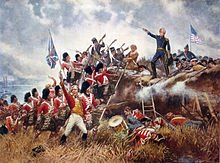
220px-battle_of_new_orleansSince my dad’s younger brother was named Andrew Jackson Logsdon, you might guess that Andrew Jackson was well thought of in my family. He is well thought of by most Americans as the first people’s president, a man who went to Washington, overthrew the elites, and returned the country to its democratic roots. A champion of the common man.

I disagree.

As a person trained in both anthropology and history, I have to declare my biases. Jackson was an important president, with much to his credit. I grant that. But he was also the leader of a successful movement to drive out the legal residents who were owners of vast tracts of land throughout the South, to make way for his white followers.

By the way, I plan to use the word Indian. It’s a description, not an insult, and it is the word that was used in the 1800’s. When Jackson finally sent the native people west of the Mississippi, he settled them in Indian Territory, not Native American Territory.

Jackson led an unapologetically racist movement, but there was no racial purity about it. The whites who moved into the vacated lands took their black slaves with them, and many of those slaves were partly white. (See yesterday’s post and numerous posts last January and February. Go to the tag cloud and click race.) The Indians who were moved out were frequently partly white, and took their black (and mixed) slaves with them when they went.

There is an argument that, morality notwithstanding, a stone age people had to give way before an industrialized one. Even if that idea has merit elsewhere, it does not apply to the frontier South in the early 1800s. The region was not industrialized, although gin-separated cotton would bring organized agriculture in the form of the plantation system during the next two decades. It was a land of small farmers (white or Indian), mostly engaged in subsistence agriculture (white or Indian), dotted with small towns (white or Indian) and few cities. White society and Indian both maintained slaves. Both traded with the larger world, mostly England, for manufactured goods.

White society, however, was under pressure from growing population beyond the Appalachians. Call it greed, or call it need, the whites wanted what the Indians had, and they took it. Jackson played a key roll in it all.

Jackson first came to public attention as an Indian fighter in the Creek War. It didn’t start out as a war between the Creeks (a historically imbedded term for the Muscogee tribe) and the Americans, but as a civil war between the lower Creeks who had made peace with the dominance of whites and the Red Stick faction which had not. Some whites were killed, militia units were organized, and Jackson became their leader. The regular American army was unavailable; they were fighting the British along the Atlantic coast. The War of 1812 was underway, and the Red Sticks were receiving British arms.

Jackson proved to be an effective general, tough and uncompromising. This is the period that gave him his nickname Old Hickory for those qualities. The Red Sticks were crushed and the entire Creek nation lost half their land at the end of hostilities. That was the pattern of frontier Indian fighting.

Next, Jackson defended New Orleans (brilliantly, to give the man his due) and emerged a Washington-like American hero. His road from New Orleans to the White House was long and rocky, but he became President in 1828 and won reelection in 1832.

Jackson was dedicated throughout his life to the removal of Indians from their lands in the South for resettlement them beyond the Mississippi. Toward that end, he effected passage of the Indian Removal Act in 1830.

This act required Indian tribes to sign treaties exchanging their original lands for new lands west of the Mississippi. Most tribes resisted, and the saga of bribery, coercion, and trickery that brought about the change would fill volumes. Among the Cherokee, for example, a small faction was bribed into signing a treaty which was then enforced on the whole tribe. Anger over this betrayal led to political assassinations among the Cherokee once they reached the new Indian Territory.

16,000 Cherokees were removed for the Indian Territory. 4000 died along the way. Jackson retired after his second term and died eight years later. By that time tens of thousands of non-citizens who had been resident in America for generations had been deported – excuse me, I meant removed – to beyond the borders of the United States.

**         **         **

We’ve looked at Andrew Jackson and Thomas Jefferson, two Presidents from the first half of the nineteenth century. We’ve seen what Jackson did about the non-citizens living in America. We’ve seen how different thinking was then on race and gender, even for someone like Thomas Jefferson. It’s good that we have progressed.

Or have we? I guess we’ll find out on Tuesday.

Raven’s Run 37

I looked around, depressed by what had happened. One of the parked cars caught my eye momentarily. It had been sitting with no lights on. Now both doors opened and two men got out; one was heavy and muscular, the other was skinny and short. They leaned against the hood and looked at the boats.

I walked Raven down to the Wahini. I had repaired the hatch; it was secured now with a hasp and padlock. I got out my key, and as I was bending over I caught sight of the two men again, standing casually beneath the bow of the fishing boat that was moored beside us.

Satori is a Zen Buddhist concept. At a moment of satori, one suddenly sees in a flash of insight things that were always there, but were hidden by one’s preconceived picture of the world. I had a satori at that moment, a black satori. The men suddenly ceased to be two strangers and I knew them to be Raven’s attackers.

I slid the hatch back hurriedly and motioned Raven inside. As I followed her, the two men moved toward the Wahini.

It never occurred to me to secure the hatch. Since I picked Raven out of the ocean, her attackers had been a cloud on her mind. Appearing again, they instantly became an intolerable threat. I wanted to get my hands on them and end that threat. I thought of the fear Raven had endured as she watched the cruise ship pull away, leaving her alone in mid-ocean, and I wanted blood.

I caught Raven’s shoulder and spun her around. Gesturing forward, I snapped, “Get back and stay back!” She shrank away from me. I flipped open the engine room door and snatched up a 12 inch Crescent wrench.

Wahini shifted slightly as they came aboard. She was a heavy craft; I would never have felt her move if I had not been keyed up. I faced the closed hatch, balancing in the narrow aisle way between the transom seats. Behind me, Raven gasped as she heard their soft footsteps on the deck.

My breath came short and my ears were ringing, but I was ready.

The hatch slammed back and the larger man came in feet first.  I swung the wrench. I had been ready to hit his right wrist, expecting a weapon. But when he landed he dropped into a crouch to catch himself, and the wrench popped him smartly on the side of the head. He collapsed like a marionette with the strings cut.

Then his partner gave me a faceful of feet. It slammed me back against Raven. She cried out in pain as I smashed her against the bulkhead. Then the second attacker went down. He had landed on his partner and lost his balance.

It was a confusing fight, with three men struggling and one girl dodging in a space not much bigger than a bathroom. I swung at Skinny’s head and missed. He scored the back of my hand with a knife and I lost the wrench. I kicked at his crotch. He sideslipped and I caught Davis in the face instead, just as he was trying to struggle to his feet. He went back down and Skinny caught me in the throat with a fist. I fell back, gasping for air, as Skinny took another swing with the knife. More by luck than skill, I dodged it. As he was sideways to me, with his arm up and extended, I hit him hard with a braced finger knuckle in the nerve center at the top of his ribs. He screamed like a stepped-on cat and lost his knife.

Our fishermen friends next door came alive then. They had heard Raven’s screams.

Skinny heard them shouting and jerked Davis to his feet. They went up the ladder and out the hatch. I followed. They went overboard on the side opposite the fishing boat, and ran for the quai, sheltered by the bulk of Wahini. The fishermen were lining the rail of their boat. I pointed and tried to shout, but Skinny’s blow had stopped my voice.

Raven explained in rapid Spanish, and her friend translated. By that time, Davis and his skinny companion were just a squeal of tires and a flash of taillights on the boulevard. more tomorrow

246. Unalienable Rights

u-rNext week, we elect a president. Today and tomorrow let’s look at the lives of two of our early ones, Jefferson and Jackson.

Everybody knows the passage in the box above. Thomas Jefferson wrote it. It is logical to think that he believed what he wrote, and yet he held Sally Hemings and his children by her in slavery.

Odd? By the standards of our day, certainly. By the standards of his day, it was odd that he freed any of them. His father-in-law also had a black concubine and children, and freed none of them.

If you have read anything I posted from mid-January to the end of February of this year, you know I am no apologist for slavery, Jim Crow, or resistance to interracial marriage. However, if you plan to understand historical events and beliefs, you have to examine them in their own context. The Sally Hemings story gives us a lens through which to examine both slavery and women as child bearers, whether wife or concubine, in the days when our nation was being created.

The story begins two generations before Jefferson. A slave name Susanna bore a child to a white man named Hemings; the child was named Betty. Both were owned by Francis Eppes, then were inherited by Eppes’ daughter Martha. When Martha Eppes married John Wayles, the slaves, mother and daughter, went with her.

Martha Eppes Wayles had a daughter, also named Martha, before her death. Wayles was widowed twice more, and also had several children by the slave Betty Hemings. The youngest of these was named Sally.

Martha Wayles (the daughter) married Thomas Jefferson. Sally Hemings was her half-sister (they shared a father) and was three-quarters white. When John Wayles died, Thomas and Martha Jefferson inherited his slaves, including Betty and Sally Hemings.

Martha Jefferson had a daughter, also Martha. Thankfully, for ease of reading this post, she was called Patsy. Jefferson’s wife Martha died. When Thomas Jefferson was appointed American envoy to France, he took Patsy with him, and took Sally Hemings as her companion. It appears that the Thomas Jefferson/Sally Hemings affair began in France.

Accurate research is difficult on affairs that are semi-hidden. As best we know, Sally Hemings bore Jefferson six children: two daughters who died in infancy, one daughter and three sons who live to adulthood. All these children were seven-eighths white, and all were slaves.

The children and their mother remained house slaves. They never worked the fields; the male children were given training to become artisans. At age 24, the eldest son was allowed to “escape” to the North. The daughter followed shortly after. The younger sons were given their freedom in Jefferson’s will. Sally Hemings was inherited by Patsy and informally freed.

Why did Jefferson, the champion of unalienable rights, hold his “wife” and children in slavery? Let’s look for answers.

Sally Hemings was legally negro, genetic heritage notwithstanding. That could not be changed. She could have been freed, but Jefferson could not have married her, even if the thought had ever occurred to him. If freed, she would have not become a full citizen of Virginia or of the United States. If freed, she would have passed completely out of Jefferson’s control, and she would also have passed out from under his protection. Which of those two factors weighed more heavily on Jefferson? We cannot know.

We can speculate, however, based on how he treated his children. They were legally negro, although actually seven-eighths white. They could not be given the rights of white children. They could not inherit, which was something of a moot point since Jefferson died deeply in debt and his estate went to his creditors. He allowed his elder two to “escape” to the North after they were adult. He freed his younger two in his will; they were just reaching legal maturity at the time of his death.

He did not free Sally Hemings in his will. Why? Was he unable to let go, or was he depending on his daughter Patsy to take care of her in her old age? She was in her mid-fifties when Jefferson died. Again, we cannot know.

A lot of scholarship has been devoted to Sally Hemings. We know quite a few facts, but from this distance, understanding comes hard. Did Jefferson do the best he could under the circumstances? Do we even have the right to be disappointed that he didn’t do more? We have more questions than answers.

**        **        **

It is important to consider what happened to Sally Hemings’ offspring, but that will require a future post.

Raven’s Run 36

Such violent passion could not be sustained. It was over in minutes, and it left me with no desire to prolong it. I rolled off and sat up, reaching for my clothing. Then I thought, “Why bother.” The other sunbathers were studiously not looking in our direction. Will was out among the breakers, looking seaward. Gulls were cutting circles against the high, faint clouds.

My passion had spent itself, but the anger and resentment remained. Raven looked up from where she sprawled, half dazed, and said, “What’s wrong.”

“That is the second time you have manipulated me. I don’t like it!”

“It seemed to me that you did.”

I looked hard at her. I said, “I won’t be used by anyone.”

“Men use women all the time. Why shouldn’t I have the same privilege?”

“I am not men! I am not a category; I am not generic; I am singular, unique, myself only. I don’t give a damn what men do. I don’t use; I don’t manipulate. Not men, not women, and particularly not friends. And I won’t tolerate being used! Not by anyone!”

I was shouting at the last. Raven backed away from me. I took my rage in both hands and forced it back into the little room at the bottom of my soul where it hides, never asleep and never forgotten.

“I was only trying to arouse you,” she said.

“Bullshit!”

Her face froze in anger, then slowly relaxed. Tears formed and trickled down her cheeks.

“Bullshit,” I repeated softly. “It was touch and go. You might just as easily have ended up under Will. Or both of us.”

“Would that have been so bad?”

“That’s not the point. Life is complicated. It isn’t just a fuck on the beach. Every act has consequences. What you did today jeopardized my friendship with Will, and Will may be the only real friend I have.”

“I didn’t mean it that way.”

I pulled on my bathing suit and reached for my jeans. Will was coming back up the beach. I turned to Raven and said, “Twice you’ve manipulated me. But never again!”

And I waited. If she had said anything, a cutting remark or an offhand attempt to make the situation seem smaller than it was, I would have used my last dollar to put her on a plane back to California.

Four people, now dead, would still be alive if I had.

#          #          #

The ride back to Marseille was silent and strained. Will did not ask what had happened between Raven and me, and I did not volunteer any information. He dropped us off at the quai and said that he would see us in the morning.

The sun had set already. The boulevard was alive with cars and the sidewalks were alive with people. I said, “What do you want to do now? Walk around or go to bed?”

Raven shrugged. She looked very unhappy.

“Do you want to be alone?”

“Yes. For a while.”

“Marseille isn’t safe at night. If I left you on the Wahini, you could bolt the hatch. I would like to walk around for an hour or so, anyway.”

“All right.”

“We have to talk about this some more, you know. Unless you are just going to get on a plane and fly out of my life. If we stay together, we can’t let this lie.”

“I know. But not now. Please.” more tomorrow

245. Serializing

I’ve been doing a lot of serializing lately. In fact, I’ve been at it for over a year, but lately it has become intense.

Publishing novels serially in periodicals is a very old idea. Most of Charles Dickens work came out that way. What I’m doing is a bit different though, because Dickens wrote his novels to be serialized. The size of each chunk was known to him when he wrote. And the chunks were bigger.

David Copperfield was a novel of 358,551 words. I know this by downloading it from Project Gutenberg, transferring it to my word processor, and using the word count function. You might make note of that; it is a useful technique. David Copperfield was published in twenty monthly installments. That makes each installment was about 18,000 words. In SFWA (Science Fiction Writers of America) terms, each installment was of novella length.

My typical serial post is about 600 words.

Dickens serialized in order to sell to those who could not afford his books, and at the same time, to boost sales of those books when they came out after they appeared in periodicals. Most successful nineteenth century authors followed the same pattern. So did the big names in twentieth century science fiction, although they wrote smaller novels and presented them in fewer, but longer installments. Often they didn’t sell their books for serialization until they were already completed.

That is also my situation. Nothing I have presented in Serial was in progress at the time it was serialized. I’m too slow and picky a writer for that. Some of the things presented had been published, some had not, one was presented as a excerpt from a completed novel, and one was a fragment from a novel I’ll probably never finish. Jandrax was annotated to such a degree that it almost forms a writing primer, and How to Build a Culture was entirely a how-to.

Everything I have presented in Serial has been to assure continued readership of the website. It’s a trick. Leave ‘em hanging, and they’ll come back. And the whole website is to assure a readership for my upcoming novel Cyan, and for others that will follow.

But man, it has been fun.

I’ve enjoyed revisiting old friends. I’ve learned a lot from a close re-reading of old material, especially regarding pacing. Since I post four days a week, each post has to be relatively short, both to keep from running out of material too soon and to keep each reading experience brief for the sake of the daily reader. I didn’t originally choose 600 words; that just evolved.

The actual process of taking a novel and breaking it into pieces has been fascinating, frustrating, and a rewarding learning experience. It begins with a completed novel, which may be decades old, and which will already have been polished to a high shine. Still, I find errors from time to time.

First, using a word processor version, I have to re-read the novel, looking for natural breaks in the action every two and a half to three manuscript pages. I type a nonsense word at each break. I use breakbreak, as one word, which has meaning to me but would never appear in the actual text. This will allow me to use the find function to jump from break to break if I should need to. After typing breakbreak, I highlight what I have chosen, use the word count function, then type in the number of words. If it seems too short or too long, I adjust.

That takes care of post #1. Now to repeat. Jandrax required 92 posts. Raven’s Run will require 150. Some posts make sense on their own, but some require that I start with a sentence or two from the previous day’s post. I use bold-italic to denote this repeat.

All this takes place on a single word processor document. I then make individual documents of each post-to-be. This is a backup to what will actually appear on the website. At this point, I run the spell checker one last time and face the two-space conundrum.

I learned touch typing in high school in the mid-sixties on a mechanical (not even electric) typewriter. This was overseen by Mrs. Worden (AKA the warden) who pounded (pun intended) the rules into our heads. One rule was that you put two spaces between sentences.

Over the years I went from mechanical typewriters, to electric typewriters, to computers, but the rule stuck with me – even after everyone else had stopped using it. Raven’s Run was written before I kicked the two space habit, so now I have to go through each document removing the second space.

The last step is copying from word processor file to website.

Tedious? Yes. Fun? Absolutely. If you write, and you don’t enjoy reading your own work, why bother?

Raven’s Run 35

“Well,” Raven said, “what do you think?”

“Jesus Christ!”

“What about you, Ian?”

“I’ve made my opinion clear plenty of times,” I growled. “But should strip teases be performed in pubic?”

“Don’t be silly. Look at those girls over there. This is a topless beach.”

Will looked at me in confusion, but I just shook my head. This Raven was new to me, too. She had my blood boiling, but I would have preferred to see the show in private.

“Are you two going to sit there dressed like this was a garden party, or are you going to join me?”

I shrugged and pulled my shirt over my head. Will hesitated.  When Raven gave him a scornful look, he said, “If I take my slacks off after that show, it could be embarrassing.”

“Not to me,” she replied. She sat back on her heels, with her spread knees dug into the sand. She sipped her wine and watched while we slipped off our clothes. Will wore baggy trunks that hid any evidence of his feelings. My bathing suit was smaller. Raven laughed and said, “I see you still love me.”

“I always did wear my feelings on my sleeve.”

“Sleeve?”

“Whatever.”

Will looked embarrassed. He was too good a friend to try to cut me out, but Raven seemed as interested in him as in me. Did she want us both? At once? He had to be thinking that. I know I was. And I didn’t like it.

She said, “I’ve always wanted to try a topless beach,” and reached behind her back to untie her bikini top. The strings fell to her sides and she reached up behind her neck. The loosened bra rose with the motion and revealed the smooth curves at the bottoms of her breasts.  There was just a hint of rosy aureole peeking out. She fumbled with the upper string, frowned prettily, and said, “It’s stuck. I’ve snarled the knot.”

“That would be a terrible disappointment,” Will said. His voice was rough and he seemed to be having a hard time breathing.

Raven stopped dead, frozen motionless with her arms uplifted, and stared at me. Then she seemed to make up her mind suddenly. She moved sideways in one fluid motion and planted herself in front of Will with her nearly bare rump almost in his lap, and said, “Undo me, Will.” While Will struggled with the knot, she put her hands on his knees and arched her back. The bikini top fell into her lap. Still with her back to him, she rose gracefully and made a slow turn, pushing back her hair with her hands.

I thought his heart would stop.

A storm was building inside of me. I was hurt, burning with lust, and filled up with a primeval desire to lash out.

Raven glanced at me out of the side of her eyes. It was a look of pure challenge. It was the kind of look that said, Raise, or get out of the game.

I hooked my thumbs in the waistband of my bathing suit and skinned out of it. Now there was no question about my passion. Vaguely, I heard Will mutter something coarse.

Raven smiled a slow smile, like coming home after a long absence. She said, “Goody. Bottomless. Even better.” She stripped off her bikini bottom, tossed it aside, and posed, naked, feet spread wide apart in the sand and quite unabashed by Will or the other sunbathers who had turned to watch.

Will lurched to his feet and said, “I’m going for a cold swim.” It didn’t matter. What had been a game for three, had suddenly become a game for two. I was hardly aware when he loped away toward the water.

It was a public beach, and there was no cover anywhere. It didn’t matter.

It was savage lovemaking. There was little tenderness involved, little carefulness, no caresses. Our foreplay had been her challenge and my response. When I first drew her down to the towel beside me, she was ready and I plunged in without preamble, oblivious of the other sunbathers. They turned away, too full of French savoire faire to stare; but they watched covertly. more tomorrow