
Monthly Archives: August 2017

Spirit Deer 39

With a growl that shook the forest, the black bear wheeled; the spear shaft quivered in his side. He charged. Tim cast his second spear at the bear’s open mouth, but missed. The obsidian point flew high and cleaved a gash through the animal’s already mutilated nose and up between his eyes, glancing off his heavy skull. The bear screamed and reared up, pawing at his face. Tim lunged forward, grabbed the shaft of the first spear, and plunged it deeper. A mighty paw caught him and tossed him aside.

Tim staggered to his feet. Blood rushed into his eyes, but he wiped it away. The bear, too, was blinded by blood. Moving unsteadily, Tim recovered his second spear. He circled the thrashing bear, found his atlatl, and took a stand near the club. The bear was dying, but he was still deadly. Blinded by blood, he turned his shaggy head from side to side to listen.

“Here, Bear,” Tim whispered. The bear jerked his head toward the sound, then rose on his hind legs, turning his head to catch the slightest noise.

“Here!” Tim screamed and hurled his spear. It pierced the bear’s belly once again. Dropping to all fours, the bear charged. The spear shafts burrowed twin furrows in the snow. It was a blind charge, and Tim stepped to one side bringing up his club. He swung it as he would have swung an axe in his father’s woodpile, overhead and down with all the power of his chest and arms, directly onto the bear’s skull. The bear dropped, plowing up the snow as it skidded to a halt, twitched, and lay still.

* * *

The crippled deer stood proud and defiant on his island of traction. Tim faced him with a spear in his hand. The deer’s hard brown eyes never wavered and his antlered head was lowered to fight to the last. But it would be no contest, for Tim could kill from where he stood.

Tim had followed his deer a long way. Both of them had been cripples, and now both were nearly well. Tim had been alone and helpless. Slowly, bit by painful bit, he had gained the tools of survival. Now he stood with the deer’s life in his hands.

And now he no longer needed to kill it.

The deer’s flinty eyes never changed as Tim laid aside his spears and removed his snowshoes. Moving carefully with his club raised, Tim fenced with the deer until he had tangled the club in its antlers. When the deer threw up his head to rip the club from Tim’s hand, Tim did not resist. Instead he lunged forward and threw his shoulder against the deer’s side, reaching under its belly to grasp his opposite foreleg, and tossed him into the snow. Tim rolled on over the deer’s back to avoid his flashing rear hooves and caught him by the antlers.

Throwing his weight backward, he dragged the struggling deer off the mud bar onto the smooth ice, then dragged him to shore. Tim stepped back as the deer plunged to his feet and bounded away. When the deer reached the edge of the timber, he turned for a moment and looked back.

Tim raised his hand to the deer. “Good luck,” he said.

The deer disappeared into the forest, and Tim turned back to the carcass of the bear. last post tomorrow
Spirit Deer 38

Tim’s snowshoes lent speed to his footsteps. When he caught up to the bear, it had its nose close to the snow, doglike, as it lumbered through the drifts with careless strength. Tim remained at a distance. He kept the animal in sight, but made no move to overtake it. The wind lay at Tim’s back, but for some reason the bear did not scent him. Once the bear stopped and tested the air as Tim crouched in the cover of a hemlock, but he seemed unable to get the information he needed from the wind. Tim could see his massive head; the swelling was gone from his cheek. Tim’s blow had done the bear some good by allowing the wound to drain. Now the bear looked less anguished, but just as deadly.

The bear topped a rise and disappeared. Tim followed, taking care in case the bear had stopped just out of sight. He crossed the ridge a hundred yards to the left of the bear’s tracks.

Tim’s deer had been feeding just under the crest of the hill. Now he was floundering in flight from the bear.

The crippled deer tried to cut to the right, but the bear was faster in the deep snow. He closed the gap quickly, and the deer turned away to the left, heading out across a barren stretch of snow.

The deer should have known better. The “clearing” extended tabletop flat for two hundred yards in every direction – it could have been nothing but a frozen, snow covered lake. In his frenzy to escape, the deer hit the smooth snow, floundered, and fell sliding on the ice. The bear galloped after him. The deer regained his feet, only to fall again, then lunged forward and spun around. He had found a mud bar, no more than six feet by four, that rose inches above the ice and provided a tiny island of traction.

Yet, he was trapped. He could stand; he could wheel to face his attacker, but he could not retreat over the slick ice.

He was doomed.

Tim could not allow it.

He moved down the slope at a shuffle with his snowshoes shushing along the snow’s surface. The crippled deer stood with his head down and his antlers poised; he made a splendid figure of defiance. The bear circled just out of range of his lunges. The slickness of the ice did not seem to bother the bear at all. The advantages were all his.

Tim came to the edge of the ice and paused. The bear had not seen him, but when he did his life would be in deadly danger. Yet he could not leave. He had uncompleted business here. The bear circled close and the crippled deer lunged, catching the bear’s nose with his antlers. The bear sat back and turned his head.

He saw Tim.

Startled, the bear spun and lost his footing on the ice. The deer lunged forward and speared his flank. The bear leaped back, then turned toward Tim. Tim stood like a statue, with his spear poised to cast. He had taken his crutch-club and had stuck it into a snowdrift close at hand.

The bear looked at Tim, then at the deer. He turned to rush the deer and Tim cast his spear.

It flew forward in a clean arc, propelled by the extra snap of his wrist, and arrowed toward the target Tim had selected. Just forward of the bear’s hind leg, back from the heavy bones of his rib cage, it penetrated the bear’s belly.

With a growl that shook the forest, the black bear wheeled; the spear shaft quivered in his side. He charged. more tomorrow

397. University of Steampunk

Here I am, quoting myself, from Golden Age of Science Fiction:

Recently I have been reading Neil and Neal, Gaiman and Stephenson, but I know I must have missed a feast of others. I have probably missed more than one feast. Is there a Golden Age of Steampunk? Probably, but I don’t know the sub-genre well enough to talk about it.

Since I wrote that, I have interacted with a bunch of steampunk authors, done a lot of research, and concluded that, “Yes, I was right. There is a golden age of steampunk and it is now about a century and a half deep.”

I love steampunk. i already knew that. But now I have a better handle on what steampunk is, and I am continuing to pursue my education. Let’s call it University of Steampunk (self-inflicted) and I am inviting you to come along. And don’t hesitate to use reply to tell me when you think I’m wrong.

Not only am I immersing myself in steampunk research, I am also writing my first steampunk novel. Since Westercon, it has tumbled out onto the screen. I have it fully outlined, with initial drafts of the introduction and first two chapters.

The rest of this post is drawn from the draft introduction.

#           #            #

This novel, as yet unnamed, working title Durbar, is steampunk, pure and simple, and designed to be so. It differs from other steampunk novels only in that it emphasizes strong scientific and historical excuses for the prevalence of steam power and pseudo-Victorian culture.

My literary introduction to that age on our own planet did not come from Austen, the Brontes and their ilk. My literary Victorian/Edwardians were Holmes and Watson, Hannay and all his friends, and Davies and Carruthers; in other words, the stories of Arthur Conan Doyle, John Buchan, and Erskine Childers’ Riddle of the Sands.

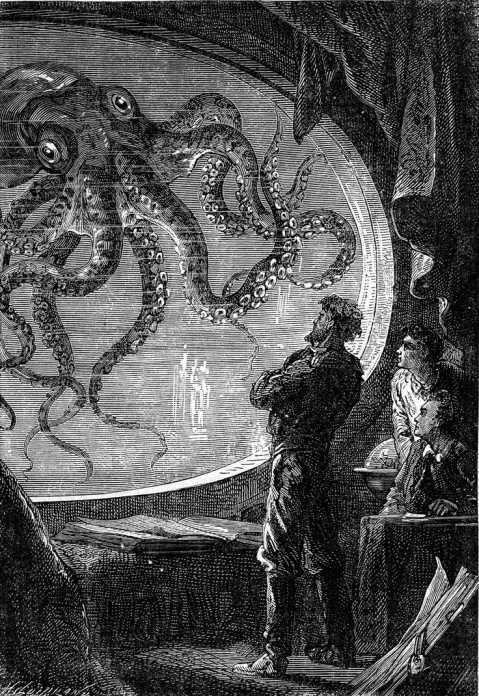
I can tell you the exact hour the new novel was born. I had gone looking for understanding of the steampunk phenomenon. I was aware of the movement; it seemed to always be in the periphery of my vision, but it wouldn’t come clear. Certainly Jules Verne, especially Twenty Thousand League Under the Sea, was steampunk before steampunk. So was the Wild Wild West, and both were staples of my childhood. I had stumbled onto Kenneth Oppel’s Airborn while teaching middle school. It was a fine novel which seemed on the verge of steampunk without completely fitting the mold.

Add a few inspiring steampunk short stories off the internet and childhood memories of reading my grandfather’s copy of Tom Swift and his Electric Rifle — also steampunk before steampunk — and I was ready to write something of my own. Still, it is foolish to write in somebody else’s genre without understanding the boundaries.

I visited a series to panels on steampunk while I was at Westercon 70. I found an inviting openness and nobody seemed interested in defending boundaries. I also came to appreciate the culture of steampunk (their term) and the joys of cosplay. Appreciate, not join in; I’m the guy in the corner, not the dressed up dude on the stage.

The panel which saw the birth of my new novel was called The Science of Steampunk: What Makes the Gears Go Round? As it turned out, there are steampunk authors who are perfectly happy to write their novels without caring what makes the gears go round, and there are also hard-science types who just can’t live that way. This panel had about an equal mix of those two.

They all had fun with the question, but the only scientific underpinning for some kinds of steampunk is magic. I enjoyed the interchange, and I want to thank Ashley Carlson, Bruce Davis, Steve Howe (not the guitarist), Susan Lazear and David Lee Summers — and Ryan Dalton who moderated — for the education.

As I was listening to the science types trying to find an equation for magic, it occurred to me that is would be great fun to write a novel which did tie up all the scientific and historical underpinnings of a steampunk world, neatly and realistically.

That was when two bombs went off in my head. I’m not ready to go public with what they were, but In the course of an hour, the new novel had gone from nonexistent to a full blown embryo. My thanks to the panel, but don’t expect any royalties.

Spirit Deer 37

Using the light limbs of a young fir, he bent a pair of frameworks and laid other straight, small limbs across them, weaving them together and tying their ends with the deerskin strings.

He struggled back to the hollow where he had collapsed and spent a freezing half hour searching for his bow. When he had found it, he removed the bootlace bowstring and used it to make snowshoe bindings. The bow had been pretty useless anyway, and his arrows were lost.

* * *

The storm lasted through a long afternoon and night. By the morning after Tim’s kill, it had spent its fury. The clouds had lifted and blue sky was even showing through here and there. The mountains were covered with more than a foot of new snow.

Tim set out, walking easily on his new snowshoes, strengthened by the venison, and with a new confidence. He carried his spears and his atlatl in his hand and the crutch-club was strapped across his back as a weapon of last resort.

He had eaten all the deer meat, but now he felt confident that he could get more. He had run his prey down on clumsy bough snowshoes, so surely he could do the same with these better ones, especially since the snow had drifted even deeper. He moved with a shuffling step, sliding each snowshoe forward with a minimum of lifting, for they were heavy once they became caked with snow.

The deer were leaving the high country. Although he did not see them, he saw new trails all about him in the fresh snow. Too much of their food had been buried, so the muleys would stay no longer. Like Tim, they were heading for the valley.

* * *

Tim knelt in the snow to examine one set of tracks more closely. In the deep snow where the deers’ bellies dragged it had been hard to tell much. Here where the snow cover was thinner, the message was clear. Tim’s spirit deer was heading down the mountain, and having a hard time with his injured foreleg.

Tim started along after the deer. The snow had stopped about four in the morning, and now it was about ten. The tracks could be six hours old, although Tim doubted it. It was foolish to follow them. It would be far better to sight a deer first, then follow him.

It did not matter. Logic was not the issue. There was a bond between Tim and that particular deer. It was not hatred and it was not love. It was no emotion that Tim could have put a name to, but he needed that particular deer like he needed food and shelter. It was as if that deer had taken away a part of him when he shot it and Tim had to follow it – forever? – across this frozen waste.

It was a thing beyond food and shelter. It was a thing beyond manhood, as civilized man understands the term. It was a matter of selfhood. Like two stars locked in each other’s gravities, Tim and the deer were inseparably linked.

He was not the only one following the deer. Tim came upon bear tracks. There was nothing in them to tell Tim for certain that this was the same bear which had driven him from his other kill, but he somehow he knew that it was.

This bear stood like a demon between him and his prey, just as he had stood yesterday between him and his kill. Spirit deer and demon bear. 

To stalk old tracks was foolish; to stalk a stalking bear was suicide. Still, Tim went on. more tomorrow

Spirit Deer 36

The bear made no move to charge, but growled deep in his throat. Tim moved toward the deer, going slowly and searching through the snow. He found his other spear and his atlatl. He thrust one spear into his quiver, hooked the other into his atlatl and balanced them over his right shoulder while he held the torch in his left hand.

The wind tore at the torch, laying the flames out horizontally. The numbing cold cut deep.

When Tim had come to within thirty feet of the kill, the bear made a move to charge, then retreated from the torch. He snorted and shook his head. Slowly, Tim advanced, but the bear stood his ground.

Tim needed three hands: one for the torch, one for the spear, and one to cut out a portion of the desperately needed meat. He advanced another step. He had to drive the bear off, but the bear showed no sign of fear.

Tim’s torch was burning down, and as it died the bear was gaining confidence.

The bear charged. Tim cast the spear, and missed. It cut the air where the bear had been one second before.

The bear’s roar shook the mountainside and his jaws plunged toward Tim’s face. With one last desperate burst of strength as he fell back, Tim brought his atlatl down like a club on the bear’s swollen cheek. The festering wound burst open in a shower of pus and the bear leaped stark upright. His scream split the air. He towered above the spot where Tim had been knocked down, waving his paws in agony, then turned and plunged into the storm.

Suddenly, Tim was alone in a swirling white world of snow. He drew a broken breath and for the moment he could not move. Then he rolled to his knees and pulled out his knife. He cut out a massive chunk of meat and hacked off a section of hide, working quickly, for the bear would surely return.

He recovered his spears and atlatl, estimated his position, and headed back toward the shelter he had left hours earlier. The wind and snow were so fierce that he didn’t think he would be able to build a new shelter in time to keep from freezing. And he wanted distance between himself and the bear.

Fortunately, though the deer had run far, he had been circling back when Tim caught him. In the howling storm Tim could not be sure of his directions. Juices from the meat froze on the back of his hand. He blundered on.

It was the hollow where the deer had nuzzled him that he recognized first. After that he found his way without difficulty, but he was chilled through by the time he had kindled a new fire in his shelter.

For all his efforts, he had gained only a piece of venison weighing a few pounds and one lacerated section of hide. But when he remembered the bear, he was content just to be alive.

Chapter 14

Throughout the storm, Tim kept his fire high to keep the cold away, even though it meant frequent trips out to find wood. He was stronger now for the meat he had eaten.

Yesterday he had done without his crutch, and he would have to do without it in the future. As the snow level rose, he would have to have better snowshoes, and the piece of deerskin was the way to obtain them. There was not enough to use as webbing, but he cut what there was into strings. These he soaked in hot water in a bark basket made from his now useless quiver. more next week

396. Fire Again

It was nine o’clock at night upon the second of August — the most terrible August in the history of the world. One might have thought already that God’s curse hung heavy over a degenerate world, for there was an awesome hush and a feeling of vague expectancy in the sultry and stagnant air. The sun had long set, but one blood-red gash like an open wound lay low in the distant west.      ACD

Talk about atmosphere. I was copying those words from His Last Bow by Arthur Conan Doyle, a story about how Holmes and the opening days of World War I, when the helicopters started going over.

I was a teenager and then a draftee during the Viet Nam War, although I didn’t actually go there to serve. For many of my generation, helicopters are like the four horsemen. We don’t run out to smile and wave at the pilots when they go over because, for us, they represent death from above.

I’m about to change my mind about that. My new impression of helicopters is tied to the red and white Cal Fire ‘copters, with those huge steel buckets hanging down, which drop down to local lakes to carry water to fires. I’ve certainly seen plenty of them lately.

This decade, where I live, has been a decade of fire. I wrote a post on that subject less than a year ago, and here I go again.

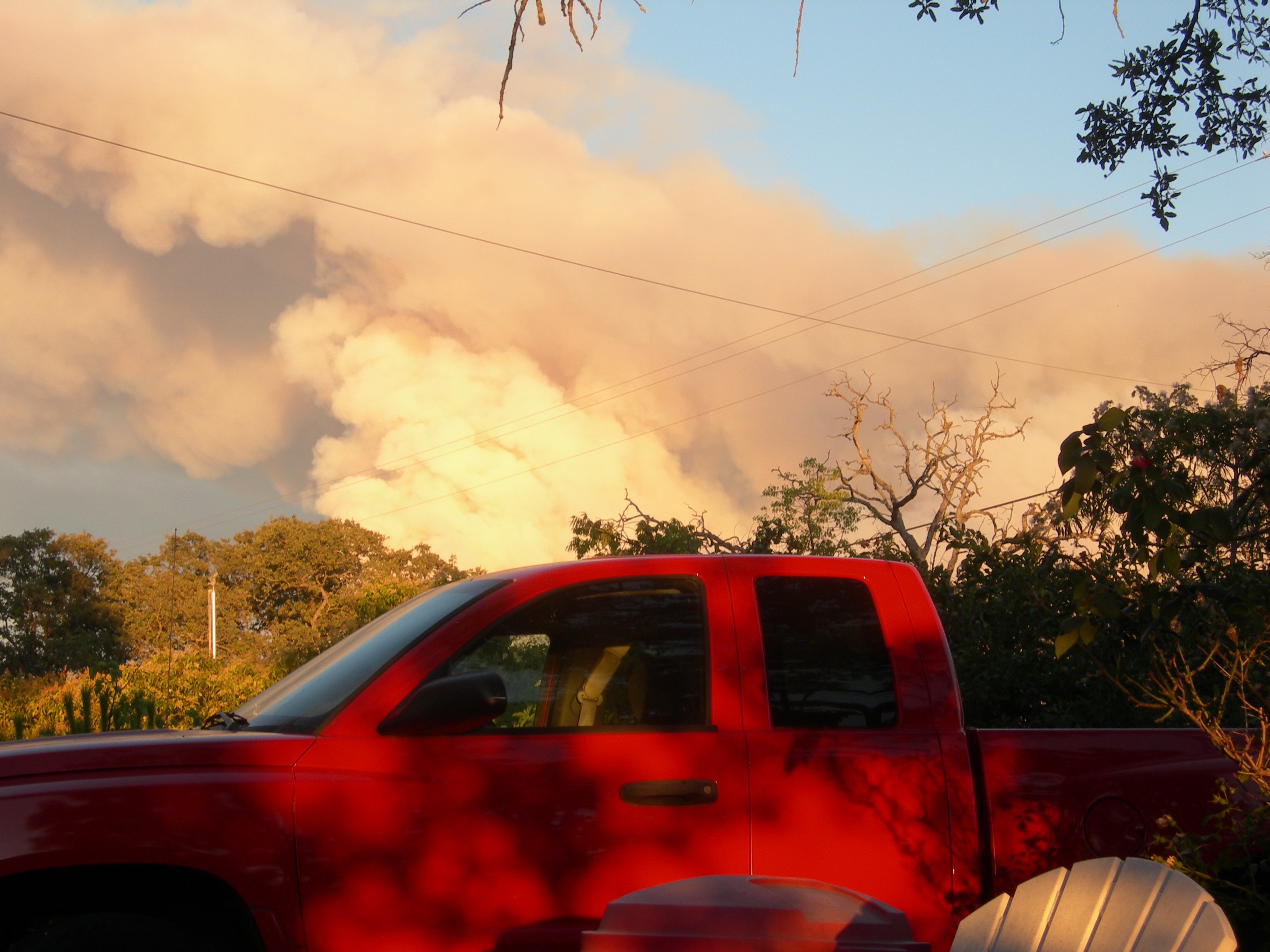
In the previous post, I opened with a picture taken from my front yard. I am opening this post with another, also from my front yard, taken a few weeks ago. In both cases, there is a lake between my house and the fire. The first fire burned 677 acres. This fire started in nearly the same place, but this time it burned 81,826 acres, so far, destroyed 63 homes, and threatened to destroy two nearby towns.

The day it started, my wife and I went down to watch the aerial ballet as DC 10s dropped fire retardant, spotter planes orbited high overhead, and Cal Fire helicopters carried tank after tank of water from the lake to douse the fire. This time they couldn’t stop it, and it eventually took thousands of firefighters to do the job. It still isn’t really over.

Then another fire broke out ten miles north of here and caused damage and confusion for two days. A day later, another fire broke out in the same area, and it is still burning.

Those helicopters I told you about? They weren’t part of any of those fires. They knocked down a fire less than a mile from my house. I heard them, closed my computer, and drove by back roads to a place I knew I could look without bothering the fire fighters. I needed to know if I should start loading the car to evacuate.

Nope. When I got to my overlook the helicopters had already knocked the fire down. To my eye, it looked like about twenty acres. When I turned around to come home, I saw a battalion of firetrucks arriving.

The helicopters got my attention at 4:55. I saw the knocked down fire at 5:05. It is now 5:45 and I am about ready to post this for tomorrow.

There aren’t enough words to thank firefighters, aerial and ground, but I do have two things to add:

I now keep my computer backup forty miles from here, and —

I’m thinking about moving to the rain forest.

Spirit Deer 35

He looked up into the eyes of an enormous black bear.

Fear took hold of him. The entire right side of the bear’s face was swollen to the size of an orange and his cheek was smeared with yellow pus. His nose was partially torn away. For a moment that seemed to last forever they faced each other; then the bear lumbered forward, growling deep in his chest.

Tim hooked spear to atlatl and stood his ground, poised over his kill like some prehistoric man.

The bear charged.

Tim hurled his spear, but it glanced off the bear’s heavily furred shoulder. Then Tim leaped sideways and the bear knocked him down as he charged by. His sweeping forepaw missed Tim by inches. Tim scrambled up instantly and ran. He heard the roar behind him and leaped into the lower branches of a small fir. Scrambling upward and tearing off his rough snowshoes as he climbed, he quickly reached a place where further climbing was impossible. The bear stood on his hind legs and stretched his mighty paws upward. The scars he left on the tree trunk were just below Tim’s feet.

The bear circled the tree several times, then went to the deer. Settling down where he could watch Tim, he began to feed.

Tim cursed the bear, but the bear did not listen. As his fear began to drain away, Tim pounded the tree trunk in frustration. To finally make a kill after all this time, only to have it snatched away! He needed that meat, but the humiliation was almost worse.

The bear continued to eat, keeping his one good eye on the tree where Tim seethed.

Across the mountain, a wall of white bore in, ripping the needles about him and tearing at the warmth of his body. In an instant, Tim could barely see the deer and bear. He had sweated during the chase; now he felt that moisture chilling his body. The wind carried snow in stinging, hail like particles that peppered his face and arms. His world was suddenly restricted to the few branches around him. He could see nothing and feel nothing but the cruel, cruel wind.

He had to have shelter, food, and fire. The bear stood between him and all three. He had lost his weapons, but he did not intend to freeze to death cowering in a tree.

There were some dead branches nearby that had partially dried since the last snow, and a squirrel’s nest that was dry on its underside  He had been carrying the remaining rifle cartridges since he was lost. Now he pulled the bullet out of one with his teeth and spread the gunpowder across the squirrel’s nest he had torn to pieces. With knife and firestone, he kindled a flame.

And the wind blew it out.

This was no time for further hoarding. He emptied the remaining cartridges across the nest, working the powder into the tangle so that some of it at least would be protected from the wind. Again he struck sparks and once again the nest took fire. This time it flamed up and scorched his eyebrows. He twisted the flaming nest into the tangle of dead branches and the wind fanned their flame higher until he held a formidable torch.

Tim slid to the ground and sidled toward the spear that lay closest to him. The bear made no move to charge, but growled deep in his throat. more tomorrow

395. The Sum of Fears

If you haven’t read today’s Serial post, go read it first.

We all have our fear-inducing creature, and for me, it is bears. Sharks? Nope. Wolves? I’d pet a wolf if it would hold still for it. But bears have my number.

It all started when I was a kid. The old black and white TV carried two stations, and one of them carried the program Cheyenne. I was eight years old when the series premiered, and big, quiet, gentle, soft spoken, confident Cheyenne Bodie became my picture of what a hero should be.

But there was this one episode . . .

Something was terrorizing the region. No one knew what it was, or even if it was human, animal, or supernatural. It came out of the dark night and killed, but there were never marks of claws on the crushed and mangled bodies. It scared the crap out of eight year old me.

Cheyenne set out to rid the ranchers of the curse. The thing hated campfires, and always attacked those it found around them, so Cheyenne went out alone, built a campfire, and took his place in a tree with rifle in hand. The night wore on — and wore on my nerves. The campfire burned down. Cheyenne left his rifle in a crotch of the tree and climbed down to put on more wood. As he was crouched over the fire, it appeared. Cheyenne reached for his six-shooter . . .

After the gun smoke cleared, we all found out that it was a giant grizzly, his claws burned off from a cubhood encounter with a campfire. Perfectly logical.

That bear still lives in my dreams. Be careful what you watch when you are eight years old.

And if that weren’t enough, there was the Bible. The old prophets who lived there were as real to me when I was a boy as the people who lived in my town. Every Sunday morning I avoided the boring sermon by looking attentive in the back pew, with downcast eyes and my bible open on my lap. There are a lot of exciting stories in that book, and one which was particularly troubling. I quote:

And he (Elisha) went up from thence unto Bethel: and as he was going up by the way, there came forth little children out of the city, and mocked him, and said unto him, Go up, thou bald head; go up, thou bald head.

And he turned back, and looked on them, and cursed them in the name of the LORD. And there came forth two she bears out of the wood, and tare forty and two children of them. (2 Kings 2:23-4 KJ Version)

Yikes! I was a fervent Christian back then and now I’m a card-carrying bald guy, but it seemed then, and seems now, a harsh fate for a bunch of kids who were just calling a bald guy bald.

Bears still scare Hell out of me, all out of proportion to their actual danger. So when I decided that Spirit Deer needed a demonic adversary to carry it through to the end, there was no question what it would be.

Two Hands and a Knife, which was always in my mind while I was writing Spirit Deer, was a boy’s vision of a long, adventurous vacation in the woods. Spirit Deer is more like what it would really be like if it happened. Two Hands and a Knife, was a perfect boys’ book; mine partakes of the realism I don’t ever seem to be able to shake.

So, a bear. I introduced him early, kept him simmering in the background until needed, and he will be there in a few more days for the climax, when . . .

No, that would be a spoiler.

Spirit Deer 34

Then it stumbled as something turned under his feet, and when it leaped to its feet again, Tim cast a spear. It fell short and Tim recovered it as he went by without breaking stride.

His breath came in tearing gasps. The deer was steadily pulling away. Only Tim’s crazed strength and the deep drift snow had kept him so close so long. The deer was running up what seemed to be a blind canyon. When he reached the end, Tim saw it leaping from rock to rock up the sheer side wall. As it neared the top, it slipped in the snow and plunged back, then recovered. It leaped up again and as it did, Tim cast his spear again. The range was extreme and the was angle great, but he connected. The deer went over the top with Tim’s spear protruding from the muscles of its hind leg.

Tim collapsed against a rock with his breath coming in hoarse wheezes. Then he started up.

He found the spear a hundred yards down the trail, lying in a patch of pink snow. The snow was dotted with pink as he trailed the deer.

* * *

The bear heard the noise of pursuit, rapid footfalls softened by the snow and harsh breathing. He plunged through the snow toward the sound and came across the pinkened furrow plowed by footsteps only minutes before. He smelled deer blood and man scent. The man scent set new fire to his smoldering rage. Rolling his shaggy head to one side, he studied the broken snow, but it told him nothing. Only his nearly useless nose told him anything worth knowing, and his ears that still heard the sounds of pursuit up ahead. He started quickly across the snow, following the trail of blood.

* * *

The sky was ominous. Black and gray clouds billowed above him, but Tim paid no attention. His entire world had shrunk to include only himself and the deer.

Then it burst from a thicket almost under his feet and leaped away. It did not seem that its strength had been reduced at all by the injury. The deer turned downslope in the direction from which they had come, and Tim cast his spear again. It furrowed the deer’s back muscles and stuck without slowing it. Tim ran after it, lifting his other spear.

Suddenly the deer fell forward in a shower of snow. He had plunged into a small ravine; there had been no break in the smooth white snow to mark its presence. The deer plunged and faltered, reddening the snow. Tim drew up and poised for a moment with his spear at the ready; then he threw with a long, clean motion. The spear plunged deep.

Still the deer struggled and regained its feet. Tim leaped into the snow choked ravine. The butt of his spear came around and smacked him in the ear. Then he had the deer in his hands. He wrapped his arms around its body and held it as it heaved and struggled, until it finally grew still.

Tim sat down in the snow beside the deer. Snow drifted down to settle on his clothing. He pulled out the spears and tried to think. He had to gut the deer, then build a fire. And a shelter. He had to skin the deer carefully so he could make a blanket of its skin.

No, first a shelter. And a fire. Then he would skin the deer and eat.

He heard a coarse grunt and heavy breathing.

He looked up into the eyes of an enormous black bear. more tomorrow