
Monthly Archives: October 2019

631. To Grid or Not To Grid

Although I fully believe in it, I normally steer clear of talking about global warming, wind and solar power, and the impending end of civilization. There are plenty of sources for that, and I don’t want to get caught channeling PBS.

However, speaking of PBS, there was a bit about the problems of energy storage as part of the solar solution yesterday (Sept. 27) that made me realize I knew a few odd things from a few odd sources that were worth sharing.

I live in California, in the foothills of the Sierras. PG&E provides my electricity, but every time it rains more than a tenth of an inch, my power goes out for six hours. This has been true for decades, not just since PG&E went bankrupt for its role in recent fires and told us all that it was going to shut our power off every time the wind comes up.

It’s enough to make you want to go off the grid.

We’ve all grown up with the grid — even me. The first house I remember, about 1950, had no plumbing, no running water, and an outhouse out back, but it had electricity coming in from elsewhere through the wires. Consequently, I can’t honestly tell Lincolnesque tales of reading by a coal oil light (except when tornadoes took the wires down).

The history of the grid goes back to Tesla and Edison fighting the battle of AC vs DC, and continues through the REA. (That’s the Rural Electrification Administration which brought electricity to isolated farms throughout America in the thirties.)

The grid is wonderful; it has given us our present level of civilization.

The grid is terrible. It is a dinosaur, completely out of date and tying us to the mistakes of the past.

As is so often the case, both of those statements are true. No one decided to choose centralized production of electricity with a massive distribution system. Its alternative, dispersed production, was simply not an option in the past.

That is no longer the case. A system of solar power through electrovoltaic cells can now be built one roof at a time. (There are other alternative sources of electricity, but I’m only going to talk about one in this post.)

There is a big problem, though. Solar cells only generate sufficient power during reasonably sunny days. There is also a solution, but it is only going to work for a few years.

In today’s installation of rooftop solar cells, homes mostly draw on the grid at night and “turn the meter back” during the day. Quite clever, for now. It amounts to using the grid like a giant storage battery. But if enough rooftop solar installations try this trick, daytime generated electricity will become essentially a waste product from the viewpoint of the owners of the grid.

Of course you could have a mega-array of solar cells in America lighting up India at night, and a similar array in India lighting up America at night, but that’s turning the grid into a GRID. It’s good science fiction, but not very practical.

If you want off the grid — and eventually the grid will want you off, if you are a daytime energy generator — you will have to find a way to store your daytime energy for night time use.

Storage batteries are heavy and expensive, not only in the owner’s dollars but also in terms of world resources. They also blow up. I’m not just talking about lithium ion batteries; car batteries blow up too from time to time.

If you could invent the perfect battery — light, safe, cheap, environmentally friendly, capacious — it would make you more money than cold fusion.

If you could invent both, you would solve all the world’s problems except overpopulation and religious strife. You could run for God and probably win.

Heinlein invented the perfect battery, the Shipstone, and built a whole universe around it, but it’s harder to do in the real world.

Coming back down to the individual home owner, what is needed is a non-battery source of energy storage to make those solar cells practical.

I have an idea! Actually it isn’t mine; it already exists, and I can point to it.

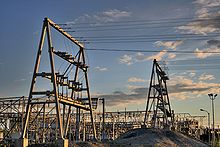
Hop in the car with me and let’s take off for the coast. I drive by something every time the foothills get too hot and I need a Monterey fix down by the ocean. I’ll show it to you.

We’ll go there Wednesday.

630. Sequel

I spent most of the summer trying out possibilities before settling on Dreamsinger as my next novel. One thing I considered was a sequel to A Fond Farewell to Dying. FFTD was set in a post nuclear war/post rising of the waters world. I wrote it before global warming became obvious, and my main character thought the flooding was due to the nukes that opened up the San Andreas fault. I don’t feel obligated to agree with him if I write another novel.

There would be several advantages in this sequel. I wasn’t done with my characters, even though FFTD had a proper closure. I had several bits and pieces of story that needed telling, but not enough to make a novel. I had a dandy idea for a third novel, if I could find a good second one to sew everything together.

In FFTD, the protagonist starts out in Ozarka, the island chain that lives in the middle of a much expanded Gulf of Mexico, but this is told as a flashback. The shattered, inundated remains of NorAm are not explored, and I felt there was a lot to see there. I wanted my old characters to fade into the background, letting me tell the next story through new eyes.

On a practical note, I’ve lived fifty years in California but only two of my novels are set there, and neither is science fiction. I know a lot of stuff that is going to waste.

So I decided to bring in a new character. He (I don’t know his name yet) is not so driven as David Singer was, but he is still a backwoods kid who has a lot to learn. That’s always useful; it lets us learn along with our character. I decided to let him grow up on an island off the coast of what is left of California, make his way across the now flooded Central Valley, spend some times in the former gold rush towns which will become seaports by his time, then head north walking along the crest of the Sierra/Cascade ranges. Up north he will come in contact with the characters from FFTD and his story will meld with theirs, but I don’t have that completely figured out yet.

I could tell you more, but at this point everything is still malleable. In fact, it is probably too soon to write this story; it needs to ferment a few more years.

Just to get a feel for this new novel, I wrote a few hundred opening words. You can have a peek at what may be coming, if you want.

==============

1.

The town I reached was a haphazard scattering of buildings up the dense green slopes of what was once the Coast Range, mostly built from sawn driftwood. At sea level were shacks and several small piers for fishermen, as well as a longer one for oceangoing vessels.

As for me, I was an invading army of one. Maybe I should say navy, since I was coming in from downcoast in the middle of a sealskin and driftwood kayak of my own making. I had left my birthtown two weeks ago, heading north to find a bigger life. Here and there I slept on islets, and cooked fish over driftwood fires, but mostly I just paddled all day with the sunrise on my right and the sunset on my left, and slept on the waters each night.

This place was not going to give me the life I wanted, but that long pier meant ships would come eventually. I beached the kayak on the open shore and dragged it into the brush, out of sight.

First things first. There were hundreds of streamlets coming down the steep, west facing slope. I picked one, walked up until I reached a waterfall, and let it sluice two weeks of grime and stench off my body. I swilled my fill of fresh water that had not spent days in a stoppered gourd. Then I walked on up the beach.

The first man I saw was a fisherman. So were the next dozen.

You could read the history and the future of the town in its architecture. There were a dozen huts on stilts paralleling the beach. The first actual houses were three hundred yards up a steep zigzag, and a hundred feet above the water.

Conclusion: from time to time a storm would wipe out everything below those houses. Prediction: someday, tomorrow maybe, or maybe ten years from now, a larger storm would wash the headland clean and this town would become a memory — if anyone survived to remember.

The first man I met looked me over and snarled, “Where did you come from?”

“Pirling. Two weeks south, out on one of the islands.”

“How’d you get here?”

“Kayak.”

His eyes ran down the beach behind me, looking, but he didn’t ask where I had hidden it. He said, “We all work here. No handouts. What can you do?”

“Anything you can do.”

#             #             #

For two weeks I worked, harder than anyone in the town. I wasn’t trying to impress anybody. It’s just that I had no friends or family, and nothing to keep me occupied but work. I slept on the beach. The sand was comfortable enough, and my boudoir was swept clean twice a day by the tide.

My body was comfortable, my belly was full, and the surly bastards I worked with never asked any questions. But my mind was trying to crawl out my ears to find something interesting to think about. Fat chance in that town.

Then a ship came. She was called Mariposa, Spanish for butterfly, a twenty-five meter schooner with a ferrocrete hull. I went aboard and looked for the skipper.

==============

His next stop will be the shattered remains of nuked San Francisco, with only Nob Hill still above the water. Maybe. Someday. If I get that far down the list of books-to-write.