
The Year That Never Ends
Once upon a time, in tenth grade, they force-fed me Dickens in the form of Great Expectations. No one should do that to a teenager. It put me off of Dickens for thirty years.
Then I discovered A Christmas Carol, and Dickens rose to the top of my pantheon. I loved the book. I loved the other four Christmas books he wrote in subsequent years. I loved the movies made from the book.
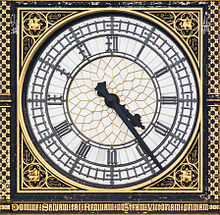
I wanted to write the next great Christmas tale. (Don’t we all?) Instead I wrote a novel that was half Dickensian and half dystopian. It centered around the Clock That Ate Time and the Great Babbage, but it did take place in a variant Dickensian London.
The immediate call to write was both visual and visceral. It was a scene from the musical Scrooge, drawn from the book and repeated in most movie adaptations. Bob Cratchit’s children are waiting for him to finish work on Christmas Eve while staring through the window of a toy shop. And what a toy shop, filled to the rafters with all the kinds of toys that rich Victorian children might be given, but which were forever out of reach of poor children like Tiny Tim and his sister. There were even mechanical wonders like the clockwork strongman who suspends himself horizontally using only one hand.
Who was the man who ran the shop? He was nothing in the story that Dickens told, but I wanted to know. Who built the mechanical man? I wanted to know. What possessed the owner to set up a shop in the poorest part of London, where none of the children staring into his windows would ever have a chance to buy his wares? I wanted to know that, too.
Yes, writers are like that. They are likely to stare at a potted rose and wonder what kind of soil is in the pot.
The novel I wrote is called Like Clockwork. The toyshop is there. It is also called Like Clockwork, and it is overfilled with mechanical wonders all created by the man who runs it. His name is Snap. He is the man who built the Clock That Killed Time, although he has lost all memory of building it. He, and everyone else in his pocket London, will live forever — but at a cost. Every Midwinter Midnight, the citizens gather around the Great Clock to watch the year 1850 end — then begin again, invariant forever.
What follows is the Prolog to Like Clockwork, in the form of a note written by Snap’s wife, Pilar of the Sorrows, as the old year closes.
— << >> —
Prolog. (Or is it an epilog?)
“Tonight Snap has gone down to the Clock for Midwinter Midnight. In just a few minutes, the reversion will occur and I will forget writing this note. It will be midnight of January first, 1850. Not next year, nor last year, but the only year there is.
“It isn’t a bad year and it isn’t a particularly good year, but if it is to be my only year, I want more.”
Pilar laid down her pen and listened, straining to hear the song they always sang at midnight:
The year that ends, but never ends,
That ‘ere again unfolds,
We live that year forever and
We never shall grow old
It was probably her imagination. Surely voices could not be heard over such a distance. She rose to move closer to a window and as she did the note she had written ceased to be. All her memories of the past twelve months ceased to be. Her body sloughed off a year of age and it was January first of the last-this-next-only year.
Again.
— << >> —
You’ll get a chance to read Like Clockwork, but not for a while. There is strategy and pacing in how I intend to release my novels, and that grand plan calls for Like Clockwork to be published no sooner than 2028.
This isn’t intended as a mean tease; its just that I wanted to acknowledge Midwinter Midnight as, unlike Snap’s world, 2025 rolls over into 2026.
 A Writing Life