Monthly Archives: February 2026

714. The Soul of the Menhir

Religion fascinates me. I had it, I lost it, and I have told that story too many times to repeat it here, but the fascination remains.

I invented a master religion in Jandrax, where Louis Dumezil wrote a compilation of all the things which religions have in common and called it the Monomythos. It was meant to end religious wars. It went through many revisions, after which religious wars were fought over which version was the correct one.

In A Fond Farewell to Dying Ram David Singh found his research impeded by those who believed in the Christian concept of a soul and by those who believed in the Hindu concept of atman.

That is the way I exercise my fascination. Whatever my personal opinion, I write about characters working out their destinies, guided by their own beliefs.

Of course, I nudge.

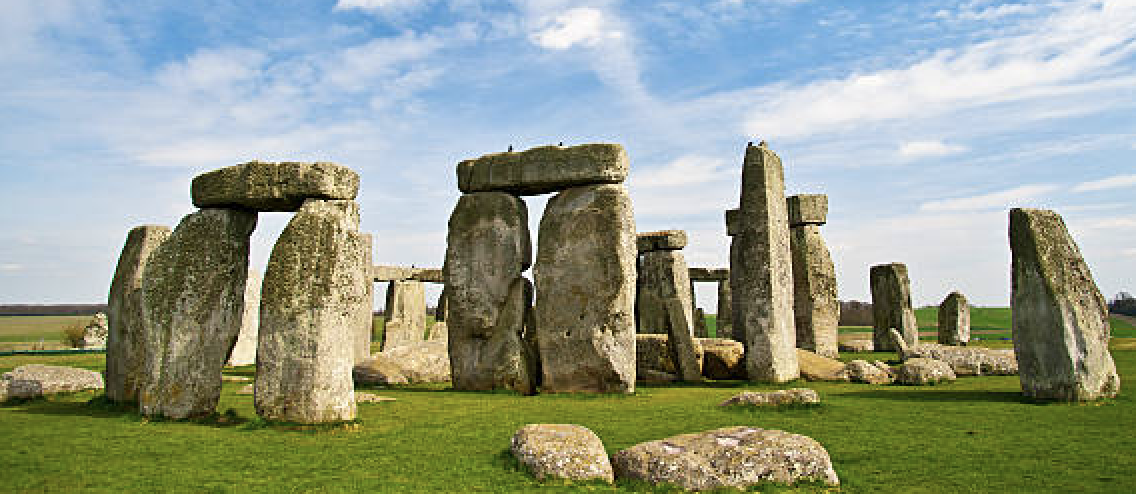
In the menhir series, menhirs are gates between worlds. (See post 710, January 28, 2026) How they are powered in the rest of the multiverse is not explained, but in the world of the menhir they are repositories of souls, and are fed by the ai (power) of the souls which are bound (enreithed) to them.

I’ll let my favorite priest, Dymal, explain further:

— <<  >> —

From Morning of the Gods . . .

Dymal paused outside the hedge and shook his head.

“Most improper,” he said and, looking at the direction the late afternoon shadows fell. He walked around to the eastern side of the thorngall hedge and pushed through. As Tidac and Cinnabar followed him, he said, “One always approaches a menhir from the direction of the rising sun.”

“We didn’t know.”

“Of course not. No harm was done. It’s just that you came in the window when you should have entered by the front door.”

Dymal stopped to survey the besh. It was rounded and lichen covered, a boulder perhaps a little under man height. He raised his hands and spoke a word, listened to the echo of his voice, then said, “Not a menhir, but certainly a stone of enreithment.”

Tidac was puzzled. His education should have included the details of menhir worship, but it had been cut short by Marquart’s death. Cinnabar knew even less, and said so.

Dymal accepted their ignorance with good grace and fell into a didactic mode of speech. “When one dies,” he said, “where does the soul go?”

“It is enreithed,” Tidac said.

“It hoovers above the body for a time,” Cinnabar said. “Then it sometimes goes into some object, or it just fades away.”

Dymal smiled as if his pupils had said something profound. A dozen years of teaching priest candidates had given him the skill of setting young ones at ease, and making the ignorant feel smarter than they were. “You are both half right and half wrong.” he said.

“No one knows where souls come from; the last great mystery is who you were before you were born. But once installed in a physical body, our soul, our essence, clings with such tenacity that not age, nor weakness, nor sorrow, nor torture can drive it out. Only death can free a soul, and in that terrible last moment it becomes abahara — bodiless. The word means disconnected, and there is no greater torment than that state.

“Thousands upon thousands of years ago, wise men discovered a way to attach those bodiless souls to inanimate stone, and give them rest. Over the millennia, as soul after soul comes to find rest in a single stone, those souls form a commingled whole — a gestalt soul, if you will. Thus a mere stone becomes a besh, as this one is.”

“But not a menhir?” Tidac asked.

“All menhirs are beshes, but not all beshes are menhirs. This one will never be more than it is. It is too far from where men now live. But in other places, as more and more souls are enreithed, the power of each soul — each soul’s ai — contributes to the ai of the besh. If this goes on long enough, the besh becomes a menhir gate, through which the powerful can pass from world to world.”

— <<  >> —

Thank you, Dymal. I’ll take over now.

Menhirs are gates between the worlds, but only in the world of the menhir are men so attached to them. They are every man’s or woman’s desired ending. Death is not particularly feared, if it is followed by enreithment and a commingling with all the souls who have gone before. However, it is much feared by travelers and soldiers, whose deaths may come too far from a menhir. They truly die. Their souls arise out of their bodies and hover in fear and agony. Over a few days they dissipate. It is the ultimate in loneliness, and those who endure it are called abahara.

But not ghosts. Once these abaharas are gone, they are gone. They do not return.

There is passage between living worlds by way of the menhirs, for those who have the personal power to compel them. There is passage into the menhirs, once and forever at death. The eternal loneliness is averted, but individual identity is lost.

There is no land of the dead for the abaharas to return from. The unenreithed are simply dead, irrevocably and eternally.

It’s a tough world. I wrote it, I enjoy visiting and watching my word-people working out their destinies, but I wouldn’t want to live there.

— <<  >> —

BACK IN POST 695 BIRTH OF A SERIES I gave my best estimate of publication dates for the Menhir series. That has been revised to:

The Morning of the Gods

May 27, 2026

Firedrake

July 15, 2026

The Lost Get

September 2, 2027

Whitethorn

October 21, 2026

The Scourge of Heaven

December 9, 2026

713. You and Me


About sixty-eight years ago I was sitting in a fourth or fifth grade classroom, learning that I should always say, “You and I,” and that I was never supposed to say “Me and you”. I didn’t know that right there in small town Oklahoma I was being given a double-whammy of British imperialism and English politeness.

I did know that every child was going to continue saying “me and you” outside the classroom, and I suspected that the teacher probably would too. Adults were always full of advice they didn’t follow themselves.

I also knew that the adults in my little town didn’t talk like the people on television, and certainly didn’t speak the same English that I was finding in all those books from the county library.

I’m not talking about accent. Books are silent. Whatever was written in them, echoed in my head in the same Okie accent that I spoke. Even the local newsman on KTUL Tulsa, who used different words in different places than the people in my town, did so in the same Okie accent.

The teacher said, “Never say me and you. Always say you and I.” The implication was, memorize it and don’t ask any questions.

It wasn’t even grammatical. Let’s assume that we keep the other person first and ourselves second — it is “you and I” if we are using it as subject, and “you and me” if we are using it as an object. They didn’t teach us that.

Putting the person spoken to before the speaker didn’t really have anything to do with grammar. It existed because America grew out of British culture, before the rest of the world arrived. Britain was a stratified society in which you kept your head down unless you were top dog.

Don’t step in front of your betters. Don’t complain if they cut in line. Don’t speak until spoken to. And put your betters first in the sentence.

Any stratified society is dangerous, because your place in the system is never permanent or safe. If you work hard enough, you can rise — but if you slack off, you will fall.

That’s for the upper strata. If you are too far down, you had better plan to stay there, or your “betters” will make you wish you had. We are referring to Brits in Britain, high caste Hindus interacting with low caste Hindus in India, or anybody White in the era of my childhood, anywhere near the South, talking to anybody Black.

Until recently, and maybe still, that also included women trying to interact with men.

The English politeness — you and me, but never me and you — is not a matter of Mary Poppins sweetness and light. It is a word to the wise. Never assert your own value in a stratified society. Never put yourself first. Those above you will slap you down if you do.

— << >> —

In that class, I was actually being taught that grammar (in the larger sense of rules of language, both acknowledged and hidden) is what language is all about. It would be years later that I realized that an equally compelling case could be made for the idea that usage is what language is all about. Finally I came to realize that it is, and probably always will be, a struggle between those two positions.

To be short and snarky, usage is what people say, and grammar is what intellectuals tell people that they should have said.

So who cares? You do, probably, if you are or want to be a writer.

Language is always changing, and one advantage of being seventy-eight and being a writer is that I have lived long enough to see it happen. A disadvantage (from the same viewpoint) is that language always seems to move toward the more simple, at the expense of the measured, the stately, and the beautiful.

I hate it. I throw metaphorical bricks at my TV screen every evening because of the way the characters are talking.

Nevertheless, the changes are real. They reflect the language people actually speak. They make up the language you readers will expect to read.

— << >> —

When I was about fourteen, I knew I wanted to go to college, and I knew that the people there were not going to speak small town Okie. I got an authoritative book of grammar, Strunk and White, and made it part of my thinking. (It didn’t help my accent, but that’s another post.)

Even then, I didn’t buy into S&W as if it were the word of God, and over the years I have found that much of their advice was not helpful. No problem. I have never read a book without muttering, “Yeah, maybe?”, from time to time under my breath.

I know now that sentence fragments are as legitimate as sentences, and are frequently a great deal more expressive. Strunk or White would slap my knuckles for that, but who cares.

Are you a writer, or a would-be writer? I can’t imagine you coming this far into this post if you aren’t. There is a great variety of English out there. Pick and choose. Make it your own. Decide who your audience is, and how far you want to go toward sounding like them.

Especially,  be prepared for more changes in the future. Like it or not, change is coming.

712. God, Trump, and the Devil

I originally wrote this post before Christmas. That’s not unusual; I always write posts early and revise them several times before they appear. In this case, you might expect that all the horrors visited on the world by Trump in Venezuela, Greenland, and Minneapolis would make my position harsher. It doesn’t, but only because this post is about the situation at the time of the last presidential election.

If those same voters still support Trump, that is a different matter.

— << >> —

The people who follow Trump are not necessarily evil. They also aren’t fools. If you disagree with them philosophically, it is all too easy to paint them blacker than they deserve.

I don’t feel that negatively about them. I understand why conservatives hate abortion. I understand why the more extreme conservatives consider it murder. It isn’t a crazy position. I would argue with them, but that doesn’t mean their positions are crazy — not even extreme.

It’s a Christian thing and I used to be a Christian. I understand it.

I hear complaints about transgender people reading to children in libraries. I understand that too, even though I don’t agree.

If God made men and women, separate and different, in the manner He saw fit, then there is no middle ground — no blurring of the genders. I disagree with that philosophy (or more properly, religious interpretation) but that doesn’t make it crazy. It doesn’t even make it extreme.

I understand why Christian conservatives would support someone who claims to oppose abortion. I can understand why Christian conservatives would support someone who tells them that there are only two sexes, so homosexuality is wrong. I don’t agree, but I understand their viewpoint.

Here is what I don’t understand.

How can Christian conservatives support Trump when he only plays lip service to what they cherish. They have deep beliefs about morality and religion. He has deep beliefs in money and power. Trump has no empathy, no sexual morality, no sense of justice, and no respect for the law.

Christian conservatives, you should consider this question — do you like him? He doesn’t like you, or anyone else but himself.

I have even heard it said that Christians should support Trump because he is doing God’s work.

Really?

Does God need the Devil to do his work for him. Don’t you think He could save the world without employing a lying, cheating, heartless, arrogant, self-serving buffoon like Trump?

That’s the Christian position I don’t understand.

Here’s what I would think, if I were still a Christian. My mind would stray from contemporary issues to the Revelation of St. John. I would think about the Beast. I would think about the Antichrist — that charismatic world leader from the final days whom everyone worships and everyone follows, but whose coming signals Armageddon.

Trump as the Antichrist? I don’t believe it — now.

But if Trump had been around when I was a Christian, it would have been the first explanation that came to mind. It makes a lot more sense than the idea of Trump doing God’s work.

711. Backstory, Cyan

Backstory — these are the things a writer has to know about his fictional universe, most of which will have happened before his actual story begins. Some is dribbled out to the reader as the story progresses. Much is never known to the reader, but remains essential nonetheless.

The novel Cyan takes place in the late twenty-first century, but it was written during the last decades of the twentieth and first decades of the twenty-first century. A lot of things changed during those decades, and so did the backstory.

When I started Cyan, the expedition to Procyon was to be mounted by an international body as a cooperative effort. As the story matured in my mind, the notion of cooperation that was so important to the creation of the International Space Station began to fade in the real world. Things got grittier on Real Earth and also on the Earth of the novel.

In that changing backstory, some joker nuked Washington, which ushered in an America First period worse than the Trump era. That wasn’t a prediction. It’s just that the Open Hand and the Closed Fist have alternated throughout American history, and I needed a dystopian, overcrowded Earth to motivate extra-solar exploration.

Cooperation was no longer an option in Cyan; an all-American crew was required. Well, almost all-American, since the new America had gobbled up some of its neighbors as I watched the backstory change.

Due in large part to a disastrous economic downturn in the mid twenty-first century, Canada allowed itself to be swallowed up by the U.S.. Mexico and most of the Caribbean were given no choice. The result was the U.S.N.A., the United States of North America, twice as big with its new capital in Chicago.

Was the downturn due to tariffs? Beats me; all this reorganization of the backstory was finished long before I had ever heard of Trump, and I thought tariffs were a dead issue. After all, they had almost destroyed the American economy during the Jefferson administration, and that was a long time ago,

If this makes Cyan sound depressing, don’t worry. All this has already happened by the time the novel opens. Our ten explorers are half way to Procyon, where none of their problems will be political — at least until their year of exploration is over and they return to Earth.

— << >> —

In the beginning, when the explorers were to be from many countries, I chose their names accordingly. By the time I started reorganizing the backstory, they had already become people to me. I wasn’t going to give up anyone, and I wasn’t going to rename anyone.

Originally Stephan Andrax was Danish, Debra Bruner was American, Petra Crowley was Greek, Keir Delacroix was French, Viki Johanssen was Swedish, Gus Leinhoff was German, Leia Polanyi was from somewhere in the South Pacific, Ramananda and Tasmeen Rao were from India, and Uke Tomiki was Japanese.

Once they all had to be citizens of the U.S.N.A., this might have posed a problem. However, we are a nation of immigrants. Even in 2026, every one of them could have reasonably come from Topeka.

Just for fun — just because I could — and just because it was one of the places I had studied, I chose to let Tasmeen and Ramananda come from Trinidad, the newly admitted seventy-first state.

Yes this is an ongoing advertisement for Cyan,

available from Amazon.