
Religion fascinates me. I had it, I lost it, and I have told that story too many times to repeat it here, but the fascination remains.
I invented a master religion in Jandrax, where Louis Dumezil wrote a compilation of all the things which religions have in common and called it the Monomythos. It was meant to end religious wars. It went through many revisions, after which religious wars were fought over which version was the correct one.
In A Fond Farewell to Dying Ram David Singh found his research impeded by those who believed in the Christian concept of a soul and by those who believed in the Hindu concept of atman.
That is the way I exercise my fascination. Whatever my personal opinion, I write about characters working out their destinies, guided by their own beliefs.
Of course, I nudge.
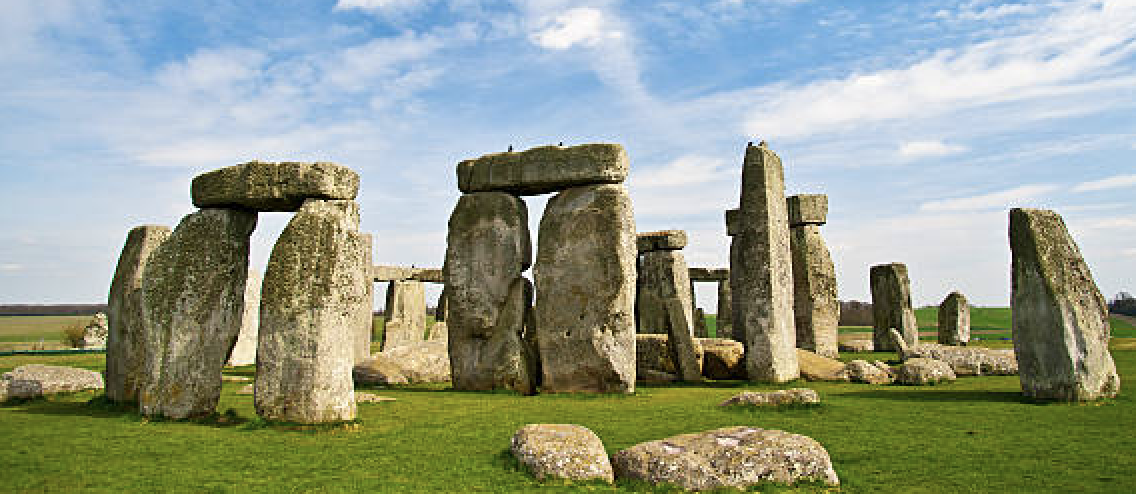
In the menhir series, menhirs are gates between worlds. (See post 710, January 28, 2026) How they are powered in the rest of the multiverse is not explained, but in the world of the menhir they are repositories of souls, and are fed by the ai (power) of the souls which are bound (enreithed) to them.
I’ll let my favorite priest, Dymal, explain further:
— << >> —
From Morning of the Gods . . .
Dymal paused outside the hedge and shook his head.
“Most improper,” he said and, looking at the direction the late afternoon shadows fell. He walked around to the eastern side of the thorngall hedge and pushed through. As Tidac and Cinnabar followed him, he said, “One always approaches a menhir from the direction of the rising sun.”
“We didn’t know.”
“Of course not. No harm was done. It’s just that you came in the window when you should have entered by the front door.”
Dymal stopped to survey the besh. It was rounded and lichen covered, a boulder perhaps a little under man height. He raised his hands and spoke a word, listened to the echo of his voice, then said, “Not a menhir, but certainly a stone of enreithment.”
Tidac was puzzled. His education should have included the details of menhir worship, but it had been cut short by Marquart’s death. Cinnabar knew even less, and said so.
Dymal accepted their ignorance with good grace and fell into a didactic mode of speech. “When one dies,” he said, “where does the soul go?”
“It is enreithed,” Tidac said.
“It hoovers above the body for a time,” Cinnabar said. “Then it sometimes goes into some object, or it just fades away.”
Dymal smiled as if his pupils had said something profound. A dozen years of teaching priest candidates had given him the skill of setting young ones at ease, and making the ignorant feel smarter than they were. “You are both half right and half wrong.” he said.
“No one knows where souls come from; the last great mystery is who you were before you were born. But once installed in a physical body, our soul, our essence, clings with such tenacity that not age, nor weakness, nor sorrow, nor torture can drive it out. Only death can free a soul, and in that terrible last moment it becomes abahara — bodiless. The word means disconnected, and there is no greater torment than that state.
“Thousands upon thousands of years ago, wise men discovered a way to attach those bodiless souls to inanimate stone, and give them rest. Over the millennia, as soul after soul comes to find rest in a single stone, those souls form a commingled whole — a gestalt soul, if you will. Thus a mere stone becomes a besh, as this one is.”
“But not a menhir?” Tidac asked.
“All menhirs are beshes, but not all beshes are menhirs. This one will never be more than it is. It is too far from where men now live. But in other places, as more and more souls are enreithed, the power of each soul — each soul’s ai — contributes to the ai of the besh. If this goes on long enough, the besh becomes a menhir gate, through which the powerful can pass from world to world.”
— << >> —
Thank you, Dymal. I’ll take over now.
Menhirs are gates between the worlds, but only in the world of the menhir are men so attached to them. They are every man’s or woman’s desired ending. Death is not particularly feared, if it is followed by enreithment and a commingling with all the souls who have gone before. However, it is much feared by travelers and soldiers, whose deaths may come too far from a menhir. They truly die. Their souls arise out of their bodies and hover in fear and agony. Over a few days they dissipate. It is the ultimate in loneliness, and those who endure it are called abahara.
But not ghosts. Once these abaharas are gone, they are gone. They do not return.
There is passage between living worlds by way of the menhirs, for those who have the personal power to compel them. There is passage into the menhirs, once and forever at death. The eternal loneliness is averted, but individual identity is lost.
There is no land of the dead for the abaharas to return from. The unenreithed are simply dead, irrevocably and eternally.
It’s a tough world. I wrote it, I enjoy visiting and watching my word-people working out their destinies, but I wouldn’t want to live there.
— << >> —
BACK IN POST 695 BIRTH OF A SERIES I gave my best estimate of publication dates for the Menhir series. That has been revised to:
The Morning of the Gods
May 27, 2026
Firedrake
July 15, 2026
The Lost Get
September 2, 2027
Whitethorn
October 21, 2026
The Scourge of Heaven
December 9, 2026
 A Writing Life