
Author Archives: sydlogsdon

The First Surveyor

hiatusDuring this last week of the year, I’m taking a hiatus, sort of, by placing some of my favorite poems instead of things I have written. My fantasy short story Prince of Exile will begin here the first full week of next year.

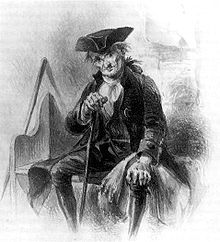
A. B. Paterson, Australian poet, is often called Banjo Paterson because he signed his poetry with a picture of a banjo during his early days as a newspaper writer. Australian egalitarianism carries with it overtones of hidden conflict, between urban and outback, between privileged and unprivileged, and between pioneers and the late comers who often, as in this poem, had no understanding of the ones who came before them.

The First Surveyor

“The opening of the railway line! — the Governor and all!
With flags and banners down the street, a banquet and a ball.
Hark to ’em at the station now! They’re raising cheer on cheer!
‘The man who brought the railway through — our friend the engineer.’
They cheer his pluck and enterprise and engineering skill!
‘Twas my old husband found the pass behind that big red hill.
Before the engineer was born we’d settled with our stock
Behind that great big mountain chain, a line of range and rock —
A line that kept us starving there in weary weeks of drought,
With ne’er a track across the range to let the cattle out.

“‘Twas then, with horses starved and weak and scarcely fit to crawl,
My husband went to find a way across the rocky wall.
He vanished in the wilderness — God knows where he was gone —
He hunted till his food gave out, but still he battled on.
His horses strayed (’twas well they did), they made towards the grass,
And down behind that big red hill they found an easy pass.

He followed up and blazed the trees, to show the safest track,
Then drew his belt another hole and turned and started back.
His horses died — just one pulled through with nothing much to spare;
God bless the beast that brought him home, the old white Arab mare!
We drove the cattle through the hills, along the new-found way,
And this was our first camping-ground — just where I live today.

“Then others came across the range and built the township here,
And then there came the railway line and this young engineer;
He drove about with tents and traps, a cook to cook his meals,
A bath to wash himself at night, a chain-man at his heels.
And that was all the pluck and skill for which he’s cheered and praised,
For after all he took the track, the same my husband blazed!

“My poor old husband, dead and gone with never a feast nor cheer;
He’s buried by the railway line! — I wonder can he hear
When by the very track he marked, and close to where he’s laid,
The cattle trains go roaring down the one-in-thirty grade.
I wonder does he hear them pass, and can he see the sight
When, whistling shrill, the fast express goes flaming by at night.

“I think ‘twould comfort him to know there’s someone left to care;
I’ll take some things this very night and hold a banquet there —
The hard old fare we’ve often shared together, him and me,
Some damper and a bite of beef, a pannikin of tea:
We’ll do without the bands and flags, the speeches and the fuss,
We know who ought to get the cheers — and that’s enough for us.

“What’s that? They wish that I’d come down — the oldest settler here!
Present me to the Governor and that young engineer!
Well, just you tell his Excellence, and put the thing polite,
I’m sorry, but I can’t come down — I’m dining out tonight!”

68. Nostalgia

Dec 25thAs a sort of disclaimer, let me assure you that Christmas Day, and the season that precedes it, is my favorite time of the year. I love everything about it, but that doesn’t keep me from also seeing it slantwise.

“It’s coming on Christmas, they’re cutting down trees . . .” It seems to be a sad and bitter beginning, but Joni Mitchell’s River is all about nostalgia, and so is American Christmas in the twenty-first century.

This goes deeper than surface appearances. The obvious nostalgia is for rural life and all its simplicities – clean snow, red barns, white farmhouses and a one horse open sleigh. In reality, there is nothing nostalgic about walking to the barn in the pre-dawn darkness to face three hours of chores at five below zero. Never mind; when I see that perfect scene on a Christmas card, I want to be there. Childhood memories of frozen feet don’t stand in the way.

Christmas literature today has come to mean movies. I know that there are new Christmas books every year, but they all seem to fall into a soupy genre I can’t bring myself to read.

Among movies, the original is A Christmas Carol, in all its iterations. It stands alone, a whole genre all by itself, and there is no nostalgia in it. No one wants to go back to the age of “prisons, and Union workhouses”, cold, hunger, and early death. Instead, the story is about the change in Scrooge as he considers the horrors faced by those around him, many of which are his own fault. The horrors don’t go away, except for the few people Scrooge can help, but Scrooge himself is redeemed.

Recently, there have been a spate of TV movies all asking, “will the girl get the guy by Christmas”? I leave them with that soupy genre of books, readily available for those who can stomach them, after pointing out that they have nothing to do with Christmas.

The rest of Christmas movies fall into one category, with one masterplot. They range from silly to profound, but they all have this in common: Santa is accused of assault, or loses his memory, or decides that he doen’t want to be Santa any more, or Santa Jr. doesn’t want to take over for Santa Sr..

Santa, and/or those around him, are on the verge of losing faith, but they are saved at the last minute by _______. Choose a crisis and a salvation, and write you own screenplay.

Don’t get me wrong. I love these films; I watch them all season. They have to be really bad for me to turn one off. But what is the one thing are all these movies nostalgic about? Faith, of course, which so many people today are clinging to by their fingernails.

If Santa stands in for Jesus – and even those who wish he didn’t, know that he does – then every time Santa once again proves himself to be real, that version of Christianity which proposes a warm, loving, all seeing, yet forgiving God is reaffirmed.

Those who are afraid to doubt out loud can sit back and let Santa, acting as a stand-in, reaffirm their faith.

I’ll buy in. For another Christmas season I will set aside my unbelief and bask in the feeling that someone out there will make all things come right.

Now get out from in front of the television; Miracle on 34th Street will be on in twenty minutes.

Symphony Christmas, 10 of 10

Because I intend to publish the novel from which this excerpt comes, Symphony Christmas will not be placed in Backfile.

Neil and Carmen are delivering a present to Rosa at her apartment.

Rosa’s little sisters were staring at Neil, wide eyed and unabashed. He shifted nervously from one foot to the other, painfully aware of the brightly wrapped package under his arm. The Alvarez’s were nice people; he could deal with them in a school setting where formality gave a pattern for their interaction. Here, he did not know what to do.

Language was not the problem; Carmen could translate. The problem was culture. Should he sit down? Should he expect a cup of coffee? If they offered him one, would they expect him to take it or to refuse? Would they be insulted if he refused? Should he treat Carmen as an equal, or take charge of the conversation? Should he come right to the heart of the business and give the gift, or would it be more proper to talk a while first? If he were in the home of any of his Anglo kids, no matter how rich or poor, he would not have been so much at a loss.

Carmen sensed his discomfort and took charge. She spoke to Mrs. Alvarez in Spanish. Although Rosa’s mother spoke fair English, she was more comfortable in Spanish, and it let Jose share in the conversation. Then Carmen said, “Give her the package.”

Neil held out the package to Rosa and said, “Merry Christmas.” For the first time, Rosa and her parents allowed themselves to become aware of its existence. Before that moment, only the younger children had stared at it.

Rosa held it in her hands for a long time, admiring the paper. “Its really pretty,” she said.  Neil wondered if she would open it now or at Christmas, but he had no way of asking without appearing pushy.

Then Carmen said, “Go on, Rosa. Open it.” Rosa tore off the paper, pulled open the box, and extracted the jacket. Her face was full of hesitation. She loved it, but she wasn’t quite sure it was really hers until Neil said, “Go ahead, see if it fits.”

Rosa spoke to her mother – asking permission? – before she slipped it on. Her face lit up as she smoothed the fabric around her. Then she had to ask; she had to be sure. She said, “Is it for me?”

“It’s yours,” Neil assured her. He started to add that Carmen had picked it out, but his good sense stopped him. It would detract from the moment, so he remained silent while she showed it to her parents. Rosa’s father crossed to Neil and shook his hand again, mumbling something in Spanish of which Neil only caught, “Gracias.”

Rosa’s mother said, “It is really nice, but you shouldn’t have.”

Neil looked at Rosa’s beaming face and said, “I wanted to.”

Things had gone well so far; it was time to retreat before he said something clumsy to ruin everything. Neil made a tiny motion toward the door and Carmen spoke to the Alvarez’s in Spanish one more time, then took Neil’s elbow and eased him toward the door as the conversation bounced back and forth between her and Rosa’s mother.

Rosa and her mother followed them out onto the stoop, then Rosa made a quick, shy motion forward and threw her arms around Neil’s waist for a moment. She said, “Thank you, Mr. McCrae.”

Her heart was in every word and her voice made it a song.

Neil and Carmen drove away in silence. Neil was not a man to accept gratitude easily; it made him uncomfortable, and out of his discomfort he said, “Giving her a jacket won’t change her life.”

Carmen was beginning to understand him. She recognized the source of his uneasiness. She replied, “Giving her a jacket won’t change her life, but knowing that you cared for her might.”    finis

67. ‘Twas the Night . . .

220px-Diedrich_Knickerbocker

Everybody reads Washington Irving in college because he is IMPORTANT. Almost nobody reads him afterward for pleasure. Sleepy Hollow and Rip Van Winkle live in our racial memory, but nobody actually reads the stories.

I tried to read Knickerbocker’s History of New York and liked it as far as I got. However it was a satire disguised as a history, so I couldn’t enjoy it as fiction and I couldn’t trust it as history. My pleasure died of whiplash.

What does this have to do with Christmas? A great deal, actually. In his “history”, Irving included a dream in which

St. Nicholas came riding over the tops of the trees, in that self-same wagon wherein he brings his yearly presents to children

This is apparently the first introduction into American society of Sinterklass, the Dutch version of St. Nicholas from which our Santa comes. Others took up the banner. We will look at them below, but first let’s see what else Washington Irving did for Christmas.

In 1815, Irving moved to England, and five years later published his Sketch Book. Five of the chapters from that work, frequently published separately today as Old Christmas, extolled the nostalgic joys of the old, rural Christmas traditions of England. Widely read in the United States, it was instrumental in giving Christmas respectability at a time when it was reviled by the religious establishment and degenerating into drunken rowdyism among the working classes. 

Irving was a prominent member of the Knickerbockers, a conservative group opposed to the rise of the mob – that which most of us call democracy. They were particularly horrified by the excesses and vandalism of Christmas as it was practiced at that time. They worked to move the center of celebration from the street to the home.

In 1809, Irving published his History on St. Nicholas’ day. In 1810, the Knickerbockers released a broadside extolling St. Nicholas for his bringing of presents to good little girls and boys – and punishment to the rest. A poem about him appeared that same year. I won’t inflict all of it on you, but the last two lines tell you enough.

From naughty behavior we’ll always refrain,
In hope that you’ll come and reward us again.

Twelve years later another poem called the Children’s Friend was published, with “Santeclaus driving his reindeer o’er chimneytops” and giving gifts to the good little children, but still leaving a switch for the parents to use on the rest.

There is little question that Clement Moore, a Knickerbocker since 1813, knew Knickerbocker’s History, Old Christmas, and both poems when he wrote a poem of his own combining all the happy elements and leaving out the preaching and punishment.

A Visit from St. Nicholas, which we usually call ‘Twas the Night Before Christmas, was the result. Ironically, a group of grumpy, nostalgic elitists who loved order and discipline and hated democracy, eventually gave us a poem which would enthrall children for the next two hundred years.

*     *     *

The poem Children’s Friend is just good enough to be amusing rather than repulsive. You can see a facsimile of an original copy at http://pastispresent.org/2009/good-sources/christmas-treasures-flip-through-the-pages-of-the-children%E2%80%99s-friend/ .

Here it is in plain type. I would be surprised if you like it, but it may give you a greater appreciation of what Clement Moore made of the same materials.

Children’s Friend

Old Santeclaus with much delight
His reindeer drives this frosty night.
O’er chimneytops, and tracks of snow,
To bring his yearly gifts to you.

A steady friend of virtuous youth,
The friend of duty, and of truth,
Each Christmas eve he joys to come
Where love and peace have made their home.

Through many houses he had been,
And various beds and stockings seen,
Some, white as snow, and neatly mended,
Others, that seem’d for pigs intended.

Where e’er I found good girls or boys,
That hated quarrels, strife and noise,
I left an apple, or a tart,
Or wooden gun, or painted cart;

To some I gave a pretty doll,
To some a peg-top, or a ball;
No crackers, cannons, squibs, or rockets,
To blow their eyes up, or their pockets.

No drums to stun their Mother’s ear,
Nor swords to make their sisters fear;
But pretty books to store their mind
With knowledge of each various kind.

But where I found the children naughty,
In manners rude, in temper haughty,
Thankless to parents, liars, swearers,
Boxers, or cheats, or base tale-bearers,

I left a long, black, birchen rod,
Such as the dread command of God
Directs a Parent’s hand to use
When virtue’s path his sons refuse.

Yeah, me too! Same as you, I’ll stick with The Night Before Christmas.


Symphony Christmas, 9 of 10

Because I intend to publish the novel from which this excerpt comes, Symphony Christmas will not be placed in Backfile.

Carmen has asked Neil why he hesitates to give the jacket he has purchased directly to Rosa.

He shrugged.

“Have you been out at the apartments?”

“I drive by them every day, but I’ve never been in one of them.”

“Why not?”

“I’ve never had reason to go. I’ve never been in one of my rich kids’ homes, either.”

“Don’t you want to see how they live?”

“Yes,” Neil admitted, “I really do, but I don’t want to look like big bwana coming in to look at the native village.”

Carmen shook her head in mild dismay. “Neil,” she said, “I think you’re more ashamed of their poverty than they are.”

*****

Christmas inched closer. The children were ready for vacation and their attention wandered at any excuse. Juan Rogers went back to Mexico for the winter, and Joaquin Velasquez followed three days later. Attendance had never been great at Kiernan; by the week before Christmas, it was not uncommon for one fourth of the students to be gone on any given day. Neil preached the values of school attendance and all but tore his hair out in frustration; it did no good.

The children’s minds went on vacation a week before their bodies were allowed to follow.

*****

Carmen drove by to pick Neil up at six. His own car was packed to drive to Oregon in the morning, so he tossed the colorfully wrapped present into her back seat and they went out to dinner. Afterward, she drove him out to the Oaks Apartments.

The scene was forlorn. Neil had seen this place twice each day as he drove to and from work, but he had never turned in. Two sycamores, a giant and its still considerable smaller brother, grew in the courtyard between facing rows of small apartments. The structures were of concrete block, two stories high with an open walkway at the upper level. There were four apartments on each side in each level; sixteen in all. It looked as if it had been a motel some time in its early history. The grass was still green and trimmed, even at Christmas time. The ragged palms out front were immune to the changing seasons, but the sycamores were bare.

Someone had wrapped the swing set in tinsel garland, and there were decorations in some of the windows. No children played outside so late on a winter evening.

When Neil got out of the car, he could see his breath. It was in the forties, which was about as cold as Modesto got. It would seem mild to an easterner, but to a little girl without a jacket, it would be just plain cold. Neil reached into the back seat and picked up the package. Carmen led the way without hesitation; she knew most of the families here.

The door opened to her knock, and Maria Alvarez appeared. She spoke with Carmen in fluid, rapid Spanish, then drew the door open and motioned them in. Neil stepped into the living room and looked around. Jose Alvarez was a slim, dark man in jeans and an undershirt. He got up swiftly and shyly from his place in front of the television and looked at his wife, who said something to him in Spanish. Neil could only understand a few words. Jose offered a brief, limp handshake, yelled, “Rosa!”, and spoke sharply to his younger daughter, who quickly turned down the volume on the TV.

Rosa came out of the kitchen dressed in ragged jeans and a faded sweat shirt. Her face lighted at the sight of Neil and Carmen, then fell instantly. Was she embarrassed by her house or her parents? Neil could not read her. Wherever it came from, the expression was chased away a moment later by shy happiness. Rosa took her mother by the elbow and spoke rapidly, gesturing toward Neil. Her mother nodded vigorously and smiled at Neil again. She took his hand in a longer handshake and said, “Gracias. Thank you. Rosa says you are helping her get better every day with her English. We know how important that is.”    continued

66. Five by Dickens

DSCN3975 Everybody knows the story of Scrooge. Everybody from Alistair Sim to the Muppets to his namesake duck has played him. I won’t waste your time talking about the story, but have you read him?

Everybody knows Dickens, but did you like him when you met him? I didn’t, in high school. Great Expectations was the most boring, pointless, excruciatingly unending experience of my reading life. My only expectation was that it had to end eventually, and my only hope was never to have to read Dickens again.

A Christmas Carol isn’t like that at all. It is a joy to read.

Marley was dead, to begin with. There is no doubt whatever about that. The register of his burial was signed by the clergyman, the clerk, the undertaker, and the chief mourner. Scrooge signed it. And Scrooge’s name was good upon ‘Change for anything he chose to put his hand to.

You can’t beat writing like that. And it’s short; it makes its point and shuts up.

There seems to be something magical, or at least natural, about novella length. A Christmas Carol and The Old Man and the Sea were both novellas, and either would have been destroyed if it had been stretched out to novel length.

(TOM&TS a novel? Forfend! You’d need the heart of a bookseller to make that claim.)

Dickens was in financial and artistic trouble when he wrote A Christmas Carol and it was the making of the rest of his career. You can get the whole story of its origin from either The Man Who Invented Christmas by Les Standiford or Inventing Scrooge by Carlo De Vito.

A Christmas Carol was prefigured by the story of Gabriel Grub, chapter 29 of The Pickwick Papers, a story within a story which is often reprinted separately today under the title “The Story of the Goblins Who Stole a Sexton.” Old Grubb was so miserable that he chose to spend Chrismas night in a graveyard to avoid human contact. Goblins caught him there and put him through miseries which led to his redemption. The parallel is obvious.

After the ringing success of A Christmas Carol, Dickens wrote another Christmas novella during each of the succeeding four years. These five little books were published together during Dickens lifetime as Christmas Books. That version, with original illustrations, is avaliable from the series The Oxford Illustrated Dickens.

That volume often appears in bookstores seasonally, but you don’t have to seek it out. There will be some kind of Dickens Christmas collection every year. I have in front of me A Christmas Carol and other Christmas Classics, 2012, Fall River Press, which has the five novellas and seventeen other Dickens seasonal stories. Again, however, there is nothing special about any particular version. The stories have been around a hundred and seventy years and they don’t change.

Yesterday, I saw this year’s version in Barnes and Noble, leather bound, red, with gold and white pen style illustrated cover. This version is called A Christmas Carol and other Christmas Stories. It looks like the kind of book you would put in the living room to impress your snooty guests, but the stories inside don’t care about the cover.

As a point of honesty, I slipped into the B&N website just now to confirm my memory. This version was the 300th book that came up when I searched Dickens Christmas. Obviously more people buy Dickens than read him.

A few years ago I decided to read one of the other stories each year at Christmas time. That isn’t as logical as it seems, since Christmas is not a time of leisure. I eventually got through three and a half of the other four. I read The Chimes first and enjoyed it. It was something of a Christmas Carol reprise, and not as good as the original, but worth reading. A Cricket on the Hearth was once the most popular of these books. I didn’t get through it, not because I wasn’t enjoying it, but because that was the year time did me in. I still plan to read it someday. Maybe June would be better. The other two were worthwhile but not earth shaking.

For the sake of completeness, the Dickens Christmas books, in order, are:
     A Christmas Carol
     The Chimes
     A Cricket on the Hearth
     The Battle of Life
     The Haunted Man

Symphony Christmas, 8 of 10

Because I intend to publish the novel from which this excerpt comes, Symphony Christmas will not be placed in Backfile.

They left together in Carmen’s car because they had a date to do some Christmas shopping at the mall. Neil had to get gifts for his mother and grandfather because this year school was running all the way to the twenty-third. He would have a day to drive to Oregon and no time to shop once he got there.

While they were walking through J. C. Penney’s, Neil said, “You know Rosa Alvarez?”

“Sure.”

“If you had to, could you pick out clothes that would fit her?”

“I guess so. Why?”

“She’s kind of chubby.”

“I know what she looks like. Why did you ask if I could pick out clothes for her?”

“Do you think her parents would mind if I bought her a jacket? She has been coming to school without one and it is really getting cold in the mornings.”

“I’m sure they wouldn’t mind, Neil. I could let them know so they won’t buy her one for Christmas, if they had planned to. When did you decide to do this?”

Neil shrugged, feeling embarrassed for no good reason. “I don’t know, she just looks so miserable every morning. She always heads for my room to warm up.”

Carmen smiled. “She doesn’t come there just to warm up. You have a fan club.”

That embarrassed Neil even more and Carmen laughed again.

She bought the jacket for him. It was nothing Neil would have chosen, but she assured him it was stylish as well as warm. He bought lesser presents for a dozen of his other students whose parents were poor. Carmen said, “Can you afford all this?”

“The only other people I have to buy for are my mother and grandfather.”

“And me!”

“Well, that goes without saying.”

“Say it anyway.”

He faced her suddenly and drew her back between some racks of clothing. His face was serious as he said, “Carmen, you are very precious to me. If I haven’t said it before, I’m saying it now.”

“Wow!” She put her hand on his chest and kissed him quickly. Then she pulled away and said, “People are looking. I don’t want the kids to catch us necking behind the lingerie.”

Neil was a little hurt by her response, until he saw moments later that she was wiping a tear from her eye. Sometimes – often – he didn’t know what to make of her.

“Carmen, I don’t want to give these presents at school. I don’t like to have the other kids feel that I’ve singled some of them out. Can you help me see that they get them?”

“Do you want to take them to their homes?”

“I’d rather stay behind the scenes. Could you see to it that they get them? Or I could take care of the little ones, but would you see to it that Rosa gets the jacket?”

“Why don’t you do it yourself?”

“I don’t want to intrude.”

She looked closely at him and said, “Are you sure that’s the reason?”    continued

65. Winter Solstice

DSCN1841The calendar says “first day of winter”. The astronomically inclined say “winter solstice”. Since this is the day that the sun appears to be as far south as it ever gets, it bothers me sometimes that the first day of winter (speaking with a northern hemispheric bias) comes when, by the sun, winter should be half over. That feeling comes of having a certain kind of over-picky mind; pure experience, of the shivering kind, recognizes that there is a delay effect in seasonal changes. Meterologically speaking, the phrase “first day of winter” fits pretty well. It’s going to get a lot colder before it gets warmer again.

What if it didn’t get colder, or warmer? What if we had no seasons? What would that do to your heating and cooling bills? What would it do to your wardrobe? Would you even wear clothing?

It’s easy enough to arrange; just choose a planet with no axial tilt. Like Cyan.

Late in the novel Cyan, while some of the scouts are on a rescue mission to save a group of Cyl (non-human natives) by transferring them to the southern hemisphere, we get a detailed picture of what Cyan looks like.

In the cockpit, Debra was alone with her thoughts while Tasmeen attended to piloting the landing craft.  The sky outside was black with stars. She had never expected to see the stars from space again. Beneath them, Cyan spun lazily. Clouds blanketed various portions of the temperate zone where humans lived, and only a bit of the torrid zone which was the domain of the Cyl. Further north than that, where Keir and the children were, clouds massed high and storms raged.

The lower latitudes passed beneath them. This was the band of eternal desert, where every island and fragment of a continent was dry lifeless rock studding a lifeless sea. There were few clouds here, but ahead of them now was the equatorial cloud band. The heart of the great heat engine that was Cyan, where the water steamed in the relentless light of Procyon A, pumping moisture into the atmosphere and sending it northward and southward, over the lifeless bands too hot for coalescence and on up toward the dry Cyl lands and the wet human lands and the great snowcapped poles.

They passed the clouded equator, the southern dead zone, spiraling down toward the southern torrid, the zone where neither Cyl nor man had ever set foot, and where the Cyl could live secure from the depredations of man.

Aside: Cyan was originally scheduled for publication in January, but has been pushed back to April or May.

Symphony Christmas, 7 of 10

Because I intend to publish the novel from which this excerpt comes, Symphony Christmas will not be placed in Backfile.

The morning after his candy trick, Stephanie had come to him with a proposition. Her church collected cans for the needy every Christmas. She thought their class should do the same thing.

Neil thought it was a wonderful idea. He called Mrs. Hagstrom and discussed it with her to make sure that the parents would not have any objection. The biggest problem Stephanie’s project presented was identifying the needy in the community and getting food to them without putting them in the spotlight.  Fortunately, Delores Zavala had lived in the district all her life and knew every adult, child, car, cat, dog, and everyone’s financial condition. She proved invaluable and Stephanie turned out to be an eleven year old dynamo. Within three days she had organized all her friends, and their friends, and their friends. That meant every child in the sixth grade. Two weeks after the idea was born, there was a seven foot stack of canned goods in the corner of Neil’s classroom.

*****

December was a busy month for them all, but particularly for Carmen whose mother became ill and began to take all her spare time. After two weeks Carmen was looking tired and complaining that she wasn’t getting any Christmas shopping done. Neil offered to sit with her mother to give her an evening off. Carmen accepted and Neil found, to his surprise, that Maria de la Vega spoke no English. Carmen had been so much at ease in her job, and so confident in the world she shared with him, that he had assumed her family was educated and English speaking.

He ended up having a great time. Mrs. de la Vega was past the worst of her illness and her zest for life had returned. She waited until Carmen had gone out, then got up and cooked Neil a delicious Mexican meal, ignoring his protests, and carrying on a one sided conversation in Spanish. Only their gestures and laughter were bilingual.

Carmen chewed him out royally for letting her mother out of bed. Neil said, “How was I to stop her?  Carmen had to admit that it would have been impossible.

Several days later, Carmen came in to see his can tree. She had only just heard of it from Delores. She said, “Why didn’t you tell me what you were doing? I would have ben glad to help.”

“I really didn’t do that much,” Neil explained. “Stephanie Hagstrom and her mother were the force behind it, and Delores agreed to do the distribution for us.”

“How did you ever get it started? I’ve tried to get my seventh graders to have some social conscience all year, and I’ve gotten nowhere.”

Neil explained about the candy trick. She said, “Good. Good. We need more of that kind of thing.” Then she gave him a dazzling smile, looked around to see that no students were near, and gave him a quick kiss.

“”What was that for? Not that I’m complaining.”

“That, Neil McCrae, is because you are a nice guy.”

“It took you long enough to notice.”

Her gaiety went away. Neil said, “What’s wrong?”

“Nothing. I don’t want to talk about it.”

“Are you sure?”

She nodded. “Someday I will,” she promised, “but not just now.”   continued

Symphony Christmas, 6 of 10

Because I intend to publish the novel from which this excerpt comes, Symphony Christmas will not be placed in Backfile.

Elanor has just realized something the other kids missed.

Elanor beamed.

Stephanie half raised her hand, withdrew it, then raised it again. Neil was pleased at this crack in her normal self-confidence. He nodded, and she said, “I guess it was fair that you gave the poor kids more candy. But now you said you are going to make it all even.”

“That’s right, I am. I do like to be fair.”

Stephanie squirmed in a perplexity of near understanding. Every atom of her body was involved in the moment. She said, “But then – why did you do it?”

“I didn’t do it for the poor kids.”

She just shook her head. She still didn’t get it.

“I did it for the rich kids.”

She was still blank, but trying so hard to understand.

“I did it so the kids who always get everything could just once, in one tiny way, know what it feels like to see others get something they want while they get nothing.”

Neil instructed his class to evaluate the lesson. If they wanted, they could look at it like Mr. Campbell would, or they could tell how it had affected them personally. Most of them wrote willingly; kids always do when they have something they really want to say.

That night he read their papers. Stephanie had said:

I always get a lot for Christmas and for birthdays. I always say thank you to my parents. I really do appreciate them. They are very good to me and I know it. 

Sometimes I see other kids parents being mean to them. They won’t let them play baseball or buy them things and I think how sad it would be to be like that. But sometimes I guess they don’t have much choice. Like if they have lost their jobs and they don’t have much money. I think it would be sad to live like that and I am glad my Daddy has a good job so we can live in a nice house and have nice things.

Your class made me see what it would be like to not have anything and to see other people get things. I wouldn’t like that, but I guess I needed to see it, so thank you Mr. McCrae for showing me.

Rosa had written:

We used to have alot at Christmas until my daddy lost his job, but we are still luky I guess cause we have more than some other poeple have  We hav plenty to eat even if it is beans alot of the time.  I like beans anyway  and if I don’t get nothing for chirismas this year thats alright because I got alot last year.

It would be easy, Neil thought, to see Stephanie as spoiled and Rosa as some kind of angel, but that wasn’t so. They were both just sweet eleven year old girls who hadn’t had much experience in the world. Giving them some of that experience was Neil’s job.    continued