Monthly Archives: April 2026

721. Learning from the Masters


Much of what has appeared in this blog over the years has been how-to for writers and would-be writers. Those posts have been gathered, reconsidered, sometimes condensed, sometimes expanded, and placed between the virtual covers of two books.

The first book, Learning from the Masters, is a compilation of some of the things I have learned from a lifetime of reading. It is partly a thank you to those who came before me, and it could form a long, annotated to-read list. You could do worse than to look up these old guys (and gals) as your next reads. There is a note below that will tell you more. Learning from the Masters is scheduled for release on March 17, 2027, a little less than a year from now.

The second book, So You Want to Write Science Fiction, is more personal, primarily consisting of things I have learned myself through fifty-plus years on the edge of the publishing industry. It is due for release on July 7, 2027. There will be a heads-up like this one on July 8th of this year to remind you.

— << >> —

What follows here is a note I wrote a few months ago, for inclusion at the beginning of Learning from the Masters. If you were born after 1990, this note is for you.

This book is called Learning from the Masters. You don’t get to be a Master overnight. Even if your first book is a masterpiece, it will probably be decades before they call you a Master.

Most (not all) of the Masters in this book are dead. That doesn’t make them obsolete. Even if you are reading this on your smart phone, you should remember that these visionaries were the primary builders of the world that made that smart phone possible. Even though they lived in your past, their minds lived in the future. Most of what they envisioned is yet to come — unless one of the violent ends to modern culture that they also envisioned happens first.

When they wrote is less important than what they wrote.

There are Masters at work today, and many of them have already been anointed with that title. Some will still be called Masters by your children; some will be forgotten. A few of them are in this book, but the bulk of those I have included are the Masters who helped form my writing life.

My early life was lived with one foot in the past and one foot in the future. I was born in 1947 — a little closer to 1900 than to 2000, and much closer to 1900 than to the publication date of Learning from the Masters..

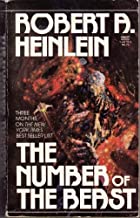
When I was thirteen, standing in the dairy barn, shoveling cow manure out the door, my soul wasn’t grounded in the muck at my feet. It was riding a multi-colored variform horse across the plains of Arzor in memory of the Andre Norton novel I had been reading the night before. Or it was on the way to the outer planets with the family Stone in a novel written by Heinlein

The Masters in this book, no matter what era they were writing in, faced the same challenges that writers face today. Plot, characterization, backstory, readership, changing tastes, censorship, publication and how to attain it — the questions never change, although the answers often do.

If you are a writer, or want to be — and why would you read this book (or this blog) if you didn’t — these men (and a few women) faced the same challenges you are facing now. Shouldn’t you be . . .

Learning from the Masters

Due for release on March 17, 2027.

720. Where Good Men Have Gone Before

I never thought it would happen, but NASA proved me wrong. Good for them.

I was a space enthusiast from age 10, when space was impossible. I never lost my fervor. Coming home from our honeymoon a decade later, my wife and I went to her old college dorm to find a television and watched the Apollo 11 landing, surrounded by a crowd of enthusiasts.

Three and half years later, the glory was over. Manned exploration was over. We flew space shuttles, but only in low Earth orbit. We built a space station — two actually, and the Russians built many. Still, manned exploration was over. We were not-so-boldly going where Mercury and Gemini had gone before, but nobody was going where Apollo had so recently gone.

Then came NASP, Venturestar, and Project Constellation, phantom programs that promised new explorations, but died stillborn. By the time Constellation morphed into Artemis, I had given up — not on space exploration, but on the politicians who make it happen. Or don’t make it happen.

<< — >>

The rest is part of a post I wrote 45 years after the liftoff of the last Saturn. These were Gene Cernan’s words on leaving the moon at the end of Apollo 17.

“We leave as we came, and, God willing, we shall return, with peace and hope for all mankind.” 

<< — >>

On December 7, 1972, at 12:33 AM Eastern Time, the last manned moon flight took off from Cape Canaveral.

Apollo was a stunt from the get-go. Kennedy’s speech set a goal of landing a man on the moon and returning him safely to the Earth within the decade. If we had failed, it would be laughed at today as just another empty promise made by a politician.

One man laid down the challenge and thousands of men and women carried out the promise.

But it was still a stunt. When Kennedy made his speech on May 25, 1961, Russia had put a man into orbit. We had not, although we had managed a sub-orbital flight. NASA had only been in existence for three years. By any real or imagined yardstick, the Russians were far ahead in space.

By herculean efforts, NASA forged ahead through Mercury and Gemini. The fire aboard “Apollo One” set American efforts back significantly, and when launches began again, it looked like the Russians were going to land on the moon first.

Something had to be done. That something was the Apollo 8 journey to and around the moon, without a lander, for the Christmas season of 1968. We could claim to have been to the moon first (by an ad-man’s stretch of the truth), even if the Soviets became the first to land.

The Russian program faltered. Apollo 11 landed a man safely on the moon, and returned him safely to the Earth.

Now what?

For the Soviets, the answer was to turn away from the moon. Their N-1 mega-rocket had failed, and their manned modules and lander were stored away. The Soviets began a series of long flights and space stations, studying space from low Earth orbit.

For NASA there were nine more Saturn V rockets waiting to launch Apollo 12 through 20. It didn’t turn out that way. Even before Apollo 13 failed, Apollo 20 had been cancelled so its Saturn V could be used to launch Skylab. Even before Apollo 14 landed, Apollo 18 and 19 were cancelled. Why? Because it was a stunt from the get-go. Apollo 11 had met the deadline. To coin-counting bureaucrats, that was enough.

For those of us who see space exploration as the future of humanity, Apollo 11 was only the  beginning. Lunar exploration, a moon base, Mars, Venus — there should have been no end.

Bureaucrats did not agree. The program was cut short.

<< — >>

Eugene Cernan and Harrison Schmitt landed on the moon December 11, 1972, in the Taurus-Littrow region of the moon. This site allowed sampling a wide range of types of rock, as it consisted of an ancient lava flow, with surface broken by subsequent meteor strikes, and included secondary strikes. This means that ejecta from the nearby Tycho crater had come to earth (come to Moon?) causing secondary, smaller craters at the Taurus-Littrow site. This allowed Schmitt to sample Tycho material even though an Apollo landing at Tycho never happened.

A few minutes before eleven PM, Greenwich Time, December 14, 1972, the last manned mission to the moon lifted off, to later rendezvous with the CSM and return to Earth. Gene Cernan was the last to enter the lunar lander before take off.

We’ll give him the final words, spoken years later:

“Too many years have passed for me to still be the last man to have left his footprints on the Moon. I believe with all my heart that somewhere out there is a young boy or girl with indomitable will and courage who will lift that dubious distinction from my shoulders and take us back where we belong. Let us give that dream a chance.”

And now, we’re going back. It’s about time. Thank you to all who did not lose faith.

719. Winning a War

I have over a dozen novels waiting to be published, and once in a while I fire one up and read it again on my computer. It isn’t entirely self-indulgence, although if you don’t enjoy reading your own writing its time to take up a different art form.  In my case it is half enjoyment and half polishing. Every read-through finds dozens to hundreds of tiny changes that make the novel read more smoothly.

I have recently been re-reading my novel The Cost of Empire, an alternate reality story in which the Brits won the German War, their equivalent of our WWI. In their world that war came a half a century early and was won mostly by the actions of a secret group of spies, saboteurs, and assassins.

Now this Britain all but rules the world. Our hero has found out about the league of spies, has gotten himself on their hit list, and has gone underground.

Today — March 23, 2026 — I reached ms. page 203 where he is musing about how he got to where he is. He says of his country:

Winning a war is one thing: surviving the peace that follows is another, particularly when all the world hates you.

God, does that sound familiar. And timely.

— << >> —

Here are two propositions for you to consider:

The United States is a beacon to the world, showing what democracy can mean for its people.

The United States is a hungry beast, treating the little countries of the world as its prey.

Neither proposition is true all the time, but each of them is true sometimes.

We could start looking at how the nation was formed, although that gets awfully complicated for a short post.

Yes, the land was already occupied by “savages”. That wasn’t a word restricted to North America. In early days it basically meant non-Christian, and was applied to the whole non-European world. Before we sympathize with the natives too quickly however, we need to remember that most of the pioneers who took over Indian land were escaping from tyranny.

No, I am not talking about the tyranny of King George III. North America was well populated by Europeans before George III’s grandfather was  born. I am referring to the tyranny of European landlords — the rich of their day who controlled the land and reduced the people who worked that land to serfdom, whether or not that term technically applied.

Could the European populating of America have been stopped? No. Do I wish for a different outcome? No. Nevertheless, it is the ground base of our culture, the source of our pride, and the birth of our legends. We tell ourselves that we won because we were a superior people, endowed with the rights of free men.

Good enough. I make no arguments with American pride, as long as it is tempered with a clear vision of what else we have done over the years.

For instance, we might consider the Mexican War of 1846-8, in which the United States force-purchased New Mexico, Arizona, California, Nevada, and Utah, along with parts of Wyoming, Colorado, Kansas, and Oklahoma, all at the point of American guns.

We might also remember the with Spanish-American war of 1898. It began with America supporting Cuba’s revolt against its Spanish masters. The Senate disavowed any intention of taking control of Cuba, but when the treaties were signed after the war, America had nevertheless gained control of Puerto Rico, Guam, and the Philippines.

But not Cuba. 128 years later, Trump wants to remedy that.

Old news? How about the war your grandfathers fought in Viet Nam, a fourth rate country that should have fallen in no time, but defeated the giant — us. Or the ten years spent in Afghanistan, before we pulled out.

Who could have guessed such things could happen?

The answer is, any guy. We all know the story. The school bully beats up every kid in the class, and finally picks on the littlest, least, and last — and gets his head handed to him. For the bully, it was just fun; for the little guy, it was life or death.

Multiply that by a million and you have the US taking on third or fourth rate nations, and losing. When you declare victory and vacate, no one is fooled.

I say it again:

Winning a war is one thing: surviving the peace that follows is another, particularly when all the world hates you.

That is, if you can even win the war.