Category Archives: A Writing Life

710. Star Gates and Menhirs

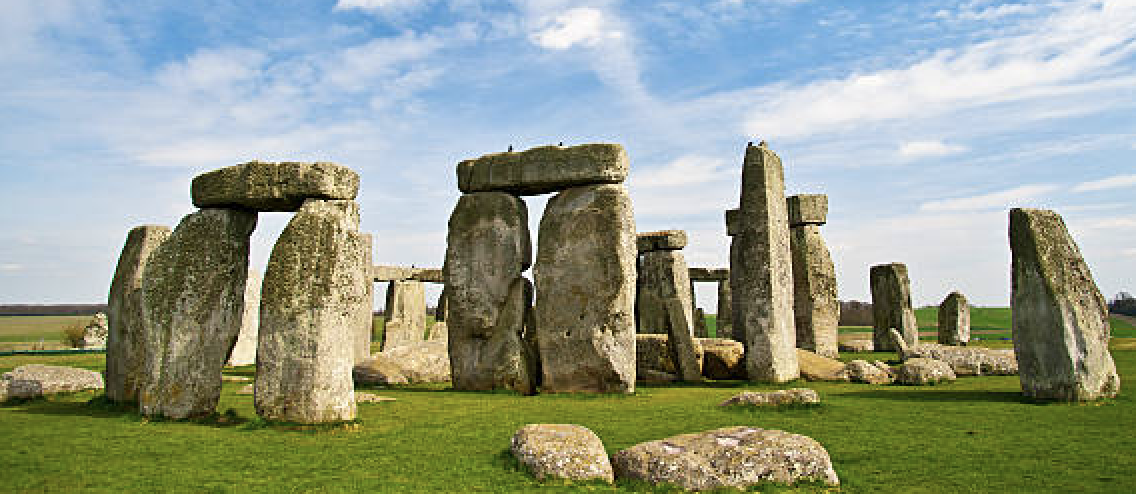
Stonehenge: the most famous menhir.

Star gates have been around a long time, often under other names. They have given us passage to elsewhere in science fiction and in fantasy for decades. They seem to work equally well in either genre.

Is a star gate science fiction or fantasy? The term seems to imply science fiction and looks a bit like a wormhole. The concept of a gate to elsewhere, however, could be either or both.

The first time I saw the term was in the title of Andre Norton’s 1958 novel called Star Gate. It was science fiction, but with some magic thrown in. I saw it next as the title of a theatrical movie Stargate in 1994, which had nothing in common with the Norton novel but the title. That movie spun off the television series which everybody remembers. It ran from 1997 to 2007, then spawned numerous additional spinoffs. You can find it on re-run channels any week.

I can’t speak authoritatively of the TV series. Military fiction isn’t in my wheelhouse so I rarely watched it, but I assume the places they were sent to were in our physical universe. That would make it science fiction.

Let’s drop the prefix star and continue.

Heinlein used a teleportation gate to other planets as the basis for his novel Tunnel in the Sky. Gordon Dickson used such a gate in Time to Teleport (a pretty good novel with a lousy title). It’s a fairly common device for authors who don’t feel like inventing a faster than light drive to get their characters to some extrasolar planet.

Also still within science fiction are alternate universes. Sometimes a whole novel takes place in one such alternate without any travel between them. More often, characters from one universe travel to one or more other alternate universes. Sometimes they go in time-space vehicles (example: Heinlein’s Number of the Beast). Sometimes they travel via a gate-like device that sends them directly to their destination.

Andre Norton used such a device in her 1963 novel Witch World to get Simon Tregarth from prosaic Earth to a magical world. Norton would preside over her Witch World as she and a few others spun off novels and short stories for forty years. She referred to the device that transported Tregarth as the Siege Perilous, referring to Arthurian legend, but essentially it was just another gate.

Was Norton’s Siege Perilous scientific or magical? Who knows? Who cares? If you are going in a book to a wonderful place, what difference if you get there by a space ship or you step through a magical wardrobe?

— << >> —

Now, a slight detour. Some time in the mid-sixties I stumbled upon a book. I can’t tell you the title or the author, but if you are a reader you will understand why I can’t remember them all. It explained that for thousands of years there was a culture of menhir builders who left megalithic monuments across Europe and the Middle East. No one knows why these menhirs were built. We now have some notion of by whom, but that wasn’t known when the book was written. It was all a big mystery.

I was intrigued by what I had read. I fantasized about the menhir builders. I wrote an unremarkable short story, then tossed it. Then I more or less forgot about menhirs for a decade, but they didn’t go away.

Years later, I dreamed up this medieval kid whose father was killed, but who didn’t want to seek revenge. I told you about his origin last October fifth.

In 1976 I began to tell his story, and that led me to build a world for him to occupy. Those fascinating menhirs came crawling up from memory and insisted that they become the center of his world. In fact, his world came to be called the World of the Menhir, and I plan to publish the first five novels this year.

The boy’s name was Tidac. I already knew that five minutes after he crawled into my brain in 1972. He had been introduced to me during a seance with a Ouija board in Oklahoma City in 1965. The board (or the lovely and imaginative young lady who seemed to be the one manipulating it) said that I was reincarnated from a Norman prince named Tidac. Who was I to argue with a lovely young lady?

When Tidac crawled out of Beowulf in 1972, I knew him immediately and I knew why he didn’t want to take revenge for his father’s death. He wanted freedom from his father’s shadow. I had wanted my freedom for similar reasons, only a few years earlier.

That’s not coincidence; that’s how a writer’s mind works.

709. Redneck Granny

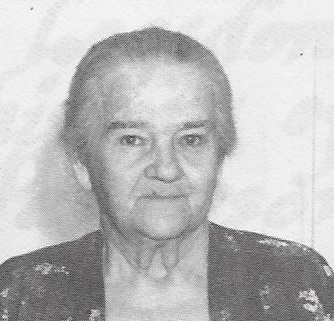
Here is my redneck Granny, who died long before the original of this was posted. I’m sure she would hate everything I have said here, but I love her anyway.

Redneck Granny

I started this blog late in 2015. When Black History Month rolled around in 2016, I had a lot to say — enough to fill the month with posts. This, somewhat modified, was one of them.

— << >> —

The first African slaves arrived in America about 400 years ago. If we count twenty-five years as a generation, that’s 16 generations.

Let’s look at the typical American today. He or she had two parents and they had four parents between them, and their parents had eight parents between them. And so forth. Up the line sixteen generations, that’s 32,768 direct ancestors. If you don’t believe me, do the math.

All those ancestors sent DNA down the line to make our average American. What are the chances that not one packet of DNA was out of Africa? What are the chances that there weren’t a lot more than one out of Africa in his/her lineage?

You might think whites didn’t mix with blacks in the olden days, but are you sure? Are you counting all the times when a white man was in charge, and a black woman didn’t have any say in the matter? They wouldn’t even have called it rape in 1619. Nor 1719. Nor 1819. In a lot of places they wouldn’t have called it rape in 1919. 2019 — maybe.

So much for black purity, but that isn’t any big secret. What about white purity?

How white do you have to look to pass for white? Three quarters? Seven eighths? How many generations does that take? Not many.

Now what are the chances that a whitish, black female would claim to be white if she could? Or a whitish, black male? Forget the twenty-first century when African-Americans are proud of what they are. Project your thinking back to when being white meant being free, and being black meant being a slave. Wouldn’t you pass for white, if you could get away with it?

I would. Some of my (and your) ancestors probably did.

More math. Lets say that by 1700 (eighty years into the era of American slavery, thirteen generations ago), one hundred partially negro girls could and did pass for white. That’s not a big number to surmise. In fact, it’s ridiculously small.

Let’s give doubters no excuse for their doubts. Let’s say that these passing girls only averaged two children who went on to have children. That’s certainly a minimal estimation. Their descendants are boys and girls who would disappear into the white gene pool.

That’s 408,000 offspring after 13 generations. Which is to say, in 2025.

Wow. And after a couple of generations, if Mom kept her mouth shut, none of them would know they were passing. They would believe they were white.

That doesn’t cover all the other blacks, male and female, who passed in the last four hundred years. That is only one hundred, starting in 1700. But there weren’t just a hundred, they didn’t start in 1700, and they haven’t stopped to this day.

There is one big change in the twenty-first century. People who are light skinned and could call themselves white, now often identify as black. It’s probably confusing for “white” folks who haven’t thought it through.

I don’t think it confuses “black” folks at all.

If math doesn’t impress you, if you think numbers lie, then let’s make it personal.

Rhett Butler was partly black. Scarlet O’Hara was partly black. Simon Legree was partly black.

You’re partly black. I’m partly black. And my Oklahoma relatives just disowned me.

That’s mighty white of them.

— << >> —

This was a modified version of a post from February 3, 2016. If you are wondering why this old “white” guy is so concerned with black identity, it is all a matter of upbringing. In my case, that means being raised on the edge of the South in the fifties in a culture that didn’t exactly hate blacks, but didn’t much like them either. My people fully believed in the separation of the races; the only good black was somebody who lived someplace else.

The problem with the community viewpoint was television. On the six o’clock news I saw black people being washed down the sidewalk by firehoses because they were marching for the right to be human.

They were right. We were wrong. Hardly anybody in my town got that message, but I did.

I escaped to college, where I studied Anthropology and got an extended view of what British imperialism had done to the black and brown people of the world.

Then I studied History, where I found out that English imperialism had been just as harmful to the ruddy-faced and red-haired poor in Scotland and Ireland. I also found out what white America had done to the Native Americans, the Chinese and Japanese immigrants, and even the Irish.

In California, where I now live, white incomers from the east now discriminate against the Latinos, who owned California after they took it away from the California Indians, and before the white east-coast Americans took it away from them.

Over the years I wrote about all of those displaced and disadvantage peoples in my blog and now that has all been gathered together for publication.

Originally I planned to call the book . . .

Your Redneck Granny is a Black Woman, and she doesn’t even know it

I had kept that provocative phrase in my back pocket for years, but when it came to reality, the title . . .

Your Redneck Granny has a secret

. . . seemed more likely to make a prospective reader curious enough to pick up the book.

I originally wanted to publish it early in 2026, but the five novels of the Menhir Series will take the whole year to release. Instead Redneck Granny is planned for release on January 20, 2027, just about a year from today. Keep it in mind and tell your friends.

708. Pardons

Five years and two weeks ago, on January 6th, 2021, Donald Trump caused an attack on the United States Capitol after refusing to admit that he lost the election.

One year ago, on January 20, 2025, as he returned to the Presidency, Trump commuted the sentences or pardoned outright nearly 1600 persons, either already convicted of crimes related to that attack or awaiting trial for their parts in the attack.

Please remember these facts when you vote in 2026.

707. A New Start

A New Start

It is already January fourteenth, but the year is still new and the re-start of A Writing Life is still fairly new. It’s time to present something special.

On April 17, 2019 I was trying to write a review of a novel. I remembered the book clearly but didn’t remember enough details, and I needed to explain why I was going to postpone writing about it. What I wrote then does more to tell why I created this blog than anything else I have written.

— << >> —

I have written quite a few books over the years, but it is never enough. Writing books is just too much fun.

The fact is, reading a book is ten times better than watching a movie, but writing a book is fifty times better than reading one. And takes fifty times as long.

Besides the hundred thousand words a modern novel demands, there are the other hundreds of thousands of words you have to go through while getting to the right ones. And there are all those books you have to burrow through looking for just the right bit of information or inspiration to help you understand how that next chapter is supposed to come out.

Just reading a book for fun gets lost somewhere. I read the things I need to read, and late in the evening I read comfort books, like the thirtieth Nero Wolfe, which isn’t that different from the other twenty-nine.

It wasn’t always that way.

— << >> —

I was an only child on a farm in the fifties. We had one black and white TV that got two channels, which my parents watched in the evenings while I read. Of course I became a reader; what else was there to do? From the time I discovered the county library, there was no time I didn’t have a stack of books waiting for my attention.

But I didn’t talk about it.

My mother read occasional romance novels but she didn’t talk about it. My dad read the Bible, but he didn’t talk about it. The habit started early.

I read books about hunting and outdoor life. I already lived outdoors, but on a tractor. I never hunted, barely fished, and I had never seen a tent. My outdoors wasn’t for play, it was for work, and that wasn’t enough to satisfy me.

Looking back, I know that the place I lived as a boy was rather lovely, in a muted sort of way. It was farm country, lightly populated by humans, but with plenty of birds, and occasional coyotes and possums.

Nevertheless, every patch of ground was either under the plow or turned into grazing land. There was nothing wild. I wanted forests and streams, fish and game, and real snow, along with the freedom to wander through them.

That was all available in books, along with a thousand other adventures to be found all over the globe.

My fellow students in my little school read what they had to read — but nobody talked about it. Nobody read science fiction. Nobody wanted to know any more about science than they were required to know. I was reading and studying continuously, preparing to head for college to be a scientist — but I didn’t talk about it, because no one wanted to know.

When I got to college, one of my roommates was a science fiction fan. We talked about it, but only a little. By then, my habit of silence was pretty well set.

A lifetime later I started this blog. For the first time I got to really talk about the books I love and why I love them. Like right here, right now, talking to you, telling you why I had to postpone a review.

Hi. You see, there was this book called The Road to Corlay . . .

— << >> —

I began A Writing Life in support of an upcoming novel, but it quickly evolved into something larger. It became a how-to, and a “How I did it”, and a “What I’ve learned about how others did it.”

Many of those posts, somewhat modified, are gathered together now in a pair of books for writers called Learning from the Masters (that would be Heinlein, Clarke, et al, not me bragging about myself) and So You Want to Write Science Fiction. Because 2026 will be fully occupied with the Menhir series, they are scheduled for release in 2027. Tentative dates are:

Learning from the Masters

March 17, 2027

and

So You Want to Write Science Fiction

July 7, 2027

706. Five Years Ago

Even though Trump just “took over” Venezuela, that isn’t what I want to talk about. That story is still unfolding and full of unknowns, but there is no confusion about what happened five years ago.

January sixth — you can’t say that any more without special meaning. It has become a time-bound phrase, as specific as 9/11.

January sixth came five years ago. No doubt every newspaper and television journalist will have something to say today. Me, too. It’s personal; it should be personal to every American.

I saw it all on television, starting at nine on the west coast. This posting will match that time. At first it seemed to be only another address by the outgoing crazy. Then Trump called on the crowd to “fight like hell”, and they did.

I saw it all as it happened. From the moment it became apparent that there was going to be trouble, continuing until the crowd dispersed, I never left the broadcast.

Even if you were elsewhere that day, everybody knows about the attack. Unfortunately, not everybody understands that the attack happened entirely because Trump lied.

Trump had lost the 2020 election. He refused to acknowledge that fact. He instituted multiple lawsuits against the result, and lost them all.

He called for a rally. He stoked the crowd. He sent them to march and told them to fight in order to keep the Congress from ratifying the vote.

Trump orchestrated and authorized the horrors that followed. There is only one word to describe his actions.

Treason.

Trump is responsible for his words and his deeds, despite the subsequent findings of the Supreme Court which ended attempts to bring him to justice.

Trump ran again four years later, and won a second term. He continued to lie and continued to be believed, but he did not win without help.

The gatekeepers who kept the American people from knowing of Biden’s decline have to share the blame for Trump’s return. When Biden came on stage at the June 24, 2024 Presidential debate, clearly inadequate to his task, the election was already lost before he ever opened his mouth.

And now Trump is back with a vengeance.

These are dark days. They must not continue. 2026 is our best chance to return to reason. It may be our last chance.

705. The Year That Never Ends

The Year That Never Ends

Once upon a time, in tenth grade, they force-fed me Dickens in the form of Great Expectations. No one should do that to a teenager. It put me off of Dickens for thirty years.

Then I discovered A Christmas Carol, and Dickens rose to the top of my pantheon. I loved the book. I loved the other four Christmas books he wrote in subsequent years. I loved the movies made from the book.

I wanted to write the next great Christmas tale. (Don’t we all?) Instead I wrote a novel that was half Dickensian and half dystopian. It centered around the Clock That Ate Time and the Great Babbage, but it did take place in a variant Dickensian London.

The immediate call to write was both visual and visceral. It was a scene from the musical Scrooge, drawn from the book and repeated in most movie adaptations. Bob Cratchit’s children are waiting for him to finish work on Christmas Eve while staring through the window of a toy shop. And what a toy shop, filled to the rafters with all the kinds of toys that rich Victorian children might be given, but which were forever out of reach of poor children like Tiny Tim and his sister. There were even mechanical wonders like the clockwork strongman who suspends himself horizontally using only one hand.

Who was the man who ran the shop? He was nothing in the story that Dickens told, but I wanted to know. Who built the mechanical man? I wanted to know. What possessed the owner to set up a shop in the poorest part of London, where none of the children staring into his windows would ever have a chance to buy his wares? I wanted to know that, too.

Yes, writers are like that. They are likely to stare at a potted rose and wonder what kind of soil is in the pot.

The novel I wrote is called Like Clockwork. The toyshop is there. It is also called Like Clockwork, and it is overfilled with mechanical wonders all created by the man who runs it. His name is Snap. He is the man who built the Clock That Killed Time, although he has lost all memory of building it. He, and everyone else in his pocket London, will live forever — but at a cost. Every Midwinter Midnight, the citizens gather around the Great Clock to watch the year 1850 end — then begin again, invariant forever.

What follows is the Prolog to Like Clockwork, in the form of a note written by Snap’s wife, Pilar of the Sorrows, as the old year closes.

— << >> —

Prolog. (Or is it an epilog?)

“Tonight Snap has gone down to the Clock for Midwinter Midnight. In just a few minutes, the reversion will occur and I will forget writing this note. It will be midnight of January first, 1850. Not next year, nor last year, but the only year there is.

“It isn’t a bad year and it isn’t a particularly good year, but if it is to be my only year, I want more.”

Pilar laid down her pen and listened, straining to hear the song they always sang at midnight:

The year that ends, but never ends,

That ‘ere again unfolds,

We live that year forever and

We never shall grow old

It was probably her imagination. Surely voices could not be heard over such a distance. She rose to move closer to a window and as she did the note she had written ceased to be. All her memories of the past twelve months ceased to be. Her body sloughed off a year of age and it was January first of the last-this-next-only year.

Again.

— << >> —

You’ll get a chance to read Like Clockwork, but not for a while. There is strategy and pacing in how I intend to release my novels, and that grand plan calls for Like Clockwork to be published no sooner than 2028.

This isn’t intended as a mean tease; its just that I wanted to acknowledge Midwinter Midnight as, unlike Snap’s world, 2025 rolls over into 2026.

704. No Room in the Inn

No Room in the Inn

[Don’t even expect even-handedness here.]

In English we call him Joseph, in Italian he is Giuseppe, in Basque he is Joseba, in Spanish he is just plain Jose.

In English we call her Mary, in Hebrew she is Miryam, in German she is Maria, and also in Spanish.

In English he is Jesus, in Cornish he is Jesu, in Italian he is Gesu, and in Spanish he is Jesus again, but pronounced Hey-sous.

We are going to walk with these three this Christmas season.

And it came to pass in those days, that there went out a decree from Caesar Augustus, that all the world should be taxed. And all went, every one into his own city. And Jose also went up from Galilee, out of the city of Nazareth, into Judaea, unto the city of David, which is called Bethlehem, to be taxed with Maria his espoused wife, being great with child.

Of course that could be written as Joseph and Mary, but surely they are the same couple, in any language. Jose was a carpenter. He built things out of wood to feed his family, and he paid his taxes like everybody else. All the world was to be taxed, and he had to go back to the place from which his people came.

Where would that be today? Perhaps a land with cities named Sacramento for the Holy Sacrament, or maybe Atascadero, Alameda, Camarillo, El Segundo, or Escondido. Perhaps cities like Fresno, La Mesa, Madera, or Mariposa show where his people once lived. Certainly they must have lived in cities like Los Angeles, Merced, Paso Robles, Salinas, or San Francisco. Even if his people no longer own the land, certainly the city named after him, San Jose, must once have belonged to his people.

And so it was, that, while they were there, the days were accomplished that she should be delivered. And she brought forth her firstborn son, and wrapped him in swaddling clothes, and laid him in a manger, because there was no room for them in the inn.

I think Luke shortened this a bit. Was there only one inn in Bethlehem? We can see the young couple, going from place to place, Jose leading, Maria on a burro since she cannot walk so late in her pregnancy. Everywhere they are turned away. Are all the sleeping places truly full? It may be. Or perhaps something about the two of them, perhaps the color of their skin, makes the innkeepers turn them away. Luke does not tell us.

I see migrant housing everywhere I go in California and I think, perhaps, a manger was preferable.

Now they are in a place where their people once lived, but to which they are no longer welcome. And here, their son is born.

Donald Trump would call Him an anchor baby. I wonder what He will call Trump, when they finally meet.

And there were in the same country shepherds abiding in the field, keeping watch over their flock by night. And, lo, the angel of the Lord came upon them, and the glory of the Lord shone round about them: and they were sore afraid. And the angel said unto them, Fear not: for, behold, I bring you good tidings of great joy, which shall be to all people.

To all people. ALL people. Imagine that!

703. No More Little House

No More Little House

I wrote the story of Lupe after Donald Trump won in 2016, but before he took office. I presented it in fear of what might happen. I present it again knowing what is happening, now that he is back for a second term.

Ramon came in, stamping the snow from his feet, and shook the snow from his jacket before closing the door. The sun was low in the eastern sky behind him as Lupe moved up and hugged his leg. He smelled of sweat and manure and soured milk, but she didn’t mind. She had hugged him this way every morning for as long as she could remember, and he always smelled the same. For Lupe, the smell was as familiar and welcome as his cold fingers on the top of her head.

Every morning Ramon rose before the sun was up, and left the house. His daughter greeted him when he returned hours later, and saw him off again in the afternoon. She was usually asleep when he came home at night.

It is hard work milking cattle twice a day, and the pay is low. The cattle march in from the muddy lots to take their turns in the stalls, where fast moving men attach the milking machines. The cattle resent the process and the workers have to move quickly to avoid having their hands caught against he stanchions. It goes on for hours, in heat or cold, beginning every morning before daylight, and continuing again every evening until after dark.

Lupe stepped aside to make room for her mother. Today she seemed worried; her voice was unusually sharp as she asked, “What did he say?”

Ramon replied, “I didn’t tell him.”

I translate, of course. Every word was in Spanish.

“You got your money for the week?”

Lupe’s father nodded, “I told him I needed it today, to buy things for Christmas. I was afraid to tell him the truth. He is a good man, but it seemed best that he should not know.”

Lupe’s sister came out of the single bedroom with a cardboard box in her arms, tied up with twine. Lupe looked up with interest. It was not wrapped in paper, but any box is interesting so close to Christmas. Carmella put the box down on the floor and returned a moment later with blankets and bedding, also rolled up and also tied up with twine. Lupe asked what she was doing, but Carmella ignored her.

Her father carried the box and roll of bedding outside. Her mother came out of kitchen with a box of food, and that began a procession of boxes, coming from various parts of the house and out to the car. Lupe’s mother and sister had gathered up their possessions during the pre-dawn, while Lupe slept.

Now Lupe dragged at her mothers leg asking questions, but she was ignored until Carmella pulled her aside and said, “We are going away.”

“Where?”

“I wish I knew Lupita. I wish I knew.”

“But why?”

“It’s only a month until he becomes President. Everyone here knows who we are. We have to go away, somewhere where people don’t know us.”

“But why? I was born here. This is home.”

“So was I, Lupe, but mother and father were not.”

When they pulled out an hour later, Lupe stared back at the little house where she had spent her whole, short life, until it disappeared around a bend. Then she looked out the windshield, past her mother and father’s silent heads. It was a long road, wet with melted snow. Her father would not leave the house tonight before the sun went down and go to the cows. There would be no more money, no more warmth, no more little house. It would be again as it had been, before the job at the cows, before she was born. Lupe knew what that was like from hearing her parents talk. Now it would be like that again.

— << >> —

Is Lupe real? She was born from the hundreds of little Mexican-American girls I taught over twenty-seven years. How many were undocumented? I never knew. I never asked. I didn’t need to know.

Is she real? She is as real as heartache. She is as real as fear. She is as real as dislocation, cold, hunger, and injustice.

702. Reaching Cyan

Reaching Cyan

The year was 2086, the place, half way to Procyon. Stephan Andrax wrote in the log of the Starship Darwin . . .

There are two chronometers on the bulkhead. One forges forward at the speed of Everyday, ticking off seconds and minutes and hours and days that make sense to the body and soul. The other races. Seconds flitter by. A new day is born every three hours and twenty-two minutes. Einstein told us this would happen, a century and a half ago; when an object approaches the speed of light, time slows down.

Beside the chronometers is a viewport and beyond it are Dopplered stars which sweep through my field of vision as the ship spins. We are nearly six years into our journey. Halfway through our journey. Yet, for me, only a year and a half have passed.

And through all the years and hours of our journey, the smaller, fleeter chronometer will rush ahead at Earthtime while our time is slowed. All those I knew and loved, except my companions here on the Darwin, are aging seven times faster than I am. When we return, my agemates could be my parents, and my parents will be dead.

The mind perceives what the heart cannot comprehend.

— << >> —

Obviously, one of the joys of writing near-future extra-solar exploration is dealing with the delicious complexities that come from working in a relativistic universe. Thank you Albert Einstein.

The novel Cyan opens with the words of Stephan Andrax, but he will not be the main character. He is the great great (I never figured out how many greats) grandfather of Jan Andrax, who gave his name to the novel Jandrax. I wanted an obvious connection between that novel and its sequel (prequel?), but I kept Stephan mostly in the background by making him the captain of the Darwin.

Imagine that you are planning a ten person expedition to an unknown extra-solar planet. Assume a giant starship, designed for travel only in space, and a landing craft to carry the explorers down to the surface. That seems like how things would actually be arranged. What would happen if all the explorers were killed while going about their business? What if the landing craft were damaged beyond repair leaving everyone marooned on-planet?

Contingencies are what planning is all about. If everyone on the ground were killed or stranded, the knowledge obtained up to that point would still need to be transported back to Earth, so the planners of the Procyon expedition arranged to always have one crew member on board the Darwin. They selected an astrophysicist who would be best positioned to study Procyon’s system of planets by staying in orbit, and made him Captain. He would stay with the ship, just like one astronaut stayed in the CSM while two others descended to the surface of the moon in the Apollo program. That made Stephan important but mostly off camera, which is just what I wanted.

The groundside leader was the character I chose be our eyes for most of the action. Stephan Andrax was Captain in space; Keir Delacroix was “captain” on the ground.

Everyone except Keir had one or more Ph. D.s and was at the top of his or her field. Keir was also highly intelligent, perhaps at the next level down, but his skills came from a life spent in the outback of Australia. He was a rarity on overcrowded Earth, a man who had spent his time in one of the few places that was still wild. Each other crew member had a scientific specialty to bring to the study of Cyan. Keir was there to keep them all alive.

I chose the name Keir Delacroix in tribute to the actor Keir Dullea who argued with the computer Hal in 2001: A Space Odyssey.

Here is the list of the Darwin‘s crew, alphabetically, with their specialties and their alternate fields of knowledge.

Stephan Andrax    captain (spaceside) – astrophysicist
Debra Bruner        microbiologist – astronomer – medic
Petra Crowley       geologist – soils scientist
Keir Delacroix       groundside crew leader – generalist
Viki Johanssen      anthropologist – paleontologist
Gus Leinhoff         zoologist – biochemist – medic
Leia Polanyi          paleontologist – geologist
Ramananda Rao  meteorologist – cartographer – geologist
Tasmeen Rao       first officer (spaceside) – pilot (starship and landing craft) –  engineer
Uke Tomiki           botanist – biochemist – medic

— << >> —

I have a lot of things to do in this rejuvenated version of A Writing Life, largely having to do with upcoming releases, but I won’t forget Cyan. I will return to talk about how it came to be, perhaps once a month. You can get a jump on all that by typing Syd Logsdon Cyan into Amazon and reading it now.

next week there will be Christmas posts on Tuesday and Thursday

701. Approaching Cyan

Approaching Cyan

Cyan is the name of a novel and the name of a planet.

I’ve been writing science fiction for fifty years, but I’ve been reading it even longer. When I began, NASA didn’t exist and the word astronaut hadn’t been coined. I was ten years old.

In the science fiction novels that filled my childhood, I rode on a thousand spaceships or starships to explore a thousand planets, but there was one novel I could never find. I never read of the discovery, exploration, and colonization of a planet — all the phases of what would actually occur — under one cover.

I really wanted to read that book. Eventually, I had to write it myself.

The kind of science fiction I prefer — and write — is based on reality, humanity, and scientific accuracy. The key question I continually ask myself is, what is likely to actually happen when the day comes. And the day that interests me most is something past tomorrow, but not too far past.

I can imagine 2050, but it really doesn’t interest me. It will look too much like today. I prefer to look forward a hundred years or so.

The novel Cyan opens in 2086, which seems a contradiction to what I just said, but I began writing it about 1980. It just took a long time to complete.

I also had to keep changing the year dates on what I was writing. Real world manned space exploration had slowed to a crawl. Who could have predicted in 1972 when the last astronaut left the moon, that fifty-three years later no more humans would have gone beyond low Earth orbit? Certainly no science fiction writer would choose to imagine that.

So what planet would I want to colonize? Mars? Of course not. Half the fun of science fiction is world building, and Mars is far too well known to be of interest. It would have to be a planet around another star, and if it was to be colonized in the next hundred years or so, it would have to be nearby, at least in stellar terms.

Actually, any extra-solar colonization in the next hundred years requires a major stretch of the imagination, but science fiction writers are in the imagination business.

So what are out near neighbors in the galaxy? Here is a list:

Sol, our sun, as a starting place.

Alpha Centauri, about 4.3 light years away.

Sirius, about 8.6 light years away.

Epsilon Eridani, about 10.5 light years away.

Procyon, about 11.4 light years away.

Epsilon Indi, about 11.8 light years away.

Tau Ceti, also about 11.8 light years away, in another direction.

Other than specks and oddballs, that is the full list of star systems within five parsecs of us. I will add two more, just beyond five parsecs, because they were part of Gordon Dickson’s writings in his Dorsai novels. You’ve read them, right?

Formalhaut, about 16.6 light years away.

Altair, about 16.7 light years away.

— << >> —

Click here (or type in https://en.wikipedia.org/wiki/List_of_nearest_stars ) for a Wikipedia article that will list 56 of the nearest stars, including some very small ones, and tell you more than you ever wanted to know about them.

— << >> —

Jandrax, my first published novel, was a lost colony story. The FTL ship Lydia malfunctioned during a jump, stranding colonists and crew so far out that they would never return.

The novel Cyan would be a prequel, taking  place hundreds of years earlier in the same imagined universe. It was intended from the first to be one of a group of novels, so I wasn’t just choosing a star and planet for a single story, but deciding what to do with the whole nearby neighborhood.

It seemed during my youth that every author of a novel about early extra-solar exploration landed on Alpha Centauri. I didn’t want that, so I made the planets of that star system barely habitable. Alpha Centauri lives in the backstory, but I don’t plan a novel about it.

Sirius, on the other hand, is 23 times as luminous as the sun. It struck me as a perfect place to put a colony of humans who were quite satisfied to live in space habitats, with no desire to take up planetary life. That became the setting for Dreamsinger, a novel which I have been sparring with for several years now. I offer no predictions about when it will be completed.

As the novel Cyan opens, limited colonization of the planet Cinder, around Alpha Centauri B, is underway. Explorers have not yet returned from Sirius. When they do, half way through Cyan, they will tell of a system unfit for colonization. Later, a group of dissidents will prove them wrong, leading to Dreamsinger.

There are three starships waiting to leave Earth. One is the Darwin, scheduled for Procyon and the as yet unknown planet Cyan. The other two will head out to Epsilon Eridani and Tau Ceti where they find prime, Earth-like planets.

Writing a story about the exploration and colonization of a prime planet would be a dead end for me. Something not related to the actual colonization would be needed to jazz up the story, and that was exactly what I was trying to avoid.

Cyan, on the other had, had plenty of challenges on its own. It was — and was designed to be — a place to tell a story about how exploration and colonization might actually take place.

I’ll tell you more about Cyan next week, but if you don’t feel like waiting, just go to Amazon and type in Syd Logsdon Cyan and you can buy the novel today, as an ebook or as print on demand.

more about Cyan next week