Category Archives: A Writing Life

686. It Was Fifty Years Ago Today . . .

It Was Fifty Years Ago Today . . .

If you are my age, music from Sergeant Pepper just popped into your head in honor of that title. But you probably aren’t my age — 77 — so it probably didn’t.

Today, I’m throwing myself a digital anniversary party. I’ve earned it.

Today is September 2, 2025. It’s also the day after Labor Day.

In 1975, on the day after Labor Day — also September second — I sat down at a home-made plywood desk, in the tiny back bedroom of a rented house, in front of an electric typewriter to try something new. I was going to find out if I could write a novel.

I didn’t doubt my intellegence, nor my skill with language. What I doubted was whether I could sit down day after day and think of enough interesting things to say to fill up a novel.

I was going to give it my best shot.

At the time, I was reconsidering my plans. I had always intended to be a scientist, initially in ecology. The problem was that I was a decade too early. No one had heard of ecology in 1966. Michigan State University had only two classes even close to the subject when I arrived and they were both in Fisheries and Wildlife, not Biology.

I switched to anthropology and spent five years pursuing that goal. I loved it as long as I was studying work done by other anthropologists, but the idea of field work (sitting in a mud hut recording local gossip, to be snarky about it) did not appeal.

I had never considered writing novels. I had started a dozen, just for fun, but inspiration always ran out about page ten. Now,  I had a little time on  my hands, so . . .

To my amazement, between September and Christmas, I turned out a novel. It was simple and short — a hunter gets lost in the wilderness and, after many adventures, finds his way back to civilization. I used the local Sierras which I knew well and kept my hero so lost that I never had to worry about absolute accuracy in describing his surroundings.

It was unpublishable, but that isn’t unusual for first novels. The important thing was that in four months I had neither stalled nor stumbled as I worked my way through 45,000 words, which was just long enough for a novel in 1975.

I could write a whole novel! Who knew? Certainly not me.

After Christmas I started doing the research and world building for a novel of science fiction. It was finished by the end of 1976, sold by 1978, and published in 1979. The title was Jandrax, from Ballantine under the Del Rey imprint.

Now I was a published writer. Who would have believed it. Certainly not me.

I’m still working at my trade after fifty years, so it’s happy anniversary to me.

I am also using this anniversary as the starting point for a rebirth of my blog A Writing Life. Keep coming back, mostly on Wednesdays — we still have a lot to talk about.

685. Dear Joe

Monday brought the decision from the Supreme Court on Presidential immunity. Now everything now lies in the hands of the voters.

Actually, everything lies in the hands of Joe Biden.

Less than a week ago I watched the debate. When President Biden walked out, moving so tentatively, I said to my wife, “Trump just won the election.” That was before Biden opened his mouth.

There is a long history to this, which I will talk about soon, but today I want to keep things short.

For the second time in three presidential elections, the people wish both candidates would just go away. Most of them – and not just independents – will vote with a feeling of distaste, or will vote in protest for a third party, or will just stay home.

Until the debate, the coming election was a tie between Trump’s lies and Biden’s age. That tie is now broken. Against Biden, Trump will win. All the special pleading by Democrats can’t change what the American people saw.

The day after the debate, surrogates said that Biden had a bad day. No one in America believes that. Old is old. Too far gone is too far gone, and we all saw it.

I am 76. I know old. I know bad days.

There are times when I stare at a blank computers screen and wonder what I was going to say. I leave spaces in sentences for words I’ve known all my life, but which just won’t come to me. I go back later and fill them in.

I know bad days, and when things get really ugly, I turn off the computer, go watch re-runs on TV, and pet the cat.

The President of the United States can’t do that.

Joe, maybe you can be competent and effective with plenty of time to think, while safely in the oval office surrounded by you friends. Maybe you could act effectively is a short term crisis.

Maybe.

But you could not survive a long term situation like the Cuban Missile Crisis. We know that now. You should know it. You should have known it for months.

The Supreme Court isn’t going to help. Donald Trump is not going to keel over with a heart attack.

Half the country believes Trump’s lies. Most Democrats before the debate, and every Democrat now, knows Biden’s frailty.

Against Trump, now that we have seen the debate, Biden will lose.

Absolutely. There is no question.

But any one of a dozen younger Democrats could still win, if Biden were to go gracefully and support their candidacy.

It’s up to you, Joe. Release your delegates and save the country. Or stay in the race, and all Hell lies before us.

684. Bible in Schools

I am not really back, but I never really went away. You can expect to hear from me more regularly sometime in the near future, but today I have to respond to something in the news.

Before the Biden-Trump debate stole all the bandwidth, a seemingly minor story crawled across the bottom of our TV screens.

Oklahoma Schools Superintendent Ryan Walters orders schools to teach the Bible.

This is not new, as I can tell you from personal experience.

I was in high school in the mid sixties, in a small town in Oklahoma. Once a year a local evangelist named Reverend Heck was invited to our school. No, that was really his name. For an hour, the auditorium was turned into a church. Attendance was mandatory; respectful silence was also mandatory. No one complained; no one mentioned the constitution. No one asked to be excused. We all knew that the weight of community opinion would fall upon us if we did.

If you are not a fundamentalist Christian, or if you are Buddhist, Muslim, Jew or other non-Christian, I don’t need to convince you that this was not right.

On the other hand, if you are a Christian and you think that Superintendent Walters might have the right idea, you are the person I want to talk to.

Let us reason together. (Isaiah 1:18)

My childhood world consisted of two tiny communities, populations of 121 and about 300, with a consolidated school. There were five churches in the two communities, all Christian, all more or less fundamentalist. Belief that dancing was a sin was so strong that there were no proms. Do you have the picture?

Now fast forward to my adulthood. For twenty-seven years I taught middle school in a small community of a couple of thousand people. The composition of my new community was roughly half Mexican-American Catholics and half White Mormons. This community was in California, not Oklahoma, but I know it well, so I plan to use it in my comparisons.

Superintendent Walters wants the Bible to be taught. Let’s see how that would work.

If my California community were in Oklahoma, would Walters also call for the teaching of the Book of Mormon? He calls the Bible a historical text; the book of Mormon has been around since 1830, just under two hundred years. That’s just 42 years less than the Constitution. You can’t get more American than a Holy Book which was found (or ghost written, you decide) here in the U.S.A.

My childhood community would not stand for Mormonism being taught in the schools. They barely tolerated Catholics.

Speaking of Catholics, how would Superintendent Walters teach Matthew 16:18? It says (King James Version, according to my father the only version authorized by God for speakers of English):

And I say unto thee, That thou art Peter, and upon this rock I will build my church: and the gates of hell shall not prevail against it.

It’s in the Bible, and if you are part of a Bible Church, you have to believe it. But what does it really mean?

To Catholics, it means that Peter (a name meaning rock) was the first Pope and that Jesus appointed him in this verse. By extension only Catholics are true to God’s teaching.

See how well that goes over in my old home town. Or teach it the opposite way, and see how that goes over in Catholic Oklahoma.

Those are the first two problems that come to mind, but there are hundreds of differing opinions among Christians, even in Oklahoma. Most of the people I knew as a child thought that those holding other opinions had been deluded by the Devil. And those other people probably thought the same about my people.

Be careful what you ask for. God may be on somebody’s side, but is it yours? Are you absolutely sure? Do you want to bet your freedom to worship as you please on it?

There is one more thing to consider. How much do you trust the government?

Not much, you say; that’s what I thought. So why do you think they are going to get this right? That they will teach the Bible as you think it should be taught, not as some (insert the group you hate the most) would do it?

Good luck, friends. If you go down this road, you’re going to need it.

Once you have the Bible being taught in school, it won’t be long before the courts insist on fairness. You might find your children being taught Christianity, probably by religious liberals, on Monday and Wednesday while the rest of the week they are being taught the Koran, the Mahabharata, the I Ching, the Epic of Gilgamesh, the Daozang, the Gathas, the Mahayana Sutras . . .

And so forth. The list is very long.

There is an alternative. Accept the first amendment. Accept that all those other people who aren’t as smart as you are, have the right to go to the Devil in their own way. Accept that the only way to ensure your freedom is to let them have theirs – all outside of the schools.

It has worked for 248 years.

683. Dry Oklahoma

Greetings. I have been gone a long time and I did not intend to come back now, but a weird thing happened. Just before covid struck, I had finished two posts; when I decided to bow out for a while, I reset them for a month later than their original posting date. Then again, then again, as the year rolled on.

Then something else weird happened. WordPress completely changed the way posts have to be written. I opened it up one day and couldn’t make heads or tails of what was on the screen. Clearly I had to completely relearn their system, but there was no hurry, since I didn’t plan to post for a couple more months.

Then this morning, I saw that I had posted yesterday. My pushing the dates forward on those two old posts had caught up to me. Since I don’t really know how to post in the new fashion, and the other old post (this one) is scheduled out in three hours, I decided to just add this explanation and let things go. I don’t even know if these paragraphs will be added to the Dry Oklahoma post.

If you don’t see this information, ignore it.

=========================

I grew up during prohibition.

If you are mathematically challenged or historically challenged, that statement might seem possible. Otherwise, you have already calculated that this statement makes me over a hundred years old, which I’m not.

A lie? No, the twenty-first amendment did not end prohibition everywhere. States had the option of continuing it, and Oklahoma did until 1959 when the consumption of alcohol was made legal, but only under stringent conditions. For two and half decades, the Kansas-Oklahoma border was the starting line of a nightly race between bootleggers and the Highway Patrol.

That’s all behind us, right? Not quite. Today the Kansas-Colorado border straddles pot highways, but this time the product is flowing into Kansas. The history of Oklahoma as a dry state in a wet nation might be useful in 2020.

As for my tiny part in the story, when I was five years old our house was fifty feet from Highway 169 which ran from Coffeeville, Kansas down to Tulsa. As I watched the cars go by, many of them were carrying booze for personal consumption, and some of them were carrying booze in bulk for resale. Tales of high speed chases and big busts were common.

There was no checkpoint at the border. Bootlegging was as simple as buying a bottle of whiskey legally in Coffeeville, driving home, and drinking it illegally in your living room. And there were plenty of bootleggers who were willing to save you the trip, for a profit.

Oklahoma was dry. Okies weren’t. Local humorist Will Rogers said that Okies would vote dry as long as they could stagger to the polls.

All this started before statehood and continued until 1959. When national prohibition came along in 1919 with the eighteenth amendment, it only cut off the source of liquor from surrounding states.

During national prohibition no one in America got all that thirsty. There were always stills, along with mass smuggling from Canada and Mexico, and rumrunners on all three coasts. From 1919 to 1933, America was dry, but Americans weren’t. With the advent of the twenty-first amendment, the rest of America could legally drink again. Okies could not, but it didn’t even slow them down.

Actually a few other states also remained dry. Mississippi was dry longer than Oklahoma, and many counties remain dry or moist today. Moist means consumption is legal but only under severe restrictions.

Consumption of alcohol finally became legal in Oklahoma in 1959, fifty-two years after statehood, but only with great restrictions. For example, you could buy beer, but only with 3.2% alcohol or less, and only at room temperature. Cold beer could not be sold. The idea was that you had to take it home to refrigerate it, and then consume it in the shameful privacy of your own house.

So what does this have to do with pot in 2020?

Beyond the obvious issue of people from Kansas having to drive to Colorado to get pot, and bringing it home illegally, there is the issue of why prohibitions get overturned, and how wide is the overturn.

People in Oklahoma were convinced to overturn dry laws in part because of all the tax revenues they felt they were losing and because the cost of enforcement. That should sound quite contemporary.

Of course there was a lot of home brew being made and a lot of stills that went right on selling their wares after 1959 so drinkers could avoid the booze taxes.

The snarky part of me also wants to wonder if the booze tax revenue after 1959 in Oklahoma made up for the gas tax revenue that all those bootleggers were paying, but never mind . . .

In a similar way, there is still a thriving business in illegal pot in California today, causing disappointing tax returns on legal pot. What a shocker! Remember all those million dollar busts of pot in the old days? That was based on street prices. Once pot becomes legal, the street price goes down. Legal pot sales go up, but they never match those old inflated revenues. No problem, raise the pot tax. But then people go back to buying illegal pot, because it is cheaper.

Funny how politicians never think of that until it happens.

Also, to say that pot is legal in California is not quite true. It can still be made illegal county by county and city by city. In Calaveras County, near where I live, it is currently illegal to cultivate pot, illegal to manufacture (which I assume means process) it, but legal to sell it retail. There was a recent battle to change the local laws, with billboards for and against. The argument against was “keep out crime”. The argument for was “tax revenue”.

This should all seem familiar.

682. Hard Road to America

When I taught middle school science, I always took St. Patrick’s Day off from levers, rockets, and chemical reactions to teach a session on history. Irish history, but with a twist.

Those days very few of my students had an Irish background, but about half were Hispanic. There is a connection between St. Patrick’s Day and Cinco de Mayo which I will explain that at the bottom of this post.

The Irish immigrant story I taught on St. Patrick’s Day  was always new, since my student’s were always new. That is also somewhat true of those who read this blog. If you were here the last time I told a version of this story, my apologies. It has been several years and this one is somewhat changed.

It is a moving story, which eighth graders are old enough to appreciate. Potatoes from the new world were perfect for Irish soil; where a crop of oats had supported four people, a crop of potatoes would support eight; when previously hungry people were no longer hungry, they had more babies. Then the potato blight struck, and there was no going back to oats because the population had grown.

The land was largely owned by the English. They continued to export grain throughout the famine. Vast numbers of Irish starved. Those who could raise the money took ship for America.

The passage was hard. Ten percent of those who left Ireland died on the way. Their quarters were cramped, filthy, and unhealthy. Eighth graders both love and hate this part of the story; they have a very human capacity to be simultaneously moved and grossed out. I would walk about the room, measuring out the cubicles with hand movements, mimicking the heaving of the ship in a storm, telling of the bilge seeping up from below, pointing out the sound and smell of vomiting from seasickness, and reminding them that the cedar bucket behind the blanket at the end of the central aisle-way would fill to overflowing with human waste on those days when the hatches had to remain battened down.

Then I would quote a passage from a letter sent back to Ireland by an immigrant, who described the passage then said, “But I would endure all that ten times over, rather than see my children hungry.”

Once in the United States, things were still hard. The Americans who were already here didn’t want them. They could only obtain the jobs no one else wanted. Many were Gaelic speakers and did not speak English. They were segregated into the poorest part of the cities. They were disrespected.

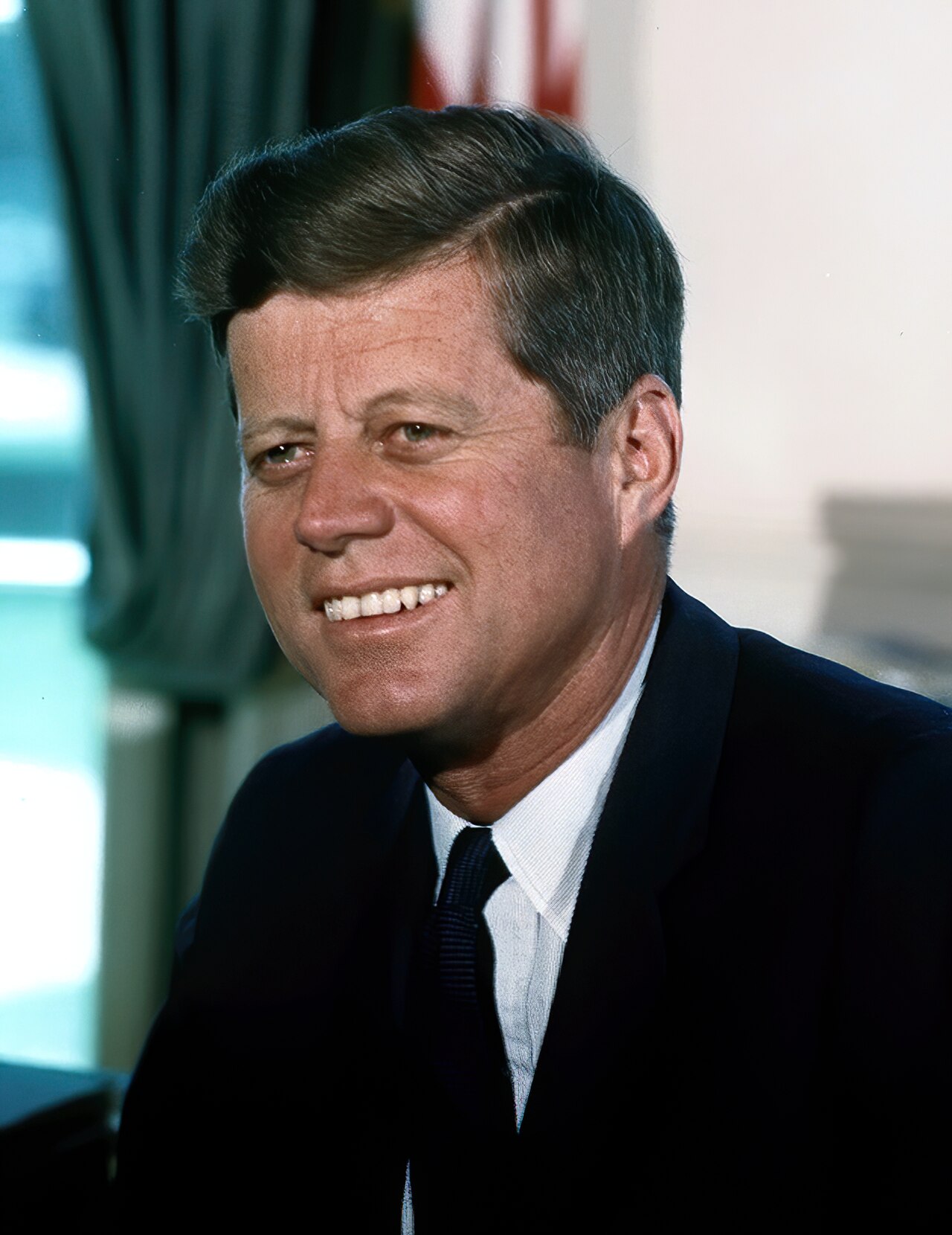
They bettered themselves, generation by generation. They learned American democracy, and elected their own kind to office. They learned American capitalism and many became rich. Eventually, they elected one of their own, John F. Kennedy, to be president.

Along the way, they began to celebrate themselves. St. Patrick Day parades are an American invention. They have only recently begun to be celebrated back in Ireland, but they have been important in America for more than a century.

A teacher has to talk fast to get all that into forty minutes and still have time for the payoff.

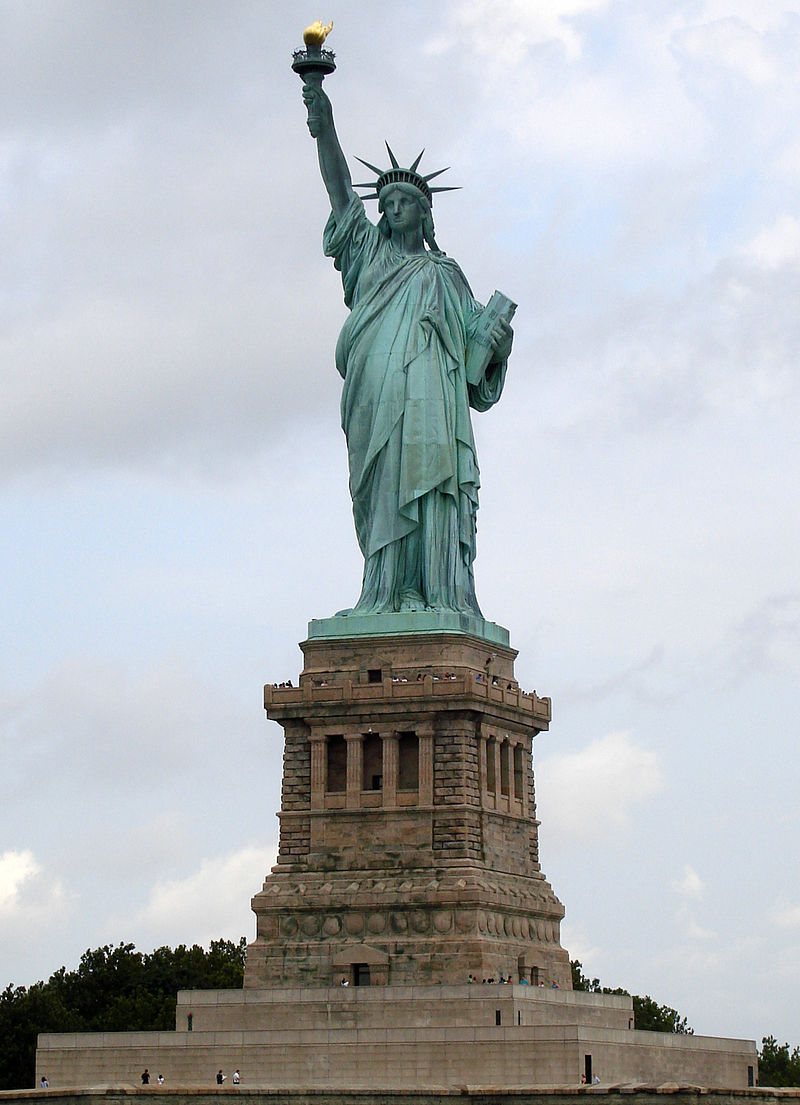
St. Patrick’s Day isn’t about shamrocks and leprechauns. Its about Irish pride. Its about saying, “I’m as good as anyone.” It can even say, “I’m here — deal with it.” St. Patrick’s Day is American, not Irish, because America is where the Irish had to speak up for themselves.

Cinco de Mayo is an American holiday. It is not widely celebrated in Mexico. Just as St. Patrick’s Day is Irish Pride Day, Cinco de Mayo is Mexican Pride Day.

It is a message I got across most years, but no one would have listened if I had not first captured their emotions with the story of a politically neutral and sympathetic people with whom both Anglo and Mexican students could identify.

681. Anniversaries

I’m still here.

I’m not quite ready to come back to the blog yet. I have a lot of things planned, but they have all been impeded, first by covid, then by an unprecedented heat wave, and now by a layer of smoke that burns the eyes and hides the sun. Welcome to California.

The title of this interim post is Anniversaries, and I have two of them.

Forty-five years ago I sat down to write my first novel. The actual date varies a little because it was the day after Labor Day, and that is the way I celebrate it. In 1975, it came on September second. This year it came on September eighth, but on that day it was too hot to start the computer in my un-airconditioned writing shed.

Life giveth and life taketh away. In the last four days the temperature has dropped from 110+ to something almost comfortable, but only because the sun had not been able to penetrate the smoke cloud that covers the entire state. I can’t breathe, but I’ve stopped sweating and I can turn the computer on again.

In a world where people are dying of covid, out of work, fearing eviction, and in many cases hungry, a little sweat, some stinging in the eyes, and a bit of cabin fever is the definition of comfort and luxury.

I don’t forget that.

Hard times aren’t new. Ninety some years ago in my birth state of Oklahoma my father couldn’t see the sky either, but then it was from the dust storms that were wrecking everyone’s lives. We go on.

Nineteen years ago, things got tough in a hurry here in America, and everything changed. That’s the other anniversary. I spoke of it in an early post of this blog, back in 2015. I’m repeating it here.

================

I was in the shower getting ready for a day at school when my wife called to me. A plane had hit the World Trade Center. By the time I dried and dressed, the second plane had hit.

Twenty minutes later, driving to work, I listened on the radio as the towers fell.

All day long I taught science, keeping to the lesson plan. I didn’t want to teach, and no one wanted to listen, but it was necessary to keep a semblance of normalcy. Every break we teachers watched the television, but we didn’t take any news back to the classroom. These were young children. They needed to be in their own homes, with their parents, before they began to deal with the details of America’s disaster.

At the end of the day, I drove home. I had upon me the need to write, but not of the tragedy. Others wrote that day of what had happened to our country, and wrote well. I needed to write of love and joy and beauty – and of my wife who is all those things to me.

Poems come slowly to me; usually they take years to complete. This one rolled freely about in my head as I drove, and when I arrived at home, I only had to write it down.

                   There Am I

Where there is water, there am I.
In sweet, soft rain and in hard rain,
driving and howling,
or filling the air with luminescent mist.
Water is life, and there am I.

Where there is sun, there am I.
In the soft heat of morning or in the harsh afternoon,
or heavy with moisture, forcing its way through clouds,
or dry as a lizard’s back.
Where the Sun is, is life, and there am I.

Where Earth is, there am I.
Whether dark loam, freshly plowed
or webbed with fissures, hard as stone,
or sandy, or soft as moss.
Where Earth is, is life, and there am I.

Where life is, there am I.
rain forest or desert,
broad plains of grass or brooding jungle,
Where life is, there am I.

Where She is, there is life,
and sun and rain and earth, and all good things.
Where She is, is life,
And there am I.

================

Things got tough in 2011, things are tough in 2020, things have often been tough throughout history, and things will be tough again in the future. But life abides, beauty abides, joy abides, and love abides.

Stay well, friends. Be good to each other.

680. Life is Fragile

I’ve been using this cocoon time to do a lot of things I don’t normally have time for. One of those is going through back posts to remember all of those things I said. In doing so, I ran across a post from three years ago that needs repeating.

This is no time to be taking classes on anything, even CPR, but that won’t last forever, and this is a time for serious reflections on the fragility of life. So just read this old post, and mark your calendar for some time after covid passes on to learn some life saving techniques.

Now Im going back into hiatus for a while longer.

I once saved a little girl’s life. True, but not as exciting as it sounds. I’ll tell you about it further down in the post.

In 1976 a whole bunch of things came together. I was back in California with a master’s degree and had started writing novels. My wife’s parents lived in the same small city. Her father was a life long Red Cross volunteer, so when help was needed in the Swine Flu clinics that the Red Cross organized that year, all three of us volunteered. I had spent four years as a surgical tech in a Naval Hospital, so it was natural that I continued to volunteer for medical things after everybody had had their shots and the Swine Flue had not appeared.

(Cynics called the Swine Flu shots the cure for which there was no disease, but no one knew that at the time. Hindsight is always accurate, but sometimes cruel.)

About that time, the Red Cross was given the responsibility of teaching the then-new technique of cardiopulmonary resuscitation. My wife, my father-in-law, and i took the county’s first CPR class one week, then took the first CPR teacher training the following week. After that we taught as a team.

At that time there were no EMTs. We taught the local ambulance drivers to do CPR, then my father-in-law taught the park rangers at the local lake. We taught civilian classes every week or so and after a few years we had trained several hundred.

In those days CPR training included the Heimlich maneuver and many other things I won’t even tell you about. Year by year, the training contained less and less. Dumbed down, in my non-medical opinion. Eventually I could no longer stand telling people who came for retraining, “What I taught you last year, we can’t teach that any more.” So I backed off  and let newer teachers take over.

To be fair, we weren’t teaching doctors and nurses. The amount that you can expect a civilian to learn in a short class, and remember in an emergency a year later, has to be fairly well restricted.

When I wrote my second published novel, I had the hero save a life using CPR, and in the front pages, placed a statement about CPR with a call for the reader to get training.

I never had to actually use CPR. That just means that nobody ever dropped temporarily dead in my presence, and I’m glad they didn’t.

However . . .

About twenty years later I was teaching middle school. It was the end of the day. The bell had just rung and my students had started getting into their back packs to file out, when one of them yelled, “Suzy’s in trouble!” and another student yelled, “She’s choking.”

The girl (not named Suzy) had slipped a hard candy about the size and shape of a marble into her mouth. She wasn’t supposed to do that until she was outside the classroom, so she was being sneaky instead of careful, and it lodged in her windpipe.

I slipped into the mode teachers use for bleeding, fainting, and fist fights. I went to her at a walk that resembled a run. Her face was desperate. I spun her around and stripped off her backpack while calmly saying, “Let’s get this off you. Let’s get you turned around so I can get that out, so you can breathe.” I put my hands in the right position and jerked up sharply — but carefully, since I was three times her size. The candy shot across the room.

That was it. It was over. She was shaken, but unhurt.

Humility would have me say that she would probably have been all right anyway, but I don’t think so. I really don’t think so.

So, what is the takeaway — that I’m a hero? Not likely. People’s lives are saved every day by the Heimlich maneuver. I have a friend, another teacher, who used it successfully twice during her career.

The takeaway is that CPR, rescue breathing, and the Heimlich maneuver are easy to learn, and if you ever have the chance to save the life of a loved one, or even a stranger, and you don’t know how, it will haunt you for the rest of your life.

Make a note on your calendar for after covid has passed. End of sermon.

679. The Nightingale Sings Again

I’m not all the way back, although I will be eventually. Even while I am in covid-hiatus, I will have occasional cause to say something that won’t wait for better days, and this is such a case.

Two years ago, JM Williams produced a new take on an old Hans Christian Anderson story The Nightingale.  I reviewed it  positively at that time. Now he has published a cleaned up version of his novella. The changes in the text are insignificant, but the look of the work is vastly improved.

In the original, Williams said, “There are certain themes in the original story that still resonate . . .” and in the new version he says, “Certain themes in the original story still resonate . . .” In the original he says “ . . . the lie was an integral part of his plan.” and in the new version he says “ . . . the lie was an integral part of his plot.” Those are the kind of tiny changes a careful author makes if he is given a do-over. I know; I drive myself crazy with those kind of changes in my own work.

Such small changes aren’t reason enough to visit the story again, but in the first edition, the formatting got out of hand. Nothing was indented. In chapter three, it went from single space between paragraphs, to double, and then back again. Later the right margin slid to the middle of the page.

I’m sure that some of Williams’s readers must have given up along the way. If so, they really missed out.

Now all this has changed. The new version is a clean and professional as anything out of Doubleday. Nothing stands between the reader and the story, and it is a fine story.

This is what I said about The Nightingale two years ago, except this time I can give it the 5 stars the story deserves.

JM Williams retelling of the classic fairy tale sees the world from the ground up. King Gregor is about to name an heir but villainy is afoot, with two princes and a princess in contention, and magic tipping the scale. Royalty can’t help; instead, the son and daughter of the village blacksmith, with advice from a witch too old to act on his own, have to try to save the day. The characters are warm and relatable, and the action is believable. If you like a slash-em-up, this isn’t for you. If you like real people working to make their world better, give it a try.

While you are at Amazon picking up a copy of The Nightingale (be sure to get the one with the brightly colored bird on the cover) you might as well pick up a copy of Cyan. It’s going to be a long time before we once again complain that we don’t have enough time to read.

Stay well.

678. Taking a Break

I’m going to take a break

Yesterday, here in California, the Governor requested that all people over 65 self-isolate. That makes sense to me, and I passed that milestone seven years ago, so my wife and I are going to hunker down and become temporary hermits. That isn’t too much of a hardship since we live in the country and keep a well stocked larder anyway.

This change shouldn’t bother my blog, but it does. I’m not worried for my wife and myself, but worrying about the rest of the country and the world beyond weighs on me. It has also been getting harder lately to come up with new things to say, especially on subjects that don’t call for hours of research for a post that will be read in three minutes. This is post 678, after all.

So I am going to take a break. I have other things on my mind and I’m sure you do too.

I’ll be back. Whether in two weeks or two months, I can’t say. Meanwhile, I’m going to keep working on my novels, keep my wife company, and keep thinking about all the good people out there beyond my driveway.

Take care, folks. Stay safe.

677. A Perfect Book

This is a photo of my  copy. The front blurb, which is too small to read, says, “He was a rip-roaring rebel . . .  the Army be damned!”  However the narrator was nothing like a rebel and the Army appears nowhere in this book. So much for truth in advertising.

Let me tell you about a perfect book — not some abstract idea of perfection, but a very specific book called Last Scout by Wade Everett, which is the pseudonym used by two western writers, Will Cook and Giles A. Lutz, for the books they wrote together.

What makes Last Scout perfect, for me, is the way in which it weaves together four strands into one seamless cable. It is a mystery, a western, a story of family, and a story of a boy growing into manhood. Each of those strands gets roughly equal treatment.

It was never much of a success (see below) possibly because of this balance. If you love westerns, there is probably too much family stuff interrupting the action. A mystery lover would wonder why Wild Bill Hickok keeps showing up, and a family story reader might wish Page, the young narrator, wouldn’t get into so many fist fights and shoot-outs.

I like it all, but especially the pacing.

Chapter one: Deadwood, during the height of the gold rush. Page, our narrator, meets his grandpa for the first time. He has been languishing in an old folks home. Page meets him at the stage where his gramps greets him by throwing him repeatedly to the ground. He isn’t mad; he’s just an ornery old mountain man testing out the young-un. Page takes him back to his mother who is not happy that the old coot is coming home.

Page leaves to dodge the fireworks between the two and goes to see his dad, who is running one of the mines which have been losing money to stage hold-ups. His dad explains that his mother is half-Indian, born of one of the old man’s many wives. She was raised white in a school for girls until the old man took her back to the blanket where she had to learn to live as an Indian. That is where Page’s dad found her and married her.  She loves the old man, but she has never forgiven him for taking her out of the white world when she was a girl. All this has given her an exaggerated need for respectability.

Page borrows his dad’s shotgun and heads out to shoot some birds for supper, wild game to make his grandpa feel more at home. There he meets Buckley, manager of the stage line which is being overwhelmed by hold-ups. They hunt together, but Buckley is unskilled and Page is a wizard with a shotgun. At the end of the day, Buckley sets up a test. He hangs a batch of sacks of flour in trees a few miles out of town, and challenges Page to hit them from a moving stage. Jim Bell, the marshall, and Hickok hear about it and tag along. It is a wild ride, but Page pots every target, and Buckley offers him a job guarding the stage as Bell and Hickok look on. Of course he says yes. And of course that causes a row when he gets home, but he has given his word, so he keeps the job.

That’s chapter one of fifteen and already everything that will follow is rolling down the track at high speed. Hold onto you cowboy hat.

In a later chapter, Marshall Bell’s mother and Buckley’s sister come into town on one of the stages Page is guarding. Now the dynamics of all three families are in play, which becomes more important when Page determines that the head of the robbers is a man from one of the three families. After he decides he can’t trust Bell, and since he it the primary target the robbers are shooting at, Page feels he has to unravel the mystery himself.

Page and his grandfather become uneasy partners, but Page can’t quite trust the old mountain man not to just shoot his suspects.

Eventually the robbers get caught, the family tensions sort themselves out, the mystery man in the background is outed, Page grows up, and there is plenty of manly fist and gun play along the way.

What makes all this perfect is the way things move from scene to scene. In a normal novel of this type, an action scene is often followed by some extraneous business, such as a pony ride from one town to another through memorable scenery. This gives the reader time to catch his breath. In Last Scout, a scene of family life moves to a scene of sharp action and then to a scene where Page learns a lesson in maturity. Nothing is wasted; nothing is extraneous.

If I have any complaint, it is that Page is too competent for his age. He makes too few embarrassing mistakes on his way to manhood.

All this takes place in about 42,000 pretty short words. An author today would need a series of four long books to give us this much story.

============

It’s hard to find the publishing history of a minor work, so this is all I know. Last Scout was published in paperback in 1960 by Ballantine. I bought my copy used, probably in the seventies or eighties, and I haven’t seen another copy since. Apparently it was reprinted in 1997 in a Large Print Hardcover edition, credited only to Will Cook. As I write, Amazon has only two copies of the hardback and one of the paperback, all used, and your local used book store is likely to have none..