Category Archives: A Writing Life

391. Pilgrim Son (3)

Continuing Pilgrim Son from yesterday —

Masters says:

I began preparation of the first novel. (ultimately titled The Nightrunners of Bengal)  The subject must be the most powerful to my hand: the Indian Mutiny. I spent two days wondering whether I could afford to start with another, for the Mutiny was so great a subject that I really ought not to tackle it until I was better equipped to do so. But a man being charged by a tiger is wise to use his biggest gun the first time, there may not be a second. So the Mutiny it was.

. . . What was the natural second level (story behind the story) of the Mutiny? That stuck out a mile: the fact that good men on both sides were turned into beasts . . .

The next problem was research: now or later? I knew the principal events of the Mutiny, and more important, I knew roughly why it had come about, and what most British and Indians felt about it at the time. If I did a lot of research, I would dredge up more detailed information. I would find out what young ladies wore at formal balls in 1857, what was the correct way to address a deposed Rajah, the names of Havelock’s aides. But it was not certain that I would want to use any of that information, so the collection of it might be a waste of time. I also knew, from correcting Staff College papers, that once a man has done research, he has a strong tendency to make his reader swallow the fruits of it. I could see the danger. After all, it would seem a criminal waste, once I had with so much effort dug up the fact that Tippoo Sahib used to give his pet pug dog champagne for supper, not to use it. To hell with the architectural line and ornament plan of the book — stick it in.

I decided to leave research to the end. If my broad plan was not right, I had no business writing the novel in the first place. After I had done the first or second draft, I would find out whether the greased cartridges were introduced on April 1 or March 1, and I would make out a calendar for the year 1857 so that my Sundays fell on the right dates . . . important because on Sundays the British troops went to church, leaving their arms behind, until they learned better.

Research costs time, which is money, and sometimes travel, which is also money. I wrote Spirit Deer first because I could dive in with only a minimum of research. I also wrote science fiction and fantasy first, not only because they are my first love, but because I simply could not afford to write anything else. (See 208. The Cost of Research)

#                       #                       #

Masters says that critics of a certain type, in the early fifties, believed that writers should take sides in the political problems of the day . . .

I did not. I had come to believe that the writer’s duty, as a writer, is to offer some effectively worded insight into the human condition. If anything else, a particular situation, for example, is at the center of his work — that is, if the situation and not the humans are the essentials of it — it will not last, because all situations change. It is for this reason that Of Mice and Men is a greater work than The Grapes of Wrath. The Depression has long gone; George and Lennie live forever.

I don’t fully agree (not that Masters expects me to). George and Lennie types and Depression type economic disruptions both, sadly, live forever. The Joads were stopped at the California border and undocumenteds are stopped at the Southern U. S. border. There is no essential difference.

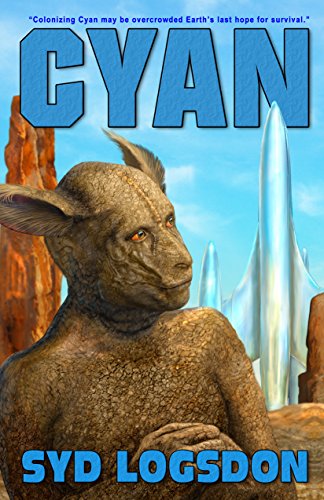
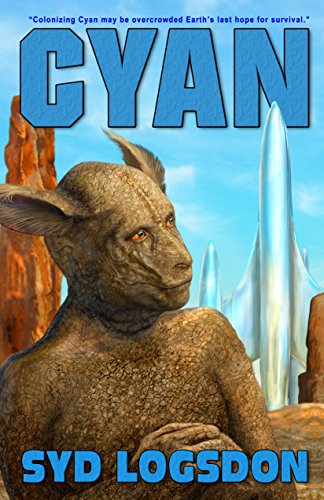
It is certainly true that novelists who treat events through the actions of people with whom we can have sympathy, will get their point across better than propagandists. Uncle Tom’s Cabin started the Civil War by making northerners care about particular, fictional slaves. I have always had strong feelings about overpopulation, but I could not write with any effect until I wrapped the problem into the story of the colonization of Cyan, by people we could care about.

If these three posts have seemed a bit disjointed, remember that my intention has been to give bits and pieces of Masters’ advice to an audience that otherwise might never see them. The entire books is worth reading, if you have the time and patience.

390. Pilgrim Son (2)

Continuing Pilgrim Son from yesterday —

Masters dictated an outline of Brutal . . . and sent that with the first two chapters. Dial Press, who had asked for Brutal . . .  in the first place, was impressed, but wanted another reading. Two weeks later, they passed on the book.

Masters was not like you and me; he had friends in high places, so he could find out what went wrong. It turned out that a famous publisher had advised them not to publish anything by an ex-British Indian officer, and they caved to pressure.

Nothing personal, but your book does not meet our current needs. Does that sound familiar?

Masters returned to what he had written, and found it different than any book of its type and better than most. He decided to finish it and send it on its rounds to publishers on spec.

He finished it. He sent it out. It came back. He sent it out again —

As is the manner of things in publishing, rejections began to pile up. A friend of Masters’ gave this advice: (page 127)

A writer’s time is always valuable. If you don’t write anything, I can’t sell anything.  While Brutal is going around the publishers, you should be starting something else. . . .  Why don’t you write a novel? You could, you know.

Master’s says, “The writing of Brutal . . . had given me confidence that the mere mass of works in a full-length book was nothing to be afraid of.”

I offer you that quote here for the express purpose of adding, “AMEN!” Spirit Deer did that for me.

As usual, Masters approached the question with deep thought. Write a novel, or become a novelist? It isn’t exactly the same thing. Masters was looking of interesting work to fill the rest of his life, and provide security for his family. Writing one novel would not further that end. Becoming a novelist — producing novel after novel — would.

He would become a novelist, but what kind. He wrestles with this for many pages, starting on 128, before he decides what we already know. He will write historical novels about India, from the viewpoint of Brits who are half inside and half outside the culture of India. By page 138, he is ready to say:

I listed thirty-five areas of conflict about which I felt I could write novels. They covered the whole period from 1600 to 1947. Taken as a whole, they would present a large canvas of the British period in India. The British would be in the foreground, as they had been in actuality, yet I thought the canvas would show how they were controlled by their environment — India — even while they were ostensibley directing it.

(to provide unity to the project) . . . I thought that the only course left open to me was to put into the foreground of each book some member of a single continuing family.

And that is exactly what he did, through more than twenty novels.

Through all this, and other chapters besides, he interrupts his memoir with short paragraphs like:

John Day rejected Brutal. They said they already had a writer on Oriental subjects. . . .  and  . . . Little, Brown rejected Brutal. It was very well written and eminently readable, they said, but the couldn’t think what category to publish it in, as it contained elements of travel, belles-lettres, adventure, and military history, as well as autobiography.

I also remember those days of frustration. Now rejection slips are kind, vague, and always contain something like, “not for us, but try elsewhere.”  They do not cause hurt feelings, but they also don’t give any useful feedback.

Back in the day, I was once turned down on an outline that my agent was excited about, because the novel, on the subject of Shah Jehan’s reign, was “too Indian”. Imagine that. A novel about historical India that was too Indian. Another novel was highly praised by a publisher, who ended by saying, “But I can’t take it because men’s adventure books are no longer selling.”

Maybe its better when we don’t know why.  Pilgrim Son review continues tomorrow.

389. Pilgrim Son (1)

Pilgrim Son by John Masters is the third in a trio of memoirs. The first two are about his life in the British Indian army, the last is about becoming a writer.

As I said earlier, I first read Pilgrim Son in the late 70s, about the time I was writing Spirit Deer. I was impressed by Masters professionalism. I expected professionalism from the publishing industry —  the phrase publishing industry suggests that it is run in a businesslike manner. Within a few years, I decided that was a myth.

I recently went back to Pilgrim Son and reread it, looking for the point at which he rails against the industry for not recognizing that his first novel would be successful. I spent many hours and did not find the quotation, so I will tell you that he said something like this: If Nightrunners was good enough to be chosen for book clubs, then why did every editor who read it fail to know this? Quote, more or less.

Pilgrim Son is 383 dense pages, much of which is dedicated to Masters observations on becoming an American in the late 40s and early 50s, while living in a colony of bohemian artists and writers. That world no longer exists.

I can’t recommend the book to everyone. Nevertheless, if you are a serious would-be or beginning writer, you could do worse. For you, I will drop approximate page numbers from time to time in order to help you find the parts of the book which will be most useful to you.

The book Masters was writing at the beginning of Pilgrim Son was Bugles and a Tiger; its original title was Brutal and Licentious, part of a then well known quotation. I will call it Bugles  . . . or Brutal . . . as he does, according to which part of Pilgrim Son I am referring to at the moment. Sorry if that confuses you.

#                             #                            #

Around the beginning of 1948, John Masters had settled down to write. This included discussing his prospects with several editors of his acquaintance, and receiving their advice.

Beginning writers will now be reaching for their favorite means of suicide or homicide at the notion that Masters got to talk to and receive advice from editors before he had written anything. It does help to have friends in high places — or so I am given to understand. I never had any myself.

Those editors suggested that he begin with a memoir of his life in India, somewhat following the pattern of Lives of a Bengal Lancer. (page 106, but also check out pp. 104-5) Masters disliked that book, but took what he could from it in planning his own. Planning was second nature to him, learned as a British Army officer, so he soon knew what every chapter of Brutal . . . was going to contain. Then it was time to write.

Masters says: I pulled myself together. The first chapter was only going to be twenty-five pages and I could manage that. The the next . . . and the next . . . One chapter at a time, I could do it. The book as a whole and each chapter had been shaped by the master plan. Now I must concentrate on each page, each line.     page 112

Masters finished the first draft and read it through. He didn’t like it. Lots of beginning writers have reached that stage. Masters had learned that an excellent plan does not always result in excellent execution.

It’s what he did next that makes him interesting. In his own words, somewhat shortened:

A more experienced author might have been able to avoid these errors, but for me there was no way but to replan in the light of what was there on paper. …. Find out how it happened, first, and then remedy it.

I divided several sheets of paper into lines and columns and went carefully through the MS, grading each sequence in three ways: by length, by type, and by merit of its type. It soon developed that almost every sequence could be classified as Action, Explanation, Color, Characterization or Thought. When the job was done, and it took several day’s hard work, my new charts revealed a very lumpy texture in the book. Page followed page of action, with no explanation and little color. Color was not used as a background to action or as a perimeter to characterization, but haphazardly, as the pictures had come to me. Although I could grade some sequences A, too many were B’s and C’s: not good enough for a professional.

 . . . Using my charts to correct the early faults, I rewrote the first two chapters.  . . . .  

I’ve never been quite that organized myself, but I have gutted and rebuilt many hundreds  of pages. Pilgrim Son review continues tomorrow.

388. Cyan Released Everywhere

Cyan was released in a sequence. First it was available in March for pre-order from Amazon.

On April 17, it was released, but exclusively from Amazon.

Today, it becomes available everywhere.

If you do your reading on another tablet, in EPUB or another format, you can finally download.

I thought the only hard copies available would be the fifty print-on-demand copies I took with me to Westercon, however once I made the POD order, they became available to everyone. I didn’t see that coming.

Enjoy.

387. Buchan the Racist

Getting ready for Westercon, I prepared a set of notes, placed as posts, for the panel What made the golden age golden? I was under the impression that it would be history and homage, and made notes appropriate for that. I was wrong, and it isn’t the first time I have spent time off track by starting before I had full information. When i’m ready to start a project, I’m ready, and sometimes I pay the price.

After I had posted my notes-to-self, but long before Westercon, I received this description of the panel:

Heinlein and Asimov are two pillars of the Golden Age of Sci-Fi. But reading those works with modern eyes can reveal attitudes that would be unacceptable in modern times. What can we learn from the classics when we look past the sexist and racist attitudes that pervaded the works of that time? Can we still appreciate works that present unacceptable ideologies?

Well, that’s a bit of a different story. No problem. I am always ready to fight the forces of political correctness.

I’ve been to this rodeo before. Once, several years ago, I was looking at on-line reviews of John Buchan’s The 39 Steps. I don’t remember why, but I do remember a review that ripped Buchan as a racist for seemingly anti-Semitic statements in that novel. I wrote a counter-review; both have since disappeared.

For those who don’t know him, John Buchan was a popular British novelist of the early twentieth century. He is very much a pro-British patriot, with the prejudices that implies. Think Kipling light. And he was a racist, but not an anti-Semite. I say that not as a scholar, but as a fan, who has read and re-read his works.

If you read him at length, his distaste for African blacks comes through loud and clear. His Jews, on the other hand, show up as both heroes and villains, just like his Germans and his Englishmen. But if you only read a little, you can be fooled.

#                #                #

To follow through on this, I used one of my favorite techniques. I recommend that you put this into your bag of tricks. I went to Project Gutenberg, downloaded The 39 Steps in Rich Text format, then cut and pasted that into my word processor. Now I had all 41,264 words in a searchable form.

One more hint. RTF will be hard to read because its wide line-length makes it look like bad modern poetry. Just switch your word processor to horizontal format and it will be much easier to work with.

The reviewer who started this controversy had complained about Buchan because of the words of one of his characters, Scudder. If you don’t know the book, Scudder is a kind of amateur spy who finds out that bad people are about to start World War I, and catch England off guard. This is what Hannay, the main character, says, quoting Scudder:

The Jew is everywhere, but you have to go far down the backstairs to find him. Take any big Teutonic business concern.  If you have dealings with it the first man you meet is Prince von und Zu Something, an elegant young man who talks Eton-and-Harrow English.  But he cuts no ice.  If your business is big, you get behind him and find a prognathous Westphalian with a retreating brow and the manners of a hog.  He is the German business man that gives your English papers the shakes.  But if you’re on the biggest kind of job and are bound to get to the real boss, ten to one you are brought up against a little white-faced Jew in a bath-chair with an eye like a rattlesnake.  Yes, Sir, he is the man who is ruling the world just now, and he has his knife in the Empire of the Tzar, because his aunt was outraged and his father flogged in some one-horse location on the Volga.

Wow! That sounds pretty anti-Semitic, and the reviewer who started this conversation took it as proof positive. But let’s wait a minute. Assume that the character Scudder is the worst anti-Semite since Hitler — does it follow that Buchan hated Jews? I wrote a mass murderer into Cyan — does that mean I approve of mass murder?

You can’t read the words of a fictional character as the opinion of the author, especially if you are looking at a minor character of questionable honesty.

Scudder dies in chapter one and his quest is taken over by Richard Hannay, the actual main character in this and several other novels. If you look closely at the character of Hannay and a dozen other lead characters in two dozen other novels, then you will come closer to having a fair and defensible picture of Buchan’s attitude.

In point of fact, not only was Scudder a minor character, he was also a liar. The reviewer who cried bigot never found this out because he quit the novel early. I knew that he was, but I needed a quote as proof. To find this, I searched for the word Scudder in my Find and Replace function. His name appears 65 times in the book because Hannay keeps thinking about him. Click and read. Click and read. Click and read. I found the passage I remembered at the beginning of chapter four.

The little man had told me a pack of lies.  All his yarns about the Balkans and the Jew-Anarchists and the Foreign Office Conference were eyewash . . .

Hannay worries at Scudder’s diary, taken off his body, because it seems odd, almost as if it were a cypher, and Hannay is good at cyphers. Sure enough, the Jew-Anarchist plot is just a cover for a much deeper plot (not by Jews), which Hannay foils by the end of the book.

So, everybody was a nice, unbigoted person and it was all a misunderstanding? If it were only that simple.

Reread the first quote, if you can stomach it. How would that passage play in a book published in 2017? When it was published in 1915, the book was a hit. Nobody minded that passage at all.

After Hitler and the holocaust, anti-Semitism fell out of favor. Before that, it was everywhere, in Europe and America. An actually anti-Semitic book in England in 1915 would have raised no eyebrows.

Was Buchan a bigot? Yes and no. He was not anti-German, he was not anti-Semitic, but he was anti-African. How do I know? I have read more than a dozen of his books, some multiple times. You can’t know from assumptions, and you can’t know from reading one book.

Bringing this back to the Golden Age of science fiction, we should be able to read and appreciate authors like Heinlein when he depicts mannerisms that are foreign to us. (Or to be fair, foreign to you; I grew up in the same era and it all seems normal to me, even when I disagree with it.) The fact, for example, that Joan Freeman in Lost Legacy is the object of mild sexist teasing should not mask the fact that she is a full participant in the action.

Nevertheless, understanding is one thing, enjoyment is another. There is a limit, and it varies with each of us. For me, Heinlein sometimes seems silly, but I still read and enjoy everything but Farnham’s Freehold. That one goes on my never-again list, along with John Buchan’s anti-Black tirade Prester John.

POSTSCRIPT: As it turned out, everyone on the panel ignored the description and we just talked about how great the golden age was. The forces of political correctness never raised their heads.

386. Chief Seattle

Beware, I occasionally rant. Like today.

If this post had a descriptive sub-title in the nineteenth century style, the full spread would be:

Chief Seattle: White Man’s Indian
or, how a movie took a fine old man and turned him
into a puppet and a joke

How’s that for laying out a political agenda for all to see?

Yesterday and today I presented an ersatz Miwuk legend. Ersatz is a fancy word for “I just made it up”. I don’t apologize for that. Spirit Deer is a work of fiction, and I used Miwuk Indians as the basis for Tim’s knowledge because they were the resident Native American’s in the places he finds himself. (When I wrote the book in 1975, it wasn’t yet a crime to say Indian instead of Native American.) Later, I will also have a “family story” about his grandfather’s grandfather. That is also made up, to meet the needs of the novel. Again, no apologies. Fiction is fiction. Historical fiction has some responsibility for maintaining accuracy, but Spirit Deer isn’t even subject to that.

I wrote this novel, all of it, including the legends and family stories. It’s fiction, okay. If it were ever to be published, I would make sure that those facts were clearly stated.

Actually, that’s what I’m doing here.

There is a point to all this, beyond simply taking responsibility for what I have written. When I was a teacher, I came across a book called Brother Eagle, Sister Sky: A Message From Chief Seattle and also the supposed text of Chief Seattle’s speech. This took place decades ago, and I can’t remember which I saw first, but my Hemingway style “writer’s shit detector” went off like a siren. I was sure that this was another white guy putting words in an Indian’s (excuse me, Native American’s) mouth, after he was long dead and couldn’t set the record straight.

It turns out, I was right. The version of Chief Seattle’s speech in question, which comes complete with the statement, “I have seen a thousand rotting buffaloes on the prairies left by the white man who shot them from a passing train,” was written by screenwriter Ted Perry for the 1971 film Home. Those buffaloes were killed and rotted decades after Chief Seattle made his speech, and half a continent away. To be fair to Perry, he tried for years to claim credit for the speech and counter its false historicity, to no avail.

Actually, as fiction, or as a soupy environmental statement, it is a powerful piece of writing. But it has nothing to do with Chief Seattle.

The publication of Brother Eagle, Sister Sky led to a 1992 Newsweek article that named Perry as the author of the speech. In researching for this post, I also found a more complete article from the New York Times. You can check them out for yourself.

All this slapped me in the face four ways.

As a writer, I work hard to keep my fiction from telling lies, either morally or factually. I am a long time student of ecology, and I abhor the way a hard-edged science gets turned into a set of slogans. As an anthropologist (B.S., M.A., and two summers on archaeology digs), I hate the way Native Americans are rarely seen for themselves, but as savages or saints, according to whatever is the current fashion. I am a student of history as well, and . . . you get the picture.

You might have guessed by now that I can be irritated by lies, and seeing a screenwriter’s version of “Chief Seattle’s” speech accepted as history grinds all my gears.

385. Westercon Report

I flew down to Tempe (part of greater Phoenix) to attend Westercon 70. It was a business trip — right? Like an amusement park attendant going to Disneyland is a business trip. That is, I had to go, but I had great fun.

There were panels and workshop on many subjects. I concentrated on the Books and Authors section, where there were enough things happening to keep me occupied three times over. I missed a lot of good stuff because I was presenting, or because something I couldn’t miss kept me away from something I didn’t want to miss. There were also panels on Art, Diversity, Fandom, Science, Steampunk and more, most of which I didn’t have time to attend.

I finally feel like I have a handle on what Steampunk is all about. I was born on the Nautilus, grew up with the Wild Wild West, and flipped out about Brisco. I have read a few Steampunk novels, and some short stories, and liked them all, but I never got what these people with goggles and gears glued to their clothing were all about. After two panels about Steampunk as literature, by Steampunk writers, and a panel by costumed members of Steampunk culture, I get it. And I like it — although you’ll never see me in costume. I also got the kernel of a new novel. That one is your fault, Steve Howe (not the guitarist) and Bruce Davis. Thank you Ashley Carlson, Suzanne Lazear and David Lee Summers for the literary education on Steampunk, and thank you Dirk Folmer, Katherine Stewart, and Madame Askew for the cultural education.

Those are just a few of the authors I met. They were mostly young people. Understand that, at my age, young is defined as under forty, and there weren’t many under thirty because it takes some time to have enough books published to get invited.

I won’t name drop at this time, except for Amy Nichols whose reading from Now That You’re Here (or was it While You Were Gone — I missed something at the introduction) was calm, clean, and unaffected, and sounded just like a teenager. The character in the book, that is; not Amy. I will testify that science fiction and fantasy are in good hands. I have at least a dozen new books on my must-read list, and a lot more on my want-to-read list. I expect to provide some reviews here and on Goodreads and Amazon. After all, that is how readers keep their favorites in sales, so they will be able to write more books.

I learned a hundred other technical tidbits on writing and publishing, but I won’t share them until I’ve tried them.

Worldcon is in my back yard next year. I can’t wait.

384. How to Sign an Ebook

I was involved in a book signing years ago, and had/will have two at Westercon. [Two weeks from now as I write this, one week ago as you read it.] Which begs the question — how do you sign an eBook? I’ll answer that below, but first . . .

Jandrax came out in 1978, and the Stacey’s book store in the local mall invited me to do a signing.

READERS PLEASE NOTE: THIS POST HAS BEEN HIJACKED BY REALITY.

After writing that last sentence, I did a quick internet search to see what happened to Stacey’s. I knew it disappeared later, but I couldn’t remember what year. I discovered that my Stacey’s was a spin-off of the well known San Francisco store and I had to work my way through obituaries to that great institution. I finally found someone who knew the fate of my local store. It closed in 1994. To quote my source

 . . . in 1994, Borders and Waldenbooks joined forces – and like a tidal wave of orcs, they swept across the land, mercilessly engulfing independent bookstores. Ashes to ashes, Stacey’s.  RIP, The Bookstore in Modesto.

Waldenbooks? I had completely forgotten them. They used to be at the other end of the mall, but they too are gone with the wind. I liked that store. I also liked both of the Borders stores that were within driving distance. Barnes and Nobel wiped them out years ago.

The upside is that Barnes and Nobel is also a fine bookstore with two local outlets. Today it is beleaguered by Amazon. If they go I’ll miss them, too.

I also miss The Bookstore, a true independent in another location across town. It was replaced by a Christian bookstore. The Christian bookstore went out of business later. Apparently, not even God can fight The Big Book Monopoly.

Because I like old books, and because I am usually short of cash, I shop at used bookstores. There are half a dozen in my five county area, but I also know of another ten, all of which have gone bankrupt in the last two decades. Ironically, when I want an old book that isn’t available locally, I buy from used bookstores on the internet — brokered by Amazon.

If you want to buy my latest novel, Cyan, you have to go to Amazon for now, where you can download it or order it in paperback. On July 17 it will become available everywhere. That is, everywhere on the internet.

The internet giveth, and the internet taketh away. That’s not a battle cry, just a recognition of the reality of change.

So back to what I was saying:  Jandrax came out in 1978, and the Stacey’s book store in the local mall invited me to do a signing. It was great fun, although most people stopped, smiled, looked, and left without buying a copy.

When things got slow, the manager explained some of the financial realities of his life. He said that when books came in, and didn’t sell, it would cost too much to send them back. They simply ripped the covers off and sent them back instead, for full credit against their account. Then they threw the coverless books into the dumpster.

He pulled a copy of Silmarillion, just published, off the shelf, tore off the cover, and gave it to me. He said he would return the cover and it wouldn’t cost him a dime.

I took it. I didn’t want to insult my host, but I felt guilty at the time, and I still do. It sits on a shelf in my library, an odd souvenir of my book signing. I still haven’t been able to force myself through it, so it remains unread. Tolkien without hobbits is a hard go.

I thought of that event three years later when A Fond Farewell to Dying came out with a cover that was — not beautiful. It didn’t sell. I had a vision of book store managers everywhere taking one look at the cover, deciding it wouldn’t sell, ripping it off for credit, and tossing FFTD into the dumpster, as unread as my copy of Silmarillion. Maybe that is just me making excuses.

Maybe not.

So here we are, back in the present. I have two book signings coming at Westercon, and Cyan is primarily an eBook. What to do? EDGE, my publisher, allows me to buy print-on-demand copies, so I ordered 50. I’ll keep some for myself and take the others along.

For the other thousand people at Westercon, I am making up a half-page, double-sided sheet with a thumbnail of Cyan’s cover, the Westercon logo, and a sample of text from chapter one. It amounts to a come-on for the eBook and a weird souvenir for those who attend Westercon. At least it gives me something to sign at the “book” signing.

Still, it was more fun signing a physical book.

Welcome to Summer

Hi, just a personal note, here; not one of my usual mini-essays.

I went to Tempe, Arizona to Westercon over the Fourth of July weekend. It was from 109 to 111 or thereabouts, but I felt no pain because the Mission Palms was well air conditioned. I have a report on that scheduled for the 11th.

I came home to find things weren’t much cooler. Yesterday was 109 here in the foothills of the Sierras, so my wife and I cut out for the coast and spent a few hours walking along the beach at Carmel. Today I’m home, hiding under the air conditioner, working out the details of a new novel that was sparked at Westercon.

I am also watering our non-native trees. When I just went out to change the sprinkler, I saw two mother wild turkeys with twenty-one gawky, half-grown chicks in our yard. They were panting, and looking miserable.

They and I are both asking — is it fall yet?