Category Archives: Serial

Spirit Deer 4

Tim started up the slope and the muley broke from cover.  With surprising speed, it went up the slope on three legs. Tim sighted quickly and squeezed the trigger – but nothing happened! He had forgotten to work the lever after his first shot. He jacked a shell angrily into the chamber and fired, but the deer kept right on going, and he knew he had missed.

Tim topped the skyline fifteen minutes later. Below him was a broad, shallow valley, now lost in shadow, and behind him the sun was setting. The deer was nowhere in sight.

* * *

Tim was in trouble, and he knew it. It was too late to find his way back to the campground before full dark, and he was growing cold, so he built a fire near a circle of junipers. He had slept out many times with his father, but never without a sleeping bag or jacket, and never without food. “Serves you right,” he told himself, bitterly. He fed the fire and squeezed close to it.

Tim could imagine his mother coming home from work, past midnight, and moving about the silent, empty house. She would see his note. If he was really lucky, she would assume that he had decided to spend the night at his grandfather’s house. It would be late, so she probably wouldn’t call. It would probably be morning before she knew he was missing.

If he just had his cell phone he could have told her what happened, although he cringed at how lame the story would sound.

It was a miserable night. Tim dozed in snatches on a bed of dry ferns and needles. Before is was fully light, Tim had already stamped out his fire and started off, but even exercise did little to warm him.

He had a decision to make. Within an hour, his mother would be calling his grandfather, and would find out that he wasn’t there. He didn’t want to worry her, but there was no way to avoid it now. The question was, should he go back immediately and face her, or should he spend a little more time to bring the muley in. He decided to spend one hour looking for the injured muley, then he would have to go back.

The ground was too rocky to take tracks, so he headed for the stream he could see at the base of the valley. It was rocky with only a few patches of dirt, and he found no tracks there, so he worked his way downstream, looking for anything to indicate that the deer had passed that way.

Just when he was about to give up and turn back, he found three-legged deer tracks.

Now Tim was really in a dilemma. He didn’t want his mother to worry, but he didn’t want to leave his wounded deer either. And he certainly didn’t want to have to tell his dad that he had left a wounded animal.

“Just a little longer,” he decided.

Tim followed the tracks down the valley. It was slow work; the tracks only appeared at scattered intervals where the ground was soft enough to hold them. Several times he lost them altogether, but always managed to pick them up again.

The sunny morning was turning into a very cloudy day. Up here snow would be dangerous, and even rain would be a first class misery. At least he had the survival pack his father had helped him put together. It held matches and a plastic poncho, and he never went into the woods without it.

The stream roared in its bed, and towhees darted about, showing him their red sides as the flitted by. Tim was watching them, when he saw his deer. more next week

Spirit Deer 3

He hid his bike in the manzanita a hundred yards from the campground and took his rifle with him. Then he slipped a few cartridges into the magazine, just in case.

He walked into the woods. It was late October and the Sierra Nevada mountains of California were beautiful. The aspens were gold against the deep green of the firs and the air was clear and cool. As the morning slipped by he occasionally heard the shots of other hunters, but he didn’t see any deer.

By mid-afternoon, Tim reached a high valley, cut through by a small, swift brook. There he lay back with the sound of water in his ears. The rifle was across his stomach as his eyes searched the edges of the trees.

Five deer came out of the woods on an eyebrow of trail fifty feet higher up the slope and a long hundred yards away. A four point buck led the way, followed by three does and a yearling. Tim sat up and brought up his rifle. He took up slack on the trigger and squeezed gently, just as his father had taught him.

In the moment that Tim fired, the lead muley caught sight of him and pulled up short, then stumbled. His forequarters failed him and his chest hit the trail as his back legs struggled for balance. Then he was up again and running up the trail.

The other deer were gone. Tim’s attention had been all on the leader and he had not even seen where they went after they disappeared into the forest.

Now he was in a panic. Until he had fired that shot, he had not really admitted to himself that he was out hunting alone. He had just been “taking a walk”. If he turned away and went back down to the campground now, his parents would never know the truth. But Tim would know, and in the hunter’s code his father had taught him, leaving a wounded animal was unthinkable.

Tim plunged into the stream where it ran shallow across a bar of harder rock, holding his rifle high. He scrambled up the talus slope, using rocks and juniper as handholds. When he reached the point where the deer had been, he found the manzanita covered with a fine spray of blood.

Tim turned up the narrow, winding trail in pursuit of the wounded deer. Near the stream there were vines and underbrush, but as the trail climbed, it became more open. The muley was nowhere in sight.

There were a number of tracks on the trail, but only one set going in the right direction. Tim studied them for a moment, looking for some distinctive feature, but he found none. The deer held a grueling pace for more than a quarter of a mile before his tracks showed that he had slowed and begun to limp.

The situation didn’t look promising. The deer had run into an area of broken granite and stunted firs. It was not a place for an inexperienced tracker.

The sun was low, filling the land with shadows and strange suggestions of shapes. It was beginning to get cold, and Tim’s jacket was back at the campground, tied to his bike.

Tim sat down on a rock to scan the slope ahead of him. Finally, almost lost in the tangle of roots at the base of an uprooted ponderosa pine, he thought he saw a set of antlers.

Tim started up the slope and the muley broke from cover. With surprising speed, it went up the slope on three legs. more tomorrow

Spirit Deer 2

Last year, Tim had been allowed for the first time to go with his father on his yearly deer hunt. Then his father had given him a rifle for Christmas, and this year they would have hunted together for the first time. There had never been any open agreement between them – that would have spoiled the whole thing – and his father would never have admitted that these were rewards for good behavior. Good behavior was simply expected. But if Tim hadn’t gotten control of his temper, the rifle and the hunt would not have been his.

Tim picked up an axe and took his anger out on the wood.

* * *

Tim was standing beside the pickup when his parents left the next morning. His dad tossed a worn leather satchel into the back and squeezed his shoulder. “Your mother is going to drop me off on her way to work,” he said. “Maybe I’ll be able to get a day between runs before deer season is over.”

“Now don’t you go driving crazy!” Tim’s mother said.

“You know me, Helen.”

“Yes, I do.” She turned and kissed Tim, and said, “There are leftovers in the refrigerator. You’ll have to make your own supper. I’m taking another double shift while Susan is having her baby. Maybe you ought to bike over to see your Granddad.”

“All right, Mom,” Tim said, but inside he was shouting, Not you too! He knew he shouldn’t be angry at either of them, but he was. After the pickup pulled out of sight, he wandered around the yard, feeling abandoned and feeling sorry for himself.

Eventually, he went to his bedroom and sat down on the bed with his new rifle across his knees. It had never been fired, except on the practice range. He took the shells from the box on his desk and loaded it, then unloaded it again. Finally he dropped a half dozen cartridges into his pocket and picked up his pack. As long as both parents were gone for the night, he figured he might as well spend the time with his grandfather. Maybe he could get in some target practice, or maybe he could get his grandfather to tell some of the family tales about the old Miwuk Indian days.

He left a note for his mother and strapped his rifle across the handlebars of his bike. He turned up the main highway into the mountains, standing on his pedals to make the initial grade. When he got to the turnoff to his grandfather’s place, he hesitated. Up the road, only seven miles further into the mountains, was the campground where he and his father had parked last year when they went hunting. At least he could go there. He had all day.

The road rose sharply for those seven miles, and Tim was thoroughly winded when he arrived at the campground. Half a dozen empty campers were parked there, but there was no one in the campground. Everyone was out hunting.

Tim stood astraddle of his bike for a long time, running his hands across the smooth steel and wood of his rifle. He was sorely tempted to have his hunt anyway, alone. Finally he decided to just walk in the woods for an hour before he went down to his grandfather’s place. He reached for his cell phone to tell his grandfather, then remembered that it was at home.  The one girl he liked least had begun to call him twice a day, so he had stopped carrying it. more tomorrow

Spirit Deer 1

Spirit Deer
by Syd Logsdon

Chapter 1

Tim was packing for their hunting trip when his father came to his room. When he hesitated in the doorway, Tim knew that something was up, and that it wasn’t something good. He shoved another pair of jeans into the pack and said, “What’s the matter, Dad?”

“I just got a call from Mike Conway,” Tim’s father replied.  “He’s come down with the flu.”

Tim stood still with his hands resting quietly on the half filled pack, waiting for the rest.

“I have to drive his rig for him.”

“How far?” Tim asked.

Tim’s father came up and put his hand on Tim’s shoulder. “All the way to Chicago. I’m sorry, Tim”

Tim wished he was twelve years old again, so he could throw a screaming fit. He had been working on his temper these last two years, trying to be fair to his family, trying to be responsible – trying to be more like his dad. If he acted childish now, if he even whined, his father would be terribly disappointed in him. He didn’t want that, so he gritted his teeth and asked, “How soon will you be back?”

“That’s the rest of the bad news. I can’t pick up his load until tomorrow morning. Figure two days each way, and at least a day to unload and load at the other end. Five days; I’ll barely be back in time to make my own next run.”

Tim couldn’t believe it. It wasn’t fair. He had waited all year for this hunting trip and now it was going to be snatched away from him. He said, “I wish we had left two hours ago.”

Tim’s father shook his shoulder in a friendly way. “Then Mike would have driven sick. I’m glad I was here for him. He has been a good friend to all of us.”

It was true. Tim knew that; but inside, the selfish twelve year old he had been was screaming, “I hate it, I hate it, I hate it!” Tim was tired of being fair. His fingers tightened on the pack. He wanted to grab it up and throw it – preferably through a window, or at his dad.

But Tim saw his father’s eyes on him. He knew the look of disappointment that would come into those eyes if he gave in to childishness, and he never wanted to see that look again. His dad said, “Tim, I’m proud of you for taking this like a man.”

Tim couldn’t reply, and he couldn’t stand those eyes on him any longer. He nodded with set lips and left the room. He headed for the woodpile.

Two years ago, the last time he had thrown a tantrum, his father had taken him out to that woodpile. He had given the axe to Tim and had told him to chop wood. After ten minutes, when some of his anger had been drained away by smashing the heavy logs into firewood, his father had said, “Everyone gets angry. Everyone wants to have things go just right, and things never do. Now you’ve got a choice to make. You can cry like a baby when you don’t get your way, or you can act like a man. The next time you find yourself losing control, I want you to get up from whatever you are doing and come out here. Work it out, then come back.”

Tim had spent a lot of time at the woodpile that year. Gradually he had gained control of himself, and as his father grew proud of him, he had grown proud of himself.

It had been nearly a year since he had gone to the woodpile to take out his frustrations, but this was no ordinary disappointment. more tomorrow

Alien Autopsy (4)

In Jandrax, I was happy to use modified mammals and birds. That was all the story needed. When I wrote Cyan, I faced a different situation. My crew was set down on an alien planet for one year, with the task of coming to understand its weather, geology, and ecology in order to prepare for colonization. They were all scientists, so their actions and conversations called for a deeper understanding of their new world than any other kind of science fiction novel would have required. That challenge was half the fun.

When I began Cyan, I had been studying ecology for about twenty years, starting back when I had to explain what the word meant. I later came to understand the essence of Earth’s taxonomy in the most rigorous possible way — I had had to condense it to a level which middle school students could understand without dying of boredom.

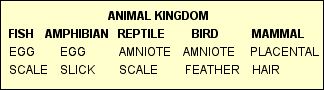
Terrestrial taxonomy looks something like this:taxon

Drop a salmon egg on the gunwale of your canoe and it will dry out in minutes. A chicken or turtle egg would survive the same treatment. This is the meaning of amniote egg (although there are other, competing meanings). Creatures who lack them, must lay their eggs in water. The rest of the chart should be clear, although simplified. For example, birds have scales on their legs as well as feathers elsewhere, and I skipped Dinosauria altogether.

I built up Cyan from the taxonomic level. If I had hadn’t been showing the planet through the eyes of a team of scientists, I would never have started out there.

It had to be weird but recognizable — that’s the key to all science fiction invention. It also required restraint. You can only explain so much to your reader without losing them, and beyond a certain point, your backstory is wasted effort.

I took grasses and weeds for granted. I gave my trees multiple trunks bound together, like a strangler fig without its victim. For something like insects, I made Chitropods – chitro sounds like chitin, and pod means foot, so the reader can be expected to infer an exoskeleton. Continuing the idea of inference, if we call the flying creatures who eat the chitropods pouchbats, the reader will draw a better picture in his mind that we could on paper.

The number of legs is important to Terrestrial arthropods, but I bypassed that by giving all chitropods many legs, but with only one joint each where each meets the body. This gave them a rolling gait “like caterpillars on crutches”.

These are throw-away inventions. They could have been applied to any ecosystem and they are not systemically related to each other. They alone would be good enough for most science fiction novels, but not for one about scientists teasing out the essence of their planet.

Here we need a key differentiation, from early in evolution, from which a thousand lesser differences can be derived. I decided that on Cyan, early in the development of chordate life, the vertebral column doubled at the posterior, giving Cyanian sea life twin tails. That changed everything. Earth fishes evolved legs from their fins. Cyanian “fishes” evolved legs from their split tails, so every Cyanian land creature is a tail-less hopper, fundamentally different from anything on Earth.

On Cyan, the classes are Pseudo-pisces, Amphibia, and Inturbia. No reptiles, no birds, no mammals, no dinosaurs. The Amphibia are cold blooded. Inturbia are inefficiently warm blooded. The term Inturbia should imply “internal body temperature un-perturbed by external changes”. Not every reader will get that, but writers should reward their best readers by not spelling everything out.

There are a thousand other details, but for that, you will just have to download Cyan.

All this is not to say that I didn’t invent interesting alien creatures. Kavines are incredibly fierce. Dropels, especially after they became domesticated, are cute and tasty. In the southern part of the upper continent, the Cyl developed something close to sapience, leading Viki to . . . nope, sorry, that’s a spoiler. I just started with taxonomy so they would all fit together.

Of course, too much consistency without outliers would be boring, so I added the globe wombs. The explorers see them shining in the treetops from their first minutes on the planet, and it takes a while for them to figure out what they mean.

Inturbia have live birth. Cyanian amphibs have to return to water to lay their eggs, except for one group, the Sphaeralvids, who produce globewombs. When a Sphaeralvid mother comes to term, she moves to a sunny spot in the treetops and exudes a transparent, leathery sac filled with a clear fluid like seawater. Into this she deposits fertile ova, then defecates. Algae from the Sphaeralvid mother’s bowels convert the feces into biomass and the Sphaeralvid nymphs fed off the algae.  When the feces are gone, the globewomb walls break down, leaving the now sizable nymphs free to face Cyan on their own.

Neat, huh? That is entirely too much detail for most books, but Cyan was written to show, realistically, what exploration of a new world might be like. This is just the kind of detail a crew of scientists would be recording.

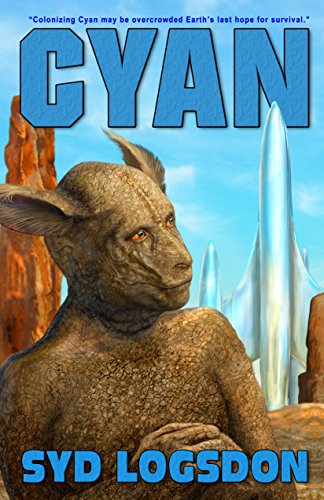
Aside:      Shortly after posting this, I received a digital copy of the print-on-demand version of Cyan to proof. I spent May 29 and 30 in close reading of all 315 pages. The taxonomy and ecology of Cyan are backstory, dribbled out in bits here and there, but what the reader sees up front and in their faces are the individual alien beings. I realized that I need a fifth Alien Autopsy post to devote to the Cyl (the cover critter), but there is no space for it here. You will find it next Thursday over on the A Writing Life side of this website.

#               #               #

I began Cyan a few years after I wrote Jandrax, and set it in the same universe but hundreds of years earlier.

I also have in mind a third novel set in the same universe, but very different. It will take place on Stormking, a prison planet with a Uranian inclination to the ecliptic. The people who make up its population are not scientists, but outcasts. They have no interest in taxonomy. They meet the creatures native to their world one by one, and all they care about are which ones can they eat and which ones want to eat them. This time I’ll stop worrying about how these alien creatures make up a logical system, and just weird them up big time. That ought to be fun, too.

Alien Autopsy (3)

Imagined alien life forms can range from nearly human to outrageously strange. They can be imagined to meet story needs, or imagined first, with stories arising from their peculiarities.

Actually we can do even more. We can imagine whole ecologies. And again, we can go from minimalist to extreme. Arzor from Norton’s Beast Master is suspiciously like the American southwest, but Dune is a desert with an ecology quite a bit developed beyond any desert on Earth.

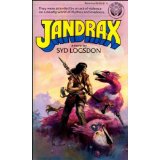
My first science fiction novel Jandrax [see note at the bottom of the page] is set on a deeply frozen planet, with only the equatorial region ice free. The only area I developed was a plain roughly a thousand miles across, centering on a massive freshwater lake. I stranded a starship with a load of fundamentalist passengers and a relatively unreligious crew, and watched the fireworks as they found two quite different ways of coping with the local ecology.

The area in question never sees rain, but during the cold season, snow and sleet falls, then melts during the (slightly) warm season. Viewed locally, this results in a dead season of snow, a brief season of wild plant growth during which massive migratory herds move through, and then a long season of dry, warm aftermath until the churned and destroyed vegetation is covered with new snow, where it and its seeds will wait for the next melt.

Viewed from the starship stranded in orbit, there is a moving line of green, eating up a mass of white, and followed by a growing gray, brown temporary desert.

I won’t tell you what happens to the people. That would be a spoiler to a book I’m hoping you will still read. Instead, let’s look at the alien creatures, starting with the herbivores.

Herbies are burrow bodied, tapir headed, fleet and harmless. Humpox don’t get much description, but don’t need it, with that name. Trihorns are as deadly as they sound. All are mammals, as are the carnivorous longnecks and krats. There are also huge carnivorous toothed birds called leers. They ended up on the cover.

These are the deliberately realistic creatures, all mammals and birds, devised in an era when warm blooded dinosaurs had not yet reached public awareness. In another part of the book, there is an interlude on an island which may be a hallucination or perhaps an encounter with the local version of God. Here the rules of realism don’t fully apply, and we find winged people who would never stand up to the laws of aerodynamics, and an insufferably cute, seal-faced, plump flying mammal called a dilwildi.

The example of Jandrax goes straight to the notion of purpose. Weird critters for the sake of weird critters is entirely valid. I love a weird critter novel. But Jandrax was my first full fledged novel, designed to show human interaction in a harsh, ice-age environment. It contains an entire religion, devised for the purpose of providing conflict. The ecology of the world was central to the story, and it was developed, but the individual alien creatures just needed to look right in an ice age environment. Nortonian minimalism is at work here.

#               #               #

I was in high school when I  first read Richard McKenna ’s novella Hunter, Come Home. It was a deeply moving, human story of manhood, honor, and love. It also had a second dimension, the description of an entire sentient ecosystem in peril and fighting back.

Here is a brief summary. Mordinmen were descendants of a lost Earth colony which had fought a generations long war against the dinosaur-like creatures which inhabited their planet. Manhood had become symbolized by the killing of a dino, but now the dinos were scarce and poor families, like Roy Craig’s, could no longer afford a hunt.

Mordinmen had now claimed another planet and were setting about to destroy its native ecosystem, in order to rebuild it in the image of their home planet. Red dots (successful hunters) were running the show, assisted by blankies like Roy who was working toward the time he could make his kill on the new planet. Hired as specialists, the Belconti biologists were providing the virus-like Thanasis used to destroy the native life.

When the story begins, the fight to transform this new planet has been going on for decades, and it is failing. Now the Mordinmen, against warnings by the Belacaonti, are about to unleash newer, harsher, more dangerous plague on the planet.

That’s about as far as I can summarize without a spoiler alert. Roy Craig wants more than anything to be a full fledged member of his machismo society, but his blanky status leaves him marginalized and frustrated. At the same time, he is drawn to the relatively gentle society of the Belaconti with whom is is working, symbolized for him by the woman Midori Blake.

Other than the dinosaur like creatures imported by the Mordinmen, there is only one other alien species — the entire planet they are all on. The native life of the planet is totally interconnected, essentially a one-world-tree (shades of Gaia).

There is a three way contrast in Hunter, Come Home. The Mordinmen, from a macho society built on killing are placed in contrast to the Belaconti, scientists who understand and treasure the ecosystem they are trying to destroy, and they in turn are contrasted to the interlocked, semi-sentient native life of the planet. Roy and Midori are each caught in conflicting loyalties as the planned apocalypse moves forward.

This is one of those cases where world building, culture building, and alien species building work together seamlessly. more tomorrow

Click here for next post.

[You can find Jandrax in used book stores. It is also available on this website, in an annotated form. Eventually it will be placed in Backfile, but I’ve been busy. I you want to read it here and now, your best bet for navigation is to begin by clicking the March 2016 archive and find Jandrax 2, then read and slide up, skipping every other post — archives alternates posts from the two blogs on this site. It is a bit of a pain. You can get Jandrax most days through Amazon’s cadre of used book stores. If you want the annotated version, in which I explain the various foibles of a young author, I plan to put it into an easily accessed form in Backfile, as soon after Westercon as I can find the time.]

Alien Autopsy (2)

This material is the second post of four for the panel “Alien Autopsy: the biology of ET” Posts for the rest of the panels will be published in A Writing Life.

You can write a story and make up aliens – sentient or otherwise –  to fit. Or, you can make up aliens, and write a story about some peculiarity of their makeup. Decades of stories were about human mutants (not technically alien, but close enough) with psi powers. if you didn’t live through the fifties, you probably don’t realize how many ESP wielding mutants there were in science fiction, long before Professor X and his X-men made it to the comic books.

Sometimes a single biological factor, with its secondary ramifications, may suggest a whole species and their culture, as in Gardner Dozois novel Strangers.

It is the bittersweet story of a love affair between an Earth man and an alien woman of a people called the Cian. Throughout the novel, Dozois drops hints about the central paradox of Cianian culture, but Farber, his hero – if that is the right word – doesn’t pick up on them. Because he doesn’t understand his wife’s culture, he chooses to have children by her, thinking that is what she wants, and in the closing chapters Dozois drops a house on all of us when Farber – and we – discover that Cianian culture is all built around the fact that, because of a biological defect, its women always die in childbirth.

Technically, this is a gimmick story, but it is so well done that it doesn’t feel like one. Strangers is build around Cianian culture, but Cianian culture is built around the structure of its aliens’ reproductive biology.

There have also been a lot of less salutary books written about aliens with odd reproductive structures, but lets not go down that road.

(Aside: My novel Cyan, named after the planet which was named after the color, has no relationship to Dozois Cian, or the thousand other Cians — characters, book titles, and authors names — to be found if you type cian into Goodreads.)

Those of us that grew up with the original Star Trek knew aliens as humans with big masks and padded clothing. CGI made quite a bit of progress in removing that limitation in movies and subsequent TV programs, but the wildest aliens aren’t products of technology. They have been around for more than a century in novels. Remember War of the Worlds? Great monster. Even better radio broadcast.

Larry Niven’s Puppeteers might be hard to reproduce in a movie, but that doesn’t stop readers of Ringworld from enjoying them. In fact, that may be part of the appeal. We science fiction readers enjoy having a cadre of writers producing phalanxes of weird critters that would leave lesser readers shaking their heads.

No one has read all of science fiction, but I’ve read a lot. And in my slice of the SF universe, I have never found a writer who created more or weirder creatures than E. E. Smith, PhD; aka Doc Smith.

Smith was not available in either of the two libraries that were the centers of my childhood universe, but when I got to college, one of my roommates was a fan. He wisely started me on Galactic Patrol, and I read through to the end, then circled back. Take my word for it — keep the same order. If you start on the putative book one, Triplanetary, you’ll probably never make it past page five.

(Another aside: books four through six were written from 1937 through 1948, all appearing in Astounding. Smith wrote “book one” in 1934, unconnected to the rest. When he got a chance to see the complete series published, he rewrote Triplanetary to fit the others, wrote an entire new “book two”, First Lensman, and tweaked the rest. They fit together, and the first two have moments of excellence, but the last four are the essence of the tale. If you find the style too old fashioned after two chapters of Galactic Patrol, move on; you were born too late.)

You will, however,  miss a menagerie of strange aliens, both sentient and otherwise. I’ll describe just two; first Worsel:

. . . there was hurtling downward toward them a veritable dragon: a nightmare’s horror of hideously reptilian head, of leathern wings, of viciously fanged jaws, of frightfully taloned feet,  of multiple knotty arms, of long, sinuous heavily-scaled serpent’s body.

This is the creature who will become the second most formidable Lensman, and Kennison’ s best friend. The third second-stage Lensman was Tregonsee:

This . . .apparition was at least erect, which was something. His body was the size and shape of an oil-drum. Beneath this massive cylinder of a body were four short, blocky legs upon which he waddled about with surprising speed. Midway up the body, above each leg, there sprouted out a ten-foot-long, writhing, boneless, tentacular arm, which toward the extremity branched out into dozens of lesser tentacles, ranging in size from hair-like tendrils up to mighty fingers two inches or more in diameter. Tregonsee’s head was merely a neckless, immobile, bulging dome in the center of the flat upper surface of his body — a dome bearing neither eyes nor ears, but only four equally-spaced toothless mouths and four single, flaring nostrils.

These are the minions of civilization; the baddies look worse.

Part of the power of these descriptions comes from E. E. Smith’s writing style. In flipping through the internet while writing this, I ran across a comment that if the Lensmen series were to be offered for publication today, it would not be accepted. That is absolutely true, but it is also true that without the Lensmen series, there would be no Star Wars, nor any other space opera. The Lensman series set the pattern that all others would follow, and nothing that came after was as good as the original.

Heinlein was Smith’s friend, and our best picture of him, from RAH, shows Smith as the original of the Gray Lensman, and shows his wife as the original of Clarissa MacDougal. Much of the charm of the series lies in Kennison’s Boy Scout incorruptibility. Those who say he has no personality are wrong. He simply has a personality that is out of the modern norm. Like Jesus. Which is exactly what he should be, as the end product of thousands of years of Arisan work in perfecting human DNA.

All this works, and the hundreds of weird aliens work, because E. E. Smith’s writing style is essentially naive. His rolling cascades of description could only come from someone who is so sure of himself that he is incapable of embarrassment.

It’s been a long time since that kind of writer has been in vogue. more tomorrow

Click here for next post.

Alien Autopsy (1)

Kinnison and Tregonsee well visualized,
with Worsel drawn badly as an alligator.
Interior illustration from a 1941 Astounding.

Raven’s Run concluded Monday, May 22. A new novel, Spirit Deer, will begin in Serial on June 5. Meanwhile, I am scheduled to participate in five panels at Westercon this year. Posts relating to the panel “What Makes the Golden Age Golden?” were presented in Serial last week.

This material is for the second panel “Alien Autopsy: the biology of ET”. Posts for the rest of the panels will be published in A Writing Life.

Take one human being. Count his parts. Now start changing the appearance, number, or configuration of those parts. You might come up with:

A two headed mutant on a century ship.
A seven foot humanoid with curving horns coming out of his forehead.
A human who consists of “four-hundred-odd pounds of rawhide and whalebone”, because his ancestors colonized a high gee planet.

See how easy it is. And that, by the way, was a quiz. All three examples are from major writers of science fiction. Their identities are at the bottom of the page. Sometimes, a little tweak all it takes, and for that you don’t need any help. Anyone could do it, although not everyone does it equally well.

     The first of these three was a monster/villain type, and that was all the critter building required to let him do his job.
     The second was an ersatz Amerindian and everybody knew it. By the way, the term Amerindian was used by anthropologists for a short time before Native American took over, and this author may be the only one to have used it in science fiction. Hint, hint.
     The last human variant was a fairly major character, with an actual personality (albeit a cardboard one) and he looked like he did because he had to, in order to play the role assigned to him.

These are all humans, or the galactic equivalent of human. Sentient beings. HILFs. A HILF is a Highly Intelligent Life Form, a term coined by Ursula Le Guin, which should have replaced sentient being, but never caught on. Sentient actually means “having sensation”, not “having intelligence”. An earthworm is sentient in the dictionary sense, but science fiction speaks its own language.

Non-sentient (in the SF sense) beings can also be created by simple tweaks.

The people of Gorth in Star Gate ride larngs; I’m referring to the original novel by Norton, unrelated to the movie or TV series using the same name. A larng is shaggy, clawed, and has a bad temper, but basically he is just a hairy horse with an attitude. On Arzor — Norton, again, in Beast Master and its sequels — humans have to watch out for yoris (think alligators with a poison gland) while they herd frawns (analog to big-horn sheep) across a landscape suspiciously like the American southwest.

I’m not complaining. Beast Master is one of my favorite Norton novels. There is plenty of intrigue, adventure, battle, and family turmoil. It didn’t need a full scale exercise in critter building. In fact, more imagination devoted to that aspect of the novel would just have slowed things down.

Marion Zimmer Bradley, in Hunters of the Red Moon and its sequel The Survivors,  gave us a mammalian snake, complete with nipples, and a giant hyper-fast weasel. She also gave us some sentient beings — there was the cat-critter and the dinosaur-critter. Again, I am not making fun. These sentients had plenty of individuality and charm, but it came from their cultures, not their body structures.

You might call this the minimalist approach; it’s surprising how often it works. Norton was the master of the technique. Gordon Dickson could paint a whole landscape in twenty words. If you have a story to tell, and that story just requires local color, it’s often best not to waste your efforts and your reader’s time in excessive descriptions of the local flora and fauna.

You can combine the minimalist approach with an occasional zinger that brings you reader up short. Marion Zimmer Bradley did that in The Survivors with the proto-saurian Aratak. In the middle of the action, he gets a pheromone soaked calling card from an enemy proto-saurian and disappears. Weeks later he comes back with a smile on his face, ready to take up the quest where they were when he deserted his companions.

I have read hundreds of stories with minimally different aliens. They were all as good, or bad, as the underlying story allowed. I never felt cheated.

However, if you want to go to the next level, and make your aliens really different, that works too. We’ll look at that tomorrow.     

Click here for next post.

================

Oh, yes, I almost forgot. The quiz. The examples were from:

Robert Heinlein, Orphans of the Sky
Andre Norton, the Norbies from Beast Master
E. E. Smith, Galactic Patrol, referring, of course, to Peter vanBuskirk.

Golden Age of Science Fiction (3)

Raven’s Run concluded Monday, May 22. A new novel will begin soon.  Meanwhile, this is the third of three posts of material for the panel “What Makes the Golden Age Golden?”, to be presented at Westercon.

.  .  .  Some say the golden age was circa 1928; some say 1939; some favor 1953, or 1970 or 1984. The arguments rage til the small of the morning, and nothing is ever resolved.
         Because the real golden age of science fiction is twelve.
                                   David Hartwell

That the golden age of science fiction is twelve — or thirteen — has some validity, but also has limitations. If you are a thinking reader, the golden age of science fiction begins when your maturity begins.

For fun, let’s put that into pseudo-mathematical terms:

MATURITY = ENTHUSIASM – CALLOWNESS

Old age comes when you also subtract enthusiasm — some of us will never reach it. A mature reader loves the good stuff (by his/her lights) but doesn’t love everything.

I had a life crisis just short of my sixteenth birthday that drop kicked me into maturity. From sixteen to college was Hell. Then I escaped. Once I was on my own, I grew like a weed after a rain storm — fast, sprawling, and a little bit prickly. I reveled in being part of a community of scholars, but I didn’t ignore that rack of science fiction paperbacks at the back of the college book store.

I had read The Way of All Flesh in high school. Samuel Butler was good. I read Davy after I was on my own. Pangborn was better.

I had read the stories in the Old Testament in church, sitting in the back pew, with my Bible in my lap so I could look like I was listening to the preacher. They weren’t bad. I read A Wizard of Earthsea after I escaped. Le Guin was better.

I don’t disparage the classics, but consider this. Setting aside the universals of the human experience (which are reason enough to go to the classics), Dickens and Butler were fighting the battles of their day. Those battles were won or lost before we were born. The best science fiction writers are fighting the battles of today and tomorrow.

Is Dickson as good as Dickens? I doubt it. But the Friendlies, the Exotics and the Dorsai are probably more relevant to today than Oliver Twist. Aside from the universals, that is.

My college roommate introduced me to Marvel comics, something that wasn’t allowed in my childhood home. That led to a decade long addiction. I finally kicked Marvel cold turkey, so I would have money enough to eat. I swear the idea of crossovers would make Wall Street proud.

My roommate also introduced me to the Lensman books. Thanks, Bob. It’s hard to read them fifty years later without lip-syncing, but I still do.

If you read enough, and treasure the good stuff, you will create your own golden age.

You can find my golden age in tattered paperbacks on the shelves of my writing room. They are the ones I didn’t get rid of, out of the thousands I read. You will find Ursula Le Guin there, but shoved to the back. Her fantasies would be at the top of my fantasy list, and a long way above Lord of the Rings, but not her science fiction. They are all thoughtful, intelligent, meaningful, and powerful. The problem is the people with whom she populated them. They were all Mrs. Brown’s of both genders (including both genders in alteration in Left Hand of Darkness). How someone who created Sparrowhawk/Ged could fail to write any science fiction protagonist I could like, even while I was enjoying her stories and respecting her skill, is a continuing mystery to me.

You will find Pavane on those shelves. It is my second favorite fantasy and near the top in science fiction. Technically an alternate timeline story, Pavane tastes like fantasy. If they ever put on a panel, “Is there any difference between science fiction and fantasy?”, I’ll propose Pavane as exhibit number one, for the prosecution and the defense.

The Road to Corlay is there, along with everything Zelazny wrote; also everything from Dickson’s Childe Cycle, but very little of his other writing. Everything from Heinlein is there, even For Us the Living. I don’t understand why, but I re-read Heinlein more than any other author. If I could solve the conundrum of Heinlein, and apply it to my own writing, I could make a million dollars and be equally loved and hated by the whole science fiction community.

I could go on for hours, but you would quit reading. It doesn’t really matter what makes up my personal golden age. It only matters what makes up yours.

#              #              #

And then there was New Age.

No concept as fuzzy as New Age has boundaries. It’s even hard to point to a center. Is Michael Moorcock part of it? Certainly. Harlan Ellison? Maybe. Defining New Age is like trying to nail fog to the wall.

During the sixties and seventies, everybody was talking about the New Age. It was going to save moribund science fiction from itself. It was going to destroy science fiction by drowning it in a sea of whining. It depended on who you were listening to.

I never was clear on who was or wasn’t New Age. I just knew there was a lot of weird new stuff coming down and I really liked a lot of it.

J. G. Ballard blew my mind. I never knew where-the-hell his stories were going while I was reading them. I often wasn’t sure after I had finished. If you ever despair of the decency of humanity, don’t read “Deep End”, and least not if you have the means of suicide ready to hand.

Harlan Ellison was the best writer of short stories ever. No qualifiers. If you want a clinic on how to craft the perfect last line, without gimmicks, read “Pretty Maggie Moneyeyes”.

If you want a clinic on how to write a soap opera, in the sense of a story that goes on and on with each sub-climax leading to new start, with suspense and resolution, but no final resolution — in short, a story that can go on forever and keep its readers happily following book after book — read Zelazny’s Amber series. It will take a while. Or if you want to sample Zelazny in a short novel that doesn’t commit you to a lifetime of reading, try Isle of the Dead.

I think there is one golden age that I missed. About mid-eighties I hit a dry spell in my writing — or more accurately, in my selling. It had consequences. When I saw a newly published science fiction novel that wasn’t as good as mine, I got angry. When I saw a newly published science fiction novel that was better than mine, I got depressed.

I was still re-reading old science fiction, and new novels by old favorite authors. I found some new favorites — John Varley, David Brin, and others come to mind — but I largely bypassed a generation of new writers. Recently I have been reading Neil and Neal, Gaiman and Stephenson, but I know I must have missed a feast of others.

I have probably missed more than one feast. Is there a Golden Age of Steampunk? Probably, but I don’t know the sub-genre well enough to talk about it.

So now I’m off to Westercon to participate in a few panels, including the Golden Age panel that prompted this series of posts. While I’m on that stage, I’ll not only be sharing my thoughts, but also taking notes. I have some catching up to do.

These posts called out a short story, which will show up Monday, over in the A Writing Life side of this website.

==================================

This is an insert, placed in the last days before Westercon. The change in the Golden Age panel caused me to write additional material on the subject of political correctness getting in the way of reading old books, but the earliest space available for that post is on July 13. Click here to go there. If you saw me at Westercon, and have arrived here via the Westercon page, I think you can get to the post early. If you click and nothing happens, try again after the 13th. Sometimes posting seems to have all the paradoxes of time travel.
Golden Age of Science Fiction (2)

Raven’s Run concluded Monday, May 22. A new novel will begin soon.  Meanwhile, this is the second of three posts of material for the panel “What Makes the Golden Age Golden?”, to be presented at Westercon.

Yesterday, we looked at Jules Verne. Meanwhile, over in England, there was a fellow named H. G. Wells, but I place him with all the other unreadable Victorians. In my opinion, if he had been a German or a Spaniard or — God forbid — a Hindu, we would never have heard of him. Actually, that is probably true of most of the denizens of British Literature 101. Others differ on this opinion.

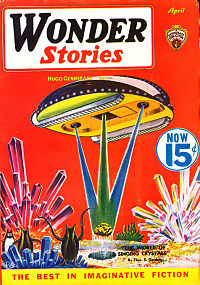
Science fiction, as we know it, got its start in France and England. The next major event in science fiction history, possibly not a golden age, but at least an efflorescence, was the era of the magazines, starting with Hugo Gernsback’s Amazing Stories in 1926 and extending, much attenuated, until today.

The era of John Campbell’s Astounding from 1939 is probably the most cited period in the search for a golden age, and a list of stories from that venue is compelling. The list of authors from the Campbell era is of almost unbelievable quality.

At that time, science fiction was mostly a literature of short stories. Novels existed, but were typically presented serially — a technique that has been in play at least since Charles Dickens. All that changed around the time of the end of World War II, with the rise of mass market paperbacks. It is a complicated story with dozens of players, but no one was more influential than Donald A. Wollheim.

Wollheim began as a fan, went on to write novels and short fiction, and eventually found his métier as an editor. He began with fanzines, moved to the editing of anthologies, then became an editor at Avon books. In 1952 he moved to Ace, where he introduced Ace Doubles. These were twin novels, published together back to back, head to foot. Two for the price of one was a real selling point in the era when paperbacks were introducing cheap literature to the masses. That’s me; I was part of the masses.

Was this a Golden Age? In terms of the availability of new writers like Delany, Le Guin. Zelazny and Brunner, certainly. And Andre Norton’s works finally got to shed their tattered cloth library look and to sport bright, new multicolored covers, sometime two on one double. But technically, this might not be a true golden age, since large numbers of the titles were recycled from the John Campbell era magazines.

It sure felt like a golden age to those of us who were reading the hundreds of titles that were suddenly available to us.

Here lies one of the answers to what makes a golden age. Any time you publish material, some of it will be golden. If your output is large enough, there will be enough gold to make an age, notwithstanding all the rest of the sludge-flow that carries it along. The influx brought about by Ace doubles and the rest of the paperback revolution made huge numbers of new works, and equally large numbers of lost classics from the past, available on every street corner for prices that everyone could afford. If that isn’t a golden age, I don’t know what it takes.

With no intention to disparage the genius of Le Guin, Zelazny, or any other, I am reminded of an old Irish story:

A group of men in an Irish bar were solving the world’s problems one by one. Deep into the night, one of them asked the group, “If every poet in Ireland were all killed tonight, how many years would it take before a new generation of poets rose up?” Another of the group raised his hand with one finger showing, and the rest nodded in agreement.

It is my opinion that for every literary genius who arises, there are a hundred like her or him that we will never know. For every award winning novel, there are many more as good moldering away in typescript, awaiting their author’s death and their final trip to the trash bin.

Literary genius is a part of the whole human race. A golden age comes when opportunity arises for the distribution of genius. Change the venue, change the world.

Today there is a mass of unread eBooks, self published through Amazon. You wanna get rich? Invent the algorithm that winnows through this crop of eBooks, and separates genius from the rest. Of course, if you do, would-be authors everywhere will hate you.

Why? Let’s consider traditional editors as Valkyries. (I didn’t say vultures, I said Valkyries.) They cruise above the field of battle and choose those worthy of Valhalla, or at least publication. Self-publication bypasses this process. An algorithm to decide on quality would be an AI-editor. Now there’s a scary science fiction concept.

The onslaught of paperbacks was not the last golden age. Beginning with the original Star Trek, there was a golden age of television science fiction, although its quality was never very pronounced. CGI, starting with Star Wars, brought a golden age of movies, at least visually. I watch them occasionally, but I have yet to see one which rises to the quality of a good novel. That may be just a personal prejudice.

I watched the Wild Wild West in its original run, and had no idea I was there for the birth of steampunk. I’m still trying to figure out what steampunk is, as something more than a sales tag. Jules Verne, plus sex? That’s puzzlement, not disparagement. I have liked the steampunk I’ve read and watched, but it won’t come into focus for me as a movement. more tomorrow

Click here for next post.