Tag Archives: blogging

709. Redneck Granny

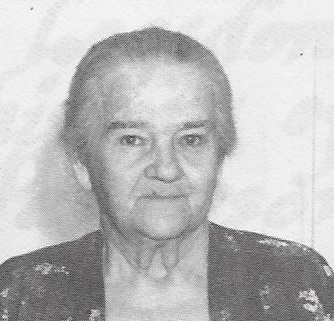
Here is my redneck Granny, who died long before the original of this was posted. I’m sure she would hate everything I have said here, but I love her anyway.

Redneck Granny

I started this blog late in 2015. When Black History Month rolled around in 2016, I had a lot to say — enough to fill the month with posts. This, somewhat modified, was one of them.

— << >> —

The first African slaves arrived in America about 400 years ago. If we count twenty-five years as a generation, that’s 16 generations.

Let’s look at the typical American today. He or she had two parents and they had four parents between them, and their parents had eight parents between them. And so forth. Up the line sixteen generations, that’s 32,768 direct ancestors. If you don’t believe me, do the math.

All those ancestors sent DNA down the line to make our average American. What are the chances that not one packet of DNA was out of Africa? What are the chances that there weren’t a lot more than one out of Africa in his/her lineage?

You might think whites didn’t mix with blacks in the olden days, but are you sure? Are you counting all the times when a white man was in charge, and a black woman didn’t have any say in the matter? They wouldn’t even have called it rape in 1619. Nor 1719. Nor 1819. In a lot of places they wouldn’t have called it rape in 1919. 2019 — maybe.

So much for black purity, but that isn’t any big secret. What about white purity?

How white do you have to look to pass for white? Three quarters? Seven eighths? How many generations does that take? Not many.

Now what are the chances that a whitish, black female would claim to be white if she could? Or a whitish, black male? Forget the twenty-first century when African-Americans are proud of what they are. Project your thinking back to when being white meant being free, and being black meant being a slave. Wouldn’t you pass for white, if you could get away with it?

I would. Some of my (and your) ancestors probably did.

More math. Lets say that by 1700 (eighty years into the era of American slavery, thirteen generations ago), one hundred partially negro girls could and did pass for white. That’s not a big number to surmise. In fact, it’s ridiculously small.

Let’s give doubters no excuse for their doubts. Let’s say that these passing girls only averaged two children who went on to have children. That’s certainly a minimal estimation. Their descendants are boys and girls who would disappear into the white gene pool.

That’s 408,000 offspring after 13 generations. Which is to say, in 2025.

Wow. And after a couple of generations, if Mom kept her mouth shut, none of them would know they were passing. They would believe they were white.

That doesn’t cover all the other blacks, male and female, who passed in the last four hundred years. That is only one hundred, starting in 1700. But there weren’t just a hundred, they didn’t start in 1700, and they haven’t stopped to this day.

There is one big change in the twenty-first century. People who are light skinned and could call themselves white, now often identify as black. It’s probably confusing for “white” folks who haven’t thought it through.

I don’t think it confuses “black” folks at all.

If math doesn’t impress you, if you think numbers lie, then let’s make it personal.

Rhett Butler was partly black. Scarlet O’Hara was partly black. Simon Legree was partly black.

You’re partly black. I’m partly black. And my Oklahoma relatives just disowned me.

That’s mighty white of them.

— << >> —

This was a modified version of a post from February 3, 2016. If you are wondering why this old “white” guy is so concerned with black identity, it is all a matter of upbringing. In my case, that means being raised on the edge of the South in the fifties in a culture that didn’t exactly hate blacks, but didn’t much like them either. My people fully believed in the separation of the races; the only good black was somebody who lived someplace else.

The problem with the community viewpoint was television. On the six o’clock news I saw black people being washed down the sidewalk by firehoses because they were marching for the right to be human.

They were right. We were wrong. Hardly anybody in my town got that message, but I did.

I escaped to college, where I studied Anthropology and got an extended view of what British imperialism had done to the black and brown people of the world.

Then I studied History, where I found out that English imperialism had been just as harmful to the ruddy-faced and red-haired poor in Scotland and Ireland. I also found out what white America had done to the Native Americans, the Chinese and Japanese immigrants, and even the Irish.

In California, where I now live, white incomers from the east now discriminate against the Latinos, who owned California after they took it away from the California Indians, and before the white east-coast Americans took it away from them.

Over the years I wrote about all of those displaced and disadvantage peoples in my blog and now that has all been gathered together for publication.

Originally I planned to call the book . . .

Your Redneck Granny is a Black Woman, and she doesn’t even know it

I had kept that provocative phrase in my back pocket for years, but when it came to reality, the title . . .

Your Redneck Granny has a secret

. . . seemed more likely to make a prospective reader curious enough to pick up the book.

I originally wanted to publish it early in 2026, but the five novels of the Menhir Series will take the whole year to release. Instead Redneck Granny is planned for release on January 20, 2027, just about a year from today. Keep it in mind and tell your friends.

707. A New Start

A New Start

It is already January fourteenth, but the year is still new and the re-start of A Writing Life is still fairly new. It’s time to present something special.

On April 17, 2019 I was trying to write a review of a novel. I remembered the book clearly but didn’t remember enough details, and I needed to explain why I was going to postpone writing about it. What I wrote then does more to tell why I created this blog than anything else I have written.

— << >> —

I have written quite a few books over the years, but it is never enough. Writing books is just too much fun.

The fact is, reading a book is ten times better than watching a movie, but writing a book is fifty times better than reading one. And takes fifty times as long.

Besides the hundred thousand words a modern novel demands, there are the other hundreds of thousands of words you have to go through while getting to the right ones. And there are all those books you have to burrow through looking for just the right bit of information or inspiration to help you understand how that next chapter is supposed to come out.

Just reading a book for fun gets lost somewhere. I read the things I need to read, and late in the evening I read comfort books, like the thirtieth Nero Wolfe, which isn’t that different from the other twenty-nine.

It wasn’t always that way.

— << >> —

I was an only child on a farm in the fifties. We had one black and white TV that got two channels, which my parents watched in the evenings while I read. Of course I became a reader; what else was there to do? From the time I discovered the county library, there was no time I didn’t have a stack of books waiting for my attention.

But I didn’t talk about it.

My mother read occasional romance novels but she didn’t talk about it. My dad read the Bible, but he didn’t talk about it. The habit started early.

I read books about hunting and outdoor life. I already lived outdoors, but on a tractor. I never hunted, barely fished, and I had never seen a tent. My outdoors wasn’t for play, it was for work, and that wasn’t enough to satisfy me.

Looking back, I know that the place I lived as a boy was rather lovely, in a muted sort of way. It was farm country, lightly populated by humans, but with plenty of birds, and occasional coyotes and possums.

Nevertheless, every patch of ground was either under the plow or turned into grazing land. There was nothing wild. I wanted forests and streams, fish and game, and real snow, along with the freedom to wander through them.

That was all available in books, along with a thousand other adventures to be found all over the globe.

My fellow students in my little school read what they had to read — but nobody talked about it. Nobody read science fiction. Nobody wanted to know any more about science than they were required to know. I was reading and studying continuously, preparing to head for college to be a scientist — but I didn’t talk about it, because no one wanted to know.

When I got to college, one of my roommates was a science fiction fan. We talked about it, but only a little. By then, my habit of silence was pretty well set.

A lifetime later I started this blog. For the first time I got to really talk about the books I love and why I love them. Like right here, right now, talking to you, telling you why I had to postpone a review.

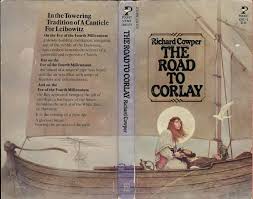
Hi. You see, there was this book called The Road to Corlay . . .

— << >> —

I began A Writing Life in support of an upcoming novel, but it quickly evolved into something larger. It became a how-to, and a “How I did it”, and a “What I’ve learned about how others did it.”

Many of those posts, somewhat modified, are gathered together now in a pair of books for writers called Learning from the Masters (that would be Heinlein, Clarke, et al, not me bragging about myself) and So You Want to Write Science Fiction. Because 2026 will be fully occupied with the Menhir series, they are scheduled for release in 2027. Tentative dates are:

Learning from the Masters

March 17, 2027

and

So You Want to Write Science Fiction

July 7, 2027

697. Trump Looks at Borders

Attribution: Nabokov at English Wikipedia  

Trump Looks at Borders

I started this blog on the twenty-ninth of August, 2015. At that time, I had no political agenda for the blog. I had plenty of political opinions, but the blog’s only purpose was to support my coming novel Cyan and write how-to and behind the scenes posts for young writers.

Less than three weeks later, Donald Trump entered my consciousness. I didn’t take him seriously at first — almost no one did — but the things he said and the positions he took were not something I could ignore.

So, on Sept. 15, 2015, I interrupted myself to write the post I am partially reprinting here. It was my first statement on Trump, and pretty much my first awareness of him. I said . . .

— << >> —

This is not normally a political blog, but as I am a citizen, there are times to speak out.

Have you ever asked yourself, “How could Germany have been fooled into following Adolph Hitler?” The answer is on your television this morning, and it is Donald Trump.

I’m not saying that Trump is a Nazi. I don’t see him as evil, merely foolish. (That was a decade ago. His Nazi leanings and deep evil is no longer in question.) But the techniques that have brought him to prominence are the same techniques that Hitler used.

First, appeal to a country’s deepest fears.

Second, claim to be the only one to have the answer.

Third, claim that your opponents are all cowardly and incompetent or, to use Trump’s favorite word — stupid.

The tactics are false. But the fears are real, so Trump promises his followers a wall to keep the world out. There is no wall strong enough to do it.

— << >> —

That same morning, September 15, 2015, Hungary closed its borders against middle-eastern refugees with a wall of razor wire.

I have a strong feeling for Hungary. The Hungarian Uprising of 1956 forms my first political memory. I was eight, and I remember sitting in front of the TV with my parents watching the streams of refugees escaping Soviet reprisals. Eventually 200,000 Hungarians fled their homeland. That memory makes it particularly hard for me to watch Hungary put up a wall against Syrian refugees fleeing genocide.

In another time and place, backed by Russia, East Germany built a wall across Berlin in 1961. It slowed the flow of refugees escaping from tyranny, but it did not stop them. And it didn’t stop the later fall of East Germany.

There is a fence across our southern border of the US that doesn’t stop those hungry enough to jump it. Trump wants a wall to hold out “illegals” and a massive sweep through our country to deport the “illegals” who are already here. He wants to declare that the 14th amendment doesn’t really mean what it says, in order to authorize the deportation of American citizens, born her just like you and I were.

Hitler would be proud. East Germany would understand. Russia is laughing.

— << >> —

Looking back, it is clear that the Trump agenda we see in 2025 was already his plan in 2015. I just couldn’t imagine him becoming President.

No one could imagine that he would win, then lose, then win again.

— << >> —

So my blog for new writers is back, and Trump is back. I wish I could spend all my time talking about writing, but times are too dangerous for that.

There is a lot I plan to do and say about writing. I will be releasing a five book series of novels next year, and two books on writing in 2027. You will hear all about them in this blog.

But we also have to talk about Trump, in this post, in two posts of poetry next week, and in many other posts sandwiched between more pleasant things. I wish times were better, but everyone has to deal with reality.

689. Birth of a Blog

I started the blog you are reading on the twenty-ninth of August, 2015. I took a hiatus in 2020, because of covid. Here is what I said that day.

— << >> —

Yesterday, here in California, the Governor requested that all people over 65 self-isolate. That makes sense to me, and I passed that milestone seven years ago, so my wife and I are going to hunker down and become temporary hermits. That isn’t too much of a hardship since we live in the country and keep a well stocked larder anyway.

This change shouldn’t bother my blog, but it does. I’m not worried for my wife and myself, but worrying about the rest of the country and the world beyond weighs on me. It has also been getting harder lately to come up with new things to say, especially on subjects that don’t call for hours of research for a post that will be read in three minutes. This is post 678, after all.

— << >> —

Actually, A Writing Life had more than 678 posts. From day one it was a double effort, a website called A Writing Life with almost daily entries in a blog of the same name (causing some confusion) and a secondary blog on the same website called Serial which provided many of my fiction writings in serial form.

According to WordPress who handles my blog and keeps track of such things, I had 1280 posts when I restarted this blog.

During the hiatus, seven posts trickled through, so make that 1273 posts in less than five years. I know I was working my tail off during that period, but it still boggles my mind.

I made a lot of friends during that period, but after six years off most of them probably don’t even know I’m still alive.

I am.

I disappeared but I never went away. During those years I finally put the last period on a five book series of novels I have been working on since 1972 called The Menhir Series (fantasy). I completed two new novels The Cost of Empire (alternate universe) and Like Clockwork (time travel), and am fighting with another called Dreamsinger, a sideways sequel to Cyan which won’t quite come to heel yet.

You will be seeing all my works, old and new, in e-book format in the next few years. The Cost of Empire and Like Clockwork won’t be published for a while, so I won’t name their release dates. Too many possibilities lie between now and then.

687. Irritated Independence

WELL, I’M BACK.

This renewed version of A Writing Life will primarily be about supporting the publication of my novels, giving hints to young writers, and telling my story. But nothing in 2025 can avoid politics.

If I am also going to complain about the new iteration of Donald Trump — and I am — I have to declare my place in the argument for those who don’t remember me. Anyone who reads what I write deserves that much.

I am not a liberal, particularly. I am not a conservative, particularly. I listen to both sides and find both positions full of wisdom and stupidity. Most of the time, it’s about a fifty-fifty toss-up.

I was raised to be a proud and loud Republican. Like many other things my father taught me, it didn’t take.

I didn’t become a Democrat in reaction either. When I first registered to vote, I chose Independent. Or, as they call it here in California, “no preference”. I hate that term. I have a preference on pretty much everything. My preferences just don’t line up with everybody else’s.

I am fully in favor of a woman’t right to abortion. I am equally supportive of the gun rights spelled out in the second amendment. If I tried to join either party, neither one would want me.

On the liberal side, political correctness seems to have been pushed to the point that telling the plain, unvarnished truth is out of fashion. Not quite illegal, but not acceptable in polite company. I’ve had enough of that.

On the conservative side — actually I don’t know. Where have the conservatives gone? I can’t find them anywhere.

Trump isn’t a conservative. He isn’t a Republican, either. None of the conservative Republicans of my father’s generation would have accepted him. None of the Republican former Presidents support him, and the dead ones are turning in their graves.

And yet he won the last election. We’ll have to talk about that — even though we will talk mostly about science fiction and why it is so hard for writers to get published.

They say we live in unprecedented times. Maybe, but American politics has always been a liar’s game, so that overworked word unprecedented doesn’t quite fit. It’s just that Trump is just so damned convincing that it changes the whole situation.

But mostly this blog is going to continue to be about writing.

678. Taking a Break

I’m going to take a break

Yesterday, here in California, the Governor requested that all people over 65 self-isolate. That makes sense to me, and I passed that milestone seven years ago, so my wife and I are going to hunker down and become temporary hermits. That isn’t too much of a hardship since we live in the country and keep a well stocked larder anyway.

This change shouldn’t bother my blog, but it does. I’m not worried for my wife and myself, but worrying about the rest of the country and the world beyond weighs on me. It has also been getting harder lately to come up with new things to say, especially on subjects that don’t call for hours of research for a post that will be read in three minutes. This is post 678, after all.

So I am going to take a break. I have other things on my mind and I’m sure you do too.

I’ll be back. Whether in two weeks or two months, I can’t say. Meanwhile, I’m going to keep working on my novels, keep my wife company, and keep thinking about all the good people out there beyond my driveway.

Take care, folks. Stay safe.

676. Cat A Strophic Fiction

One of my many friends.

I got a long and thoughtful reply to 668. Century Ships from a person (human name not given) whose website is dedicated to cats. I went there, as I always go at least once to the sites of people who like my posts.

Lots of SF people tend to be cat people. Heinlein famously loved cats and wrote about them. Two internet friends who found me through this blog, one a writer of fantasy and one a reviewer of old SF and other schlock, are both cat people. Me, too.

That is the tenuous connection between science fiction and this trip down memory lane.

In the late seventies, I was writing full time and my wife was working at an art and frame gallery. Leaving work one evening, she saw a cardboard box sitting in front of a pet store two doors down. The store was already closed, and she couldn’t walk away without looking. Inside were two abandoned kittens, only hours old. She knew they wouldn’t last the night.

Half an hour later she came in the front door of our house carrying the box and said, “Guess what I found.”

We raised them, cleaned their eyes, cleaned their other ends, burped them, and fed them multiple times a day. They slept in a box next to our bed so we could hear when they were hungry — frequently, as it turned out.

Big Buddy — the internet name of the SF fan who wrote about century ships — posted a study that “explained” why cats bond with us and see us as parents. As if that needed confirmation. (He didn’t think so either. He was making light of the study.) Cats, dogs, and people are herd animals. They naturally live in family groups, so of course they bond.

Bonding goes both ways, as if you didn’t already know that.

My wife suggested we raise the kittens just until they were old enough to give away. Right! They were with us seventeen years.

One was a gray tabby. I was looking into his kitten-blue eyes early on when Don McLean came on the radio singing about how the swirling clouds reflected in Vincent (van Gogh)’s eyes of china blue. China Blue became his name. His orange sister had a one inch tail, so she became Spike, and later Spikey.

It is a testimony to what cats do to us that we talk to them. China Blue was in my lap once, getting petted while I took a break from writing. Music was always playing in the background any time I was at the typewriter. A girl folk singer’s voice caught China’s ear and he looked around for her. I told him, “Don’t worry, buddy. That’s just the way people purr.”

“Sanity” and “cat” are rarely used in the same sentence.

I put a pillow on my desk and they took turns sleeping there, although China often preferred to drape himself around my shoulders while I wrote.

Good times.

The picture at the top is one of my many subsequent friends, resting in his favorite wheelbarrow. I have plenty of pictures of Spike and China, but they aren’t digital.

675. Extra, Extra

Yesterday this blog reached 10,000 hits.

I’ve never been quite sure what that means, since I have had days that have more likes than hits, and it doesn’t seem to include all of the followers who are supposedly notified of each post. I assume it leaves out all the spam the filter has intercepted. I also don’t know how it counts someone who finds my site, then wanders around from post to post upon arrival.

However it happens, I’m glad to see it. Thanks, everybody.

667. My India

I am frequently blown away by what I am doing here. I came to the internet late, and the magic of it has not worn off. I know that most of you reading this don’t remember a world without the World Wide Web. Even the phrase has fallen out of use, if not out of memory, and has become a basically meaningless www at the start of urls.

Not me. I grew up in a house without a telephone, without plumbing, and didn’t have a flush toilet until I was seven. Still, I have had decades to get used to the changes so I am as blasé as anyone about most of them, but one thing still knocks me out.

Here is an example: On January 6th, I had visitors to this site from nine countries; Canada, India, Netherlands, New Zealand, Philippines, Russia, South Korea, the United Kingdom, and the United States. More than half of those visitors were from India.

That isn’t a typical day. There is no such thing as a typical day, actually. However, if I were to tally all my days, the US would come in first in number of readers and India would come in second.

I would never have anticipated that when I began this blog, but there is some logic to it. To start with, India is a big country, second in the world by population, with five times as many people as the US. China is bigger, but I get few hits from China. There is a reason for that too, beyond politics.

Although the official language of India is Hindi, English is widely used. That is a legacy of hundreds of years of British domination. When India achieved independence in 1947, there were dozens of major languages. If any one had achieved dominance, it would have given its speakers a major political advantage, so English became a “subsidiary official language”. There are vast number of English speakers in India, and a lot of them are on the internet. Of those whose sites I’ve seen, many are in one of the Indian languages plus English.

I get a kick out of all the hits I get from distant countries, but India is special. I have had a relationship with India since 1968. When I switched from Biology to Anthropology at the start of my Sophomore year in college I had just taken Introduction to India and had already found my area of specialization. During the last three years at MSU I was a member of the Indian studies group, researched overseas Indian colonization, and took a year of Hindi (of which I remember little, all these years later). I made friends among Indian students studying at MSU and among returned Peace Corps volunteers.

My wife and I signed up for and were accepted to the Peace Corps for assignment in India, but lost out when the deferment was cancelled. Then I spent four years in the Navy, before entering the University of Chicago for a masters degree. Again India was my area specialization, and my thesis was on Indian village economics.

All of that makes me an expert, right? Not on your life it doesn’t. I’ll give you an example. I once took a graduate level class in Indian history. The first day we were asked about our backgrounds. One young Indian woman said that she was only auditing the class. She was in America with her husband who was a student in another department, and she was just coming by to fill in a few details that she might have missed in her high school history class.

I was in my late twenties with a B.S., enrolled in a top graduate school, and right out of high school she knew ten times more about India than I ever would.

It’s enough to keep you humble.

When I started writing, I put that knowledge to use. My second published novel, A Fond Farewell to Dying takes place in a post nuclear war, post flood world where India is the only remaining modern technical civilization. My main character was an American scientist who had moved there because North America was so backward after being heavily nuked. Because of his research, he becomes embroiled in the rising conflict between India and a pan-Muslim neighbor.

A major sub-plot in Cyan concerns parallel colonization efforts by Indian and North American groups.

The Cost of Empire is primarily built around actual Indian history, somewhat modified since it is taking place in an alternate universe. The various durbars in which Britain announced its imperial claims on India are collapsed into one, watched over by a fleet of dirigibles flown there to overawe the Indians who are agitating for independence. David James, the main character, learns from overseas Indians in Trinidad and later in India itself that maybe his country shouldn’t be ruling the whole world after all.

I you are a writer, you use what you know.

658. Non-Political ?

Like 2020, 2016 was also the year of a Presidential election. I had a new blog designed to bring in readers for my upcoming novel Cyan and I had no intention of writing on politics. I was planning to share some of the things I had learned in decades of writing while drumming up customers. The last thing I wanted to do was make half of my readers mad at me.

Not that I had any readers yet, so early in my blogging career, but I hoped to soon.

Life has a way of changing our plans. My neutrality lasted about a month, from mid-August until mid-September. Then I had to interrupt my sequence of blogs between 10 and 11 to say:

This is not normally a political blog, but as I am a citizen, there are times to speak out. The post originally scheduled to be here will appear tomorrow.

Have you ever asked yourself, “How could Germany have been fooled into following Adolph Hitler?” The answer is on your television this morning, and it is Donald Trump.

I called him out for his fear-mongering, but added that I didn’t see him as evil, just foolish. I subsequently changed my mind about that.

Still I couldn’t see spending much time on someone who had no chance of winning. That was another error in judgment, both about how effective Trump would be and about how much time I would spend yelling at him.

On February 29th I celebrated the end of Black History Month with a bit of whimsy that would grow into a long series of posts about an imaginary Presidential candidate. I’ll remind you about that on Wednesday.

By Election Day things looked pretty well settled on a Hillary win. I had never been impressed by her either, so on September third I wrote a post to be placed election day, making these predictions:

By now you know who won this time around . . . As of today, Hillary’s win seems certain if she doesn’t stumble, but she stumbles a lot. It could still be Donald. You know the outcome. So do I, but I didn’t when I wrote this.

Here is what I do know, now, September third. Whoever was elected yesterday will be a one-term president.

You’ve heard every talking head for the last year say that no two candidates in history have been so hated and feared as Donald and Hillary. Almost everyone dislikes one or the other; a sad majority dislikes them both.

So the question arises:  who will win the Presidency in 2020? You can be sure it won’t be Donald or Hillary, no matter who won yesterday.

If your candidate lost yesterday, take heart. Whoever your party chooses in 2020 will win – barring another match-up of turkeys, and what are the chances of that happening again?

If your candidate won yesterday, tough luck.

Well, that is what it looked like in September of 2016. I’m not so sure that prediction was any better than the others I made during the campaign. I just hope I got that one right.