Tag Archives: history

700. Double Lives

Double Lives

By 1984, I had published and perished (see the post from November 12th), but I wasn’t about to give up writing. Nevertheless, things were getting tight and something had to change.

I hadn’t left academia because I hated it. I just couldn’t find my place. I missed out on the popularity of ecological studies by just a few years, but that turned out to be a blessing in disguise. I had wanted to study the beautiful symmetry of animal interactions in the wild, but today ecologists study how fast Earth is going down the toilet.

There was one field I had an interest in, but had never studied, and that was History. I was about to change that, for three reasons.

First, I was writing every day, and making progress slowly, but it wasn’t making me any money.

Second, I was able to make a full day’s progress in a few hours. At that point, the well was dry. I had tried to push on past my limits, and that didn’t work. If I forced twice as many pages as came naturally in a day, the next day I was empty. I could write nothing until the well of imagination refilled.

Third, I really missed college. I had always planned on a Ph. D. and I felt empty sitting alone in a room with a typewriter.

And I still had most of my GI Bill.

The original GI Bill was generous. I had used some of it getting my first masters at University of Chicago, but if I worked things right, there was enough left to get a second MA in History. There was a school in easy driving distance, California State College, Stanislaus. A few years later it became California State University, Stanislaus. I was a California resident, so tuition was low. If I took just enough classes to be a full time student, it would take longer to get my new degree, but that was part of the plan. There would be enough GI Bill money left over after books and tuition to fill in some of the blanks in my personal economy, and I could work all day again — half on novels, half on getting my History degree.

The plan worked for several years. I had something new for my brain to chew on in those dead half days when my novel writing had run dry, yet I was still able to make progress on my novels. I wrote fiction all but the few months near the end when I was writing my thesis.

That thesis would be The Crisis in American Shipping and Shipbuilding, 1862 – 1914. Yes, I started out as a dry land Oklahoma boy, but my grandfather in Florida was in the Coast Guard auxiliary. From him I inherited a fascination with all things maritime.

Plan B worked for about three years, and now I had a second MA. But to twist the words of the old country song, even though I wasn’t completely broke, I was still badly bent.

Plan C was more permanent.

I had worked as a substitute teacher and found I really liked middle school kids. No one else seemed to, so there were plenty of jobs available. I went back to school again at the University of the Pacific — my fourth college — for a summer session, took a one year internship, and worked my way into teaching by the back door.

For a while, there was no more writing, but there was money. Teachers don’t make much, but writers often make nothing, so my salary seemed like a fortune.

Most of my effort in the first few years went to learning my trade. You see, what they teach you in Biology is useful, what they teach you in Anthropology will broaden your mind, what they teach you in Social Science is enlightening, what they teach you in History is wonderful. I know. I’ve been through all of them.

What they teach you in teachers school is pure BS, so the first thing I had to learn was how to teach. Fortunately there were plenty of people to help me, experienced teachers who had learned it just like I was, in the classroom.

There was also a lot of delayed life to be lived. Being a writer is a lot like being a monk, and the pay is a lot like being unemployed. When I was a writer, I couldn’t afford a computer. Now that I wasn’t a writer, I could.

After a few years, I was writing again, now part time. My wife and I finally made it to Europe, and that brought about the novel Raven’s Run. Then I wrote a novel about teaching called Symphony in a Minor Key. The Menhir Series kept limping along, slowly growing, book by book. Before it was completely finished, I wrote a sequel in the same world with a different main character called Who Once Were Kin.

I finally solved the conundrum of Cyan, and the second half became a pleasure to write. When Cyan was finished, it sold to EDGE of Canada.

In support of its release, I started this blog.

More about that next Wednesday.

697. Trump Looks at Borders

Attribution: Nabokov at English Wikipedia  

Trump Looks at Borders

I started this blog on the twenty-ninth of August, 2015. At that time, I had no political agenda for the blog. I had plenty of political opinions, but the blog’s only purpose was to support my coming novel Cyan and write how-to and behind the scenes posts for young writers.

Less than three weeks later, Donald Trump entered my consciousness. I didn’t take him seriously at first — almost no one did — but the things he said and the positions he took were not something I could ignore.

So, on Sept. 15, 2015, I interrupted myself to write the post I am partially reprinting here. It was my first statement on Trump, and pretty much my first awareness of him. I said . . .

— << >> —

This is not normally a political blog, but as I am a citizen, there are times to speak out.

Have you ever asked yourself, “How could Germany have been fooled into following Adolph Hitler?” The answer is on your television this morning, and it is Donald Trump.

I’m not saying that Trump is a Nazi. I don’t see him as evil, merely foolish. (That was a decade ago. His Nazi leanings and deep evil is no longer in question.) But the techniques that have brought him to prominence are the same techniques that Hitler used.

First, appeal to a country’s deepest fears.

Second, claim to be the only one to have the answer.

Third, claim that your opponents are all cowardly and incompetent or, to use Trump’s favorite word — stupid.

The tactics are false. But the fears are real, so Trump promises his followers a wall to keep the world out. There is no wall strong enough to do it.

— << >> —

That same morning, September 15, 2015, Hungary closed its borders against middle-eastern refugees with a wall of razor wire.

I have a strong feeling for Hungary. The Hungarian Uprising of 1956 forms my first political memory. I was eight, and I remember sitting in front of the TV with my parents watching the streams of refugees escaping Soviet reprisals. Eventually 200,000 Hungarians fled their homeland. That memory makes it particularly hard for me to watch Hungary put up a wall against Syrian refugees fleeing genocide.

In another time and place, backed by Russia, East Germany built a wall across Berlin in 1961. It slowed the flow of refugees escaping from tyranny, but it did not stop them. And it didn’t stop the later fall of East Germany.

There is a fence across our southern border of the US that doesn’t stop those hungry enough to jump it. Trump wants a wall to hold out “illegals” and a massive sweep through our country to deport the “illegals” who are already here. He wants to declare that the 14th amendment doesn’t really mean what it says, in order to authorize the deportation of American citizens, born her just like you and I were.

Hitler would be proud. East Germany would understand. Russia is laughing.

— << >> —

Looking back, it is clear that the Trump agenda we see in 2025 was already his plan in 2015. I just couldn’t imagine him becoming President.

No one could imagine that he would win, then lose, then win again.

— << >> —

So my blog for new writers is back, and Trump is back. I wish I could spend all my time talking about writing, but times are too dangerous for that.

There is a lot I plan to do and say about writing. I will be releasing a five book series of novels next year, and two books on writing in 2027. You will hear all about them in this blog.

But we also have to talk about Trump, in this post, in two posts of poetry next week, and in many other posts sandwiched between more pleasant things. I wish times were better, but everyone has to deal with reality.

694. Our Very Own Alternate Reality

Why is the bird here? He is a peaceful hope while we look at an ugly reality.

Our Very Own Alternate Reality

In these four posts we have come full circle, through a brief history of science fiction, which was stuffed into an even more brief history of five presidencies. Now we have meandered back to the subject of assassinations..

On November 22, 1963, John Kennedy was assassinated.

On July 13th, 2024, Donald Trump was almost assassinated.

On September 10th, 2025, Charlie Kirk was assassinated, which started this train of posts.

— << >> —

For at least a century, a staple of science fiction has been stories of alternate realities, and many of them begin with an assassination. In Keith Roberts Pavane, the assassination of Queen Elizabeth the first, on the eve of the invasion by the Spanish Armada, returned England to the Catholic fold and gave us a semi-modern world that still looks a lot like the Middle Ages.

Neat idea. Beautiful novel. But would you want to live in it?

Assassins are a strange breed. They are willing to change the future for all of us through an act that is far less certain than a roll of the dice.

Consider John Wilkes Booth. What if his derringer had misfired? We would never have heard of him. He would be lost to history along with the other would be assassin of Lincoln who made an attempt a year earlier.

If Booth had failed and Lincoln had lived, how different would our history be? How different would reconstruction have been? One person, even a well intentioned president, probably could not have completely forestalled the Jim Crow era, but it might have been a great deal less harsh.

A similar question — would the Viet Nam war have been so protracted if Kennedy had lived? No one knows.

— << >> —

You might well ask why I am even bringing up the subject? Assassination is morally wrong. Isn’t that enough?

Are you sure you feel that way? What if someone in 1938 had assassinated Adolph Hitler? Wouldn’t we all be better off?

I think most people would ignore morality — or argue it away — and opt for a world without Hitler. If any one of us had been in the crowd in Nuremberg in 1938, with a rifle, a clear shot, and a sure means of escape, it would have been hard not to pull the trigger.

But what if Hitler’s replacement had the same goals, and the same hatred for the Allies because of the harsh treatment Germany received in the treaty of Versailles at the end of World War I? (It is a legitimate position.) What if the new leader were not an anti-Semite, and all those Jewish scientists had not defected to the west, like Albert Einstein did?

If all those Jewish-German scientists had perfected the atomic bomb first and used it effectively, we might all be dead.

When a science fiction writer sits down to change the world by introducing a change in the past, it can be great fun. I know. I’ve done it. But contemplating an assassination in the real world is a whole different thing.

Of course I’m sure none of you are thinking about doing anything like that. Eh?

Well, maybe one or two of you — and you are the ones I’m talking to. Before you load up your deer rifle and set out to save humanity, I have just one question.

Are you really sure what the result will be? Maybe you should just think it over for a while.

Go sit under a tree and watch the squirrels play. Eat a good meal. Drink a beer. Make love.

You’ll feel better in the morning.

Peace

693. New Wave, New Frontier

New Wave, New Frontier

We choose to go to the Moon in this decade and do the other things, not because they are easy, but because they are hard . . .

John F. Kennedy, September 12, 1962

Eisenhower, Kennedy, Johnson, Nixon.  Eisenhower began the space program, Johnson saw it through, and Nixon got to be the president who placed a phone call to the first man on the moon. Nevertheless, it is Kennedy we most closely associate with space, largely due to the speech above.

Kennedy’s presidency was short — January 20, 1961 to November 22, 1963 — two years and ten months.

He began by creating the Peace Corps, then failed to provide air support for the Bay of Pigs fiasco. He saw the USSR build the Berlin Wall, faced Khrushchev in the Cuban Missile Crisis, and gave support to Civil Rights activists — but not enough support in the eyes of many.

Kennedy was a young man undergoing extreme on-the-job training. He was beloved by many and hated by many — nothing unusual in that — but a full and balanced evaluation of his Presidency is not possible because it was cut short.

What we can say for certain is that he was a modern President in all senses, and it was his charisma that set us on a path to the moon.

And then he was gone.

— << >> —

Meanwhile, regarding science fiction . . .

In 1961 Arthur C. Clarke’s A Fall of Moondust became the first SF novel selected to be a Readers Digest condensed book. That seems about right, since Moondust was Clarke at his most bland.

A Clockwork Orange, The Man in the High Castle, Cat’s Cradle, Dune, and Planet of the Apes also came out during the Kennedy years, and they were not bland.

About that same time a movement occurred inside SF which became known as the New Wave. That’s a problematical name, like Roosevelt’s New Deal. The New Deal isn’t so new 93 years later. The New Wave isn’t so new 60-some years later either. Still, if felt new while it was happening.

If a young SF fan today were to read something from the New Wave for the first time, they would be likely to say, “But didn’t people always write like this?” No, they didn’t. Before the New Wave, SF writing covered new and exciting concepts, but the style was generally pretty stodgy.

The New Wave was the era of Harlan Ellison, Ursula K. Le Guin, J.G. Ballard, and Roger Zelazny. And many others, but I am mentioning my favorites. I had loved SF before these folks came along, but the fact is, they just wrote better than those who came before them.

By the time the New Wave had been digested and made the norm, science fiction had generally reached it’s present stage. It was, and still is, a genre loved by a few, read by many, and avoided by even larger numbers. It’s style and tenor is no longer particularly distinguishable from the mainstream. There are a few best-sellers and a lot of stories that appear briefly then disappear into the ooze of indifference.

There were still a few changes to come before we would reach 2025. Computers would make writing — and especially revising — easier, so books got longer. Much longer. In the seventies, SF novels often ran 50,000 words. Today you would have a hard time selling one unless it was twice that long.

No agent or editor in the seventies would have even opened a Neal Stephenson manuscript.

Computers were at the heart of the other main change since the Kennedy/Johnson era. Special effects made it possible to create believable futuristic movies and television programs. While I offer no comments on the variable quality of story and acting, modern SF movies look beautiful. It is no wonder the center of SF attention has moved from books toward video.

I object to that, but who cares what I think.

— << >> —

When Kennedy was inaugurated, there were about 3000 Americans in Viet Nam. They were not called troops; they were called advisors. By the time Kennedy was assassinated, that number had grown to about 16,000.

Then Lyndon Johnson took over. He lied to the American people. He lied to Congress. He posted weekly kill-counts that were entirely imaginary. He promised victory. He expanded American military activities to adjacent countries. It gained him reelection in 1964, and cost him the chance to run again in 1968.

Nixon won and — in my opinion, since no one will ever know what really went on in that man’s mind — rode the war and the faltering peace talks to reelection in 1972. The he declared victory and pulled out.

Viet Nam fell.

Nixon could have pulled out four years earlier, with the same result. Johnson could have pulled out eight years earlier, with the same result. There would have been one difference, however.

Fifty some thousand Americans died in Viet Nam. According to Encyclopedia Britannica, an estimated two million counting all countries died due to the Viet Nam war. They didn’t need to die.

I occasionally meet Viet Nam vets who wear caps reminding us of their service. I have no quarrel with them. They were sent, they went, they did what their country told them to do. And there but for the grace of God go I.

I was also in that draft, and I enlisted. I spent my four years stateside, but that was nothing but luck. I could have gone over like the ones wearing the Vietnam Vet caps. And if I had, I could now be sixty years in the grave.

Tens of thousands of us knew Viet Nam was a mistake and said so. No one listened. I’m still angry, and I make no apologies for that.

— << >> —

Bouncing back to science fiction again — to the SF of alternate realities — here is the question all this poses. What would Kennedy have done, if he had lived?

We can’t know the answer; we can only speculate. Kennedy made big mistakes, then stood tall against Khrushchev. He learned. Would he have learned enough? Maybe not — but maybe he would have.

Folks, we are living in our very own alternate reality, initiated by Lee Harvey Oswald on November 22. 1963.

I also have a question for Oswald himself. Why did you shoot Kennedy that day in Dallas? Did you think you were going to make the world a better place?

What were you thinking?

The discussion concludes next week.

692. The Space Age Begins

The Space Age Begins

Britain measures eras by the reign of its Kings and Queens. America measures eras by Presidents. In our look at the beginnings of science fiction, we are about to enter the Truman/Eisenhower era, even though neither man will be our focus.

— << >> —

Hiroshima changed everything.

Science fiction people had read Einstein, or had tried to, so they knew about nuclear fission. They knew that an atom bomb could be built, and were expecting it. A few even got in trouble because they used atom bombs in stories, when the FBI was convinced they had it locked into secrecy.

For the rest of the country, Hiroshima was a shock to the heart.

It didn’t take long for the Russians to get the A bomb. Then we got the H bomb. Then the Russians got the H bomb. Welcome to my childhood.

Suddenly the future had become the present. Everybody was still driving ancient looking cars (no cars had been produced during WW II) and dressing like people in the old movies, but their world had been ripped open by futuristic perils.

Literature reacted to the situation. The Saturday Evening Post, that bastion of American norms, broke tradition and published a science fiction short story, The Green Hills of Earth by Robert Heinlein. Colliers Weekly published Wernher von Braun’s article Man Will Conquer Space Soon.

Von Braun also partnered with Disney to produce three episodes of Disneyland (as the Disney TV program was then called). The first, in March of 1955, was called Man in Space. This was followed by Man and the Moon and Mars and Beyond is later seasons. These were humorous and relied heavily on cartoon animation, but they showed American youth what the future held in store.

Eisenhower’s presidency saw a worsening of the Cold War, the rise of ICBM’s to deliver H bombs, and the development of satellites. The push for space flight had been properly begun. NASA was formed in 1958.

Space flight is key to science fiction, but it is by no means the whole of the genre. SF, by its nature, is always out ahead of contemporary science, and the giants of science fiction were producing major works during this period. The main difference from the golden age was that there were more novels, fewer short stories, and people had stopped laughing at the genre.

This was the era of Arthur C. Clarke’s Childhood’s End and Issac Asimov’s Foundation trilogy, while Robert Heinlein revised his novella Methuselah’s Children into a full novel.

This era also saw the rise of near future “science fiction”. The quotation marks are there to point out that this wasn’t really science fiction at all, because it was reacting, not predicting. Atomic power, atom bombs, jets, and rockets had been the stock in trade of science fiction fifty years earlier when they did not exist. Now they were the stock in trade of mainstream writers because they did exist.

Fail Safe was probably the most notable of these near future science fiction novels. It began as a short story in 1959 and was revised into a novel that appeared in 1962. In it, an American bomber is mistakenly on route to destroy Moscow with nuclear bombs. The American President, who cannot call back the bomber, must sacrifice millions of American lives to avert a world destroying all out nuclear war.

On the Beach was even more somber.  Years after a nuclear war, people of Melbourne, Australia wait for inevitable death as fallout from the northern hemisphere drifts down upon them.

No fun novels for a no fun time.

There were many others. Philip Wylie, who was already an established science fiction writer, turned out Tomorrow and Triumph. I read both in high school.

This new sub-genre of science fiction continued to gain readers who might never have read Clarke or Heinlein. In 1984 it reached apotheosis when Tom Clancy published The Hunt for Red October.

— << >> —

Over the course of this blog, fifty year anniversaries of events from the early space program kept happening, and I kept writing about them. By the time of my covid hiatus, those posts had grown into a book to be called Brief but Glorious.

Of all the books I plan to e-publish, it is the most dubious. Not the text — that’s fine — but I want to illustrate it heavily with NASA photos, and I don’t know what kind of technical problems that will cause. I have tentatively scheduled it for October 2027, but that could change. I’ll keep you posted.

The discussion continues next week.

691. Science Fiction Begins

Science Fiction Begins

If you don’t like that title, here’s a longer one.

Science fiction begins as literature, becomes a genre, sinks to a sub-literate state in the eyes of the intelligentsia, regains legitimacy in the Saturday Evening Post, and then consumes the universe.

I like the short one better. And by the way, this is just a quick survey. If you don’t like the way I’ve chopped up history, write your own. After all, most SF “scholars” disagree — on everything.

— << >> —

Science fiction has been around for a long time, although the early stuff is hardly recognizable. You could make the argument that it truly began when writers started using machines instead of supernatural beings to do marvelous things. That is why we look to H. G. Wells instead of Charles Dickens for the beginning of time travel stories.

Scrooge visited the past, present, and future, but it took three spirits (plus Marley) to pull it off. Wells did it with a time machine.

Jules Verne’s Five Weeks in a Balloon (1863) and H. G. Wells’s The Time Machine (1895) are a good enough place to start looking at science fiction. Both were considered literature from the beginning. Verne’s writing style was held up for emulation by the French establishment. H. G. Wells was a respected social commentator. In that same era, Edward Bellamy’s Looking Backward was a call for society to perfect itself — science fiction ideas spoken by the voice of the elite.

But what if you are an outsider, with a coarser voice?

Later, rougher, more exciting writers of science fiction didn’t fit the proper mold. They were frequently not all that interested in uplift, they just liked the idea of the future. Their characters were more likely to carry a ray gun than to address Parliament. Through the early decades of the twentieth century a whole generation of young men (and a few young women) found excitement in reading this kind of science fiction presented in the form of short stories in inexpensive specialty magazines.

This period, beginning in the thirties and lasting until roughly World War II, was often called the Golden Age of Science Fiction. (Remember, golden ages are always in the past somewhere.) A great deal of high quality science fiction was produced, along with the usual kinderdrivel. Science fiction had left the mainstream and become a niche interest, ignored or derided by most people.

Science fiction also acquired its own name. The Time Machine was just called a novel when it was published, but now science fiction had become a genre. Calling it sci-fi was forbidden by those who loved it. Everybody else just considered it cheap trash.

I wasn’t there for all that. For most of the Golden Age, I wasn’t born yet. I saw the science fiction of the golden age when it was reprinted in the paperback books published in the sixties, seventies, and eighties.

My actual connection with Golden Age magazines was brief but exciting. A few of them were still around when I began writing, and my first publication was in Galaxy. It was a novella called To Go Not Gently, and the cover of Vol. 39, No. 6, 1978, showed my character Ram David Singh walking uneasily down the Avenue of Abominations in New Bombay. I was over the moon.

It was also the last issue of Galaxy, although there were later attempts at resurrection.

So science fiction began as just a part of normal literature, then went on the gain an intense fan base as well as the disdain of everyone else. Heinlein and history were about to change that.

The discussion continues next week.

690. Fighting Stupidity With Stupidity

Gavin Newsom

Fighting Stupidity With Stupidity

The cliché is “fighting fire with fire”. Sometimes it makes sense to fight fire with fire. Sometimes it doesn’t.

This time the cliché should read “fighting a danger to our democracy with another danger to our democracy”, which explains the title of this post.

I’ve been giving President Trump a hard time and I plan to continue to do so, but he isn’t the only politician endangering our system of government, and they aren’t all MAGA. My home state of California has come up with a plan to counter the Trump agenda which is as dangerous as anything Trump is doing.

It’s called Prop 50. It’s all in the news here, but if you live in Paducah or Peoria, it may be new to you. When Texas, following Trump’s call, unfairly redistricted its congressional map, Democratic leadership in California, following Governor Gavin Newsom, followed suit. Before I can tell you exactly what they did, a little background will be needed.

Since 2010, California had done its redistricting through the Citizens Redistricting Commission, a balanced panel of five Democrats, five Republicans, and four members unaffiliated with either party. This board was brought about the people through Proposition 11, and later modified by Proposition 20. Its redistricting map is probably as fair as anyone could expect.

Now the Democratic leadership has produced Proposition 50 which throws out the CRC redistricting map in favor of one which completely and openly favors Democrats. They make no apologies, but call it a necessary reaction to the unfair actions of the State of Texas. The Citizens Redistricting Commission is not disbanded by Prop 50; it will draw the 2030-2040 map after the 2030 census, but the 2026, 2028, and 2030 elections will be skewed Democratic. Deliberately. Openly. Nakedly. And without apology.

Since this is a proposition, it will be up to the people of California to vote this in — or not.

I suppose the California Democrats who wrote Prop 50 will call this fighting fire with fire. I agree, if they mean, “You Republicans set fire to one end of the Constitution, so we Democrats are going to set fire to the other end.”

Welcome to 2025. If this had happened any other year, I would have suspected I was reading a script from Saturday Night Live, but apparently this is the way we do things now.

We shouldn’t.

Our country is in serious trouble and it needs serious leaders. It needs people in office who trust the Constitution. It needs Democrats who do not simply copy what the MAGA Republicans are doing and call it justified.

You shoved me, so I’m going to shove you is not a reasonable political philosophy.

He did it first, is not an excuse for violating responsible political behavior.

The only good thing that could come out of this would be a sound defeat for Prop. 50. I expect it to go down, because I trust the people of California.

As always, folks, its all up to you.

689. Birth of a Blog

I started the blog you are reading on the twenty-ninth of August, 2015. I took a hiatus in 2020, because of covid. Here is what I said that day.

— << >> —

Yesterday, here in California, the Governor requested that all people over 65 self-isolate. That makes sense to me, and I passed that milestone seven years ago, so my wife and I are going to hunker down and become temporary hermits. That isn’t too much of a hardship since we live in the country and keep a well stocked larder anyway.

This change shouldn’t bother my blog, but it does. I’m not worried for my wife and myself, but worrying about the rest of the country and the world beyond weighs on me. It has also been getting harder lately to come up with new things to say, especially on subjects that don’t call for hours of research for a post that will be read in three minutes. This is post 678, after all.

— << >> —

Actually, A Writing Life had more than 678 posts. From day one it was a double effort, a website called A Writing Life with almost daily entries in a blog of the same name (causing some confusion) and a secondary blog on the same website called Serial which provided many of my fiction writings in serial form.

According to WordPress who handles my blog and keeps track of such things, I had 1280 posts when I restarted this blog.

During the hiatus, seven posts trickled through, so make that 1273 posts in less than five years. I know I was working my tail off during that period, but it still boggles my mind.

I made a lot of friends during that period, but after six years off most of them probably don’t even know I’m still alive.

I am.

I disappeared but I never went away. During those years I finally put the last period on a five book series of novels I have been working on since 1972 called The Menhir Series (fantasy). I completed two new novels The Cost of Empire (alternate universe) and Like Clockwork (time travel), and am fighting with another called Dreamsinger, a sideways sequel to Cyan which won’t quite come to heel yet.

You will be seeing all my works, old and new, in e-book format in the next few years. The Cost of Empire and Like Clockwork won’t be published for a while, so I won’t name their release dates. Too many possibilities lie between now and then.

688. Another Assassination

Another Assassination

9/11 was last week. Most years I have at least acknowledged the event in this blog, but life moves forward. I had a blog in the can for last week, and was working on others that will appear around the New Year, when another event took over the news too late for me to have anything to say. I had a different post planned for this week, but it will have to wait.

On September 10 Charlie Kirk was assassinated. So much for leaving politics aside for a while.

The truth is, I had never heard of Kirk. He was deep in the MAGA movement and I am not. If I knew more about him, I am sure I would disagree with much of what he believes. I would probably agree with a lot as well.

If you are deep into MAGA, you don’t have to think a lot. You may — but you don’t have to.

If you are a committed liberal, you don’t have to think a lot. You may — but you don’t have to.

In either case, if you are far to the left or far to the right, you would never vote for the other guy, even if you didn’t like your own guy. I’ve been voting for over five decades, and I never felt like that — until Donald Trump came along.

When Biden came slowly to the podium in the infamous debate, my heart sank. He was clearly unfit for the office, and everybody knew it. But I would still have voted for Biden because Trump was also unfit, and evil besides.

Evil is a word that requires explanation, and I will do that in a moment.

Since I live in California, I already knew Kamila Harris from her debate on the way to winning a Senatorial seat. I was not impressed then, and that never changed. But I still voted for her because of Trump.

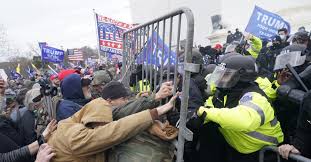
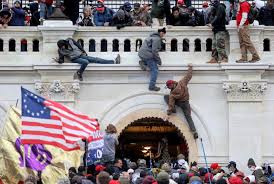
I called Trump evil. Evil is losing a Presidential election, lying about it, fomenting rebellion, and attempting to overthrow the Constitution. Evil is the attack on the Capitol. Evil is pardoning the guilty. Donald should have — and still should — stand trial for treason because of those actions.

But he should not be assassinated. And neither should Charlie Kirk.

The people spoke in 2016. They spoke again in 2020. They spoke yet again in 2024. The people decide.

So much for Donald Trump, in my opinion. Insurrection is unforgivable.

But that doesn’t make Charlie Kirk evil, and it doesn’t make any of Trump’s other followers evil. It doesn’t make them crazy. It doesn’t even make their ideas wrong.

I can understand why people follow Trump, both Republicans and Independents. He is persuasive, despite his lies. And he is just humorous enough to pass his lies off as exaggerations. He is also the first Republican president since Bush Two left office in January of 2009. That counts for a lot.

Extreme Republicans will vote for a Republican he doesn’t like before he will vote for a Democrat. Even though I am independent, I get that.

Extreme Democrats will vote for a Democrat he doesn’t like before he will vote for a Republican. I get that, too.

The people who voted for Trump — with the possible exception of very young voters — already had their opinions long before Trump came down the escalator. Most of them were already conservative. Most believed in limited government. Most of them believed that America was going to Hell.

(Actually, most people over 50 have always believed that the country is going to Hell. Liberals and conservatives just think it is true for diametrically opposite reasons.)

When Trump started selling MAGA hats, most of the people who wore them hadn’t been converted to anything. They were just following a man who seemed to be saying what they already believed.

There is no excuse for insurrection. Beyond that, if somebody is doing something you hate, then organize, protest, file a lawsuit, or scream at the top of your lungs.

But assassination? No. Never.

As for me, I am wringing my hands and grieving for America. Again.

— << >> —

That is not all I have to say about assassination. Science fiction uses assassination as the starting point for a lot of stories, particularly ones in the alternate timelines sub-genre. It will be coming up again when we talk about that in a few weeks.

687. Irritated Independence

WELL, I’M BACK.

This renewed version of A Writing Life will primarily be about supporting the publication of my novels, giving hints to young writers, and telling my story. But nothing in 2025 can avoid politics.

If I am also going to complain about the new iteration of Donald Trump — and I am — I have to declare my place in the argument for those who don’t remember me. Anyone who reads what I write deserves that much.

I am not a liberal, particularly. I am not a conservative, particularly. I listen to both sides and find both positions full of wisdom and stupidity. Most of the time, it’s about a fifty-fifty toss-up.

I was raised to be a proud and loud Republican. Like many other things my father taught me, it didn’t take.

I didn’t become a Democrat in reaction either. When I first registered to vote, I chose Independent. Or, as they call it here in California, “no preference”. I hate that term. I have a preference on pretty much everything. My preferences just don’t line up with everybody else’s.

I am fully in favor of a woman’t right to abortion. I am equally supportive of the gun rights spelled out in the second amendment. If I tried to join either party, neither one would want me.

On the liberal side, political correctness seems to have been pushed to the point that telling the plain, unvarnished truth is out of fashion. Not quite illegal, but not acceptable in polite company. I’ve had enough of that.

On the conservative side — actually I don’t know. Where have the conservatives gone? I can’t find them anywhere.

Trump isn’t a conservative. He isn’t a Republican, either. None of the conservative Republicans of my father’s generation would have accepted him. None of the Republican former Presidents support him, and the dead ones are turning in their graves.

And yet he won the last election. We’ll have to talk about that — even though we will talk mostly about science fiction and why it is so hard for writers to get published.

They say we live in unprecedented times. Maybe, but American politics has always been a liar’s game, so that overworked word unprecedented doesn’t quite fit. It’s just that Trump is just so damned convincing that it changes the whole situation.

But mostly this blog is going to continue to be about writing.