Tag Archives: history

Serial Education

Continued from last week, when I started to talk about what has already appeared in Serial.

Starting January 20, 2016, I presented a long fragment of the unfinished novel Voices in the Walls. I won’t give details, since you can read for yourself, but it was a teaching event. I interlaced the novel fragment with a chance to look over my shoulder as I worked. That turned it into a how-to for new writers.

#           #           #

Here is a bit of unavoidable nerdishness. I should have transferred Voices to Backfile. I didn’t. Time is short and work is long, and I never found the time to get it done.

You can still read old multiple posts, but it can be a major PITA (pain in  . . . ) because they are presented in archives last-first, and you want to read them first-first. Worse still, archives does not distinguish between AWL posts and Serial posts, so you have to read every alternate one.

It isn’t really hard if you know the secret. Here’s how it is done. At the bottom of each post are right and left arrows to the next/previous post. If you start with the first post of VITW, read it, then click the right arrow, it will take you to the next post. Unfortunately, in my world that will be the same-day post over in AWL. Slide down through that post and click the right arrow to go to the next day’s post of Serial. And so forth.

It goes quickly after a few clicks to get into rhythm. Try it. VITW is worth your time.

#           #           #

The entire novel Jandrax followed. It was and is available in used bookstores both locally and on Amazon, so it was not a lost work, but I included it with annotations. If you just want to read Jandrax, buy a used copy. Clicking through 92 posts isn’t worth 95 cents. But if you want to read the annotations in which I discuss why I did what I did, and confess to my screw-ups, it’s all there for you to enjoy.

more tomorrow

485. Uhura With a Dagger

Imagine Lieutenant Uhura in a different outfit, with a dagger at her belt, looking even sexier than usual. Actually, you don’t have to imagine, just check out Mirror, Mirror, which is simultaneously a pretty good piece of original Star Trek and one of the worst Star Treks ever.

How’s that? From the viewpoint of drama Mirror, Mirror is good television. From the viewpoint of logic, it stinks. Even though the alternate universe version of the Federation is completely changed and utterly barbaric, every member of the Enterprise crew is still at the same post, and the Enterprise is still in orbit of the same planet, going about the same business on the same day. Really?

Usually I don’t worry too much about accuracy in Star Trek. It is best viewed as  allegory, or as an attempt to make a decent SF program with minimal cost. I forgive a lot, but this one keeps me groaning more loudly than most.

#                #                #

As Mirror, Mirror shows us, building an alternative universe is no occupation for the lazy. But it sure can be fun. And if that universe has a steampunk attitude, all the better.

I spent the last half of last year writing a steampunk novel called The Cost of Empire, set in an alternate world in “the Year of Our Lord 18—, and of the Reign of Queen Victoria, year forty-seven”. It could be called an alternate history, but I made sure that most of the alternatives taste like steampunk, even though it doesn’t have werewolves or zombies or Jack the Ripper. Or automatons, although the sequels will. In fact, the whole intent was to provide a steampunk world that doesn’t depend on magic or unsupportable science.

Here’s the setup. After the Austro-Prussian War (real, 1866), a ruthless English businessman named McFarland (imaginary) stole an obscure type of engine (real, but forgotten today) which allowed him to produce useful dirigibles long before the Germans. He also started an organization of spying, disinformation, and assassination (imaginary, we hope) which allowed him to provoke and win a war with newly unified Germany, bringing England to universal power. In the process of suppressing German inventors, McFarland has skewed the course of science, prolonging the age of steam and clockwork.

To make this work, I had to shift a few dates, but not many and not by much. That is the reason, besides mimicking Victorian style, for the vague 18— date in the quotation. The challenge I gave to myself was to make big changes through the introduction of a single character.

So our story begins with England as the world’s most powerful nation (even more and sooner than in our reality) but hated by everyone, and with a fatal hidden flaw at its heart. England’s fleet covers the oceans, with dirigibles as eyes-in-the-sky above.

Our hero is about to fall afoul of the secret organization of assassins, escape, and spend the rest of this and hopefully several other novels fighting to free his nation from their grip.

The next two weeks will be devoted to the opening pages of that novel here in A Writing Life. As has happened a few times before, Serial will be tied up with other things.

484. Steampunk Anglophiles

I have come to the conclusion that most steampunk fans are also Anglophiles. That isn’t really surprising, but it puts me in a bit of an odd position, since I am not.

It’s not an aversion to England; I’ve been there several time and it is full of wonderful things. However, I have a disinterest in many of the things Anglophiles find interesting. Downton Abbey bores me silly. I don’t care who lives Upstairs or who lives Downstairs, and I really couldn’t care less about Elizabeth Bennet and Mr. Darcy.

One reason for my disaffection with a certain kind of English literature comes from being forced during high school to read Great Expectations. It was enough to put a person off reading altogether. With some exceptions (to be fair, probably quite a few), the recommended cannon of English literature, 1750 to 1900, is a litany of insipid characters, dull plots, uninteresting situations, and tales of a tedious and self-destructive culture. Thank God for Shakespeare and science fiction, or I might be illiterate today.

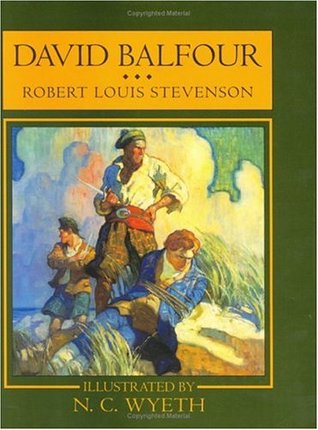
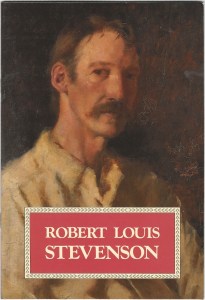
English history is fascinating, but I found my interest in English literature only on the periphery. First came Robert Louis Stevenson. I’m not talking about Treasure Island, which made him rich and famous. I mean, primarily, Kidnapped, and its almost forgotten sequel David Balfour (also published as Catriona). They are two halves of the same story and form a true classic. Critics see them as children’s books, but together they are the tale of a young man who successfully fights his way to become a morally responsible and honorable adult.

Of course, Kidnapped/Catriona is really a Scottish novel.

As an undergraduate, I studied India, one of England’s major victims. That inoculated me against Kipling style jingoism. My wife’s ancestors were Scottish and that led me into a study of Scottish-English relations — another complicated and ugly story. It also led me to two incredibly talented Scottish authors, Neil Gunn and George Mackay Brown.

Nevertheless, I did find English literature to love — even Victorian/Edwardian English literature to love — but not in the official cannon. First came Sherlock Holmes. I found a copy of the two volume Doubleday version when I was in my twenties and I have read it to shreds. I really need a new copy. That led me to Chesterton’s Father Brown; the real one, not the imposter on PBS.

Through my interest in small boats, I stumbled onto Riddle of the Sands, with two of the most English, most honorable, most fun heroes ever. I also found author John Buchan, who now occupies two feet packed tight on my library shelf. Buchan finally showed me inside the minds of some British imperialists whom I could respect, and even identify with.

Finally, the musical Scrooge led me to the non-musical adaptations of A Christmas Carol, and they led me to the novella itself. What a revelation. Dickens is wonderful, despite the agony of being force-fed Great Expectations while still too young.

So I ended up with a balanced view of England. England is the origin of our civilization and also the meanest SOB on the block. England both destroyed and preserved the great civilizations of the past wherever they conquered; and that was pretty much everywhere. English literature is both fascinating and as dull as a downstairs maid polishing the silver. England brought modern mechanized civilization and increased poverty to most of the world.

So I came to steampunk from out of left field and it shows in my new steampunk novels.

In The Cost of Empire (written in 2017 and looking for a publisher as we speak) the hero is a farmer/fisherman from the fens who is on the rise as an officer in Her Majesty’s Air Service (dirigibles, of course). He is a defender of the empire, but he begins to have doubts when he comes to know Amir Kalinath, an advocate of Indian independence. I have a long excerpt from the opening chapter scheduled here shortly.

And Like Clockwork, presently more than half finished, is a deeply weird take on Old London. It started out by imagining what would happen if the toy shop in Scrooge (the musical) was real, and it’s proprietor had built those incredible clockwork toys himself. I’ll say no more, since even I am not sure how this one is going to turn out.

480. Mairi at Culloden

272 years ago today, the last battle took place on British soil. Followers of Charles Edward Stuart (aka Bonnie Prince Charlie) met British forces under the Duke of Cumberland on Culloden moor. Like all battles, it was a confusing, bloody mess, but it had the virtue of being decisive. The reprisals which followed brought highland culture largely to an end.

The mists of nostalgia roll over the Battle of Culloden, casting it in a romantic light as the last day of Scottish independence from the English. Sorry, but it was nothing like that. There were Scots on both sides of the fight. The “champion of the Scots” was the grandson of a deposed British king, born in Rome and raised in France, now fighting to regain his grandfather’s throne in London. The highlanders who followed him were despised by the lowland Scots who fought on Cumberland’s side — but the lowlanders’ descendants now claim clan membership and wear kilts — even though kilts hadn’t been invented yet in 1756.

I would have sworn that I would never write about Culloden, until I saw a brief note in an article about the history of oats in Scotland which described the actions of a Scotswoman who sat down beside the road leading from Culloden and cooked oat cakes for the soldiers, knowing they would need food to survive. Her simple and humane reaction to the conflict moved me to write this poem.

Mairi sat down by the side of the road

The night was filled with the sound of men
And the moan of wind in the heather,
As Mairi’s kinsmen went south toward the field,
That Charlie had set for the meeting.

Three sons of Mairi came out of her hut
And kissed her cheek as they left her
With Ross the youngest trailing along
To see what the battle would bring.

Mairi took oats from the pantry shelf,
There was not enough to please her,
So she dragged in a sack from the loft of the ben,
Took peats, and salt, and her griddle.

Then Mairi went down to the side of the road,
Built a peat fire and kneaded the grain,
Heated her griddle and cooked fat cakes,
To stack for the coming of day.

“They will come,” she said, “in the morning,
And all through the rest of the day,
Strutting proud or running scared,
Theyʼll be hungry either way.”

The oat cakes sizzled; the smell was fine;
She flipped them and stacked them and listened
To the musket fire from Cumberlandʼs men
And the deeper roar of his cannons.

The cries that went up as the claymores flashed
Were too distant for Mairi to hear,
But Ross would come back from where he watched
To tell how the Scotsmen had fared.

Then a sudden wind, and the fire flared up,
She shivered as pain rushed through her.
Three quick shocks in her empty womb,
And her heart in her breast went numb.

Her hands dug deeper into the oats,
And flew at the task of the kneading,
The stack of bannocks at her side grew tall
For she knew now that they would be needed.

Then Ross came running from the battlefield
He could only come out with a groan.
But Mairi knew without any words
That his brothers would not return.

******

The first man she saw was limping hard
With his leg bound up in a rag.
A highland face, with matted red hair,
He was lean as an iron bar.

A hungry man with a strangerʼs face;
Mairi gestured to the cakes.
He picked one up, took a bite, and sighed.
“God Bless you,” he said, and moved on.

The second man was a stranger, too,
He said, “Mother, it was awful.”
“Eat,” she said, “and move along,
I’ll pray that you find safety.”

The third was young, more a boy than a man,
With face flat and eyes that were dry.
Half held up by a second youth
Who coughed along along at his side.

“Take cakes and eat,” Mairi started to say.
But the coughing youth shook his head.
“I thank you, Mother, but let them go
To living men instead.

My friendʼs bled dry; thereʼs a ball in my lung;
Weʼre as dead as the ones behind.
Just show us a hidden place to crawl in,
And a quiet place to die.”

Mairi worked on, with a clenched up heart
While Ross fed peats to the fire,
Saving the lives of the fleeing men,
For hungry men soon tire.

All through the morning and the afternoon,
Those who lived to flee streamed by them,
Mairi rolled dough in her aged hands
As she mourned for the dead and the living.

For even these battered and tattered men,
Who would leave the field still living
Had lost more than battle, kinsmen, and sons.
A whole way of life had died with them.

And Mairi knew, with foresight clear,
That the winners would fare no better.
That the losers had lost, and the winners would lose,
All except for the rich and the English.

Then the last cake was gone, and Ross was gone,
Sent on with the last survivor.
Up past the river and into the hills.
To hide for a while in the heather.

Down the road she saw them, a mile away,
The Redcoats at last were coming,
Marching proud with bloody swords.
                Mairi stood up and put out the fire.

477. They Never Flew (2)


NASP

Continuing from 472. Teaching Space and 474. They Never Flew (1), this post will discuss three manned space programs that never happened.

Eisenhower, Kennedy, Johnson, and Nixon were the presidents who took us into space. Whatever you think of any of them, they will always have that marked down on the positive side of their ledger.

Other presidents aspired to join them. How much of their thinking was patriotic for America, patriotic for all of mankind, or pure political calculation, is way outside the realm of my knowledge. I’m going to give them all benefit of the doubt and just talk about the programs themselves. You can spin motives any way that suits you.

Regan proposed NASP, the National AeroSpace Plane, also called the X-30. In his 1986 State of the Union, he said that we should produce a vehicle which would be “a new Orient Express that could, by the end of the next decade, take off from Dulles Airport and accelerate up to twenty-five times the speed of sound, attaining low earth orbit or flying to Tokyo within two hours.” It was an exciting idea, coming out of DARPA where it had begun as a black project.

NASP was supposed to produce two prototype planes, but neither was ever built. That doesn’t mean that it was a political scam. The technological difficulties of the project were staggering.

In detail, NASP was cutting edge. As an idea, the horizontal launch of a spacecraft was old in science fiction. There it was usually accomplished by electromagnetic technology, with ground based and powered launchers and only maneuvering fuel on the vehicle itself. See many early Heinleins, especially Starman Jones and The Moon is a Harsh Mistress.

One reason rockets take off vertically is to get mostly out of the atmosphere before achieving speed. That way, massive friction is only a reentry issue, when it can be used to advantage.

NASP was a jet, not a rocket. It had to operate primarily inside the atmosphere. This has the advantage of avoiding carrying oxidizer, but has a series of disadvantages. Friction heating is an obvious one. In addition, its engine would have to operate in three modes — as a relatively conventional jet at takeoff, as a ramjet once sufficient speed had been achieved, then as a scramjet (supersonic ramjet) once it passed the speed of sound.

At that time, no one had successfully built a scramjet, and NASP didn’t make it happen. The first scramjet, the X-43, made a brief flight in 2001, eight years after NASP was cancelled.

No one has successfully built a skin that can withstand reentry level heating on a continuous basis, either. NASP was too far ahead of its time. I spent a few years explaining to my kids how it was supposed to work — before it didn’t work, and silently crept away.

Then came Venturestar, which, if it had been successfully completed, would have done what the Space Shuttle was originally designed to do. It was to be a vertically launched, completely reusable, single stage to orbit vehicle with a wider and more efficient lifting body that would have allowed it to land, in emergencies, on shorter runways than the Space Shuttle.

To do all this, it would require new and untested technologies, including composite material LH tanks, a new tile-free heat resistant skin, and an aerospike engine. The project was divided into two parts. To demonstrate the feasibility of the new technologies, a one-third size, unmanned model of the VentureStar, called the X-33 was to be built and tested, and only then was a full sized VentureStar to be constructed.

Things did not go well. When the X-33 was partially completed a version of its composite LH tank was tested and failed to hold pressure. Alternatives existed, but the decision was made to cancel the project. The funding for the X-33 was a complex mixture of commercial and governmental funds, and continuation depended on all parties agreeing. That didn’t happen. The Air Force was still part of the mix, as with MISS and the Dyna-Soar, as with the black missions by the Space Shuttle, but their request for continued funding was denied. The Air Force eventually got the X-37b instead. The X-33, and with it the VentureStar, disappeared. For a view that the cancellation should not have happened, click this link.

From the perspective of a science teacher, VentureStar had been a godsend, full of all the excitement the Shuttle and NASP had lacked. Once it failed, my kids had no future in space that they could personally dream about.

Then came Project Constellation. By that time, my days as a teacher were coming to a close, so I did not have to face the daunting task of generating enthusiasm for a cobbled up rerun. Ares I, the small booster, was built out of Space Shuttle leftovers and Ares V, the large booster looked suspiciously like a Saturn V reboot. The Orion Crew Exploration Vehicle was an oversized Apollo capsule and the Altair moon lander was a LEM on steroids. Not only was Project Constellation going to do again what had been done forty years earlier, it was going to use essentially the same hardware.

I didn’t buy it. I didn’t try to sell it to my kids. It died four years after it was floated.

The future isn’t dead. The Space Launch System continues where Constellation failed and private enterprise has more strongly entered the mix. Today’s science teachers should be able to say, “You might be the first person on Mars,” with a straight face. I continue to hope.

474. They Never Flew (1)

Continuing from 472. Teaching Space, this and the upcoming April 5 post will discuss the manned space programs that never happened.

Wikipedia lists seven manned pace programs which were canceled before they were launched, but this list is only technically accurate.

MISS, Man in Space Soonest, was a project from the early days when the Air Force planned to dominate space. The preliminary work was transferred to NASA when it was formed and became Project Mercury. Technically, MISS never flew; looked at more reasonably, MISS became Mercury, which was quite successful.

Dyan-Soar was a follow up Air Force project which planned to put a winged craft into low earth orbit, and subsequently turn that into an ultra-long range space bomber. It was contemporary to Project Mercury. There was not enough money or will to keep them both, so Dyna-Soar was cancelled, only to be reborn, in a manner of speaking, as the Space Shuttle. For details see 342. Dyna-Soar.

The Manned Orbital Development System, Blue Gemini, and the Manned Orbital Laboratory were successive names for the same secret project, designed to use modified Gemini craft to service an early one-use space station as an orbital observation post. It got to the point of one unmanned launch before being cancelled. It was made obsolete before it went into service by advances in unmanned reconnaissance satellites. For details see 256. The Space Station that Never Was.

By the time I started teaching, the era of manned space exploration was over, but there were plenty of manned space flights. The shuttle had 135 manned missions; Mercury, Gemini, Apollo, Skylab, and Apollo-Soyuz combined had only flown 35 manned mission. However, none of the Shuttle flights were explorations.

The early Shuttle flights were exciting and technologically innovative, but they only went where Mercury had gone two decades earlier. The flights quickly became routine. They were dangerous — Challenger and Columbia proved that — but danger alone does not bring excitement. Commuting on a freeway is dangerous, but only exciting during moments of imminent disaster.

The Space Shuttle was supposed to be a cost saving way to space, but it proved quite expensive. It was supposed to be reusable, but that turned out to be only partially true. It was supposed to be single stage to orbit, but it never was. Each launch had four components, not one. The fuel tank was only used once. The two solid fuel boosters had to be recovered from the ocean and refurbished each time. Only the orbiter was fully reusable, and it had massive problems with failing tiles.

A vast number of its flights were spent building and maintaining the International Space Station. Many scientists tried to stop the construction of the ISS, claiming that not much science would be done there, but the cost would cripple other exploration. They were not listened to. Politically, the ISS was a demonstration that the cold war was over and the US and Russia were now pals. You know how well that turned out.

From the viewpoint of science, plenty of exploration was going on in my kids’ era, but it all involved unmanned craft. From the viewpoint of a teacher trying to excite middle school kids, a Mars rover landing was great, but if it couldn’t be followed up by a statement like, “You may go there someday,” if fell relatively flat. None of the kids I taught in the eighties are going to Mars; by the time anyone gets there, those kids will be retired, and they knew it at the time.

The only manned space craft of my kids’ generation was the Space Shuttle, and it was only flying to low earth orbit. A lot of good science got done by the shuttle (and a lot of political nonsense) but it wasn’t the same. Mercury, Gemini, and Apollo were like going down the Amazon in a dugout canoe, with adventure around every corner. The shuttle was like driving to Sacramento on Highway 99. Dangerous, yes, but not exciting.

But every year there was hope. New manned space projects kept being proposed, and I studied all of them so I could teach my kids something that would excite them.

Regan had NASP; Clinton had VentureStar; Bush Two had Project Constellation. We’ll look at all three on April 5, and try to recapture the genuine excitement they generated, before they faded into history

472. Teaching Space

I am writing this on February 10, three days after the first launch of Falcon Heavy. I’m impressed by the achievement, and amused by a mannequin in a Tesla floating through space. You would never have seen that during the days of Apollo.

For all the shift from government to private space flight, some things remain the same. All rockets have always been made by private companies, and the primary customer has always been the government. The degree of participation by private industry on the consumption side has changed considerably. Still, if it were not for the government contract to supply the International Space Station, it is unlikely that the original Falcon would have lived long enough to beget Falcon Heavy.

Falcon Heavy is a big deal, but not a total revolution. That doesn’t keep me from doing handsprings at its launch.

I know that teachers all over America are going to be using Falcon Heavy as motivation for their students to work hard and get ready to join the movement into space. Students who are in middle school today will be walking on Mars in thirty years. Any kid who isn’t fired up about that, doesn’t deserve to go.

Exciting tomorrow’s astronauts is the job of science fiction writers and science teachers, as well as those who are doing the actual work of exploration. I’ve been involved in two and a half of those enterprises.

For me it started with science fiction, first Tom Swift, Jr. and Rick Brant, then all the glorious writers of the thirties through the fifties when I finally got access to a real library. By the time I reached my teens about 1960, I was hooked.

That was about the time real astronauts first appeared. (And the time the words astronaut and cosmonaut appeared, so that we had to give up that wonderful word spaceman.) I also became aware of the X-planes, which had been making aerospace history since my birth year. It was an exciting time, culminating in a series of moon landings.

High school kids like me didn’t get to work at NASA, but I did research at the level available to me. Since my two science loves were space and ecology (starting before ecology became part of the public consciousness), I developed an “Ecosystem Operable in Weightlessness” as a junior and continued as a senior with “A Study of the Nutrient Uptake of Chlorella Algae”, both as science fair projects. That is the “and a half” from three paragraphs back. Those got me a summer job as a science intern and got me into college with a scholarship. I started in biology, switched to anthropology, got drafted, survived, went back to grad school then ended up being seduced by writing.

I wrote science fiction. I still do, but for twenty-seven years, a $ad lack of fund$ caused me to also teach middle school science.

Teaching math is teaching math, and teaching history is teaching history. Teaching science, however, is more than passing on skills and information; it is also firing up your students to become future scientists, or at least future citizens who understand and appreciate the role of science in our world. You really need to love your subject to do that, and I did.

It is also an easy subject to generate enthusiasm about. While others are teaching adverbs, food groups, the three branches of government, and quadratic equations, science teachers get to teach about explosions, dead animals rotting at the side of the road, poop, and the exploration of space. I pity my colleagues on a warm day in spring when every eye is out the window. I got to take my students out to throw baseballs into the air and analyze how the baseballs’ trajectories were the same ballistic path as a Redstone rocket with Alan Shepard aboard.

Middle school students are just the right age for this, and I loved teaching them. That probably tells you more about how my mind works that I should admit to.

The exploration of space, if you start about the time of Goddard and carry through Von Braun and his V-2s all the way to the moon, is the story of mankind in the twentieth century. You can’t teach it properly without including World War I and the rise of aircraft, the rise of the Soviet Union, World War II, the Cold War, the promise and danger of nuclear power, and the ugly political motivations behind the glorious achievements of Apollo.

History is a good starting point for firing up young scientists, but it has to be followed by a proper answer to the question, “All right, fine, but what will I get to do.” That part was tough. From the mid-eighties to the turn of the millennium was an era in which manned space exploration was undergoing a drought of imagination, will and accomplishment. Project after project failed to deliver, but those failures were not evident at the outset. Year after year I told my students, “This is your future.” And year after year, those futures faltered and died.

Maybe these non-starters don’t deserve to be remembered, but if you don’t know about the drought, you can’t appreciate the rain that follows. On March 26 and April 5 I’ll explore those projects which began with a flurry of excitement, then died quickly and quietly.

469. Joe Engle, Astronaut

Joe Engle missed his chance to go to the moon when he was bumped from Apollo 17 by Harrison Schmitt. It made sense. Schmitt was a geologist turned astronaut, and became the only one of the scientist-astronauts to get to the moon. He was, in fact, the only scientist to fly in space before the space shuttle program.

Joe Engle never became a household name like John Glenn and Neil Armstrong, but fighter jet crazy and space crazy kids of my generation were already aware of him before Apollo began. Not through the internet, which was decades away, nor from books in the library which were always two generations out of date, but from Popular Mechanics and Popular Science magazines. That was where my generation went to read about what was newer, faster, shinier, and cooler.

Iven Kincheloe, Mel Apt, Chuck Yaeger, Scott Crossfield, Joe Walker — if those names don’t stir your blood, you missed out. They were test pilots at Edwards Air Force Base who flew the newest and the best, especially the X-1, X-2, and most especially the X-15.

Joe Engle was one of them. By the way, so was that other guy, Neil Armstrong.

Engle decided to be a test pilot while in college, where he was in Air Force ROTC. Chuck Yeager recommended him for USAF test pilot school, and he subsequently attended Aerospace Research Pilot School. This was pre-NASA when the Air Force planned to put a man in space in a project called MISS (Man in Space Soonest). MISS morphed into Mercury after NASA took over the space program from the Air Force.

Engle served as a jet test pilot at Edwards and applied to NASA to be an astronaut. Instead, the Air Force chose him for the X-15 program. There he made sixteen flights; the fastest speed he recorded was 3887 mph. His highest altitude was 53.1 miles.

FAI (Fédération aéronautique internationale) in Switzerland maintains world records for human space flight. They set the limit of space at 100 kilometers. That’s 62.1 miles in the measurements Americans still use. In the days of the X-15, the Air Force set 50 miles as the edge of space and awarded an astronaut’s wings to any pilot exceeding that altitude. Engle exceeded fifty miles three times in the X-15.

(Fellow test pilot Joe Walker flew the X-15 above 100 kilometers twice, becoming the eighth American in space by the FAI’s more difficult criterion.)

Joe Engle applied to NASA again and was accepted. He was backup Lunar Module pilot for Apollo 14, and would have landed on the moon in Apollo 17. Engle then elected to transfer to the Space Shuttle program. He commanded one of the crews which flew multiple flight on the unpowered Enterprise. This near-shuttle was carried aloft on a Boeing 747 and dropped for a dead stick landing to evaluate its aerodynamic characteristics. NASA had to determine if the shuttle could land before it would launch it into space.

Engle was backup for the first Space Shuttle flight, and commander of the second flight. He later commanded STS-51-1.

Joe Engle is the only man to have flown two different types of winged vehicle into space. He is also the only remaining pilot of the twelve who flew the X-15, which he still calls his favorite aircraft.

468. Astronauts Left Behind

These poor guys got left behind when Apollo 17 went to the moon, and then I left them behind as well. This and the following post were originally planned for January but life got in the way.

When Apollo missions 18, 19, and 20 were cancelled, ten astronauts lost their chance at the moon. They were:

joe Engle who was scheduled for Apollo 17, but was replaced on that mission by Harrison Schmitt. (see 444. Last Men on the Moon) He will get his own post on Wednesday.

Richard Gordon and Vance Brand, who were scheduled for Apollo 18 along with Schmitt.

Fred Haise, William Pogue, and Gerald Carr who were scheduled for Apollo 19.

Stuart Roosa, Paul Weitz, Jack Lousma, and Don Lind who were on the short list for Apollo 20, although the final choice of three had not been made at the time of cancellation.

Here are their individual stories:

Stuart Roosa had been the Command Module Pilot of Apollo 14, the third moon landing. It was his only mission in space. He did not fly in space after Apollo 18 was cancelled.

Richard Gordon flew first on Gemini 11 where he and Pete Conrad set a record for the highest apogee earth orbit, while Gordon performed two space walks. He was Command Module Pilot of Apollo 12, the second moon landing. He did not fly in space after Apollo 18 was cancelled.

Vance Brand was on the backup crew of Apollo 15 and scheduled for the cancelled Apollo 18. He was then backup on Skylabs 3 and 4, and was on the rescue team held in reserve for a possible Skylab disaster. He finally flew on space on the Apollo-Soyuz mission, and later commanded the first fully operational Space Shuttle mission on the Columbia. He commanded Challenger on the tenth Space Shuttle flight and Columbia again on the thirty-eighth shuttle flight.

Fred Haise had gone around the moon on the ill-fated Apollo 13. On Apollo 19 he would have landed on the moon. He subsequently was a pilot on the ALT program (full title, Space Shuttle Approach and Landing Tests), where he piloted the unpowered Enterprise to three successful landings, after being dropped from a 747. He was scheduled to fly the second Space Shuttle mission to boost Skylab to a higher orbit, but that was cancelled when delays in the shuttle program allowed Skylab to fall.

Skylab plays a role in the stories of several of these astronauts. For details, go to posts 297   298  and  299.

William Pogue and Gerald Carr both shifted from Apollo to Skylab after the cancellation of Apollo 19. They were part of the Skylab 4 crew which spent 84 days in space.

Paul Weitz also shifted to the Skylab project, where he was on the crew of Skylab 2, the first manned mission. Skylab was badly damaged during its unmanned launch, a mission that was called Skylab 1. Weitz along with Pete Conrad and Joseph Kerwin spent much of their mission doing repairs.  Weitz retired from NASA, then returned to fly the maiden voyage of the Space Shuttle Challenger.

Jack Lousma was on the crew of Skylab 3, where he spent 60 days in space. He subsequently was commander of STS-3, the third orbital test flight of Space Shuttle Columbia.

Don Lind once said he was “in the right place at the wrong time.” He was one of the scientist-astronauts brought into Apollo and would most likely have followed Schmitt in rotation had Apollo 20 not been cancelled. He moved to Skylab, where he was backup for Skylabs 3 and 4, on standby for a rescue mission that didn’t happen, and was scheduled for Skylab 5 mission, which also didn’t happen. He was under consideration for Skylab B, a second Skylab space station that was cancelled. He was under consideration for the Apollo-Soyuz mission, but was not chosen. He finally flew on STS-51-B in 1985 aboard Spacelab-3. Spacelab was a space lab, in module form, carried in the payload bay of a space shuttle. Lind had served nineteen years as an astronaut before his first and only spaceflight.

467. Steel Drivin’ Man

So we come to the end of another Black History Month. I have said some new things, and repeated some posts that could not be said better. This is one of those repeats; it originally appeared as 88. John Henry, January 28, 2016.

The battle goes on, not just for “blacks” (who aren’t fully black) and “whites” (who aren’t fully white), gays, Latinos . . . the list goes on. If life permits, I’ll be back next year, beating the same drum. I won’t be here forever, but when I’m gone, you will still be here. It will be up to you then.

I have always wondered why John Henry is a folk hero.

Maybe it’s just a folk song. Maybe it isn’t supposed to make sense. I never worry about the fact that Stewball “never drank water, he only drank wine”; I do have a tendency to overthink things.

But let’s look at the facts. John Henry is big, strong, uneducated and very black. Symbolically black, even. As a ”little bitty baby” he picks up a hammer and accepts his fate. He works himself to death for white folks, while they stand around and bet against him. Then his wife takes over when he’s dead, and the story goes on unchanged.

Sounds pretty damned Jim Crow to me.

A technical point here, so it all makes sense. As a “steel drivin’ man”, John Henry is not spiking down rails to ties. He is digging tunnels. He is swinging a doublejack, a two handed medium weight sledge hammer. He is hitting a star drill, which is a steel rod about a yard long ending in a hardened cross bit. Every time John Henry hits the drill, another inch of rock is pulverized in the bottom of a hole. Between each stroke, his assistant turns the drill an eighth of a turn.

Men with John Henry’s job spent their days drilling holes in the face of a tunnel. Those holes were then filled with black powder or dynamite, depending on the era, and blasted. Then the drill men moved back in to do it all over again.

Imagine working in near darkness, covered with sweat and stone dust, breathing in the fumes from the last blast, damp and cold in winter, damp and hot in summer. Tough for John Henry; terrifying for his assistant, holding the drill steady, turning it only in that moment when the hammer is drawn back, and knowing that if John Henry ever misses, he’s dog meat.

It gets worse.

It is useful to those in power to have a large population of the powerless and hungry. Slaves fit that bill very well; so do new immigrants. Today we have the working poor, who are kept humble by the myth that if you can’t make it in America, it’s your own fault. You aren’t working hard enough (see post 5.Labor Day).

Immediately after the Civil War, white southerners found a way to get back some of their power and some of their slaves. They simply arrested and imprisoned newly freed blacks, then rented them out. They invented the chain gang. If you are trying to find historical reasons why blacks fill our prisons and why our police are so often corrupt, chances are pretty good your research will lead you to those events.

What does this have to do with John Henry? In searching for the man behind the legend, writer Scott Reynolds Nelson’s* discoveries suggest that John Henry was one of these convict-slaves.

John Henry was a man who could not break his chains, but was still a man for all that. His status as a black hero makes sense.

Still . . ., if I were borrowing all this to make a story, I would rewrite it so that John Henry used his hammer to brain the overseer. But, of course, the real John Henry could never do that, and today’s black community would not accept such a cheap answer, or such an easy road to freedom. It would not match up with their own experiences.

History is usually uglier than anything we novelists can invent.

——————–

*Scott Reynolds Nelson. Steel Drivin’ Man: John Henry, the Untold Story of an American Legend.