Tag Archives: literature

693. New Wave, New Frontier

New Wave, New Frontier

We choose to go to the Moon in this decade and do the other things, not because they are easy, but because they are hard . . .

John F. Kennedy, September 12, 1962

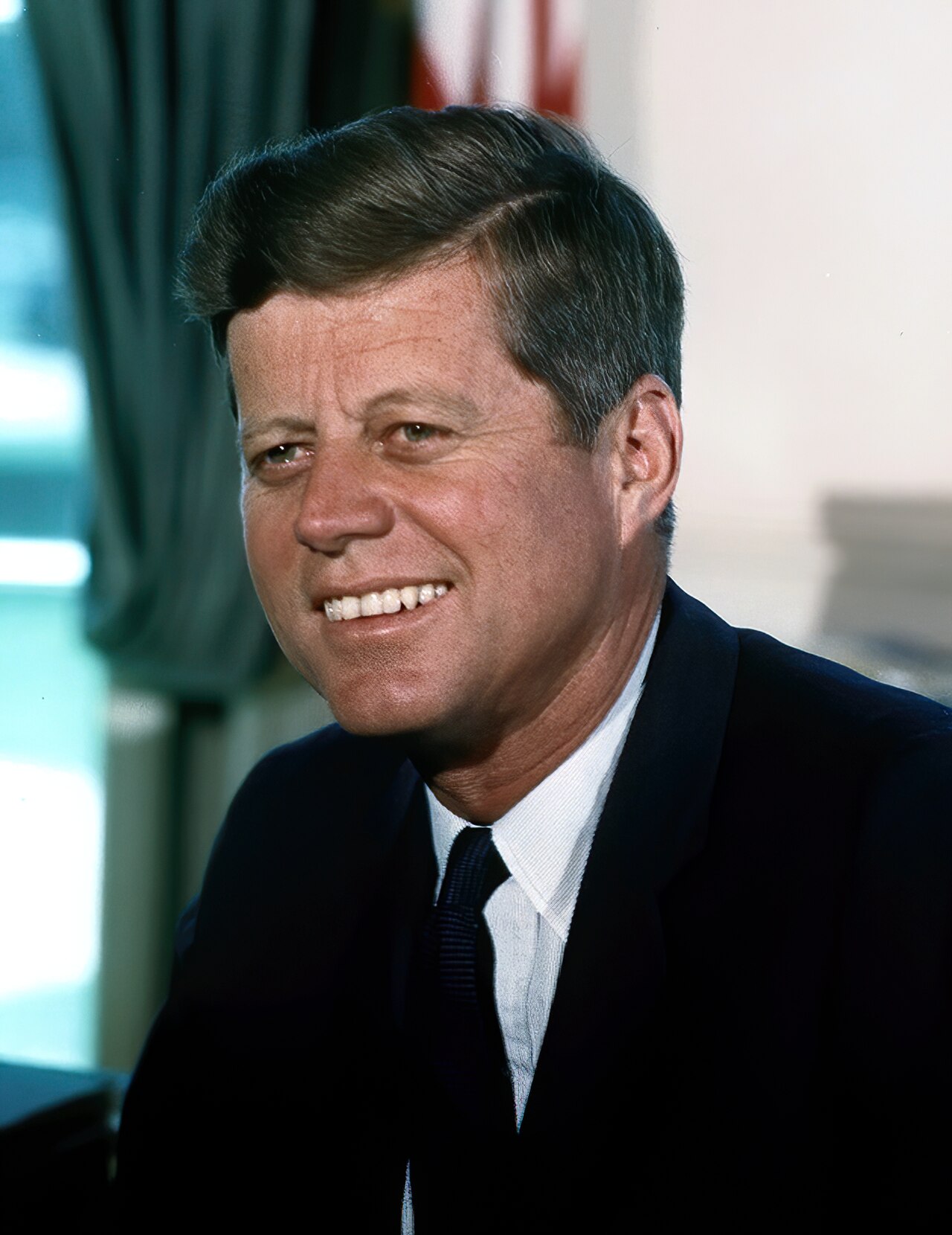
Eisenhower, Kennedy, Johnson, Nixon.  Eisenhower began the space program, Johnson saw it through, and Nixon got to be the president who placed a phone call to the first man on the moon. Nevertheless, it is Kennedy we most closely associate with space, largely due to the speech above.

Kennedy’s presidency was short — January 20, 1961 to November 22, 1963 — two years and ten months.

He began by creating the Peace Corps, then failed to provide air support for the Bay of Pigs fiasco. He saw the USSR build the Berlin Wall, faced Khrushchev in the Cuban Missile Crisis, and gave support to Civil Rights activists — but not enough support in the eyes of many.

Kennedy was a young man undergoing extreme on-the-job training. He was beloved by many and hated by many — nothing unusual in that — but a full and balanced evaluation of his Presidency is not possible because it was cut short.

What we can say for certain is that he was a modern President in all senses, and it was his charisma that set us on a path to the moon.

And then he was gone.

— << >> —

Meanwhile, regarding science fiction . . .

In 1961 Arthur C. Clarke’s A Fall of Moondust became the first SF novel selected to be a Readers Digest condensed book. That seems about right, since Moondust was Clarke at his most bland.

A Clockwork Orange, The Man in the High Castle, Cat’s Cradle, Dune, and Planet of the Apes also came out during the Kennedy years, and they were not bland.

About that same time a movement occurred inside SF which became known as the New Wave. That’s a problematical name, like Roosevelt’s New Deal. The New Deal isn’t so new 93 years later. The New Wave isn’t so new 60-some years later either. Still, if felt new while it was happening.

If a young SF fan today were to read something from the New Wave for the first time, they would be likely to say, “But didn’t people always write like this?” No, they didn’t. Before the New Wave, SF writing covered new and exciting concepts, but the style was generally pretty stodgy.

The New Wave was the era of Harlan Ellison, Ursula K. Le Guin, J.G. Ballard, and Roger Zelazny. And many others, but I am mentioning my favorites. I had loved SF before these folks came along, but the fact is, they just wrote better than those who came before them.

By the time the New Wave had been digested and made the norm, science fiction had generally reached it’s present stage. It was, and still is, a genre loved by a few, read by many, and avoided by even larger numbers. It’s style and tenor is no longer particularly distinguishable from the mainstream. There are a few best-sellers and a lot of stories that appear briefly then disappear into the ooze of indifference.

There were still a few changes to come before we would reach 2025. Computers would make writing — and especially revising — easier, so books got longer. Much longer. In the seventies, SF novels often ran 50,000 words. Today you would have a hard time selling one unless it was twice that long.

No agent or editor in the seventies would have even opened a Neal Stephenson manuscript.

Computers were at the heart of the other main change since the Kennedy/Johnson era. Special effects made it possible to create believable futuristic movies and television programs. While I offer no comments on the variable quality of story and acting, modern SF movies look beautiful. It is no wonder the center of SF attention has moved from books toward video.

I object to that, but who cares what I think.

— << >> —

When Kennedy was inaugurated, there were about 3000 Americans in Viet Nam. They were not called troops; they were called advisors. By the time Kennedy was assassinated, that number had grown to about 16,000.

Then Lyndon Johnson took over. He lied to the American people. He lied to Congress. He posted weekly kill-counts that were entirely imaginary. He promised victory. He expanded American military activities to adjacent countries. It gained him reelection in 1964, and cost him the chance to run again in 1968.

Nixon won and — in my opinion, since no one will ever know what really went on in that man’s mind — rode the war and the faltering peace talks to reelection in 1972. The he declared victory and pulled out.

Viet Nam fell.

Nixon could have pulled out four years earlier, with the same result. Johnson could have pulled out eight years earlier, with the same result. There would have been one difference, however.

Fifty some thousand Americans died in Viet Nam. According to Encyclopedia Britannica, an estimated two million counting all countries died due to the Viet Nam war. They didn’t need to die.

I occasionally meet Viet Nam vets who wear caps reminding us of their service. I have no quarrel with them. They were sent, they went, they did what their country told them to do. And there but for the grace of God go I.

I was also in that draft, and I enlisted. I spent my four years stateside, but that was nothing but luck. I could have gone over like the ones wearing the Vietnam Vet caps. And if I had, I could now be sixty years in the grave.

Tens of thousands of us knew Viet Nam was a mistake and said so. No one listened. I’m still angry, and I make no apologies for that.

— << >> —

Bouncing back to science fiction again — to the SF of alternate realities — here is the question all this poses. What would Kennedy have done, if he had lived?

We can’t know the answer; we can only speculate. Kennedy made big mistakes, then stood tall against Khrushchev. He learned. Would he have learned enough? Maybe not — but maybe he would have.

Folks, we are living in our very own alternate reality, initiated by Lee Harvey Oswald on November 22. 1963.

I also have a question for Oswald himself. Why did you shoot Kennedy that day in Dallas? Did you think you were going to make the world a better place?

What were you thinking?

The discussion concludes next week.
692. The Space Age Begins

The Space Age Begins

Britain measures eras by the reign of its Kings and Queens. America measures eras by Presidents. In our look at the beginnings of science fiction, we are about to enter the Truman/Eisenhower era, even though neither man will be our focus.

— << >> —

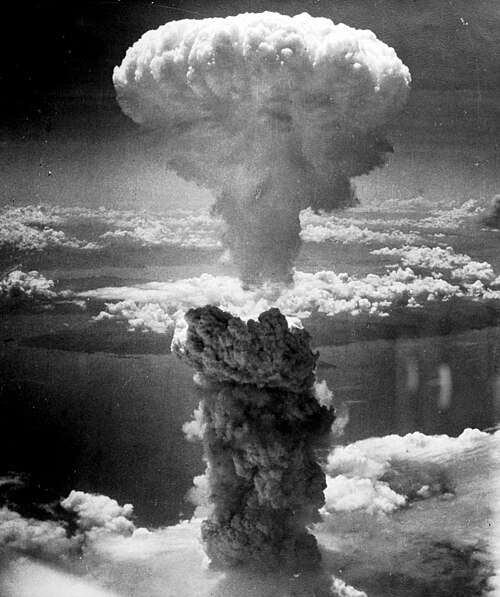
Hiroshima changed everything.

Science fiction people had read Einstein, or had tried to, so they knew about nuclear fission. They knew that an atom bomb could be built, and were expecting it. A few even got in trouble because they used atom bombs in stories, when the FBI was convinced they had it locked into secrecy.

For the rest of the country, Hiroshima was a shock to the heart.

It didn’t take long for the Russians to get the A bomb. Then we got the H bomb. Then the Russians got the H bomb. Welcome to my childhood.

Suddenly the future had become the present. Everybody was still driving ancient looking cars (no cars had been produced during WW II) and dressing like people in the old movies, but their world had been ripped open by futuristic perils.

Literature reacted to the situation. The Saturday Evening Post, that bastion of American norms, broke tradition and published a science fiction short story, The Green Hills of Earth by Robert Heinlein. Colliers Weekly published Wernher von Braun’s article Man Will Conquer Space Soon.

Von Braun also partnered with Disney to produce three episodes of Disneyland (as the Disney TV program was then called). The first, in March of 1955, was called Man in Space. This was followed by Man and the Moon and Mars and Beyond is later seasons. These were humorous and relied heavily on cartoon animation, but they showed American youth what the future held in store.

Eisenhower’s presidency saw a worsening of the Cold War, the rise of ICBM’s to deliver H bombs, and the development of satellites. The push for space flight had been properly begun. NASA was formed in 1958.

Space flight is key to science fiction, but it is by no means the whole of the genre. SF, by its nature, is always out ahead of contemporary science, and the giants of science fiction were producing major works during this period. The main difference from the golden age was that there were more novels, fewer short stories, and people had stopped laughing at the genre.

This was the era of Arthur C. Clarke’s Childhood’s End and Issac Asimov’s Foundation trilogy, while Robert Heinlein revised his novella Methuselah’s Children into a full novel.

This era also saw the rise of near future “science fiction”. The quotation marks are there to point out that this wasn’t really science fiction at all, because it was reacting, not predicting. Atomic power, atom bombs, jets, and rockets had been the stock in trade of science fiction fifty years earlier when they did not exist. Now they were the stock in trade of mainstream writers because they did exist.

Fail Safe was probably the most notable of these near future science fiction novels. It began as a short story in 1959 and was revised into a novel that appeared in 1962. In it, an American bomber is mistakenly on route to destroy Moscow with nuclear bombs. The American President, who cannot call back the bomber, must sacrifice millions of American lives to avert a world destroying all out nuclear war.

On the Beach was even more somber.  Years after a nuclear war, people of Melbourne, Australia wait for inevitable death as fallout from the northern hemisphere drifts down upon them.

No fun novels for a no fun time.

There were many others. Philip Wylie, who was already an established science fiction writer, turned out Tomorrow and Triumph. I read both in high school.

This new sub-genre of science fiction continued to gain readers who might never have read Clarke or Heinlein. In 1984 it reached apotheosis when Tom Clancy published The Hunt for Red October.

— << >> —

Over the course of this blog, fifty year anniversaries of events from the early space program kept happening, and I kept writing about them. By the time of my covid hiatus, those posts had grown into a book to be called Brief but Glorious.

Of all the books I plan to e-publish, it is the most dubious. Not the text — that’s fine — but I want to illustrate it heavily with NASA photos, and I don’t know what kind of technical problems that will cause. I have tentatively scheduled it for October 2027, but that could change. I’ll keep you posted.

The discussion continues next week.

691. Science Fiction Begins

Science Fiction Begins

If you don’t like that title, here’s a longer one.

Science fiction begins as literature, becomes a genre, sinks to a sub-literate state in the eyes of the intelligentsia, regains legitimacy in the Saturday Evening Post, and then consumes the universe.

I like the short one better. And by the way, this is just a quick survey. If you don’t like the way I’ve chopped up history, write your own. After all, most SF “scholars” disagree — on everything.

— << >> —

Science fiction has been around for a long time, although the early stuff is hardly recognizable. You could make the argument that it truly began when writers started using machines instead of supernatural beings to do marvelous things. That is why we look to H. G. Wells instead of Charles Dickens for the beginning of time travel stories.

Scrooge visited the past, present, and future, but it took three spirits (plus Marley) to pull it off. Wells did it with a time machine.

Jules Verne’s Five Weeks in a Balloon (1863) and H. G. Wells’s The Time Machine (1895) are a good enough place to start looking at science fiction. Both were considered literature from the beginning. Verne’s writing style was held up for emulation by the French establishment. H. G. Wells was a respected social commentator. In that same era, Edward Bellamy’s Looking Backward was a call for society to perfect itself — science fiction ideas spoken by the voice of the elite.

But what if you are an outsider, with a coarser voice?

Later, rougher, more exciting writers of science fiction didn’t fit the proper mold. They were frequently not all that interested in uplift, they just liked the idea of the future. Their characters were more likely to carry a ray gun than to address Parliament. Through the early decades of the twentieth century a whole generation of young men (and a few young women) found excitement in reading this kind of science fiction presented in the form of short stories in inexpensive specialty magazines.

This period, beginning in the thirties and lasting until roughly World War II, was often called the Golden Age of Science Fiction. (Remember, golden ages are always in the past somewhere.) A great deal of high quality science fiction was produced, along with the usual kinderdrivel. Science fiction had left the mainstream and become a niche interest, ignored or derided by most people.

Science fiction also acquired its own name. The Time Machine was just called a novel when it was published, but now science fiction had become a genre. Calling it sci-fi was forbidden by those who loved it. Everybody else just considered it cheap trash.

I wasn’t there for all that. For most of the Golden Age, I wasn’t born yet. I saw the science fiction of the golden age when it was reprinted in the paperback books published in the sixties, seventies, and eighties.

My actual connection with Golden Age magazines was brief but exciting. A few of them were still around when I began writing, and my first publication was in Galaxy. It was a novella called To Go Not Gently, and the cover of Vol. 39, No. 6, 1978, showed my character Ram David Singh walking uneasily down the Avenue of Abominations in New Bombay. I was over the moon.

It was also the last issue of Galaxy, although there were later attempts at resurrection.

So science fiction began as just a part of normal literature, then went on the gain an intense fan base as well as the disdain of everyone else. Heinlein and history were about to change that.

The discussion continues next week.

686. It Was Fifty Years Ago Today . . .

It Was Fifty Years Ago Today . . .

If you are my age, music from Sergeant Pepper just popped into your head in honor of that title. But you probably aren’t my age — 77 — so it probably didn’t.

Today, I’m throwing myself a digital anniversary party. I’ve earned it.

Today is September 2, 2025. It’s also the day after Labor Day.

In 1975, on the day after Labor Day — also September second — I sat down at a home-made plywood desk, in the tiny back bedroom of a rented house, in front of an electric typewriter to try something new. I was going to find out if I could write a novel.

I didn’t doubt my intellegence, nor my skill with language. What I doubted was whether I could sit down day after day and think of enough interesting things to say to fill up a novel.

I was going to give it my best shot.

At the time, I was reconsidering my plans. I had always intended to be a scientist, initially in ecology. The problem was that I was a decade too early. No one had heard of ecology in 1966. Michigan State University had only two classes even close to the subject when I arrived and they were both in Fisheries and Wildlife, not Biology.

I switched to anthropology and spent five years pursuing that goal. I loved it as long as I was studying work done by other anthropologists, but the idea of field work (sitting in a mud hut recording local gossip, to be snarky about it) did not appeal.

I had never considered writing novels. I had started a dozen, just for fun, but inspiration always ran out about page ten. Now,  I had a little time on  my hands, so . . .

To my amazement, between September and Christmas, I turned out a novel. It was simple and short — a hunter gets lost in the wilderness and, after many adventures, finds his way back to civilization. I used the local Sierras which I knew well and kept my hero so lost that I never had to worry about absolute accuracy in describing his surroundings.

It was unpublishable, but that isn’t unusual for first novels. The important thing was that in four months I had neither stalled nor stumbled as I worked my way through 45,000 words, which was just long enough for a novel in 1975.

I could write a whole novel! Who knew? Certainly not me.

After Christmas I started doing the research and world building for a novel of science fiction. It was finished by the end of 1976, sold by 1978, and published in 1979. The title was Jandrax, from Ballantine under the Del Rey imprint.

Now I was a published writer. Who would have believed it. Certainly not me.

I’m still working at my trade after fifty years, so it’s happy anniversary to me.

I am also using this anniversary as the starting point for a rebirth of my blog A Writing Life. Keep coming back, mostly on Wednesdays — we still have a lot to talk about.

681. Anniversaries

I’m still here.

I’m not quite ready to come back to the blog yet. I have a lot of things planned, but they have all been impeded, first by covid, then by an unprecedented heat wave, and now by a layer of smoke that burns the eyes and hides the sun. Welcome to California.

The title of this interim post is Anniversaries, and I have two of them.

Forty-five years ago I sat down to write my first novel. The actual date varies a little because it was the day after Labor Day, and that is the way I celebrate it. In 1975, it came on September second. This year it came on September eighth, but on that day it was too hot to start the computer in my un-airconditioned writing shed.

Life giveth and life taketh away. In the last four days the temperature has dropped from 110+ to something almost comfortable, but only because the sun had not been able to penetrate the smoke cloud that covers the entire state. I can’t breathe, but I’ve stopped sweating and I can turn the computer on again.

In a world where people are dying of covid, out of work, fearing eviction, and in many cases hungry, a little sweat, some stinging in the eyes, and a bit of cabin fever is the definition of comfort and luxury.

I don’t forget that.

Hard times aren’t new. Ninety some years ago in my birth state of Oklahoma my father couldn’t see the sky either, but then it was from the dust storms that were wrecking everyone’s lives. We go on.

Nineteen years ago, things got tough in a hurry here in America, and everything changed. That’s the other anniversary. I spoke of it in an early post of this blog, back in 2015. I’m repeating it here.

================

I was in the shower getting ready for a day at school when my wife called to me. A plane had hit the World Trade Center. By the time I dried and dressed, the second plane had hit.

Twenty minutes later, driving to work, I listened on the radio as the towers fell.

All day long I taught science, keeping to the lesson plan. I didn’t want to teach, and no one wanted to listen, but it was necessary to keep a semblance of normalcy. Every break we teachers watched the television, but we didn’t take any news back to the classroom. These were young children. They needed to be in their own homes, with their parents, before they began to deal with the details of America’s disaster.

At the end of the day, I drove home. I had upon me the need to write, but not of the tragedy. Others wrote that day of what had happened to our country, and wrote well. I needed to write of love and joy and beauty – and of my wife who is all those things to me.

Poems come slowly to me; usually they take years to complete. This one rolled freely about in my head as I drove, and when I arrived at home, I only had to write it down.

                   There Am I

Where there is water, there am I.
In sweet, soft rain and in hard rain,
driving and howling,
or filling the air with luminescent mist.
Water is life, and there am I.

Where there is sun, there am I.
In the soft heat of morning or in the harsh afternoon,
or heavy with moisture, forcing its way through clouds,
or dry as a lizard’s back.
Where the Sun is, is life, and there am I.

Where Earth is, there am I.
Whether dark loam, freshly plowed
or webbed with fissures, hard as stone,
or sandy, or soft as moss.
Where Earth is, is life, and there am I.

Where life is, there am I.
rain forest or desert,
broad plains of grass or brooding jungle,
Where life is, there am I.

Where She is, there is life,
and sun and rain and earth, and all good things.
Where She is, is life,
And there am I.

================

Things got tough in 2011, things are tough in 2020, things have often been tough throughout history, and things will be tough again in the future. But life abides, beauty abides, joy abides, and love abides.

Stay well, friends. Be good to each other.

679. The Nightingale Sings Again

I’m not all the way back, although I will be eventually. Even while I am in covid-hiatus, I will have occasional cause to say something that won’t wait for better days, and this is such a case.

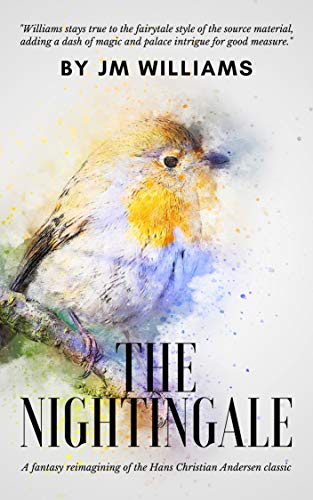
Two years ago, JM Williams produced a new take on an old Hans Christian Anderson story The Nightingale.  I reviewed it  positively at that time. Now he has published a cleaned up version of his novella. The changes in the text are insignificant, but the look of the work is vastly improved.

In the original, Williams said, “There are certain themes in the original story that still resonate . . .” and in the new version he says, “Certain themes in the original story still resonate . . .” In the original he says “ . . . the lie was an integral part of his plan.” and in the new version he says “ . . . the lie was an integral part of his plot.” Those are the kind of tiny changes a careful author makes if he is given a do-over. I know; I drive myself crazy with those kind of changes in my own work.

Such small changes aren’t reason enough to visit the story again, but in the first edition, the formatting got out of hand. Nothing was indented. In chapter three, it went from single space between paragraphs, to double, and then back again. Later the right margin slid to the middle of the page.

I’m sure that some of Williams’s readers must have given up along the way. If so, they really missed out.

Now all this has changed. The new version is a clean and professional as anything out of Doubleday. Nothing stands between the reader and the story, and it is a fine story.

This is what I said about The Nightingale two years ago, except this time I can give it the 5 stars the story deserves.

JM Williams retelling of the classic fairy tale sees the world from the ground up. King Gregor is about to name an heir but villainy is afoot, with two princes and a princess in contention, and magic tipping the scale. Royalty can’t help; instead, the son and daughter of the village blacksmith, with advice from a witch too old to act on his own, have to try to save the day. The characters are warm and relatable, and the action is believable. If you like a slash-em-up, this isn’t for you. If you like real people working to make their world better, give it a try.

While you are at Amazon picking up a copy of The Nightingale (be sure to get the one with the brightly colored bird on the cover) you might as well pick up a copy of Cyan. It’s going to be a long time before we once again complain that we don’t have enough time to read.

Stay well.

678. Taking a Break

I’m going to take a break

Yesterday, here in California, the Governor requested that all people over 65 self-isolate. That makes sense to me, and I passed that milestone seven years ago, so my wife and I are going to hunker down and become temporary hermits. That isn’t too much of a hardship since we live in the country and keep a well stocked larder anyway.

This change shouldn’t bother my blog, but it does. I’m not worried for my wife and myself, but worrying about the rest of the country and the world beyond weighs on me. It has also been getting harder lately to come up with new things to say, especially on subjects that don’t call for hours of research for a post that will be read in three minutes. This is post 678, after all.

So I am going to take a break. I have other things on my mind and I’m sure you do too.

I’ll be back. Whether in two weeks or two months, I can’t say. Meanwhile, I’m going to keep working on my novels, keep my wife company, and keep thinking about all the good people out there beyond my driveway.

Take care, folks. Stay safe.

677. A Perfect Book

This is a photo of my  copy. The front blurb, which is too small to read, says, “He was a rip-roaring rebel . . .  the Army be damned!”  However the narrator was nothing like a rebel and the Army appears nowhere in this book. So much for truth in advertising.

Let me tell you about a perfect book — not some abstract idea of perfection, but a very specific book called Last Scout by Wade Everett, which is the pseudonym used by two western writers, Will Cook and Giles A. Lutz, for the books they wrote together.

What makes Last Scout perfect, for me, is the way in which it weaves together four strands into one seamless cable. It is a mystery, a western, a story of family, and a story of a boy growing into manhood. Each of those strands gets roughly equal treatment.

It was never much of a success (see below) possibly because of this balance. If you love westerns, there is probably too much family stuff interrupting the action. A mystery lover would wonder why Wild Bill Hickok keeps showing up, and a family story reader might wish Page, the young narrator, wouldn’t get into so many fist fights and shoot-outs.

I like it all, but especially the pacing.

Chapter one: Deadwood, during the height of the gold rush. Page, our narrator, meets his grandpa for the first time. He has been languishing in an old folks home. Page meets him at the stage where his gramps greets him by throwing him repeatedly to the ground. He isn’t mad; he’s just an ornery old mountain man testing out the young-un. Page takes him back to his mother who is not happy that the old coot is coming home.

Page leaves to dodge the fireworks between the two and goes to see his dad, who is running one of the mines which have been losing money to stage hold-ups. His dad explains that his mother is half-Indian, born of one of the old man’s many wives. She was raised white in a school for girls until the old man took her back to the blanket where she had to learn to live as an Indian. That is where Page’s dad found her and married her.  She loves the old man, but she has never forgiven him for taking her out of the white world when she was a girl. All this has given her an exaggerated need for respectability.

Page borrows his dad’s shotgun and heads out to shoot some birds for supper, wild game to make his grandpa feel more at home. There he meets Buckley, manager of the stage line which is being overwhelmed by hold-ups. They hunt together, but Buckley is unskilled and Page is a wizard with a shotgun. At the end of the day, Buckley sets up a test. He hangs a batch of sacks of flour in trees a few miles out of town, and challenges Page to hit them from a moving stage. Jim Bell, the marshall, and Hickok hear about it and tag along. It is a wild ride, but Page pots every target, and Buckley offers him a job guarding the stage as Bell and Hickok look on. Of course he says yes. And of course that causes a row when he gets home, but he has given his word, so he keeps the job.

That’s chapter one of fifteen and already everything that will follow is rolling down the track at high speed. Hold onto you cowboy hat.

In a later chapter, Marshall Bell’s mother and Buckley’s sister come into town on one of the stages Page is guarding. Now the dynamics of all three families are in play, which becomes more important when Page determines that the head of the robbers is a man from one of the three families. After he decides he can’t trust Bell, and since he it the primary target the robbers are shooting at, Page feels he has to unravel the mystery himself.

Page and his grandfather become uneasy partners, but Page can’t quite trust the old mountain man not to just shoot his suspects.

Eventually the robbers get caught, the family tensions sort themselves out, the mystery man in the background is outed, Page grows up, and there is plenty of manly fist and gun play along the way.

What makes all this perfect is the way things move from scene to scene. In a normal novel of this type, an action scene is often followed by some extraneous business, such as a pony ride from one town to another through memorable scenery. This gives the reader time to catch his breath. In Last Scout, a scene of family life moves to a scene of sharp action and then to a scene where Page learns a lesson in maturity. Nothing is wasted; nothing is extraneous.

If I have any complaint, it is that Page is too competent for his age. He makes too few embarrassing mistakes on his way to manhood.

All this takes place in about 42,000 pretty short words. An author today would need a series of four long books to give us this much story.

============

It’s hard to find the publishing history of a minor work, so this is all I know. Last Scout was published in paperback in 1960 by Ballantine. I bought my copy used, probably in the seventies or eighties, and I haven’t seen another copy since. Apparently it was reprinted in 1997 in a Large Print Hardcover edition, credited only to Will Cook. As I write, Amazon has only two copies of the hardback and one of the paperback, all used, and your local used book store is likely to have none..

674. The Voice of a Scholar

This will be short, an excerpt from The Cost of Empire, set in the year 188-, in an alternate universe. It refers in part to what was published in Old Lascar.
Sometimes a writer drops a clue to his personal philosophy into conversations between his characters. Take this as a hint from a guy who could never get enough of learning.

Very little in an ordinary dirigible is asymmetrical, but the King Class had been designed to carry bombs or troops, and only given diplomatic quarters as an afterthought. As a consequence, in making room for the dining hall and the staterooms there had originally been no place for the passengers to gather and watch the view below. A second design had pulled the passageway from the center to the port side, lined the outboard wall with windows, and lined the inboard wall with benches. It had been unpopular while crossing the Arabian Sea, but now interesting scenery was back and so were the lounging passengers.

David had begun to spend his off hours there, answering the passenger’s questions and enjoying the scenery himself.

The fleet of eight had followed the coast down to Mangalore, circled the city without landing, and headed inland following the Netravathi River. Normally, Harry could have jumped the Western Ghats, but with an overload of passengers, cooks, servants, fancy food, and the added mass of the walls and fixtures of the passenger’s quarters, the ship’s altitude capability was considerably reduced.

This morning, Kalinath was seated on one of the benches, with his bodyguard sitting stiffly beside him. There was no place for Singh to stand and it clearly made him nervous. He looked on suspiciously as David approached, put palms together, and said, “Namaskar, Sri Kalinath.”

“Namaskar, Mr. James. Sit.” He gestured to the place beside him, and David took it. “How is it that you know to say namaskar, instead of namaste?”

“You are from Bengal, are you not?”

“I am. Have you been to India before?”

“No. I learned the difference from an old man in London, a displaced lascar.”

“A servant?”

“No, just an old man. He sat every day in the sun on the street near where I was living while they were building the Harry. I talked to him occasionally. He taught me the difference.”

“I don’t know many Englishmen, Mr. James, who talk to old men on the street whom they do not know.”

David shrugged. “I don’t normally, either, but I knew I was going to India and I wanted more than I could read in the newspapers. This old man was clearly a Sikh, and he seemed so calm and — I suppose the word is dignified — that he seemed like someone worth knowing.”

Kalinath only nodded, and chose not to pursue the subject. The river below was brown and slow. The countryside was green and heavy with trees. The air moving through the dirigible was still warm, even at a thousand feet of altitude, and carried a trace of the smell of vegetation. As they talked and the dirigible moved inland, there was a rapid change from coastal plain to foothills and forest gave way to plantation. David asked, and was told that these were crops of tea. Kalinath knew tea, and gave a brief description of its cultivation.

“You see, Mr James, even though I am a son of scholars and a man of the cities, when I knew that I would need to go to England to plead the case for my homeland’s freedom, I had to become an expert on many things. One cannot champion a land he does not know intimately. You understand, I know.”

“Not personally.”

“Come, Mr. James, one scholar knows another when they meet.”

“I’m no scholar, Sri Kalinath.”

“Is there anything about the construction and management of this craft that you do not know?”

“No, but that’s my job.”

“And you asked an old man about India, and the proper form of address.”

David shook his head and said, “I just wanted to know.”

“I just wanted to know,” Kalinath repeated. “That, Sir, is the voice of a scholar.”

671. Old Lascar

Early in January I was taking a break from writing Dreamsinger to write posts for the blog. At the same time, I decided to re-read Cost of Empire. It has been floating from publisher to publisher for a couple of years now, longer than reason would expect but not longer than reality dictates. I wanted to become reacquainted with it.

As I read, I was reminded again how much India lives in my writing. That led to my February fifth post. I had particularly enjoyed writing David James’s encounter with an old Sikh man in London. Indians in British literature are so often spear carriers, villains, or Gunga Dins that it was a pleasure to present a character who was just a nice old fellow worth knowing.

This takes place just before the launch of the dirigible Henry V and it’s subsequent journey to India.

*                     *                     *

There was an old man who sat in the sun every day in a nook against the south side of a rooming house. David had seen him since he first took a room in the city, as he was on his way to where he slept. There were plenty of street sitters, mostly beggars, so at first David paid him no mind. 

Once he became aware of the man, David realized that he never begged or harangued any passers by, but sat with quiet dignity, enjoying the sun and minding his own business. He seemed as isolated as David felt, so David nodded to him in passing, and the old man smiled.

The old man was never there when David walked to work, but he was always there as he returned. The evening after the nod, David touched his palms together as he passed and said, “Namaskar.” Startled, the old man did not reply.

The next evening, David again saluted the old man with namaskar, and received a head bob, palms together, and a reply of, “Namaste.” And a smile.

The following evening, the old man was not alone. A scrawny, dark skinned youngster sat beside him. This time the old man saluted him first, and the boy said, in passable English, “My grandfather greets you. He asks why you take time to notice an old man?”

David stopped. He didn’t want to stand over the old man, but there was no way he could contort his legs into the position the fellow favored. He compromised by sitting down on the lowest of the steps leading to the boarding house and replied, “Why shouldn’t I notice you? Will you tell me why you said namaste after I had said namaskar?”

The boy translated, then replied, “Grandfather says that only the people of eastern India say namaskar. Grandfather is from Maharashtra where they say namaste. It is the same greeting. He asks how you know to say either?”

“I learned namaskar from a friend in Trinidad. His grandfather came to Trinidad to work, after the African slaves were freed. His grandfather was from Bengal.”

They began an intermittent relationship. Sometimes the boy would be there when David came by, and he and the old man would talk through him. But the child was restless, and most evenings he was absent. Sometimes David would salute with namaste (now that he knew the difference) in passing, and sometimes, especially when he was particularly weary, he would simply sit quietly with the old Sikh and watch the people passing by.

It felt natural. David normally shied away from crowds or strangers; to have to say something when he had nothing to say was hard for him. Sitting with the old man and saying nothing, even when he had much to say, was a quiet comfort.

Piece by piece he learned the old man’s story. He was a lascar, as Indian sailors were called. He had first sailed out of Bombay as a young man, forty years ago. He had reached London, and had been paid off. He had no English to seek work or a berth on a ship, so it took him two years to find his way back home to his wife.

He made more journeys, and spent far too much time starving in port between them. His wife had a son during one absence, and died during another absence. Finally his son, now the age he had been on his first trip, shipped with him.

The docks of London were full of lascars looking for a berth, or just existing; a few worked in Britain, although it was illegal. His son gave up on finding a berth, found work with a ships’ chandler, and eventually saved enough money to buy the boarding house where his father took the sun. He married a half-Indian girl, the daughter of another lascar, and his son was now his grandfather’s translator.

The old man longed for his home. His son worked day to night, and hoarded his pennies like an Englishman. His grandson had never seen India, and lived the life of the despised, in the land which had conquered his homeland.