
Tag Archives: literature

394. Today, everything changed

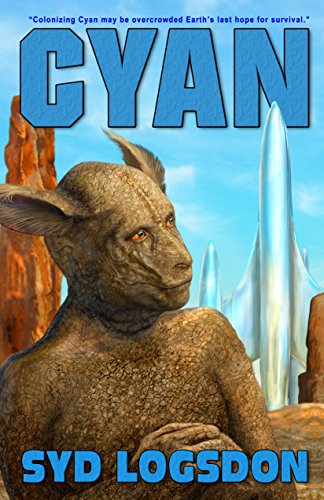
Today, everything changed. Those were Ramanda’s words when Viki picked up a chipped stone and the explorers of Cyan discovered that they were not alone.

Today, things will change in this blog, but perhaps more meaningfully for me than for you.

On the last day of August, 2015, I released the first post in A Writing Life and the first post in Serial. I immediately began a program of five posts of fiction and four mini-essays each week. It wasn’t long until I trimmed Serial to four posts a week to keep the two halves of the website in synch, and I have kept that schedule with very few breaks for nearly two years.

The early AWL posts were short, about 350 words, but they quickly grew and now they are typically about 700 words. Occasionally I repeated old posts, for various reasons, so my best estimate of how much I have written for A Writing Life (the blog) has reached over 200,000 words.

That’s the equivalent of a long novel or two short ones. I have never run out of material, but there have been times I have come close.

The content of Serial was already written, but even that takes a lot of time to convert into serial form. (see 245. Serializing)

I started preparing A Writing Life six months before its rollout. And yes, I know that it was dumb to name the overall website and one of the two posts with the same name. But I didn’t know it when I started, and it’s too late to fix it now. AWL (the website) came about when Cyan was accepted for publication, as a way to see that it didn’t die quick and quiet like A Fond Farewell to Dying had done. FFTD was a good novel. It deserved an audience, but it never found one.

It took a long time from acceptance to publication, but Cyan finally came out this April. In July, I went to Westercon to tell everybody who would listen that they ought to buy it. That’s how we do things these days. Hemingway would puke.

Where was I — oh yes, changes. I have spent so much time on this website that it has curtailed my actual writing. That can’t go on, but this site is how I met all of you, so I can’t quit it either. So here is the plan.

Starting today, I will no longer post on A Writing Life (the blog) to a schedule. When I have something to say, I will. For example, there will be a post August first about bears, and why they are in Spirit Deer.

If you haven’t followed me yet, this would be a good time to start, so you will get notification when I post. I will still have a lot to say, just not four days a week. This will get the schedule monkey off my back. I have a couple of sequels to Cyan that are calling me.

Serial will continue. Spirit Deer will be finished in early August. I will follow it with one of my favorite Harold Godwin novels from my childhood, now largely forgotten and in public domain. That will carry us most of the way to Christmas. Then we’ll see. There will be a post explaining all that on August 14, here in A Writing Life.

I’m not going away, I just won’t be around quite as often.

Download Cyan, or order it in paperback. If you like it, write reviews for Goodreads and Amazon. Tell your friends. Then in a year or so, you can tell them about the sequel.

In many ways, A Writing Life (the blog) has been less of a blog and more of a magazine. From now on it will be more like most blogs, with news, events, and updates of ongoing writing. But the magazine style mini-essays won’t disappear. They will simply stop dominating my life, so that I can get back to my novels.


Spirit Deer 31

Beneath him the hills fell away into what had to be the valley of the Tate River; beyond, etched against the clouds, were Mt. McCutcheon, Rampart Peak, and Mount Carter. Above and on either side of him towered Saddle Mountain and Davis Peak. He strained his memory; this would be the valley of Rube Creek – no, of Dog Creek. To get out he would have to follow Dog Creek to the Tate, then turn upstream and follow the river to the highway. He estimated the distance at between twenty and thirty miles.

He would never make it in his condition.

Then he realized that if he could see landmarks, a signal fire could also be seen. Looking around, he chose a dead cedar that stood alone. Dragging burning wood from his shelter, he built a fire against its base, cutting boughs and piling them high. Dense black smoke boiled up as the branches caught. Within minutes, the entire tree was blazing like a torch and Tim had to retreat from the heat. But the clouds were rapidly closing in and Tim knew that his fire had been started too late. He watched disheartened as the landmarks were eaten up one by one by the lowering clouds.

Tim continued to stand near the burning cedar. He was bitterly disappointed. If the clouds had held back for even ten minutes, the ranger station at Mt. McCutcheon would have seen his fire and would have sent someone to investigate. Instead, his fate was still in his own hands.

Food and a hide – he had to have both. And now, not later.

As he hunted, he found that he had plenty of deer to chose from. Muleys were out in record numbers scrounging among the drifts for food, and he heard the crash of antlers throughout the morning. Tim wasn’t sure if they were simply making up for lost meals, or because they sensed that this was only a lull in the storm.

He found a small set of tracks in the fresh snow. Keeping to the shadows of the trees, he advanced with arrow nocked, moving carefully from cover to cover. He carried the bow in his left hand with his fingers laced around the arrow while he gripped his crutch-club with his right hand. Tim floundered pitifully with that crutch, but he could not yet abandon it.

After a while he caught sight of his quarry and began to circle around upslope. It was a muley doe, feeding hurriedly but cautiously. He approached from above, keeping behind a stunted fir. She shied away but he remained perfectly still, and eventually she swung back to browse a manzanita below him. She was not aware of his presence or she would have run, but she stayed too far away for him to get a shot. She finished with the manzanita and moved closer. Tim sensed that he would get no better chance, so he drew and released. He saw the arrow arch true, but the deer had seen him move as he drew back his bow and she leaped away. The arrow brushed her flank as she bounded away, marking her with a harmless scratch.

* * *

The black bear was prowling. The slopes were alive with mule deer, but it was early in the season and they were not yet weak enough for him to run them down. Except in mid-winter, a black bear can usually only take fawns and carrion, and an an occasional lame, weak, or sick deer.

The black bear’s battered senses and infected face had combined with his stiffened leg to put him in a constant, killing rage. more tomorrow

Spirit Deer 30

Replenishing his fire, he brushed great masses of snow from his clothing and sat huddled miserably. After a time, he became warmer again. The heat trapped within the shelter dried his clothing. Snow had built up on the roof of his shelter and had drifted against the walls, making what seemed to Tim a snug hideaway. The actual temperature in the shelter was only ten degrees above freezing, but Tim had grown used to hardship.

Outside, the snow fell ceaselessly, filling up the spaces between the trees and building long drifts in the meadows.

* * *

The black bear lay beneath a stunted hemlock. His various wounds ached and the festering shot beneath his eye had now robbed it of sight in one eye. He had eaten well of the deer carcass, but he needed more, much more, if he was to survive his winter hibernation.

* * *

Outside, the temperature had dropped to zero. Within the shelter, Tim huddled close to the fire. He slept little during the night, and his skin crawled at the thought of going out into the cold to search for more firewood. Throughout the mountains, this would be a time of withdrawal, when every creature stayed close to his den and dozed the storm away.

If the temperature stayed this low, he could not travel even when the storm broke. He would either freeze quickly, or starve slowly by the fire. It was not a matter of giving up – he would fight to the last – but now he realized that he had used up all his options. If he could kill a deer, he might make some rough clothing from its hide and live on its meat until he could fashion snowshoes and walk out. But how could he kill a deer when the cold had nailed him to his fire?

* * *

The black bear slept, wrapped in layers of fat and fur. The wind howled in the brush around him. From the Olympics in northern Washington to the Tehachapies east of Bakersfield, the western mountains were being buried by the first major storm of what would be an exceptionally harsh winter.

* * *

The storm was like a giant beast, crushing the land beneath it. When Tim stepped out of his shelter into the night, the wind whipsawed him and nearly drove him back inside. He forced himself to go out and burrow through the drifts for wood. Then he collapsed by the fire, almost crying out from the cold.

It would not be enough to get him through the night.

Again and again during the night, Tim had to go out to burrow through the drifts for down wood. Each time it was harder to force himself out, and each time it took longer to warm himself again. He got no sleep, just a few moments of dozing, and the strength the porcupine’s meat had given him drained steadily away.

Chapter 12

Tim was wakened by the sun. For a long time he lay in a stupor, unable to comprehend the meaning of that fact, then he leaped up and staggered out. He had to climb up out of his shelter onto the drift snow to see the world around him. Every tree and bush shone with a diamond light that hurt his eyes, and the sun hung suspended beyond a hole in the clouds.

The clouds had lifted during the night and the snow had stopped falling, but even as he watched the sun was obscured again. He could see for miles now, and for the first time he could make out familiar landmarks. more tomorrow

392. Cold to the Bone

Poor Tim. I’ve been putting him through Hell since he wandered off and got himself lost in Post five. But you have to give me some credit. I gave him two breaks. If he hadn’t found that piece of pyrites, or something equivalent, he would have died by the second night. And if he hadn’t stumbled onto that piece of obsidian, he could not have made spearpoints and arrowheads.

The rule of fiction is: you can use all the coincidence you want in getting your hero into trouble, but be very careful in using coincidence to get him out of trouble. That is story logic, not real life logic. We dodge bullets every day by sheer happenstance, but we don’t expect our authors to cut our characters any such slack.

So I gave Tim a piece of pyrites and a piece of obsidian, then gave him rain, cold, clouds, a twisted ankle, and got him so thoroughly lost that he had no idea which way to walk out. That’s fair, in story land. Two ounces of luck and a thousand pounds of pain.

#                          #                          #

Write about what you know; the oldest cliche in the book. Well, I know cold.

Take a typical December day in Oklahoma. That means not much snow, some sleet occasionally, but typically bare, hoof churned dirt, frozen by thirty degrees of frost into a tangled mass of lumps and holes. It was deadly to walk on and the cow flop froze solid when it hit.

You will find me snug and warm in my bed until 4:30 A.M. when my dad would throw back the door and shout, “Get up!”, in his take-no-prisoners voice. He had no patience for coming back a second time and, with that voice, he never had to.

I hit the floor with a jolt of adrenaline and went in the living room to dress. The only stove we owned was there, gas burning and hot. The stove pipe in the back had been replaced with a “C” of pipe sections that redirected the fumes into the fan that sent glorious heat into the room. OSHA would not have approved, but OSHA hadn’t been invented yet.

First I held my long johns over the fan. They stood out like a wind sock briefly, then I put them on. The same with my jeans and shirt. The same with the overalls that went on next. Then two pairs of socks, boots, overshoes, then a blanket-lined jean jacket. I was warm as toast.

The comfort lasted about thirty seconds after the kitchen door closed behind me and there was no comfort for the next three hours while my dad and I milked cows.

There is nothing like three hours of arctic cold seeping into your feet from a concrete floor to make you appreciate that you would soon be in a heated classroom. I loved school. I loved learning. I also loved being where it was warm — while it lasted. After school, we did it all over again, then I got to sink into the comfort of a warm bed.

Until 4:30 the next morning.

After milking each morning we would load hay onto the truck and drive out to scatter it in the pasture. Then we would drive to the pond, and both hop out with our axes. We each cut — or recut — a series of eighteen inch square holes in the ice so the cows could drink.

There is a science to this. After you chop out the four lines which form the perimeter of the hole, you flip the loosened square out onto the ice, then splash water up and around the hole. This removes the floating ice chunks that would quickly refreeze, and also thickens the ice where the cattle will later stand.

It works well, usually. But one day there had been a rare snowfall. There were drifts, only inches deep, at the edge of the pond. Actually, over the pond, as I found out when I stepped out, thinking I was still on land, onto the ice itself.

No, I didn’t drown. I’m here to tell the story, aren’t I? But I can’t describe the shock when I went in to my knees.

Science tells us that water, under ice, is 0o Celsius or 32o Fahrenheit. Science lies! It is infinitely colder than that.

So yes, Tim, I know all about cold. I feel your pain, but you are the hero and I am the author. I am going to enjoy sitting here in front of the typewriter with my feet wrapped in a blanket while you sleep on the frozen ground. It’s nothing personal, but I’ve been there, and I ain’t goin’ back.

Spirit Deer 29

The next snowfall could easily bring another foot of snow. The sky had not cleared, but the clouds hung higher and all of the animals seemed to be in a desperate last minute frenzy of activity. Douglas squirrels dashed about harvesting the last of the pine cones, and the birds had left. The wind across the snow fields cut deeply.

All day he heard the clatter of bucks in battle. Where yesterday his own deer had seemed to be the only one on the mountain, today he had seen several in the distance and had seen the tracks and rut signs of others.

There was real storm brewing. He could see it in the sky, in the behavior of the animals, and could feel it in the cruel wind. It was as if nature had given her warning and was now drawing her forces together for a real horror.

He was worried about his feet, as well. They hadn’t been dry in two days. And he was worried about his ability to travel. Already he was having a rough time in the snow because of his crutch.

Life had been simpler when he was too hunger dazed to worry. The thought made him smile.

During the afternoon, he spotted a number of muleys feeding in the open. They bolted before he got anywhere near a stalk. The ground was crisscrossed with tracks, but the cripple’s tracks had disappeared.

It was growing dark when he found a trio of cedars set in a rough triangle. Working as quickly as he could, he cut numerous saplings and braced them horizontally among the lower branches.  He swept the ground free of snow, laid down boughs for a bed, and used more for a roof.

He built a fire and dried his feet as best he could. He roasted the last of the porcupine meat. It was frozen, but Tim had had the foresight to spear it with a roasting stick while it was still fresh. All afternoon he had carried it like a meat popsicle.

Night fell as he continued to work, building brush walls and dragging up firewood. The wind increased and the temperature dropped until he could no longer work away from the fire.

It was a rough shelter at best. One wall was open and another was only partially completed, but these faced away from the wind. The fire fought a losing battle with the dropping temperature. No amount of fuel would keep this shelter warm, and Tim sat huddled miserably into the smallest ball his body would form.

* * *

The black bear was hungry and enraged. His wounds had not healed; the pellet below his eye remained swollen and infected.

He paused to strip the inner bark from a pine, but it did little for him. Then he smelled rotting flesh. Such carrion had nearly led him to his death, so he approached the carcass with exceptional caution but there was no trace of man. He still instinctively trusted his nose, even though it was nearly useless.

He fed well on a deer which some hunter had wounded and lost.

* * *

Near midnight, Tim had to make a foray for more wood. The snow had fallen steadily all night, first with wind, and later in an insistent, heavy downpouring. In the darkness beyond the fire, Tim could not see the snow as it whitened his body. He hunted for wood by feel, running his bare arms through the drifts to find down wood. more tomorrow

391. Pilgrim Son (3)

Continuing Pilgrim Son from yesterday —

Masters says:

I began preparation of the first novel. (ultimately titled The Nightrunners of Bengal)  The subject must be the most powerful to my hand: the Indian Mutiny. I spent two days wondering whether I could afford to start with another, for the Mutiny was so great a subject that I really ought not to tackle it until I was better equipped to do so. But a man being charged by a tiger is wise to use his biggest gun the first time, there may not be a second. So the Mutiny it was.

. . . What was the natural second level (story behind the story) of the Mutiny? That stuck out a mile: the fact that good men on both sides were turned into beasts . . .

The next problem was research: now or later? I knew the principal events of the Mutiny, and more important, I knew roughly why it had come about, and what most British and Indians felt about it at the time. If I did a lot of research, I would dredge up more detailed information. I would find out what young ladies wore at formal balls in 1857, what was the correct way to address a deposed Rajah, the names of Havelock’s aides. But it was not certain that I would want to use any of that information, so the collection of it might be a waste of time. I also knew, from correcting Staff College papers, that once a man has done research, he has a strong tendency to make his reader swallow the fruits of it. I could see the danger. After all, it would seem a criminal waste, once I had with so much effort dug up the fact that Tippoo Sahib used to give his pet pug dog champagne for supper, not to use it. To hell with the architectural line and ornament plan of the book — stick it in.

I decided to leave research to the end. If my broad plan was not right, I had no business writing the novel in the first place. After I had done the first or second draft, I would find out whether the greased cartridges were introduced on April 1 or March 1, and I would make out a calendar for the year 1857 so that my Sundays fell on the right dates . . . important because on Sundays the British troops went to church, leaving their arms behind, until they learned better.

Research costs time, which is money, and sometimes travel, which is also money. I wrote Spirit Deer first because I could dive in with only a minimum of research. I also wrote science fiction and fantasy first, not only because they are my first love, but because I simply could not afford to write anything else. (See 208. The Cost of Research)

#                       #                       #

Masters says that critics of a certain type, in the early fifties, believed that writers should take sides in the political problems of the day . . .

I did not. I had come to believe that the writer’s duty, as a writer, is to offer some effectively worded insight into the human condition. If anything else, a particular situation, for example, is at the center of his work — that is, if the situation and not the humans are the essentials of it — it will not last, because all situations change. It is for this reason that Of Mice and Men is a greater work than The Grapes of Wrath. The Depression has long gone; George and Lennie live forever.

I don’t fully agree (not that Masters expects me to). George and Lennie types and Depression type economic disruptions both, sadly, live forever. The Joads were stopped at the California border and undocumenteds are stopped at the Southern U. S. border. There is no essential difference.

It is certainly true that novelists who treat events through the actions of people with whom we can have sympathy, will get their point across better than propagandists. Uncle Tom’s Cabin started the Civil War by making northerners care about particular, fictional slaves. I have always had strong feelings about overpopulation, but I could not write with any effect until I wrapped the problem into the story of the colonization of Cyan, by people we could care about.

If these three posts have seemed a bit disjointed, remember that my intention has been to give bits and pieces of Masters’ advice to an audience that otherwise might never see them. The entire books is worth reading, if you have the time and patience.

Spirit Deer 28

It was meat. More than meat, this was life itself. For the first time, Tim fully understood the mystery in taking life so that his own life could go on. He understood now why his father had only hunted once a year to put deer meat in the freezer for winter. And he understood why his Miwuk ancestors had had reverence for the animals they killed.

“Porcupine,” he said, “I don’t know the right words. I don’t know what my ancestors would have said. But thank you. Thank you for being here, now, so I can eat and live.”

Chapter 11

Tim had not gone far on his morning hunt, so he returned to his shelter to cook the porcupine. The meat was greasy and strong. He roasted small pieces over a new fire and took his time eating. He drowsed by the fire, then woke to eat again.

Tim’s grandfather had told him tales that he had heard from his own grandfather. Tim’s grandfather’s grandfather had heard the same tales from his grandfather – stories and legends from the old days before the Miwuks had taken up the white man’s ways.

Tim’s grandfather’s grandfather was the son of a white man and a Miwuk woman. From his mother he had inherited a squat, stocky Miwuk body, but he was hairy like his white father. To the Miwuks, who had little body hair, he had looked like a black bear, so they called him Usue’mate.

When Usue’mate was a young man, he saw how his people were losing their old ways. He went into the mountains and fasted for three days, looking for a spirit animal to tell him in what he should do for them. At the end of the third day, when he had all but given up, a great deer had come to him and had spoken one word to him in the Miwuk language. Then the spirit deer had run away into the forest, and Usue’mate had run after him. Usue’mate chased the spirit deer, never stopping to rest or eat. At the end of the fifth day of his quest, he overtook the deer and forced him to speak. What the spirit deer had said was sacred to Usue’mate, and he had never repeated it, but he had changed his name to Uwu’ya in honor of his spirit animal.

Now Tim had gone to the mountains. He had fasted there, although not by choice. And he seemed to have his own spirit deer, which could not die at his hands. He wished he could talk to his grandfather about it. Or better, his grandfather’s grandfather.

The meat strengthened him quickly. He did not dare eat too much of it at once. When he had had all his stomach would tolerate, he bundled the rest and kicked out his fire.

Crisscrossing the area, Tim picked up his deer’s tracks about noon. Long before that he had seen bruised, antler rubbed trees. Twice he had crossed the tracks of another deer, but he had not followed them up. He thought his best chance was still with the cripple. 

He was less willing to admit the other feelings that bound him to it.

Rut was upon the muleys, and Tim had to consider that. He could no longer be sure how they might act. Now they might run, or they might attack.

Tim was thinking clearly again. Hunger had temporarily left him, but he was as cold as he had ever been and the storm showed no sign of breaking. Snow had begun to build up in the hollows. The next snowfall could easily bring another foot of snow. more next week

390. Pilgrim Son (2)

Continuing Pilgrim Son from yesterday —

Masters dictated an outline of Brutal . . . and sent that with the first two chapters. Dial Press, who had asked for Brutal . . .  in the first place, was impressed, but wanted another reading. Two weeks later, they passed on the book.

Masters was not like you and me; he had friends in high places, so he could find out what went wrong. It turned out that a famous publisher had advised them not to publish anything by an ex-British Indian officer, and they caved to pressure.

Nothing personal, but your book does not meet our current needs. Does that sound familiar?

Masters returned to what he had written, and found it different than any book of its type and better than most. He decided to finish it and send it on its rounds to publishers on spec.

He finished it. He sent it out. It came back. He sent it out again —

As is the manner of things in publishing, rejections began to pile up. A friend of Masters’ gave this advice: (page 127)

A writer’s time is always valuable. If you don’t write anything, I can’t sell anything.  While Brutal is going around the publishers, you should be starting something else. . . .  Why don’t you write a novel? You could, you know.

Master’s says, “The writing of Brutal . . . had given me confidence that the mere mass of works in a full-length book was nothing to be afraid of.”

I offer you that quote here for the express purpose of adding, “AMEN!” Spirit Deer did that for me.

As usual, Masters approached the question with deep thought. Write a novel, or become a novelist? It isn’t exactly the same thing. Masters was looking of interesting work to fill the rest of his life, and provide security for his family. Writing one novel would not further that end. Becoming a novelist — producing novel after novel — would.

He would become a novelist, but what kind. He wrestles with this for many pages, starting on 128, before he decides what we already know. He will write historical novels about India, from the viewpoint of Brits who are half inside and half outside the culture of India. By page 138, he is ready to say:

I listed thirty-five areas of conflict about which I felt I could write novels. They covered the whole period from 1600 to 1947. Taken as a whole, they would present a large canvas of the British period in India. The British would be in the foreground, as they had been in actuality, yet I thought the canvas would show how they were controlled by their environment — India — even while they were ostensibley directing it.

(to provide unity to the project) . . . I thought that the only course left open to me was to put into the foreground of each book some member of a single continuing family.

And that is exactly what he did, through more than twenty novels.

Through all this, and other chapters besides, he interrupts his memoir with short paragraphs like:

John Day rejected Brutal. They said they already had a writer on Oriental subjects. . . .  and  . . . Little, Brown rejected Brutal. It was very well written and eminently readable, they said, but the couldn’t think what category to publish it in, as it contained elements of travel, belles-lettres, adventure, and military history, as well as autobiography.

I also remember those days of frustration. Now rejection slips are kind, vague, and always contain something like, “not for us, but try elsewhere.”  They do not cause hurt feelings, but they also don’t give any useful feedback.

Back in the day, I was once turned down on an outline that my agent was excited about, because the novel, on the subject of Shah Jehan’s reign, was “too Indian”. Imagine that. A novel about historical India that was too Indian. Another novel was highly praised by a publisher, who ended by saying, “But I can’t take it because men’s adventure books are no longer selling.”

Maybe its better when we don’t know why.  Pilgrim Son review continues tomorrow.

Spirit Deer 27

If he had hit the deer, would it have died? Or had the deer’s spirit put the branch in the way? Tim’s father would not have approved of such speculation, but his grandfather would have understood.

A chill was growing under the hemlock as the fire died. There was little energy left in him now. He slipped into a fitful sleep.

* * *

Two miles away the black bear caught a faint scent, but he could not identify it. Without his sense of smell, he was nearly helpless. It was days since he had had meat, and his instinct to hibernate as well as his hunger told him how badly he needed to eat. He stood up on his hind legs and peered uselessly into the blinding screen of snow, but a bear’s eyes are weak, and he saw nothing.

A great rage was building within him.

* * *

Tim woke, shivering uncontrollably. The fire was out. He scattered the ashes and found a live ember. Working carefully, he took tinder from the supply in his canteen and rekindled the fire. When he had it going, he didn’t wait to warm himself, but stacked the remainder of his wood so that it would fall into the fire as it burned. Then he fell back into a half-conscious state.

* * *

The fire was out again when he woke and day was beginning to lighten the world. The snow had stopped. He ate a mouthful of snow, then dug around the roots of his shelter tree, hoping to find a squirrel’s cache of pine nuts. He found a pitiful few.

He did not bother to rebuild the fire. If he stayed here now, he would never leave.

The deer’s tracks had been covered by the fresh snow, but it made no difference. He was too weak to stalk it anyway. The tracks of birds and small rodents dotted the snow here and there, but there were by not many of them.

Tim wandered in a daze, looking for anything to eat. Once he blundered into a pine and looked longingly at the cones hanging high above his head. For the life of him, he could not figure out how to get them down. Not for the life of him.

Later, he realized that he was following a set of tracks, but he didn’t know what had made them. He followed them to the base of a lodgepole pine and, looking up, he could see a creature sitting in the lower branches staring down at him.

Porcupine!

The  porcupine is one of the few creatures slow enough to be caught and clubbed. The have no speed, only their quills for protection.

Shaking with excitement and need, Tim strung his bow and nocked an arrow. Shooting overhead was a skill he had never practiced. His first arrow buried itself in the limb on which the porcupine sat.

The porcupine was startled into action. As Tim nocked another arrow, almost sobbing, the porcupine waddled to the main trunk and started up. Tim took careful aim and shot again. The arrow skewered the porcupine and buried itself in the tree trunk.

The creature hung suspended by the shaft that had struck it, nailed to the tree and completely out of Tim’s reach.

“No, no, no, no, no!” Tim cried as tears ran down his cheeks. Then, making slow and graceful turns, the porcupine slid down the shaft, propelled by its own weight, and fell to the ground. The arrow remained embedded in the tree.

Tim approached the fallen creature and fell to his knees before it. It lay on its back with its rodent like mouth half open. Its eyes were flat and dull in death.

It was meat. More than meat, this was life itself. more tomorrow

389. Pilgrim Son (1)

Pilgrim Son by John Masters is the third in a trio of memoirs. The first two are about his life in the British Indian army, the last is about becoming a writer.

As I said earlier, I first read Pilgrim Son in the late 70s, about the time I was writing Spirit Deer. I was impressed by Masters professionalism. I expected professionalism from the publishing industry —  the phrase publishing industry suggests that it is run in a businesslike manner. Within a few years, I decided that was a myth.

I recently went back to Pilgrim Son and reread it, looking for the point at which he rails against the industry for not recognizing that his first novel would be successful. I spent many hours and did not find the quotation, so I will tell you that he said something like this: If Nightrunners was good enough to be chosen for book clubs, then why did every editor who read it fail to know this? Quote, more or less.

Pilgrim Son is 383 dense pages, much of which is dedicated to Masters observations on becoming an American in the late 40s and early 50s, while living in a colony of bohemian artists and writers. That world no longer exists.

I can’t recommend the book to everyone. Nevertheless, if you are a serious would-be or beginning writer, you could do worse. For you, I will drop approximate page numbers from time to time in order to help you find the parts of the book which will be most useful to you.

The book Masters was writing at the beginning of Pilgrim Son was Bugles and a Tiger; its original title was Brutal and Licentious, part of a then well known quotation. I will call it Bugles  . . . or Brutal . . . as he does, according to which part of Pilgrim Son I am referring to at the moment. Sorry if that confuses you.

#                             #                            #

Around the beginning of 1948, John Masters had settled down to write. This included discussing his prospects with several editors of his acquaintance, and receiving their advice.

Beginning writers will now be reaching for their favorite means of suicide or homicide at the notion that Masters got to talk to and receive advice from editors before he had written anything. It does help to have friends in high places — or so I am given to understand. I never had any myself.

Those editors suggested that he begin with a memoir of his life in India, somewhat following the pattern of Lives of a Bengal Lancer. (page 106, but also check out pp. 104-5) Masters disliked that book, but took what he could from it in planning his own. Planning was second nature to him, learned as a British Army officer, so he soon knew what every chapter of Brutal . . . was going to contain. Then it was time to write.

Masters says: I pulled myself together. The first chapter was only going to be twenty-five pages and I could manage that. The the next . . . and the next . . . One chapter at a time, I could do it. The book as a whole and each chapter had been shaped by the master plan. Now I must concentrate on each page, each line.     page 112

Masters finished the first draft and read it through. He didn’t like it. Lots of beginning writers have reached that stage. Masters had learned that an excellent plan does not always result in excellent execution.

It’s what he did next that makes him interesting. In his own words, somewhat shortened:

A more experienced author might have been able to avoid these errors, but for me there was no way but to replan in the light of what was there on paper. …. Find out how it happened, first, and then remedy it.

I divided several sheets of paper into lines and columns and went carefully through the MS, grading each sequence in three ways: by length, by type, and by merit of its type. It soon developed that almost every sequence could be classified as Action, Explanation, Color, Characterization or Thought. When the job was done, and it took several day’s hard work, my new charts revealed a very lumpy texture in the book. Page followed page of action, with no explanation and little color. Color was not used as a background to action or as a perimeter to characterization, but haphazardly, as the pictures had come to me. Although I could grade some sequences A, too many were B’s and C’s: not good enough for a professional.

 . . . Using my charts to correct the early faults, I rewrote the first two chapters.  . . . .  

I’ve never been quite that organized myself, but I have gutted and rebuilt many hundreds  of pages. Pilgrim Son review continues tomorrow.