Tag Archives: politics

249. The Presidency That Wasn’t

Greetings, my fellow Americans. This is the first time in my life that America has gone to the polls with so little to hope for and so much to fear.

On February 29 of this year I wrote a silly story about a child born on Leap Day. I repeated it, in longer form, on July 6. As the Presidential campaign degenerated, the story haunted me with a view of a lighter and better version of things. I had written the end of the story first; now I felt impelled to go back and fill in the beginning and the middle over a number of posts spaced out through the summer and autumn. If you want to see them, check out the tag cloud for Leap.

Today is the big day, the day of Leap’s fate and unwanted triumph. I can’t leave him hanging. I have to tell the ending again, somewhat abbreviated, this time. I owe him that much, after all I’ve put him through in his alternate America.

********

In 1952 a boy was born on Leap Day. His Dad was named Alan Hed, and he wanted to give his son the same name, but his wife had a quirky sense of humor. She named him Leap Alan Hed, and all his childhood acquaintances called him Leap A. Hed.

The teasing drove him to a foolish act. Leap began to count his age by Leap-day-birthdays. When he was sixteen, he started putting his age down as four. He spent a lot of time talking to the principal about that, until the school finally got tired of the whole business.

The draft board wasn’t amused when he turned eighteen and still claimed to be four, but when the 1969 draft lottery gave him draft number 285, they stopped worrying.

Leap never married (he claimed he was too young) and the IRS was indulgent. They figured he would regret his claims when he wasn’t eligible for Social Security until he was 260 years old.

Leap eventually put that nonsense behind him, but not soon enough. Billy Joe Barker, a newspaper columnist, heard about him and touted him as a write-in candidate for President in 2016. It started as a joke, but it caught fire. If you’ve read any recent posts, you know the details.

Donald Trump denounced him. Nothing new there. Donald denounces everybody.

********

Unfortunately, some jokes get out of hand.

When the polls opened, well over a hundred million people wrote in Leap Alan Hed, each thinking he was the only person in America who would do so. It brought a landslide in both the popular vote and the electoral college.

Weren’t the voters surprised? And wasn’t Leap terrified? He headed for Canada – he had camped near the border the night before just in case – and sought asylum. The Canadians didn’t want any part of the controversy. They wouldn’t let him in.

Leap thought about moving to another country, but there wasn’t anywhere else he wanted to live. And there probably wasn’t any country that would take him. Except Russia, and he was no Snowden. Or Manafort.

He decided to just disappear, and he did. I don’t know where he went; he didn’t tell me. Geraldo claimed to know, but that turned out to be a bluff. Somebody said that he crossed the Canadian border and was heading north, following a compass, but everybody knows you can’t walk to the North Pole now that the ice caps have melted. Probably looking for a Fortress of Solitude, and you can’t blame him.

All those people who voted for Leap are now wringing their hands and wondering what is going to happen next. They never thought he would win. They never thought he would run to Canada like a modern day Draft Dodger. Which, essentially, is what he is — drafted to be President, and scared out of his wits.

Hillary has been very quiet about it all. She hopes to win in the House if they can find Leap, and get him to resign. But it’s problematical. Only fourteen Democrats and eleven Republicans were elected to the new Congress. Aside from a few Libs and Greenies, the rest are all newly elected Independents, sent by a disgusted America.

Bernie is smiling.

Donald claims he will still win, and when he does, he plans to invade Canada.

Hillary is biding her time.

********

Okay, folks, it’s been a long time since February, and Leap’s story is now over. But wouldn’t the wait for tonight’s election results be less dreary if you had written him in?
248. The Last Leap

For the rest of Leap Alan Hed’s story, check out the tag cloud for Leap.

It was late. The sun had already set and with its passing, the chill of a November evening had set in hard. Leap Alan Hed – calling himself Joe and hoping that none of his homeless companions around the fire would recognize him – pulled his coat closer around his shoulders and stretched his hands out to the fire.

It was a vain hope. The press had hounded him out of his home in Dannebrog, and hounded him half way across America and back again. His picture had been spread across the country in countless newspapers and television broadcasts.

One of his companions said, “Joe,” and his tone said that he knew the real name behind the nom de flight, “tomorrow is the big day. What do you think will happen?”

Leap said, “I don’t know. They won’t vote for me. They aren’t that stupid, no matter how frustrated they have become. They will vote for Hillary and God knows what that will mean. Or maybe even He doesn’t know. Or they will vote for Donald, and everybody knows what that will mean.

“In a few days, or maybe a few weeks, I’ll be able to surface again and get back something like a life of my own. I just hope there’s a country for me to go back to.”

His companion shrugged, and said, “I don’t have a life to go back to. I haven’t had anything like a life in years. I can’t vote for you, or anybody else. You have to have an address to register to vote and I haven’t had an address in years. But I would vote for you.”

“Why, for God’s sake? Why?”

“Because you aren’t him and you aren’t her, and anybody else is better. Somebody has to do the job. At least you don’t want it, and that means something.”

“If nominated, I won’t run. If elected, I won’t serve.”

“I don’t think so. I think you would come out of hiding and do your duty.”

Leap shook his head, and just said, “No.”

“Its going to be Donald or Hillary or you,” the other said.

Leap sighed. He said, “No good can come of this.”

***************

GOOD LUCK, AMERICA.

247. The People’s President

220px-battle_of_new_orleansSince my dad’s younger brother was named Andrew Jackson Logsdon, you might guess that Andrew Jackson was well thought of in my family. He is well thought of by most Americans as the first people’s president, a man who went to Washington, overthrew the elites, and returned the country to its democratic roots. A champion of the common man.

I disagree.

As a person trained in both anthropology and history, I have to declare my biases. Jackson was an important president, with much to his credit. I grant that. But he was also the leader of a successful movement to drive out the legal residents who were owners of vast tracts of land throughout the South, to make way for his white followers.

By the way, I plan to use the word Indian. It’s a description, not an insult, and it is the word that was used in the 1800’s. When Jackson finally sent the native people west of the Mississippi, he settled them in Indian Territory, not Native American Territory.

Jackson led an unapologetically racist movement, but there was no racial purity about it. The whites who moved into the vacated lands took their black slaves with them, and many of those slaves were partly white. (See yesterday’s post and numerous posts last January and February. Go to the tag cloud and click race.) The Indians who were moved out were frequently partly white, and took their black (and mixed) slaves with them when they went.

There is an argument that, morality notwithstanding, a stone age people had to give way before an industrialized one. Even if that idea has merit elsewhere, it does not apply to the frontier South in the early 1800s. The region was not industrialized, although gin-separated cotton would bring organized agriculture in the form of the plantation system during the next two decades. It was a land of small farmers (white or Indian), mostly engaged in subsistence agriculture (white or Indian), dotted with small towns (white or Indian) and few cities. White society and Indian both maintained slaves. Both traded with the larger world, mostly England, for manufactured goods.

White society, however, was under pressure from growing population beyond the Appalachians. Call it greed, or call it need, the whites wanted what the Indians had, and they took it. Jackson played a key roll in it all.

Jackson first came to public attention as an Indian fighter in the Creek War. It didn’t start out as a war between the Creeks (a historically imbedded term for the Muscogee tribe) and the Americans, but as a civil war between the lower Creeks who had made peace with the dominance of whites and the Red Stick faction which had not. Some whites were killed, militia units were organized, and Jackson became their leader. The regular American army was unavailable; they were fighting the British along the Atlantic coast. The War of 1812 was underway, and the Red Sticks were receiving British arms.

Jackson proved to be an effective general, tough and uncompromising. This is the period that gave him his nickname Old Hickory for those qualities. The Red Sticks were crushed and the entire Creek nation lost half their land at the end of hostilities. That was the pattern of frontier Indian fighting.

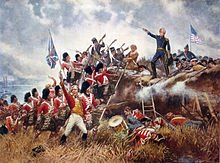
Next, Jackson defended New Orleans (brilliantly, to give the man his due) and emerged a Washington-like American hero. His road from New Orleans to the White House was long and rocky, but he became President in 1828 and won reelection in 1832.

Jackson was dedicated throughout his life to the removal of Indians from their lands in the South for resettlement them beyond the Mississippi. Toward that end, he effected passage of the Indian Removal Act in 1830.

This act required Indian tribes to sign treaties exchanging their original lands for new lands west of the Mississippi. Most tribes resisted, and the saga of bribery, coercion, and trickery that brought about the change would fill volumes. Among the Cherokee, for example, a small faction was bribed into signing a treaty which was then enforced on the whole tribe. Anger over this betrayal led to political assassinations among the Cherokee once they reached the new Indian Territory.

16,000 Cherokees were removed for the Indian Territory. 4000 died along the way. Jackson retired after his second term and died eight years later. By that time tens of thousands of non-citizens who had been resident in America for generations had been deported – excuse me, I meant removed – to beyond the borders of the United States.

**         **         **

We’ve looked at Andrew Jackson and Thomas Jefferson, two Presidents from the first half of the nineteenth century. We’ve seen what Jackson did about the non-citizens living in America. We’ve seen how different thinking was then on race and gender, even for someone like Thomas Jefferson. It’s good that we have progressed.

Or have we? I guess we’ll find out on Tuesday.

246. Unalienable Rights

u-rNext week, we elect a president. Today and tomorrow let’s look at the lives of two of our early ones, Jefferson and Jackson.

Everybody knows the passage in the box above. Thomas Jefferson wrote it. It is logical to think that he believed what he wrote, and yet he held Sally Hemings and his children by her in slavery.

Odd? By the standards of our day, certainly. By the standards of his day, it was odd that he freed any of them. His father-in-law also had a black concubine and children, and freed none of them.

If you have read anything I posted from mid-January to the end of February of this year, you know I am no apologist for slavery, Jim Crow, or resistance to interracial marriage. However, if you plan to understand historical events and beliefs, you have to examine them in their own context. The Sally Hemings story gives us a lens through which to examine both slavery and women as child bearers, whether wife or concubine, in the days when our nation was being created.

The story begins two generations before Jefferson. A slave name Susanna bore a child to a white man named Hemings; the child was named Betty. Both were owned by Francis Eppes, then were inherited by Eppes’ daughter Martha. When Martha Eppes married John Wayles, the slaves, mother and daughter, went with her.

Martha Eppes Wayles had a daughter, also named Martha, before her death. Wayles was widowed twice more, and also had several children by the slave Betty Hemings. The youngest of these was named Sally.

Martha Wayles (the daughter) married Thomas Jefferson. Sally Hemings was her half-sister (they shared a father) and was three-quarters white. When John Wayles died, Thomas and Martha Jefferson inherited his slaves, including Betty and Sally Hemings.

Martha Jefferson had a daughter, also Martha. Thankfully, for ease of reading this post, she was called Patsy. Jefferson’s wife Martha died. When Thomas Jefferson was appointed American envoy to France, he took Patsy with him, and took Sally Hemings as her companion. It appears that the Thomas Jefferson/Sally Hemings affair began in France.

Accurate research is difficult on affairs that are semi-hidden. As best we know, Sally Hemings bore Jefferson six children: two daughters who died in infancy, one daughter and three sons who live to adulthood. All these children were seven-eighths white, and all were slaves.

The children and their mother remained house slaves. They never worked the fields; the male children were given training to become artisans. At age 24, the eldest son was allowed to “escape” to the North. The daughter followed shortly after. The younger sons were given their freedom in Jefferson’s will. Sally Hemings was inherited by Patsy and informally freed.

Why did Jefferson, the champion of unalienable rights, hold his “wife” and children in slavery? Let’s look for answers.

Sally Hemings was legally negro, genetic heritage notwithstanding. That could not be changed. She could have been freed, but Jefferson could not have married her, even if the thought had ever occurred to him. If freed, she would have not become a full citizen of Virginia or of the United States. If freed, she would have passed completely out of Jefferson’s control, and she would also have passed out from under his protection. Which of those two factors weighed more heavily on Jefferson? We cannot know.

We can speculate, however, based on how he treated his children. They were legally negro, although actually seven-eighths white. They could not be given the rights of white children. They could not inherit, which was something of a moot point since Jefferson died deeply in debt and his estate went to his creditors. He allowed his elder two to “escape” to the North after they were adult. He freed his younger two in his will; they were just reaching legal maturity at the time of his death.

He did not free Sally Hemings in his will. Why? Was he unable to let go, or was he depending on his daughter Patsy to take care of her in her old age? She was in her mid-fifties when Jefferson died. Again, we cannot know.

A lot of scholarship has been devoted to Sally Hemings. We know quite a few facts, but from this distance, understanding comes hard. Did Jefferson do the best he could under the circumstances? Do we even have the right to be disappointed that he didn’t do more? We have more questions than answers.

**        **        **

It is important to consider what happened to Sally Hemings’ offspring, but that will require a future post.

236. American Voices

If you are just discovering Leap Alan Hed, his story is getting rather long. Try the tag cloud under Leap.

Leap Alan Hed was going to Tulsa, to have it out with Billy Joe Barker. It had been eight weeks since he left his home in Dannebrog, running from the media circus that Barker had set in motion by calling on Americans to write in Leap’s name for President. Barker had started it all; Leap figured Barker owed it to him to at least try to stop it.

It was hard for Leap to travel. He could go by bus, slumped down, face covered by the brim of his hat, and take his chances on being recognized. That was how he got to Hays, Kansas. There he picked up a ride with a friend of a friend from Dannebrog who took him as far as northern Oklahoma. He found himself stranded in Ochelata on a Sunday morning.

By now Leap was hungry for normalcy, and on Sunday morning, that meant church. He couldn’t go in, of course. If you are from the city, or the north, you may not know this, but when you go into a small town southern church as a visitor, everyone in the congregation will come up and shake your hand, ask you your name, welcome you to their fellowship, and half of them will invite you for Sunday dinner. Leap would have loved that, but since his face had been in every newspaper in America . . .

The Ochelata Baptist Church was a long, low green roofed building, built around a courtyard. There was a park on the east, so that was the direction Leap used for his approach. He walked in, as bold as if he belonged there, across the park to the blind back of the sanctuary where he settled down hidden by a few trash cans and sat for two hours listening to the service taking place on the other side of the wall. From time to time, his eyes were awash with the moisture of homesickness.

He slept the day out in a wooded ravine, and walked southward on Highway 75 during the night. Morning found him somewhere, but he didn’t know where, hungry, cold, and discouraged. He was in front of a convenience store, on the outskirts of a small town, so he pulled up the hood of his sweatshirt and went in. He kept his eyes floorward as he picked out a couple of donuts and a cup of coffee, and didn’t look up at the checkout where the surveillance cameras are clustered. Outside again, he found a bench at the edge of the light.

He was on his second donut when a pickup rolled to a stop. A man of fifty got out and exchanged a few parting words with his driver before she u-turned and disappeared. Everything about their casual friendliness said man and wife. He was carrying a brown paper bag that said “lunch”. He crossed to Leap’s bench and sat down.

He glanced at Leap, looked away, then his head snapped back again. He studied Leap for about five seconds, then turned his head back toward the road and didn’t look again.

Discovered! This man knew exactly who Leap was, but he made no acknowledgment. With eyes averted, the man talked as casually as if he didn’t know Leap’s identity. Leap had seen that reaction several times in the farm country and small towns where he had been wandering these last weeks. People in rural America have a respect for privacy and a willingness to mind their own business which he found admirable

Leap’s benchmate said was waiting for a bus that would take him west to Sperry where he had a job as a school custodian. And, yes, there was another bus that went south to Tulsa. After twenty years as a skilled lathe operator in a small factory, the man had lost his job after 2008. He had been out of work, except for odd jobs, for seven years, and now he was pushing a broom at age fifty, and glad to get the work.

He had gone from Democrat, to Republican, then further with the rise of the Tea Party. He had no faith in government, no faith in politicians, but he still had faith in free enterprise. Where he had worked all his life, the owner had been just down the hall, working all day behind a second hand desk in a room with plywood walls. They had gone to the same church, and every decision the owner had made had included concern for his employees.

The factory made small parts, that went onto larger parts, that then went onto automobiles. In 2008, the system collapsed and the factory folded. Leap’s temporary friend blamed free trade and Hillary and Obama. He did not blame large corporations and their CEOs. His vision of free enterprise was a hard working owner in a dusty plywood room, with forty hard working employees out on the floor making things. Multi-national corporations were outside his experience and outside his imagination.

The bus rolled up with whoosh of air brakes. As the man got up, he added, shaking his head, “Donald Trump says he’s going to fix all that.”

“Do you believe him?”

“No, not really.”

“Are you going to vote for him?”

“I might. Probably not, though. It’s hard to vote for a man that full of hate.”

After a pause, he added, “I might just throw my vote away on this guy called Leap. That way I won’t be responsible for what happens later.”

235. 1989 Revisited

This follows Tuesday’s post. 

In the early nineties, my wife and I were traveling on a train in Germany, where we found ourselves sharing a compartment with a young German college student. We congratulated her on Germany’s recent reunification. She became flustered and could not understand why we, as Americans, could be concerned with the reunification of her little country.

Germany is not a little country. It fought the British Empire to a standstill in WWI, then conquered essentially all of mainland Europe in WWII, and today is a leading state in a more-or-less united Europe. But this young woman would have been the granddaughter of people who were there at Germany’s defeat in 1945, and her parents would have grown up in the western half of a nation, whose eastern half had been gobbled up by the Soviets. Her humility made sense, at that moment in history.

Germany was divided in 1945 and reunified in 1990, but the real year of change for Germany and the rest of eastern Europe was 1989. That is why I slid Raven’s Run into that year when I began to post it in the twenty-first century.

**       **       **

On February 14, 1989, Ayatollah Khomeini declared a fatwa (death sentence) against Salman Rushdie. Even before a year of great progress in international relations had fully begun, the sound of the coming world challenges were echoing in from the Middle East. The next day, the Soviet Union announced that the last of its troops had left Afghanistan, ending a fruitless nine year war that some called Russia’s Viet Nam. Unfortunately, America didn’t get the message about the fruitlessness of trying to change Afghanistan.

The Warsaw Pact alliance was getting shaky. For forty five years Russian had maintained its dominance over eastern Europe by military might. It had cost them, in rubles, in the lost productivity involved in maintaining a huge standing army, and in the growing recalcitrance of the peoples under their domination.

There had been other risings during that near half century – in East Germany in 1953,  and in Hungary and Poland in 1956. But by 1989, conditions within Russia itself had deteriorated badly. Russia’s new leader Mikhail Gorbachev was ready for change. When mass protests occurred in Hungary in March, he allowed reforms to begin. It was a far cry from the Russian tanks and guns of 1956.

The Hungarian revolution of 1956 had been put down ruthlessly. Officially, it was not seen as a Hungarian uprising, but as something orchestrated by the West. Now the story was changed, and it was officially accepted as a popular movement. Soon the Hungarians began tearing down the fence that closed off the Austrian border, which eventually had major consequences for East Germany.

Germany was partitioned in 1945 and Berlin, inside the Russian sector, was also partitioned. The two Germanies were fenced apart, and between the two Berlins the East Germans, at Russian insistence, built a massive concrete barrier. The Berlin Wall became the visible symbol for the separation of Europe.

By stealth and guile, innumerable refugees fled from East Germany to the west, but no defections got as much attention as those that broke through, over, and under the Berlin Wall.

With loosening of restraints in Hungary, East Germans defections intensified. For decades, they had vacationed in Hungary. Now they went to Hungary by the thousands and crossed from there to Austria. By September, 30,000 had escaped. When the East German government closed that route, East Germans flocked to Czechoslovakia where they descended on the Hungarian and West German embassies. In October, the East German government closed the border with Czechoslovakia. Those East Germans who had not been able to escape, turned to protests, which grew weekly in size. A shoot to kill order was given, then retracted under pressure from Gorbachev. By late October, the crowds of demonstrators numbered in the hundreds of thousands.

The East German government relented and opened the Berlin wall. East German people then tore it down.

Throughout eastern Europe, variations on the theme played out. Dozens of countries were freed from Soviet domination, but there was one massive casualty. Yugoslavia, a conglomeration of smaller states since WWI, disintegrated shortly after the breakup of the Warsaw Pact nations, leading to wars throughout the nineties.

Germany reunified in 1990 and the Soviet Union dissolved into its component states in 1991.

232. Inadmissible Evidence

It is Sunday morning, 8:30 here on the west coast, and I am hurrying to finish this in order to post it for tomorrow. Tonight is the second presidential debate; Hillary’s newly leaked emails and Donald’s newly leaked audiotapes will be aired fully. When you read this, you will know the outcome. Here and now, I can only speculate.

First let me say that I am not apologizing for Trump. Nor am I suggesting that the Access Hollywood tape is a fake. I have been giving Trump a hard time since he first began ranting about The Wall, and I haven’t been too kind to Hillary, either. None of that has changed. However . . .

There is a danger facing America which needs to be brought fully into the light. It is going to be a bit hard to talk about, because even suggesting it makes me look like someone who is into conspiracy theories. I’m not, except for the fun of poking holes in them.

Here is the problem. What if the Wikileaked documents on Hillary were doctored? What if the Access Hollywood tapes were faked?

Do I think they were? Absolutely not.

Do I think faked or doctored releases are on our near horizon? Absolutely, unquestionably, as sure as tomorrow’s sunrise.

Conspiracy theories run afoul of the fact that conspirators usually aren’t too bright. It easy to imagine a conspiracy, but hard to believe anyone who would want to pull one off would be able to succeed. It’s easy to imagine the government faking the moon landing on a Hollywood sound stage, but the notion that the millions who built the craft and watched the launch at Canaveral were all either fooled or in on it, makes the theory laughable.

Leaked electronic documents are different. Changing a key word, or cherry picking what part to release, or creating them out of the whole cloth is ridiculously easy. It doesn’t take a rocket scientist, or even a conspiracy. One person could do it.

Let’s suppose that a new leak is reported by the New York Times in tomorrow’s issue, on the candidate you support or the candidate you hate. Would we know its source? We would not; news organizations guard their sources like the Swiss Guard guards the Pope. Would we know how the source got the information? No. Would we know if he passed it on pristine, unaltered and complete? No. Would we know if he simply faked it? No.

Do I trust the New York Times? More or less.

Do I trust the Democratic Party? More or less.

Do I trust the Republican Party? More or less.

Do I trust everyone who works for those three organizations? Ah, there’s the rub.

If a police officer picks up fingerprints or DNA at a crime scene, there is a trail of evidence which must be presented, showing that no outside influence was made on the results of tests performed on those clues. If that trail fails, the evidence cannot be presented in a court of law. With leaked electronic documents, there is no such chain of evidence. With a reputable agency – say the New York Times – there will certainly be an attempt at verification. But, by the clandestine nature of the events, that verification will be imperfect.

So back to tonight’s debate. Hillary and Donald will have to face the consequences of these leaked electronic documents, and we probably can accept that the documents are real, although certainly cherrypicked.

But a year from now . . .? This is the point at which every hacker, prankster, and political operative in America – and the world beyond – realizes how easy it is to create or modify electronic documents and “leak” them.

Next cycle, when Paul Ryan runs for President, and leaked documents prove that he is actually a Martian, I don’t think I’ll believe them.

225. Somewhere in America

Leap Alan Hed has been around all summer. If you want to look up the rest of his story, go to the tag cloud and hit Leap.

From Leap Alan Hed, somewhere in America, to a favorite cousin,
(I can’t tell you exactly where he is. Someone might find this.)

Dear Anne,

I’m still on the run from the news media and from those who would write me in as President.  I’ve been on the road now for about six weeks. I’ve lost weight and grown a beard, but anyone who looks closely could still recognize me, so I stay hidden most of the time. That was almost a blessing at first. The high Rockies were beautiful when I could stay there. It has been getting colder every day for a while now, and I have had to come down, so I am once again hiding too close to people.

I thought the desert would be open and empty enough for me to go unnoticed, but it isn’t. I stumbled onto a deserted shack and made myself comfortable last night. Then I had midnight visitors. Five Mexicans: two young men, one young woman, a child, and an old man. They must have been a family. You could tell they were just over the border and on their way north looking for work.

Donald would have crapped himself to be caught by a bunch of “rapists and murderers”, but, of course, they were just frightened people, looking for a little peace. And hungry. Both hungry in the long term sense that had sent them looking for work, and hungry right now. I don’t speak enough Spanish to matter, but sometimes smiles and gestures are enough. I shared my food with them. I cooked up all I had, but it wasn’t enough. Tomorrow I’ll have to take a chance and find a place to buy more.

They left this morning before the sun came up. They were very quiet as they went, but the child’s voice woke me. The old man was last to leave. He is probably my age but he looks a hundred years old. He saw that I was awake, so I said, “VIa con Dios,” and he made a little wave as he slipped out the door. I wish them well, but I fear for them. I fear that they will be caught, or die in the desert as so many do. And I fear for what will happen to them after November.

Damn these people who chose Hillary and Donald, and now they hound me to run as a joke President. I’ll bet they thought it was funny, when it all started. Well, very little of this seems funny to me now.

I’d better quit so I can mail this when I go looking to buy food. Anyway, if I get any angrier, I’ll set the paper on fire just touching it. Soon November will have come and gone, and I can come out of hiding, and see you and Ted again. Bake me an apple pie, say November 15th, and I’ll be there to eat it.

I wonder what will become of my new Mexican friends in November?

      Love,
      Leap

224. I Have a Theory

voicesThe debates are tonight, and I’m confused. I’ve been following this election closely for a year, and it just doesn’t make sense. Why the Democrats nominated Hillary is a puzzle, and why the Republicans nominated Donald is a mystery.

Hillary Clinton is entirely unappealing, but not crazy. Donald Trump probably isn’t crazy either, although he is working very hard to appear as if he were. It should be a no-brainer. People should be holding their noses and voting for Clinton, or voting for a third party, or refusing to vote at all. But that isn’t happening.

Why?

I have a theory. Actually I have three, that came to me after months of head scratching.

First, let’s look at two philosophical positions, beginning with belief in the zero sum game. In sports, which are supposed to mirror life, there are winners and losers. Ties happen, but they are an aberration. We have overtime, and double overtime, and photo-actuated timers that measure to the hundredth of a second, all to avoid ties.

If you believe in the zero sum game, then if America is losing, it’s our own fault – or more accurately, the fault of those in power – and it doesn’t matter who starts to lose when we begin to win again. As Donald said, “I am a winner; I like winners.” He does not say, “To hell with the losers,” but it is implied.

The other position is laid out in the notion that, “A rising tide floats all boats.” That is, if we do things right, everyone can come out better. Despite ten thousand kindergarten teachers pushing cooperation, this is not a position most Americans are comfortable with. Those who have won think it’s stupid. Those who have lost think it doesn’t work.

Hilary said, “We are stronger together.” I personally prefer that position, but I can fully understand how voters being rubbed up against the hard edges of America would see it as fluff.

Will those who favor the zero sum game support a self-proclaimed strong man, hoping to hold on to what they have at the rest of the world’s expense? And hoping that Donald won’t simply take for himself what little they have left?

And what of those who favor the rising tide? Will they, if they lose faith, go running, crawling, gagging to the master of the deal?

Is it simply a matter of fear vs. faith, with fear winning?

Theory number two is everybody’s theory. For the farmers, auto mechanics, and truck drivers I grew up among, Donald wins the “who would you rather have a beer with” contest. Just look at him on the campaign trail, the impish smart-ass that you can never pin down in an argument. Everybody who has lived his life among working men, knows many Donalds. They are the life of the party in every beer joint, ignorant but unflappable. Now look at Hillary on the campaign trail. Her face looks like the reason they all came to the beer joint in the first place. Everywhere she goes, Hillary plays the woman card; grumpy old men silently counter with the ex-wife card.

Prejudicial argument? Certainly, but we all live with images in our heads, and when those images match up with the faces we see on TV, it is a strain to keep logic from flying out the window.

So much for men of my age. Theory three deals for young voters, for whom the candidates look like father-image and mother-image. (And Bernie looks like the wise old grandfather you can trust when your parents are going squirrelly.)

Donald looks like the father who will bluster and foam at the mouth, then give in and let you do what you please. Hilary looks like the mother who will stand over you until you eat all your vegetables.

It is a terrible thing to realize what images we carry. I hope we Americans can get beyond them and vote for substance.

Doing what the voices in your head tell you, is never a good idea.

221. The Wall

This post carries a poem at the bottom. Pardon me while I set the stage for it.

I wrote this poem years ago, when Trump wasn’t even a blip on anyone’s radar. It isn’t about him, but he eventually came to symbolize what the poem spoke against. When he started talking about a wall, I published the post repeated below, back in September of 2015. AWL was a new blog then, and no one was reading, so once again . . .

Have you ever asked yourself, “How could Germany have been fooled into following Adolph Hitler?” The answer is on your television this morning, and it is Donald Trump.

I’m not saying that Trump is a Nazi. I don’t see him as evil, merely foolish. But the techniques that have brought him to prominence are the same techniques that Hitler used.

First, appeal to a country’s deepest fears.
Second, claim to be the only one to have the answer.
Third, claim that your opponents are all cowardly and incompetent or, to use Trump’s favorite word – stupid.

The tactics are false. But the fears are real, so Trump promises his followers a wall to keep the world out. There is no wall strong enough to do it.

*****

This morning, September 15, 2015, Hungary closed its borders with a wall of razor wire. By the time this post reaches you, it will have been breached. Count on it.

The Hungarian Uprising of 1956 forms my first political memory. I was eight, and I remember sitting in front of the TV with my parents watching the streams of refugees escaping Soviet reprisals. Eventually 200,000 Hungarians fled. That memory makes it hard for me to watch Hungary put up a wall against Syrian refugees fleeing genocide.

Backed by Russia, East Germany built a wall across Berlin in 1961. It slowed the flow of refugees escaping from tyranny, but it did not stop them. And it didn’t stop the fall of East Germany.

There is a fence across our southern border that holds back no one hungry enough to jump it. Trump wants a wall to hold out “illegals” and a massive sweep through our country to deport the “illegals” who are already here. He wants declare that the 14th amendment doesn’t really mean what it says, in order to authorize the deportation of American citizens, born here just like you and I were.

Hitler would be proud. East Germany would understand. Russia is laughing.

*****

Poetry should stand without explanation, but, like anything else, it can be misused. So, be notified! This is not a right wing call to man the barricades to keep the enemy out, but a cautionary tale about what it will cost us if we don’t find real solutions.

Hungry

We who horde the common wealth
Upon this crowded planet,
Must look to see what lies beyond
Our barricaded borders.

The world stares back,
Unblinking eyes — prepared
To eat us all alive, and still be hungry.

                              It’s happened all before.

Once, seven in a cave drove out the eighth
With stones and fire-sharpened sticks,
Because the antlered carcass on the ground
Was not enough to feed them all.

And then in ancient days when kings and priests
Invented both religion and the law,
To fill their coffers so that they could eat
While those who raised the food went hungry.

Or yet again, when men of white
Despised the black, and black despised the gray.
And those whose colors ran together were disowned.
Color was enough to make them hate
But hunger taught them how and why
A thousand years ago.

Yet still we breed and laugh,
And play at deafness, though an angry sound
Declares the world is poised to seize its bread.

They will march like locusts through the earth,
And eat us all alive, and still be hungry.

This world is troubled. We are surrounded by people hungry for bread and freedom. Pointing a finger at them and saying, “It’s your fault!’ won’t solve our problems.

And a wall won’t do it. Never has; never will.

I’ll have more to say on this tomorrow.