Tag Archives: science fiction

Welcome to Summer

Hi, just a personal note, here; not one of my usual mini-essays.

I went to Tempe, Arizona to Westercon over the Fourth of July weekend. It was from 109 to 111 or thereabouts, but I felt no pain because the Mission Palms was well air conditioned. I have a report on that scheduled for the 11th.

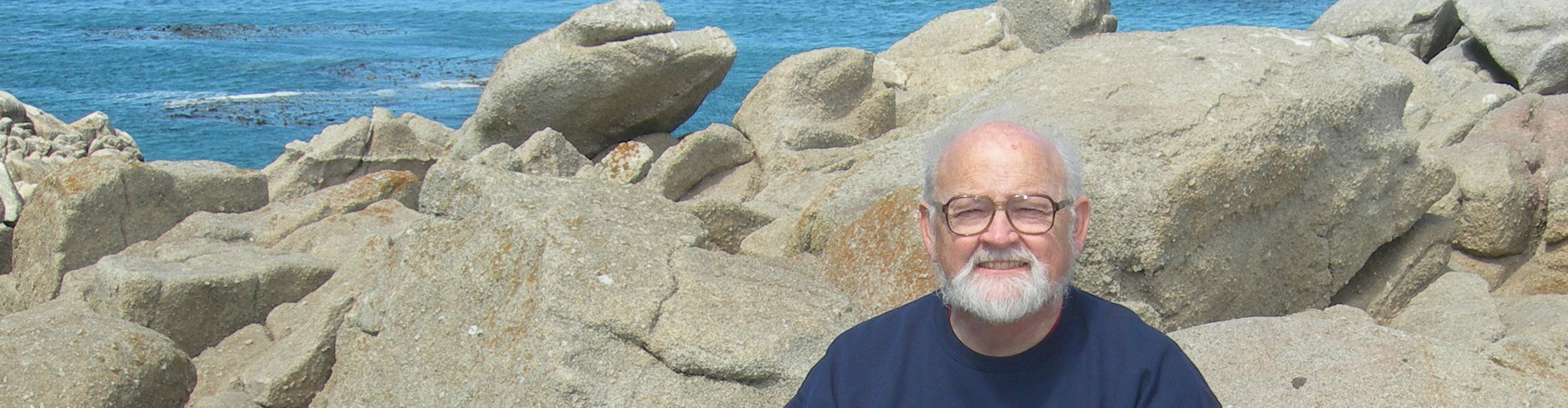
I came home to find things weren’t much cooler. Yesterday was 109 here in the foothills of the Sierras, so my wife and I cut out for the coast and spent a few hours walking along the beach at Carmel. Today I’m home, hiding under the air conditioner, working out the details of a new novel that was sparked at Westercon.

I am also watering our non-native trees. When I just went out to change the sprinkler, I saw two mother wild turkeys with twenty-one gawky, half-grown chicks in our yard. They were panting, and looking miserable.

They and I are both asking — is it fall yet?

379. Westercon

You know that I write these posts in advance, and it’s a good thing because today I am leaving for Tempe, Arizona and Westercon 70.

Westercon is a western US regional science fiction and fantasy convention. It has been around since 1948, when the Los Angeles Science Fantasy Society organized it for those who could not travel to the east coast where most Worldcons were held at that time.

This will be my third Westercon. I attended Westercon 33 in Los Angeles the year Zelazny was the guest of honor. I stepped out for air during the afternoon and a lovely young woman told me I looked lonely (I wasn’t), told me she was a wannabe actress – actually she said “I’m just an LA nobody” – and told me the story of her life. I know what you’re thinking. There is no romantic ending, no money changed hands, and she didn’t steal my wallet. I think she was just exactly what she said she was.

Later that night I was cornered at a party by a guy who wanted to tell me about his screenplay. He wouldn’t take the hint that I wasn’t interested, or that I was in no position to further his career. The screenplay turned out to be for a space opera about a ray gun shooting femme fatale. He whipped out a copy of Playboy and showed me a beautiful naked black girl on the centerfold. He said she was the one he had in mind to play the part.

I don’t remember his name (a high functioning forgettery is a very useful tool) but he is probably living in a big house in Hollywood today. The plot was just dumb enough to sell.

I don’t think most Westercons are that weird, costumes notwithstanding. I think it was just LA.

The next year Westercon 34 was in Sacramento. It was a bit more sedate and I gave the paper “How to Build a Culture”. There was a good turnout; as best I can remember a couple of hundred attendees in a small auditorium. I had prepared a piece of mat board with a hand-drawn circle, divided into four pie-slices with the words environment, technology, world view, and biological structure hand written in the quadrants. It was makeshift because my first computer was still five years in the future.

When I said, “Which brings me to my visual aid”, I stood it up and, to cover it’s crudity, added “We have spared no expense!”

The joke got the small chuckle it deserved, but the sound died instantly. A young man in the middle of the auditorium was saying, in a conversational voice, “He is showing a chart. It’s circular, divided into quadrants . . .” We all realized that he was describing the chart to a blind companion, and for the length of time it took him to give his description, you could have heard a feather drop in the room. The respectful silence from crowd made me proud to be a part of the moment.

Last year I wanted to go to Westercon 69 in Portland. I hadn’t gone during all the years of my dry spell; it just didn’t seem like it would be fun under the circumstances. Then Cyan’s release was delayed again, so I skipped Portland. Now that Cyan is out, I am off to Tempe.

It will be good to be back.

378. Science vs. Magic (3)

This is the last in a set of posts which acts as a backdrop to the Westercon panel Science & Technology versus Magic: what makes this such a compelling trope? I

It’s all about control, and how to achieve it.

I think we all understand pretty well how science and technology work. Even when we postulate something like FTL, which is contrary to our present understanding of the universe, we get to it rationally. We don’t get there by lighting candles around a pentagram.

Magic is another world, an alternate way of achieving control, and I see it falling into three types, with quite a lot of overlap.

First, there are the unconsidered, slobbering monsters of gothic horror and B movies. They just are. If they are the offshoot of a mad scientist or a nuclear explosion, we call them science fiction. If they are the offshoot of an ancient curse, we call them fantasy. Frankenstein and Dracula are examples of alternate strands, but really, they belong together. Their effectiveness is on our fears, not on our need to explain. And, no matter how the monster is overcome in the end — if he is —  the experience is all about not having control.

Second, there are magical systems which are simply science under different laws. Do this and that happens, just because that’s the way things work in one projected universe. Nobody did this better than Randall Garrett in his Darcy stories.

Third, there are supplicatory systems which assume that there are forces in the universe, and some of them are personalities. It is very transactional. Do something for the power, and the power will do something for you. But beware of the fine print in the contract. Every variation of the Faust legend falls into this pattern.

Many stories take on the colors of more than one system. In both Harry Potter and A Wizard of Earthsea there are spell that just work, like E=MC2 works, but there are also callings which evoke powers who are personalities, and usually not very nice ones.

These are logical systems, but nobody cares about them until we embed them in stories.

#                  #                  #

On the question of science and technology vs. magic, a scholarly type could easily expend a thousand pages. That might be a little dry, though.

In our everyday lives, we all use science to make our lives easy, but there are some questions that science can’t answer. Which questions? We decide that for ourselves, and the tipping point is different for each person. After all, you can use your new self-driving car to go to the psychic and have your future told, if you are so inclined.

The same balance is found in stories of fantasy and science fiction. It is rare for a science fiction novel to completely lack the unexplained and unexplainable. Luke Skywalker had the Force. Every mutant in the 1950s had psi powers. In Jandrax, I put in a possibly Godly encounter because the book needed it. Most science fiction novels have a touch of magic somewhere.

On the other hand, novels full of magic still have physical laws. The sky is up and the ground is down. If you fall off a high cliff, you die. Of course you might use a levitation spell to save yourself — just like one of those mutants in 50s science fiction would levitate by their psi powers — but you wouldn’t need to if nature wasn’t trying to kill you. The physical reality of heat, cold, hunger, thirst and a fragile body are as much a part of fantasy as they are of science fiction — or romance novels, spy stories, or detective tales. It’s a long way from the Shire to Mount Doom if you have to walk. Frodo could have used a Lear jet.

The places we go in science fiction are great fun and sometimes scary.

In fantasy, we go places that are sometimes great fun, but usually scary.

Which journeys we take are a matter of taste. I would love to sail with Ged by a mage wind, or by the world’s winds, but I wouldn’t read H. P. Lovecraft on a Romnean ten thousand dollar bet.

377. Science vs. Magic (2)

This is post two of three in another set which acts as a backdrop to one of the Westercon  panels. In this case the panel is Science & Technology versus Magic: what makes this such a compelling trope? This post continues from last Thursday’.

Religion has a relationship to magic, but it is not straightforward. It is more in the nature of finger pointing, as in, “My religion is the truth that underlies all things, including science and technology, but his religion is just mumbo jumbo.

You could say that religion and magic both are attempts to influence or control supernatural powers, but that doesn’t seem too accurate in our modern world. It might have made some sense when they were still burning witches.

Any Southern Baptist will tell you that no matter how much you pray for rain, if God has other plans, it isn’t going to happen. In fact, there is a Southern Baptist saying, “God always answers prayers, but his answer is often, ‘No.’” That doesn’t stop people from praying.

At least one of the major components of religion is also shared with science.  Recognition that we are so small and the world is so big — also known as humility — is a pan-human trait. Scientific types walk around looking at the sky and wondering when the next asteroid strike will come. Religious types walk around waiting for the Second Coming, or Ragnarok, or whatever terminal event their sect provides. Maybe magicians walk around wondering if their next spell is going to backfire and turn them into a toad; who knows?

All these types recognize that the universe is essentially beyond human control, and then set out to try to control it anyway..

Control over the uncontrollable is a pretty good starting point for the discussion of magic. Here is where religion flies in two directions. Many sects recognize that God cannot be controlled. He sets things in motion then wanders off, or maybe he pays attention to our everyday trials, but has a plan of his own. In any case, he can’t be compelled.

That position is a lot like science.

Other religions believe that God answers prayers, pays attention to burning candles, likes the smell of incense, and generally can be bought off. That type of religion is a lot like the magic we use in our fantasy fiction. If we make an incantation (light fantasy), some Thing will make an event happen. Or (dark fantasy) if we make a sacrifice, some malign Thing will make an event happen.

Actually, this is also a lot like science. Once the observation and experimentation phase is over, the results of science are used with confidence, not skepticism — just like prayer and supplication, are used.

(Is anybody out there chuckling at the similarity between A=9.8 m/sec2 and — as they say in Harry Potter’s world — Descendo?)

Not understanding what-the-hell is going on in the universe is the most basic of human experiences. Understanding brings about control. Believing that we understand brings about a felling of control, even if that feeling is unfounded.

Science seeks to mitigate this unease by reducing our ignorance. At its best, science is humble about this. However, when a physicist declares that we now know, fundamentally, how the universe works — and points to technology that works most of the time to prove it — it’s time for him to take off his lab smock and put on priest’s robes.

It all comes down to control. One of the things that makes Science & Technology vs Magic so interesting to us is that we all use science, everyday experience, and common sense to navigate and make sense of the world. And it works pretty well, most of the time — but not all of the time.

Ultimately tragedy strikes us, our families, our nation, or, potentially, our planet. Mortality walks behind us every day with its breath on our necks. We reach that place where logic and understanding fail, and we need more.

They say that there are no atheists in fox holes, but there are also no persons so sure of their place in heaven that they don’t feel fear when the reaper comes.

We all trust science — to a point — and then we need the hand of God. Or at least a good magic wand.  more tomorrow

Click here for next post.

375. Science vs. Magic (1)

This is another set of posts which acts as a backdrop to one of the panels I am scheduled to be on at Westercon this year. In this case the panel is Science & Technology versus Magic: what makes this such a compelling trope? In part it draws on a very old post, 37. Fantasy, Whatever that is.

It has been a grand ride.

Since I started reading science fiction and fantasy in the late fifties, I have seen the rise of Amber, Witch World, the Dorsai, the Lensmen, LeGuin, Zelazny, Ellison, Varley, Ballard, and hundred of others. I was there for the Tolkien revival and the revival of other fantasy writers under Ballantine.

Through the years, avid readers waged war on one another over the most trivial of notions — just like any other family. It used to be that, if you called science fiction “sci fi” (never mind SyFy) you were being disrespectful. You had to call the genre science fiction, or maybe SF.

However, if you called it SF, then you had to argue whether that stood for science fiction of speculative fiction or . . . I’ve forgotten what the lesser contenders were.

Mimeographs and postage stamps were the internet of the early sixties. Whole forests went to the pulp mills to make paper to support arguments about what was or was not science fiction, whether fantasy was worth considering, and where one ended and the other began. Then Heinlein published Glory Road and sent shock waves through the SF community by landing with one foot squarely in each camp.

I mention all this because, although my publications so far have been science fiction, I have spent more time and taken more satisfaction writing fantasy.

Things have changed — somewhat. Today, everything goes, but you still have to declare yourself. I recently dealt with a publisher who required that you shoehorn your submission into one of about forty SF/fantasy sub-categories. Let’s call this generating chaos through an excessive allegiance to order.

All of this is probably subsumed under Clarke’s Third Law. Or, look at it this way: the Creation as given in Genesis is fact, allegory, or fantasy depending on whether you are a fundamentalist, a religious liberal, or an atheist.

Put still another way, if it tastes like fantasy, it is (for you) and if it tastes like science fiction, it is (for you).

But maybe not for the rest of us.

Clarke’s third law:
Any sufficiently advanced technology is indistinguishable from magic

Heinlein on technology:
I try never to get a machine sore at me. There’s no theory for that but every engineer knows it.

“The car won’t start unless you hold your mouth just right.”
folk wisdom known to all owners of elderly automobiles

So what do we mean by science and technology, and what do we mean by magic?

Does anybody care?

I think the general answer is, “No”. Most readers just want a fun ride, whether with ray guns or magic wands. You, on the other hand, did sign up for Science & Technology vs. Magic, so I’m going to assume you do care. Before we go any further, let’s try to answer the question. It may prove difficult — especially if there really isn’t any difference — but let’s try.

Science is a rigorous and careful attempt to discover the nature of the universe by observation and experimentation. Okay, that seems reasonable. I think we can be provisionally satisfied with that, and move on.

Technology is a little trickier. A computer is technology, sure. But so is a flaked stone spear point. That spear point didn’t flake itself. But what about the stick that a chimp picks up and uses to get ants out of an anthill?

Nothing is ever easy, is it? Let’s just file technology as a sub-set of science and move on, or we we’ll never get to the fun stuff.

Magic is harder to define. We’ll tackle that next Tuesday, because on Monday I have to devote a post to things that are happening with Sprit Deer, over on the Serial side of the website.

Click here for next post.

373. The Introverted Author (3)

This the last of three posts of online notes for the Westercon panel
Fake it ’til you make it: a survivor’s guide for the introverted author

Today, if you are commercially published, it is expected that you will work to sell your own book. If you have self-published, you are entirely on your own. The internet allows authors the chance to reach out to potential readers. That means we have to use the opportunity, because every other newly published author already is.

Goodreads provides author’s pages. So does Amazon. Even though Amazon now owns Goodreads, they still operate separately, and you need to be on both. Goodreads provides a website as part of the author page. I use it, but I don’t suggest it as a main website.

You need reviews in both places. That’s where a gaggle of friends comes in handy — oops, I forgot. We’re introverts. That’s why we are on social media instead of down at the corner bar.

Facebook is supposed to be the answer. It wasn’t for me. I found that I was simply repeating on Facebook what I was already saying on my website, so I let it lapse. I don’t suggest that. Facebook allows your readers to share that they have found you, much easier than a website does, but in my case, I didn’t have the time to do both.

My own situation was unique. I had forty years of experience in a lot of fields. Writing, teaching, anthropology, archaeology, history, South Asian studies, maritime history, carpentry, musical instrument making, studying ecology, growing up with the space race, farming, growing up white on the edge of the South and learning how wrong we were by watching the civil rights movement, turning atheist in a Southern Baptist household and having to deal with that. On top of that, I had a lot of unpublished and under published material at hand.

If you are just coming in from Westercon, that probably seems like exaggeration. If you have been with me since this site started, you may be getting tired of hearing about it. I began a site with twin blogs, Serial which provides serialized fiction, and

Today, if you are commercially published, it is expected that you will work to sell your own book. If you have self-published, you are entirely on your own. The internet allows authors the chance to reach out to potential readers. That means we have to use the opportunity, because every other newly published author already is.

Goodreads provides author’s pages. So does Amazon. Even though Amazon now owns Goodreads, they still operate separately, and you need to be on both. Goodreads provides a website as part of the author page. I use it, but I don’t suggest it as a main website.

You need reviews in both places. That’s where a gaggle of friends comes in handy — oops, I forgot. We’re introverts. That’s why we are on social media instead of down at the corner bar.

Facebook is supposed to be the answer. It wasn’t for me. I found that I was simply repeating on Facebook what I was already saying on my website, so I let it lapse. I don’t suggest that. Facebook allows your readers to share that they have found you, much easier than a website does, but in my case, I didn’t have the time to do both.

My own situation was unique. I had forty years of experience in a lot of fields. Writing, teaching, anthropology, archaeology, history, South Asian studies, maritime history, carpentry, musical instrument making, studying ecology, growing up with the space race, farming, growing up white on the edge of the south and learning how wrong we were by watching the civil rights movement, turning atheist in a Southern Baptist household and having to deal with that. On top of that, I had a lot of unpublished and under published material.

If you are coming in from Westercon, that probably seems like exaggeration. If you have been with me since this site started, you may be getting tired of hearing about it. I began a site with twin blogs, Serial which provides serialized fiction, and A Writing Life which consists of mini-essays. It’s a blog site that is more like a magazine and it takes as much time as it sounds like it would.

If you are young, you certainly don’t have the option of doing what I’ve done, but you have other options in social media that I probably don’t even know exist.

Let’s circle back now to writers who aren’t yet published; who may not even have finished their first novel; who may not even have started their first novel. You can still blog about your process.

When I was just learning about blogging I came across the book How to Blog a Book by Nina Amir. I recommend it, although it didn’t work for me. My work habits don’t fit the approach, but if you are the kind of person who makes chapter by chapter outlines before you begin to write, check it out.

Making a blog is free and fairly easy on WordPress. Or do the equivalent on Facebook, or Twitter, or whatever comes out next. Then take this advice from an old curmudgeon who would never take the advice himself. Get all the support you get off the internet and hug it close. Thank the people who “like” you, and “like” their work in turn, if you find it worthwhile. If it helps you, go back to your favorite happy comments when you’re feeling low.

At very least, these people are offering a safe place to speak in “public”. It’s probably the only safe place on the internet. Don’t abuse it with the criticism. And don’t think that being liked, or “liked” by your fellow wannabes means much to the larger world.

Read and compare your best work with the best in the world. Don’t expect to be that good. Read Shakespeare for humility, and to steal his cadences. You already know his words; he was the first person to use half the words in the dictionary.

As an introvert, you should already know that Mama’s praise, and disdain from that bully down the street, both mean nothing.

Compare your work to the best and don’t expect to get to where they are right away. Or ever, if you are reading the masters. Compare your work to those who are successful in your field in order to set reasonable goals. Compare your work to published mediocrities and join the ranks of the thousands of writers who have said, “Hell, I could write better than that.” Then go out and prove it. But don’t think you’re there yet. There are a million mediocrities who also write better than that guy. They just aren’t married to the editor.

You don’t let the harsh words of those who don’t like you hold you back? Good. Now take the harder step, and don’t let the unearned praise of your friends make you complacent.

The last word, which is also the first word, on the subject of how to “Fake it till you make it,” is — Get a good day job. 

Do something you like, something you wouldn’t mind spending a lifetime at. You may never sell; even more likely, you probably will never make a living at what you write.

Don’t stop writing, but don’t bet your future on success.

Go to a large used book store, look at the science fiction section, and figure out how many books were written by people who only saw a few of their works published. Some of these books are classics. Some are mediocre. All of them were written by people who were not making a living at writing.

The old saw is, “Life is what happens while you are making other plans.” Turn that around. “Writing is what happens while you are living a good life.”

Want to be a veterinarian? Do it. Want to be a college professor? Do it. Want to be an organic farmer? Do it. Want to be a librarian? Do it.

Want to teach middle school science? Do it.

Keep writing on the side, and let success take care of itself.