Tag Archives: science fiction

387. Buchan the Racist

Getting ready for Westercon, I prepared a set of notes, placed as posts, for the panel What made the golden age golden? I was under the impression that it would be history and homage, and made notes appropriate for that. I was wrong, and it isn’t the first time I have spent time off track by starting before I had full information. When i’m ready to start a project, I’m ready, and sometimes I pay the price.

After I had posted my notes-to-self, but long before Westercon, I received this description of the panel:

Heinlein and Asimov are two pillars of the Golden Age of Sci-Fi. But reading those works with modern eyes can reveal attitudes that would be unacceptable in modern times. What can we learn from the classics when we look past the sexist and racist attitudes that pervaded the works of that time? Can we still appreciate works that present unacceptable ideologies?

Well, that’s a bit of a different story. No problem. I am always ready to fight the forces of political correctness.

I’ve been to this rodeo before. Once, several years ago, I was looking at on-line reviews of John Buchan’s The 39 Steps. I don’t remember why, but I do remember a review that ripped Buchan as a racist for seemingly anti-Semitic statements in that novel. I wrote a counter-review; both have since disappeared.

For those who don’t know him, John Buchan was a popular British novelist of the early twentieth century. He is very much a pro-British patriot, with the prejudices that implies. Think Kipling light. And he was a racist, but not an anti-Semite. I say that not as a scholar, but as a fan, who has read and re-read his works.

If you read him at length, his distaste for African blacks comes through loud and clear. His Jews, on the other hand, show up as both heroes and villains, just like his Germans and his Englishmen. But if you only read a little, you can be fooled.

#                #                #

To follow through on this, I used one of my favorite techniques. I recommend that you put this into your bag of tricks. I went to Project Gutenberg, downloaded The 39 Steps in Rich Text format, then cut and pasted that into my word processor. Now I had all 41,264 words in a searchable form.

One more hint. RTF will be hard to read because its wide line-length makes it look like bad modern poetry. Just switch your word processor to horizontal format and it will be much easier to work with.

The reviewer who started this controversy had complained about Buchan because of the words of one of his characters, Scudder. If you don’t know the book, Scudder is a kind of amateur spy who finds out that bad people are about to start World War I, and catch England off guard. This is what Hannay, the main character, says, quoting Scudder:

The Jew is everywhere, but you have to go far down the backstairs to find him. Take any big Teutonic business concern.  If you have dealings with it the first man you meet is Prince von und Zu Something, an elegant young man who talks Eton-and-Harrow English.  But he cuts no ice.  If your business is big, you get behind him and find a prognathous Westphalian with a retreating brow and the manners of a hog.  He is the German business man that gives your English papers the shakes.  But if you’re on the biggest kind of job and are bound to get to the real boss, ten to one you are brought up against a little white-faced Jew in a bath-chair with an eye like a rattlesnake.  Yes, Sir, he is the man who is ruling the world just now, and he has his knife in the Empire of the Tzar, because his aunt was outraged and his father flogged in some one-horse location on the Volga.

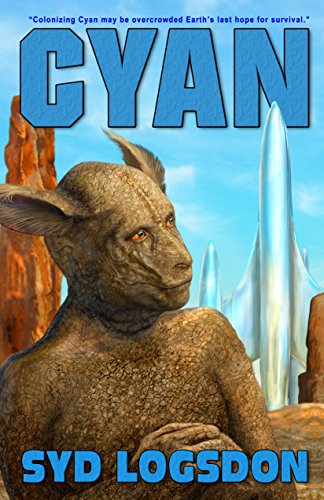
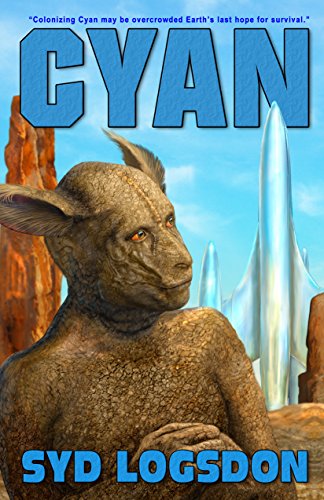
Wow! That sounds pretty anti-Semitic, and the reviewer who started this conversation took it as proof positive. But let’s wait a minute. Assume that the character Scudder is the worst anti-Semite since Hitler — does it follow that Buchan hated Jews? I wrote a mass murderer into Cyan — does that mean I approve of mass murder?

You can’t read the words of a fictional character as the opinion of the author, especially if you are looking at a minor character of questionable honesty.

Scudder dies in chapter one and his quest is taken over by Richard Hannay, the actual main character in this and several other novels. If you look closely at the character of Hannay and a dozen other lead characters in two dozen other novels, then you will come closer to having a fair and defensible picture of Buchan’s attitude.

In point of fact, not only was Scudder a minor character, he was also a liar. The reviewer who cried bigot never found this out because he quit the novel early. I knew that he was, but I needed a quote as proof. To find this, I searched for the word Scudder in my Find and Replace function. His name appears 65 times in the book because Hannay keeps thinking about him. Click and read. Click and read. Click and read. I found the passage I remembered at the beginning of chapter four.

The little man had told me a pack of lies.  All his yarns about the Balkans and the Jew-Anarchists and the Foreign Office Conference were eyewash . . .

Hannay worries at Scudder’s diary, taken off his body, because it seems odd, almost as if it were a cypher, and Hannay is good at cyphers. Sure enough, the Jew-Anarchist plot is just a cover for a much deeper plot (not by Jews), which Hannay foils by the end of the book.

So, everybody was a nice, unbigoted person and it was all a misunderstanding? If it were only that simple.

Reread the first quote, if you can stomach it. How would that passage play in a book published in 2017? When it was published in 1915, the book was a hit. Nobody minded that passage at all.

After Hitler and the holocaust, anti-Semitism fell out of favor. Before that, it was everywhere, in Europe and America. An actually anti-Semitic book in England in 1915 would have raised no eyebrows.

Was Buchan a bigot? Yes and no. He was not anti-German, he was not anti-Semitic, but he was anti-African. How do I know? I have read more than a dozen of his books, some multiple times. You can’t know from assumptions, and you can’t know from reading one book.

Bringing this back to the Golden Age of science fiction, we should be able to read and appreciate authors like Heinlein when he depicts mannerisms that are foreign to us. (Or to be fair, foreign to you; I grew up in the same era and it all seems normal to me, even when I disagree with it.) The fact, for example, that Joan Freeman in Lost Legacy is the object of mild sexist teasing should not mask the fact that she is a full participant in the action.

Nevertheless, understanding is one thing, enjoyment is another. There is a limit, and it varies with each of us. For me, Heinlein sometimes seems silly, but I still read and enjoy everything but Farnham’s Freehold. That one goes on my never-again list, along with John Buchan’s anti-Black tirade Prester John.

POSTSCRIPT: As it turned out, everyone on the panel ignored the description and we just talked about how great the golden age was. The forces of political correctness never raised their heads.

385. Westercon Report

I flew down to Tempe (part of greater Phoenix) to attend Westercon 70. It was a business trip — right? Like an amusement park attendant going to Disneyland is a business trip. That is, I had to go, but I had great fun.

There were panels and workshop on many subjects. I concentrated on the Books and Authors section, where there were enough things happening to keep me occupied three times over. I missed a lot of good stuff because I was presenting, or because something I couldn’t miss kept me away from something I didn’t want to miss. There were also panels on Art, Diversity, Fandom, Science, Steampunk and more, most of which I didn’t have time to attend.

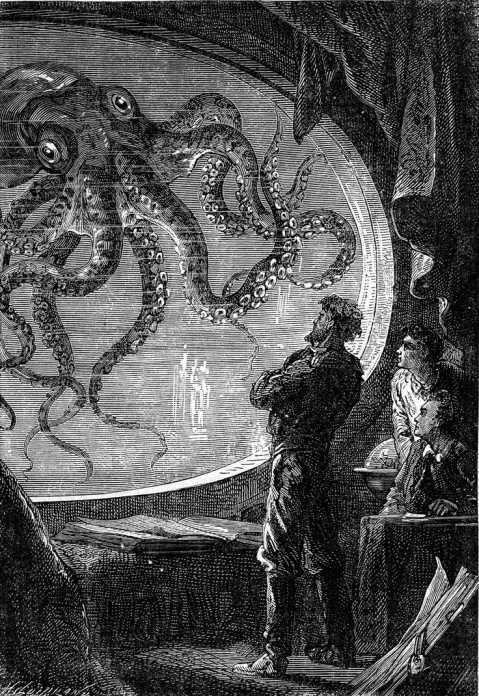
I finally feel like I have a handle on what Steampunk is all about. I was born on the Nautilus, grew up with the Wild Wild West, and flipped out about Brisco. I have read a few Steampunk novels, and some short stories, and liked them all, but I never got what these people with goggles and gears glued to their clothing were all about. After two panels about Steampunk as literature, by Steampunk writers, and a panel by costumed members of Steampunk culture, I get it. And I like it — although you’ll never see me in costume. I also got the kernel of a new novel. That one is your fault, Steve Howe (not the guitarist) and Bruce Davis. Thank you Ashley Carlson, Suzanne Lazear and David Lee Summers for the literary education on Steampunk, and thank you Dirk Folmer, Katherine Stewart, and Madame Askew for the cultural education.

Those are just a few of the authors I met. They were mostly young people. Understand that, at my age, young is defined as under forty, and there weren’t many under thirty because it takes some time to have enough books published to get invited.

I won’t name drop at this time, except for Amy Nichols whose reading from Now That You’re Here (or was it While You Were Gone — I missed something at the introduction) was calm, clean, and unaffected, and sounded just like a teenager. The character in the book, that is; not Amy. I will testify that science fiction and fantasy are in good hands. I have at least a dozen new books on my must-read list, and a lot more on my want-to-read list. I expect to provide some reviews here and on Goodreads and Amazon. After all, that is how readers keep their favorites in sales, so they will be able to write more books.

I learned a hundred other technical tidbits on writing and publishing, but I won’t share them until I’ve tried them.

Worldcon is in my back yard next year. I can’t wait.

Welcome to Summer

Hi, just a personal note, here; not one of my usual mini-essays.

I went to Tempe, Arizona to Westercon over the Fourth of July weekend. It was from 109 to 111 or thereabouts, but I felt no pain because the Mission Palms was well air conditioned. I have a report on that scheduled for the 11th.

I came home to find things weren’t much cooler. Yesterday was 109 here in the foothills of the Sierras, so my wife and I cut out for the coast and spent a few hours walking along the beach at Carmel. Today I’m home, hiding under the air conditioner, working out the details of a new novel that was sparked at Westercon.

I am also watering our non-native trees. When I just went out to change the sprinkler, I saw two mother wild turkeys with twenty-one gawky, half-grown chicks in our yard. They were panting, and looking miserable.

They and I are both asking — is it fall yet?

379. Westercon

You know that I write these posts in advance, and it’s a good thing because today I am leaving for Tempe, Arizona and Westercon 70.

Westercon is a western US regional science fiction and fantasy convention. It has been around since 1948, when the Los Angeles Science Fantasy Society organized it for those who could not travel to the east coast where most Worldcons were held at that time.

This will be my third Westercon. I attended Westercon 33 in Los Angeles the year Zelazny was the guest of honor. I stepped out for air during the afternoon and a lovely young woman told me I looked lonely (I wasn’t), told me she was a wannabe actress – actually she said “I’m just an LA nobody” – and told me the story of her life. I know what you’re thinking. There is no romantic ending, no money changed hands, and she didn’t steal my wallet. I think she was just exactly what she said she was.

Later that night I was cornered at a party by a guy who wanted to tell me about his screenplay. He wouldn’t take the hint that I wasn’t interested, or that I was in no position to further his career. The screenplay turned out to be for a space opera about a ray gun shooting femme fatale. He whipped out a copy of Playboy and showed me a beautiful naked black girl on the centerfold. He said she was the one he had in mind to play the part.

I don’t remember his name (a high functioning forgettery is a very useful tool) but he is probably living in a big house in Hollywood today. The plot was just dumb enough to sell.

I don’t think most Westercons are that weird, costumes notwithstanding. I think it was just LA.

The next year Westercon 34 was in Sacramento. It was a bit more sedate and I gave the paper “How to Build a Culture”. There was a good turnout; as best I can remember a couple of hundred attendees in a small auditorium. I had prepared a piece of mat board with a hand-drawn circle, divided into four pie-slices with the words environment, technology, world view, and biological structure hand written in the quadrants. It was makeshift because my first computer was still five years in the future.

When I said, “Which brings me to my visual aid”, I stood it up and, to cover it’s crudity, added “We have spared no expense!”

The joke got the small chuckle it deserved, but the sound died instantly. A young man in the middle of the auditorium was saying, in a conversational voice, “He is showing a chart. It’s circular, divided into quadrants . . .” We all realized that he was describing the chart to a blind companion, and for the length of time it took him to give his description, you could have heard a feather drop in the room. The respectful silence from crowd made me proud to be a part of the moment.

Last year I wanted to go to Westercon 69 in Portland. I hadn’t gone during all the years of my dry spell; it just didn’t seem like it would be fun under the circumstances. Then Cyan’s release was delayed again, so I skipped Portland. Now that Cyan is out, I am off to Tempe.

It will be good to be back.

378. Science vs. Magic (3)

This is the last in a set of posts which acts as a backdrop to the Westercon panel Science & Technology versus Magic: what makes this such a compelling trope? I

It’s all about control, and how to achieve it.

I think we all understand pretty well how science and technology work. Even when we postulate something like FTL, which is contrary to our present understanding of the universe, we get to it rationally. We don’t get there by lighting candles around a pentagram.

Magic is another world, an alternate way of achieving control, and I see it falling into three types, with quite a lot of overlap.

First, there are the unconsidered, slobbering monsters of gothic horror and B movies. They just are. If they are the offshoot of a mad scientist or a nuclear explosion, we call them science fiction. If they are the offshoot of an ancient curse, we call them fantasy. Frankenstein and Dracula are examples of alternate strands, but really, they belong together. Their effectiveness is on our fears, not on our need to explain. And, no matter how the monster is overcome in the end — if he is —  the experience is all about not having control.

Second, there are magical systems which are simply science under different laws. Do this and that happens, just because that’s the way things work in one projected universe. Nobody did this better than Randall Garrett in his Darcy stories.

Third, there are supplicatory systems which assume that there are forces in the universe, and some of them are personalities. It is very transactional. Do something for the power, and the power will do something for you. But beware of the fine print in the contract. Every variation of the Faust legend falls into this pattern.

Many stories take on the colors of more than one system. In both Harry Potter and A Wizard of Earthsea there are spell that just work, like E=MC2 works, but there are also callings which evoke powers who are personalities, and usually not very nice ones.

These are logical systems, but nobody cares about them until we embed them in stories.

#                  #                  #

On the question of science and technology vs. magic, a scholarly type could easily expend a thousand pages. That might be a little dry, though.

In our everyday lives, we all use science to make our lives easy, but there are some questions that science can’t answer. Which questions? We decide that for ourselves, and the tipping point is different for each person. After all, you can use your new self-driving car to go to the psychic and have your future told, if you are so inclined.

The same balance is found in stories of fantasy and science fiction. It is rare for a science fiction novel to completely lack the unexplained and unexplainable. Luke Skywalker had the Force. Every mutant in the 1950s had psi powers. In Jandrax, I put in a possibly Godly encounter because the book needed it. Most science fiction novels have a touch of magic somewhere.

On the other hand, novels full of magic still have physical laws. The sky is up and the ground is down. If you fall off a high cliff, you die. Of course you might use a levitation spell to save yourself — just like one of those mutants in 50s science fiction would levitate by their psi powers — but you wouldn’t need to if nature wasn’t trying to kill you. The physical reality of heat, cold, hunger, thirst and a fragile body are as much a part of fantasy as they are of science fiction — or romance novels, spy stories, or detective tales. It’s a long way from the Shire to Mount Doom if you have to walk. Frodo could have used a Lear jet.

The places we go in science fiction are great fun and sometimes scary.

In fantasy, we go places that are sometimes great fun, but usually scary.

Which journeys we take are a matter of taste. I would love to sail with Ged by a mage wind, or by the world’s winds, but I wouldn’t read H. P. Lovecraft on a Romnean ten thousand dollar bet.

377. Science vs. Magic (2)

This is post two of three in another set which acts as a backdrop to one of the Westercon  panels. In this case the panel is Science & Technology versus Magic: what makes this such a compelling trope? This post continues from last Thursday’.

Religion has a relationship to magic, but it is not straightforward. It is more in the nature of finger pointing, as in, “My religion is the truth that underlies all things, including science and technology, but his religion is just mumbo jumbo.

You could say that religion and magic both are attempts to influence or control supernatural powers, but that doesn’t seem too accurate in our modern world. It might have made some sense when they were still burning witches.

Any Southern Baptist will tell you that no matter how much you pray for rain, if God has other plans, it isn’t going to happen. In fact, there is a Southern Baptist saying, “God always answers prayers, but his answer is often, ‘No.’” That doesn’t stop people from praying.

At least one of the major components of religion is also shared with science.  Recognition that we are so small and the world is so big — also known as humility — is a pan-human trait. Scientific types walk around looking at the sky and wondering when the next asteroid strike will come. Religious types walk around waiting for the Second Coming, or Ragnarok, or whatever terminal event their sect provides. Maybe magicians walk around wondering if their next spell is going to backfire and turn them into a toad; who knows?

All these types recognize that the universe is essentially beyond human control, and then set out to try to control it anyway..

Control over the uncontrollable is a pretty good starting point for the discussion of magic. Here is where religion flies in two directions. Many sects recognize that God cannot be controlled. He sets things in motion then wanders off, or maybe he pays attention to our everyday trials, but has a plan of his own. In any case, he can’t be compelled.

That position is a lot like science.

Other religions believe that God answers prayers, pays attention to burning candles, likes the smell of incense, and generally can be bought off. That type of religion is a lot like the magic we use in our fantasy fiction. If we make an incantation (light fantasy), some Thing will make an event happen. Or (dark fantasy) if we make a sacrifice, some malign Thing will make an event happen.

Actually, this is also a lot like science. Once the observation and experimentation phase is over, the results of science are used with confidence, not skepticism — just like prayer and supplication, are used.

(Is anybody out there chuckling at the similarity between A=9.8 m/sec2 and — as they say in Harry Potter’s world — Descendo?)

Not understanding what-the-hell is going on in the universe is the most basic of human experiences. Understanding brings about control. Believing that we understand brings about a felling of control, even if that feeling is unfounded.

Science seeks to mitigate this unease by reducing our ignorance. At its best, science is humble about this. However, when a physicist declares that we now know, fundamentally, how the universe works — and points to technology that works most of the time to prove it — it’s time for him to take off his lab smock and put on priest’s robes.

It all comes down to control. One of the things that makes Science & Technology vs Magic so interesting to us is that we all use science, everyday experience, and common sense to navigate and make sense of the world. And it works pretty well, most of the time — but not all of the time.

Ultimately tragedy strikes us, our families, our nation, or, potentially, our planet. Mortality walks behind us every day with its breath on our necks. We reach that place where logic and understanding fail, and we need more.

They say that there are no atheists in fox holes, but there are also no persons so sure of their place in heaven that they don’t feel fear when the reaper comes.

We all trust science — to a point — and then we need the hand of God. Or at least a good magic wand.  more tomorrow

Click here for next post.