
Tag Archives: space travel

116. Spacecraft Threatened by Bears

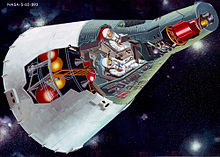
200px-Voskhod_spacecraft_diagramYes, I agree; it’s a snarky title. It’s also accurate, believe it or not.

I had the great good fortune of living through the early days of manned space flight. I was nine years old when the Russians orbited the first satellite, and the early manned flights came when I was in high school. I watched every American launch with fascination and envy, but the Russian launches were shrouded in secrecy. I knew only the bare minimum that all Americans knew. I’m not sure the president knew much more.

During those early days, nothing was routine. Every mission was dangerous. They still are, of course, but not so much as then. American failures were there for all the world to see, while the Soviets kept their’s secret. After the breakup of the Soviet Union, information about the early Russian space program became generally available, but by then few people cared. I did, and I sought out the stories.

Today is the fifty-first anniversary of the first space walk – by the USSR. I would have brought it to you on the fiftieth anniversary, but I wasn’t blogging yet. Voskhod 2 was a triumph, and also a flight which went spectacularly awry.

Voskhod 2
March 18-19, 1965

The first six manned Soviet spaceflights were aboard Vostok craft. Gagarin became the first man in space on Vostok 1, Tereshkova became the first woman in space on Vostok 6. I plan to talk about them on their anniversaries, in April and June.

Vostok astronauts wore space suits throughout their flights and landed by personal parachute separate from the descent module. Before the second generation Soyuz spacecraft came on line, the Soviets launched two additional manned missions on modified Vostoks called Voskhod.

On Voskhod, a backup solid fuel retrorocket was added to the spherical descent module, another additional rocket softened the landing so that the cosmonauts could remain within the descent module, and the ejection seat was no longer used. This allowed Voskhod 1 to carry three astronauts where Vostok had carried only one.

Voskhod 1 cosmonauts flew without space suits, as did early Soyuz missions. Voskhod 2 cosmonauts Belyayev and Leonov wore space suits because they were scheduled for the first space walk. Their craft also carried an inflatable airlock.

American space walks first took place during the Gemini program (see post 87). That craft had two hatches but no airlock; both astronauts were in vacuum during the entire spacewalk.

On Voskhod 2, Leonov crawled into the airlock, sealed the inner door and opened the outer one. Belyayev remained in the pressurized descent module.

For ten minutes, Leonov remained within the airlock but exposed to the vacuum of space, then he slipped free and floated on a tether for another ten minutes. He was called back in to terminate his space walk, and his difficulties began.

(Or perhaps they had already begun. Some sources state that he “experienced a disorienting euphoria” during the space walk and other sources state that he suffered bends-like symptoms after the space walk was over; I haven’t been able to confirm these statements.)

It is certain that he had extreme difficulty reentering the airlock. His space suit had over inflated; the boots and gloves had slipped beyond his toes and fingertips, and his suit had increased in girth. He had to vent part of his rapidly depleting oxygen in order to bring his suit down in size, and even then had to enter the airlock head first, instead of feet first as planned. Once inside the airlock, he had extreme difficulty contorting his body to close the outer door. All the time, his body was heating up dangerously. Since he was surrounded by vacuum, there was nothing to carry away the heat his body was generating.

Once air pressure had been restored in the airlock, Belyayev opened the inner door and Leonov was safe. For the moment. As he said in an article for Smithsonian’s Air and Space magazine in 2005, “the difficulties I experienced reentering the spacecraft were just the start of a series of dire emergencies that almost cost us our lives.”

The mission had achieved it’s goal and it was time to return, but just before the scheduled time for firing retro rockets the cosmonauts discovered that their automatic guidance system was malfunctioning. It took time to prepare for manual entry, so they had to wait one orbit, which would make them miss their return point by a thousand miles. Most of that orbit they were out of radio communications. When communications were restored, ground control asked them where they had landed, not knowing of their difficulties.

Their orbit was set, but the time they would fire their retro rockets would determine where on that orbit they would land. They chose a target just past the Urals. Using the clumsy and difficult manual backup equipment, they achieved the correct attitude and fired the retro rockets in the conical rear portion of the craft called the orbital module. The orbital and landing modules were supposed to separate ten seconds after retrofire. They didn’t.

The two cosmonauts knew immediately that something was terribly wrong. Instead of the steady press of force against their backs as they decelerated, they found themselves whipped about by confused forces that exceeded ten gravities. A communication cable between the two modules had failed to release, and now both modules were spinning about each other, tethered by the cable.

Finally, about 60 miles up, the cable burned through and the cosmonauts were freed. The drogue chute deployed, and then the main chute. All was peaceful and in order – briefly. Then it became dark as they dropped below cloud cover, the final rocket fired to slow them to landing speed, and they landed in 6 feet of snow.

They were 1200 miles beyond their intended landing point.

They blew the explosive bolts to release the hatch. It didn’t open. They had landed in the middle of a forest and the hatch was held shut by a tree. By yanking violently they dislodged it and it fell away, lost in the snow.

They made their way out of the spacecraft and waded through snow to a small clearing. Bikonur had not heard their landing signal, but a passing cargo plane had. It circled, and was soon joined by other planes and helicopters, but none of them could land in the rough taiga. Pilots threw a bottle of cognac; it broke. They threw warm clothing which got caught in the trees, but at least two pairs of wolfskin boots made it to the ground.

The light was failing. The cosmonauts returned to their landing module for shelter. Leonov was walking in calf deep sweat still trapped in his space suit from his space walk. Both cosmonauts stripped, removed the liners from their space suits and wring them as dry as possible, then put the on again along with the wolf skin boots and abandoned the useless space suits. The crawled into the landing module for the night, well aware that the taiga was filled with bears and wolves, and that this was mating season, when they were most aggressive.

The hatch was out of reach. The lights failed, but the circulation fan ran all night. The temperature dropped to 22 below zero.

A rescue party arrived on skis the next morning; they chopped trees to build a small log cabin and a big fire. The cosmonauts spent a second night, then skied out to where a second, larger party had chopped down enough trees for a helicopter to land.

I guess they made ‘em tough in those days. i suspect they still do.
111. Our Neighborhood in Fiction

Gordon Dickson’s list of works is huge, but for some of us they all boil down to the Childe Cycle, known to us mortals as the Dorsai books. At some future date I plan a series of posts in appreciation of them, but for now the issue is his use of the local stellar neighborhood.

Dickson provided us with fifteen extrasolar planets circling seven nearby stars. His primary interest wasn’t in planet building, but he had an ability to paint a planet with a broad brush, then close in and give telling details about those local scenes where the action was taking place. It worked; it was just enough world building to carry each story forward.

Since the Childe Cycle consumed twelve novels over forty-seven years, there was plenty of time to visit each world at some time during the series. Some of the worlds, the Dorsai world in particular, were instrumental in shaping the character of the actors, but for the most part, Dickson’s focus was on a larger issue.

Even though the Childe Cycle featured a form of FTL almost from the first, Dickson’s characters never ventured beyond the local neighborhood. The overarching story he was telling concerned man’s early venturing into space, which led to the formation of three splinter cultures, and the semi-mystical forces which were attempting to reintegrate them into the mainstream.

(Yes, Dorsai Irregulars, I know that is an inadequate rendering, but you try putting fifty years of another man’s sophisticated thoughts into one sentence.)

The Friendlies (religious fanatics or men of faith, depending on who was writing the description, and not really that friendly at all) inhabited the planets Harmony and Association under Epsilon Eridani. The Exotics (scientists of the mind, following a believable mash-up of psychology and zen) inhabited Mara and Kultis under Procyon. Dorsai, the warrior world, lay under Fomalhaut. Incidentally, the phrase under (a star’s name) was one Dickson used often. I find it charming, and presume he was exporting to the stars the notion that there is “nothing new under the sun”.

The rest of his planets were well thought out and inhabited by humans who were not of one of the splinter cultures.

Wikipedia has a nice summary of the Childe Cycle, including a full list of Dickson’s planets. Better still go to your used bookstore and start reading.

*****

At the risk of arrogance – a risk any author is always willing to take – I’ll add my own fictional view of the local neighborhood.

My first science fiction novel, Jandrax, used a sabotaged FTL drive to set things in motion, stranding a group of colonists on an unknown planet. The only thing they – or I –  knew about their location was that it was far beyond the limits of exploration, and that none of them were ever going to return.

Cyan was going to be different. I wanted it to exploit the plot possibilities of relativistic flight, and to be a part of the exploration of the local neighborhood. I worked out this backstory as I wrote:

Early in this century, science makes a discovery that allows total conversion of matter to energy, providing the power to reach the stars at relativistic speeds. A multi-ship expedition to Alpha Centauri finds that the planet around Alpha Centauri A which should have been in the habitable zone, actually has an orbit so erratic that it is alternatively fried and frozen. However there is a barely habitable planet circling Alpha Centauri B. They name it Cinder and begin limited colonization.

Every novel of my childhood found an Earth-like planet around Alpha Centauri A; I had to break the pattern.

The second expedition, to Sirius, finds an Earth sized planet in a reasonable orbit for life, but this time the planet Stormking has a Uranian inclination. There is life, but it is basically uninhabitable. This sets up a future novel with an orbiting civilization made up of refugees from the inhabitants of Earth’s asteroid belt. They have chosen Sirius because it doesn’t have a habitable planet. They use Stormking as a prison, which set up the moral basis of the plot.

Three third-generations starships are built in orbit. The first two set out, one for Epsilon Eridani and one for Tau Ceti. A year later, the third set out for Procyon. This is the voyage which is the focus of the novel Cyan. When the explorers return to Earth, they find that the other two expeditions have both found prime planets, Haven and Elysium. Preparations to colonize them are taking all Earth’s resources; Cyan is not to be colonized, which sets up the events of the second half of the novel.

The starship which carried explorers to Cyan now goes on with a new crew to explore Epsilon Indi, before events which I can’t (spoiler alert) tell you about bring this stage of human exploration to a close.

Check out Cyan, due for release in a month or so, for details.

110. Our Stellar Neighborhood (post 2)

In the science fiction books of my youth, no one ever mentioned heading out into the universe already knowing what planets would be circling the stars they would visit. Even when I began Cyan, no one was thinking like that, so the first thing my explorers do is to map Procyon’s solar system and discover the eponymous planet which they will explore.

Alpha Centauri A is a near twin of our sun, as well as the closest to us. It used to be logical to assume that we will visit there first. That is no longer true. By the time we find the breakthroughs that will allow even relativistic speeds, we will probably have a full inventory of the nearby cosmos, and our first star journeys are likely to be to relatively well known destinations.

I really hate that. What fun would Columbus have had, if he had seen the National Geographic special first?

Where were we? Ah, the neighborhood.

Ignoring the various stellar specks out there, these are the stars we might have interest in, in order of closeness to Earth.

Alpha Centauri – luminosity 1.0 – 4.4 light years from Earth – already covered yesterday.

Sirius – luminosity 23.0 – 8.6 light years from Earth – is the brightest star in the night sky, as seen from Earth, due both to its inherent brightness and to its closeness to us. Sirius is a binary star. Sirius A is extremely bright and hot; Sirius B is a white dwarf.

Epsilon Eridani – luminosity 0.25 -10.5 light years from Earth – is the closest star which has a reasonably well confirmed planet, a giant thought to be about 3.4 AUs out. An AU (astronomical unit) is the distance from the Earth to the Sun, making it ideal for a quick mental picture of distance. The presence of a giant planet at that distance leaves us free to postulate smaller, more human-friendly planets closer in.

Procyon – luminosity 5.8 – 11.4 light years from Earth – is another binary. Procyon A is hot and white (but nowhere nearly as bright at Sirius) with an even fainter white dwarf companion, Procyon B.

Epsilon Indi – luminosity 0.12 – 11.8 light years from Earth – has three-fourths the mass of the sun and a much lower luminosity. Any human-habitable planets would be close in, with a very short year. If it has a decent tilt, its seasons could go by quite rapidly, leading to interesting story possibilities.

Tau Ceti – luminosity 0.36 (newer figures suggest .55) – 11.8 light years from Earth – Tau Ceti is a slightly smaller Sol type star. It is the nearest single star to so resemble our sun.

When I worked out the backstory for Cyan, I only considered stars within 5 parsecs; I will add two more to this list because Gordon Dickson used them in his version of the neighborhood, which we will see in tomorrow’s post.

Altair – luminosity 11 – 16.7 light years from Earth – is a slightly variable blue white star with a rapid rotation (about 9 hours, compared to the sun’s 25 days) which gives a pronounced equatorial bulge.

Fomalhaut – luminosity 16.6 – 25 light years from Earth – is also blue-white with one known planet called Dagon. The size, nature and composition of Dagon is highly controversial, but it seems to be visible to the Hubble telescope only because it is surrounded by a dust cloud many times larger in diameter than the planet itself.

87. Gemini

220px-Gemini_spacecraftToday I want to share with you a book you are unlikely to see. Few libraries have it and it commands unreasonable prices in used books stores. It’s writing style is not artistic. Yet it is a moving book, because of its subject, its author, and its timing. The book is Gemini, by Virgil “Gus” Grissom.

Every American knows something about Apollo. Most have at least heard of Mercury, but the Gemini program has been largely forgotten. That is reasonable enough; youth looks forward. At the time, however, Gemini saved America’s faith in the space program at a time when Soviet advances had made us look foolish and hopelessly outclassed.

Here is a brief summary for the terminally young: the Mercury program, consisting of two sub-orbital flights followed by four orbital flights, put America into space, but the one man capsules – not yet called spacecraft, for good reason – were largely occupied rather than flown. Gemini was a two man spacecraft which could change orbits, meet up with other orbiting objects, and was fully under control of its pilots.

If Mercury was a Volkswagen and Apollo was a Winnebago, Gemini was a sports car.

Mercury capsules had windows in the hatch, only placed there at astronaut insistance. Astronauts could look out, but not forward. Gemini’s viewports were moved to a front facing orientation, like the eyes of a predator. It’s pilots had to see where they were going, because they were actually flying their space craft.

For Apollo to do its job, NASA had to learn to rendezvous, dock, and perform EVAs (extra vehicular activities – space walks) and provide a cadre of astronauts who had proven their ability to do these things. That was the purpose of Gemini.

Grissom was the second American in space and the command pilot of the first manned Gemini mission. He provides a first hand look at the program through it’s brief five year span. The book was written just after the last Gemini flight.

Speaking of 1965, Grissom says: ”We had put ten men and five spacecraft into space and returned them safely, performed EVA, and achieved rendezvous. It was a pretty good record for a program that only two years before had appeared to be foundering.” Eventually sixteen astronauts flew on ten manned Gemini missions.

Grissom’s book is an excellent summary. His style charmingly represents a working astronaut who is not a writer. Nevertheless, the book is haunted. We know that, in the words of Grissom’s editor and friend Jacob Hay, “Within weeks after completing the first draft manuscript of this book, Lieutenant Colonel Virgil Ivan Grissom was dead, killed with his colleagues Lieutenant Colonel Edward M. White, and Lieutenant Commander Roger B. Chaffee, in a flash fire aboard the Apollo spacecraft they were scheduled to take aloft in its first manned flight on Feburary 21, 1967.”

The launchpad fire occurred on January 27, 1967, forty-nine years ago today. For details, see Jay Barbree’s Live from Cape Canaveral (2007), especially chapter nine, ”I’ve got a fire in the cockpit!” Also see post 27, That Was My Childhood.

The book Gemini would have been hard to read when it came out shortly after the fire. It is even harder to read today, given our understanding of the incompetence that led to the disaster. Knowing that the primary cause was flammable materials in an all oxygen atmosphere, it is hard to hear Gus admit that, “For their part, the medical people weren’t really entirely happy over out 100 per cent oxygen supply.”

Still – the book is joyful, and clearly written my a man who loved what he was doing. Gus says he was writing the book for his sons, and the sons and daughters of the other astronauts, and for other sons and daughters throughout America. He meant me (I was senior in high school when the book was published), and he meant you, whatever your age.

Grissom’s book Gemini is largely forgotten, but what he and his fellow astronauts did will not fade from our memories.