Tag Archives: spaceflight

441. The Last Apollo

“We leave as we came, and, God willing, we shall return, with peace and hope for all mankind.”        Cernan’s closing words on leaving the moon at the end of Apollo 17

Forty-five years ago, at 12:33 AM Eastern Time, the last manned moon flight took off from Cape Canaveral.

It was a stunt from the get-go. Kennedy’s speech, setting a goal of landing a man on the moon and returning him safely to the Earth, was a Trump-worthy brag. If we had failed, it would be laughed at today as just another empty promise made by a politician.

One man laid down the challenge and thousands of men and women carried out the promise.

But it was still a stunt. When Kennedy made his speech on May 25, 1961, Russian had put a man into orbit. We had not, although we had managed a sub-orbital flight. Atlas boosters were still blowing up on launch, so a smaller Redstone was used for Alan Shepard’s flight on May fifth.

NASA had only been in existence for three years. By any real or imagined yardstick, the Russians were far ahead in space.

By herculean efforts, NASA forged ahead through Mercury and Gemini. The fire aboard “Apollo One” set American efforts back significantly, and when launches began again, it looked like the Russians were going to land on the moon first.

There were Soviet problems however, particularly the repeated failure of their N-1 rocket. These doomed their attempt to reach the moon first, but NASA was not aware at the time.

NASA had problems of its own. The lunar lander was not ready when Apollo 7, the first actual manned Apollo flight, left for low Earth orbit in October of 1968. Only a year remained on Kennedy’s timeline, and the Soviets — we thought — were poised to land on the moon ahead of us. Something had to be done.

That something was the Apollo 8 journey to and around the moon, without a lander, for the Christmas season of 1968. We had been to the moon first (by an ad-man’s stretch of the truth), even if the Soviets became the first to land.

Apollo 9 tested the lunar lander in low Earth orbit. Apollo 10 (the most frustrating almost in human history) returned to the moon, deployed the lunar lander, and flew it to within wishing distance of the moon without landing.

Apollo 11 landed a man safely on the moon, and returned him safely to the Earth.

Now what?

For the Soviets, the answer was to turn away from the moon. Their N-1 mega-rocket had failed, and their manned modules and lander were stored away. The Soviets began a series of long flights and space stations, studying space from low Earth orbit.

For NASA there were nine more Saturn V rockets waiting to launch Apollo 12 through 20. It didn’t turn out that way. Apollo 12 landed in a different part of the moon, Apollo 13 suffered and explosion, didn’t land, and barely made it home.

Even before Apollo 13, Apollo 20 was cancelled so its Saturn V could be used to launch Skylab. Even before Apollo 14 landed, Apollo 18 and 19 were cancelled. Why? Because it was a stunt from the get-go. Apollo 11 met the deadline. To coin-counting bureaucrats, that was enough.

For those of us who see space exploration as the future of humanity, Apollo 11 was only the  beginning. Lunar exploration, a moon base, Mars. Venus — there should have been no end.

Bureaucrats did not agree. On Thursday, 1972, at 12:33 AM Eastern Time, the last manned moon flight took off from Cape Canaveral.

more next Thursday, the anniversary of the last liftoff from the Moon

406. Arthur C. Clarke Invents the Modern World

If you hang a satellite over the equator, 22,300 miles up, it will appear to remain stationary. Everybody knows that, or should, since global communications is based on the fact. A generation ago, everyone in the science fiction world also knew that this cornerstone of modern society was “invented” or discovered by Arthur C. Clarke.

I’m not sure that Clarke is still generally remembered for this. The origins of everyday things tend to be forgotten.

Clarke’s observation first appeared  February 1945, in a letter written to the periodical Wireless World.

When Wireless World began in 1913, wireless had a completely different meaning than it has today. It referred to wireless telegraphy, invented by Marconi, which used radio waves, interrupted by a telegraph key, to send messages. That allowed ships at sea to send and receive messages.

Wireless World remained on the cutting edge of electronic technology. so it was the right place for Clarke to write his February 1945 letter, which included these words:

An “artificial satellite” at the correct distance from the earth would make one revolution every 24 hours; i.e, it would remain stationary above the same spot . . . Three repeater stations, 120 degrees apart in the correct orbit, could give . . . coverage to the entire planet.

In October of that same year, Clarke was back in print in Wireless World with his article Extra-Terrestrial Relays, in which he fleshed out his idea.


Fig 3. Three satellite stations would ensure complete coverage of the globe.
Illustration from the 1945 Wireless World article.

Clarke discussed the difficulties of early radio and television transmission. Radio, particularly the lower frequency AM radios in use then, were erratic. Sometimes they only carried a short distance from the transmitter; at other times, they would bounce off the ionosphere and travel for a thousand miles. Television signals, being higher frequency, did not bounce off the ionosphere and so were limited to line of sight.

Relaying through orbital repeaters was the answer to both range and reliability. An orbit of 42,000 kilometers above the center of the Earth would provide a geosynchronous station.

The figure given at the top of this post –23,300 miles — appeared in every early popularization of space travel. It is not only a switch to miles, but also that distance is above the surface of the Earth, not the center.

To power his satellite, Clarke suggests mirrors concentrating the sun’s rays to heat water in boilers for turbines to run generators. He also suggests that “photoelectric developments may make it possible to utilize the solar energy more directly”. That is exactly what happened; only thirteen years later, Vanguard became the first satellite to use solar cells.

Clarke then went on to specify what kind of rockets would be needed to place these geosynchronous satellites into orbit and predicted, correctly, that such rockets would soon be available.

He also said:

The advent of atomic power has at one bound brought space travel half a century nearer. It seems unlikely that we will have to wait as much as twenty years (i.e. 1965) before atomic-powered rockets could reach even the remoter planets with a fantastically small fuel/mass ration — only  a few per cent. The equations developed in the appendix still hold, but v(elocity) will be increased by a factor of about — a thousand.

Oh, if he had only been right about that, too. Then our world might come closer to resembling the world envisioned by Harold Goodwin in his Rip Foster novel.

402. Nuclear Spacecraft

I taught middle school science for twenty-seven years, and always, whether I was supposed to or not, I taught the space program.

I grew up with space travel, first in fiction, then in fact. I loved it, and the kids I taught loved it, too. How much of that rubbed off from me, I’ll never know.

By the time I started teaching, the big show was over. When Gene Cernan stepped back into his LEM in 1972, it was the high water mark of manned space exploration. It’s been downhill since.

In the classic science fiction novel I had planned to serialize, Rip Foster is heading out toward the asteroid belt on the nuclear powered spacecraft Scorpius. That’s how we all thought the future would look. That’s how the future should have looked. Chemically powered rockets are simply not sufficient for exploring the solar system.

We have have nuclear power plants for electricity, nuclear submarines, nuclear aircraft carriers, even a nuclear cargo ship. Why not nuclear spacecraft? Weight? Do you really think we couldn’t have overcome that problem? Maybe it was the danger, but . . .

Here is a quiz for you. How many nuclear submarines are lying on the bottom of the ocean, tombs for sailors and ecological time bombs for the rest of us? Two from America and six from Russia. An additional Russian nuclear sub sank twice, but was raised both times.

How many nuclear and thermonuclear bombs have gone missing? The U.S. admits to eight. How many more are hidden under the umbrella of security? Your guess is as good as mine. How many have the Soviet’s lost? You ask them, I’m keeping my head down.

Did I mention Chernobyl and Fukushima?

Let me put it another way. When the Soviets launched Sputnik and initiated the space race, then followed up with a man in orbit before we could even launch a sub-orbital flight, we did an end-around and went to the moon.

If the Soviets had launched a nuclear powered space craft, we would have launched a nuclear powered space craft. Technology would not have stopped us. Fear of radiation would not have stopped us.

That was then, this is now. The best thing for manned space exploration today – though not for American interests or world peace – would be for the Chinese to launch a nuclear powered space craft. It wouldn’t even have to be a good one. Just the threat would be enough, and in a few decades ships like the Scorpius would be filling the solar system.

358. X-37b

This picks up where 343. Black Shuttles leaves off.

The Air Force has wanted space for a long time, since it’s beginning actually. NASA took its MISS program and turned it into Mercury. The Air Force wanted the Dyna-soar, but Gemini beat them out in a fight for appropriations. The Air Force coopted Gemini for a manned reconnaissance station, but unmanned satellites did the job sooner and cheaper. There were rumors that Skylab was largely an Air Force observation post disguised as a science station. Possibly true, but it seems doubtful. Finally they got the Space Shuttle, at least part time, but civilian cautions after the Challenger disaster threw off the Air Force schedule and they fell back on their own resources.

Luke Skywalker got to fly a spaceplane and blow up the Deathstar. The Air Force never did. Okay, maybe the Aurora will change that, if it exists.

(What the heck is Aurora? It is either a follow on to the SR-71 or a myth. Conspiracy theorists believe in it, and the rest of us aviation and space crazies want to. I’ll do a post on it some day.)

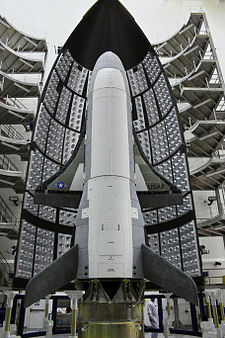
What the Air Force ended up with was a highly capable unmanned vehicle called the X-37b. So far it has only flown four missions, but they are all long duration. The latest ended early this month, May 7th, when the craft landed at the Kennedy Space Center in Florida after a mission of 718 days.

What can I tell you about the mission? That is a lot like the Aurora. Except for the fact that X-37b does exist, and the Aurora may not (probably doesn’t) exist, everything else is classified.

I gave you a link in Black Shuttles for more information, and warned you that it would be frustrating because of the secrecy involved. I have no such link for X-37b. Google it and chase down the conspiracy sites if you want entertainment. If you want facts, join DARPA. Then maybe you can find out which building houses the facts, but they still won’t tell you about them.

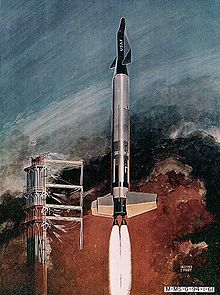
I can tell you a bit about the craft itself. It looks like a miniature space shuttle, about 29 feet long, about 10 feet tall, with a 15 foot wingspan. It is launched inside a streamlined shroud on top of an Atlas 5 missile. It has a payload bay about equivalent to a medium pickup bed.

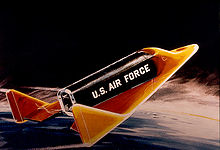
The program started in 1999 and is closely linked to the X-40, which ultimately became a drop-model test bed for data needed to build the X-37b. NASA transferred the project to the military in 2004 and it disappeared into the black world.

X-37b is a scaled up version of the X-40, so early versions had to undergo additional drop tests, this time using a Scaled Composites White Knight (mother ship for the SpaceShipOne program).

To date, there have been four missions, all launched from Cape Canaveral. The first three landed at Vandenberg. The fourth mission landed on the old Space Shuttle runway at Kennedy Space Center.

The future of manned space fighters does not look promising. Most of the new X craft (X-40 through X-57, so far) are unpiloted, but that is simply a cost issue. However, the X-45/46 and X-47 are pilot programs (yes, pun intended) for unpiloted operational fighter jets.

Would-be Luke Skywalkers need not apply. Sorry.

343. Black Shuttles

Atlantis, first launch, DOD mission.

Regular readers will notice that these posts are coming later in the day.

During the planning stage of the Space Shuttle, some changes were called for by the National Reconnaissance Office. That is an organization which, at that time, was not acknowledged to exist, but which is the home of sophisticated space hardware and a big budget. Specifically, NRO wanted the cargo bay on the shuttles to be bigger, presumably to accommodate their oversized spy satellites. They got their way, and the money they provided helped keep the struggling shuttle program afloat during the hard early days.

We’ve been looking at the Air Force in space this week and NRO isn’t the Air Force — quite. However, the head of NRO has traditionally been an undersecretary or Assistant Secretary of the Air Force. So, close enough.

It would not be unreasonable to think of the Air Force as an organization run by pilots and ex-pilots. MISS was a program designed to put men into space; so were the Dyna-soar and the MOL. But none of them ever succeeded in putting Air Force astronauts into space.

During this period of public failure, there were secret successes in the form of more and more military satellites. One of the earliest class of mission was reconnaissance, and the Air Force/NRO success with unmanned satellites was the primary reason MOL was abandoned. Through the sixties and into the seventies, these satellites used sophisticated film cameras, and their findings came back to earth via film canisters dropped from satellites and snagged out of the air by military aircraft. After digital imaging came to maturity, that was no longer necessary.

Sidebar.      Just how successful those satellites were, and how rich the NRO is, became embarrassingly obvious in 2012. The NRO gave NASA two Hubble-quality space telescopes that they had ordered, but weren’t using. One of these is slated to become the Wide Field Infrared Survey Telescope, due for launch in 2024.

At the same time that the Air Force, through NRO, arranged to have the shuttle’s cargo bay expanded, it began to build a shuttle launching facility at Vandenberg Air Base in California. To understand what this means requires knowledge that every space nerd had in the sixties, but which is never talked about these days.

Why do we launch space missions from Florida? Because it is the only place in the US which is both far south and on the eastern seaboard. Rockets are typically launched as close the the equator as practical so that the rotation of the Earth is added to the rocket’s speed — something vitally important when crude, early craft were being launched. They are launched from the eastern seaboard to provide thousands of miles of open ocean for first stages — or fiery, falling failures — to land in.

Vandenberg is situated on the western edge of the nation, ideally located for launching rockets north or south into polar orbit — that orange-peel path spy satellites need. Advanced Titans and Atlases launch from there as needed, without fanfare. But not with complete secrecy. It is a California cliché for a UFO scare to be debunked as “just another night launch from Vandenberg”.

The Johnson Space Center is in Huston because Texan LBJ was President when it was built. Orbital physics had nothing to do with it.

No shuttle was ever launched from Vandenberg. Shortly after the second classified Department of Defense shuttle mission, the Challenger was lost. Important secret launches were delayed by the hearings that followed.

The relationship between NASA and the Air Force had never been a happy one, and the Air Force shifted as quickly as possible back to its own resources. They used the shuttle to take up satellites too large to be launched by other means, and otherwise returned to using their own missiles, typically out of Vandenberg.

The Luke Skywalker picture of Air Force pilots in their space fighters has never come about. The closest to that idea is the robot X-37b, which we will look at in some future post.

——————————

The Smithsonian Air & Space magazine carried an article in 2009 on the eleven black shuttle missions. Since most details are still classified, the article is frustrating, but will provide about as much as you will find anywhere outside of alien-influence websites.

342. Dyna-soar

Regular readers will notice that posts are now coming later in the day.

MISS, Man in Space Soonest, was a USAF project to put a man into a capsule and boost him into space on top of a converted ICBM. It was cancelled, resurrected, and passed on to the new organization NASA, where it became Project Mercury.

Times were tense. The Soviets had launched a satellite into orbit in 1957, beating America into space by a few months. They added to the humiliation by beating the US again in 1961, this time with a man in space. Worse than either accomplishment, was they booster that was used. It was far more powerful than anything America had in service, or in development. A booster that powerful presented all kinds of doomsday scenarios.

Eisenhower had plenty of problems at the time. He was using U-2 spy planes to illegally overfly the Soviet Union, and recognized that it was only a matter of time before that blew up in his face — which it did in 1960 when one of the U-2s was shot down while spying. MISS being transferred to NASA made it a civilian project, and less objectionable. The same logic led the Navy originated Project Vanguard to be passed on to NASA, and also to the use of underpowered rockets to launch it because they were not military hardware.

Sputnik and the Soviet manned missions were on top of a military booster, rendering that concern moot.

NASA went on to success in manned space flight, but in the fifties and early sixties, that was not a foregone conclusion. The Air Force moved on to the Dyna-soar.

Project Dyna-soar (from the phrase dynamic soaring) had begun in 1957, when it was to be the next step after MISS. It was based on the theories of Eugen Sänger, who had a suborbital bomber on the drawing board for the Germans during WWII.

The basic idea was to send a winged vehicle above the atmosphere on top of a rocket, whether in a sub-orbital flight or returning from orbital flight. That craft would skip repeatedly off the upper atmosphere on returning, dissipating the heat of reentry, and ultimately land as a glider.

This sounds a lot like the Space Shuttle, but there are two main differences. STS was designed as a single stage to orbit vehicle, and it dissipated heat by shock waves while being protected by insulated tiles, much like the Mercury through Apollo missions had used shock waves off ablative heat shields. Dyna-soar was designed to ride into orbit on top of a military rocket and to lose its heat by skipping — that is, by dipping into the atmosphere, then bouncing back into space to radiate away the heat it had built up, followed by repeat, repeat, repeat, until cool enough to finally land as a glider.

That would make for a long, hard, bumpy ride. If you are simply thinking of reentry, it would be a unnecessarily tough way to go. To understand why the skip-glide method was so inviting, you have to project yourself back to dawn of the 1960s when rockets were small and space exploration was new. With skip-glide, a relatively small and not particularly powerful rocket could send the Dyna-soar anywhere on Earth.

When Alan Shepard made his sub-orbital flight, he traveled 116 miles above the Earth but landed only about 300 miles downrange. With that initial altitude, Dyna-soar could probably have circled the Earth before landing.

Dyna-soar was developed as a reconnaissance and bombing vehicle. It was, after all, an Air Force project.

Had it gone to completion, the Dyna-soar (also called the X-20 later in its development) would have been the most sophisticated space craft of its era. Unfortunately, money was scarce, and while in orbit, the Gemini could do anything the Dyna-soar could do.

Gemini was a monumentally successful project (see Gemini) that sucked up all of America’s attention. In December of 1963, the Dyna-soar project was cancelled.

Again, the Air Force had lost out to its civilian counterpart. It didn’t give up. The next time around, the Air Force co-opted the Gemini. That third chapter in the Air Force’s bid for space was told here last November as The Space Station That Never Was. We’ll cover the rest of the story – so far –  tomorrow.

341. Air Force in Space, Almost

Regular readers will note that posts now come later in the day.

See if you can find anything wrong with this sentence:

Throughout 1943, U. S. Air Force  B-17 bombers carried out raids over Germany.

Give up? The place is right, the time is right, the B-17s are right, but the United States Air Force did not exist yet. The service in question was the United States Army Air Force, previously called the United States Army Air Corps. From the beginning of American military aviation, planes flying from ships belonged to the Navy and planes flying from air fields belonged to the Army.

That changed with post-war reorganization. The War Department became the Department of the Army, which then joined the Department of the Navy and the newly created Department of the Air Force to become the Department of Defense.

The Air Force was new and hungry, and it soon found plenty to feed on.

By dropping atomic bombs on Japan, the United States had changed the face of warfare. A bombs, and soon H bombs, became our first line of defense against expected Soviet aggression, and it was the Air Force’s job to deliver them if needed. Within a decade, missiles were ousting planes as the primary means of delivery, and the Air Force became the proprietor of such missiles as the Atlas, Titan, and Minuteman.

But not of all missiles. The United States Army developed the Redstone IRBM which launched the first two American astronauts into space, if not orbit. The Redstone was later succeeded by the Pershing which was a cornerstone of the defense of Europe until the eighties. The Navy developed the Polaris and then the Poseidon submarine launched missiles, which were probably, due to their stealthy deployment, a greater deterrent than the missiles developed by the Air Force.

Meanwhile, the Army continued to maintain some aircraft for support missions, and with the onset of war in Korea and later Viet Nam, Army helicopters became a major force in the air. Naval jets launched form aircraft carriers were the equal of Air Force planes. Soon the Marine Corps came to maintain what amounts to a mini-air force all its own.

It looked like everybody has aircraft and everybody had missiles.

The Air Force had additional, more ambitious plans. They intended to launch manned Air Force vehicles into space, first on top of a Thor, then atop an Atlas. The project was called MISS, Man in Space Soonest. The Air Force announced its nine astronauts on June 25, 1958. They included X-15 pilots Scott Crossfield, Joe Walker, John McKay, Robert Rushworth, Robert White — and Neil Armstrong.

A month later, MISS was cancelled.

Two months later a new government organization called NASA was formed and took up the concepts pioneered by the Air Force. MISS became Project Mercury.

The Air Force, however, was not through trying for space. More on that tomorrow.

339. Teaching Space

I taught middle school science for twenty-seven years. It was often fun, but not always. Helping the kids make projects to demonstrate simple machines was a blast, but chemistry was no fun at all. It was a challenge to make astronomy appeal to my kids, but I think I managed.

Teaching space had its ups and downs.

The space race had everything, exploration, political intrigue, danger – both in space and in the Cold War which was the real reason for going to space – technology and a chance to participate. When I taught Gemini IV, I would put two chairs on their backs on a table and have two students lie back in them to represent McDivitt and White. Then I would take “Ed White” for a  space walk.

I was big and they were small. I would pick “Ed” up by the waist and take him spinning and “floating” around the classroom before he returned to the capsule. Great fun for both of us. I always chose the smallest student to play Ed White and, of course, always a boy. Sorry feminists, but if you think about it for a moment, you’ll see why.

I could use the movies Apollo 13 and parts of The Right Stuff, and that was a big help. But the space race was teaching history. What was happening in the world outside the classroom during my teaching career was less fun.

The Space Shuttles were practical. Five craft made 135 trips into space, expanded our knowledge, launched the Hubble, and built the ISS. They called the shuttle NASA’s pick-up truck. It was a good analogy, but what twelve year old wants to go to space in a pick-up truck?

Nothing was really new, just more and better of the same old stuff. Nobody was going beyond low Earth orbit.

(“When are we going to the moon again, Teacher? When are we going to Mars?”
“Damned if I know kid. It’s beginning to look like never.)

There were promising new programs. I watched several of them as they were announced, begun, and then cancelled. I’ll recap them later.

I taught the space shuttle with more enthusiasm than I actually felt. We followed its progress, and there was a lot of it during my teaching career. There was also tragedy.

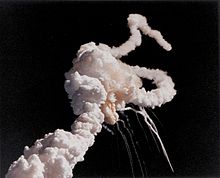
When the Challenger blew up, my class wasn’t watching. Our school got TV’s for the classrooms a couple of years later, so I didn’t know what had happened until recess when I went to the teacher’s lounge and saw faces suitable for a wake on my fellow teachers. It was a long afternoon, first explaining to the students what had occurred, and then going on with our work as if nothing had happened.

I didn’t face another day like that until 9/11.

I remember sitting with my friends in the teacher’s lounge after Challenger blew up, listening to the radio. When the announcer said that the mission commander had flown fighter jets during Viet Nam, I knew that he had found a more honorable death than that war could have given him.

When Columbia returned from orbit the last time, I was excited to see it. By that time I had moved to the foothills. Columbia’s flight path was to pass north of my new house, and I was up before daylight to watch its fire trail across the sky from my balcony. Instead, I only saw dense fog. I waited around until the projected time and at least heard it’s sonic boom. Five minutes later and a thousand miles to the east, it broke up and fell to earth.

It was Saturday morning. I had two days before it would be time to talk to my students about what had happened.

324. Scientific Entrepreneurs

ksc-20160408-ph_kls0001_0005_25704320894In Heinlein’s original stories, a visionary entrepreneur named D. D. Harriman put the first man on the moon. In our world, NASA did it.

Recently, NASA has been in one of its periodic slow periods and entrepreneurs like Elon Musk have been taking center stage. Just this week (I’m writing this on March second) both groups were in the news. Musk announced that two unnamed underwriters had put down sizable deposits for a trip around the moon in the near future, riding in a Dragon spacecraft on top of one of his Falcon rockets. And NASA has announced that the first launch of its Space Launch System booster might carry astronauts around the moon again, for the first time since 1972.

Both are big news, if they happen. Of course, if you follow the space program, you know that there are always more big stories of upcoming events than there are actual events. We’ll have to wait and see.

There are many space enthusiasts who feel that private enterprise should lead in the exploration of space. “Boy genius builds rocket in basement and travels to Alpha Centauri” has a long history in science fiction. I don’t see it.

American industry built all the components of the Apollo missions, and the government paid the bill. Elon Musk has built the Falcon rocket (see photo) on his own, but a NASA contract to supply the ISS pays at least part of the bill. Different, yes, but how different? Privately owned trucks carry goods to your town every day, but on government built roads. Private enterprise is always entangled with government support.

Perhaps it all comes down to a case of, “Who do you trust?” Do you trust private enterprise? Or do you trust the government? Personally, I don’t trust either one of them, so I don’t care who carries the torch for space exploration, as long as it happens.

All this brings us to the anniversary of the day.

Since innumerable interesting things have happened throughout history, and there are only 365 days in a year, you can find something worth celebrating almost any day.

On March 26 (yesterday) or March 25 — depending on which side of the international date line you’re sitting on as you read this — in 2012, James Cameron made a solo descent to the deepest point in the ocean.

The Challenger Deep, in the Marianas Trench, had not been visited by humans since 1960. That expedition was sponsored by the government, specifically the U. S. Navy. Cameron’s visit was self-financed.

Rich men spending their money on their passions, without regard for profit, is not just a twenty-first century phenomenon. Rockefeller made his money in oil, then set up the Rockefeller Foundation. Alfred Nobel made his fortune in armaments, then set up a Peace Prize. Andrew Carnegie made his money in railroads, then set up a chain of libraries across America, including one which illuminated my youth.

Cameron became rich through such films as Titanic and Avatar. His passion for undersea exploration is of long standing. Like Musk with manned space flight, Cameron is continuing an exploration that the government began, then partially abandoned.

Tomorrow we will look at earlier explorers of Challenger Deep.

313. Weightless Ecology

ecoopwegt-lessI’ve been putting off this post since I started the blog. It’s embarrassing. I’m proud of what I did, but telling it makes me feel a little like one of those old guys who never stops talking about the night his forward pass won the big game.

Still, if I hadn’t done what I’m going to tell you about today, I would never have done what I did the summer after (tomorrow’s post), and if not for that, I would still be driving a tractor in Oklahoma. So here goes.

1964-5 was my junior year in high school. That was the year I took both junior and senior English because I was running out of classes to take, and that was the year I discovered science fairs. We didn’t have one in our tiny school, but their was a regional competition one county over. I had recently discovered Shirley Moore’s Science Projects Handbook, which was the bible for the science nuts (nerd wasn’t a word yet) of my generation.

America was in space; the Mercury project was completed and Gemini was waiting in the wings. I was enthralled with space, but also with ecology. Rachel Carson’s Silent Spring was about to make ecology a household word, but no one in my world had heard of it yet. I decided to put the two together and build an “Ecosystem Operable in Weightlessness”.

Lets get real. Boy scientist builds spaceship and flies to Arcturus only happens in the very old pulp stories. I wasn’t going to build something that would actually fly in space. It was an exercise in design, with as much building as I could pull off with limited resources.

The idea was that at that time NASA needed to keep to keep some creature in weightlessness long enough to see what it would do to its body. Laika the Russian space dog hadn’t lasted long, and the longest Mercury flight had been 34 hours. I proposed a design that would put two mice in a closed ecosystem with algae. It was set up so that the algae tank would spin to provide just enough gravity to keep the water separate from the air, but the mice would be weightless in a separate chamber.

The fun was in the details. The mice would be housed in a two part plexiglas bubble, with a wire mesh floor at its equator. Waste would pass through he mesh, carried by the airstream and drop down into the algae tank.

That part actually got built. I made the algae tank of plexiglas, heated and formed around two round pieces of wood. I blew two half domes with a plywood form, an air compressor dragged up from shop class, and an oven borrowed from the home-ec teacher.

As I’ve said before, most of my education came outside of the classroom, thanks to indulgent teachers. They did the right thing, but it would get them fired if they did it today.

I bolted the half domes together through flanges formed during the blowing process. With two mice, Hing and Ho (named after the meerkats in Andre Norton’s Beast Master) in the upper chamber of the dome and a mass of Ankistrodesmus from a local stream in the algae chamber, connected by an aquarium pump, the ecosystem was as far finished as I could manage by the time of the science fair.

The physical result was limited by my resources, but the design went much further. To transfer the food to the mice, I had designed a pump, patterned after a Wankel engine (all the rage in Popular Mechanics that year). It was to send algae laden water up through a tube where it would be flushed over a fine mesh screen. The water would return to the tank on the airstream, leaving the algae for the mice to eat.

I did actually experiment with feeding them Ankistrodesmus. I strained it out of the water, dried it over a light bulb and passed the algae wafer into the mice’s cage. They went wild. You would have thought it was ice cream.

The design called for a small tube to carry a continuous airstream from above the algae water to strike the inside center of the upper dome, bringing the mice fresh air and carrying away waste as it returned. There a larger tube would carry the waste to the bottom of the algae tank.

To get water to the mice under weightlessness, the design called for the airstream from the algae tank to first pass through a Hilsch vortex tube, which split the airstream into hot and cold halves. The cold half was to pass between two thin metal plates. The warm (and moist) half of the air was to play onto the outside of these plates, leading to condensation and a continuous source of water for the mice to drink.

So why am I telling you this? Because this was the first step toward my future.

I didn’t know that at the time. I just did it because it was a challenge and more fun than I had ever had, but it led to a Fleming Fellowship, and that changed my life. more tomorrow.