Tag Archives: teaching

Spirit Deer 3

He hid his bike in the manzanita a hundred yards from the campground and took his rifle with him. Then he slipped a few cartridges into the magazine, just in case.

He walked into the woods. It was late October and the Sierra Nevada mountains of California were beautiful. The aspens were gold against the deep green of the firs and the air was clear and cool. As the morning slipped by he occasionally heard the shots of other hunters, but he didn’t see any deer.

By mid-afternoon, Tim reached a high valley, cut through by a small, swift brook. There he lay back with the sound of water in his ears. The rifle was across his stomach as his eyes searched the edges of the trees.

Five deer came out of the woods on an eyebrow of trail fifty feet higher up the slope and a long hundred yards away. A four point buck led the way, followed by three does and a yearling. Tim sat up and brought up his rifle. He took up slack on the trigger and squeezed gently, just as his father had taught him.

In the moment that Tim fired, the lead muley caught sight of him and pulled up short, then stumbled. His forequarters failed him and his chest hit the trail as his back legs struggled for balance. Then he was up again and running up the trail.

The other deer were gone. Tim’s attention had been all on the leader and he had not even seen where they went after they disappeared into the forest.

Now he was in a panic. Until he had fired that shot, he had not really admitted to himself that he was out hunting alone. He had just been “taking a walk”. If he turned away and went back down to the campground now, his parents would never know the truth. But Tim would know, and in the hunter’s code his father had taught him, leaving a wounded animal was unthinkable.

Tim plunged into the stream where it ran shallow across a bar of harder rock, holding his rifle high. He scrambled up the talus slope, using rocks and juniper as handholds. When he reached the point where the deer had been, he found the manzanita covered with a fine spray of blood.

Tim turned up the narrow, winding trail in pursuit of the wounded deer. Near the stream there were vines and underbrush, but as the trail climbed, it became more open. The muley was nowhere in sight.

There were a number of tracks on the trail, but only one set going in the right direction. Tim studied them for a moment, looking for some distinctive feature, but he found none. The deer held a grueling pace for more than a quarter of a mile before his tracks showed that he had slowed and begun to limp.

The situation didn’t look promising. The deer had run into an area of broken granite and stunted firs. It was not a place for an inexperienced tracker.

The sun was low, filling the land with shadows and strange suggestions of shapes. It was beginning to get cold, and Tim’s jacket was back at the campground, tied to his bike.

Tim sat down on a rock to scan the slope ahead of him. Finally, almost lost in the tangle of roots at the base of an uprooted ponderosa pine, he thought he saw a set of antlers.

Tim started up the slope and the muley broke from cover. With surprising speed, it went up the slope on three legs. more tomorrow

Spirit Deer 2

Last year, Tim had been allowed for the first time to go with his father on his yearly deer hunt. Then his father had given him a rifle for Christmas, and this year they would have hunted together for the first time. There had never been any open agreement between them – that would have spoiled the whole thing – and his father would never have admitted that these were rewards for good behavior. Good behavior was simply expected. But if Tim hadn’t gotten control of his temper, the rifle and the hunt would not have been his.

Tim picked up an axe and took his anger out on the wood.

* * *

Tim was standing beside the pickup when his parents left the next morning. His dad tossed a worn leather satchel into the back and squeezed his shoulder. “Your mother is going to drop me off on her way to work,” he said. “Maybe I’ll be able to get a day between runs before deer season is over.”

“Now don’t you go driving crazy!” Tim’s mother said.

“You know me, Helen.”

“Yes, I do.” She turned and kissed Tim, and said, “There are leftovers in the refrigerator. You’ll have to make your own supper. I’m taking another double shift while Susan is having her baby. Maybe you ought to bike over to see your Granddad.”

“All right, Mom,” Tim said, but inside he was shouting, Not you too! He knew he shouldn’t be angry at either of them, but he was. After the pickup pulled out of sight, he wandered around the yard, feeling abandoned and feeling sorry for himself.

Eventually, he went to his bedroom and sat down on the bed with his new rifle across his knees. It had never been fired, except on the practice range. He took the shells from the box on his desk and loaded it, then unloaded it again. Finally he dropped a half dozen cartridges into his pocket and picked up his pack. As long as both parents were gone for the night, he figured he might as well spend the time with his grandfather. Maybe he could get in some target practice, or maybe he could get his grandfather to tell some of the family tales about the old Miwuk Indian days.

He left a note for his mother and strapped his rifle across the handlebars of his bike. He turned up the main highway into the mountains, standing on his pedals to make the initial grade. When he got to the turnoff to his grandfather’s place, he hesitated. Up the road, only seven miles further into the mountains, was the campground where he and his father had parked last year when they went hunting. At least he could go there. He had all day.

The road rose sharply for those seven miles, and Tim was thoroughly winded when he arrived at the campground. Half a dozen empty campers were parked there, but there was no one in the campground. Everyone was out hunting.

Tim stood astraddle of his bike for a long time, running his hands across the smooth steel and wood of his rifle. He was sorely tempted to have his hunt anyway, alone. Finally he decided to just walk in the woods for an hour before he went down to his grandfather’s place. He reached for his cell phone to tell his grandfather, then remembered that it was at home.  The one girl he liked least had begun to call him twice a day, so he had stopped carrying it. more tomorrow

364. The Core Story

photo by David Mayer

For the last month, these posts have been coming later in the day, in hopes of finding new readership in other time zones. I haven’t been happy with the results, so today I am reverting to the old posting schedule.

Over in Serial today, I begin presenting the novel Spirit Deer. I had some hesitation about this.

As it stands, Spirit Deer is a juvenile, not a YA. It would be suitable for most of the kids I taught in middle school, but too young for teenagers. It would stand with Island of the Blue Dolphins, not with Twilight.

It didn’t start out that way. When I originally wrote it, as an experiment to see if I could I write a complete novel, Spirit Deer was a book for adults. Tim had a last name, a wife, a job, a backstory, and other adult considerations. When he got lost in the woods and had to find his own way out, it was a catalyst for changing his life.

It was only 45,000 words however. That was too short for a western or a science fiction novel, even in the seventies, and way too short for a regular novel. And while the lost-and-found part of the story was fine, the relationships part wasn’t ready for prime time. It didn’t deserve to be published, and it wasn’t.

I moved on and my second novel,  Jandrax, and it was published. Fair trade; Spirit Deer had done its job by teaching me to write. It could be put away with no regrets.

But it wouldn’t die. The problem was, once you strip away the wife and the job and the friend and the adult concerns, the core story of how to keep alive when nature is trying to kill you was still powerful.

After a lot of years, and several other novels, I went back to Spirit Deer and stripped it down to it’s essence. At that level, Spirit Deer could have been about any male above the age of thirteen, all the way up to senility. To be fair, a woman could have endured what Tim endured, but I don’t think a woman would want to read a book about it. At least not in the eighties and nineties when the core story was tapping me on the shoulder and saying, “Don’t give up on me.”

Spirit Deer became a juvenile because of its length. When the wife and friend and backstory went away, there were only about 25,000 words left.

Consider this:

Man against nature, other men, or himself, is a story.
Man against nature, other men, or himself, plus gunfights, is a western.
Man against nature, other men, or himself, plus thugs, is a thriller.
Man against nature, other men, or himself, plus spies, is James Bond.
Man against nature, other men, or himself, plus sweet sex, is a romance.
Man against nature, other men, or himself, plus rough sex, is men’s action — a genre which has all but disappeared.
Man against nature, other men, or himself, plus sex, catching a big fish, and death on the last page, is Hemingway.

I didn’t want to add any of those plusses, and I didn’t want to make Spirit Deer artificially longer, so it became a juvenile. It’s still a good story, it taught me a lot, and it provides a lot for us to talk about as writers.

That is, I assume you are or want to be a writer, or I would have lost you in the second paragraph.

Spirit Deer will be presented in forty posts over in Serial, and there will be posts over here on A Writing Life expanding on the story, on being a beginning writer, and on how many ways a writer can present a core story.

Spirit Deer 1

Spirit Deer
by Syd Logsdon

Chapter 1

Tim was packing for their hunting trip when his father came to his room. When he hesitated in the doorway, Tim knew that something was up, and that it wasn’t something good. He shoved another pair of jeans into the pack and said, “What’s the matter, Dad?”

“I just got a call from Mike Conway,” Tim’s father replied.  “He’s come down with the flu.”

Tim stood still with his hands resting quietly on the half filled pack, waiting for the rest.

“I have to drive his rig for him.”

“How far?” Tim asked.

Tim’s father came up and put his hand on Tim’s shoulder. “All the way to Chicago. I’m sorry, Tim”

Tim wished he was twelve years old again, so he could throw a screaming fit. He had been working on his temper these last two years, trying to be fair to his family, trying to be responsible – trying to be more like his dad. If he acted childish now, if he even whined, his father would be terribly disappointed in him. He didn’t want that, so he gritted his teeth and asked, “How soon will you be back?”

“That’s the rest of the bad news. I can’t pick up his load until tomorrow morning. Figure two days each way, and at least a day to unload and load at the other end. Five days; I’ll barely be back in time to make my own next run.”

Tim couldn’t believe it. It wasn’t fair. He had waited all year for this hunting trip and now it was going to be snatched away from him. He said, “I wish we had left two hours ago.”

Tim’s father shook his shoulder in a friendly way. “Then Mike would have driven sick. I’m glad I was here for him. He has been a good friend to all of us.”

It was true. Tim knew that; but inside, the selfish twelve year old he had been was screaming, “I hate it, I hate it, I hate it!” Tim was tired of being fair. His fingers tightened on the pack. He wanted to grab it up and throw it – preferably through a window, or at his dad.

But Tim saw his father’s eyes on him. He knew the look of disappointment that would come into those eyes if he gave in to childishness, and he never wanted to see that look again. His dad said, “Tim, I’m proud of you for taking this like a man.”

Tim couldn’t reply, and he couldn’t stand those eyes on him any longer. He nodded with set lips and left the room. He headed for the woodpile.

Two years ago, the last time he had thrown a tantrum, his father had taken him out to that woodpile. He had given the axe to Tim and had told him to chop wood. After ten minutes, when some of his anger had been drained away by smashing the heavy logs into firewood, his father had said, “Everyone gets angry. Everyone wants to have things go just right, and things never do. Now you’ve got a choice to make. You can cry like a baby when you don’t get your way, or you can act like a man. The next time you find yourself losing control, I want you to get up from whatever you are doing and come out here. Work it out, then come back.”

Tim had spent a lot of time at the woodpile that year. Gradually he had gained control of himself, and as his father grew proud of him, he had grown proud of himself.

It had been nearly a year since he had gone to the woodpile to take out his frustrations, but this was no ordinary disappointment. more tomorrow

347. Prenatal Algebra

I wrote a post some time ago on the subject of No Child Left Behind, without saying one good thing about the program. I know almost nothing about Common Core, since it came on the scene just as I was leaving. When I retired, I retired. I enjoyed my days of teaching, but twenty-seven years was enough.

Without reference to the latest nonsense, I can say as a general and probably universal rule that a lot of BS floats down onto teachers from above. And from whom?

Everyone knows the saying, “Those who can, do, and those who can’t, teach.” Like most sayings, it isn’t always true, but sometimes it feels true. There is another saying that only teachers know. “Those who can, do, those who can’t, teach, and those who can’t teach, teach teachers.” Again, not universally true, but I have known some Professors of Education who fit the aphorism with sad precision. And I’ve seen a lot of self-appointed experts who make the circuit of schools, giving training programs they devised themselves, who could spin out reams of self-evident drivel as if they were conveying the word of God.

It makes you wonder. Could it be that they weren’t fitted by their education to work outside of the schools, but they would do anything to get away from kids? I don’t know. I never knew any of them personally. I can tell you that of the hundred or so trainers I endured while teaching, only one or two had anything worthwhile to say.

I can also tell you that there should be a banner on the State Board of Education building that reads, “If it doesn’t work, do more of it.” They double down on every bad idea.

________________

The French scholar Jean Piaget, studying children back in the 1930s, discovered that there are stages of readiness for learning. If you try to teach a skill before the readiness is there, it won’t take. I can’t say that is a shocking conclusion. What is shocking is that eighty years later the educational establishment is pretending that it isn’t true.

Everyone can learn. Okay, that’s probably true, but an administrator who says it, means this: Everyone can learn everything. And that’s a lie.

Worse, in their actions, in the textbooks they approve and the tests they give, they are really saying: Everyone can learn everything, and all at the same age, on the schedule we set. And that’s just bullshit.

In California about the time I retired, students in eighth grade had to take algebra, whether they were ready or not, whether they could pass or not — whether they would ever be ready or not. But as soon as they were in ninth grade, and presumably a year more advanced, they could opt out of algebra and take something easier.

Read that three times and it still won’t make sense.

The general rule is this: the state assigns a skill to a certain grade. Some kids get it, some don’t. Does the state let the latter group try when they’re older and more mentally developed? No. They say the students lacked readiness, but they don’t mean readiness in the way Piaget meant it. The state thinks readiness can be taught, so teachers have to try.

If students can’t understand algebra in eighth grade, the schools could teach it to those who are ready, and teach another year of more basic math to the others. Fat chance. Instead the state requires pre-algebra of seventh graders so they will be ready for algebra in eighth. And when that doesn’t work? Let’s try pre-pre-algebra in sixth grade? Where will it end — with expectant mothers sleeping with opened algebra books on their baby bumps?

Read that three times. No, read it 4(2N+3) where N=9 times. It still won’t make sense.

Like it says in the title, get ready for prenatal algebra.

________________

All right, if any of you are young and want to change the world by becoming teachers, more power to you. You are needed.

But first, buy yourself a big pair of hip boots. It’s a swamp out there.

346. Science, just for fun

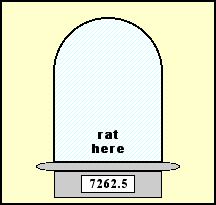
rat-hereTeaching should be fun for teacher and student alike. That’s my perspective, but I have to admit that I had it easy on that front because I taught science. Science is full of falling things, and flying things, and squishy things, and stinky things. If I had to teach English, or social studies, or math, I would certainly have a different view of how much fun teaching is.

Here is an example. CH4 is the formula for methane gas. Teaching chemical formulas could get a little obscure and uninteresting if you let it, but there are always “interesting facts” that you can throw in to help keep things rolling. For instance, methane is what comes out of the gas pipes that you cook with if you live in a city. It’s also what comes out of cows and ends up in the news as a bovine generated greenhouse gas. If you leave a stove on without lighting it, you smell it, but methane is odorless. How does this happen? The gas company puts a chemical in with the methane that stinks when fresh, but burns up without stinking if a fire is lit.

This is the point when some wiseacre will say, “If methane is odorless, why do farts stink?”

And you can answer with a straight face, “Well, if you consider where they come from, and what the gasses have to push their way through, and the little particles they are carrying with them . . .”

If you can’t make science fun, you probably shouldn’t be teaching it.

One of the things that come up in middle school science is the conservation of matter. Matter is neither created nor destroyed, except in nuclear reactions; it just changes form. Methane gas combines with oxygen to create carbon dioxide and water. You know the equation, and you’ve probably had to balance it. My students had to do it, too. You have to do the work if you are going to learn.

But there is nothing wrong with spicing things up occasionally with an illustrative story. Even Jesus used parables.

Consider the story of Billy, who never believed what he was told.

I would begin this story with a drawing on the board like the one at the top of this post, except that there would be a cartoon of a dead rat, on its back, where the word “rat” is.

The story begins — When Billy came into science class one day, his teacher had put a dead rat on a scale and covered it with a bell jar. The scale read 7262.5 grams, the weight of the bell jar plus the rat. Billy’s teacher said, “This is part of a two week long experiment. Don’t touch the setup.” Then he taught something else.

The next day, things didn’t change. After the third day, the rat had started to swell up. (I didn’t take two weeks for this. The whole story took about fifteen minutes. At this point I erased and redrew the rat with a distended belly.)

By Friday, the rat was huge, and it was all Billy could do to keep from lifting the bell jar and poking it. But he didn’t. Even though the rat was huge, the scale still said 7262.5 grams.

Over the weekend, the rat blew up. When Billy came in on Monday, there was nothing left but a skeleton wrapped in a busted skin, with a few oozing guts. The air around the rat was kind of brown and the scale still said 7262.5 grams

(At this point I had redrawn the rat to match the description. This was also the point when I elicited from my students just what was happening and why the scale still read the same.)

Billy just didn’t get it. He couldn’t understand why the scale stayed the same when the rat was reduced to almost nothing. His teacher had explained that the rat’s mass had been converted to gasses which were trapped in the bell jar. Since the gasses could not escape, the scale had no reason to change.

Billy didn’t believe it. It had to be a trick. While his teacher was across the room, helping one of his fellow students, Billy slipped up to the teacher’s desk, took hold of the bell jar, tipped it back . . .

There was a pop and a hiss as the bell jar came unstuck. The scale dropped to 6571.3 grams. The students in the room screamed, leaped up holding their noses and yelling at Billy, and ran for the back of the room . . .

You get the point. They got the point. And we had a lot of fun besides.

345. Do You Measure Up?

if-youI keep an eye on who reads this blog. Most of the people who like or follow are young, at least from my viewpoint.

I know that most of you aren’t teachers, aren’t in school (unless it’s college), and don’t have kids in school yet. I also know that most of my own friends, including my teacher friends, are uncomfortable with math or with measurement, and many aren’t comfortable with either. That’s really too bad, because they’re useful and fun. Honest.

Math isn’t that hard, if you approach it right. Truly.

What’s the secret? I’ll tell you further down the post.

Even those who are good at one kind of math are likely to come up short when faced with a different kind. Give a carpenter a problem in double entry bookkeeping and he would probably be lost. Ask an accountant to solve . . .

                5 feet  1 1/8 inches   minus   2 feet  3  7/16 inches

. . . and he probably wouldn’t know where to start, while carpenters do this kind of math a hundred times a day. Or they use workarounds. A carpenter might walk up to an eight foot 2 x 4, mark out 5 feet  1 1/8 inches with his tape measure, then mark out 2 feet  3  7/16 inches from the same starting point, then measure between the two marks he just made. 2 feet  9  11/16 inches. Easy, and no logarithms were injured in the making of this “calculation”.

Ask a math teacher to hand you a piece of five-quarter lumber and he will probably just stare at you.

Ask an auto mechanic why he glanced at a nut, picked up a 9/16 inch wrench, and knew it would fit. Answer: because he has a solid visual knowledge of sizes from doing the same chore ten-thousand times.

I took math through college calculus and I’m a pretty good craftsman. I’ve built furniture and musical instruments, both of which require accurate measurement. I’ve taught math now and again for three decades. But I couldn’t calculate an elliptical orbit and I couldn’t balance the books on a hot dog stand.

That secret I told you about? Here it is — everybody needs math, but not everybody needs the same math. And not everybody needs the same amount of math.

It is as pointless to teach an auto mechanic or a home-ec teacher calculus (unless they just like math and want it for their own interest) as it would be to teach a NASA scientist that 2-9-3+ means two feet, nine inches, 3/8 inches, and an unspecified little bit more, to a traditional boat builder.

————————–

Math teaching is often excellent, but it works under the burden of a basic error. The march from simpler to more complex math in our schools moves at a pace that only the brightest can manage, and aims toward reaches of higher math that only a small percentage could master or will ever use.

If you put the truth of this ambition on a bumper sticker, it would read:

Everybody needs to be a nuclear scientist,
and if you can’t cut the math,
you aren’t trying hard enough.

Both of these assertions are untrue, but they rule our math programs. I saw this all the time as I taught science. My students could not confidently and accurately add, subtract, multiply, or divide, even though they were — by state law — all enrolled in eighth grade algebra.

Their math teachers were not allowed to help them. They were required — again, by state law — to teach at grade level. That is, to teach algebra only.

They were not allowed to remediate. If they did, they were scolded by those who came in to evaluate our school.

I remediated, in science class, where the proctors of compliance would never know. Some years my student’s skill levels were so low that I actually spent several weeks teaching the processes, mostly long division, as I would have taught a math class. Most years, however, my math teaching was science in disguise; or was my science teaching math in disguise?

Were my students stupid? No.

Were the math teachers stupid? No.

Were the ones who devised the math plan stupid? ———- It would be so satisfying to say yes, but the opposite is true. They were the overachievers who never misplaced a decimal. They were putting in place a plan they would have done well in, when they were children. But that plan doesn’t work for the other 90% who suffer under it.

344. Teachers

This is teacher appreciation week, and I certainly do appreciate teachers. Most of them anyway. I’ve known a few who needed to find another profession, and a very few who needed to be shot. Sorry if that offends you, but I stand by it.

The overwhelming majority of the teachers I have known have been hard working, caring, dedicated and competent. I understand that better than most people, because I was one of them, and working along side of them. How I came to be a teacher, is another story.

First I wanted to be an astronaut, but claustrophobia and bad eyesight killed that dream before I got to high school. Then I wanted to be a scientist studying ecology, but I got to college when everyone was infatuated with the double helix, ten years before ecology burst on the scene. I studied South Asia as an anthropology major for five years, through my first MA, before reality set in and I realized that I would hate the field work. That was when I started writing, and started my second MA in History. Now I had found something I could have loved writing and teaching at the college level, but about that time there were two would-be professors for every available position.

Timing is a killer.

Money got short so I decided to do a little substitute teaching. It was a revelation.

I taught kindergarten one day and it was a disaster. I taught fourth graders — every teacher’s first choice — and almost died of boredom. I taught middle school — every teacher’s nightmare — and loved it. So I went back to college (for the fourth time), got a credential and spent the next twenty-seven years teaching sixth, seventh and eighth graders.

I have been told several times by parents that there is a special place in heaven for me because I chose to teach middle school kids. I don’t see it that way. Middle school kids are more fun than a bucket of puppies, if you don’t have to take them home with you at the end of the day. I think those parents may have been projecting some of their own feelings.

I remember one meet-the-parents night, sitting down with one of my girl students and her mother. The girl had been a fine student, not troublesome at all, and I had thought of her as mature for her age. Sitting next to her mother, she squirmed like an eight year old, talked back, and generally gave her mother hell. It was amazing to see how different her at-home personality was from her at-school persona.

Not having middle school kids at home probably accounts, in part, for liking them so much in the classroom.

I’ll tell you another secret about teaching. It takes all kinds — assuming decency and competence. Some kids will think you are great because of what you teach, or because of how you teach, or because your personality happens to mesh with theirs. Other kids will hate you for exactly the same reasons. These are your choices — if you are a good teacher, some will love you and some will hate you. If you are a bad teacher, most of them will hate you, and a few will just be happy to go to class without having to work..

If you want to be universally loved, you should choose another profession.

339. Teaching Space

I taught middle school science for twenty-seven years. It was often fun, but not always. Helping the kids make projects to demonstrate simple machines was a blast, but chemistry was no fun at all. It was a challenge to make astronomy appeal to my kids, but I think I managed.

Teaching space had its ups and downs.

The space race had everything, exploration, political intrigue, danger – both in space and in the Cold War which was the real reason for going to space – technology and a chance to participate. When I taught Gemini IV, I would put two chairs on their backs on a table and have two students lie back in them to represent McDivitt and White. Then I would take “Ed White” for a  space walk.

I was big and they were small. I would pick “Ed” up by the waist and take him spinning and “floating” around the classroom before he returned to the capsule. Great fun for both of us. I always chose the smallest student to play Ed White and, of course, always a boy. Sorry feminists, but if you think about it for a moment, you’ll see why.

I could use the movies Apollo 13 and parts of The Right Stuff, and that was a big help. But the space race was teaching history. What was happening in the world outside the classroom during my teaching career was less fun.

The Space Shuttles were practical. Five craft made 135 trips into space, expanded our knowledge, launched the Hubble, and built the ISS. They called the shuttle NASA’s pick-up truck. It was a good analogy, but what twelve year old wants to go to space in a pick-up truck?

Nothing was really new, just more and better of the same old stuff. Nobody was going beyond low Earth orbit.

(“When are we going to the moon again, Teacher? When are we going to Mars?”
“Damned if I know kid. It’s beginning to look like never.)

There were promising new programs. I watched several of them as they were announced, begun, and then cancelled. I’ll recap them later.

I taught the space shuttle with more enthusiasm than I actually felt. We followed its progress, and there was a lot of it during my teaching career. There was also tragedy.

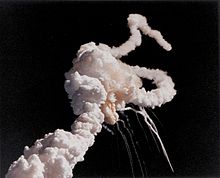
When the Challenger blew up, my class wasn’t watching. Our school got TV’s for the classrooms a couple of years later, so I didn’t know what had happened until recess when I went to the teacher’s lounge and saw faces suitable for a wake on my fellow teachers. It was a long afternoon, first explaining to the students what had occurred, and then going on with our work as if nothing had happened.

I didn’t face another day like that until 9/11.

I remember sitting with my friends in the teacher’s lounge after Challenger blew up, listening to the radio. When the announcer said that the mission commander had flown fighter jets during Viet Nam, I knew that he had found a more honorable death than that war could have given him.

When Columbia returned from orbit the last time, I was excited to see it. By that time I had moved to the foothills. Columbia’s flight path was to pass north of my new house, and I was up before daylight to watch its fire trail across the sky from my balcony. Instead, I only saw dense fog. I waited around until the projected time and at least heard it’s sonic boom. Five minutes later and a thousand miles to the east, it broke up and fell to earth.

It was Saturday morning. I had two days before it would be time to talk to my students about what had happened.

335. To Save a Life

I once saved a little girl’s life. True, but not as exciting as it sounds. I’ll tell you about it further down in the post.

In 1975, a whole bunch of things came together. I came back to California with a master’s degree and started writing novels. My wife’s parents lived in the same small city. Her father was a life long Red Cross volunteer, so when help was needed in the Swine Flu clinics, we all three volunteered. I had spent four years as a surgical tech in a Naval Hospital, so it was natural that I continued to volunteer after everybody had had their shots and the Swine Flue had not appeared.

(Cynics called the Swine Flu the cure for which there was no disease, but no one knew that at the time. Hindsight is always accurate, but sometimes cruel.)

About that time, the Red Cross was given the responsibility of teaching the then-new technique of cardiopulmonary resuscitation. My wife, my father-in-law, and i took the county’s first CPR class one week, then took the first CPR teacher training the following week. After that we taught as a team.

At that time there were no EMTs. We taught the local ambulance drivers to do CPR, then my father-in-law taught the park rangers at the local lake. We taught civilian classes every week or so and after a few years, we had trained hundreds.

In those days CPR training included the Heimlich maneuver and many other things I won’t even tell you about. Year by year, the training contained less and less. Dumbed down, in my non-medical opinion. To be fair, we weren’t teaching doctors and nurses. The amount that you can expect a civilian to learn in a short class, and remember in an emergency a year later, has to be fairly well restricted.

When I wrote my second published novel, I had the hero save a life using CPR, and in the front pages, placed a statement about CPR with a call for the reader to get training.

I never had to actually use CPR. That just means that nobody ever dropped temporarily dead in my presence, and I’m glad they didn’t.

However . . .

About twenty years later I was teaching middle school. It was the end of the day. The bell had just rung and my students had started getting into their back packs to file out, when one of them yelled, “Suzy’s in trouble!” and another student yelled, “She’s choking.”

The girl (not named Suzy) had slipped a hard candy about the size and shape of a marble into her mouth. She wasn’t supposed to do that until she was outside the classroom, so she was being sneaky instead of careful, and it lodged in her windpipe.

I slipped into the mode teachers use for bleeding, fainting, and fist fights. I went to her at a walk that resembled a run. Her face was desperate. I spun her around and stripped off her backpack while calmly saying, “Let’s get this off you. Let’s get you turned around so I can get that out, so you can breathe.” I put my hands in the right position and jerked up sharply — but carefully, since I was three times her size. The candy shot across the room.

That was it. It was over. She was shaken, but unhurt.

Humility would have me say that she would probably have been all right anyway, but I don’t think so. I really don’t think so.

So, what is the takeaway — that I’m a hero? Not likely. People’s lives are saved every day by the Heimlich maneuver. I have a friend, a teacher, who used it successfully twice during her career.

The takeaway is that CPR, rescue breathing, and the Heimlich maneuver are easy to learn, and if you ever have the chance to same the life of a loved one, or even a stranger, and you don’t know how, it will haunt you for the rest of your life.

End of sermon.