Tag Archives: writing

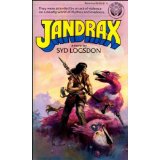
Jandrax 1

51jbN0bvqRL._AA160_We are just coming off Voices in the Walls, which, if you missed it, was a fragment of a novel presented with commentary. It was intended to provide young writers with a chance to look over my shoulder.

Like most experiments, I didn’t know if it would fly, but I think it worked out quite well. Now I intend to expand the idea by presenting Jandrax, my first published novel, as a serial, with commentary on world building, person, publishing, writing style (Be careful how you write, it will still be around to haunt you in your old age!), and changes in the world of fiction from then to now.

In August of 1978 I received this letter, which changed my life.

August 8, 1978

Mr. Syd Logsdon
(address)

Dear Mr. Logsdon:

I have just read Jandrax, the novel you sent to my  husband.  Lester handles the fantasy for the list, and I take care of the science fiction.

I like the book and would very much like to publish it–probably in the Spring.

I offer you (monetary and rights details, very modest)

If these terms are satisfactory, get back to me, and I will get a contact prepared.

Is this your first novel? It reads well, and I would hope to see many more from you.

Would you prepare a 200-word About The Author (in the 3rd person) to run in the book and send that along in the next few weeks.

I think readers like to know something about new authors.

I shall look forward to hearing from you.  Welcome to Ballantine.

Cordially,

Judy-Lynn del Rey
Editor-in-Chief
DEL REY Books

P.S. I’m not sure I love the title. Can you come up with something a little jazzier that captures the spirit of the book?

If you are a would-be writer – and why would you be reading this if you were not – you probably already know what a rejection letter looks like. I had certainly seen dozens by the time Jandrax was accepted. I’ve seen hundreds since.

Acceptance letters are a different breed of cat. This one hangs, framed, above my desk. I look at it from time to time to remind myself that I am a published author, when current events make that seem fantastic. I have had a few more acceptances, which are filed, not framed, because only the first one gives you that maximum heart thump.

Jandrax begins tomorrow

116. Spacecraft Threatened by Bears

200px-Voskhod_spacecraft_diagramYes, I agree; it’s a snarky title. It’s also accurate, believe it or not.

I had the great good fortune of living through the early days of manned space flight. I was nine years old when the Russians orbited the first satellite, and the early manned flights came when I was in high school. I watched every American launch with fascination and envy, but the Russian launches were shrouded in secrecy. I knew only the bare minimum that all Americans knew. I’m not sure the president knew much more.

During those early days, nothing was routine. Every mission was dangerous. They still are, of course, but not so much as then. American failures were there for all the world to see, while the Soviets kept their’s secret. After the breakup of the Soviet Union, information about the early Russian space program became generally available, but by then few people cared. I did, and I sought out the stories.

Today is the fifty-first anniversary of the first space walk – by the USSR. I would have brought it to you on the fiftieth anniversary, but I wasn’t blogging yet. Voskhod 2 was a triumph, and also a flight which went spectacularly awry.

Voskhod 2
March 18-19, 1965

The first six manned Soviet spaceflights were aboard Vostok craft. Gagarin became the first man in space on Vostok 1, Tereshkova became the first woman in space on Vostok 6. I plan to talk about them on their anniversaries, in April and June.

Vostok astronauts wore space suits throughout their flights and landed by personal parachute separate from the descent module. Before the second generation Soyuz spacecraft came on line, the Soviets launched two additional manned missions on modified Vostoks called Voskhod.

On Voskhod, a backup solid fuel retrorocket was added to the spherical descent module, another additional rocket softened the landing so that the cosmonauts could remain within the descent module, and the ejection seat was no longer used. This allowed Voskhod 1 to carry three astronauts where Vostok had carried only one.

Voskhod 1 cosmonauts flew without space suits, as did early Soyuz missions. Voskhod 2 cosmonauts Belyayev and Leonov wore space suits because they were scheduled for the first space walk. Their craft also carried an inflatable airlock.

American space walks first took place during the Gemini program (see post 87). That craft had two hatches but no airlock; both astronauts were in vacuum during the entire spacewalk.

On Voskhod 2, Leonov crawled into the airlock, sealed the inner door and opened the outer one. Belyayev remained in the pressurized descent module.

For ten minutes, Leonov remained within the airlock but exposed to the vacuum of space, then he slipped free and floated on a tether for another ten minutes. He was called back in to terminate his space walk, and his difficulties began.

(Or perhaps they had already begun. Some sources state that he “experienced a disorienting euphoria” during the space walk and other sources state that he suffered bends-like symptoms after the space walk was over; I haven’t been able to confirm these statements.)

It is certain that he had extreme difficulty reentering the airlock. His space suit had over inflated; the boots and gloves had slipped beyond his toes and fingertips, and his suit had increased in girth. He had to vent part of his rapidly depleting oxygen in order to bring his suit down in size, and even then had to enter the airlock head first, instead of feet first as planned. Once inside the airlock, he had extreme difficulty contorting his body to close the outer door. All the time, his body was heating up dangerously. Since he was surrounded by vacuum, there was nothing to carry away the heat his body was generating.

Once air pressure had been restored in the airlock, Belyayev opened the inner door and Leonov was safe. For the moment. As he said in an article for Smithsonian’s Air and Space magazine in 2005, “the difficulties I experienced reentering the spacecraft were just the start of a series of dire emergencies that almost cost us our lives.”

The mission had achieved it’s goal and it was time to return, but just before the scheduled time for firing retro rockets the cosmonauts discovered that their automatic guidance system was malfunctioning. It took time to prepare for manual entry, so they had to wait one orbit, which would make them miss their return point by a thousand miles. Most of that orbit they were out of radio communications. When communications were restored, ground control asked them where they had landed, not knowing of their difficulties.

Their orbit was set, but the time they would fire their retro rockets would determine where on that orbit they would land. They chose a target just past the Urals. Using the clumsy and difficult manual backup equipment, they achieved the correct attitude and fired the retro rockets in the conical rear portion of the craft called the orbital module. The orbital and landing modules were supposed to separate ten seconds after retrofire. They didn’t.

The two cosmonauts knew immediately that something was terribly wrong. Instead of the steady press of force against their backs as they decelerated, they found themselves whipped about by confused forces that exceeded ten gravities. A communication cable between the two modules had failed to release, and now both modules were spinning about each other, tethered by the cable.

Finally, about 60 miles up, the cable burned through and the cosmonauts were freed. The drogue chute deployed, and then the main chute. All was peaceful and in order – briefly. Then it became dark as they dropped below cloud cover, the final rocket fired to slow them to landing speed, and they landed in 6 feet of snow.

They were 1200 miles beyond their intended landing point.

They blew the explosive bolts to release the hatch. It didn’t open. They had landed in the middle of a forest and the hatch was held shut by a tree. By yanking violently they dislodged it and it fell away, lost in the snow.

They made their way out of the spacecraft and waded through snow to a small clearing. Bikonur had not heard their landing signal, but a passing cargo plane had. It circled, and was soon joined by other planes and helicopters, but none of them could land in the rough taiga. Pilots threw a bottle of cognac; it broke. They threw warm clothing which got caught in the trees, but at least two pairs of wolfskin boots made it to the ground.

The light was failing. The cosmonauts returned to their landing module for shelter. Leonov was walking in calf deep sweat still trapped in his space suit from his space walk. Both cosmonauts stripped, removed the liners from their space suits and wring them as dry as possible, then put the on again along with the wolf skin boots and abandoned the useless space suits. The crawled into the landing module for the night, well aware that the taiga was filled with bears and wolves, and that this was mating season, when they were most aggressive.

The hatch was out of reach. The lights failed, but the circulation fan ran all night. The temperature dropped to 22 below zero.

A rescue party arrived on skis the next morning; they chopped trees to build a small log cabin and a big fire. The cosmonauts spent a second night, then skied out to where a second, larger party had chopped down enough trees for a helicopter to land.

I guess they made ‘em tough in those days. i suspect they still do.

115. St. Patrick’s Day With Juan O’Malley

full title
Juan Angus Georg Angelo O’Malley celebrates St. Patrick’s Day
by drinking tequila and while wearing lederhosen under his kilt.

It is cliche to say that we are a nation of immigrants. We are also a nation of holidays celebrating our immigrant origins – Cinco de Mayo, Octoberfest, Tartan Day, Chinese New Year, and of course, St. Patrick’s Day.

The middle school where I taught for nearly three decades was not racially diverse. We had an occasional student of East Indian heritage, a very occasional black student, but the rest of the students were divided roughly equally between Mexicans (mostly Catholic) and Anglos (mostly Mormon).

I didn’t say Mexican-Americans. The phrase seems politically correct, but it lumps some very different groups together, and not all of them like the name. There were students of Mexican heritage whose ancestors had been in California longer than I had, students whose ancestors were here before the 49ers, students who were children of recent citizens, students who were children of field workers with visas, and students who had just come over the border illegally. Some were Mexican, some were Mexican-American, and some were more American than the DAR.

The newcomers had an understandably harder attitude. A few of my students wore a T-shirt with a message that said it all:

Not Mexican-American
Not Hispanic
Not Chicano
MEXICAN!

As you might guess, Cinco de Mayo was a tense holiday for the teaching staff, but St. Patrick’s Day was neutral. I took sneaky advantage of that to tell a double story.

Pardon an aside: I got away with a lot because I liked middle school kids and I was a good science teacher. Most good science teachers escape to High School at the first opportunity. My kids always scored high on the science portion of standardized tests because I taught what was in the book first, then added what else I thought was needed. One year our seventh grade science teacher was an incompetent who was invited not to return. The following year I shoehorned four weeks of biology into my physical science class so his students would not reach high school without basic knowledge. For a few insane years, math teachers were forbidden to remediate; I squeezed remedial math into my science class. In the physics of motion chapter, I always taught the space program, including a brief history of the cold war so they would know why we went to the moon.

And I always taught the Irish immigrant story on St. Patrick’s Day.

It is a moving story, which eighth graders are old enough to appreciate. Potatoes from the new world were perfect for Irish soil; where a crop of oats had supported four people, a crop of potatoes would support eight; when previously hungry people were no longer hungry, they had more babies. Then the potato blight struck, and there was no going back to oats because the population had grown.

The land was largely owned by the English. They continued to export grain throughout the famine. Vast numbers of Irish starved. Those who could raise the money took ship for America.

The passage was hard. Ten percent of those who left Ireland died on the way. Their quarters were cramped, filthy, and unhealthy. Eighth graders both love and hate this part of the story; they have a very human capacity to be simultaneously moved and grossed out. I would walk about the room, measuring out the cubicles with hand movements, mimicking the heaving of the ship in a storm, telling of the bilge seeping up from below, pointing out the sound and smell of vomiting from seasickness, and reminding them that the cedar bucket behind that blanket at the end of the central aisle-way would fill to overflowing with human waste on the bad days when the hatches had to remain battened down.

Then I would quote a passage from a letter sent back to Ireland by an immigrant, who described the passage then said, “But I would endure all that ten times over, rather than see my children hungry.”

Once in the United States, things were still hard. The Americans who were already here didn’t want them. They could only obtain the jobs no one else wanted. Many were Gaelic speakers and did not speak English. They were segregated into the poorest part of the cities. They were disrespected.

They bettered themselves, generation by generation. They learned American democracy, and elected their own kind to office. They learned American capitalism and many became rich. Eventually, they elected one of their own, John F. Kennedy, to be president.

Along the way, they began to celebrate themselves. St. Patrick Day parades are an American invention. They have only recently begun to be celebrated back in Ireland, but they have been important in America for more than a century.

*****

You have to talk fast to get all that into forty minutes and still have time for the payoff, because the story is a lead-in to a realization, which is elicited by questions.

Who else came to America from elsewhere? (Mexicans is the answer you get, but you have to point out that the same could be said about Italians or Jews or Viet Namese or almost any immigrant group.) Who else didn’t speak the language? Who else was treated badly by the one’s who came before?

St. Patrick’s Day isn’t about shamrocks and leprechauns. Its about Irish pride. Its about saying, “I’m as good as anyone.” It can even say, “I’m here – deal with it.” St. Patrick’s Day is American, not Irish, because America is where the Irish had to speak up for themselves.

Cinco de Mayo is an American holiday. It is not widely celebrated in Mexico. Just as St. Patrick’s Day is Irish Pride Day, Cinco de Mayo is Mexican Pride Day.

It is a message I got across most years, but no one would have listened if I had not first captured their emotions with the story of a politically neutral and sympathetic people with whom both Anglo and Mexican students could identify.

Voices in the Walls 34

6 of 6 of an outline of the remainder of Voices in the Walls.

One of the slaves is young, powerful, and pushy. He has always resented the whites above him; he is happy now to treat Matt as an underling. Matt is not about to buy that, and there is a lot of testosterone fueled head butting, complicated by black-white tensions.

Of course, this brings an image to mind – a white guy handcuffed to a black guy, running through the swamps ahead of the law. We’ve seen this show before, in any number of B movies. It will take careful writing to acknowledge that these emotions have to play out, without having the incidents take over the novel.

Eventually, Matt will have a climatic scene where he has to choose between the life of a white man and the freedom of a black man. The whole book points to this moment. It can’t come too soon, nor be delayed too long, but he finally has to take that pistol, given to him to protect his sister, and use it to protect one of the escaping blacks. Which white he shoots has to be carefully chosen. Not Meeker, that would be too pat. Not someone who is a complete innocent, nor a complete villain. The black he rescues is equally important. Probably not Alice – too easy and pat again, as well as being a sexual instead of a racial act. Not his black adversary among the runaways, that would be unbelievable. Probably Ben Sayre. Possibly one of the lesser characters among the runaways.

(Need I point out that this scene will be an obvious metaphor for the entire coming Civil War?)

This climax needs to come shortly before they all reach the Waterside area. There Matt will meet up with the old slave who taught him how to swing and axe and adz at his father’s shipyard. He has to experience again the servility that the old man offers him, and reject it.

Matt and his group steal a bugeye, an inshore vessel which Matt understands well. They work their way down to the Atlantic at night and out into a storm, then turn north and sail to freedom.

I’ve wanted to write this scene since I saw reference to an actual event years ago, long before I got the idea of Voices. A vessel designed for other purposes is exposed to a storm, and weathers it, to the surprise of those who thought they knew its capabilities. Like Matt. The storm is a massive threat from the outside, overshadowing white-black differences, and forcing them to work together or perish. And finally, the land is ripped apart by men in warlike contention, while the sea (aka nature) offers challenges men can overcome if they work together.

Yes, critics, writers are aware of the symbolism in their books. Readers, too. They don’t need you to point them out.

This also prefigures what Matt will do in the years to come. We find in the epilog, as he and Rachel and Sarah listen to Lincoln’s Gettysburg Address, that he will spend the war in the Northern navy and will be in command of a river steamer with a black crew which is lost at the siege of Vicksburg.

In the final scene Alice comes by with her child at her side and is embraced by Rachel. She and Matt face each other; he nods, she smiles, but they do not – cannot – embrace. Matt realizes, sadly and with feelings of personal inadequacy, that he still can’t treat Alice as he would a white woman, and he predicts in his thoughts – as Lincoln’s words echo in the background – that although the slaves are freed, it may take a hundred years before his kind can bring themselves to treat them as equals.

Voices in the Walls 33

5 of 6 of an outline of the remainder of Voices in the Walls.

I’ve even considered dumping the Alice altogether and having Saul be the one captured, but I can’t believe the story told that way. Maybe if Saul were five years old, but adult-saves-child is too easy a moral path for Matt.

I want Matt to change his feelings for a race, not an individual. Matt is young, good looking, and with a full complement of hormones. That means horny; it isn’t emphasized, but the reader knows. The girl is young, good looking, and forbidden fruit for two reasons. Young men of that era were supposed to save it for marriage, however often they didn’t. And slave owners – even ones like Matt and his father who strive for the moral high ground – would have been pulled two ways. Their “racial superiority” would tend to make them keep their distance, while knowledge that they could do as they pleased would tempt them to take those women who were unable to resist.

You could write a thousand stories out of that swamp of emotions: comedies, tragedies, or stories of moral affirmation and moral downfall. But those aren’t the story I’m trying to tell.

Matt is going to go into this rescue with massively mixed feelings. I want those feelings to be slave-owner vs. friend of a good, old black man. I’m afraid his inevitable sexual attraction to Alice will skew everything.

Nevertheless, logic notwithstanding, my gut tells me Alice needs to be in the story. The only way out of my conundrum may be to buckle my seat belt and write my way through the dilemma. If it fails, it won’t be the first couple of hundred pages I’ve thrown away.

So, let’s move on with the story. Alice gets rescued, and complications ensue.

For reasons I have yet to plot out, when Matt and Ben spirit Alice away, they are joined by a small group of other slaves who either have been planning an escape, or just take advantage of the situation. It may be that Alice invites them along, risking her life and freedom for strangers she had just come to know. That would be just like her.

Matt, Ben, Alice, and the others find themselves on the run. Matt has been found out. He can no longer pass as a southern gentleman. He has become a slave-stealer and his hosts know it. A hue and cry is raised. The road north is blocked.

They must now turn east and south, following a path that will eventually lead them to the tidewater region.

Here is a sidenote, concerning research: The journey from Gettysburg to the plantation where Alice is rescued has to take long enough for all the planned moral and personal dilemmas to play out. The distance from that plantation to the coast has to be be long enough for the remaining plot events to occur, but not be so far that the journey seems impossible for escaping slaves to accomplish. Beyond the linear distance, there is also the issue of time. Matt’s story begins with Lincoln’s election, and the number of weeks in Gettysburg, plus the trip south, plus the escape to the coast will probably push the end of the escape beyond the opening battles of the Civil War. All this has to be worked out in detail.

Accurate historical fiction is a lot harder than science fiction and fantasy.

From the beginning, I have planned for Matt to return to his own home, Waterside, passing through as a fugitive in the night. I want him to be fully committed to his new people by the time he gets there, and to fully realize what his change of heart has cost him; and to accept the change and the cost.

But before he gets there, he and his new people have to undergo a great deal of hiding, running, sneaking, a batch of close calls, a lot of fear, and a lot of interactions within the group, most of them harsh. Matt is no longer the man looking down from above. The slaves don’t know him and don’t trust him, and he is out of his element. He is not a city boy, but he isn’t Davy Crockett either. The knowledge the slaves bring with them is at least as useful as anything he knows.

114. Einstein Got It Wrong

As I said in the first post of this blog, way back in August, we are the last generation of writers who will have the privilege of putting the planets which suit our stories around nearby stars. It’s already too late for our solar system. Heinlein could not write Stranger In a Strange Land today; in fact, he eventually had to shift it to another timeline where Martians with their canals and cities still exist.

Answer this: if you read stories from the 60s and 70s, how many of them were set on planets around Alpha Centauri? Dozens, at least. Soon scientists will know what Alpha Centauri’s actual planets look like, and that party will be over.

The slowing of time at relativistic speeds – Heinlein got a lot of mileage out of that in Time For the Stars, as have many other authors. But not so much lately; these days, everything seems to move at warp speed.

The next real-world century will be exciting, but science fiction has largely moved on to the far future. Cyan, due out soon as an e-book from EDGE, explores that near future.

*****

Standard Year 594
Anno Domini 2086
from the Log of the Starship Darwin,
en route to Procyon system,
S.Y. 594, Day 167 (corrected),
entry by Stephan Andrax, Captain

Einstein got it wrong.  He took Newton’s tidy world and turned it inside out, ousted common sense from physics, and gave us the bomb, bent light, and all the rest.  So what?

The speed of light is not the central fact of the universe.  I am.  Not, “I, Stephan Andrax, am the center of the universe.”  The I which speaks when any one of us utters an ultimate truth . . .

I hunger.

I hurt.

I love.

I am.

That I is the center. Everything else is fantasy.

There are two chronometers on the bulkhead. One forges forward at the speed of Everyday, ticking off seconds and minutes and hours and days that make sense to the body and soul. The other races. Seconds flitter by. A new day is born every three hours and twenty-two minutes. Einstein told us this would happen, a century and a half ago; when an object approaches the speed of light, time slows down.

Beside the chronometers is a viewport and beyond it are dopplered stars which sweep through my field of vision as the ship spins. We are nearly six years into our journey. Half way through our journey. Yet, for me, only a year and a half have passed.

And through all the years and hours of our journey, the smaller, fleeter chronometer will rush ahead at Earthtime while our time is slowed. All those I knew and loved, except my companions here on the Darwin, are aging seven times faster than I am. When we return, my agemates could be my parents, and my parents will be dead.

The mind perceives what the heart cannot comprehend.

Voices in the Walls 32

4 of 6 of an outline of the remainder of Voices in the Walls.

Eventually, Ben and Matt discover where Alice has been taken. Meeker and Bellows have sold her and left the story. There will be no shootout at the OK corral type confrontation with them. This is not a story about two evil men, but about an evil system. It would be fun for the reader, and Matt, and me, to shoot both of them, but that would cheapen the book.

Matt goes to the plantation where Alice has been bought, using his own identity for the first time on the mission, and is given the hospitality of the owner. This is a crucial scene. Matt is plunged fully back into his “real” life; he finds the plantation owner and his son to be kindred spirits. The father is nothing like the stereotyped evil owner; his son is a picture of what Matt would have hoped to become. Matt likes both of them immensely. They are so trapped in an evil system that they do not recognize it as evil. So was Matt, a month ago, and that old accomodation to slavery still calls to him. It was so much easier than the morass of emotions into which he is sinking.

Matt struggles with the knowledge that he is deceiving them and is about to betray their hospitality in a way that he would have found unthinkable a few weeks earlier.

Ben Sayre will discover where Alice is. Ben and Matt will plan the rescue and carry it out. The details of this will come to me as I need them.

Now we come to a crisis of conscience. Not Matt’s; mine. Once Alice is bought and brought to the plantation, being young and beautiful, she will be in danger of rape by her owners.

If a writer (typically) were to have Matt save a white girl from captivity, he would save her before she was raped. I am proposing to have him save a black girl from captivity after she has been raped.

Ugly. Ugly. Ugly.

It needs to happen this way for reasons of realism, and for plot reasons. This is how it would most likely have happened in reality. A good looking young slave woman would have been “sampled” by one or more of the whites, even if I paint the owner and his son as above that act. And when Matt sees her again at the end of the book, I want her to be raising the baby from that rape as a beloved child for whom she has no resentment, however much she may hate the father. That is how I see her personality, and part of my goal in Voices is to push the one-race idea that I hammered on throughout my Black History Month posts over in A Writing Life.

But it’s wrong. Logic and plot needs be damned, it’s wrong. It tastes like exploitation. A black woman author could write this story with the rape intact, but I can’t. At least, I don’t want to.

Turning away from the implications of her capture, simply writing the book without the rape, would dishonor our understanding of how helpless slaves were. Writing the rape, even though it occurs off camera, dishonors the young girl I have created and am responsible for.

Yes, characters in a book do become real for authors, as well as for readers. Alice, who didn’t even have a name two days ago, who has not yet appeared in the text, and whom Matt didn’t even know to exist at the end of what I previously wrote, is already real for me.

This is one of the sticking points that made me stop writing originally.

113. Gray Days

The internet has its faults; you have to be careful since Albert Einstein and Alfred E. Newman could both be setting up websites.

My favorite use of this technology is refreshing my memory on things I already know from a lifetime of inhabiting libraries. The second best thing is stumbling onto questions I didn’t even think to ask.

Not everyone likes that, as an imaginary street person once told me.

These gray people of the street are with us always. We know that some of them are there from hunger, from drugs, or from mental incapacities of various kinds, but others are there for personal reasons we will never understand. I have no difficulty imagining myself among them, had life treated me differently, or had I made other choices.

Come and meet an imaginary friend who doesn’t want our sympathy and doesn’t want us to understand him. He just wants us to drop a coin as we go by.

Gray Days

I had a wife,
I had a child,
I had a job,
I had a house,
I had my friends
and recreations,
And all those things
that made the noise
that filled my head
until I could not think;
And all those things
that crowded me
until I could not breathe.

No more.

Now I sit, gray days, on concrete steps.
When it rains, I go inside.
Passing among the purposeful,
Who bustle, peer, and mutter their impatience;
Among the masters and the fools,
Encased in pasteboard and in cloth.
Bound up; neatly stacked;
Cataloged and categoried.
With icons blazoned on the spine
So the hurried never find
Anything they didn’t want to know.

Once I wrote;

Once I spoke to the multitude.
My name was here
Between Dickinson and Dickens.
My life between two covers.

No more.

I saw my work for sale,
Twenty-five cents, obsolete.
It stood unbought upon the shelf
With tattered War and Peace and Valley of the Dolls.

No matter.

I like it best on gray days, when I can sit
Silent on the steps.
My can proclaims my purpose –
“Give me coin!”
And who, in this great, striving city,
Could ever question me on this,
My silent industry.
All day long the coins rain down;
Nickels, pennies, dimes –
Hardly enough to keep a mouse alive.

No matter.

I did not come to find my fortune,
Only solitude.
And I have found it.
Every face that passes meets my eye;
Furtive, quick,
And quickly looks away.
It is enough.
It’s all I want, and nearly all that I could stand.
Nearly more than I can stand.

Harried woman, children clinging to your skirt,
I understand.
Hurried man, full of worry, I understand.
You have a million dollars paper,
and not one thing to call you own.

I have enough for supper.

Voices in the Walls 31

3 of 6 of an outline of the remainder of Voices in the Walls.

Matt arrives at the Sayre home to find the front door ripped from it’s hinges. Inside, Sayre and his son are on the floor, badly beaten. Sayre is nearly unconscious and Saul is near death with a massive open wound on his skull. Alice is gone, taken by Meeker and Bellows to replace the slaves they have been unable to recapture. Saul was not taken only because he appeared dead.

The details of action will suggest themselves when I get to this point of the story. The essential part is that Matt is outraged, says to himself, “What can I do”, and then realizes that Alice’s capture into slavery is no different than what happened to tens of thousands of other slaves in Africa, and what will happen to her now is no worse than what happens to all other slaves, including the ones back home at Tidewater.

After a great deal of agonizing, Matt agrees to accompany Sayre as he follows his daughter. This means crossing the border into slave states. Sayre’s claim to be a freeborn man turns out to be untrue. He is an escaped slave who crossed into freedom before Matt was born. Discussion here of Dred Scott and how different things were twenty years earlier when the North still offered freedom for escaping slaves.

Sayre is going back into the land from which he escaped as a young man. He can’t go as a free black without papers (need to research this) and so goes as Matt’s slave. Playing the part of a slave owner is easy for Matt, but it affects the relationship he has built up with Sayre. Acting as if Sayre were a slave makes him think of Sayre as a slave. This slide back into what Matt normally would be is the first of several emotional reversals they both suffer as Matt is dragged back and forth between two visions of the meaning of slavery.

Matt talks to the whites they encounter, trying to find out where Alice has been taken, while trying not to raise suspicions. He hates the deception; it offends his sense of dignity. And he hates the silent disapproval on Sayre’s face as he falls too readily into easy give and take with those who have always been his peers, but whom he is now deceiving.

This emotional back and forth needs to be fully developed as the two of them work their way southward on Alice’s trail. There needs to be some humor and some adventure in these events as well. After all, this is a novel to be enjoyed. The modern reader should be in a position of watching Matt’s moral agonies without being sucked in to them. After all, the reader knows slavery is wrong, and Matt is just learning this. The reader needs to have some assurance that all will be well. At the same time, he needs to wonder what will be the cost in the end, and he needs just a little doubt. After all, things could go bad in a big way. Matt could betray Alice and Sayre. They could both be killed, or enslaved and left behind. The reader needs enough assurance that these things won’t happen to be able to enjoy the book, but he can’t be really sure, or he will lose interest.

112. You Can’t Be Serious!

If you were to take your time machine back to the years when I taught middle school and drop in at the teacher’s lounge, you would find me full of jokes, puns, and snappy responses. Honest – ask anyone. Somehow, for me, that humor doesn’t seem to translate to my novels.

Nevertheless, you can’t work with language for decades without becoming attuned to irony and word play, and over the years I’ve heard some dandies.

*****

In 1965 I was a high school intern at a medical facility. One of the physicians working there was Dr. Sexauer. I saw his nametag, so I can guarantee that he was real, and I fully believe the story that I was told about a brief phone conversation:

Caller: “Hello, do you have a Sexauer there?”

Respondent: “Hell, no, we don’t even have time for a coffee break.”

*****

One of my college roommates was brilliant, and proud of it. His girlfriend was college material, but ditzy. It was the late sixties; most girls chose to seem ditzy.

They were walking at night near the Red Cedar river, which smelled anything but sweet in that era. He challenged her to make up a sentence using the word odoriferous. Without hesitation, and without losing her ditzy persona, she said, “Oh, de rifer is so pretty tonight.”

*****

A friend was talking about how often she procrastinated. I told her, “I was going to procrastinate once, but I kept putting it off.” She was half way through telling me what procrastinate means, when she realized she’d been had.

*****

When I had just begun to write, I was also a Red Cross volunteer. The local chapter director Jim Curley was fearlessly quick witted and a friend of mine. I was in his office one day, talking over Red Cross business and leaning way too far back in my chair, when I went over and hit the floor hard.

Jim leaped to his feet and rushed around the desk. Before I could assure him that I wasn’t hurt, he shouted in a voice that could be heard throughout the building, “And if you ever say that to me again, I’ll knock you down again!”

*****

At Westercon (Western Regional Science Fiction Convention) 33 in Los Angeles I sat in the audience of a spirited, but deeply nerdy debate on the use of language in fantasy. The notion of archaic language came up, and someone said that it should only be used as a spice in regular English. Spice morphed into general food terms, and the metaphor had become almost embarrassingly labored when one member of the audience stood up and said:

“Are you trying to tell us that we can have archaic and eat it too?”

*****

Yes, they all really happened. No joke.