Tag Archives: writing

557. The Things We Read Together

When I began this website in 2015, it was to be in two equal but very different formats. The blog called A Writing Life was mostly  to be in the form of mini-essays, and the blog called Serial was to be a place to showcase my writing. Both halves worked out very well until recently when the well ran dry for Serial.

Here is part of what I said in the first Serial post, August 29, 2015.

Introduction to Serial

Starting September first, this space will be home to serial fiction.

Serial fiction has a long history. Going back at least to Dickens, it has been used to serve the needs of the publisher. How long each serial installment was, how many installments there were, and how long a time fell between each installment was calculated to fill issues of periodicals and bring readers back. For science fiction novelists, serialization has always been a way build an audience before a book is published, and earn a few extra dollars at the same time.

So what’s in it for you?

Free reads, for one thing.

When I first began to consider serial publication in this website, I had a particular kind of reader in mind. I envisioned a train or bus commuter, or a bored backseater in a car pool, surrounded by distractions. (Not a driver. If you’re driving right now, turn off your damned smart phone!) I thought that kind of a reader would appreciate a short presentation, half a satisfying read and half a tease for tomorrow’s installment.

As it turned out, I don’t think very many commuters ever read Serial. From feedback, I think it was read mostly by other bloggers.

Running two blogs on one site renders the results of  the stats provided by WordPress pretty questionable, but as nearly as I can judge about the same number of readers have enjoyed Serial as they have A Writing Life.

When I began to sort each story into episodes, it became apparent that each has a natural rhythm which has to be honored. Some stories have larger blocks of text between natural breaks, and this rhythm varies within each story as well. One size episode does not fit all, but there will still be five episodes each week, of somewhat varying length.

The process of serializing is a complex one, which I will talk about next Monday.

Shortly after each story concludes, it will be permanently archived on the Backfile page. If you prefer to read a story all at once, just wait. That is, if you can avert your eyes from the daily presentation.

Once again, according to stats which don’t seem too reliable, the Backfile page remained largely unread. Too bad, there is a treasure trove of stories there.

Over the years, Serial has allowed me to provide a variety of types of fiction and non-fiction, and some that was a little of both. Jandrax was reprinted there, but not simply as a serialized novel. It was annotated, so that you could look over my shoulder as I told about the writing of it, and admitted to the things that now make me cringe. The novel fragment Voices in the Walls told the story of its writing, explained how it came to remain uncompleted, and gave an outline of what might have been.

To Go Not Gently was the cover story of the a 1978 issue of Galaxy. It was also the original novella form of A Fond Farewell to Dying. The Serial blog rescued it from oblivion.

All good things must end, or at least pause. In September of 2018 I put Serial on hiatus because I had run out of suitable materials. I revived it briefly during Christmas, and may do so again in the future. Stay tuned.

556. How it All Began

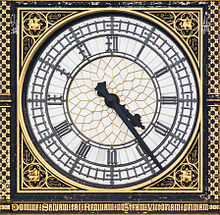
Let me offer a slightly belated Happy New Year. My first post of the year was tied in to the last/first/only year of the novel Like Clockwork, and my second was an apology for any posts that might be missing this month. I still may miss some, but I am trying to avoid that.

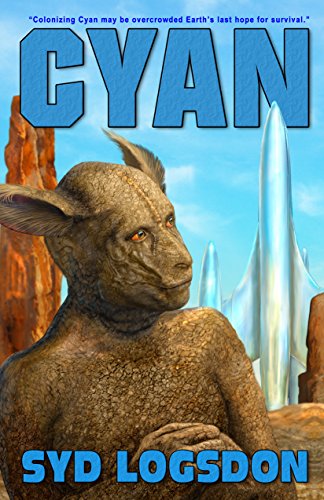
Since we are in the month of beginnings, I thought I would remind my newer followers how this enterprise started. In 2015, EDGE publisher bought my SF novel Cyan, to be released as an e-book in their new EDGE lite (dumb name) line. In honor of that — which is a sneaky way of saying to drum up business for that — I began a blog.

By the way, if you haven’t bought Cyan yet (and why haven’t you?), you can pick it up from Amazon as an ebook or paperback.

Actually, I began a website containing two blogs. The website was to be called A Writing Life and the two blogs were to be called A Writing Life and Serial. It was a glaringly bad decision to call the site and one of the blogs by the same name, but I’m stuck with it now.

Cyan was due out at the beginning of 2016 and actually came out nearly a year and a half late. I had the embarrassing task of explaining every delay in the blog.

Posts were short at first. Here is the first one:

========

1. Welcome to my World

Hi, I’m Syd Logsdon. I have been writing novels for four decades, but I’m a new blogger.

When I began, writers wrote, publishers published, and readers bought their books in bookstores – or at least at bookstands which might pop up anywhere. E-books, nooks and kindles, and the internet have changed all that. Now e-books outsell hardbacks and writers have to adapt.

Actually, this is an opportunity for me. Over the years I have accumulated a mass of knowledge, ideas, complaints, irritations, joys, disappointments, and backstage savvy that didn’t fit into any format available to me. Now I have a place to share these things.

What prompted me to start blogging at this time was the release of my e-book Cyan from EDGE, due in January of 2016. If you don’t know them, EDGE is the premier science fiction publisher of Canada.

Cyan is the story of the discovery, exploration, and colonization of a nearby habitable planet, set against the backdrop of cataclysmic overpopulation on Earth, and carried out by a fascinating and varied group of characters.

Old fashioned? No; just temporarily out of fashion.

Recent science fiction has often lost sight of the next century. This is too bad, since we are the last generation which can write what we want about nearby stars before astronomers map the actual planets which exist there.

You can expect daily posts here at A Writing Life. It is set up like a blog, but it isn’t a chronicle of daily activities. Each post is a mini-essay on some subject, current, historical, or timeless.  Most of the time, these posts will come four days a week.

At Serial, in the menu, you will find serialized fiction. Pop over there for details.

Drop in often; you will always find something new.

========

A few things changed over the years. It quickly became obvious that running A Writing Life (the blog) four days a week and Serial five days a week was an unnecessary complication. I dropped Serial to four days a week early on.

After nearly four hundred posts of the A Writing Life blog, the four day a week schedule became unsupportable and I dropped to two days a week. Serial changed as well, but I’ll talk about that on Wednesday.

555. Calf Quilt

So what, you may ask, is a quilt doing in a writing post?

No writer just writes. My wife and I both discovered quilting in the mid-eighties. For me, it was an art form in which I could satisfy myself. My painting always lacked something, to my eye, but quilts are colorful geometric things with utility. I could make a quilt and not feel artistically inadequate.

For about a decade we have been deeply involved in putting together a quilt show for my wife’s guild every other year. In 2017 I took some time off from this blog, and I may have to do so again this year.

All this is simply to point out that if posts get scarce this month, nothing is wrong. I am just busy with a different piece of my life.

554. Midwinter Midnight

Last night (Dec. 6), I watched a PBS special on the Highwaymen and heard Kris Kristofferson singing Me and Bobby McGee. One familiar line jumped out at me, and I added it to the page of short quotations that opens Like Clockwork.

I’d trade all of my tomorrows
For one single yesterday

That line encapsulates one of the strongest human sentiments, the fear of loss and the nearly insane clinging to that which cannot last.

What would you do if you were given the chance to relive the prime year of your life? Would you take the chance, or would you proceed into the unknown future?

Like Clockwork asks — and answers — that question. It begins and end at midnight on the last/first day of the Only Year.

Here is the Prolog to Like Clockwork. Or is it an epilog? Or something else altogether? You decide.

===================

“Tonight Snap has gone down to the Clock for Midwinter Midnight. In just a few minutes, the reversion will occur and I will forget writing this note. It will be midnight of January first, 1850. Not next year, nor last year, but the only year there is.

It isn’t a bad year and it isn’t a particularly good year, but if it is to be my only year, I want more.”

Pilar laid down her pen and listened, straining to hear the song they always sang at midnight:

The year that ends, but never ends,
That ‘ere again unfolds,
We live that year forever and
We never shall grow old

It was probably her imagination. Surely voices could not be heard over such a distance. She rose to move closer to a window and as she did, the note she had written ceased to be. All her memories of the past twelve months ceased to be. Her body sloughed off a year of age and it was January first of the last-this-next-only year.

Again.

553. The Babbage Bureau of Accountancy

Yesterday was Christmas. Today is the 26th of December. Happy Boxing Day.

If Boxing Day is just something British you’ve vaguely heard of, let me explain. It is the holiday on which various workers expect to receive their Christmas-box from those they serve.

I have never written about the commercialism of Christmas. That notion has been done to death, and besides, even Santa’s elves get paid in cookies. Christmas gifts don’t make themselves, you know.

So you can imagine my surprise when, seven chapters into Like Clockwork, the Dickens-inspired steampunk novel that turned out to not be about Christmas, Hemmings appeared without warning and dragged me into exploring the commerce of my pocket London. Take a look.

============

Throughout the main building of the Babbage Bureau of Accountancy, ten thousand human computers were required to keep up the constant cross checking of the Great Babbage, as it kept track of every transaction in all the factories and warehouses of London.

It was late November. Christmas was coming, the warehouses were nearly full, and the remaining raw materials had to move through the system to produce the goods, neither running short of materials too soon, nor finishing the last needed item before the final day.

Full employment, full consumption. Everybody has a job. Everybody consumes the goods that everybody else makes. Every tally book balances. The capitalistic ideal.

A single employer. Every job suited to the person who does it. All those tally books replaced by the Great Babbage. The communistic ideal.

Either way, it was no place to be unemployed.

The ten thousand computers counted themselves lucky. They were Time’s Favored Ones. They worked seated, in gentleman’s clothing. They returned home at night unstained. Not for them was the curse of Adam, to work by the sweat of their faces. The middle fingers of their right hands all bore the honorable callus that came from holding a pen. The skin on the rest of their bodies was smooth. Time moved crisply for them, to the smooth rhythm of numerals filling up little blue squares.

In the factories, time moved differently, slowing down and growing more resistant to human movement as the day wore on. That does not seem possible, but young Albert had done work in time dilation according to theories of his own. Time moved smoothly for the computers; time dragged on more slowly as the day progressed for those who bent their backs.

It had always felt that way, throughout the history of mankind, and now it actually was that way.

Morning, morning tea, and luncheon all rolled by with stately grace. It was at 2:18 in the afternoon, November 27, 1850, that Hemmings the computer hit a reef.

His whole job was to check by hand the calculations made by the Great Babbage, looking for errors. On November 27, he found one. Did they thank him? Of course not. The Babbage was incapable of error — even though Hemmings had found one — so they fired him.

Hemmings stood on the street in front of the Babbage Bureau of Accountancy and stared upward, considering the machine which had just become his nemesis. He had never seen the Great Babbage itself, but he imagined it as a massive collection of repeating components, interlaced with walkways where the technicians came and went to clean and oil and inspect. There were a trillion gears, cams, and escapements in his mental image. There were Jacquardian punch cards by the waggon load, as many cards as there were oysters in the ocean.

As many as there had been oysters, when there was an ocean.

Now the picture in his mind had changed. Not much, really, but enough. There was rust on some of the gears now, and some unidentifiable ooze coming out of some of the housings. Hemmings shook his head, trying to clear his mind. He knew the rust was hatred and the ooze was envy, and that they were in him, not the machine.

Still, here he was, with no place in the world, ripped out of the one thing he had been trained to do. With no money to buy his food or pay his rent, no companions, no usefulness to stabilize his identity.

Every stone and brick in London was unchanged, but Hemmings was changed, and suddenly he was as adrift as a chip of wood floating somewhere on the ocean.

When there had been an ocean.

There was no fight in him. He ate his supper where he always did, but this time he sat alone. There were very few coins left in his pocket. Then he walked.

All the streets were well lighted by gaslight. There was no refuse in the gutters. There were few pedestrians, and they all were moving purposefully toward someplace they belonged. He looked at their faces. He had never cared before to look into the faces of the strangers he passed by each day, but now he chose to examine them.

Their faces were calm and peaceful, but there was no joy in them.

He wandered into darkness. By that time, he owned the empty streets. He needed sleep, but it was hard to choose a place to lie down. Every place was identical to every other place. It clearly did not matter where he slept, but that was why he couldn’t choose.

Every clock-face on every building-face in all of London said 3:35 when he could no longer stand. He crawled behind an ash can and let go of everything.

He dreamed of whirling gears, and rust, and ooze.

On the third day, his coins ran out. He did not eat on the fourth day. He had never been hungry before, and the misery of that condition frightened him. He considered stealing. He could go into the place where he had always eaten, scoop up a loaf of bread, and walk away. They probably wouldn’t chase him, at least not far.

Then what? Would the — bobbies, peelers, cops, pigs, police — come to get him? He realized that all the names he had dredged up from deep memory were without weight or taste. He had never seen a policeman, not in a thousand iterations of the year.

What kind of place is so smug, so self-righteous, so self-certain that no one breaks the law? How could there be no rebellion?

He could probably become invisible to the machinery of the state and make his living by simple theft. Could the Great Babbage find him? How? Track him by arithmetic errors, by all the places which reported one less loaf of bread than the Great Babbage had predicted?

Try to find me, you bucket of rusty gears and ooze.

He considered the possibility of living by theft, outside the norms of the rest of mankind, and it tore at his heart. The thought hurt him more than hunger.

============

Now, back to our world.

There I was, sitting at my computer, comfortably contemplating my novel of a variant Dickensian London, when suddenly Hemmings appeared. Now my pocket London was split in two. Half would have looked familiar to Scrooge, and the other half was as four-square and linear as an equation. One half was under thrall to the Great Babbage and the other half to the Great Clock that kept turning time back on itself.

Weird. I’ll let you know when you can read it for yourself and see just how weird.

Hiatus Again

So, once again Serial crawls back into its bed for a long winter nap. I plan to keep the blog alive on life support until I need it again. No, make that in suspended animation; after all this is primarily a science fiction site.

Meanwhile, over in A Writing Life there is a post called Links to Christmas which you can use to see past posts about the season.

Merry Christmas

(Or whatever holiday you celebrate.)

A Graveyard Christmas 8

The Story of the Goblins Who Stole a Sexton
by Charles Dickens

In eight parts. Click here to begin at the beginning.

So, Gabriel Grub got on his feet as well as he could, for the pain in his back; and, brushing the frost off his coat, put it on, and turned his face towards the town. But he was an altered man, and he could not bear the thought of returning to a place where his repentance would be scoffed at, and his reformation disbelieved. He hesitated for a few moments; and then turned away to wander where he might, and seek his bread elsewhere.

The lantern, the spade, and the wicker bottle were found, that day, in the churchyard. There were a great many speculations about the sexton’s fate, at first, but it was speedily determined that he had been carried away by the goblins; and there were not wanting some very credible witnesses who had distinctly seen him whisked through the air on the back of a chestnut horse blind of one eye, with the hind-quarters of a lion, and the tail of a bear. At length all this was devoutly believed; and the new sexton used to exhibit to the curious, for a trifling emolument, a good-sized piece of the church weathercock which had been accidentally kicked off by the aforesaid horse in his aerial flight, and picked up by himself in the churchyard, a year or two afterwards.

Unfortunately, these stories were somewhat disturbed by the unlooked-for reappearance of Gabriel Grub himself, some ten years afterwards, a ragged, contented, rheumatic old man. He told his story to the clergyman, and also to the mayor; and in course of time it began to be received as a matter of history, in which form it has continued down to this very day. The believers in the weathercock tale, having misplaced their confidence once, were not easily prevailed upon to part with it again, so they looked as wise as they could, shrugged their shoulders, touched their foreheads, and murmured something about Gabriel Grub having drunk all the Hollands, and then fallen asleep on the flat tombstone; and they affected to explain what he supposed he had witnessed in the goblin’s cavern, by saying that he had seen the world, and grown wiser. But this opinion, which was by no means a popular one at any time, gradually died off; and be the matter how it may, as Gabriel Grub was afflicted with rheumatism to the end of his days, this story has at least one moral, if it teach no better one – and that is, that if a man turn sulky and drink by himself at Christmas time, he may make up his mind to be not a bit the better for it: let the spirits be never so good, or let them be even as many degrees beyond proof, as those which Gabriel Grub saw in the goblin’s cavern.

=============

Not bad, I think, but not up to the ending that came seven years later, when Scrooge said:

“I will honour Christmas in my heart, and try to keep it all the year. I will live in the Past, the Present, and the Future. The Spirits of all Three shall strive within me. I will not shut out the lessons that they teach.”

Yeah, that’s more like it.     SL

551. Apollo 8

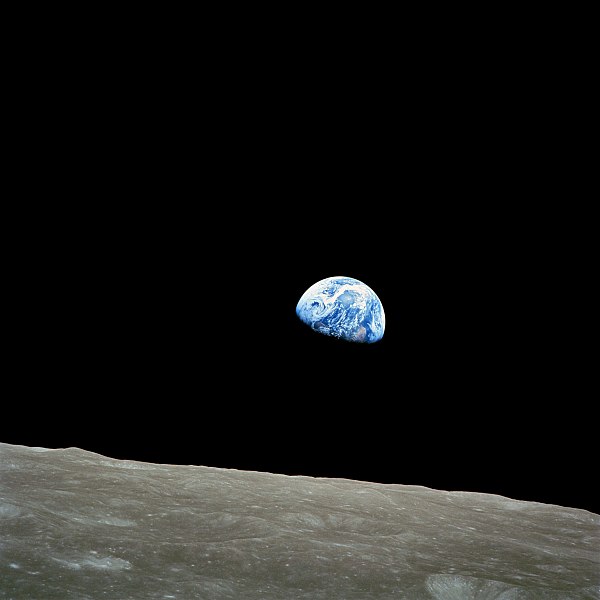
photo taken from Apollo 8

Things always look different in the rear view mirror.

If I were telling the story of Apollo 8 as it was understood when it was happening, it would be a different story than what it looks like today. We in the US knew what we were doing. We suspected what the Russians were doing, and our actions were based on those suspicions.

We were wrong. Here’s what was going on that we did not know then.

The Russians were developing a rocket, the N1, similar in size to the Saturn V. It was designed to carry two men into lunar orbit and allow one of them to land. America was aware of the existence of the N1, but not in any detail. It had been seen by reconnaissance satellite (shown here), but little else was known. Russia looked much closer to reaching the moon than the facts warranted.

In fact, the first N1 launch attempt came two months after Apollo 8, and was a disaster. There were four launch attempts in all, the last in November 1972, almost three years after Apollo 11. All ended in massive explosions and the N1 program was cancelled.

We didn’t know any of this until decades later. Based on our assessment, the Russians seemed to be on the verge of reaching the moon first, particularly after the delays that followed the Apollo One fire.

The LEM was not ready for use. The next mission was supposed to be in high Earth orbit, but NASA decided to go for broke instead. They changed the Apollo 8 mission, with only a few months to go, from an Earth orbit mission to a circumlunar mission.

On December 21, 1968 — fifty years ago this Friday — Frank Borman, James Lovell, and William Anders launched from Kennedy Space Center.

For anyone younger than sixty, it is impossible to recapture the feeling of the moment. We all know how the story came out, and that will be true over the next few years as a whole batch of fifth anniversaries come and go. At the time these spaceflights took place, no one knew if any of the astronauts would return to Earth alive.

The launch occurred at about eight AM, EST. The first and second stages burned their fuel and fell away. The third stage placed the craft in Earth orbit and remained attached.

The craft spent nearly three hours in near Earth orbit. This was standard; it allowed a full post-launch check before the craft’s irreversible journey to the moon began. Return to Earth from an aborted mission remained a possibility until the third stage fired again.

Once the third stage had fired, the CSM separated and rotated to have a view of the third stage and the retreating Earth. Having the spacecraft and the unmanned third stage on the same orbit was no part of the plan, so after five hours, the third stage vented its remaining fuel changing it to a different orbit that would not get in the way of the CSM.

The rocket in the Service Module was not used on the way to the moon. It could not be, for reasons that will be explained when we look at Apollo 9 in late February.

After nearly three days, Apollo 8 reached the vicinity of the moon. The Service Module engine fired for the first time, slowing the craft to place it in lunar orbit. The famous Earthrise photo at the top of this post was taken shortly thereafter. During the next twenty hours, Apollo 8 orbited the moon ten times. Then the Service Module engine fired again, sending them back to Earth to land in the Pacific on December 27th.

The lunar orbits took place on Christmas Eve and Christmas day. While in orbit, the astronauts read the first ten verses of the book of Genesis in a TV broadcast to Earth.

I have never been comfortable with that action. I recognize the need to comfort and unify the country at the end of a troubled year, and the need to set America apart from Russia. After all, Khrushchev had stated the Russian position when he said, “Gagarin flew into space, but didn’t see any god there.” And, despite those of us who disagree, America is demographically and historically a Christian country.

Nevertheless, why Genesis, the part of the scriptures most quoted by those who would hold back science? They would have been better to follow the lead of Linus van Pelt and quote Luke 2: 8-14. It was Christmas, after all.

The went, they orbited, and they returned. It doesn’t sound like much if you put it that way, but there was an additional factor. What if they didn’t make it back?

By the time of Apollo 8, eight astronauts had died in training or in on the launch pad. All those deaths were virtually instantaneous, but death in space could come another way. Astronauts could become stranded, unable to return.

That problem had been well understood from the first. During John Glenn’s first flight, my father, an Oklahoma farmer who considered the space program a complete waste of time and money, left his tractor in the field and went in to sit for hours in front of the television. He said later, “I just had to get that old boy back on the ground before I could go back to work.”

America had held its breath before, but going to the moon upped the ante. The possibility of three men being trapped in lunar orbit and unable to return was on everybody’s mind during Apollo 8. With subsequent moon landings, everybody worried about men being trapped on the moon, and unable to return.

It all turned out well; we know that now. But to have a sense of how it felt to those of us who watched it in real time, you have to factor in the fear of complete disaster.

A Graveyard Christmas 7

The Story of the Goblins Who Stole a Sexton
by Charles Dickens

In eight parts. Click here to begin at the beginning.

Many a time the cloud went and came, and many a lesson it taught to Gabriel Grub, who, although his shoulders smarted with pain from the frequent applications of the goblins’ feet thereunto, looked on with an interest that nothing could diminish. He saw that men who worked hard, and earned their scanty bread with lives of labour, were cheerful and happy; and that to the most ignorant, the sweet face of Nature was a never-failing source of cheerfulness and joy. He saw those who had been delicately nurtured, and tenderly brought up, cheerful under privations, and superior to suffering, that would have crushed many of a rougher grain, because they bore within their own bosoms the materials of happiness, contentment, and peace. He saw that women, the tenderest and most fragile of all God’s creatures, were the oftenest superior to sorrow, adversity, and distress; and he saw that it was because they bore, in their own hearts, an inexhaustible well-spring of affection and devotion. Above all, he saw that men like himself, who snarled at the mirth and cheerfulness of others, were the foulest weeds on the fair surface of the earth; and setting all the good of the world against the evil, he came to the conclusion that it was a very decent and respectable sort of world after all. No sooner had he formed it, than the cloud which had closed over the last picture, seemed to settle on his senses, and lull him to repose. One by one, the goblins faded from his sight; and, as the last one disappeared, he sank to sleep.

The day had broken when Gabriel Grub awoke, and found himself lying at full length on the flat gravestone in the churchyard, with the wicker bottle lying empty by his side, and his coat, spade, and lantern, all well whitened by the last night’s frost, scattered on the ground. The stone on which he had first seen the goblin seated, stood bolt upright before him, and the grave at which he had worked, the night before, was not far off. At first, he began to doubt the reality of his adventures, but the acute pain in his shoulders when he attempted to rise, assured him that the kicking of the goblins was certainly not ideal. He was staggered again, by observing no traces of footsteps in the snow on which the goblins had played at leap-frog with the gravestones, but he speedily accounted for this circumstance when he remembered that, being spirits, they would leave no visible impression behind them. So, Gabriel Grub got on his feet as well as he could, for the pain in his back; and, brushing the frost off his coat, put it on, and turned his face towards the town. continued tomorrow

A Graveyard Christmas 6

The Story of the Goblins Who Stole a Sexton
by Charles Dickens

In eight parts. Click here to begin at the beginning.

But a change came upon the view, almost imperceptibly. The scene was altered to a small bedroom, where the fairest and youngest child lay dying; the roses had fled from his cheek, and the light from his eye; and even as the sexton looked upon him with an interest he had never felt or known before, he died. His young brothers and sisters crowded round his little bed, and seized his tiny hand, so cold and heavy; but they shrank back from its touch, and looked with awe on his infant face; for calm and tranquil as it was, and sleeping in rest and peace as the beautiful child seemed to be, they saw that he was dead, and they knew that he was an angel looking down upon, and blessing them, from a bright and happy Heaven.

Again the light cloud passed across the picture, and again the subject changed. The father and mother were old and helpless now, and the number of those about them was diminished more than half; but content and cheerfulness sat on every face, and beamed in every eye, as they crowded round the fireside, and told and listened to old stories of earlier and bygone days. Slowly and peacefully, the father sank into the grave, and, soon after, the sharer of all his cares and troubles followed him to a place of rest. The few who yet survived them, kneeled by their tomb, and watered the green turf which covered it with their tears; then rose, and turned away, sadly and mournfully, but not with bitter cries, or despairing lamentations, for they knew that they should one day meet again; and once more they mixed with the busy world, and their content and cheerfulness were restored. The cloud settled upon the picture, and concealed it from the sexton’s view.

“What do you think of THAT?” said the goblin, turning his large face towards Gabriel Grub.

Gabriel murmured out something about its being very pretty, and looked somewhat ashamed, as the goblin bent his fiery eyes upon him.

” You miserable man!” said the goblin, in a tone of excessive contempt. “You!” He appeared disposed to add more, but indignation choked his utterance, so he lifted up one of his very pliable legs, and, flourishing it above his head a little, to insure his aim, administered a good sound kick to Gabriel Grub; immediately after which, all the goblins in waiting crowded round the wretched sexton, and kicked him without mercy, according to the established and invariable custom of courtiers upon earth, who kick whom royalty kicks, and hug whom royalty hugs.

“Show him some more!” said the king of the goblins.

At these words, the cloud was dispelled, and a rich and beautiful landscape was disclosed to view – there is just such another, to this day, within half a mile of the old abbey town. The sun shone from out the clear blue sky, the water sparkled beneath his rays, and the trees looked greener, and the flowers more gay, beneath its cheering influence. The water rippled on with a pleasant sound, the trees rustled in the light wind that murmured among their leaves, the birds sang upon the boughs, and the lark carolled on high her welcome to the morning. Yes, it was morning; the bright, balmy morning of summer; the minutest leaf, the smallest blade of grass, was instinct with life. The ant crept forth to her daily toil, the butterfly fluttered and basked in the warm rays of the sun; myriads of insects spread their transparent wings, and revelled in their brief but happy existence. Man walked forth, elated with the scene; and all was brightness and splendour.

“YOU a miserable man!” said the king of the goblins, in a more contemptuous tone than before. And again the king of the goblins gave his leg a flourish; again it descended on the shoulders of the sexton; and again the attendant goblins imitated the example of their chief. continued tomorow