Tag Archives: writing

457. I Don’t Write Novels Any More

I’m offering a look at the nuts and bolts of how I organize my writing, in four posts. 456 explains the system I used for years. 457 tells how I keep order while writing today. 458 gives the gory details on why this system works and 459 shows you how to keep track of your research. Take what you can use and ignore the rest.

The actual writing of novels before computers was a royal pain in a dozen ways, but there were a few advantages. The rough drafts — 300 to 500 sheets of actual paper — could be carried around, rummaged through, and sorted as needed. Several times I brought a long 1 x 12 from the wood shop as a temporary table to hold a row of single chapter stacks.

In the mid-eighties I quit writing full time and went to work as a teacher. I could finally afford a computer, and I never looked back. Symphony in a Minor Key and Raven’s Run, the first two novels I wrote on a computer, each ended up with a single file 80,000 to 100,000 words long. Finding something in that mass worked well enough if I remembered which page it was on, or if what I wanted contained a distinctive word cluster that allowed me to use the find function. You’d be surprised how often neither worked and I was left scrolling, scrolling, scrolling.

Cyan was written half on typewriter, decades ago, and half on computer. I used word recognition software to convert the first half to digital. All in all, Cyan called out the best and worst in both systems.

When I recently sat down to write The Cost of Empire, it was clearly time to reinvent and streamline my process.

First of all, there was the issue of manuscript length, and how to keep it under control. I have no trouble with writing too much; I learned the trade when novels were fifty to sixty thousand words long. That wouldn’t even be publishable today. I tend to write tersely and reach the last page under modern length requirements. It struck me that it would be a lot easier to correct that as I went along, if I knew where I stood on a daily basis.

For The Cost of Empire, I set a goal of 100,000 words. I divided that into twenty chapters of 5000 words each. That seemed a good chapter length for a novel that progressed in a linear fashion with a single viewpoint character and almost no flashbacks. It set a stately pace.

Another novel, just begun, has multiple viewpoints, confused chronology, and a ton of explanatory matter dropped in a word here and a sentence there. It seems to be all transitions. For that novel I have chosen 1000 word chapters, and lots of them.

I use the chapter break-down to keep from having to scroll through long chunks of text. I don’t write novels any more; I write chapters, and copy them into a single file only when the writing is done. Each chapter gets its own file, named (number)(space)(title in quotes). Here are the first four chapters from The Cost of Empire:

1 “Tick, tick”
2 “Unit A”
3 – 6
3 “First Mission”
3.1 rewrite
4 “Field of Fire”

When I began to write, I had placed a few numbered, blank files to receive the first few chapters, and had a dozen files of notes which I will explain two posts from now, on January 31. Chapter one went fairly smoothly, with a rough draft finished in a couple of days. The first draft of chapter two followed, also fairly quickly.

After that point, things were less clear in my head. The next chunk of writing stretched out with no obvious breaking points, and went through several rough re-writes. That piece of writing finally spanned pieces of several chapters. Now the value of the multi-file system came in to play. I simply re-titled that chunk of writing 3 – 6 and left it in place. I moved on to 3 “First Mission” and started writing again, copying and pasting large and small chunks of 3 – 6 as needed.

Note: copying, not cutting. 3 -6 is still unchanged today; nothing in it was ever lost, even though everything in it eventually found its way to a “real” chapter in the final book.

At first, there were days of research, days of invention, and days of writing. Or more likely, two hours of research, fourteen minutes of inspired writing, forty minutes of planning, thirty-two minutes of organization, twenty minutes of writing something to fill in a hole left in a previous chapter, and so forth.

Later in the process, I sat down every day and wrote, starting where I had left off the day before, and proceeding in a reasonably linear fashion. That is, I did what non-writers think writers always do.

Initially, that was not possible. I was inventing my character, inventing the plot, and inventing the world everything took place in — all at once. That process never stopped, but the amount of invention went down and the amount of linear writing went up all through the production of the book.

Even when I was a beginning writer following Whitney’s procedure, I didn’t do planning followed by writing. They always went on as simultaneous, semi-independent tracks.

There were a number of plot complications in 3 “First Mission” which had to be worked out. It took several iterations. I knew what I needed to do, I did it, and I didn’t like the results. This happens; it’s just part of the process. Sometimes you have a plan, you execute it, and the result just lies there, smelling like something that dropped out of a cow.

That, by the way, is the difference between an experienced writer and a beginner. The experienced writer recognizes the smell — from past experience — and reaches for his scoop shovel.

I copied (not cut!) out a big chunk and placed it into 3.1 rewrite. I took a new tack on some tricky points and wrote an alternative version. Again, this is where the multi-file system shone. I brought 3 “First Mission” up to standards, but kept the alternatives filed as 3.1 rewrite, for future reference.

I wrote two versions of chapter 7 because it was a critical introduction of a character that would be an important adjunct to my main character, and it had to be just right. A sizable chunk of chapter 13 was heading the wrong way and got pulled. It was titled 13.1 Pulled, but it was retained so that its content could be mined, if need be.

When I got to chapter 20 all was done. I was only seven or eight percent short of my goal length because I had kept track of my chapter lengths. I needed an Epilog. To keep it immediately after the last chapter in the folder, I titled it 20.1 Epilog. I could have called it 21, but that would have implied it was a chapter, and it was quite short.

I also needed for some ancillary material to stay with the chapters, so they were titled 0.1 chapter outlines and 0.2 introduction. That put them in order just before chapter one.

The really nerdy stuff comes next post.

Symphony 79

“Actually it’s good news and bad news. The bad news is that Alice Hamilton is pregnant . . .”

Neil sat bolt upright, feeling as if someone had hit him in the stomach.

” . . . and the good news is that she is only about four months gone.”

Neil sank back again and heaved a heavy sigh. He shook his head and pantomimed counting on his fingers. He had been gone from Oregon since June; almost seven months. “Tom,” he said, “don’t ever do that to me again. All I need is to be called up on a paternity suit for someone else’s baby!”

Tom said, imitating a prosecuting attorney, “Where were you on the night of the twenty-sixth of July?”

Neil laughed. “Why, I was forty miles north of Yosemite Park, sleeping with a black bear. You can subpoena her if you want to.”

Fear and relief in rapid succession had made him giddy for a moment, but bitterness was quick to return. He said, “Alice was one screwed up girl. I have to blame her father for most of it. He gave her her way in everything that he should not have had, but wouldn’t let her live her own life when she should have. I should feel sorry for her, but . . . I can’t.”

“The result,” Tom added, “is that she won’t even graduate from high school. Her father pulled her out and sent her to live with an aunt somewhere. He also resigned from the school board.”

Neil was horrified. “You mean to tell me that he brought her to this, and now he’s abandoning her? This isn’t the nineteen-fifties. She doesn’t have to give up her education just because she’s pregnant.”

“I thought you were happy to see her in trouble,” Tom observed with quiet amusement.

“I was . . . I . . . ” Neil gave up talking. His thoughts were rushing too fast and his feelings were too mixed for him to be coherent. He shook his head, disgusted with Alice, disgusted with her father. Disgusted with the whole situation.

“She doesn’t deserve this,” Neil said finally.

“Actually,” Tom observed, “this is exactly what she deserves. Poetic justice, and all that.”

“No. It wasn’t her fault. Not entirely.”

“I never bought that argument,” Tom said. “You can push blame all the way back to Adam if you blame parents for what a child becomes. People have to take responsibility for their own actions. I do. You do. Let Alice take her responsibility, too. Hell, of all people, you shouldn’t be standing up for her.”

Neil rose to pace around the cramped apartment. Tom went to refresh his drink, then went on to the bathroom. When he came back, he said, “Are you okay now?”

“No. I’m not okay. All I can think of is what Alice looked like when she came to me in tears begging me to tutor her. One part of me feels for her pain — it was real, you know — and imagines how lost and abandoned she must feel now. Then the other part of me wants to hunt her up and yell at her, ‘See! See what you get!'”

Tom shook his head in amazement. “You never learn, do you? The eternal patsy. Neil, you had better start listening to your dark angel. He has more sense than you do.”

# # #

Neil saw Tom off the next morning, congratulating himself that his head was clear. Tom was feeling the after effects of the rum he had drunk last night. Neil worried as he watched him pull out. Although driving with that kind of headache was nearly as bad as driving drunk, Neil had not been able to convince Tom to delay his trip for a few hours. more Monday

Ursula K. Le Guin

January 23, 7 PM.    The post I promised you, regarding how I organize my writing, is postponed until tomorrow.

I just learned that Ursula K. Le Guin died yesterday. It occurs to me, given how young the people who read this blog tend to be, that you may not know her. That would be a shame.

My years teaching middle school also leads me to a suspicion, that she may have passed into that limbo of forced reading. If a teacher makes you read it, it must be dull, right?

I have no power to tell you what to read, but I can make two suggestions.

Ursula Le Guin was the greatest fantasy writer in the history of fantasy. No exceptions.
and
A Wizard of Earthsea is her masterpiece.

Of all the writers who moved me, inspired me, and taught me how to write by example, Le Guin is the one I most would have loved to bump into at a convention just to say hello, and thank you. That it didn’t happen, is one of my regrets.

Symphony 78

“Every bit as bad. Love the kids; hate the textbook; and I go crazy trying to hold myself down to their speed. But it’s okay. Overall, its okay.”

“Except today?”

Neil told Tom about the incident with Jesse. Tom was not moved; he simply said, “I don’t get it. Why are you bothered by it? They’ll expel the little bastard and that’s that.”

“I don’t want him expelled.”

“For God’s sake, why not. He’ll just keep on being a pain. Be glad of the opportunity to get rid of him.”

Neil got up and said, “Freshen your drink?” He busied himself in the kitchen for a moment and on the way back he stopped off at his desk. He gave Tom his drink and laid a photo on the coffee table. “Look at that,” he said.

It was a snapshot Neil had made earlier in the year, inside his classroom with half a dozen kids clowning around between classes. Jesse was among them. It had been one of his good days; his face was alight with mischief, but there was no malice in it.

Tom looked at the kids soberly for a minute, and said, “God, they’re young!”

“Yes, they are. Young and vulnerable. Young enough so that the right person could keep them from going wrong. Too young to cast off just because they misbehave.”

Tom sat back for a time of thoughtful silence, then said, “It must be strange.”

Neil nodded. “For the first few weeks I was thrashing about, trying to find out what I was supposed to do, and how to go about doing it. Then came a period when I had my daily routine down, and as soon as I could relax a little, it got so boring you wouldn’t believe it. Parts of it still are. I dread coming home because I have to correct sixty-five awful papers every night. I have to drive myself to do them. They make high school papers look good by comparison.”

Tom shuddered in mock horror.

“Despite all that, I love what I am doing. Can you believe I’m saying that? It is because of the kids. I see two classes of kids, each for half a day. Its not like high school where they move in and out of your life on the hour. I actually have time to get to know them.”

The conversation drifted to other subjects.

Tom and Neil had been acquaintances and colleagues for three years before Neil’s scandal. In that time, Neil would not have called Tom a friend. They both taught literature, but theirs was a large high school and except for occasional meetings they both had to attend, their paths did not cross professionally. They were members of an informal group of teachers who met once a week to play basketball after school, and occasionally they shared a drink after a game. Beyond that, they had no basis for friendship.

Yet, when Alice Hamilton accused Neil of trading grades for sex, Tom was one of the first to defend him, and one of the few who never wavered in his loyalty. His position was, “What ever happened to innocent until proven guilty? And besides, I just don’t think Neil would do something like that.” He said it loud and often. It cost him some friendships and made him unpopular with the administration and the school board, but none of that stopped him. It was, Tom said frequently, not a matter of friendship, but of simple justice.

It may not have begun as an act of friendship, but Neil treasured it nonetheless.

“Neil,” Tom said, “I have some news you will be curious to hear.”

“Yes?”

“Actually it’s good news and bad news. The bad news is that Alice Hamilton is pregnant . . .” more tomorrow

Symphony 77

“It’s all right, and it was cheap.”

“I don’t mean your apartment; I mean the town.”

“Ugly? I guess. I thought so at first, but I am getting used to it. Parts of it are okay, and the countryside is pretty.”

“This billiard table, pretty? You’ve got to be kidding.”

Neil grinned and admitted, “You have to look close to see it. But the foothills are pretty and the mountains are beautiful.”

“Do you get up there much?”

“Not at all since school started. They keep me pretty busy.” He stopped long enough to open the door to his apartment, then went on, “I spent the summer in the high Sierras.”

“Alone?”

Neil met his eyes and said, “Yes.”

“That must have been a rough time for you.”

“Damned rough. But let’s not talk about that.”

Tom shrugged. “Suit yourself.” He headed for the refrigerator and said over his shoulder, “Don’t you have anything to drink?”

“There should be a six pack of coke.”

“Beer?”

“No. I don’t keep it on hand.”

Tom pulled a pair of cokes out of the refrigerator and a tray of ice. He was sure enough of his welcome to make himself at home. Neil was surprised to find that that made him uncomfortable. It never had before. Tom took two glasses from the cabinet, added ice and poured them three-fourths full of coke. Then he crossed to his bag, pulled out a bottle, and held it up for Neil’s inspection. “Better than beer any day,” he said.

“None for me.”

“Come on!”

“No, Tom.”

Tom poured a liberal draft of rum into each glass and held one out to Neil. He said, “It’s almost vacation time. Let loose.”

Neil stood for a moment with the glass in his hand. He could smell it and it smelled good. Then he crossed to the sink and dumped liquid and ice in a single, decisive motion. Standing with his back to Tom, he rinsed out the glass and rebuilt it of ice and soft drink only. Before he turned around, he said softly, “Don’t push me on this, Tom.”

“All right.”

Neil crossed to the couch and motioned Tom to join him. Before he sat down, Tom said, “I’m sorry, Neil. I guess I’m pretty clumsy sometimes.”

“Forget it. You stood by me when almost no one else would. I won’t forget that. Ever. I’m not being unsociable, but when I drink, I dream of that bitch. And I don’t ever need to see her face again!”

Tom sat beside him and said, “Cheers!” Neil smiled and they touched glasses together. 

“Is your school out already?”

“Sure.”

“We have to go until Friday.”

“That’s stupid. It will cut things close for you. You are driving home for Christmas, aren’t you?”

“Yes.”

“I wanted to get down here early enough to spend the evening and go on in the morning. I hope I’m not messing you up, but the chance came up suddenly and I didn’t have time to call ahead.”

“Of course not. You are welcome here any time. I don’t do much that you could interrupt; just work mostly.”

“How are you doing, really?” Tom asked.

“Really?” Neil paused. “Really, I am doing quite well. Much better than I had anticipated. I had a terrible day today, but that isn’t typical.”

“How do you like working with little kids?”

“I like it. There is a freshness about them that I haven’t experienced before. I never realized until this year how jaded high school students are.”

“How about teaching reading instead of literature?”

They looked at each other, and then they both laughed. Tom waved his hand and said, “Okay, dumb question. Let me ask instead, is it as bad as we imagined it would be?” more tomorrow

456. A Map is Not a Journey

I’m offering a look at the nuts and bolts of how I organize my writing, in four posts. 456 explains the system I used for years. 457 tells how I keep order while writing today. 458 gives the gory details on why this system works and 459 shows you how to keep track of your research. Take what you can use and ignore the rest.

I don’t outline, and failure to do so has gotten me into a world of trouble over the years. If you don’t know where you are going, you are likely to drive off a cliff.

When I do outline, that gets me into a different kind of trouble. All the fun goes out of the writing. I can stare at blankness for hours, unable to force myself to begin something that, in my heart, is already done.

Someone, Vonnegut I think, wrote about a character that read novels just “to see what happens next.” That makes sense to me. I write novels to see what happens next. If I know too much, too soon, I lose interest.

On the other hand, starting on page one without a fair idea of what you plan to write will result in a lot of uncompleted novels.

All this is very vague and has been said a thousand times before. What a new writer need is nuts and bolts, so let me give you some, first from Phyllis A. Whitney.

Whitney died in 2008 at the age of 104, having written over a hundred novels. She wan’t someone I read, except for one article, A Map is Not a Journey, which appeared in the magazine The Writer and was reprinted in the 1972 Writer’s Handbook. That book was fresh and new in 1975 when I started writing and it is still a good source for learning writing as a humane art. You wouldn’t want to go to it for marketing advice.

Whitney’s article provided the organizational backbone of my first half dozen novels, all written before home computers. It still works. She used a notebook and I used a card file, but the structure was the same. I will give you a tastes of the categories of information she used, then send you to Whitney for detail.

Work Calendar: deadlines and daily progress.

Title Ideas: self explanatory.

Situation and Theme: what is going on and why.

Problem: what is the hero(ine) trying to solve.

Development: a catch-all to write down miscellaneous bits as they are thought of.

Outline: Whitney makes the point that she can’t outline too far ahead. She starts with a rough outline, and refines it all through the writing process. The full outline, in all its detail, can’t be written before the book is finished.

To Be Checked: things Whitney needs to know.

Additional: things Whitney needs to change. Remember, this was pre-computer, when making changes in a paper ms. was no small chore. The idea is, make a note as as you think of the change, then deal with it later.

Bibliography: self explanatory.

Research: self explanatory.

Diary: here Whitney lets recalcitrant characters make diary style entries to help her come to understand them.

Of course, I modified this scheme to meet my own needs. Cyan had sections on Cyan’s solar system, Cyan’s fauna, the Cyl before and after, Terrestrial politics, and Lassiter drive/core ships. It had a biography section with mini-biographies of the ten original explorers. There were also categories that fit Whitney’s personality and genre (mysteries) which I didn’t need and didn’t use.

Stripped to a summary, Whitney’s system doesn’t look like much. My recounting misses the charm of her writing and the details which won’t fit into a short post. You should go to the original.

I tried to find a copy of Whitney’s article online to link for you. No luck. I did find that its title is now one of the great and widely appreciated quotes.

If you want to know more, I do have a source for you. Whitney wrote a Guide to Fiction Writing in 1988. I just found it today. I haven’t actually seen a copy, but Amazon has a LOOK INSIDE which showed me that the article is there in the form of a couple of early chapters. You can get it used for under two bucks, and I’m sure it is worth a lot more than that.

Next post, how I work today.

Symphony 76

“I think so. At least most of them heard him. He whispered it, but there wasn’t another sound in the room at the time.”

“That tears it. The board will expel him this time.”

Neil shook his head. “I don’t want him expelled. I’m so mad now I could kill him, but I don’t want him expelled.”

“It’s out of  your hands. After last year, the board will have no patience with him. He has been in trouble with every teacher in the school this morning. I was coming to get him when I saw him in my office and came on out to see what he had done to you.”

“He came in hassling Lorraine, threw a paper wad at T. J., claimed he had not, slammed his desk deliberately to disrupt the class, all but called me a liar when I accused him, and then cussed me out on the way back to his desk.”

Bill shook his head in disgust. “Write it up,” he said. “Write it very carefully, and don’t leave anything out.” Then he added, “Why are you out here?”

“I wanted to cool off. I didn’t want the kids to see me this mad. I’m afraid I yelled pretty loud at Jesse.”

“Evelyn thought she heard you. Don’t worry about it; you should have heard the harangue Fiona gave him. And don’t worry about being angry in front of your students. They know you’re human; believe me, students always know all of our faults.”

Suddenly, Bill Campbell’s tone changed as he asked, “You didn’t hit him or push him around, did you?”

“I felt like strangling him, but I never touched him.”

“Good. Then there is no problem. Now get back to your classroom and act like nothing happened. Or let the kids write about how it all made them feel. Don’t let them get into a discussion, though; they might draw you into saying something you shouldn’t.”

Neil nodded. This was the second time Bill had backed him up in a crisis with Jesse. Neil was learning a great deal at Kiernan, and not the least of those lessons was that paranoia clouds your reason and distorts your ability to read others. He had misjudged Bill Campbell very badly at their first meeting.

# # #

A slow, sickening anger continued to dog Neil throughout the day, and he took it home with him. He was thankful to have the night to recuperate. He was tempted to stop for a bottle of Scotch, but he knew where that road would lead his mind.

He drove into the lot at his apartment and found a familiar green sedan in his space. For a moment he could not place it; it was too much out of context. Then Tom Lewis waved from where he was lounging in the driver’s seat and Neil was suddenly transported back to the world he had left seven months before.

Tom came over and shook his hand. There was a forced gaiety about him, masking a new reserve. Yet, only Tom had stood by him when the others had backed away. When even his lover had backed away.

“Hey, Neil, old buddy. How are you doing?”

“Okay, I guess. What are you doing here?”

“I’m on my way south to L. A. for the Christmas vacation.  I decided to drive so I could stop by and see how you were.”

Neil was moved. He gripped Tom’s hand tighter and said, “Thanks. That means a lot.”

Tom turned to his car and opened the trunk for a bag. He said over his shoulder, “Say, you really picked an ugly pace to live.” more tomorrow

Symphony 75

Neil gripped the edge of his desk until the veins stood out on his forearms. He would not lose his temper — but, of course, he had already lost it. The other children had watched his conversation with Jesse with the intensity of spectators at a bullfight. They heard what Jesse muttered, and they flinched back from the flare of anger in Neil’s face.

Neil came slowly to his feet, towering over Jesse. The boy hunched down as if to protect himself from a blow, and cried out, “Don’t hit me! Please!”

That only made Neil angrier. He leaned forward until his face was within inches of Jesse’s and whispered with a barely controlled passion that shook them both, “Get out. Get out of my class. Get out of my sight. Get down to the office and stay there until I come for you!”

When Jesse’s head came up, his expression had regained its maliciousness, and he said, “No. I’m not going to the office.”

“Now!” Neil’s shout rattled the windows.

Jesse turned away slowly and left the room; every movement of his body suggested that he had gotten what he wanted.

Neil stood to watch him walk past the windows. Then he sat heavily back in his chair, shaking with unspent anger. The classroom was dead silent. He tried to speak but his voice choked in his throat. He stared at his littered desk top to shield his eyes from the other students. They did not deserve to sit in fear like this. They had done nothing wrong. But he couldn’t control his voice to tell them so. A minute passed. He felt the heavy pressure in his chest recede a bit. He cleared his throat and said, “I’m sorry I got so angry. It was not directed at you. Please try to relax.”

They did not relax, but they exchanged glances that were perfectly opaque to Neil. What they were thinking of him, of Jesse — of anything — was more than he could fathom.

He rose and said, “I’ll be just outside.”  Then he left the classroom. Outside, he leaned against the wall of the building. The children were all in their classes. The playground was deserted and peaceful. Neil breathed the clean, cool air in great gulps, trying to burn out the anger that filled him, but it did no good.

He had over-reacted, and he knew why. In the routine of everyday teaching, and in the warmth of a growing relationship with Carmen, his upper mind tended to forget Alice Hamilton’s accusation and his banishment from the world he had known and loved. The undermind forgot nothing; all that load of anger, hurt, and hatred lay ready for a trigger. Jesse had been that trigger.

Although, Neil admitted honestly, this incident would have infuriated him under the best of circumstances.

Neil was leaning against the wall next to the door to his classroom. His students could not see him, but he could hear them. The room was still mostly quiet, although here and there they were beginning to discuss what had happened in strained whispers.

Sweat was standing out on his face despite the cold, and hatred was in his heart. He had just about decided to send a student to get Bill Campbell, when the superintendent came out of his office and headed toward him. Bill did not look happy. He asked, “What’s going on?  Why are you out of your classroom?”

“I sent Jesse Herrera to you.”

“I saw him.”

“He called me a fucking bastard.”

Campbell frowned. “In front of the class?” he asked. Neil nodded. “They all heard him?” Campbell persisted. more Monday

455. Voices in the Walls

Annotated Links to
Voices in the Walls

Voices in the Walls is a fragment of a novel. It is still available in archives, but it would be impossible to navigate because it is entwined with A Writing Life posts and you would have to read long columns from bottom to top. Instead, I am going to provide a set of annotated links to make life easier.

Voices in the Walls was presented in Serial, parallel to the posts in A Writing Life that explored my position on race. You might want to read yesterday’s post for a quick summary of the novel’s genesis.

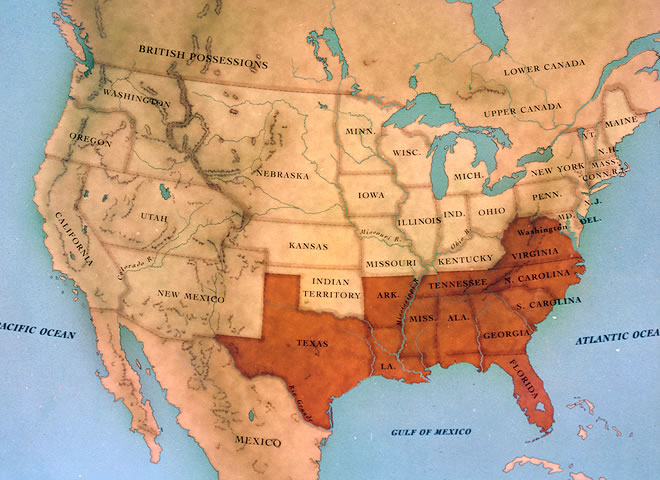
I wrote Voices in the Walls in the eighties, as a fictional way of presenting a young man who has to rethink his entire life when faced with with the fact that all his previous understanding of race is wrong. I used the opening days of Lincoln’s presidency, as the nation slid into war, as a vehicle for the story.

I never finished the novel, for reasons I explained yesterday, but it still means a lot to me. I also decided that, as an example of a writer’s struggle with a hard-headed idea, it might form a sort of how-to for writers. Enjoy.

Voices in the Walls 1  Setting the stage for the story.

Voices in the Walls 2  Setting the stage for the story.

Voices in the Walls 3  Prolog, and a discussion of bracketing.

Voices in the Walls 4  Why this novel and why 1861?

Voices in the Walls 5  Chap. 1 begins

Voices in the Walls 6  Chap. 1 continued

Voices in the Walls 7  Chap. 1 continued

Voices in the Walls 8  Chap. 1 continued

Voices in the Walls 9  Chap. 1 continued

Voices in the Walls 10  Chap. 1 continued

Voices in the Walls 11  Discussion inserted between chapters

Voices in the Walls 12  Chap.2 begins

Voices in the Walls 13  Chap. 2 continued

Voices in the Walls 14  Chap. 2 continued

Voices in the Walls 15  Chap. 2 continued

Voices in the Walls 16  Chap. 2 continued

Voices in the Walls 17  Chap. 3 begins

Voices in the Walls 18  Chap. 3 continued

Voices in the Walls 19  Chap. 3 continued

Voices in the Walls 20  Chap. 3 continued

Voices in the Walls 21  Chap. 4 begins

Voices in the Walls 22  Chap. 4 continued

Voices in the Walls 23    Chap. 4 continued

Voices in the Walls 24  Chap. 4 continued

Voices in the Walls 25  Chap. 5 begins

Voices in the Walls 26  Chap. 5 continued

Voices in the Walls 27  Chap. 5 continued

Voices in the Walls 28  Chap. 5 continued

Voices in the Walls 29  Chap. 5 ends, outline of the rest begins

Voices in the Walls 30  2 of 6, outline

Voices in the Walls 31  3 of 6, outline

Voices in the Walls 32  4 of 6, outline

Voices in the Walls 33  5 of 6, outline

Voices in the Walls 34  6 of 6, outline

Symphony 74

Neil opened Tuck Everlasting to the place he had left off and began reading. Lorraine did not relax. That was Neil’s second warning that things were not going well, so he kept one eye on his book and the other eye on Jesse.

Jesse opened his desk and pulled out a paper, rolled it up and threw it across at T. J. Nelson. Neil stopped reading and looked at Jesse, then rolled his chair back to the chalkboard and wrote Jesse’s name there. He said, “First warning.”

“Why?” Jesse said in hurt tones.

“For throwing that paper wad at T. J.”

“I didn’t throw any paper wad!”

A weak or lazy teacher would have ignored the paper wad; a self-righteous one would have suspended the boy for implying that his teacher was lying. Neil had always tried to steer a middle course, so he said sternly, “I have eyes, Jesse. Don’t push your luck.”

Neil returned to his reading, but the mood was spoiled for him and for the class. Whatever he read to them now would have little effect. They were too busy thinking about Jesse.

Jesse opened his desk, took out another piece of paper, and slammed the lid down hard. Lorraine jumped and tried to slide still farther from him, but she was already on the edge of her chair.

Neil laid his book aside and the classroom became ominously silent.

Neil locked eyes with Jesse, but the boy would not look away. Very few of his students, here or in high school, had ever had the power to infuriate him, but this boy did. Neil took his time before responding, fighting down his anger and trying to be fair. 

Yet deep inside he knew he was not being fair. In order to overcome his own growing dislike of the boy, he was leaning over backward to avoid punishing him.

“Come here, Jesse.”

“Why?’

“Get up here!”

Even then, Jesse rose and walked to the front with deliberate, taunting slowness. Neil remained seated so that their eyes were on the same level and spoke with a calmness he did not feel. “You deliberately slammed your desk top in order to disrupt the class. What’s wrong with you today?”

Jesse shifted fluidly from defiance to a shuck-and-jive act. He lowered his head and looked hurt. He said contritely, “I didn’t mean to.”

Their relationship had gone too far for Neil to believe that, or for him to overlook so transparent a lie. He said, “You did mean to. You wanted everyone in the class to look at you — again. You wanted to be the center of attention. Well, you’ve got my attention now. This is your second warning, and if you get one more I’ll not only give you a detention, I’ll also send you home.”

“You hate me!”

“No, Jesse. If I hated you, you would be long gone by now. I am bending over backwards to avoid giving you detentions, but you aren’t helping me any.”

Jesse lowered his head still further and sounded still more pitiful when he said, “You do, too.”

Neil had to pause for a deep breath. Once Jesse’s false accusations would have filled him with guilt, but he was on to the game now and it only made him more angry. Yet he did not want to suspend the boy for something as subjective as attitude.

Neil kept his voice as calm as he could and said, “Sit down.”

As Jesse moved back toward his seat, he muttered, “Fucking bastard!”

Neil gripped the edge of his desk until the veins stood out on his forearms. He would not lose his temper — but, of course, he had already lost it. more tomorrow