Tag Archives: writing

265. The Last Day of Peace

Tomorrow is the seventy-fifth anniversary of the attack on Pearl Harbor. It was the last day of a peace which American’s had clung to even while war surged across Europe, North Africa, and Asia. The next day came war, and after the war was over America found herself to be a super-power engaged in a cold war with the USSR. Nothing would ever be the same.

I had intended to write a post giving a picture of that last day of peace, but when I began my research, I found that it had already been done, and done well. Here are two examples:

Roosevelt to Japanese emperor: “Prevent further death and destruction”

The day before infamy: December 6, 1941.

There have been other last days of peace. No one needs to be reminded of the day preceding 9/11. We probably ought to remember March 19, 2003, the day before we invaded Iraq in search of weapons of mass destruction that never existed. We might also consider Viet Nam, but there is no “day before” to a war we stumbled into one foolish step at a time.

The most poignant last day of peace in American history is November 6, 1860. That was the election day which gave us Abraham Lincoln. By December, South Carolina had seceded. By January, Mississippi, Florida, Alabama, Georgia, and Louisiana had followed suit. By May the rest of the South had also broken off, and the Civil War was already underway.

As I write this protesters are in the streets carrying signs that say “Trump is not my President”. They haven’t seceded yet, although there are many who would like to. Yesterday I saw a petition for California to withdraw from the Union.

I opposed Trump. I could write thousands of words telling you why, but that time has passed.

Some of what Trump said during the campaign made sense, if you stripped away the racism, the insensitivity, and the bombast. It was no accident that people voted for him. We were all faced with choosing the lesser of two evils.

The time has come to regroup and become what the Brits call “the loyal opposition”.

Loyal.

And opposed. Oh, yes, very much opposed to the part of his message which was racist, exclusionary, and backward looking. That was the bulk of his message, but it wasn’t all. Not quite.

Raven’s Run 55

She raised her arms and locked her hands behind her head. She said, “Untie me.”

I set her breasts free, touched them, tasted them, and stood back again. She said, “More.” I put my arms around her, kissed her mouth, her neck, her breasts, her belly, then slipped the zipper of her skirt and removed it.

She had remembered. More French cut panties, like the first time I had seen her, but these had been transparent even before they were wet. I slipped them off.

She said, “My turn.”

When I was also naked, we got towels from bureau and wiped each other dry. It became a game, and when we could stand the game no longer, we fell upon the bed, clinched, grasping, straining, and trembling toward climax.

Then again. And yet again. Raven was infinite in her variety and inexhaustible. She was frenzied, hungry, insatiable. It was as if she were trying to wrap up a lifetime of lovemaking in one night.

She was.

#          #          #

The morning sun was pale and watery, but it found its way through a crack in the blinds and straight into my eyes. The bedside clock said nine o’clock; late by my standards. I stretched, and found the bed beside me empty. I lay back, listening for sounds of her movement in the bathroom, but the silence came back to mock me.

My clothes were in a damp pile on the floor, but hers were gone. I pulled back the blinds. The sun was weak and rain was threatening. People were crossing the square, but she was not among them. I shook my head, not ready to admit to myself what I had begun to fear.

I found her note propped on the sink.

Ten minutes later I was still sitting on the bed with the unread note crumpled in my hands. I could not open it and admit that what I had feared for weeks had come to be. As long as it remained unread, I could think that it was harmless. She had gone out to cancel our tickets to Rouen, or to buy some little lover’s present.

Finally, I had to open it. She had written:

#          #          #

Ian,

I am not like most people. You surely know that by now. Every day with you has been an adventure, and I thank you for all of them. But love can be bondage, for a person like me. Lately, I have been afraid that I was falling in love with you, and last night I proved to myself that I was. For someone else, that would be cause for happiness. Not for me. It would spell the end of all I have tried to become. Maybe we will meet again some day, and we will no longer be enthralled to one another. Then I can explain. I can’t explain now. The explanation would also tie me to you. I’m sorry. More sorry than you can ever know. 

Raven

#          #          #

“More sorry . . . I doubt that,” I said it to the empty room.

I would be talking to a lot of empty rooms from now on. more tomorrow

264. Last Christmas

DSCN1839Welcome to my favorite season.

Last Christmas, this blog was only a few months old, but I still enjoyed writing Christmas themed posts. I would have enjoyed it more if I had thought anyone was listening.

I could recycle, but that seems like cheating, and besides, I have new things to say. How about a compromise? Here are tags which will take you to six of last year’s posts, then tomorrow we will move on into the future.

DSCN3975

*

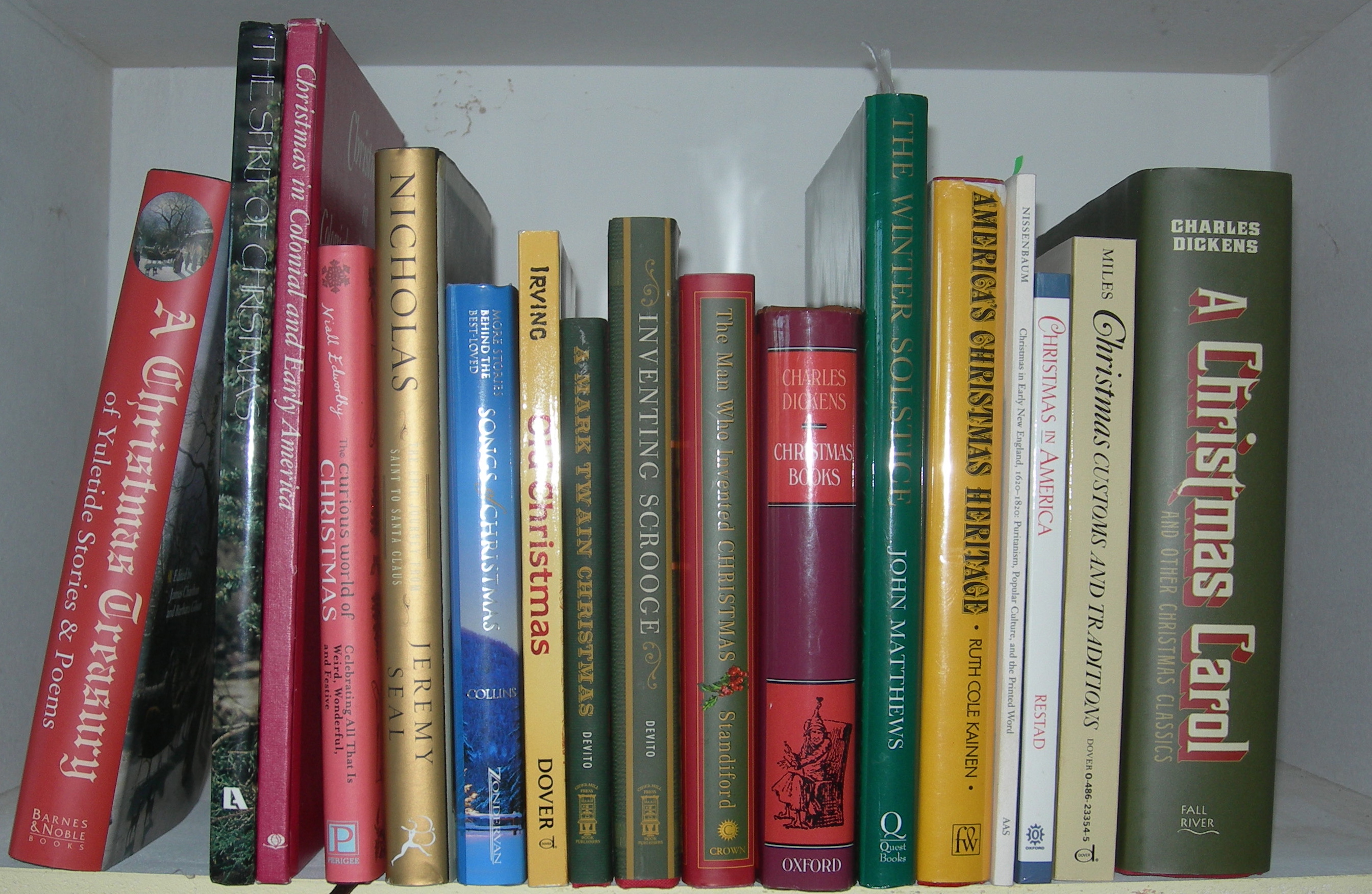
62. A Christmas Booklist – plenty of Christmas reading.

DSCN1795

*

*

*

63. ‘Twas the Season (post 1) – Christmas in Oklahoma during the fifties.  

DSCN1841

*

*

*

*

  64. ‘Twas the Season (post 2) – Christmas in Oklahoma during the fifties.

DSCN3975

*

*

*

*

66. Five by Dickens – Dickens wrote more than A Christmas Carol.

220px-Diedrich_Knickerbocker

*

67. ‘Twas the Night . . .  – the story of The Night Before Christmas, extended  version.

Dec 25th

*

*

*

68. Nostalgia – some personal reflections on what Christmas means to me. 

Raven’s Run 54

Chapter Fifteen

The old clichés are the best ones; that’s how they got to be clichés.

It was dusk when we emerged from the gare. In the shelter of the overhanging roof in front of the open courtyard, a street musician with a saxophone was leaning against the wall, playing sweet and sad. A lonely saxophone playing in the night is a magical thing, and this kid was good. Honey sweet melody poured out of him, filling up the space around him, driving back the street noises and transforming the garish lights and the tawdry shops into something exotic and exciting. We were arrested by the music, hesitating between the bright lights and the dimness of the coming evening beyond.

Then thunder came down and walked about on the rooftops until it seemed as if the pavement shook. The rain came quickly, and there was an audible, collective gasp from the hundreds of pedestrians on the streets and in the square. Like runners at the opening gun, they sprinted for shelter in the gare, and under the overhanging eaves of surrounding shops. The light was lambent and flawless; every tiny detail was clear in those first moments before the rain haze dulled the details. A hundred thousand droplets danced on the street, as water moved in sheets ahead of the sudden wind.

The thunder sounded again, more distant now, and the hiss of rain played a background harmony for the sax. There were twenty of us waiting in the doorway of the gare. Some had been drawn from within by the excitement. Some had taken shelter; they were shaking the rain from their clothing and wiping sudden moisture from their faces. Raven moved closer still, until we touched from ankle to cheek. Her breath was warm against my breath as we spoke softly. She was trembling with excitement, and something more; so was I.

She put her hand on my cheek and turned my face to hers. She leaned up to kiss me, sliding her fingers around behind my head. Her lips squirmed, her tongue came in, and I felt an electric shock from head to heels. When we broke, she whispered, “I can’t wait.”

Sweet Jesus!

Primeval rains were still falling. Across the square, people were sheltered beneath the arches of the Hotel Concorde-St. Lazare. Raven grabbed my hand and we ran. We were wet through in an instant. Her laughter rang out. She kicked the puddled water up in drenching sheets, caught me around the waist and dragged me to a stop in the middle of the square. With the rain driving against our heads we locked together.

In the lobby of the hotel, Raven held center stage. She marched up to the desk and demanded a room. Her cloud of hair had come down around her shoulders in one wet mass. The thin, light material of her tied off blouse had turned to cellophane. The old clerk smiled in appreciation. Two young men in jeans made no pretense of savoire faire. Their heads swiveled right around as Raven passed, and their girlfriends’ faces turned dark with envy.

In the room, she stood back from me, to see me and be seen by me. The rain was beaded on her face, and made twisted runnels on her long, lean legs and her bare arms. Her blouse was wet to absolute transparency – stirring memory. She said, “I was this wet when you first rescued me?”

I nodded.

“But not so much clothed.” She raised her arms and locked her hands behind her head. She said, “Untie me.” more tomorrow

263. Andre Norton’s Beast Master

Not every draft post actually gets posted. I started one a year ago in which I asked “What science fiction or fantasy world would you most like to live in?” That’s not the same as which one do you like to read about. I love the Dorsai books, but I wouldn’t be caught dead in any of them. Or, if I were caught in one, I probably would end up dead.

The question never reached the website, but in the draft I answered, “Arzor”, which is the planet in Andre Norton’s Beast Master novels.

In many ways, The Beast Master is the ultimate early Norton. Many of her protagonists are orphans, and Hosteen Storm is a hyper-orphan. He has lost not only his family, but his whole world. He is haunted not only by painful memories, but by an oath sworn during his childhood. He has to choose between the angers of the past and the promise of the future, and in choosing, eventually finds a new family.

Hosteen begins the novel as a man apart, loyal only to his team of mutated animals, with whom he communicates telepathically. This kind of communication is a trope that Norton has used liberally, at least since 1952 with Star Man’s Son. (Incidentally, the first novel I checked out on my first visit to a library.)

Hosteen, half Navaho, half Sioux, chose to enter the Beast Master Corps, where he was teamed with a dune cat, an African eagle, and a pair of meerkats,. This was decades before Timon brought meerkats to everyone’s attention. They trained together, then spent the Xix war engaged in reconnaissance and sabotage missions. Now Earth has been destroyed, and the team is all that Hosteen has left.

He musters out on Arzor, a frontier planet much like his native Arizona. It is exactly what he would have chosen, but in fact he is impelled to go there in pursuit of revenge on a man he has never met. Hosteen will wrestle with himself throughout the book, torn between his oath and his growing respect and liking for the would-be victim and his son Logan.

Arzor is a transmogrified Arizona, with modernized cowboys on variform horses. Frawns look a lot like bighorn sheep; the yoris is clearly a distant relative of a kimodo dragon; the norbies are really, really tall Indians with horns. If you are inclined to cynicism (as I normally am) this could come across as a crude mashup. I have to fall back on my favorite phrase, “Somehow, Norton makes it work.”

For my taste, the trick is to come just close enough to the familiar, while keeping just the right admixture of the outré. It’s a tricky, narrow path, and nobody does it better than Norton.

When Hosteen first meets the man he has sworn to kill, he turns aside from the confrontation for reasons he does not understand himself. He subsequently becomes involved in an expedition to the Arzorean back country, which postpones his confrontation, but becomes a deadly adventure in itself. He and his team, with the aid of his would-be victim’s son, overcome an old and deadly enemy.

Finally, Hosteen’s oath can no longer ignored . . . but, even though the novel is nearing sixty years old, I won’t spoil the ending for anyone who hasn’t read it yet.

Three years later, Norton wrote Lord of Thunder, a beast master sequel. which was quite good, though not up to the original. Four decades later, she wrote three more in the series in conjunction with Lyn McConchie: Beast Master’s Ark, Beast Master’s Circus, and Beast Master’s Quest. It seems that Norton liked Arzor as well.

The Beastmaster films are unrelated to the original, although the title is ripped off and the animal characters (two ferrets, an eagle and a panther vs. Norton’s two meerkats, an eagle and a dune cat) certainly looks suspicious. Caveat view-or.

Raven’s Run 53

In the cold, damp air of morning, the sleeping bags’ warmth was too comfortable to leave. We dozed and woke and dozed again until the morning was half gone, then dashed through the rain to the shower block. An hour later, we were on the bus back into Paris, wearing plastic ponchos and sharing a fruit and bread brunch out of a paper sack.

Raven called American Express from a public phone. She had called her father twice since we got to Paris, but there had been no answer. Finally, she had called her sister to have money sent. The Amex people said it was in, so we took the metro to Place de la Concorde and walked up to the 9th arrondissement. Twenty minutes later, Raven came out holding up a new credit card and wearing a grin a mile wide. “Now!” she said. “First clothes, then food, then a room that doesn’t leak.”

“You don’t like my lifestyle?”

“I like you. Your lifestyle is for bag ladies.”

Raven would never make a bag lady. That soon became clear. I followed her around Paris for three hours while clouds played tag with the sun. The streets were wet and shining, the rain came in brief showers, then retreated before brilliant sunlight. The clouds above the buildings were piled high and menacing. The leaves of the sycamores sagged with dampness, and sent quick showers out of a clear sky every time a breeze disturbed them. It was a Paris for lovers, and a day I would never forget. 

Despite her threats, Raven bought sparingly. When I pointed out that she could only carry one back pack, she said, “I know, silly, but don’t spoil my fun.” Her fun consisted of trying on two dozen blouses in order to buy one. My fun came from watching her model them. She bought ugly, chic, mannish suits and frilly dresses, and had them shipped to America. She bought a pleated miniskirt that let her navel peek over and barely covered her rump, along with a blouse that she left unbuttoned, rolled up from the hem, and knotted beneath her breasts. That outfit took the place of her jeans early on, and made my day infinitely more stimulating.

We dodged rain showers, moving from store to store. She vowed that she was going to treat us to a dry room tonight. Late in the afternoon, Raven bought us a meal in a sidewalk cafe. We made a ceremony of it, laughing and flirting for two hours while we people-watched. At the end, she said, “Now, isn’t this better than a burger at MacDonalds?”

“Sure.”

She cocked her head to one side and said, “Do I detect a bit of hedging.”

“It was delicious.”

“Then why the hesitation?”

I didn’t quite know how to explain. I was afraid that talking about it would make it more important that it really was. “The food was wonderful, the company was delightful, the conversation was sparkling. It’s just that being in Paris with you was equally wonderful this morning when we were eating bread and fruit out of a paper sack.”

“Equally . . .?  Oh, come on, Ian!”

“Look,” I said, “I heard a woman talking to her friend today while you were trying on dresses. She had just been to the Louvre, and all she could talk about was what she had eaten in that little cafe that overlooks the bookstore. When I remember the Louvre, I will think of the paintings, not what I had for lunch. When I remember today, I will think of you and the way the rain felt, and the sunshine, not the food we ate.”

“Ian, you’re deeply deranged.”

We went out to walk around in the fading sunlight, holding hands.

We talked about the weeks to come. I told her about Rouen with its cathedrals, half-timbered buildings, and monuments to the passing of Joan of Arc. Raven agreed to a day trip, so we walked up to Gare St-Lazare to get tickets for tomorrow. She walked so close beside me that the swinging of her hips was sweet music against my thigh.

The train station was a huge, crowded, echoing barn filled with overpriced fast food booths and sleazy magazine stores. We bought tickets, and headed back toward the street. Over the crowd noises, I could hear the sound of distant thunder. Raven was squeezed close to my side and I was as happy as I had ever been. I could see no end to that happiness.

*****

I spoke of foreshadowing in 230. Blackie Ryan. The end of this post is a subtler form of foreshadowing. I didn’t say, “If I had only known!” or something equally cliche, but the reader can still sense that all is not going to work out well for our lovers. more tomorrow

262. Andre Norton’s Star Gate

When I say Star Gate, I don’t mean the TV series. I also don’t mean the movie it was based on. I mean the original, from decades earlier, a novel by Andre Norton.

Andre Norton’s Star Gate came out in 1958 but It didn’t make it to any library I frequented. It didn’t enter my life until a decade later when cheap SF and fantasy paperbacks became generally available. Someone has an original edition for sale on the internet for $299, but at that price, I’ll never see the hardback.

Kincar s’Rud is called to the deathbed of the chief and kinsman he expects to succeed, only to find that it is not to be. He is told that he is only half Gorthian. His father was one of the Star Lords from Earth. To avoid bringing a bloody division to his clan, Kincar must leave succession to a hated cousin.

After generations on Gorth, the people of Earth have departed, but Kincar is told that a few remain, preparing to work out a separate destiny. Among these are his half-kinsmen, whom he must join. On his way he examines the few things given him as heritage and finds a Tie, a green stone amulet that is a tie to the three gods who rule his world.

Kincar is awed to be in the presence of Star Lords, and it takes him some time to adapt to their presence. This remnant consists of those who have formed so deep a bond with Gorth that they cannot bear to leave, even though all other Earth men have gone. Despite the good that Earth men have done on Gorth over the years, they eventually became convinced that their presence was warping the culture of the native Gorthians, and that they must, from conscience, depart. The few who did not take the ships out are also planning to leave, but by a different route.

They are pursued by native Gorthians as they try to find a place of temporary refuge, where they can construct a gate which will take them to an alternate Gorth where the native population never evolved; a place where they can remain in the land they love without doing harm. The gate is constructed hurriedly while under attack. All pass through, but Kincar is struck down harshly. The Tie he wears has reacted badly with the off world technology of the gate.

Here is classic Norton, with a medieval culture in conflict with an advanced technological one, and with real magic residing uneasily alongside real science. Star Gate is truly science fiction, but the fantasy touches that made the Witch World novels so appealing are already in place. (Aside: in the first Witch World novel, Simon Tregarth enters that world through a gate, which may be magical or alien technology. Norton never says which, but it’s probably magical, considering where he ends up.)

Kincar and his kinsmen emerge from the gate in a Gorth, but which Gorth? They have to explore to find out, and it quickly becomes obvious that they are not in the one they wanted. In this new Gorth, the Star Lords never departed. Worse, these Star Lords are cruel tyrants who have enslaved the native population.

Kincar’s group decides to delay building another gate to pursue their dream world. Since Star Lords have so tainted this Gorth, they feel obligated to set things right. This brings Kincar into conflict with his evil alternate father and into an alliance with his hunted alternate self.

*****

A decade after I first read Star Gate, I ripped Norton off for one useful bit. On our Earth, if you had an ancestor named David who’s father was named John, he would be David Johnson or David Johnsen or David Jensen or David Johns. On Gorth, he would be David s’John. I liked that so well that I made it the basis for kinship terminology on the World of the Menhir. Thanks, Andre.

Raven’s Run 52

We retired to a small cafe on the square behind Sacre Coeur for wine. Eric was a jovial companion. I enjoyed him almost as much as Raven did, although I would have felt more comfortable if he had had a girlfriend with him. Blue-eyed, blond, tanned, and ruggedly handsome, with Raven hanging on his every word – I was feeling an irritation that had become all too familiar.

Raven and I were living frugally, camping outside Paris and taking a bus into the city. What a typical American tourist would spend in a day, would keep us alive for two weeks. On the ladder of affluence, we were near the bottom.

Eric was one critical step lower. We knew that we could not eat in a restaurant; Eric did not know where his next meal was coming from. We knew that if we were not careful, our money would soon run out. Eric was broke any day he did not make enough tips to cover that day’s expenses. He was staying in the youth hostel on Blvd. Jules-Ferry, but would have to move on soon. They had a four day limit in midsummer. “It doesn’t matter, anyway,” he laughed. “I’m not making enough to eat and sleep. Paris is a tough gig.”

Eric was originally from Bodö, just north of the Arctic Circle, and had gone to school in Oslo. Now he was a refugee from the winter-long northern nights, but there was a homesick longing in his voice as he described the beauties of a northern summer. Raven hugged my arm and said, “We have to go there!”

“Suits me.”

“If you go to Bodö,” Eric said, “you must see the maelstrom. It’s not far from town.”

“Maelstrom?”

“A gigantic whirlpool. It inspired your writer Poe to write his Descent into the Maelstrom.”

Raven had bought a cheap camera in Nice. Now she talked a waiter into taking a picture of the three of us, promising to give a print to Eric.

It was after midnight when we got back to the campground. We had to take the metro to the end of the line and then take a bus out to the edge of the countryside. I had forgotten to pay last night, so I stopped in at the office to correct matters. We were on the list of delinquents, and the manager made nasty remarks under his breath until I paid for the rest of the week. Then he dropped the matter, satisfied, and went on to his next customer.

The French have a worldwide reputation for being actively unfriendly. It isn’t true. They just don’t give a damn if you live or die. If you want people to like you, you probably won’t be happy in France. On the other hand, if you can go about your business independently, not expecting courtesy from strangers, you will do fine. I never have any trouble in France because I don’t expect much, and that is exactly what I get.

The campground was a sea of tents, jammed edge to edge with their guy lines overlapping. Walking among them was like stepping over limbs in a blown down forest. Ours was a small blue two-man dome. I stayed outside until Raven had undressed and crawled into her sleeping bag, taking off my shoes and shirt while I waited. Then she squeezed over against one side of the tent while I struggled out of my pants. Once we were both horizontal, the tent was big enough, but dressing and undressing on a rainy day was a major undertaking. Fortunately, it had not rained much so far.

An hour later, I woke to the sound of rain. more tomorrow

261. Andre Nortonʼs Sword Trilogy

This post and yesterday’s are about the Sword Trilogy, Andre Norton’s first multi-book story. You can read the posts in either order.

Some of Andre Nortonʼs earliest work came during and just after World War II, and today is called the Sword Trilogy. I reviewed the last and best of the three books yesterday. A few are available today in paperback reprints, but the original hardbacks mostly ended up in libraries and command high prices today. Fortunately, all three are available as e-books, if you can tolerate a boat load of typos.

The Sword is Drawn came first in 1944, and was one of Norton’s earliest books; the fifth, if bibliographies can be trusted. My library rescue copy was printed by Oxford University Press, London, 1946, presumably under wartime austerities. It is a slender, ragged volume that needs to be read with a delicate touch.

In a forward to the book, Norton praises the World Friends’ Club for their work in establishing “pen friend” relations between youths of various countries before 1939, and adds:

Now again letters are finding their way by sea and air all round the world. It is possible that in these friendships lies the hope of lasting peace and the vision of a new world.

The four sections of the novel are set off by letters from the young protagonist Lorens van Norries to his American friend Lawrence Kane. Lorens is the grandson of Joris van Norries, head of the House of Norries, renowned jewelers and bankers, but he has been raised as an outcast. In the opening paragraphs, Lorens visits his grandfather’s deathbed and finds that he has been raised away from the family for a reason. His grandfather has foreseen the coming of the Nazis and now entrusts Lorens with the location of the family treasure which he is to dedicate to regaining the Netherland’s freedom. Unfortunately, the Nazi’s are not fooled, and Lorens has to run for his life. He is transported to England by Dutch smugglers, turned underground fighters.

Lorens ends up in Java, still a Dutch possession with a House of Norries presence, and there the war catches up to him again as the Japanese invade. He fights his way through the jungle and ends up fleeing by air toward Australia, where his plane is shot down and he is crippled. Heroes who are physically or emotionally crippled, and fight through anyway seems to be a Norton specialty.

Healed, but unable to fight in the traditional manner, Lorens has an interlude in America where he enlists an underground organization to transport him back into occupied Holland. There he recovers the treasure entrusted to him and uses it to advance the Allied cause.

The Sword is Drawn is a disjointed book, a round-the-world stumble back to where it started. This may be a problem for some readers; I find it a strength, as it mimics the chaos of war. The Sword is Drawn is a moody book, informed by the vision of a people who have been ground down and are still fighting back.

And then the war was over. The second book of the Sword Trilogy, Sword in Sheath,  came out in 1949 and has a mood in stark contrast to the first. Lawrence Kane – sometimes called Kane, sometimes Dutch, but never Larry – and Sam Marusaki, are back from service in WWII which included OSS work. They are called in unofficially, ostensibly to find a missing airman but actually to look for Naziʼs who had gone to earth in the East Indies after the war. Kane is the pen-pal to whom Lorens van Norreys sent all those letters and, sure enough, van Norreys shows up by chapter three, where he and Kane meet face-to-face for the first time. At this meeting we find out that, after the close of the first book, van Norreys spent the remainder of the war in the Dutch underground.

Every verbal exchange between Kane and Sam is couched in light banter, which somehow, unbelievably, still sounds like Norton. Lorens, Kane, and Sam set out on a Dutch tramp steamer to explore the area around the Celebes, where they fall in with Abdul Hakroun, a pirate who is willing to fight Nazis if there is a profit in it for him. Several mysteries entangle them until they find a lost civilization, a missing treasure, and a stranded Nazi sub. All this sounds very predictable for an espionage novel, but Norton’s touch saves it. Still, it is the weakest of the three books.

Raven’s Run 51

Chapter Fourteen

We met Eric on our third day in Paris. It was evening. We had spent the day doing the classic tourist rounds, with morning at the Versailles, a late afternoon stop at the Eiffel Tower, and then the long walk up from the Champs Elyse to Monmarte, where the architecture was lovely and the vaunted street artists would have been kicked out of Disneyland for incompetence.

Eric was set up at the base of the steps that lead up to Sacre Couer, with his violin case at this feet, playing gypsy tunes on a Hardanger fiddle. That was a feat of cultural integration about the equivalent of Sioux in full headdress playing accordion, but Eric made it work.

We sat down on the steps to listen. Raven said, “What is he playing? That isn’t a regular violin.”

“Hardanger fiddle, from the Hardanger region of Norway. An old Norwegian fellow in the town where I grew up used to play one.” It had four sympathetic strings that ran beneath the fingerboard, an extended pegbox, and instead of a scroll it had the carved head of a stylized lion. It was heavily decorated with intricate ink drawings.

“Where is Hardanger?” Raven wanted to know. I explained that it was near Bergen, and she said, “Will you take me there?”

Her eyes were glowing. She had been frenetically gay since we reached Paris. I enjoyed her happiness and her energy, but there was an underlying note of falseness to it. I said, “Sure. Tomorrow?”

“No, silly. Someday.”

“Someday it is.”

Monmarte is a hilltop community where the steps of Sacre Coeur form a sort of informal amphitheater for street musicians. As Eric played on, Paris made a hazy backdrop behind him. He was quite good, and it had been a long day. We were both content to watch the sun go down and listen. When he finally finished his set, Raven whispered,”Can we afford something for him?”

“Sure. Street musicians have a hard life.” I passed her a twenty franc note and followed her over as she dropped it into the case. 

He looked up, then looked harder. Raven is spectacular. He said, “Grazie, Signorina.”

“Not Italian,” I informed him. “American Hispanic.”

“Ah. Then gracias and thank you.” He looked at me and added, “You are both American?”

“Yes.”

“Of you, I would have said Scottish.”

“Scottish ancestry, American nationality. I’m Ian Gunn and this is Raven Cabral.”

He said he was charmed, but I’m sure he meant by Raven. His name was Eric Sangøy. He spoke English with a clipped British accent, for which he apologized. In Norwegian high schools, he explained, one took either British English or American English as a second language, and he had chosen British.

“Raven and I were admiring your fiddle, as well as your playing,” I said.

Eric passed it to Raven for inspection. It was well worn but the ink drawings were supple and intricate. He explained where it came from and how it differed from a violin. Raven listened intently, as if I had not just explained. more tomorrow