Tag Archives: writing

Raven’s Run 43

Will reached over the seat to nudge me awake when we reached the outskirts of Nimes. I shook the sleep out of my eyes and told Will the last thing that had been on my mind when I drifted off. I was leaving the automatic with him, to hold for me. When we were in immediate danger, I had wanted it handy, but carrying a concealed weapon around Europe is just plain crazy. France isn’t the wild west; it isn’t even Tulsa, Oklahoma. The French take a dim view of people with unregistered guns. Possession could lead to a long stay in a small, steel room.

I unkinked painfully and crawled out of the back seat. Will and Raven got the packs while I went to the ticket window. The train station was nearly deserted at three in the morning. There were a few kids scattered around, sprawled in the corners or stretched out on top of sleeping bags with their heads pillowed on their packs, catching a free night of sleep while they waited – or pretended to wait – for their trains to come in. I bought two tickets to Valence, the two more from Avignon to Nice. I stuffed the second pair in my jeans and rejoined Will and Raven.

Raven reached out and I took her hand. Then she smiled oddly and took Will’s hand also. She said, “I want to apologize to both of you about today; yesterday, I mean. Sometimes I’m pretty much of a bitch, and I get jealous if I am ignored.”

Will smiled and said, “Who could ignore you?”

“You and Ian did.”

“We were just catching up on each other’s lives,” Will said.

“I know. That’s why I’m sorry. I didn’t really mean to play you against each other.”

I didn’t say anything. I was surveying the platform for anyone who looked suspicious. It seemed to me that there was a little truth in Raven’s apology, and a great deal more of deception, but this was no time to discuss it.

In the distance, the train was coming. It’s one burning eye lit up the night, and there was a slight trembling of the concrete platform. A slender man with close cropped gray hair, a rumpled business suit, and a newspaper stuffed under his arm came out of the station. He was followed by three kids who were struggling into their oversized packs and shaking the sleep from their eyes. The kids had been here before us. The man had not. He had come from the direction of the parking lot. He was probably a local businessman on his way to Lyon or Paris. Probably. But he could also have followed us here by automobile.

If you are going to be paranoid, it makes no sense to go half way. I smiled at Raven, and memorized the man’s face while looking past her shoulder.

The train came in with a whoosh that sent dry leaves and candy wrappers swirling about the platform. I caught Will’s hand and said, “Thanks.”

“Any time, Ian. You know that. But how do you keep falling into these things?”

“Just lucky, I guess.” I grinned and slapped him on the shoulder. “I’ll miss you.”

“Keep Raven safe.”

“That is my first priority.” more tomorrow
Raven’s Run 42

My eyes were growing heavy. The pain was receding. I was going back to those long rides home from St. Cloud.

Then the scene changed to nightmare.

There had been one ride I had missed. I had stayed with friends that night so I wouldn’t miss an important baseball game. My parents and my sister Sharon had gone to St. Cloud to see a movie. Coming home, my father lost control of the car.  It plowed into a ditch and caught fire. Father had escaped, taking Sharon with him. My mother had never made it out.

That night had been the end of my childhood. My father had been driving drunk. Again. While the matter was still under investigation, he took his jeep and canoe and went north. To Canada, I suppose. We never saw him again.

Now that memory caught me unaware, sliding in on the moist Mediterranean wind. I was shaking and one sob broke out, almost like a hiccough. I cut it off. This was a pain I didn’t share with anyone; not even Raven; not even Will.

Raven looked back over the seat and said, “Are you all right?”

“Sure. I just hit my hand when I moved.”

She turned forward again. I stared out the back window at the anonymous car headlights, which might be enemies, probably were strangers, and certainly were not friends.

#          #          #

We drove through Martigues, the “Venice of France”. It was supposed to be a lovely village, but at 2 AM, who could tell. The flat sheen of Barre Lagoon was like a dull mirror in the moonlight off to the right. The opposite side was a modernistic nightmare of shipping and industrial silhouettes.

Will said, “Are you sure this is wise, or necessary? I feel like a fool.”

“Are you thinking about what you will tell your boss?”

“Well, yes; frankly, I am.”

“Tell him you put us both on the train for Paris, but I wasn’t willing to travel directly out of Marseille and insisted that you drive us to Nimes instead. Tell them that I was afraid Davis and his buddy would sneak on the train with us if we left from the St. Charles station. Every word will be true.”

The main line from Paris follows the valley of the Rhone southward to Avignon where it splits. One branch goes east through Marseille and on toward Italy. The other branch goes west through Nimes and on to Spain. We were crossing from one branch to the other before heading north.

“Where are you really going?”

“We haven’t discussed it. I have an immediate destination in mind, but I won’t tell you. Then you can say with a clear conscience that you don’t know.”

“Great! I’m sure they will understand your thinking if they ever hear the full story.”

I didn’t like the bitterness in Will’s voice, or the way he had so easily and quickly slipped into the habit of referring all decisions to his superiors. I said, “There is no reason for them to ever hear it.”

We passed through Arles, crossed the Rhone, and bored northwestward through the darkness. Raven was asleep and I was beginning to drift off. I pulled the clip, emptied the chamber, placed the loose cartridge back in the clip, replaced the clip, lowered the hammer and locked the safety. Then I slept. more tomorrow

251. Night at the Movies

Over in Raven’s Run in Serial today, Ian Gunn is reminiscing about:

The feeling in a night drive —- the humming of tires; the warm heaviness of the air, the darkness beyond the car —- when you were a child in the back seat —- and the thick air slid in and out of your throat like oil.

That description is pure memory.

Oklahoma is the edge of the South, with thunderstorms, tornadoes, and hot, humid summers. Air conditioner country – but I lived there before people has air conditioners. Days over a hundred were common, and the nights brought thick, moist, warm air. There were scraggly trees in the creek beds and flattish land between that was half native grass pastures and half grain fields.

Was. Now it grows houses, and people live indoors with the AC running, but in the fifties people were sparse on the ground and they spent most of their time outdoors.

I spent my summer days driving a tractor. There were no air conditioned cabs – no cabs at all, actually – but it wasn’t bad. There was an umbrella clamped to the seat, and as long as I was moving, which was at least ten hours a day, there was a breeze.

Nevertheless, nights were a pleasure by contrast. After the cows were milked, we sat in the living room with the west windows open to the wind. My parents watched TV (black and white, two channels). I joined them, or read a book. Once or twice a year, we would all go see a movie.

Those same years, my wife-to-be lived in Saginaw, Michigan. She used to walk to Saturday matinees. It’s a common reminiscence, but my nearest theatre was twenty miles away, so going to a movie was a family expedition.

After the day’s work, and milking the cows, and supper, and cleaning up, we would drive to Collinsville as the sun was going down. When we arrived, we went right in. There was only one theatre with one screen, and it changed movies every three days, so you went on the day your movie of choice was there. It didn’t matter what time the movie started; we went in, sat down, and started watching. Then we watched the coming attractions and the cartoon, and pretty soon the next showing started. We watched until my dad said, “Okay, this is where we came in.” Then we left, with no wasted time, because four AM was coming all too soon, and the cows weren’t going to milk themselves.

What I remember best about movie nights, is the ride home – especially when I was ten or so. Twenty miles on a two lane blacktop, lying stretched out on the back seat, reliving the movie, and the coming attractions which were pretty exciting for a ten year old in the fifties. Imitation of Life previews were disturbing, largely because I didn’t understand the premise of the picture (see 95. Literature of Passing). Then there was a scene of a girl wearing only a towel in a cowboy movie preview that revisited my libido for months. Mostly though, I remember a science fiction movie – something I would never have seen outside of previews – with animated pterosaurs and dinosaurs chasing people as they fled in their cars. Tame stuff for the Jurassic Park generation, but scary to me.

Outside the car, the night dampness amplified the smell of grass and weeds. The soundtrack of the night was the humming of tires and the unending churr of cicadas. The air swirling in through the open windows was syrup thick, damp and cool. The vibrations from the road, softened by the seat and transmitted through to my spine, was electric, and the little shocks from potholes were like tiny bursts of pleasure.

All this comfort was balanced by the emotional rush of hearing those imaginary dinosaurs in pursuit, along with the scree of giant pterosaurs flashing overhead.

I’ve forgotten most of the movies we saw, but I will never forget what the night felt like.

Raven’s Run 41

Chapter Eleven

By the time Will came back, it was past midnight. There was a flight from Paris, with connections for New York and then San Francisco, leaving at one PM. “There is a train leaving for Paris in an hour,” Will added. “You could make it easily.”

I said to Raven, “It’s up to you, but either way, there is no turning back.”

She smiled. “I’m staying. I’m not finished with Europe yet, or with you.”

“What are you two talking about?”

I said I would explain in the car. Will carried my pack; Raven carried her own along with the cardboard box holding holster and ammunition. I walked with my arms crossed, ostentatiously carrying my injured hand across my chest so I could conceal my left hand and the .45. The gear went into the boot, Raven rode shotgun, and I squeezed into the back to watch behind us as Will pulled away.

“Where to?”

“The train station,” I said and explained what we had in mind. Will did not agree. He thought Raven should head home. He and Raven argued while I kept a watch out the back window.

Midweek and past midnight, Marseille was still alive. The drive up la Canebiere and Blvd. D’Athenes was a kaleidoscope of images; great trees black above the street lights, revelers, streetwalkers, and an occasional tourist looking nervous, Disneyesque, and out of place. A dangerous city at night, I had been told. It had certainly proved so for Raven and me, but I was unhappy to be leaving it before I had really had time to know it.

Kids with their backpacks were sprawled on their sleeping bags on the high steps outside Gare St. Charles as Will circled up to the parking lot. Raven and I waited in the car. Three other cars had rolled into the parking lot with us. I watched the two that had parked and worried about the one that had circled and exited again. It might have parked down below out of sight. I didn’t like being caught in the cramped back seat, but I could hardly lean up against the fender in the parking lot of a busy train station with a gun in my hand.

Eventually, Will came back with a handful of train schedules.  He pulled out and I watched to see if anyone was following. We soon had a half dozen new sets of headlights behind us. I gave up. In the darkness, I couldn’t tell one car from another. I used a flashlight to study the schedules while I devised a plan of action.

Will drove skillfully through the streets of Marseille. Soon we were out of the city and crossing the marshy delta of the Rhone. He headed down the shoreline road past la Couronne before heading up to Martigues and the Barre Lagoon. We had all four windows open, and the warm, moist, Mediterranean air swirled through the car. Raven and Will were silent. There was no sound but the wind, the motor humming, and the occasional swish of a passing car. I leaned against the right hand door and watched out the back and side windows with the automatic cradled in my lap. I might have been lulled to sleep if it had not been for the throbbing in my hand.

There is a feeling in a night drive that is like no other feeling. The sound of humming tires induces it; the warm heaviness of the air, the darkness beyond the car, and the tiny, friendly lights from the dash make it complete. It is a child’s feeling. Drivers catch the edge of it, but to know it fully you have to be in the back seat, insulated from responsibility. It is a form of time travel. It will send you back to those days when your rode home, half asleep, stretched out in the back seat while your parents conversation dwindled to a meaningless buzz and the thickness of the air was so palpable that it slid in and out of your throat like oil.

My eyes were growing heavy. The pain was receding. I was going back to those long rides home from St. Cloud.

Then the scene changed to nightmare. more tomorrow

Raven’s Run 40

It was a new idea for Raven. She asked the obvious questions.  “What makes you think they can’t trace me here in Europe. I can’t even go to the police for help anywhere but Spain or England because I don’t speak the languages. I would be more helpless than ever.”

“No. Take my word for it, because I’ve done it. Once you leave Marseille you can go anywhere in Europe without leaving a trail. Border crossings are no problem. They just look at your passport and hand it back to you. They don’t even attempt to record the millions of people who go from country to country every day. If you pay with cash, there is no record of where you have gone or what you have done. Stay away from the Holiday Inn. Live in youth hostels, small cheap hotels, or campgrounds, and you can go underground easily. I think it is the safest thing for you to do.”

She smiled slowly. “With you?”

“With me.”

“Ulterior motives?”

“Tons of them.”

“Then I’ll do it!”

#          #          #

My hand was beginning to throb. If Skinny had cut a little deeper, he would have severed all those tendons and I would be heading for a hospital and reconstructive surgery. It was not a pleasant thought.

I said, “You’ll have to pack for me,” and sent Raven forward.  Beyond the main cabin was the door to the W.C., and beyond that was the forecastle. Will and I had completed it with two pipe bunks, but we never slept there. It was packed full of personal gear and boxes of canned goods. Raven brought back the cardboard box marked camping.

“Get out both packs.” They were internal frame rucksacks, sturdy and small enough to squeeze overhead in a train or bus. In went two down sleeping bags stuffed inside rolled up Ensolite pads, a tent, two rain parkas, a spare pair of jeans, shirt, underwear, and socks for me, a packet of maps and guidebooks, a tiny packet with soap and razor, a coil of nylon line and packet of miniature clothespins, and two small towels.

When Raven had finished, the packs were still half empty. She said, “Is that all?”

“We need to buy you one more pair of jeans and shirt, and maybe replace those sandals with something more sturdy. Other than that, this is all we’ll be carrying.”

I had her slip into Will’s pack and adjusted the straps to her. Then I showed her how to remove the backrest above the port transom. There was a locked secret compartment; I gave her the combination and she pulled out a slim money belt.

“Raven,” I said as I zipped it open and counted the contents, “you have to understand the ground rules. I have three thousand dollars American. By hitchhiking, staying in youth hostels and campgrounds, and never eating in restaurants I had planned to stretch that over several months. A typical pair of tourists would go through it in less than a week. You have to be willing to do things my way or we will run out of money.”

“I can do that.”

“You say you can, but I saw what you paid for those clothes.”

“They were reasonably priced.”

“To you; by the standards you are used to. Not by the new standards you have to learn. For the next few weeks, you are going to deliberately become a street person. Are you ready for that?”

She thought about it. “I guess so. I have to be.”

“No, you don’t. You can fly home.”

” ‘Into the lion’s mouth.’ Quoting you.”

“I think you are safer with me. But if you go with me and can’t live like I live, you won’t be able to back out. There won’t be enough money to get home. You’ll have to go to another consulate, call home, and wait for money to be sent. If you are going to back out, it had better be now.”

She answered by leaning over and kissing me lightly on the lips. more tomorrow

Raven’s Run 39

“Ms. Cabral could move into the consulate.”
Raven shook her head. “Prison, you mean.”

“As you will. It is your life.”

I didn’t say anything else. Cummings argued for an immediate flight home. I couldn’t make up my mind if he thought that was better for Raven, or better for the consulate. Probably both. I had ideas of my own, but I didn’t plan to bring them up until later. Raven kept looking at me, as if for advice. I ignored her. Raven seemed hurt and Will looked troubled.

Eventually, as I had thought he would, Evan talked Raven into leaving immediately. I said, “Why don’t we do it this way. It’s nearly eleven. Will can take Evan home. Those two won’t be back tonight, and we can bolt the hatch. Will can call the airport at Paris for flight information, then come back and pick us up. Raven can probably be out of France by morning.”

“Money?”

“I’m bankrolled for a couple of months of hitchhiking around Europe. I’ll loan Raven the price of the ticket and she can wire my repayment as soon as she gets home.”

“That would work. Is that all right with you, Ms. Cabral?”

“Yes.” She didn’t sound enthusiastic.

After they were gone, I bolted the hatch and squeezed into the engine room. It was a tiny cubicle with an air cooled Petter engine and a forty gallon tank of diesel. By lying back against the engine, I could reach a combination padlock on a door set in the front bulkhead. It was our bonded stores locker. Many things are illegal in many places, but not always the same things. You can’t bring handguns into Canada or liquor into Egypt, so you need a place for port authorities to put them under seal until you leave. I pulled out a small cardboard box and relocked the door.

“Raven,” I said as I sat down on the transom, “I wasn’t straight with you while Evan was here. I wanted to talk to you in private instead.”

“All right.”

I fumbled my jackknife out with my left hand and slit the tape on the box. Inside was a .45 caliber Colt automatic, two fifty round boxes of ammunition, two spare clips, both full, and a holster. Raven’s eyes had gotten big again, so I explained, “This isn’t what I wanted to talk to you about. I used this in the Army, and later when I worked as a guard, so I brought it along. I thought I might need it if I got posted someplace like Lebanon or Nicaragua.”

“It didn’t do you much good tonight.”

“That’s the trouble with handguns; they’re never there when you need them. Look, I don’t think going home to California is the best way out for you.”

“Why didn’t you say so earlier.”

“I thought it best for Evan to think you were leaving. If you go back, you will be a sitting duck for an enemy you don’t know.”

“I know them.”

“You only know the henchmen, not whoever is behind them. Whoever hired them could hire someone else. Probably will, now that you know their faces. If you go back, you won’t know who to trust, but they will know where you are.”

“I can’t run forever.”

“No one said you should, but there is no reason you can’t run for a while. Let your father call on his FBI connections and use his clout as Senator. Let him find out who is behind these attacks. You stay out of it.”

“Where?”

“With me. Call your father. Tell him what happened, and tell him that you will stay in touch. Assume his phone is tapped and don’t tell him where you are. Call back once a week. When things are safe again, then you can go home.” more tomorrow

249. The Presidency That Wasn’t

Greetings, my fellow Americans. This is the first time in my life that America has gone to the polls with so little to hope for and so much to fear.

On February 29 of this year I wrote a silly story about a child born on Leap Day. I repeated it, in longer form, on July 6. As the Presidential campaign degenerated, the story haunted me with a view of a lighter and better version of things. I had written the end of the story first; now I felt impelled to go back and fill in the beginning and the middle over a number of posts spaced out through the summer and autumn. If you want to see them, check out the tag cloud for Leap.

Today is the big day, the day of Leap’s fate and unwanted triumph. I can’t leave him hanging. I have to tell the ending again, somewhat abbreviated, this time. I owe him that much, after all I’ve put him through in his alternate America.

********

In 1952 a boy was born on Leap Day. His Dad was named Alan Hed, and he wanted to give his son the same name, but his wife had a quirky sense of humor. She named him Leap Alan Hed, and all his childhood acquaintances called him Leap A. Hed.

The teasing drove him to a foolish act. Leap began to count his age by Leap-day-birthdays. When he was sixteen, he started putting his age down as four. He spent a lot of time talking to the principal about that, until the school finally got tired of the whole business.

The draft board wasn’t amused when he turned eighteen and still claimed to be four, but when the 1969 draft lottery gave him draft number 285, they stopped worrying.

Leap never married (he claimed he was too young) and the IRS was indulgent. They figured he would regret his claims when he wasn’t eligible for Social Security until he was 260 years old.

Leap eventually put that nonsense behind him, but not soon enough. Billy Joe Barker, a newspaper columnist, heard about him and touted him as a write-in candidate for President in 2016. It started as a joke, but it caught fire. If you’ve read any recent posts, you know the details.

Donald Trump denounced him. Nothing new there. Donald denounces everybody.

********

Unfortunately, some jokes get out of hand.

When the polls opened, well over a hundred million people wrote in Leap Alan Hed, each thinking he was the only person in America who would do so. It brought a landslide in both the popular vote and the electoral college.

Weren’t the voters surprised? And wasn’t Leap terrified? He headed for Canada – he had camped near the border the night before just in case – and sought asylum. The Canadians didn’t want any part of the controversy. They wouldn’t let him in.

Leap thought about moving to another country, but there wasn’t anywhere else he wanted to live. And there probably wasn’t any country that would take him. Except Russia, and he was no Snowden. Or Manafort.

He decided to just disappear, and he did. I don’t know where he went; he didn’t tell me. Geraldo claimed to know, but that turned out to be a bluff. Somebody said that he crossed the Canadian border and was heading north, following a compass, but everybody knows you can’t walk to the North Pole now that the ice caps have melted. Probably looking for a Fortress of Solitude, and you can’t blame him.

All those people who voted for Leap are now wringing their hands and wondering what is going to happen next. They never thought he would win. They never thought he would run to Canada like a modern day Draft Dodger. Which, essentially, is what he is — drafted to be President, and scared out of his wits.

Hillary has been very quiet about it all. She hopes to win in the House if they can find Leap, and get him to resign. But it’s problematical. Only fourteen Democrats and eleven Republicans were elected to the new Congress. Aside from a few Libs and Greenies, the rest are all newly elected Independents, sent by a disgusted America.

Bernie is smiling.

Donald claims he will still win, and when he does, he plans to invade Canada.

Hillary is biding her time.

********

Okay, folks, it’s been a long time since February, and Leap’s story is now over. But wouldn’t the wait for tonight’s election results be less dreary if you had written him in?

248. The Last Leap

For the rest of Leap Alan Hed’s story, check out the tag cloud for Leap.

It was late. The sun had already set and with its passing, the chill of a November evening had set in hard. Leap Alan Hed – calling himself Joe and hoping that none of his homeless companions around the fire would recognize him – pulled his coat closer around his shoulders and stretched his hands out to the fire.

It was a vain hope. The press had hounded him out of his home in Dannebrog, and hounded him half way across America and back again. His picture had been spread across the country in countless newspapers and television broadcasts.

One of his companions said, “Joe,” and his tone said that he knew the real name behind the nom de flight, “tomorrow is the big day. What do you think will happen?”

Leap said, “I don’t know. They won’t vote for me. They aren’t that stupid, no matter how frustrated they have become. They will vote for Hillary and God knows what that will mean. Or maybe even He doesn’t know. Or they will vote for Donald, and everybody knows what that will mean.

“In a few days, or maybe a few weeks, I’ll be able to surface again and get back something like a life of my own. I just hope there’s a country for me to go back to.”

His companion shrugged, and said, “I don’t have a life to go back to. I haven’t had anything like a life in years. I can’t vote for you, or anybody else. You have to have an address to register to vote and I haven’t had an address in years. But I would vote for you.”

“Why, for God’s sake? Why?”

“Because you aren’t him and you aren’t her, and anybody else is better. Somebody has to do the job. At least you don’t want it, and that means something.”

“If nominated, I won’t run. If elected, I won’t serve.”

“I don’t think so. I think you would come out of hiding and do your duty.”

Leap shook his head, and just said, “No.”

“Its going to be Donald or Hillary or you,” the other said.

Leap sighed. He said, “No good can come of this.”

***************

GOOD LUCK, AMERICA.

Raven’s Run 38

Chapter Ten

The American consulate in Marseille deals mostly with stranded sailors, lost passports, and with keeping track of seamen who are jailed for fighting, petty theft, or public drunkenness. There is no ambassador in residence – that is what makes the difference between a consulate and an embassy. No treaties are negotiated there and there is little espionage. Occasionally a tourist gets robbed and needs help getting more money from home, but excitement is not a normal state of affairs.

It must have been something of a break in the boredom for the staff to find that Raven’s attackers had followed her to Marseille and tried again.

I had left Raven under the protection of the fishermen while I went to a pay phone. I hid my sliced and quickly bandaged hand inside my shirt. The bloody rag would have brought police inquiries that my limited French could not have coped with. The duty officer was Malcolm Hamlin, called Maui. He called the consul, probably because a state senator’s daughter was involved, and then called Will and Evan Cummings.

Will and Evan showed up together in Will’s Renault, with a French doctor squeezed into the back seat. He took one look at the bloody bandage, shook his head, and went to work. It was an ugly wound, cutting clear across the back of my right hand. He told me to move my fingers. I could see the tendons working like little hard white snakes in an oozing pool of red. He led me to the sink and poured half a bottle of Betadine over the wound. Sweat popped out on my face and my legs got rubbery. Then he slipped on rubber gloves, took out some forceps, and broke open a prepackaged needle-and-thread.

Maybe medical customs are different in France and maybe he just forgot. Or thought I was tough. He didn’t use anesthetic. I sat chewing on my lip while he took three dozen neat little stitches.

Raven watched it all. She sat pale and stiff with one hand folded in her lap and the other holding my left one in a death grip. She looked scared and sickened, but she never turned away. I was proud of her.

The doctor stripped off his gloves and packed his gear. I could hear soft voices beyond the hatch conversing in French, and saw the vague silhouette of a uniformed figure on the deck. The doctor went up and the police came down. There were two of them. They sat on opposite transoms. Evan Cummings stood in the hatch to translate. There wasn’t room below for Will.

It took nearly an hour to satisfy them. I would not have wanted to tell that story without Will and Evan standing by for support. I don’t think they completely believed us, but they agreed to circulate a description of Davis and his partner.

After they left, Will joined us in the cabin. Evan said, “I have two questions, one major and one minor. The minor first:  how did those two know Raven had survived, and how did they know where she was? Who knew?”

Raven said, “I told my father and his secretary, but I didn’t swear anyone to secrecy. Chances are everyone in my father’s office knew in ten minutes, and one of them could easily have leaked it to the news media. Sacramento is like a little Washington; everybody knows everybody, and a favor today is an investment against tomorrow. Anyone wanting to get in good with the media would see this as juicy and harmless. They could leak it without feeling disloyal. Stan Atkinson probably read it on the six o’clock news.”

Evan shook his head, but did not voice his disappointment or disapproval. Appropriately diplomatic, as a foreign service officer should be. He said, “Question two – the big one. Wouldn’t you be safer if you got on the next plane for Sacramento?”

“Would she?” I asked. “If we can assume anything from what we know, it would be that the attack was ordered from there. She would be sticking her head back into the lion’s mouth.”

“The other alternative would be for Ms. Cabral to move into the consulate where she could have a Marine guard.”

Raven shook her head. “Prison, you mean.” more tomorrow

247. The People’s President

220px-battle_of_new_orleansSince my dad’s younger brother was named Andrew Jackson Logsdon, you might guess that Andrew Jackson was well thought of in my family. He is well thought of by most Americans as the first people’s president, a man who went to Washington, overthrew the elites, and returned the country to its democratic roots. A champion of the common man.

I disagree.

As a person trained in both anthropology and history, I have to declare my biases. Jackson was an important president, with much to his credit. I grant that. But he was also the leader of a successful movement to drive out the legal residents who were owners of vast tracts of land throughout the South, to make way for his white followers.

By the way, I plan to use the word Indian. It’s a description, not an insult, and it is the word that was used in the 1800’s. When Jackson finally sent the native people west of the Mississippi, he settled them in Indian Territory, not Native American Territory.

Jackson led an unapologetically racist movement, but there was no racial purity about it. The whites who moved into the vacated lands took their black slaves with them, and many of those slaves were partly white. (See yesterday’s post and numerous posts last January and February. Go to the tag cloud and click race.) The Indians who were moved out were frequently partly white, and took their black (and mixed) slaves with them when they went.

There is an argument that, morality notwithstanding, a stone age people had to give way before an industrialized one. Even if that idea has merit elsewhere, it does not apply to the frontier South in the early 1800s. The region was not industrialized, although gin-separated cotton would bring organized agriculture in the form of the plantation system during the next two decades. It was a land of small farmers (white or Indian), mostly engaged in subsistence agriculture (white or Indian), dotted with small towns (white or Indian) and few cities. White society and Indian both maintained slaves. Both traded with the larger world, mostly England, for manufactured goods.

White society, however, was under pressure from growing population beyond the Appalachians. Call it greed, or call it need, the whites wanted what the Indians had, and they took it. Jackson played a key roll in it all.

Jackson first came to public attention as an Indian fighter in the Creek War. It didn’t start out as a war between the Creeks (a historically imbedded term for the Muscogee tribe) and the Americans, but as a civil war between the lower Creeks who had made peace with the dominance of whites and the Red Stick faction which had not. Some whites were killed, militia units were organized, and Jackson became their leader. The regular American army was unavailable; they were fighting the British along the Atlantic coast. The War of 1812 was underway, and the Red Sticks were receiving British arms.

Jackson proved to be an effective general, tough and uncompromising. This is the period that gave him his nickname Old Hickory for those qualities. The Red Sticks were crushed and the entire Creek nation lost half their land at the end of hostilities. That was the pattern of frontier Indian fighting.

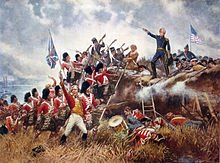
Next, Jackson defended New Orleans (brilliantly, to give the man his due) and emerged a Washington-like American hero. His road from New Orleans to the White House was long and rocky, but he became President in 1828 and won reelection in 1832.

Jackson was dedicated throughout his life to the removal of Indians from their lands in the South for resettlement them beyond the Mississippi. Toward that end, he effected passage of the Indian Removal Act in 1830.

This act required Indian tribes to sign treaties exchanging their original lands for new lands west of the Mississippi. Most tribes resisted, and the saga of bribery, coercion, and trickery that brought about the change would fill volumes. Among the Cherokee, for example, a small faction was bribed into signing a treaty which was then enforced on the whole tribe. Anger over this betrayal led to political assassinations among the Cherokee once they reached the new Indian Territory.

16,000 Cherokees were removed for the Indian Territory. 4000 died along the way. Jackson retired after his second term and died eight years later. By that time tens of thousands of non-citizens who had been resident in America for generations had been deported – excuse me, I meant removed – to beyond the borders of the United States.

**         **         **

We’ve looked at Andrew Jackson and Thomas Jefferson, two Presidents from the first half of the nineteenth century. We’ve seen what Jackson did about the non-citizens living in America. We’ve seen how different thinking was then on race and gender, even for someone like Thomas Jefferson. It’s good that we have progressed.

Or have we? I guess we’ll find out on Tuesday.