
Monthly Archives: March 2017

322. Time Enough for Love

tefljpg

Heinlein gets mentioned in this blog fairly often. I can’t really say he is my favorite, although I probably read him more often than any other science fiction writer. He isn’t the smartest writer, or the most thoughtful, certainly his longer novels drag, and his writing style doesn’t sing. But he’s the most fun.

I’ve heard several reviewers bemoan the lumbering style of the novels from the late part of his career, then admit that they still read them all the time. I get that.

It recently occurred to me that I have said I don’t much like his two most famous works, Starship Troopers and Stranger in a Strange Land, but I’ve never named my favorites.

Favorites. Plural. There have to be two, because books from the first half of his career are utterly different than books from the second half. In the beginning, Heinlein novels were short, tightly plotted, and polished to a high shine. Most of them are very good, but the pinnacle of that era for me is The Door into Summer. It and four others will be presented in tomorrow’s post.

Stranger . . .  was the watershed in Heinlein’s career. It was long, disjointed, and sloppy. He attempted to shake up the status quo after the rest of the culture had already moved on. Worst of all, it was boring.

He wrote other short, polished works in his middle period, but the long novels gradually prevailed. Twelve years later, Time Enough for Love was published and quickly became my favorite among the new type.

(My near favorite is The Number of the Beast. I read the opening to that novel a couple of times a year, but when they all set of for Mars, I close the book. It goes down hill into useless, irritating bickering, then wanders out of science fiction altogether into fairy land. Sorry, that’s not a place I care to go, but that first hundred-plus pages are perfect.)

If you like tightly plotted novels, don’t waste your time on Time Enough for Love. If you like long winded, rambling stories like your Grandpa used to tell, that is closer, but not fully accurate either. Lazarus Long, the grumpy, selfish, charming oldest man alive is at the center of the novel, but there is also a large cast of (mostly interchangeable) characters to break up the storytelling with current events. Oddly, the most compelling character other than Long is a computer.

One of the stories buried in the middle of the book is of novella length. It isn’t named, but I call it the Happy Valley interlude. If you’ve read the book, you know which part I mean. When I wrote my novel Cyan, it was largely because I had never found a novel that told the story of a planet from exploration through colonization, without getting sidetracked by ray guns and space battles, or some lame bit about lost Earth colonies, parsecs from home. The Happy Valley interlude was the sole exception to that lack, although it was way too short to satisfy me.

After Happy Valley, the story wanders on, stumbling from one interesting bit to another, with lots of throwaway philosophy, and sex about as exciting as seeing your dad pat your mom on the butt as they wander off to bed.

Sounds like I hated it. No, I loved it. i can’t explain it, and I don’t plan to try.

Heinlein is a storyteller with a voice that many find charming – and many dislike intensely. I can’t argue with those who hate him, but he’s got my number. I could sit and listen to him ramble on for hours and, metaphorically, I often do.
Raven’s Run 116

I knew a bit about Rusty. We weren’t friends – he didn’t have friends – but Joe Dias and I were as close to friends as he had. On the surface, the three of us couldn’t be more different, but Rusty had recognized something at core level that we all shared. I couldn’t say what; Rusty’s mind works too differently from anyone else for me to say with certainty what goes on inside it. I think it might have been a willingness to look life in the face, without illusions.

Rusty was in his forties. He had been in Viet Nam. No one complained louder than Rusty about the mismanagement of that war, but his complaints hadn’t kept him from volunteering for second tour of duty. He came home, as he said, “shot full of holes and leaking like a bloody sieve.” Once he had recovered, he headed north to Fort Bragg where he was born, and spent the next decade or so there. That was right in the heart of the country I was about to enter.

“If you want to understand pot farming, you have to forget what you read in the papers,” Rusty said. “Pot farming is farming. It’s damned hard work. To do it right is not easy and no one in their right mind would work that hard if there wasn’t a big money payoff.

“You hear people talk about throwing out a few seeds and coming back months later to harvest a fortune. That’s bullshit. The land they raise pot on wouldn’t raise anything if they didn’t work it, fertilize it, and irrigate it. And harvest – man, harvest is a bitch. You have to cut it and trim it and dry it and if you don’t do the job just right, it goes moldy and worthless. You have to do all that at just the right time because of the plant, but also because at that time, the weed is worth big bucks and someone will steal it if you don’t stand guard night and day.

“Most of the growers are small time. Some of them just grow a few plants for their own use, and others just try to make enough money to keep them going. You’ve got to understand where these people are coming from.

“People have been growing weed and smoking it since the Indians were there, and nobody thought anything about it. It grew wild and you smoked weed when you couldn’t afford booze. My granddaddy was a deacon in the local Methodist church and wouldn’t touch liquor, but he smoked it just as easy as he smoked cigarettes. It wasn’t illegal. Nobody thought it was wrong. Nobody cared.

“Then along came the sixties. Some of us went off to Viet Nam and landed in pot heaven. Other kids my age went down to the cities and became hippies. When all that peace and love shit started to fall apart, a big bunch of hippies, lots of them from San Francisco and L.A., decided the new big thing was to go ‘back to the land’. Course most of them had never been on the land, so they weren’t really going back to it. If they had, they’d have known better. I mean, I never saw any kid raised on a farm that went in for that shit.” more tomorrow

321. Home Grown Ecosystems (2)

Cyan is now available for pre-order through Amazon, with the eBook arriving April 17th. Meanwhile, I plan to repeat a few year old-posts that were designed to stir the blood of would-be readers just before an earlier release date that didn’t happen.

 —————————————-

Continuing our look at the creation of an ecology for Cyan. If you missed yesterday’s post, you might want to go there first.

We can take grasses and weeds for granted. Let’s give our trees multiple trunks bound together, like a strangler fig without its victim, and that should be enough. We need something like insects. We’ll call them Chitropods – chitro sounds like chitin, and pod means foot, so our reader will infer an exoskeleton without any further work on our part. Continuing the idea of inference, if we call the flying creatures who eat the chitropods pouchbats, the reader will draw a better picture in his mind that we could on paper.

The number of legs is important to Terrestrial arthropods, but lets bypass that by giving all our chitropods many legs, but with only one joint each where it meets the body. Now they have a rolling gait “like caterpillars on crutches”. Humor helps keep description from limping along. (Sorry, couldn’t resist!)

These are throw-away inventions. They could have been applied to any ecosystem and they are not systemically related to each other. They alone would be good enough for almost any SF novel, but not for one about scientists teasing out the essence of their planet.

Here we need a key differentiation, from early in evolution, from which a thousand lesser differences can be derived. Here it is for Cyan. Early in the development of chordate life, the vertebral column doubled at the posterior, giving the Cyanian version of fish twin tails. That changed everything. I’ll explain more fully later in a separate post.

On Cyan, the classes are Pseudo-pisces, Amphibia, and Inturbia. No reptiles, no birds, no mammals, no dinosaurs. The Amphibia are cold blooded. Inturbia are inefficiently warm blooded. The term Inturbia should imply “internal body temperature un-perturbed by external changes”. Not every reader will get that, but we need to reward our best readers by not spelling out everything.

There are a thousand other details, but for that, you will just have to download the book when it comes out July 5th.

***

I do have one more thing to share. I wouldn’t bother you, but since you’re reading a post about the backstage secrets of writing science fiction, I can assume that we are all nerds together here .

Inturbia have live birth. Cyanian amphibs have to return to water to lay their eggs, except for one group, the Sphaeralvids, who produce globewombs.

(Globewombs were) the closest thing to an amniote egg that Cyan’s fauna had developed – a transparent, leathery sac extruded by a Sphaeralvid mother and filled with a clear fluid like seawater. Into this she deposited fertile ova, then defecated. Then she separated from the globewomb and left it cached in the crotch of a tree, high up where it would receive full sunlight. On a bright day millions of these globewombs glinted in the treetops.

Algae from the Sphaeralvid mother’s bowels converted the feces into biomass and the Sphaeralvid nymphs fed off the algae.  When the feces were gone, the globewomb walls would break down, leaving the now sizeable nymphs free to face Cyan on their own.

Neat, huh? The globewombs are glinting in the treetops from the first day planetside. By the time the explorers understand what they are, the reader will have been wondering for some time. Globewombs don’t contribute anything to the plot, but since these are scientists trying to tease out the ecology of Cyan, we need some concrete examples of their work. Globewombs provide that.

They make me want to be there when they make the discovery – but that’s why I wrote the book.

Raven’s Run 115

Now there was a witness who could identify Alan and James Davis for attempted murder, and implicate Susyn as an accessory. A quick flight to Marseilles would solve that problem, except that the pair had once again failed to kill Raven and now they had two witnesses.

My death must have been planned before Susyn and I ever met.

Who was running the show? Not Susyn or Jim or Alan. Seventeen pieces of property that I knew of, and probably more that I hadn’t found, meant an organization with real leadership. Someone running that kind of an organization couldn’t move to another city for years to infiltrate Cabral, and wouldn’t fly across the Atlantic twice to make hits. There had to be at least one echelon above the players I knew, and that was what I had to uncover if I wanted a lever to pry Susyn and Alan off Raven’s back.

Chapter Thirty-two

I called Ed Wilkes again, early, then loaded up the Pinto in the pre-dawn light. I drove to a filling station for gas and a road map, then headed a mile deeper into the city to Rusty Dixon’s shooting range. He lived in an apartment over his business. I walked up the outside stairway and rattled his door, then made sure I was in plain sight through the uncurtained window. Rusty is a bit trigger happy.

A few minutes later he came to the door dressed in ragged jeans and shower sandals. His bare chest was scar pocked and hairless. In the years I had known him, his ponytail had gotten longer, and his hairline had receded, but nothing else seemed to change or age. He had Norman Rockwell red hair and the coldest pair of eyes you would ever want to look into.

He said, “What?” in the same irritated tone I would use on a Jehovah’s Witness.

I said, “Good morning to you, too, Rusty.”

He grunted and stepped away from the door, and I followed him into the ancient kitchen. It was a relief to know that he was going to be in such a good mood. There were weeks at a time that I wouldn’t go near him. This was about as friendly as he got.

“Are you in trouble?” he asked.

“A guy tried to kill me about a week ago, and I had to fight off a small Chicano gang yesterday, but that’s about all. Nothing I can’t handle. I need some information.”

Rusty won’t talk to anyone unless he thinks they’re tough enough to chew up nails and spit out tacks. He said, “What do you want to know?”

“Tell me about pot farming on the north coast.”

Rusty’s eyes went far away and his face became very still. He was going into paranoid mode, and I couldn’t afford that, so I quickly gave him an abbreviated version of Raven’s problem. His face cleared and he became talkative. more tomorrow

320. Home Grown Ecosystems (1)

Cyan is now available for pre-order through Amazon, with the eBook arriving April 17th. Meanwhile, I plan to repeat a few year old-posts that were designed to stir the blood of would-be readers just before an earlier release date that didn’t happen.

——————————-

Over in Backfile, you will find an eleven part document called How to Build a Culture, inspired by Poul Anderson’s How to Build a Planet.

I could also write a paper called How to Build an Ecosystem, but who needs to read all that. A couple of posts here should cover the subject, without boredom or overload.

The fact is, simply peppering your planet with a few well chosen and deeply odd critters is enough in most cases. Andre Norton did it all the time, and it worked for her. The frawns and yoris on Arzor are simply transmogrified bighorn sheep and alligators, but so what? They provide plot points and local color, and that is all that is asked of them. Marion Zimmer Bradley gave us a mammalian snake, a hyper-weasel, and an intelligent dinosaur who sent out pheromone soaked calling cards in Hunters of the Red Moon. What more could you want?

When I wrote Cyan, I faced a different situation. My crew was set down on an alien planet for one year, with the task of coming to understand its weather, geology, and ecology in order to prepare for colonization. They were all scientists, so their actions and conversations called for a deeper understanding of their new world than any other kind of science fiction novel would have required. That challenge was half the fun.

When I began Cyan, I had been studying ecology for about twenty years, starting back when I had to explain what the word meant. I later came to understand the essence of Earth’s taxonomy in the most rigorous possible way – I had had to condense it to a level which middle school students could understand without dying of boredom.

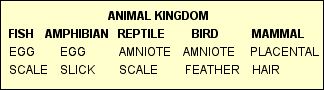
Scientists should forgive the following chart and paragraph.taxon

Drop a salmon egg on the gunwale of your canoe and it will dry out in minutes. A chicken or turtle egg would survive the same treatment. This is the meaning of amniote egg (although there are other, competing meanings). Creatures who lack them, must lay their eggs in water. The rest of the chart should be clear, although simplified. For example, birds have scales on their legs as well as feathers elsewhere, and I skipped Dinosauria altogether.

Now pull up a chair and lets build Cyanian ecology. It needs to be wierd but recognizable – that’s the key to all science fiction invention. We also need restraint. You can only explain so much to your reader without losing them, and beyond a certain point, your backstory is wasted effort.

Come back tomorrow and we’ll dive more deeply into Cyanian ecology.

Raven’s Run 114

I pushed away from the computer and paced around the room, trying to make sense of it. 

Assumption: the Davis family was heavily into pot farming. Pot makes a lot of money and the state spends a lot of time and effort trying to stamp it out. But it isn’t a high priority item; not like cocaine. The President of the United States declares war on Colombian cocaine cartels, not on hayseed, backwoods pot farmers. State law enforcement makes an ongoing effort to control the business, and sporadic mass raids, but it is just enough to keep prices up. Almost a partnership. If the state tried harder, it could cut into profits. If the state stopped trying, supply would go up and prices would go down.

Daniel Cabral’s arguments were starting to make more sense to me, but they still ran up against the usual counter-argument. Most would-be conspirators aren’t smart enough to run a conspiracy.

So there was a connection, but it was a tenuous one. If I were into pot farming, I might want to infiltrate the local sheriff’s office, but why Cabral’s organization?

Cabral did have a staff dedicated to finding out all there was to know about drug enforcement, in order to discredit it. If I were a big pot farmer, and I wanted a pipeline to the agenda of the state law enforcement people, I might give a lot to tap into Daniel Cabral’s database. It would be safer to let Cabral’s people collect the information, and then steal it from him. The only other obvious possibility was that they wanted to derail Cabral’s attempts at legalization, and Susyn was too smart to believe that Cabral was going to succeed in this decade.

So, Cabral had useful information, and Susyn had infiltrated his organization to get it. It made sense, and nothing else did. Then one night Raven found Susyn where she should not be and blew the whistle. But no one listened, so Raven hired Harvey Jacks to pursue the matter further.

Harvey Jacks, whose cover was as a private detective, but whose real profession was blackmail.

Much of what I “knew” had come from Susyn. She had named Adrian Brock, and it was beginning to look like he was not part of the game. Suppose the story was true, with only the names changed. Susyn had said that Jacks did the investigation, found the connection, then sold his information to Brock. Change the name Brock to “whoever runs the Davis family”.

Then, according to Susyn, Jacks had tried to extort another payment and had been stepped on. To save his life, Jacks had claimed that he had copies of his report sent to Raven. It had not saved his life, but it had put Raven’s in danger.

When Jim and Alan Davis tossed Raven overboard, the Davis family must have breathed a sigh of relief – until Raven called home from Marseilles. And Susyn had been there to find out about the call. Then they had all their old problems back along with a witness who could identify Alan and James Davis for attempted murder, and implicate Susyn as an accessory. more tomorrow

319. What’s in a Name

nam-pgIt is said that Louis L’amour wrote the same novel a hundred times. It has been said that Robert Heinlein wrote the same character a thousand times.

Do you remember All You Zombies? No? Well, that’s not surprising. It was first published in 1959 and it isn’t about zombies, but about a man(sic) who is every character in the short story, by means of time travel and a sex change operation.

Even Lawrence Smythe, the lead character in Double Star, who starts out an anti-Heinlein character, becomes a true Heinlein character by the end of the novel.

Before we decide that this is a fault, lets look at the names Heinlein uses.

Valentine Michael Smith
Woodrow Wilson Smith
Maureen Smith
Johan Sebastian Bach Smith
Lawrence Smythe
Max Jones
Oscar Gordon
Wyoming Knot (All right, that one was a bad pun that doesn’t fit the pattern, but I had to include it.)
Thomas Paine Bartlett
Patrick Henry Bartlett
Daniel Boone Davis
Andrew Jackson Libby
D. D. Harriman (Think E. H. Harriman, tyrant of American railroads.)

Good God, what bigger clue do you need? Do you think Heinlein couldn’t think of interesting or unusual last names? Or that he couldn’t think of names not already used by famous Americans? These are American everymen. (Or women. Or both, in alternation.) No wonder they all look alike.

They’re also Bob Heinlein clones. And that’s okay by me.

Raven’s Run 113

Marriage records confirmed that Susyn’s maiden name was Davis. Birth records gave me Susyn’s place of birth, a small town in northern California, and her parents’ names. That led me to siblings, including one named James and one named Alan. Interesting. DMV told me what kind of car she drove and gave her Sacramento address. Checking back through previous addresses, I found the same one her ex-husband still maintained. James Davis drove a BMW and also had an address in Garberville. I checked a map. It was five blocks from Susyn’s ex-husband’s house. Alan Davis drove a Jeep Cherokee and lived in Redway, a little town just outside Garberville.

I put in a call to Ed Wilkes. He was staying in a guest room at the Cabral house with its own phone extension. I caught him getting ready for bed.

“Ed, did Interpol run a check of fingerprints on Jim Davis with the FBI?”

“Yeah, didn’t I tell you?”

“No.”

“There was nothing special in his criminal record. A DUI, a couple of arrests for possession of marijuana, and a number of unsuccessful tries at catching him for pot growing. Just your typical back woods cowboy growing a little weed in his back yard.”

“Address?”

He gave me the same address in Garberville, and I told him about my findings.

“Now isn’t that interesting? A family business of some sort? I wonder what?”

“I’m beginning to get a picture.”

“Me, too. I’ll run Alan Davis by the bureau tomorrow. Call me if you get anything else, but wait till morning, OK?”

How does the old song go? You don’t tug on Superman’s cape, you don’t spit into the wind – and you don’t go hiking in Mendicino county in October. Not if you value your life. You just might stumble into someone’s pot plantation at harvest time and get your head blown off. Marijuana is California’s biggest cash crop, and most of the back-to-the-land hippies of the seventies that got the ball rolling have been run out by others who have no aversion to violence.

Maybe. And maybe the Davis clan all live in Garberville for the scenery. But that wasn’t likely. It would be good to see if they had any land there, outside the town. It might be rented under informal agreements or they might be squatting on government land, but if they owned land it would be in the records.

It took a while, but when the printout came through I had a list of seventeen properties owned by Alice Johnson, Susyn Johnson, Alice Davis, Susyn Davis, Jim Davis, Alan Davis, and William Johnson. There were no Fletchers. Apparently that was just an alias. None were owned by Adrian Brock or any reasonably close variation on that name. I got out a map of Mendicino county.The properties were all small. The largest was ten acres. They were scattered all over the county and all were well away from centers of populations, and well away from main roads.

Interesting, indeed. more tomorrow

318. Too Many Exoplanets

trappppIt’s official. The good old days are gone.

About a year ago, I said:

(T)he party is nearly over. We now have the capacity to discover extrasolar planets, and new ones are found every year. Fortunately for latecomers to the planet builders guild, megaplanets are easier to find that Earth sized ones, and NASA keeps cutting funding. Still, it won’t be too many years before you can’t decide for yourself where, within the limits of orbital mechanics, you want the planets of Alpha Centauri or Procyon to be.

Science has a way of getting somewhere a lot faster than you would expect. Manned space exploration doesn’t fit that statement, because it runs on politics, not science.

On February 22, in Nature, it was announced that seven Earth size planets had been discovered circling a single star only thirty-nine light years from Earth. Far more important, all seven orbit within the band of temperature where liquid water is a possibility. By contrast, our system has one such planet, Earth, and maybe Mars for a few minutes on a hot afternoon near the equator in mid-summer – if the ice doesn’t sublimate instead. Seven; its unheard of.

The star is TRAPPIST-1, an M dwarf. 

In fact there has been a mini-revolution in the search for exoplanets. NASA’s Kepler space telescope has found more that 4700 potential planets. Many of these will no doubt turn out to be false positives, since the techniques of the search are not perfected, but it is still a staggering number. Most of these were found around stars similar to our sun – where else would you look first? Very few of them are both Earth sized and at the right distance from their star to have the possibility of liquid water.

As I said in Cyan, “planets of no use as real estate.”

Since a mechanical failure in 2013 compromised its ability to orient itself, Kepler has concentrated on observing red dwarfs. To eveyone’s surprise, the planet candidates found around these small, dim stars tend to be more Earth sized. And there are a lot of them.

The TRAPPIST-1 discovery, however, was not by NASA but by the TRAnsiting Planets and Planetesimals Small Telescope group operating out of the University of Liège, Belgium. That explains the use of caps; TRAPPIST is an acronym.

If you want details – and of course you do – the best source is here. This page from the University of Liège is in French, but the video which will self-start is in English, and gives enough details to stir the blood of any space or science fiction fan.

It took me about three seconds to start speculating about what kinds of novels could be written about the exploration of the TRAPPIST-1 system. Suppose most or all of the seven planets had some form of life, all evolving independently. Suppose we write about a paleontological mission on a planet which had vertebral life, then lost it; these dwarfs have a solar wind that operates heavily on planets so close in. Suppose at some time in the deep past, a spacefaring civilization arose on one of these planets, colonized the others, and then died out. Or didn’t die. Or seems to have died until our intrepid explorers begin to poke around.

Okay, I was wrong. The golden age is still here.

Raven’s Run 112

Back at the car, I had worked up a sweat even in the chilly ocean wind, but it had barely taken the edge off my energies. Adrenaline and testosterone; the macho cocktail. I had had a powerful infusion of each today, and it would be a while before I was calm again.

The sun had dropped behind the evening fog bank as I ran, and now an early dusk fell across the city. I drove through the park as fog tendrils wove tapestries among the trees, watching joggers bundled against the chill and the last rollerbladers of the day, all heading somewhere for a warm haven against the damp and cold. 

I found a pay telephone and a fast food joint. Ed Wilkes was not in, but would be back in an hour.

While I was running, it had occurred to me that the strangest thing that had happened all day had slipped past my notice in a testosterone haze. Laura Jacks had simply assumed that I would accept her actions and her husband’s “profession” as normal. She had led me to incriminating evidence with childish (and that was the word) innocence. No wonder old Harvey had taken her out of the business and kept her at home where she could do him no harm.

Chapter Thirty-one

When I got back to Dias Investigations, everyone had gone home. I let myself in and called Ed again. He was still out, but he called back before I had time to brew a pot of coffee. There was no way I could sleep in my condition, so I planned to spend the night at the computer.

Our conversation was brief. He had searched Raven’s room at the Cabral’s Sacramento house and had found the report Jacks had sent her. He also had a dozen pages of data on the various actors in our play. He faxed it all to me, and I skimmed it sheet by sheet as it came out of the machine, then sat down for a closer reading, though I had seen some of it in Paris.

Alice Susyn Johnson had worked for Cabral for three years.  Her personnel record gave her salary, social security number, residence, and next of kin.  The name Fletcher did not appear anywhere in the file.  The next of kin was William Johnson, listed as an ex-husband, with a residence in Garberville. A visit to her apartment would be worth doing, but I could leave that to Ed since he was in Sacramento anyway.

There were four James Davises in the Sacramento phonebook. According to Ed’s notes, none of them was likely to be our James Davis. A fax of the Allens showed dozens, but none of them jumped off the page.

There was a great deal on Adrian Brock. He was an investor, contractor and real estate developer. He cultivated contacts at the capital and there were hints of a shady doings on the side. Ed was investigating further, but I had his name from Susyn. There was no reason to believe that she would give me the name of her real employer. It was probably a false lead.

I would have to do it the hard way. Computers were new on the scene; I had helped set up Joe’s system, and now it was time to put it to use. I wasn’t the internet, of course. That was years in the future. But I knew how to use the crude beginnings of what it would become. more tomorrow