Author Archives: sydlogsdon

569. Apollo: Profile of a Mission

This is the Apollo 9 LEM, photographed after it separated from its CSM. NASA photograph.

This was originally intended as a detailed picture of the Lunar Excursion Module, but it became clear while writing that before I could talk about the vehicle, I had to lay out it’s place in the scheme of things. This post then became a generic mission profile, and details of how the LEM worked will come in the next post.

If you Google lunar lander, you will find the LEM, but you will also find a lot of forgotten craft. Both the United States and the Russians had unmanned lunar landers and lunar crashers. That’s not a joke. Before soft landing was perfected, we learned a lot about the moon from probes which photographed all the way down to a crash landing. Those piles of rubble that dot the moon were the ancestors of Spirit and Opportunity.

That’s not good enough for a craft that was to be, in the vernacular of the day, man rated.

The LEM, or LM as it is often called today, was unlike any manned craft before or since. It has been called a “true” spacecraft, but in fact it only got half way toward that ideal. A “true” spacecraft, built in space and powered by a low force, long acting engine, would never have to endure the vicissitudes of atmospheric friction or high gravity.

The LEM did have to withstand multiple gravities during its launch from Earth, and again on landing and taking off from the moon. However, it never had to come in contact with atmospheric friction because it spent the launch hidden behind a streamlined clamshell shroud. It didn’t itself have to be streamlined, and its skin could be flimsy. The astronauts joked about being afraid of accidentally putting a boot through the side of the vessel. At least I think it was a joke.

The Saturn 5 is called a three stage rocket. It could as easily and accurately be called a six stage rocket. The first and second stages were designed to burn all their fuel and fall away. The third stage carried the rest of the vehicle into orbit and then shut down; at that point, it’s fuel was not exhausted.

If the mission was to lunar orbit or landing, the Apollo craft stayed in low earth orbit long enough to establish that all was well, then the third stage fired again to send the craft toward the moon.

On Apollo 8, there was no LEM, so in December I only described the Saturn and the CSM. Apollo 9, whose fiftieth anniversary comes in about ten days, had a LEM but never left near Earth orbit. Apollos 10 through 17 were lunar missions. They had similar flight plans and used all “six” stages.

When the Saturn third stage fired a second time, it put the entire remaining craft into a orbit toward the moon. The third stage would have gone right along with the rest to the craft, if it had been allowed to do so.

What happened next on each mission was well presented in the movie Apollo 13, but only if you already knew the what, the when, and the why. It was drama, not documentary, but with excellent animation. If you have a DVD of Apollo 13, take a look.

The LEM, and the CSM (command and service modules, treated as one) had initially been stacked vertically above the third stage, with the LEM protected by a shroud. The attached NASA drawing also shows the abort rocket above the command module, but that had already been discarded by the time the craft was actually on its way to the moon. All three astronauts were in the CM. The CSM, the LEM, the shroud, and the third stage are all still in one piece.

Now the CSM was released; it moved forward on maneuvering thrusters and turned a one-eighty. The LEM was still attached to the third stage. Now the clamshell opened up and the CSM moved carefully forward and docked with the LEM, front of CSM to top of LEM. The LEM was released from the third stage and towed away by the CSM. This position allowed the hatches on the CSM and LEM to mate so the astronauts could move freely between the two craft. The legs of the LEM, previously tucked under to fit within the shroud, now extended into lunar landing positions.

From this moment until lunar orbit was achieved and it was time for the LEM to move away from the CSM and land (or nearly land in the case of Apollo 10), the LEM/CSM were essentially one space craft. The Saturn third stage now made one last burn, changing to an orbit that would carry it out of the way.

For about two and one half days, the LEM/CSM drifted toward the moon. Upon leaving low Earth orbit, the craft had been traveling at close to 25,000 miles per hour. It should have reached the moon in ten hours, but the Earth’s gravity was pulling at it and slowing it down. Approximately six sevenths of the way to the moon, the craft was traveling at it’s slowest speed. At this point the Earth’s gravity and the moon’s gravity were in equipoise; thereafter the moon’s gravity accelerated the craft again.

At a point on the back side of the moon, the SM engine fired, slowing the combined craft enough to keep it from whipping around the moon and returning to Earth. It entered orbit of the moon. This burn, and the later one which put the CSM on its homeward trajectory, make the CSM essentially the fourth stage of the Apollo/Saturn mission.

Now it was time for the LEM to earn its keep.

What’s that you ask? Stages five and six? Where were they? The LEM itself was a two stage rocket. We’ll get details on that next post.

Running From President 9

Leap Alan Hed was going to Tulsa, to have it out with Billy Joe Barker. It had been eight weeks since he left his home in Dannebrog, running from the media circus that Barker had set in motion by calling on Americans to write in Leap’s name for President. Barker had started it all; Leap figured Barker owed it to him to at least try to stop it.

It was hard for Leap to travel. He could go by bus, slumped down, face covered by the brim of his hat, and take his chances on being recognized. That was how he got to Hays, Kansas. There he picked up a ride with a friend of a friend from Dannebrog who took him as far as northern Oklahoma. He found himself stranded in Ochelata on a Sunday morning.

By now Leap was hungry for normalcy, and on Sunday morning, that meant church. He couldn’t go in, of course. If you are from the city, or the north, you may not know this, but when you go into a small town southern church as a visitor, everyone in the congregation will come up and shake your hand, ask you your name, welcome you to their fellowship, and half of them will invite you for Sunday dinner. Leap would have loved that, but since his face had been in every newspaper in America . . .

The Ochelata Baptist Church was a long, low green roofed building, built around a courtyard. There was a park on the east, so that was the direction Leap used for his approach. He walked in, as bold as if he belonged there, across the park to the blind back of the sanctuary where he settled down hidden by a few trash cans and sat for two hours listening to the service taking place on the other side of the wall. From time to time, his eyes were awash with the moisture of homesickness.

He slept the day out in a wooded ravine, and walked southward on Highway 75 during the night. Morning found him somewhere, but he didn’t know where, hungry, cold, and discouraged. He was in front of a convenience store, on the outskirts of a small town, so he pulled up the hood of his sweatshirt and went in. He kept his eyes floorward as he picked out a couple of donuts and a cup of coffee, and didn’t look up at the checkout where the surveillance cameras are clustered. Outside again, he found a bench at the edge of the light.

He was on his second donut when a pickup rolled to a stop. A man of fifty got out and exchanged a few parting words with his driver before she u-turned and disappeared. Everything about their casual friendliness said man and wife. He was carrying a brown paper bag that said “lunch”. He crossed to Leap’s bench and sat down.

He glanced at Leap, looked away, then his head snapped back again. He studied Leap for about five seconds, then turned his head back toward the road and didn’t look again.

Discovered! This man knew exactly who Leap was, but he made no acknowledgment. With eyes averted, the man talked as casually as if he hadn’t guessed Leap’s identity. Leap had seen that reaction several times in the farm country and small towns where he had been wandering these last weeks. People in rural America have a respect for privacy and a willingness to mind their own business which he found admirable

Leap’s bench mate said was waiting for a bus that would take him west to Sperry where he had a job as a school custodian. And, yes, there was another bus that went south to Tulsa. After twenty years as a skilled lathe operator in a small factory, the man had lost his job after 2008. He had been out of work, except for odd jobs, for seven years, and now he was pushing a broom at age fifty, and glad to get the work.

He had gone from Democrat, to Republican, then further with the rise of the Tea Party. He had no faith in government, no faith in politicians, but he still had faith in free enterprise. Where he had worked all his life, the owner had been just down the hall, working all day behind a second hand desk in a room with plywood walls. They had gone to the same church, and every decision the owner had made had included concern for his employees.

The factory made small parts, that went onto larger parts, that then went onto automobiles. In 2008, the system collapsed and the factory folded. Leap’s temporary friend blamed free trade and Hillary and Obama. He did not blame large corporations and their CEOs. His vision of free enterprise was a hard working owner in a dusty plywood room, with forty hard working employees out on the floor making things. Multi-national corporations were outside his experience and outside his imagination.

The bus rolled up with whoosh of air brakes. As the man got up, he added, shaking his head, “Donald Trump says he’s going to fix all that.”

“Do you believe him?”

“No, not really.”

“Are you going to vote for him?”

“I might. Maybe not, though. It’s hard to vote for a man that full of hate.”

After a pause, he added, “I might just throw my vote away on this guy called Leap. That way I won’t be responsible for what happens later.” more Monday

Running From President 8

From Leap Alan Hed, somewhere in America,
to Anne, a favorite cousin, location not given.

Dear Anne,

I’m still on the run from the news media and from those who would write me in as President.  I’ve been on the road now for about six weeks. I’ve lost weight and grown a beard, but anyone who looks closely could still recognize me, so I stay hidden most of the time. That was almost a blessing at first. The high Rockies were beautiful when I could stay there. It has been getting colder every day for a while now, and I have had to come down, so I am once again hiding too close to people.

I thought the desert would be open and empty enough for me to go unnoticed, but it isn’t. I stumbled onto a deserted shack and made myself comfortable last night. Then I had midnight visitors. Five Mexicans: two young men, one young woman, a child, and an old man. They must have been a family. You could tell they were just over the border and on their way north looking for work.

Donald would have crapped himself to be caught by a bunch of “rapists and murderers”, but, of course, they were just frightened people, looking for a little peace. And hungry. Both hungry in the long term sense that had sent them looking for work, and hungry in the immediate moment. I don’t speak enough Spanish to matter, but sometimes smiles and gestures are enough. I shared my food with them. I cooked up all I had, but it wasn’t enough. Tomorrow I’ll have to take a chance and find a place to buy more.

They left this morning before the sun came up. They were very quiet as they went, but the child’s voice woke me. The old man was last to leave. He is probably my age but he looks a hundred years old. He saw that I was awake, so I said, “VIa con Dios,” and he made a little wave as he slipped out the door. I wish them well, but I fear for them. I fear that they will be caught, or die in the desert as so many do. And I fear for what will happen to them after November.

Damn these people who chose Hillary and Donald, and now they hound me to run as a joke President. Or worse, a real one. I’ll bet they thought it was funny, when it all started. Well, very little of this seems funny to me now.

I’d better quit so I can mail this when I go looking to buy food. Anyway, if I get any angrier, I’ll set the paper on fire just touching it. Soon November will have come and gone, and I can come out of hiding, and see you and Ted again. Bake me an apple pie, say November 15th, and I’ll be there to eat it.

I wonder what will become of my new Mexican friends in November?

                  Love,
                  Leap

more tomorrow

568. Presidents Day

I agonized over this post more than any in memory. I am not completely cynical, and the presidents I address, even the worst of them, also did things worthy of the office. I came back to this post a dozen times after I wrote it to ask myself, “Do I really want to say these things?” The answer is, “No.” But I will say them anyway, because the truth is the truth.

===========

Presidents Day. Humm.

We used to celebrate Lincoln’s birthday and Washington’s birthday, and ignored the rest of them. That wasn’t such a bad system. It allowed us to avoid linking Andrew Jackson with his betters.

How about our recent Presidents? Should we celebrate them?

John Kennedy. I have a friend who grew up in Boston and would punch out anyone who spoke against JFK, but let’s tally up what he really did. He lost the Bay of Pigs by abandoning the Cuban insurgents he had encouraged. He faced Khruschchev over the Cuban Missile crisis so let’s give credit for that, but he also sent Americans to Vietnam. Kennedy supporters claim he would have pulled out, if he had lived, but who knows. The jury will always be out of what might have happened.

Lyndon Johnson. He has massive accomplishments pushing through Kennedy’s programs and his own War on Poverty, but he also lied to the American people, lied to Congress, and conducted a secret war including massive bombings outside Vietnam. He, and Nixon after him, are responsible for over three million unnecessary  deaths. There is no responsible way to avoid calling him a war criminal.

Richard Nixon. Watergate, of course; it hardly needs repeating. He also opened up China and got us out of Vietnam by declaring that our defeat was a victory, and then running like hell. I really don’t know what else anyone could have done by that time, but why did he wait all those years and waste all those lives before telling the Big Lie? Maybe to win a second term?

Gerald Ford. They say his pardon saved the country from division and heartache. I say it only gave later Presidents bad ideas that should have been squelched fifty years ago by trying Nixon for his crimes.

Jimmy Carter. An attack on an embassy is an attack on American soil, but Carter sat impotent in the White House through the Iran hostage crisis.

Ronald Reagan. Tax cuts for the wealthy. Trickle down economics that never trickled down. Also the Iran-Contra affair in which Regan himself avoided punishment but fourteen members of his administration were indicted.

George H. W. Bush. “Read my lips.” Actually, going back on his promise regarding taxes was an act of courage that probably cost him a second term. That honorable act was sullied when he pardoned those convicted in Iran-Contra.

Bill Clinton. Plenty of good ideas, but we just remember him as the man who couldn’t keep his hands to himself.

George W. Bush. “Brownie, you’re doing a heck of a job”, and other stumble-statements too numerous to list and too painful to remember.

Barack Obama. I like the man, but I spend eight years cussing under my breath at some of the foolish things he did.

Donald Trump. I once said I didn’t consider Trump evil, just foolish. Subsequent events suggest that I was probably wrong. His fake declaration of emergency pretty much clinches matters.

Were these the best men in America?

Let’s celebrate President’s Day by taking a hard look at what’s coming our way in 2020. They don’t all look good. Let’s vow to make better choices for the future.

Lincoln and Washington, where are you?

Running From President 7

This continues the interview with Leap that began last Wednesday.

G S..: “If the choices are so unpalatable, would you choose one anyway?”

Leap: “I would vote for Hillary — reluctantly — if I could, but since I’m on the run from the media, there is no way I can get within miles of my polling place.”

G. S.: “You wouldn’t vote for a write-in, or a registered third party?”

Leap: “Third parties never win. Third party candidates don’t expect to win, they are just using the election to make a statement. If a third party candidate won, it would scare hell out of him. Just like this write-in nonsense has scared me.”

G. S.: “So you don’t really like Hillary, you think third parties are throwing away your vote, and you don’t want the job. So why not Donald Trump?”

Leap: “The wall. A million reasons, but most of all, the wall.”

“I worked as an engineer all my life. My company built farm equipment. Once, they sent me to California for a few years, to a plant near Salinas.

“There weren’t any undocumenteds in our facility, although more than half the staff were Mexican American. Several of them became my close friends, and they are the ones who opened my eyes to how things work.

“I spent a lot of time in the field, checking out the equipment we built. Everywhere I went I saw swarms of migrant farm workers. Mexicans – that’s what everybody called them. Whether they were Mexican American, legal immigrants, or illegal immigrants didn’t matter. Mexicans. I saw how hard they worked and under what terrible conditions. I saw the shacks they lived in, and it didn’t seem right. It didn’t seem American.

“I asked my Mexican American friends back at the plant and they told me that farm workers live in fear of immigration officers. Even the ones who are here legally know a whole community of those who aren’t. Children who were born here, American citizens, live in fear that their parents will be deported.

“It makes them pliable. Deportation is a whip in the hands of their employers.

“A wall – what a joke. We have a wall already. It doesn’t stop the hungry, because it isn’t supposed to stop the hungry. It exists to let workers through, and then remind them that if they step out of line, they will find themselves back on the other side.

“America couldn’t survive without a wall that lets through workers who will be silent and docile and work for slave wages under slave conditions.”

=========

Foolish Leap. He set up the interview to show how much he didn’t want to be a write-in candidate, the made the mistake of letting his passion show. He made the mistake of making sense, in a world that is hungry for sense, so of course he made his own life worse.

The interview galvanized the nation. Leap’s anti-candidacy went from being a curiosity to being a real alternative. New websites sprang up everywhere, along with tweets by the hundreds of thousand, and even a dozen fake Facebook accounts.

The biggest of them all was hashtag #Leapthewall. Commentators were forced to search for a new term to replace “went viral”. Viral didn’t do it justice.

And Leap went back on the run. more tomorrow

567. Bridges of Longing

Every time I print some poetry, my own or favorites from other writers, my readership spikes. It’s got to be the tag POETRY that does it.

The problem is that I don’t like 99.9 percent of the poetry I read today. My rule is: if you can rewrite a poem without line breaks, and that turns it into the first couple of sentences in an unfinished short story, then it isn’t a poem. Almost everything I read nowadays fails that test.

I’m not talking about rhyme. Check out Spoon River Anthology or anything by Yeats or Frost to see the flip side of what I’m complaining about.

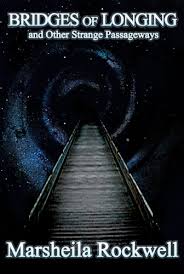
When I do find exciting work by a contemporary author, it knocks me out. Example: Marsheila Rockwell.

I met Marsheila at Westercon in 2017 at a reading. She and another author, a couple of author’s friends, and I sat down in a conference room that would have held fifty. I was the only stranger in the room.

Westercon 70 was odd that way. It was very much a home town version of a regional conference. The Cosplay and Filk venues were packed, but the book signings and author’s readings were almost (sometimes completely) empty.

Her stories were fine and her poetry was excellent. I bought her collection Bridges of Longing and there wasn’t a poem in it that wasn’t wonderful. There were some I didn’t like, primarily in the section Those Who Wait, but it was only because they were harsh to the point of hopelessness. It wasn’t because they weren’t true. The same was true of some of her stories. They were superb, whether they matched my taste or not.

You see, Marsheila and her sig-other and writing partner primarily operate in the fields of horror, dark fantasy, and D & D, all places I have no interest in going. I would certainly never have found her except that fate steered me into that reading.

Her poetry, on the other hand, is humane and feminist, and always with a hard edge. It sounds like real life, even when it is supposedly about goddesses and harshly treated mermaids. She is the best new poet I have encountered in many years, even if her novels aren’t in my wheelhouse.

I would say, buy Bridges of Longing. The poems alone are worth the cost many times over, and if you have any liking for fantasy, you will enjoy the stories as well.

You might also check out her website http://marsheilarockwell.com/ .

Running From President 6

Leap Alan Hed is on the run, not from any crime, not from angry criminals, but from the insatiable news media. When Billy Joe Barker proposed him as a write-in candidate for President, they descended on his house and he fled. Now a couple of weeks have passed.

He went north at first, toward the Canadian border, but he couldn’t find a way to pass over without being spotted. He turned south-west and tried to lose himself in the Rockies, but things have changed there, too. Where every cirque and valley used to be filled with old-time prospectors, broken down cowboys, and overly hopeful hippies, now every mountaintop is capped by a mansion with a movie star living inside.

I’m not sure where he went after that. He didn’t confide much to me, and after the paranoia set in, I don’t know how much of what he said was true. Being on the run will do that to you.

The media was hot on his trail and they have almost infinite resources. They would have found him in no time if they had cooperated. Instead, they guarded their sources, set misinformation rumors afoot, and generally got in each other’s way.

Leap stayed one step ahead of them, but it wasn’t a life worth living. He finally decided to give an interview to satisfy the world’s curiosity, and get everyone off his back. Poor fool. Giving one interview was like the old story of the man who reached for a bucket of water to put out a fire, and found out too late that it was gasoline. But Leap was an innocent, and innocents are doomed.

He wrote a letter to G. S. at —BC news, proposed a time and place. They met secretly in the home of a distant relative (who was himself harassed for the next three weeks).

==========

G. S. spoke to the camera, briefly outlining events to date, then asked, “Why did you run and why have you agreed to this interview?”

Leap described the siege of Dannebrog, and some of the things that had happened since, then said, “I’m hoping that telling my story will convince the American people that I am not someone they want to write in for President, and that I can just go home and get my life back. That would be a miracle.”

G. S.: “I’m not sure that is a miracle we can provide, but go ahead, tell us why you think Americans have become so fascinated by your candidacy.”

Leap: “I’m not a candidate. I’m not running for President. I’m running from President.”

Foolish Leap. He still didn’t understand the phenomenon he had become. Those three words –- Running From President –- which his farmer friend had said in Grand Island, became the stuff of a thousand headlines and a million tweets.

G. S.: “Why do you think America has embraced your non-candidacy, then?”

Leap: “Look at the alternatives. We have three hundred million people in America, and this is the best we can put up for President? There must be a thousand Democrats that would make a better president than Hillary, and a hundred thousand Republicans who would make a better president than Trump. But I am not one of them.” The interview continues Monday.

Running From President 5

Leap was born in 1952, on Leap Day, which was the start of all his troubles. He made his run from the media in his 64th year. That isn’t an age to start running.

Leap didn’t drink much, had never smoked, and had never had a wife, so he wasn’t too broken down. Still, 64 is 64.

Leap followed the genetic pattern of the American species. He headed west. That wasn’t hard in Nebraska where all county roads are routed by compass. He was in the middle of nowhere, half way to Rockville, when a pickup ground to a stop beside him and the driver motioned him to get in. The cow manure crusted on the wheels and fenders was reassuring; this was not a TV person. Besides, the sun was coming up, Leap was tired, and an old man walking down an empty road would be easy to spot from the air. Paranoia, or whatever you call it when they are really after you, had set in.  Leap had no problem imagining a horde of drones fanning out across the landscape, looking for him.

True to form, all Leap got from the driver was a nod and a grunt until they were back up to speed and a mile had passed under the tires. Then the driver said, “You’re Hed.” Leap admitted that he was. “Saw your picture in the newspaper. Heard about the ruckus in Dannebrog.” Then he called the newsmen a word that two men in a truck might use, but would never like to see written down. Leap agreed with him.

Another mile passed. The driver said, “How did you get into this mess, anyhow?”

“How does a guy get struck by lightning? Bad luck. Real bad luck.”

“How come you’re running for President?”

“I’m not! Some (and he used that word again) from Tulsa called me up and tried to get me to run as a joke. I said no, and he didn’t take no for an answer. Now the whole country wants me to run, or pretend to run, and I don’t know what I’m going to do.”

At Rockville, the driver turned left, crossed the Platte River and followed highway 68 toward Ravenna. He said, “You got any money? If you’re gonna run, you’ll need money.”

“Some. I took the rainy day money out of the sock drawer before I left.”

“I could loan you forty.”

“No, you keep it. But thanks.”

They drove on in silence. Fifteen miles later, as they were coming into Grand Island, the driver said, “I’ll drop you at the bus station.” Leap nodded. He didn’t ask the driver’s name. It didn’t matter, really. In the short time he had lived in Dannebrog, Leap had met a dozen men and women who would have helped him out just as automatically, with no hesitation and no thought of reward. In fact, Leap would have done the same himself.

At the bus station, he walked around the pickup and reached up to shake the hand of his new, anonymous friend.  For the first time he saw him full face, not profile. He was tanned and whiskered, lean, maybe forty years old, with a ball cap and a khaki shirt. He grinned at Leap and said, “Running from president. God almighty. Only in America.”

Leap said, “What would you do if they tried to stick you with the job?”

“Run like a deer, leap like an antelope, burrow like a prairie dog. Anything it took to get away.  Good luck. I hope they don’t catch you.”

**        **       **        **

For those of you who don’t live in Nebraska but still recognized the name Dannebrog in the last two posts, yes, you’re right, this is also an homage to Roger Welsch, who would also run from President. more tomorrow

566. The Negro Speaks of Rivers

The Negro Speaks of Rivers
by Langston Hughes

I’ve known rivers:
I’ve known rivers ancient as the world and older than the
     flow of human blood in human veins.

My soul has grown deep like the rivers.

I bathed in the Euphrates when dawns were young.
I built my hut near the Congo and it lulled me to sleep.
I looked upon the Nile and raised the pyramids above it.
I heard the singing of the Mississippi when Abe Lincoln
     went down to New Orleans, and I’ve seen its muddy
     bosom turn all golden in the sunset.

I’ve known rivers:
Ancient, dusky rivers.

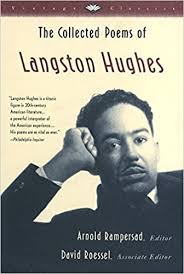
I am a great fan of Langston Hughes. I keep his complete works in my library, and I had hoped to dip into it to publish one of his less well known poems here during Black History Month. I couldn’t.

I try to stay on the sunny side of copyright law out of respect for authors and to keep out of jail. However, I am no lawyer, and copyright law in America is an incredible snarl, so I depend on others for my information. I went to Project Gutenberg, an organization dedicated to placing old literature in ebook format. They are well organized and quite careful about only using material in public domain. They have almost nothing by Hughes, so I googled, which only muddied the picture further.

I like to place pictures as teasers above each post. Other than the ones I have created myself, I get most of them from Wikipedia since they specify (if you click a couple of times on the picture) their copyright standing. I went there following this copyright question and found in Wikisource that:

This work (The Negro Speaks of Rivers) is in the public domain in the United States because it was published before January 1, 1924.

Most of Hughes work was published after that date.

It may seem odd to worry about the copyright status works by a man who died 52 years ago, but theft is theft, even if you are stealing from a dead man. I try not to steal, although sometimes I goof. I posted Hughes’s poem I, Too last Independence Day, not realizing that it was not in public domain. Of course, you can get a view of many copyrighted works on the Internet. I, Too appears in dozens of places.

I have a solution to this conundrum. Go out and buy a book of poems by Langston Hughes. Buy it for Black History Month if you care. Buy it for the beautiful poetry if you don’t care.

You can even go to a used book store to buy it. Resale of books never puts a penny in any author’s pocket, but it keeps their works alive.

Running From President 4

It’s hard to say who made the first mistake. Certainly Leap’s mother should never have named him Leap, even if he was born on Leap Day. Some temptations just have to be resisted. Worse, she should have spoken his name out loud when she named him. Leap Alan Hed, for heaven’s sake. How could she have missed that Alan would become A., and no one could ever meet her son without saying Leap A. Hed.

Leap wasn’t blameless himself. By fighting back to the point of absurdity, he made himself famous enough to come to the public’s attention. Counting his age by leap-day-birthdays and calling himself 16 when he was in his sixties — that’s just asking to be noticed.

Of course Billy Joe Barker was to blame for touting him as a write-in candidate for President. Then when he said that Leap was sane because he really didn’t want to be President, it was the last nail in Leap’s coffin.

People never give you what you want, but they always give you what you don’t want. Didn’t anybody know that?

Shelia Barnstaple of Wilmington, Ohio started a blog called I Want Leap for President. Wilton Damonson of Ash Fork, Arizona started a competing blog called Leap on the Bandwagon, also using the hashtag #LeaponforLeap. You would not believe how many people have 140 characters worth of something to say.

Throughout August, as Donald sank in the polls, people first sighed with relief, then suddenly realized that Hillary would probably win. Someone published a poem anonymously that read:

When Donald came I feared the worst,
If he won it just might kill me.
He surely was the worst of worst,
But second worst was Hillary.

Within days the doggerel was re-posted four million times, and a hundred and ninety-two people were claiming authorship.

Meanwhile, Shelia Barnstaple and Wilton Damonson combined forces and the draft Leap movement really took off. Leap found his house in Dannebrog surrounded by reporters. It looked like Marilyn Lovell’s lawn in Apollo 13. Leap came out with a shotgun to run them off, but they only clicked their cameras faster. He retreated. The shotgun was never loaded, since Leap was basically a peaceful fellow, but the hashtag #Leapforlawandorder raced around the globe at the speed of light.

Leap drew the shades and locked his doors, turned out all the lights but one, and settled in to wait out the silliness with his paperback collection of Nero Wolfe novels. After an hour, the reporters started pounding on his door, then on his windows, and finally on the walls of his house. He couldn’t call for help since he didn’t have a phone, but his neighbors took pity and brought in the county sheriff. He drove the mob back into the street.

That night, Barnstaple and Damonson posted a call to join Leap in his Silent Vigil for America. Three hundred thousand people promised that they would.

Sometime during the night, a darkly clothed figure joined the reporters briefly, then quietly faded away. Once it was light the next morning, Armin Arkin of WFUD noticed that the back door was ajar and announced that he was going in. Within minutes, the street was empty and the house was jammed with anchors and their cameramen elbowing for room to broadcast.

Leap had disappeared. more tomorrow