Author Archives: sydlogsdon

Raven’s Run 114

I pushed away from the computer and paced around the room, trying to make sense of it. 

Assumption: the Davis family was heavily into pot farming. Pot makes a lot of money and the state spends a lot of time and effort trying to stamp it out. But it isn’t a high priority item; not like cocaine. The President of the United States declares war on Colombian cocaine cartels, not on hayseed, backwoods pot farmers. State law enforcement makes an ongoing effort to control the business, and sporadic mass raids, but it is just enough to keep prices up. Almost a partnership. If the state tried harder, it could cut into profits. If the state stopped trying, supply would go up and prices would go down.

Daniel Cabral’s arguments were starting to make more sense to me, but they still ran up against the usual counter-argument. Most would-be conspirators aren’t smart enough to run a conspiracy.

So there was a connection, but it was a tenuous one. If I were into pot farming, I might want to infiltrate the local sheriff’s office, but why Cabral’s organization?

Cabral did have a staff dedicated to finding out all there was to know about drug enforcement, in order to discredit it. If I were a big pot farmer, and I wanted a pipeline to the agenda of the state law enforcement people, I might give a lot to tap into Daniel Cabral’s database. It would be safer to let Cabral’s people collect the information, and then steal it from him. The only other obvious possibility was that they wanted to derail Cabral’s attempts at legalization, and Susyn was too smart to believe that Cabral was going to succeed in this decade.

So, Cabral had useful information, and Susyn had infiltrated his organization to get it. It made sense, and nothing else did. Then one night Raven found Susyn where she should not be and blew the whistle. But no one listened, so Raven hired Harvey Jacks to pursue the matter further.

Harvey Jacks, whose cover was as a private detective, but whose real profession was blackmail.

Much of what I “knew” had come from Susyn. She had named Adrian Brock, and it was beginning to look like he was not part of the game. Suppose the story was true, with only the names changed. Susyn had said that Jacks did the investigation, found the connection, then sold his information to Brock. Change the name Brock to “whoever runs the Davis family”.

Then, according to Susyn, Jacks had tried to extort another payment and had been stepped on. To save his life, Jacks had claimed that he had copies of his report sent to Raven. It had not saved his life, but it had put Raven’s in danger.

When Jim and Alan Davis tossed Raven overboard, the Davis family must have breathed a sigh of relief – until Raven called home from Marseilles. And Susyn had been there to find out about the call. Then they had all their old problems back along with a witness who could identify Alan and James Davis for attempted murder, and implicate Susyn as an accessory. more tomorrow

319. What’s in a Name

nam-pgIt is said that Louis L’amour wrote the same novel a hundred times. It has been said that Robert Heinlein wrote the same character a thousand times.

Do you remember All You Zombies? No? Well, that’s not surprising. It was first published in 1959 and it isn’t about zombies, but about a man(sic) who is every character in the short story, by means of time travel and a sex change operation.

Even Lawrence Smythe, the lead character in Double Star, who starts out an anti-Heinlein character, becomes a true Heinlein character by the end of the novel.

Before we decide that this is a fault, lets look at the names Heinlein uses.

Valentine Michael Smith
Woodrow Wilson Smith
Maureen Smith
Johan Sebastian Bach Smith
Lawrence Smythe
Max Jones
Oscar Gordon
Wyoming Knot (All right, that one was a bad pun that doesn’t fit the pattern, but I had to include it.)
Thomas Paine Bartlett
Patrick Henry Bartlett
Daniel Boone Davis
Andrew Jackson Libby
D. D. Harriman (Think E. H. Harriman, tyrant of American railroads.)

Good God, what bigger clue do you need? Do you think Heinlein couldn’t think of interesting or unusual last names? Or that he couldn’t think of names not already used by famous Americans? These are American everymen. (Or women. Or both, in alternation.) No wonder they all look alike.

They’re also Bob Heinlein clones. And that’s okay by me.

Raven’s Run 113

Marriage records confirmed that Susyn’s maiden name was Davis. Birth records gave me Susyn’s place of birth, a small town in northern California, and her parents’ names. That led me to siblings, including one named James and one named Alan. Interesting. DMV told me what kind of car she drove and gave her Sacramento address. Checking back through previous addresses, I found the same one her ex-husband still maintained. James Davis drove a BMW and also had an address in Garberville. I checked a map. It was five blocks from Susyn’s ex-husband’s house. Alan Davis drove a Jeep Cherokee and lived in Redway, a little town just outside Garberville.

I put in a call to Ed Wilkes. He was staying in a guest room at the Cabral house with its own phone extension. I caught him getting ready for bed.

“Ed, did Interpol run a check of fingerprints on Jim Davis with the FBI?”

“Yeah, didn’t I tell you?”

“No.”

“There was nothing special in his criminal record. A DUI, a couple of arrests for possession of marijuana, and a number of unsuccessful tries at catching him for pot growing. Just your typical back woods cowboy growing a little weed in his back yard.”

“Address?”

He gave me the same address in Garberville, and I told him about my findings.

“Now isn’t that interesting? A family business of some sort? I wonder what?”

“I’m beginning to get a picture.”

“Me, too. I’ll run Alan Davis by the bureau tomorrow. Call me if you get anything else, but wait till morning, OK?”

How does the old song go? You don’t tug on Superman’s cape, you don’t spit into the wind – and you don’t go hiking in Mendicino county in October. Not if you value your life. You just might stumble into someone’s pot plantation at harvest time and get your head blown off. Marijuana is California’s biggest cash crop, and most of the back-to-the-land hippies of the seventies that got the ball rolling have been run out by others who have no aversion to violence.

Maybe. And maybe the Davis clan all live in Garberville for the scenery. But that wasn’t likely. It would be good to see if they had any land there, outside the town. It might be rented under informal agreements or they might be squatting on government land, but if they owned land it would be in the records.

It took a while, but when the printout came through I had a list of seventeen properties owned by Alice Johnson, Susyn Johnson, Alice Davis, Susyn Davis, Jim Davis, Alan Davis, and William Johnson. There were no Fletchers. Apparently that was just an alias. None were owned by Adrian Brock or any reasonably close variation on that name. I got out a map of Mendicino county.The properties were all small. The largest was ten acres. They were scattered all over the county and all were well away from centers of populations, and well away from main roads.

Interesting, indeed. more tomorrow

318. Too Many Exoplanets

trappppIt’s official. The good old days are gone.

About a year ago, I said:

(T)he party is nearly over. We now have the capacity to discover extrasolar planets, and new ones are found every year. Fortunately for latecomers to the planet builders guild, megaplanets are easier to find that Earth sized ones, and NASA keeps cutting funding. Still, it won’t be too many years before you can’t decide for yourself where, within the limits of orbital mechanics, you want the planets of Alpha Centauri or Procyon to be.

Science has a way of getting somewhere a lot faster than you would expect. Manned space exploration doesn’t fit that statement, because it runs on politics, not science.

On February 22, in Nature, it was announced that seven Earth size planets had been discovered circling a single star only thirty-nine light years from Earth. Far more important, all seven orbit within the band of temperature where liquid water is a possibility. By contrast, our system has one such planet, Earth, and maybe Mars for a few minutes on a hot afternoon near the equator in mid-summer – if the ice doesn’t sublimate instead. Seven; its unheard of.

The star is TRAPPIST-1, an M dwarf. 

In fact there has been a mini-revolution in the search for exoplanets. NASA’s Kepler space telescope has found more that 4700 potential planets. Many of these will no doubt turn out to be false positives, since the techniques of the search are not perfected, but it is still a staggering number. Most of these were found around stars similar to our sun – where else would you look first? Very few of them are both Earth sized and at the right distance from their star to have the possibility of liquid water.

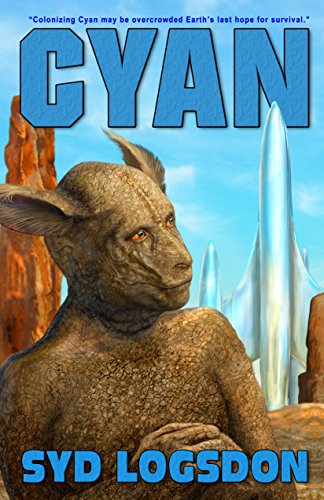
As I said in Cyan, “planets of no use as real estate.”

Since a mechanical failure in 2013 compromised its ability to orient itself, Kepler has concentrated on observing red dwarfs. To eveyone’s surprise, the planet candidates found around these small, dim stars tend to be more Earth sized. And there are a lot of them.

The TRAPPIST-1 discovery, however, was not by NASA but by the TRAnsiting Planets and Planetesimals Small Telescope group operating out of the University of Liège, Belgium. That explains the use of caps; TRAPPIST is an acronym.

If you want details – and of course you do – the best source is here. This page from the University of Liège is in French, but the video which will self-start is in English, and gives enough details to stir the blood of any space or science fiction fan.

It took me about three seconds to start speculating about what kinds of novels could be written about the exploration of the TRAPPIST-1 system. Suppose most or all of the seven planets had some form of life, all evolving independently. Suppose we write about a paleontological mission on a planet which had vertebral life, then lost it; these dwarfs have a solar wind that operates heavily on planets so close in. Suppose at some time in the deep past, a spacefaring civilization arose on one of these planets, colonized the others, and then died out. Or didn’t die. Or seems to have died until our intrepid explorers begin to poke around.

Okay, I was wrong. The golden age is still here.

Raven’s Run 112

Back at the car, I had worked up a sweat even in the chilly ocean wind, but it had barely taken the edge off my energies. Adrenaline and testosterone; the macho cocktail. I had had a powerful infusion of each today, and it would be a while before I was calm again.

The sun had dropped behind the evening fog bank as I ran, and now an early dusk fell across the city. I drove through the park as fog tendrils wove tapestries among the trees, watching joggers bundled against the chill and the last rollerbladers of the day, all heading somewhere for a warm haven against the damp and cold. 

I found a pay telephone and a fast food joint. Ed Wilkes was not in, but would be back in an hour.

While I was running, it had occurred to me that the strangest thing that had happened all day had slipped past my notice in a testosterone haze. Laura Jacks had simply assumed that I would accept her actions and her husband’s “profession” as normal. She had led me to incriminating evidence with childish (and that was the word) innocence. No wonder old Harvey had taken her out of the business and kept her at home where she could do him no harm.

Chapter Thirty-one

When I got back to Dias Investigations, everyone had gone home. I let myself in and called Ed again. He was still out, but he called back before I had time to brew a pot of coffee. There was no way I could sleep in my condition, so I planned to spend the night at the computer.

Our conversation was brief. He had searched Raven’s room at the Cabral’s Sacramento house and had found the report Jacks had sent her. He also had a dozen pages of data on the various actors in our play. He faxed it all to me, and I skimmed it sheet by sheet as it came out of the machine, then sat down for a closer reading, though I had seen some of it in Paris.

Alice Susyn Johnson had worked for Cabral for three years.  Her personnel record gave her salary, social security number, residence, and next of kin.  The name Fletcher did not appear anywhere in the file.  The next of kin was William Johnson, listed as an ex-husband, with a residence in Garberville. A visit to her apartment would be worth doing, but I could leave that to Ed since he was in Sacramento anyway.

There were four James Davises in the Sacramento phonebook. According to Ed’s notes, none of them was likely to be our James Davis. A fax of the Allens showed dozens, but none of them jumped off the page.

There was a great deal on Adrian Brock. He was an investor, contractor and real estate developer. He cultivated contacts at the capital and there were hints of a shady doings on the side. Ed was investigating further, but I had his name from Susyn. There was no reason to believe that she would give me the name of her real employer. It was probably a false lead.

I would have to do it the hard way. Computers were new on the scene; I had helped set up Joe’s system, and now it was time to put it to use. I wasn’t the internet, of course. That was years in the future. But I knew how to use the crude beginnings of what it would become. more tomorrow

317. SF in the Wild

Cyan is now available for pre-order through Amazon, with the eBook arriving April 17th. Meanwhile, I plan to repeat a few year old-posts that were designed to stir the blood of would-be readers just before an earlier release date that didn’t happen.

——————————-

This post was originally number 128.          If you are what you eat, I used to be beefsteak, fried okra, and hominy. That comes from growing up in Oklahoma. I also lived outdoors most of the hours of every spring, summer, and fall day, and way too many hours of every winter day. That comes from growing up on a working farm.

If you are what you read, then I used to be an Andre Norton protagonist, at least in my imagination. Although I never met or corresponded with her, Andre Norton was something of a long distance mentor.

Alice Mary Norton legally changed her name to Andre Norton early on, in an era when being a woman was no help to a science fiction writer. I didn’t know that when I first read her; I thought Andre Norton was a man. Not that I thought about it much, but she didn’t write like a girl. Looking back, I see that she actually wrote like a person, but I wasn’t that sophisticated then.

One reason Norton got away with writing gender neutral fiction was that her characters spent most of their time alone. Even in their relationships with others of their own kind, they were loners, if not complete outcasts.

Star Man’s Son was the first Norton I read. In it, Fors spent all but a few pages on a quest away from his people; that was a pattern to which Norton frequently returned. I could easily identify with the solo quest while I spent endless hours alone on a tractor. The only variations in my daily life were whether I was pulling a disk or a hay rake, and which Norton novel was replaying in my head.

Every time Shann Lantee on Warlock, or Naill Renfro on Janus, or any of a dozen other young men found himself stranded alone, or nearly alone, on an alien world, I could look up from my tractor seat at the Oklahoma prairie and say, “Yup, been there.”

The best thing about Norton’s characters was that they didn’t whine about being alone. They liked it. So did I.

I didn’t live in a city until I went to college. I spent my adult life living in the suburbs of a reasonably small city, and taught school in a very small town. As soon as I could retire, I moved to a few acres in the foothills. I would move further out if I could afford it.

I was born not liking cities, and my opinion never changed. It should be no surprise that my first novel was about a hunter surviving alone in the woods, or that my first science fiction novel Jandrax was about a hundred or so humans stranded on an alien world.. My three fantasy novels have a rural and medieval feel. David Singer, in A Fond Farewell to Dying, is a mountain boy who has to go urban to get his life’s work done. And Cyan, due out soon, begins with ten explorers on an empty world, then continues with the story of the peopling that world by hyper-urbanized refugees from an overcrowded Earth.

You write what you’ve lived.

Raven’s Run 111

Good old Harvey!

She was breathing heavily now and I could smell her readiness. “I used to come down here,” she said, “when Harvey was at work and look through these old files. I’d get myself so worked up I was like a steam engine. Then I’d ambush Harvey when he came in the door.”

Lucky Harvey!

“Look,” she said, and pulled out a file. The folder was dark from much handling. She spread half a dozen pictures out for my inspection. In the background was an open window with curtains blowing inward, with makeup on a bureau and a couple of stuffed animals on the floor beside the bed. A bedroom in somebody’s home, not a motel room. The woman on the bed was small, slim, and dark. The man was young and muscular. He had taken her in various positions. Some were imaginative, and some looked painful. One involved tying her hand and foot to the bed, spread eagled. Laura Jacks moved that picture to the top of the stack. The photography was good. I could clearly see the expression on the woman’s face. She was fighting the ropes, but she was having a wonderful time.

“When Harvey first got started, I used to help him with his business.”

“I can see that.” The woman in the picture was younger, but she was clearly Laura Jacks.

“I miss it, but Harvey made me quit. Funny, for a man who did what he did, and screwed around on me besides, he was really jealous. Possessive, I guess you’d say.”

“Possessive,” I repeated.

“I was afraid to screw around on Harvey. He would’ve killed me. So I would come down here and spend hours on a slow burn. Harvey got the benefit of that. He liked having me hot all the time. And I was!”

She paused, rubbing her hands over her thighs. “It’s been months since Harvey died,” she said. Her voice echoed in the basement and in my singing head.

She passed her hand lovingly over the photograph. “I really like this one,” she said. “I still have the same bed, upstairs, and some soft ropes I kept for Harvey to use. He liked it; he hurt me sometimes, but I didn’t mind.”

She pulled the Tee shirt over her head, turning it as she did so that it formed a twisted manacle around her wrists. Her breasts were small and her face shone with need. She extended her bound hands toward me. I shook my head. She stood up and pushed down her shorts, and stepped out of them. Naked, she pushed her bound hands toward me again, and said, “Please!” Again, I shook my head.   

She went to her knees at my feet and leaned forward, placing her bound hands on my feet in a gesture of final submission.

That was the way I left her, and it wasn’t easy.

*       *       *

I drove two miles north and parked overlooking the public beach off the end of Golden Gate Park. I had left my soot stained boots at the warehouse and changed into running shoes. It was a good thing; I needed to run. Badly. I slogged down to the water’s edge where the sand was hard in the retreating tide and ran southward. After a mile, I turned back. I just wouldn’t feel right running all the way back to her house.

Back at the car, I had worked up a sweat even in the chilly ocean wind, but it had barely taken the edge off my energies. more tomorrow

316. Cyan is Here

Finally, after a long wait, CYAN is available for pre-order at Amazon.

If you click here they will take your $2.99. That’s half price to those who pre-order. Pre-ordering puts you first in the queue and gives you the discount; the book itself will arrive in your Kindle on April 17.

Cyan will be available exclusively to Kindle customers at full price on April 17, and available to all eBook retailers on July 17.

Yea! (The dates I gave in an earlier post are now defunct.)

____________________________________________________

It think it would be fair to assume that, if you aren’t reading here for the very first time, you know that I started this blog to support Cyan. By now you know my writing style, and you’re still here, so it’s safe to assume you will like it. 

In the days before the internet, writers didn’t have to publicize their own work, unless they were a best seller and went on book signing tours. Writers also couldn’t publicize their own work, so the sword cut both ways. If you had a good book that didn’t find its audience, there was nothing you could do about it.

Now authors can and must be their own publicist. Hence this blog — even though writing it has become an ongoing pleasure.

Now its your turn. Brian at EDGE said to me:

One of our goals is to get 50 reviews posted on Amazon as quickly as possible.  Reviews can be posted any time after April 17th.  However, there is a catch. Only Amazon customers can post reviews.  A qualified Amazon customer does not have to have purchased CYAN to post a review, but they must have purchased something from Amazon in the past.

It would be good for you to contact as many of your supporters and ask if they would post a review. (That’s you.) If they are not currently an Amazon customer, they can become one by purchasing a copy of CYAN any time (and at the pre-order price of 2.99) and then post their review after the book becomes available on the 17th of April.

So that’s it. No hidden agenda. The agenda is in plain sight and always has been. However, I do have an additional inducement.

If you read Cyan, and like it, and review it, and it becomes successful enough to warrant publishers taking on other books of mine, then you will soon see:

Valley of the Menhir

Scourge of Heaven

Who Once Were Kin

All fantasy novels, already written. You might soon see two planned but not yet written sequels to Cyan. You might even see:

Raven’s Run (in Serial now)

Symphony in  a Minor Key (a teacher rebuilds his life after a false accusation of abuse)

Both are contemporary fiction. Your kids might even get to read the young adult Spirit Deer. (Either soon or later — I don’t know your life plans.)

Right now, I’m concentrating on Amazon, but if you also send a review to Goodreads, I wouldn’t mind at all.

There is a lot riding on electronic word of mouth.

Raven’s Run 110

Cyan is now ready for pre-order. Look at todays post on the AWL side of the blog.

_______________________

“Surely it can’t be that hard to find bank accounts.”

“Harvey never put anything in his own name. He always used dummy corporations to hide his earnings from the IRS.”

I said, “Hire an investigator.” But not me.

“Bill Bristol was going to help me, but never came through. I asked him for help the day he went through Harvey’s files.”

Now there was a bit of news. I asked, “When was this?”

“About a week after the day Harvey disappeared and the fire broke out in his office.”

“You mean those happened the same day?”

“Sure. Didn’t you know that? At first, we all thought they were going to find Harvey burned up in his office. And then they found him floating in the bay three days later.”

She shrugged and made a comic grimace. And she looked at me with slow, smiling eyes. Like she was a furnace, and she thought I was a sack of coal.

“So you asked Bristol to come over and help you sort things out?”

“No! I told you, those were old, dead files. He came by on his own. Said he had new information on something he and Harvey had been working on a couple of years ago. I took him down to the basement and he went through Harvey’s old files, but he didn’t find anything.” She shook her head in amusement. “Not anything he was looking for, anyway. Harvey’s files are always interesting.”

I said, “Would you take me down to the basement?” And I kept a straight face when I said it.

She said, “I thought you’d never ask.”

She was wearing a long Tee shirt and short shorts. Her legs were long and brown as she swivel hipped down the stairway. I was thinking that ten years older wasn’t that much older. There was something distasteful and much that was cliché about the situation, but hormones are hormones.

Harvey Jacks’ files consisted of a single cardboard box jammed with manilla file folders. Each one was labeled with a name or series of names. I pulled out Debra Tomlyn/Richard Deberg and flipped it open. It held a half dozen grainy black and white blowups of a chubby young blonde woman and a bald, middle aged man having sex. In the first shot, he was in the saddle. In the second, she was on top, head back, eyes closed, nipples erect, while he held her waist and drove his hips up to meet her. The other three shots were close variations on the same theme. The angle of the shots never changed, and the participants were not well centered. Obviously a hidden camera; probably near the ceiling.

I tried another file. Same story, new actors. A skinny black man and a pale Asian woman. Then two models of suburban ordinariness. Two young men. Two paunchy men in their forties and a girl-child who was probably fifteen but looked twelve.

I said, “Did your husband own a motel?” My voice came out hoarse.

Jacks’ wife was squatting beside me with her arm around my waist. She said, “Probably. I never knew, but most of these were shot in the same two or three rooms. Harvey was a whiz at his game. That one,” she pointed at the girl-child, “is one of my cousins. Several of the ones you see over and over in these shots were on salary to Harvey. He was a real businessman.”

Good old Harvey! more tomorrow

315. Apprentice in Science

fleming-schola-rs-1966For eight weeks in 1965, I was a Fleming Fellow (see yesterday’s post).

The gist of the program was that a Fellow was assigned to a research scientist as something like an apprentice. My personal research had been a hybrid of ecology and space science (see Tuesday’s post) Nothing like that was available in a medical research facility; instead, I was assigned to Dr. Gunnar Sevelius who was doing research on determining renal flow through use of radioisotopes. He had just finished editing Radioisotopes and Circulation the preceding year.

Dr. Sevelius gave me a small lab room and access to a supply of radioactive iodine, along with sensors for radioactivity and a strip chart recorder. He sat me down to talk about his work and tell me what he expected from me. He treated me as if I could figure things out for myself – which I could. I didn’t see him often after that, although I hung out with his young lab assistants.

I don’t need to give a lot of detail here. It has all been superseded.

Everything sophisticated in science was crude when it was being developed. Any kid in a high school metal shop today could reproduce one of Goddard’s original rockets — but only because Goddard taught them how. Any trained technician can slide you into a machine and look at images of the inside of your head — but only because to the work done by people like Dr. Sevelius. Everything at OMRF was cutting edge for 1965, and probably none of those machines are even stored in dusty basements any more. Science moves on, and quickly.

Computers? Video monitors? Forget it. A strip chart recorder had a moving roll of paper, a moving head with roll of typewriter ribbon and a striker that made a dash on the paper every time the sensor detected radioactivity. An image of a pair of kidneys looked something like this:

renal

You can see a strip chart recorder at the top of this post. That’s me in 1965, with a haircut that was already going out of fashion.

I learned a lot that summer, not least that I would never again spend eight weeks in a windowless room doing repetitive research. I love the results of science, but the doing of it can be damned boring. I also got to test myself against other smart kids, and be satisfied with the result. Every other Fleming fellow had done more sophisticated work than I had, but they were the products of sophisticated high school science programs, or the children of scientists.

There were lectures and activities for us. I met a scientist who had done research on the reaction of elephants to LSD — two years before I chose to avoid it when it became mind candy.

I learned about Michigan State, and was encouraged to apply there. I got a tour of the basement where research was being done using a sensory deprivation tank. Fifteen years later that became the basis for my second published novel.

I learned about the infamous Dr. Sexauer. From a former fellow, I got the names of two of my former incarnations, in a late night seance. Tidac and Javernan became characters in my three fantasy novels. I wrote about that incident, and it led to an odd occurrence. The OMRF was trying to find all its Fleming Fellows to prepare for the 60th anniversary of the program. I had mentioned the name of the girl who seemed to be running the ouija board. The OMRF had googled her name, found my post, and connected with me. It was good to hear from them again.

When I returned to my tiny high school that fall, I had touched the larger world and I would never turn back.