Category Archives: A Writing Life

486. The Cost of Empire 1

These next two weeks I am devoting four posts to an excerpt from my new steampunk novel The Cost of Empire.

Chapter One — Tick, tick 

There was a light haze over the sky above. The sea five hundred feet below sparkled, but the glare was easy on the eyes. It was typical North Atlantic weather for May, in the Year of Our Lord 18—, and of the Reign of Queen Victoria, year forty-seven, aboard Her Majesty’s Consort Class Dirigible, Anne of Cleves.

Daniel and David James saw none of this. They were busy clambering over, under, and about the two McFarland engines, looking for cracks or pinholes, and sniffing for the distinctive smell of leaking fuel. It was a bit of tricky business, since the engines continued to snort and whirl all the while. They were a maze of polished brass and shining gears, with shafts of oiled steel feeding power to massive cranks that sent power to the air screws. You could lose a finger — or a head — if you put it in the wrong place while crawling about.

The inspection never took less than twenty-five minutes, and they repeated it every three hours. There was no slacking of discipline as Her Majesty’s airships, filled with hydrogen and fueled by naphtha, were floating bombs.

Daniel climbed the short ladder to the catwalk as David did the same from the other side. Their first words were scripted by discipline. Daniel, who was senior by one week, asked, “Starboard engine report?”

David replied, “Starboard engine clean and tight. Port engine report?”

Daniel said, “Port engine clean and tight.” And he added, “Tick.”

David grinned and mimicked, “Tick.”

The ratings below glanced up from their work. Two smiled and one shook his head. The two cousins moved forward to a pair or racks and picked up canaries to continue their inspection. Canaries were not birds, although canaries in mines had carried out the same function fifty years previously. These canaries were thirty foot long poles of hex bamboo, with heavy glass syringes capped with valves, on one end. Daniel and David ascended the port and starboard ladders, with one hand for the rungs and the other for the canary, and managed to turn their ascent into an entirely unnecessary race.

Sub-Lieutenants are more than a little like puppies when no higher rank is watching. When they rejoined at the upper catwalk, David, who had arrived half a rung sooner, said, “Tick,” and Daniel responded in kind. They separated, Daniel going forward and David aft, then worked back toward each other.

The ring ribs divided the dirigible into many small coffers, any one of which might accumulate hydrogen leaking from a gas bag. The upper catwalk was high enough that the canaries would just reach the upper arch of the ship. Daniel dropped the lower half of his canary over the handrail so that it rotated to vertical, then shoved it up to within an inch of the outer skin. He pulled the lanyard connected to the syringe and it sucked in whatever gas was at that high arch. He then lowered it to his level and triggered the sparker inside the syringe.

Ratings called this making the canary fart. If there was leaked hydrogen in the heavy glass syringe there would be a brief, contained explosion; then everyone would be on instant alert until the leak was found and fixed.

No explosion occurred. It almost never did, but vigilance never let up. Daniel moved to the next coffer to repeat, and shouted down the catwalk to David, “Tick.”

The reply he got was unexpected. Full Lieutenant Ennis, all of twenty-seven years old and called Grandpa behind his back by the Sub-Lieutenants, stuck his head above the upper catwalk and shouted in his quarterdeck voice, “Damn your ticks, Mr. James. We all know we are on a vessel full of hydrogen and naphtha. We don’t need your infernal tick, tick, tick to remind us that we live inside a bomb. Now get below, stow those canaries, and man your stations. We’ve sighted a sub.” more Thursday. To jump straight there click here.

485. Uhura With a Dagger

Imagine Lieutenant Uhura in a different outfit, with a dagger at her belt, looking even sexier than usual. Actually, you don’t have to imagine, just check out Mirror, Mirror, which is simultaneously a pretty good piece of original Star Trek and one of the worst Star Treks ever.

How’s that? From the viewpoint of drama Mirror, Mirror is good television. From the viewpoint of logic, it stinks. Even though the alternate universe version of the Federation is completely changed and utterly barbaric, every member of the Enterprise crew is still at the same post, and the Enterprise is still in orbit of the same planet, going about the same business on the same day. Really?

Usually I don’t worry too much about accuracy in Star Trek. It is best viewed as  allegory, or as an attempt to make a decent SF program with minimal cost. I forgive a lot, but this one keeps me groaning more loudly than most.

#                #                #

As Mirror, Mirror shows us, building an alternative universe is no occupation for the lazy. But it sure can be fun. And if that universe has a steampunk attitude, all the better.

I spent the last half of last year writing a steampunk novel called The Cost of Empire, set in an alternate world in “the Year of Our Lord 18—, and of the Reign of Queen Victoria, year forty-seven”. It could be called an alternate history, but I made sure that most of the alternatives taste like steampunk, even though it doesn’t have werewolves or zombies or Jack the Ripper. Or automatons, although the sequels will. In fact, the whole intent was to provide a steampunk world that doesn’t depend on magic or unsupportable science.

Here’s the setup. After the Austro-Prussian War (real, 1866), a ruthless English businessman named McFarland (imaginary) stole an obscure type of engine (real, but forgotten today) which allowed him to produce useful dirigibles long before the Germans. He also started an organization of spying, disinformation, and assassination (imaginary, we hope) which allowed him to provoke and win a war with newly unified Germany, bringing England to universal power. In the process of suppressing German inventors, McFarland has skewed the course of science, prolonging the age of steam and clockwork.

To make this work, I had to shift a few dates, but not many and not by much. That is the reason, besides mimicking Victorian style, for the vague 18— date in the quotation. The challenge I gave to myself was to make big changes through the introduction of a single character.

So our story begins with England as the world’s most powerful nation (even more and sooner than in our reality) but hated by everyone, and with a fatal hidden flaw at its heart. England’s fleet covers the oceans, with dirigibles as eyes-in-the-sky above.

Our hero is about to fall afoul of the secret organization of assassins, escape, and spend the rest of this and hopefully several other novels fighting to free his nation from their grip.

The next two weeks will be devoted to the opening pages of that novel here in A Writing Life. As has happened a few times before, Serial will be tied up with other things.

484. Steampunk Anglophiles

I have come to the conclusion that most steampunk fans are also Anglophiles. That isn’t really surprising, but it puts me in a bit of an odd position, since I am not.

It’s not an aversion to England; I’ve been there several time and it is full of wonderful things. However, I have a disinterest in many of the things Anglophiles find interesting. Downton Abbey bores me silly. I don’t care who lives Upstairs or who lives Downstairs, and I really couldn’t care less about Elizabeth Bennet and Mr. Darcy.

One reason for my disaffection with a certain kind of English literature comes from being forced during high school to read Great Expectations. It was enough to put a person off reading altogether. With some exceptions (to be fair, probably quite a few), the recommended cannon of English literature, 1750 to 1900, is a litany of insipid characters, dull plots, uninteresting situations, and tales of a tedious and self-destructive culture. Thank God for Shakespeare and science fiction, or I might be illiterate today.

English history is fascinating, but I found my interest in English literature only on the periphery. First came Robert Louis Stevenson. I’m not talking about Treasure Island, which made him rich and famous. I mean, primarily, Kidnapped, and its almost forgotten sequel David Balfour (also published as Catriona). They are two halves of the same story and form a true classic. Critics see them as children’s books, but together they are the tale of a young man who successfully fights his way to become a morally responsible and honorable adult.

Of course, Kidnapped/Catriona is really a Scottish novel.

As an undergraduate, I studied India, one of England’s major victims. That inoculated me against Kipling style jingoism. My wife’s ancestors were Scottish and that led me into a study of Scottish-English relations — another complicated and ugly story. It also led me to two incredibly talented Scottish authors, Neil Gunn and George Mackay Brown.

Nevertheless, I did find English literature to love — even Victorian/Edwardian English literature to love — but not in the official cannon. First came Sherlock Holmes. I found a copy of the two volume Doubleday version when I was in my twenties and I have read it to shreds. I really need a new copy. That led me to Chesterton’s Father Brown; the real one, not the imposter on PBS.

Through my interest in small boats, I stumbled onto Riddle of the Sands, with two of the most English, most honorable, most fun heroes ever. I also found author John Buchan, who now occupies two feet packed tight on my library shelf. Buchan finally showed me inside the minds of some British imperialists whom I could respect, and even identify with.

Finally, the musical Scrooge led me to the non-musical adaptations of A Christmas Carol, and they led me to the novella itself. What a revelation. Dickens is wonderful, despite the agony of being force-fed Great Expectations while still too young.

So I ended up with a balanced view of England. England is the origin of our civilization and also the meanest SOB on the block. England both destroyed and preserved the great civilizations of the past wherever they conquered; and that was pretty much everywhere. English literature is both fascinating and as dull as a downstairs maid polishing the silver. England brought modern mechanized civilization and increased poverty to most of the world.

So I came to steampunk from out of left field and it shows in my new steampunk novels.

In The Cost of Empire (written in 2017 and looking for a publisher as we speak) the hero is a farmer/fisherman from the fens who is on the rise as an officer in Her Majesty’s Air Service (dirigibles, of course). He is a defender of the empire, but he begins to have doubts when he comes to know Amir Kalinath, an advocate of Indian independence. I have a long excerpt from the opening chapter scheduled here shortly.

And Like Clockwork, presently more than half finished, is a deeply weird take on Old London. It started out by imagining what would happen if the toy shop in Scrooge (the musical) was real, and it’s proprietor had built those incredible clockwork toys himself. I’ll say no more, since even I am not sure how this one is going to turn out.

483. Blogging Calendar

I actually post from six to eight times a week now,
but the disclaimer above was placed into my posts
in November of 2015. I’ll tell you why, below
.

I recently wrote a post called How to Get Readers for Your Blog. It was mostly for fun. You see, the only post I ever made with Porn in the Permalink got more views than anything I had ever written, even though there wasn’t a naked woman in sight. It cracked me up, and I wanted to talk about it.

I actually don’t know much about getting viewers. Of course, I’ve read every book on the subject. They all lie. That isn’t anything new, however. When I was a new writer in the seventies, I read every book about how to get published. They all lied, too.

I did get published, and I do get viewers — you’re here aren’t you — so I know something, but it’s a tricky world where they keep changing the rules.

I’m going to give you links to my three sparse posts of wisdom, and then I have one more thing to add.

Behind the Curtain

Wordcamp Sacramento

Blogging Hints

Most people who read our blogs are bloggers themselves, and most of them find us initially through Reader. It took me a while to figure that out, and longer to realize that those Reader posts go by fast. Did you look at Reader as your last post hit the airwaves? Go back in an hour and see if you can find it. You may have to scroll down a mile. Those Reader posts just keep on rolling in, and you (I, we) keep sinking out of sight.

You could repost every hour, but the powers-that-be would get very angry at you, and you can’t afford that.

After a couple of months as a new blogger, I realized that all my posts were going out between 7:30 and 8:30 Pacific Time because I am an early bird. Suppose someone lived in Boston. My posts would be reaching his Reader about 11 in the morning. If he/she wasn’t on her/his computer at that time, chances are that person would never find me. What could I do about that?

I went to my spreadsheet and made up a calendar, which I still update and use. Column one was the dates I post, skipping weekends, since I don’t post then. The second column was for the Serial post and the third was for the A Writing Life post. Words don’t do this well, so let me show you:

                    Dec. 14, 2015                 8:45                 8:55

                    Dec. 15, 2015                 9:45                 9:55

                    Dec. 16, 2015               10:45               10:55

                    Dec. 17, 2015               11:45               11:55

It is an artifact of a previous way of doing things that the A Writing Life post always comes ten minutes after the Serial post. The next set of numbers would repeat the hour and move both minute settings forward ten minutes, so that we get.

                    Dec. 18, 2015                  8:55                  9:05

This one worked for me, covering most of the US for most of morning and early afternoon by the time it had cycled through roughly a month. I could add details, but why bother? If you like the idea, you will certainly set up a posting calendar that meets your individual needs.

It looks logical, but can you tell me why more than half of my views come from every country other than the United States? I love it, but that part is a mystery.

=================

UNRELATED, BUT FUN, and it fits into the spirit of this, on April 10, I hit 1000 posts.

482. Where’d Ya Get That Name?

I was writing a short story yesterday, called The Gods of Wind and Air. I knew the main character well enough, had an idea of who he was and what motivated him, and had a fair idea of what he was about to do. I had written the first paragraph and the last paragraph, so I knew where he and I were going together, but I didn’t know his name.

It needed to be reasonably short — five or six letter would be ideal. He was a peasant, with only one name and it didn’t need to be fancy, but it also didn’t need to look like he was an American. No Bill nor Tom nor even Andre need apply.

Usually by this stage in something I’m writing, I know all the main characters’ names, and minor characters are forgettable enough that their names don’t count. I didn’t want to stop the flow of things, so I went postal on the keyboard, firing off a hundred finger strokes at random while moving my hands in twin circles around the keyboard. Three seconds, four at the outside, and I had produced:

;dknclm,v mqrt09gyoweuhb sd; vkjqroifgowduh jnsdp;ogui48o uyecxvKsmvkrpifgvdwslhj merpiogiyfvcoldsjkjvm qp9fgvweujk mpf9gewqsiojksvbpo9irhgbcv anop;s’dkv90q8reudvbq][giu193reuojvbn fe][guy38ewyiush sjnf][5206yu08tr peldgjshdkv[w40efuy 2ieuochn we[]pgf0uhisdujvnmaw]p-0uyhgfovl;d klfop3yion[pqofgijeqhj

Somewhere in that mess would be letter clusters that would fire a spark in the old brain. Sure enough, there was a pel and an an which gave me Pellan, and my troubled peasant had a name.

If you plan to write a normal novel, you will need from dozens to hundreds of names. Sometimes that is easy. When I wrote Jandrax, the stranded colonists were French, three colonies removed from Earth, but still with French names. I went to Homo Hierarchicus, by Louis Dumont. It is a study of Indian caste by a French anthropologist which I had from my college days. Half of the scientists in the bibliography are French. I copied a long list of first names, a long list of last names, and chose at random from each. Then I cross-checked to see that I had not accidentally recreated some famous name — say, Marcel Proust. I did have a Marcel, but I made sure he had a different last name.

When I wrote Symphony in a Minor Key I needed a lot of Anglo and Mexican names. Where I live, that is no problem. I just went to the phone book to get twin, paired lists of first and last names.

Sometimes a reader has no trouble guessing where a writer got a name. In the western novel Flint, the villain is Porter Baldwin. Since Porter and Baldwin were two of the major locomotive manufacturers in that era, and the action revolves around frontier railroads, we have no problem figuring out where Louis L’Amour got PB’s name.

It’s not that easy when you are writing fantasy. I’ve never met anyone named Pellan, for instance. When I wrote my first fantasy novel, I needed names for five sub-lords (as I called them then). I happened to be listening to an early record (stereo, LP, 12 inch vinyl — it was a long time ago) by Ravi Shankar. In the liner notes, he explained the five parts of a raga, giving the Indian names for the movements.

Yes, you guessed it. I later modified them so that it was not so obvious. Just a piece of advice; if you are writing a fantasy about a pair of twins, and you happen to be listening to classical music — don’t name your twins Allegro and Adagio. Someone will notice.

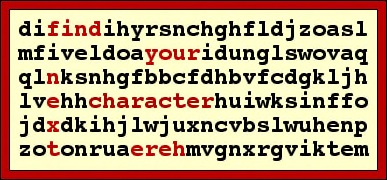
Eventually, I needed so many odd ball names that I had a brainstorm. I bought a Find-a-word. They aren’t so popular anymore, so I will describe — a Find-a-word is a book of full page puzzles where each page is filled with letters in a grid. Your job is to find the words that are listed at the bottom of the page.

I used the Find-a-word to look for letter groupings that weren’t words, but could be in my fantasy world. Brilliant, I thought. In reality, I never found anything useful. Maybe you will have more luck. I offer the notion to you free of charge.

It’s no secret that most of the people who read A Writing Life are, or want to be, writers. If you will please look up and to the left, you will find a button that says Leave a reply.

I know you guys (and gals — and whatever) are out there. I can hear your breathing in the dark. Take five minutes and tell me what you do to find character names. I’m honestly curious.

481. Asimov’s Good Life

I couldn’t sleep last night so I lay awake thinking of an article to write and I’d think and think and cry at the sad parts. I had a wonderful night.
                         Asimov, from It’s Been a Good Life, p. 157

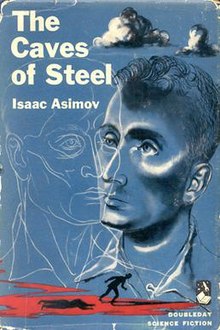
When I was new to reading science fiction in the early sixties, Clarke, Heinlein, and Asimov were everybody’s big three. Bradbury was in the next rank, but not for me. I found him unreadable. Andre Norton was still out in the cold for most people, but she, Clarke, and Heinlein were my personal big three. Asimov didn’t make the cut. I read a few of his novels, didn’t like them, and moved on.

Recently I ran across his summary autobiography, It’s Been a Good Life, edited by Janet Jeppson Asimov. It reminded me that I knew very little about the man, so I took it home.

Asimov has three full autobiographies, and a list of publications that goes on for eighteen closely packed pages. After his death, Janet Asimov published autobigaphical excerpts under the title It’s Been a Good Life. At 238 sprightly pages, 98 percent by Asimov himself, it was just right for someone who wanted to be fair to an author who is an acknowledged master.

Searching my memory and his bibliography, I found that I had read four of his novels: Lucky Starr and the Moons of Jupiter, The Stars Like Dust, and a couple of his early robot novels, each only a few years after they were published. I thought the first two were just adequate and the robot novels were dull. By the time I got to Foundation, I decided to skip it, along with anything else he might write. My local county library was full of science fiction I enjoyed, so why bother with Asimov.

It occurs to me now that might have been an error.

Asimov says (p. 143) The 1950’s [were] the decade of my greatest science-fiction triumphs, [but as] the 1950’s ended, I [ended] most of my involvement with the field. (see below)

From 1960 onward, Asimov wrote everything on every subject. It seemed to me that he had written every third book in the library. I dived into one or another from time to time doing research for my own writing. They were accurate, easy to read, and cursory, which is exactly what they were supposed to be.

When the novel The Gods Themselves came out in 1972 it was his first SF novel in fourteen years. (Not counting one novelization of a movie.) He had gone from SF novels, to non-fiction, then back to SF novels as a more mature writer. That was a biographical arc I couldn’t appreciate when I was first reading him as a teenager, for the simple reason that it had not happened yet. When it did, I had already lost interest. Not trying his new works, given his reputation, was certainly my mistake

By the eighties he was writing SF novels and winning awards once again. In 1989, he wrote Nemesis. He said this about it, “My protagonist was a teenaged girl and I also had two strong adult women characters. I placed considerably more emotion in the novel than was customary for me.” That sounds more my style, since lack of emotion was my complaint about his early work. I think I’ll check it out.

One last note for writers and would-be writers: This book is a treasure trove. I agree with pretty much everything he says about writing, but go read it from a man with far more credentials than I have.

=======

The brackets in the quotation are from Janet Asimov. She uses them to give context and continuity to excerpts which would otherwise be unintelligible. It is competently and smoothly done.

=======

Full disclosure time: After completing this post, I obtained a copy and read the first few pages of Nemesis. Sorry, I still don’t like Asimov’s writing style, but that’s all right. Not everybody likes Shakespeare, either.

480. Mairi at Culloden

272 years ago today, the last battle took place on British soil. Followers of Charles Edward Stuart (aka Bonnie Prince Charlie) met British forces under the Duke of Cumberland on Culloden moor. Like all battles, it was a confusing, bloody mess, but it had the virtue of being decisive. The reprisals which followed brought highland culture largely to an end.

The mists of nostalgia roll over the Battle of Culloden, casting it in a romantic light as the last day of Scottish independence from the English. Sorry, but it was nothing like that. There were Scots on both sides of the fight. The “champion of the Scots” was the grandson of a deposed British king, born in Rome and raised in France, now fighting to regain his grandfather’s throne in London. The highlanders who followed him were despised by the lowland Scots who fought on Cumberland’s side — but the lowlanders’ descendants now claim clan membership and wear kilts — even though kilts hadn’t been invented yet in 1756.

I would have sworn that I would never write about Culloden, until I saw a brief note in an article about the history of oats in Scotland which described the actions of a Scotswoman who sat down beside the road leading from Culloden and cooked oat cakes for the soldiers, knowing they would need food to survive. Her simple and humane reaction to the conflict moved me to write this poem.

Mairi sat down by the side of the road

The night was filled with the sound of men
And the moan of wind in the heather,
As Mairi’s kinsmen went south toward the field,
That Charlie had set for the meeting.

Three sons of Mairi came out of her hut
And kissed her cheek as they left her
With Ross the youngest trailing along
To see what the battle would bring.

Mairi took oats from the pantry shelf,
There was not enough to please her,
So she dragged in a sack from the loft of the ben,
Took peats, and salt, and her griddle.

Then Mairi went down to the side of the road,
Built a peat fire and kneaded the grain,
Heated her griddle and cooked fat cakes,
To stack for the coming of day.

“They will come,” she said, “in the morning,
And all through the rest of the day,
Strutting proud or running scared,
Theyʼll be hungry either way.”

The oat cakes sizzled; the smell was fine;
She flipped them and stacked them and listened
To the musket fire from Cumberlandʼs men
And the deeper roar of his cannons.

The cries that went up as the claymores flashed
Were too distant for Mairi to hear,
But Ross would come back from where he watched
To tell how the Scotsmen had fared.

Then a sudden wind, and the fire flared up,
She shivered as pain rushed through her.
Three quick shocks in her empty womb,
And her heart in her breast went numb.

Her hands dug deeper into the oats,
And flew at the task of the kneading,
The stack of bannocks at her side grew tall
For she knew now that they would be needed.

Then Ross came running from the battlefield
He could only come out with a groan.
But Mairi knew without any words
That his brothers would not return.

******

The first man she saw was limping hard
With his leg bound up in a rag.
A highland face, with matted red hair,
He was lean as an iron bar.

A hungry man with a strangerʼs face;
Mairi gestured to the cakes.
He picked one up, took a bite, and sighed.
“God Bless you,” he said, and moved on.

The second man was a stranger, too,
He said, “Mother, it was awful.”
“Eat,” she said, “and move along,
I’ll pray that you find safety.”

The third was young, more a boy than a man,
With face flat and eyes that were dry.
Half held up by a second youth
Who coughed along along at his side.

“Take cakes and eat,” Mairi started to say.
But the coughing youth shook his head.
“I thank you, Mother, but let them go
To living men instead.

My friendʼs bled dry; thereʼs a ball in my lung;
Weʼre as dead as the ones behind.
Just show us a hidden place to crawl in,
And a quiet place to die.”

Mairi worked on, with a clenched up heart
While Ross fed peats to the fire,
Saving the lives of the fleeing men,
For hungry men soon tire.

All through the morning and the afternoon,
Those who lived to flee streamed by them,
Mairi rolled dough in her aged hands
As she mourned for the dead and the living.

For even these battered and tattered men,
Who would leave the field still living
Had lost more than battle, kinsmen, and sons.
A whole way of life had died with them.

And Mairi knew, with foresight clear,
That the winners would fare no better.
That the losers had lost, and the winners would lose,
All except for the rich and the English.

Then the last cake was gone, and Ross was gone,
Sent on with the last survivor.
Up past the river and into the hills.
To hide for a while in the heather.

Down the road she saw them, a mile away,
The Redcoats at last were coming,
Marching proud with bloody swords.
                Mairi stood up and put out the fire.

479. Snap at his Bench

Here is a peek at Like Clockwork, the steampunk novel I’m working on now.

Snap worked every day in his shop, sometimes on maintenance, sometimes on new toys. Day after day, the children cleaned and polished and wound the mainsprings on the toys that he had already built. It would have been cacophony if all the toys had all run all the time of course. Even a good thing can be overdone. Still, every day at least ten of the clockwork toys whirred, clanked and blatted (if it was a clown) or sang (if it was a doll).

The ships whose sails shifted with the wind were entirely Snap’s. So were the several kinds of self-bouncing balls, and the elfin forest of trees that waved their branches to an unfelt, fairy wind. The toys which had faces were his and hers — the mechanism was by Snap and the wood or porcelain flesh came from Pilar’s hands. The dolls which cooed and snuggled in a child’s arms had hands and faces of of clay that Pilar had moulded, fired, and glazed.

Every iteration of the year, a dozen new creations were added. Hundreds of toys lined the shelves and a few each day clanked, chirped, crawled, waltzed, rolled with laughter, and bounced in acrobatic arabesques. Their motion came from Snap; their expressive faces came from Pilar.

Rarely did anyone buy them. Once a year, perhaps — almost never twice in one twelvemonth — someone from the other London made his way to the street outside, saw the sign that said Like Clockwork, looked through the window at the wonders inside, and entered. Then one of Snap’s and Pillar’s clockwork offspring would reach the outer world, and for a time there would be meat in the pot, and new brass, paint, clay and springs for future creations.

Their daily bread came from Pilar, who worked alone in a back room with a spring pole lathe and carving tools, making nutcrackers, jester’s heads and crudely carved puppets. She had no more than six or seven patterns, and she produced them quickly in the time she could spare from other work. They sold for a shilling, but they sold. There were thousands of children in Luddie London without toys, and a few parents who would set aside a penny here and a penny there until they could buy one of the toys Pilar made.

Eve, Lispbeth, and Pakrat were an integral part of the enterprise. Snap called them his sweepers and dusters and winders. They kept the place spotless. The delicate machinery of the toys demanded it, and Pilar demanded it. The children worked continuously, but joyfully. No one made them come each morning.

Outside the toy shop lay hunger and cold, fog and soot, bullying and torments. In the streets and alleys and tenements life was lived by the law of strength, augmented by the rule of want.

Inside was warmth and kindness. Even Pilar’s stony look seemed a mask over a beating heart — but it was such a good mask that the children were afraid to take chances with her wrath. Snap was a massive presence at the workbench, short and thick with muscle, with fingers that were always bleeding a little from scrapes and punctures given to him by slivers of brass or steel or wood, but ignored in his fierce concentration. From time to time he would look up and smile, at Pilar or one of the children, but his eyes always turned quickly back to his task.

Inside there was food, simple and not plentiful, but always there, always to be counted on.  And work, unending, undemanding, unpaid. In the mind of each child there arose a formula, as sure and unrelenting as algebra — work equals warmth, work equals food, work equals safety from the world outside the shop, work equals acceptance.

Work equals self-worth.

478. Poetic Writing

           People, I think, read too much to themselves; they should read aloud from time to time to hear the language, to feel the sounds.
          Homer told his stories accompanied by the lyre, and it was the best way, I think, to tell such stories. Men needed stories to lead them to create, to build, to conquer, even to survive, and without them the human race would have vanished long ago.
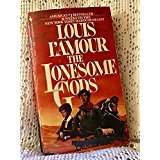
                               Louis L’amour  The Lonesome Gods  pp. 115-116

I am writing this on February 12th, to publish on April 9th. All the slots until then are filled with posts about teaching and space exploration, all tied, more or less, to my teaching novel that is winding down over in Serial.

I have also been reading The Lonesome Gods, for the umpteenth time, where I ran across the quote above. It was timely, since I just stayed up late last night finishing a poem that has been rattling around my computer for about five years, and placed it into a post. It will come out next week, keyed to the anniversary of the event that inspired it.

Old fashioned rhyming poetry can be wonderful, but it often suffers when the poet has to fight to fit content to rhyme. Modern poetry doesn’t seem like poetry at all to me. I often like it for what it has to say, but if you can retype it into your computer minus the return-key strikes, and turn it into a good opening paragraph for a story that never got written, how is that poetry?

Everyone in the world disagrees with me on this, but that’s okay. I’m used to that.

My favorite type of poetry is rhythmic, without slavishly following a pattern. Think Robert Frost, Edgar Lee Masters, or Rabindranath Tagore. I follow their lead, without aspiring to their quality. I am a novelist by moral necessity. Poems just come to me, and not too often.

My favorite type of prose is poetic in its rhythms. L’amour often reaches that peak, but not consistently. The quotation above, about poetic language, doesn’t rise to poetry. The opening paragraphs of Bendigo Shafter do:

          Where the wagons stopped we built our homes, making the cabins tight against the winter’s coming. Here in this place we would build our town, here we would create something new.
          We would space our buildings, lay out our streets and dig wells to provide water for our people. The idea of it filled me with a heartwarming excitement such as I had not known before.

Of course it doesn’t hurt that the content is the American Dream. Also from The Lonesome Gods, this passage strikes me as poetic:

And now I was back to the desert, back to the soaring mountains behind my house, back to the loneliness that was never lonely, back to the stillness that held silent voices that spoke only to me.     p. 202

When I was a new writer, I rested my fevered brain between writing sessions with Louis L’amour, because his westerns were completely different from the fantasy and science fiction I was writing. I learned a lot about poetry from him, along with a lot of cautionary tales about clunkers. I’ll spare you examples of those.

What he says in the top quotation is good advice for writers. Always read your own work aloud.

My writing goes roughly this way. First comes a draft that probably needs a lot of help. The second time through, I translate it into English — that is, I turn beagn into began, and Thmoas into Thomas. Feel free to skip that step if you don’t have dyslexic fingers. Then I run the spell checker. Finally I read it slowly, softly, and always out loud. By this time, my eyes have seen the page several times, but my ears are hearing it for the first time.

The ears will catch what the eyes miss.

477. They Never Flew (2)


NASP

Continuing from 472. Teaching Space and 474. They Never Flew (1), this post will discuss three manned space programs that never happened.

Eisenhower, Kennedy, Johnson, and Nixon were the presidents who took us into space. Whatever you think of any of them, they will always have that marked down on the positive side of their ledger.

Other presidents aspired to join them. How much of their thinking was patriotic for America, patriotic for all of mankind, or pure political calculation, is way outside the realm of my knowledge. I’m going to give them all benefit of the doubt and just talk about the programs themselves. You can spin motives any way that suits you.

Regan proposed NASP, the National AeroSpace Plane, also called the X-30. In his 1986 State of the Union, he said that we should produce a vehicle which would be “a new Orient Express that could, by the end of the next decade, take off from Dulles Airport and accelerate up to twenty-five times the speed of sound, attaining low earth orbit or flying to Tokyo within two hours.” It was an exciting idea, coming out of DARPA where it had begun as a black project.

NASP was supposed to produce two prototype planes, but neither was ever built. That doesn’t mean that it was a political scam. The technological difficulties of the project were staggering.

In detail, NASP was cutting edge. As an idea, the horizontal launch of a spacecraft was old in science fiction. There it was usually accomplished by electromagnetic technology, with ground based and powered launchers and only maneuvering fuel on the vehicle itself. See many early Heinleins, especially Starman Jones and The Moon is a Harsh Mistress.

One reason rockets take off vertically is to get mostly out of the atmosphere before achieving speed. That way, massive friction is only a reentry issue, when it can be used to advantage.

NASP was a jet, not a rocket. It had to operate primarily inside the atmosphere. This has the advantage of avoiding carrying oxidizer, but has a series of disadvantages. Friction heating is an obvious one. In addition, its engine would have to operate in three modes — as a relatively conventional jet at takeoff, as a ramjet once sufficient speed had been achieved, then as a scramjet (supersonic ramjet) once it passed the speed of sound.

At that time, no one had successfully built a scramjet, and NASP didn’t make it happen. The first scramjet, the X-43, made a brief flight in 2001, eight years after NASP was cancelled.

No one has successfully built a skin that can withstand reentry level heating on a continuous basis, either. NASP was too far ahead of its time. I spent a few years explaining to my kids how it was supposed to work — before it didn’t work, and silently crept away.

Then came Venturestar, which, if it had been successfully completed, would have done what the Space Shuttle was originally designed to do. It was to be a vertically launched, completely reusable, single stage to orbit vehicle with a wider and more efficient lifting body that would have allowed it to land, in emergencies, on shorter runways than the Space Shuttle.

To do all this, it would require new and untested technologies, including composite material LH tanks, a new tile-free heat resistant skin, and an aerospike engine. The project was divided into two parts. To demonstrate the feasibility of the new technologies, a one-third size, unmanned model of the VentureStar, called the X-33 was to be built and tested, and only then was a full sized VentureStar to be constructed.

Things did not go well. When the X-33 was partially completed a version of its composite LH tank was tested and failed to hold pressure. Alternatives existed, but the decision was made to cancel the project. The funding for the X-33 was a complex mixture of commercial and governmental funds, and continuation depended on all parties agreeing. That didn’t happen. The Air Force was still part of the mix, as with MISS and the Dyna-Soar, as with the black missions by the Space Shuttle, but their request for continued funding was denied. The Air Force eventually got the X-37b instead. The X-33, and with it the VentureStar, disappeared. For a view that the cancellation should not have happened, click this link.

From the perspective of a science teacher, VentureStar had been a godsend, full of all the excitement the Shuttle and NASP had lacked. Once it failed, my kids had no future in space that they could personally dream about.

Then came Project Constellation. By that time, my days as a teacher were coming to a close, so I did not have to face the daunting task of generating enthusiasm for a cobbled up rerun. Ares I, the small booster, was built out of Space Shuttle leftovers and Ares V, the large booster looked suspiciously like a Saturn V reboot. The Orion Crew Exploration Vehicle was an oversized Apollo capsule and the Altair moon lander was a LEM on steroids. Not only was Project Constellation going to do again what had been done forty years earlier, it was going to use essentially the same hardware.

I didn’t buy it. I didn’t try to sell it to my kids. It died four years after it was floated.

The future isn’t dead. The Space Launch System continues where Constellation failed and private enterprise has more strongly entered the mix. Today’s science teachers should be able to say, “You might be the first person on Mars,” with a straight face. I continue to hope.