Category Archives: A Writing Life

292. I’m back

dscn5448I’m back.

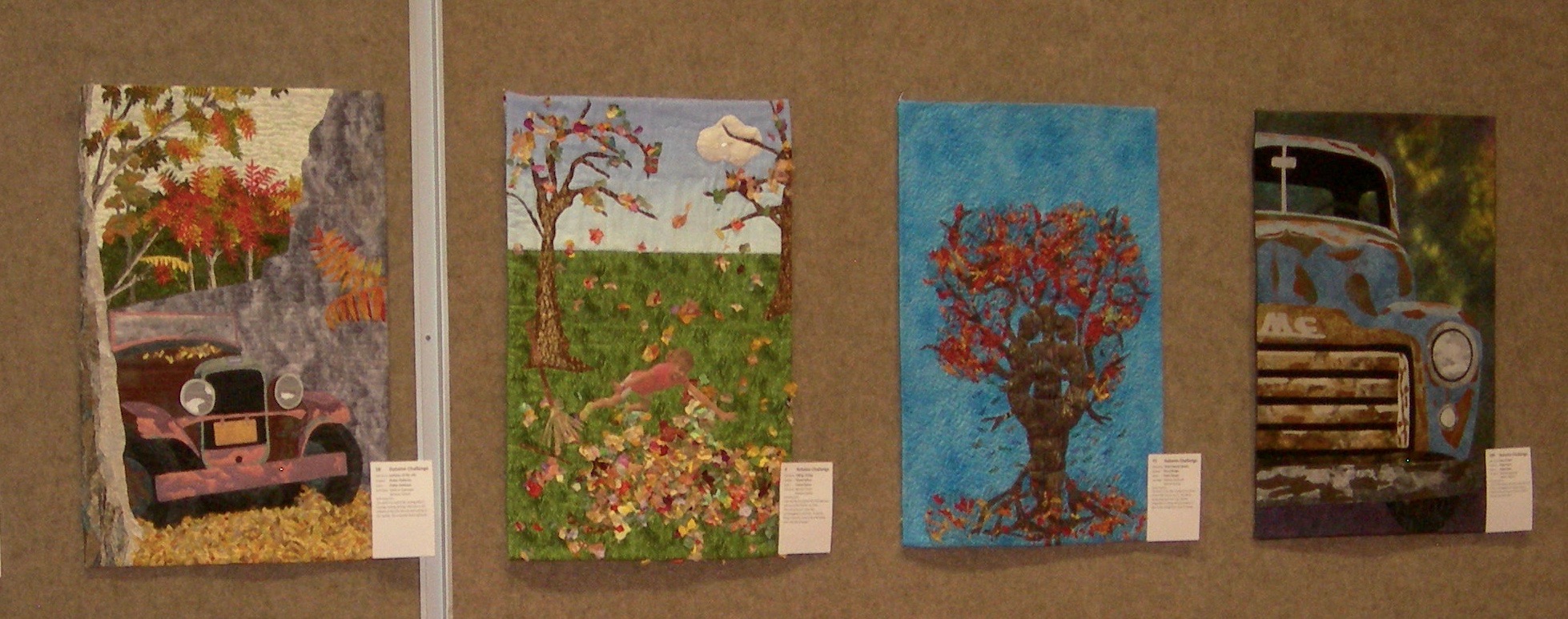
It’s been a weird month. Every two years my wife and I organize her guild’s quilt show. It’s a big deal and the amount of detail work is massive, but I won’t give any details. This is a blog about A Writing Life, not about the personal, private, non-writing life that sometimes jumps in with both feet. I did put in a photo of some of the quilts from the show as a teaser.

Things are progressing with Cyan, and I’ve been working hard to keep everything moving smoothly. One of the side effects of the excess of non-writing obligations is that I haven’t been able to work as unhurriedly on Cyan as I would prefer. I hate deadlines, and I am living in the middle of a snarl of them.

On January fifth I saw the first “rough” draft of Cyan’s cover. Excellent, exciting, and it looks like it will sell some books. That is of first importance. As much as we authors complain when covers are inaccurate, a naked female that sells books is always better than an accurate depiction that leaves books unsold.

By the way, this cover is not a naked female. It is a Cyl – and a rather well envisioned one at that – in a desert landscape looking up a the landing craft from the Darwin. It will all make sense when you read the book.

In the “rough” draft – which was slick, professional, and not rough at all – the Cyl was looking down toward stage left and there was no landing craft. On the more finished version I saw next, the Cyl had turned his head slightly left to look at the landing craft.

So what? So this was done by a skilled digital artist, using a high-end illustration program. You couldn’t turn the head of such a sophisticated image in a painting without starting from scratch. I know a little about this. I have been using graphics programs almost daily since the late eighties, making drawings of things I was about to build in the woodshop, drawing illustations for my science class, and designing dozens of oddball musical instruments and hundreds of quilts. I never had the opportunity to work with a really high-end program, nor had the time to spend on their leaning curve, but I recognize quality when I see it.

Even though the image looks finished, there are still a few tweaks coming, so EDGE is not letting me show you yet. As soon as I can, I will.

I have also been told that although Cyan will be an ebook, it will also be available in print-on-demand format. I’ll tell you more as things progress. It looks like the full release will be about the time of Westercon. For those of you in the eastern half of the US and the rest of the world, that is July fourth weekend.

So, I’m back, ready to pick up where I left off with a diverse mix of posts. Tomorrow we’ll look at the contributions of Gene Cernan, the astronaut who died two weeks ago.

Filler

I am breaking with my four days a week posts from January 23 through January 26. This filler will stay in place until January 30. Raven’s Run will continue to appear in Serial.

Every two years my wife and I coordinate a big quilt show put on by her guild. It consumes most of December and January. Last week was hectic, last weekend was insane, and this week will be spent putting away everything that got dragged out for the show. The brain is on hiatus.

Next week, back to normal.

291. Menhir, a winter’s tale 12

This the last installment of a twelve part excerpt from Valley of the Menhir. Check December 29 for an introduction to the novel.

To threaten to remove him from the only home he had ever known. And to make that threat openly here, in his own hall, in the presence of his wife and children. To Dutta, it was world shaking. No one had ever threatened him so. He had not known, not at the bone where knowing is real, that such a threat was possible.

Marquart turned on his heel, and strode out of the house, calling for his kakai. Never mind the long cold ride. If he stayed here, he would kill someone. Probably Dutta.

Marquart was shaken. He had meant the things he said, but to have said them as he did, and where he did, and when he did was foolish. It was bad strategy. Marquart prided himself on forethought and cold consideration; where now was the warrior who had taken Port Cantor with cool efficiency, unhurried even by Limiakos himself?

He had acted like Beshu.

#             #             #

Baralia trembled at the outburst, clasped her translucent hands together, and almost whimpering with joy. At last. At last, a crack in the armor.

It was not just rage. It was not just that Limiakos had sent Marquart into exile and made him small. Marquart was a God, with all the power of a God locked up inside him, and he did not even know it. He was agemate to Argat. His mother had been human, his g’mother had been human, his g’g’mother had been human, but none of that human heritage had diluted his power. Rem’s blood ran in him, and the Shambler’s blood ran in him. Only his ignorance, caused and enforced by Hea Santala, kept him from his power.

That frustrated power was now threatening to burst into a flame of rage. And Baralia stood ready to fan that flame.

The excerpt ends here but, of course, the story does not. The son Dael is carrying will be Tidac whose coming will signal the massive changes which Hea could not foresee, and has failed to control.  Further, deponent sayeth not. You’ll just have to wait.

290. Menhir, a winter’s tale 11

This is one installment of a twelve part excerpt from Valley of the Menhir. Check December 29 for an introduction to the novel.

In Marquart’s eyes, Dutta was a child.

Three cousins with their wives and children, an uncle, a g’uncle as well; Dutta introduced them to Marquart. They acknowledged him politely, looking up from their well filled plates, from the table groaning with food. Ruddy round faces; these were the g’g’g’g’g’sons of the conquerors who had moved into the valley two centuries ago. The copper skinned serfs were descended from those who had lost that ancient battle.

Soft, round, polite, secure; with no thought that they were the scourge of the serfs who starved so they could eat.

Round.

Soft.

Worthless.

Marquart felt anger building. He knew that he must control it. He feared that he could not.

In the center of the table was a silver platter, holding most of a jaungifowl, swimming in its own gravy and surrounded by mounds of soaked breads. Marquart picked it up above his head and slammed in back, inverted, onto the table. Meat and juices, bread and fruits flew in every direction, splattering the shocked diners.

There were growls and shrieks that died to silence when they all looked into Marquart’s eyes.

He wanted to shout at them all, to tell them what he had seen today at the firesides of the starving serfs, but there were no words. Twice he tried, and twice the words died in his throat, strangled there by the vastness of his anger.

Dutta approached the table, saying, “Sire . . .?”

“You feast,” Marquart managed to say, “while your serfs starve.” The words rumbled up from deep within him, and he realized that he was pounding the table.

Dutta stepped back in shock and confusion. Marquart continued, “You will not feast again this winter. You will eat sparingly and you will distribute food to your serfs. As your Lord, I charge you with this. And by next winter, half these worthless ones will be gone from your household. You will find a place for them out of the valley, and you will see to it that the food they would have eaten remains in the hands of your serfs. Do this, or I will come here and take your lands away from you, and give them to someone who can carry out my orders.”

He had felt Marquart’s displeasure before, at Midwinterfest, but now his anger was like a flame. Marquart had told him — had told them all — to clear out their households. It had seemed to unreasonable to take seriously.

But to threaten to remove him altogether from the only home he had ever known! That had been home to his father and his g’father before him. And to make that threat openly here, in his own hall, in the presence of his wife and children. continued tomorrow

289. Menhir, a winter’s tale 10

This is one installment of a twelve part excerpt from Valley of the Menhir. Check December 29 for an introduction to the novel.

“Beshu, Father,” Marquart said aloud, “are you alive or are you dead? And wherever you are, are you laughing at me now? Damn you!”

Beshu had had ambition. Beshu had gone to war to become large; he had won much, had gained lands, a title, lordship of a small demesne, sons. And he had lost it all again, through that fierce temper he could not control. He had won battles at such a cost that soon no soldiers would rally to his banner. And when men would no longer follow him, he had disappeared, leaving his sons to be raised by an old mate-in-battle.

It was fifteen years now since Marquart had had word of his father Beshu.

Marquart had gone into the world determined not to make Beshu’s mistakes. He had studied the craft of war, he had used his men carefully, he had cultivated the reputation of one who used guile in battle. Men had flocked to his banner.

And for that, Limiakos had cast him into this outer darkness. Alive, and likely to live long, but condemned to smallness.

He ground his teeth and cursed to the empty sky. He thought that no one heard him. But Baralia heard.

#             #             #

By the time Marquart had disbursed his other bags of life saving grain, it was late. The sun was low in the west. He could get back, cold and late, to his own manorhouse, or he could divert to the house of Dutta. He chose to do the latter.

As he approached, the soldier in him found Dutta’s house lacking. Marquart rode right up to the door and kicked it from the saddle. A servant looked out, greeted him briefly and went to get his master. When Dutta came to the door, he looked puzzled to see Marquart, mounted and alone.

“Dutta, if I were your enemy, I would have your house down around your ears before you even knew it. Not one servant challenged me as I approached.”

“It’s cold out, and late. Who would be out now?”

“I am. If armed brigands came down from the hills, they would have you out of your house like a crab’s meat out of its shell.”

“But, Lord Marquart, there haven’t been armed brigands in our hills for twenty years. Here, get down and come in. We are just at table.”

Marquart swung down. Servants took his kakai away as he followed Dutta back inside.

Dutta inquired why Marquart was out so late, introduced him again to his round faced wife and stripling sons. He was absurdly pleased to have Marquart in his house. His reaction was genuine; Marquart did not doubt that, but it only irritated him further. Dutta was of the age of manhood, with responsibilities and a wife and sons. But in Marquart’s eyes, Dutta was a child. continued tomorrow

288. Menhir, a winter’s tale 9

This is one installment of a twelve part excerpt from Valley of the Menhir. Check December 29 for an introduction to the novel.

Marquart tied his kakai so that it could not reach the hay, and scratched the old cow’s forehead as he passed. She was tame from much hand feeding, but she showed no interest in him. He crossed over and pounded on the door plate. The serf quickly forced the doorplate outward against the banked snow and stepped aside.

Marquart ducked his head and entered. It took a moment for his eyes to adjust to a dimness which was relieved only by a tiny fire on the hearthstone in the center of the single room. The serf reset his doorplate to hold in the heat, and near darkness returned. He dropped to his knees before Marquart and put his forehead on the dirt floor. Marquart touched his head and said, “Get up. Who are you?”

“I am Maanit, Sire. Are you the new Lord?”

“Yes, Maanit. Where is your wife?”

“Dead, Lord . . .  Marquart?” Maanit was not sure of the name.

“Is this your son?”

Maanit grabbed the scrawny child at his elbow and dragged him forward. “Yes, Lord,” he said, “his name is Garnin.”

There was fear in Mannit’s voice, and every sentence contained “Sire” or “Lord.” It irritated Marquart, but this was his role now, and accepting it was part of being Lord of the Valley.

Marquart took up the crude, earthen pot that was simmering next to the fire and sniffed its contents.

“Go ahead, Lord,” Maanit said, with steely resolve not to whimper at losing their only meal, “but I have nothing but the cooking pot to serve you with.”

It was a thin soup of vegetable scraps. Marquart put it back by the fire and said, “I didn’t come to take your food.” He passed over a cloth sack, which Maanit opened. A spasm crossed his face, as if he were fighting back tears; as if he had opened a sack of gold. In fact, it was better than gold. The sack was filled with coarse ground meal of the bitter, purple lhitai.

#             #             #

When Marquart remounted and moved on, Maanit and his son stood in the snow, waving until he was out of sight. He had saved their lives. They knew it, and he knew it. But he also knew that their lives should never have been in danger, and his mood was grim as he continued toward the next serf’s dwelling.

Baralia returned unseen to his side. In the months since Midwinter she had rarely left him. Seen or unseen, she had stayed at his elbow, but the dwelling of Maanit, her lost husband, and Garnin, who had been her son, was too painful to enter.

The gratitude of the serfs burned sour in Marquart’s throat. He looked around at the vertiginous world of gray on paler gray and saw no one. No soldiers to do his bidding, no cities to conquer, no great issues to decide. Just empty acres sparsely populated by starving serfs. Not the simpering acclaim from finely gowned ladies, nor the earned acclaim of his peers in arms; just the gratitude of the starving, of men mud-faced and downtrodden.

His own words came back to him, as he had spoken them to Dael, when he had loved her better than he loved her today. “I was large in the world, and becoming larger. Now, this is as great as I will ever be.”

“Beshu, Father,” Marquart said aloud, “are you alive or are you dead? And wherever you are, are you laughing at me now? Damn you!” continued tomorrow

287. Menhir, a winter’s tale 8

This is one installment of a twelve part excerpt from Valley of the Menhir. Check December 29 for an introduction to the novel.

Midwinterfest was in a time of plenty. The tichan and cattle who were least valuable to the herds had been slaughtered as soon as the cold had set in reliably. Frozen carcasses hung in meatsheds all over the Valley – indeed, all over the Inner Kingdom. Hunger would come in late winter, as it always did.

The hardest months of winter are not the first, nor are the deepest the most cruel. As spring approaches, and the days lengthen, winter hangs on, well schooled in snow and ice and cold, and unwilling to relinquish its hold. Then, when the first green of spring is only a month away, comes the dying time.

Just before spring the wardens larders are nearly empty, their meatsheds are down to the last few frostbitten carcasses, dried and leathery and lacking energy. Serfs are tied to their thin fires by lack of strength. Days go by with only a thin soup of old bones and cabbage and a few dried out carrots to spell the difference between deep hunger and true starvation.

On the flatlands of the Valley, skinny wolves stalk skinny deer, dragging them down to a bony and unsatisfying, snarling and contentious feast.

Across those flatlands Marquart rode alone in those last cruel weeks before spring. He and his kakai were the only well fed things on that faded, parchment landscape. Behind him, the manorhouse was lost in the gray of low hanging clouds. Before him was a tenuous finger of smoke, only a fraction lighter than the gray sky. Conger, Clevis, and Hein were out as well, each on his own course, following the advice of Bheren. They were the only ones Marquart trusted not to steal the food they were delivering, nor abuse the helpless serfs.

Dael was deep into the miseries of her pregnancy. Food was no longer her friend; lately, her body rejected everything she ate. Marquart had been supportive at first, then he had left her alone, and now he was just tired of it all. 

He had found her with Dutta at Midwinterfest, slightly drunken, laughing just a little too loud for Marquart to accept. It was only the relaxation between cousins that Midwinterfest encouraged, but to Marquart’s narrow view it had looked like betrayal.

The friendship that had begun to grow between him and his wife, had now begun to fade.

#             #             #

The structure Marquart had found was not quite a hartwa. It was made of cut logs, not interwoven branches, but it was still circular with one east-facing opening, sealed now with a crude wooden plank that acted as a door in cold weather. The outbuildings were equally crude; a meatshed on sapling legs, and a byre of interwoven branches banked with snow. He dismounted and led his kakai inside the byre. Only one cow remained there, bones showing beneath her loose hide. A thin remnant of hoarded hay hung near the roof, out of her reach.

She was the serf’s future. Without a cow to pull the plow, there would be no planting when spring came, and without a harvest there would be death. Faced with feeding his cow or his wife, a serf would feed his cow first. City dwellers made a joke of that. continued Monday

286. Menhir, a winter’s tale 7

This is one installment of a twelve part excerpt from Valley of the Menhir. Check December 29 for an introduction to the novel.

When we crowd the wardens together and feed them wine and ale, they will show me who they are. Tell me what you know already.”

“Jor thinks he is a wolf, but he is really a weasel.”

“Jor I know.”

“Vesulan is the oldest and the most stable. He is not particularly ambitious, but he loves his home. If you had not come along, Jor would have taken over the valley, but he would not have held it. Vesulan would have taken it away from him, not because he wanted power, but because Jor would have been a poor lord. I think Vesulan will take your measure slowly, and eventually welcome you.”

“Does he have children? Heirs change attitudes.”

“Vesulan had two daughters, both married out of the Valley, and has one son, Iolo. When I saw him last he was a stripling but he should be a young man by now.”

“What can you tell me about him?”

Dael smiled. “When I saw him last, he was a boy – and I was just a girl. Our paths hardly crossed, so I can’t even tell you what he was like then. What he is now, I have no idea.”

“You are related to some of these people. Tell me about it.”

“Lord Kafi was Vesulan’s uncle and Jor’s g’father. Dutta is a cousin through a tortuous connection where he is twice removed by direct relationship, and once removed by being adopted by his uncle Press when his father and mother died. I was supposed to memorize the details, but,” she shrugged and smiled, “who knew I would meet him again as an adult, far less be the Lady whose husband held his fealty?”

“You have other kin?”

“Unquestionably. Those who hold land here have held it for generations. They are all intermarried. I am related to three I know of, which means I am related in some degree to everybody.”

“Dael, I need you to do something for me. Remember every face you see. Remember every name. Find out how many uncles and cousins are in each house and how many servants, and, if you can, how many serfs are in their fields.”

Dael’s face showed surprise. She said, “I don’t even know how many servants are in this house.”

“I do.”

It was quietly said, but she took it as criticism. She snapped, “Why do you need all this information?”

He leaned back and looked around. The servants had started to come in and prepare for evenmeal. Their brief time of privacy was nearly over. He noted Dael’s irritation and ignored it. “Because,” he said, “there are too many sitting at every table in this valley. The serfs can’t feed their masters and still feed themselves.”

“No one will leave. This is their home.”

“They will leave, or I will move them out. The only question is how many have to go from each warden’s house.”

Dael shook her head in disbelief. “Have you told them?”

“I have dropped hints. The wise know; Vesulan surely knows. The others didn’t hear me. But they will hear me.”

“When?”

“After the feast.” continued tomorrow

285. Menhir, a winter’s tale 6

This is one installment of a twelve part excerpt from Valley of the Menhir. Check December 29 for an introduction to the novel.

Marquart had stripped to leggings and leather slippers. In his right hand he carried an ironwood rod balanced to the weight of his sword and in his left hand a lighter rod to match his lancette. He fought in a style he had learned from a minor prince of Renth, using his sword to deflect blows and depending on the quickness and grace of the lancette for most of his offense. It was a style that favored his bulk and power. Now he was facing both Hein and Conger. Sweat clotted the black mat of hair on Marquart’s chest and slicked the smooth skins of his adversaries as they moved around the great hall in the mock-deadly dance of sword practice.

Bheren watched with interest; he was a minor player in these games. Marquart has given him the task, three days each week, of clearing out the breakables from the hall and setting up heavy tables and benches so that each practice session found the warriors threading a new maze of furniture.

They had been working each other until all were arm weary and gasping for breath. Now Marquart kicked a bench in front of Conger, forcing him to jump back, then took out Hein with a backhand slash of his sword. Conger, however, was too quick and vaulted the bench as it spun across the flagstone floor. His false sword slammed into Marquart’s back as Marquart’s ersatz lancette slashed Conger’s ribs.

They all stopped by mutual consent and laughed. “You’re dead, Lord Marquart,” Conger crowed. “It’s the first time I’ve gotten you in a week.”

“Maybe, but you’re deader!”

Conger grinned and looked ruefully at the weal across his ribs. “Aye,” he admitted. “I’ll be packing snow under my tunic this evening.”

Marquart accepted a hot, moist towel from Bheren and then shrugged into his tunic. He found Dael in the kitchens, supervising preparations for Midwinterfest. He touched her shoulder fleetingly, then said, “Can you leave.”

“Of course.”

They moved back to the great hall. Bheren was directing serving boys as they put the tables and benches aright. Marquart and Dael took a bench in a completed corner. “Tell me how you have things arranged,” he said.

“None of the wardens will leave their houses until late in the morning. The first will arrive here about midday. We will have roast krytes ready by then . . .” Marquart waved away her recitation. He didn’t care about preparations for food and drink; he was satisfied that there would be plenty of both. 

“Who will sleep where? Who will arrive first, who will stay latest, who will want to get me alone to talk to, who will get drunk quickest, who is likely to pick a fight, and with whom?”

“Oh, man stuff.”

“I have visited each warden in his home, but other than Jor, I don’t know much about them. When we crowd them together and feed them wine and ale, they will show me who they are. continued tomorrow

284. Menhir, a winter’s tale 5

This is one installment of a twelve part excerpt from Valley of the Menhir. Check December 29 for an introduction to the novel.

When she was ready, Baralia let herself be fully seen. She was sitting at the high table when Marquart entered the great hall. He stopped, scowling at her presence; then he realized she was his phantom. He crossed to her and saw that the chair was quite visible through her body. He did not call her ghost. That word is not found in Lankhara, nor Renthian, nor in the language of the Inner Kingdom. Nor is the concept.

On Marquart’s world the souls of the dead are either enreithed or fade into nothingness within days. His world knows neither heaven nor hell, nor any other form of afterlife except the one that all men aspire to, the joining together at death through enreithment into a besh. Disembodied souls are abahara. An abahara that does not fade away cannot exist, so there is no word for such a creature.

Marquart said, “What are you and where do you come from?”

He took for granted that she was not of his world. There were other worlds, and menhirs were the gates to reach them; this Marquart knew. The Comanyi had come through the menhir on the top of Mount Comai to rule as Gods for a thousand years, and his world’s more recent Gods, Rem Ossilo and Hea Santala, had come in through the very menhir for which the Valley was named. Shapeshifters had come from Lorric; kakais and tichan had come in with the Comanyi. Marquart’s world had no concept of ghosts or heaven, but other worlds were well known to them.

There were even reputed to be dziais, men of power from Marquart’s world, who could tap the power of the menhirs and travel through them to other worlds.

Then, as Marquart looked closer, he realized that this apparition could be of his world, could even be from this region. Her dark hair, broad cheekbones and copper face could belong to the daughter of one of his own serfs.

Baralia saw that recognition, and answered, “I am of this place. This is my world.”

“How can this be?”

Hea’s geas had placed many constraints on Baralia, but telling the truth was not one of them. However, Baralia chose to simplify her lies by staying close to the truth. She said, “I died, and Hea Santala took me before I was enreithed and made me her servant.”

“To what end?”

“Ours is the menhir of her entry into our world, and she holds it precious. The worshippers of Rem Ossilo had it for a time, but Hea took it back so that the priests of our menhir now worship only the Damesept.”

Marquart nodded. This was common knowledge.

“Now there has been a change in the Remsept, and she felt the need for another, unseen watcher over that which is Hers.”

So close to the truth, as all good lies are.

“If unseen, then why do I see you?”

“Because I choose to let you see me.”

“Again, why me?”

“The menhir is Hers, the land is yours. It may be that to serve Her, I must first aid you.”

And she faded, leaving Marquart to stare at an empty chair and ponder how to deal with this supposed messenger from the Damesept. continued tomorrow