Category Archives: A Writing Life

308. All I Really Need to Know

dscn4338All I Really Need to Know I Learned in Kindergarten

All I Really Need to Know I Learned from my Dogs

Please don’t throw rocks at me, but that kind of prissy, perfect, and pretentious tag line activates my gag reflex. Let me suggest a different, more realistic take on life.

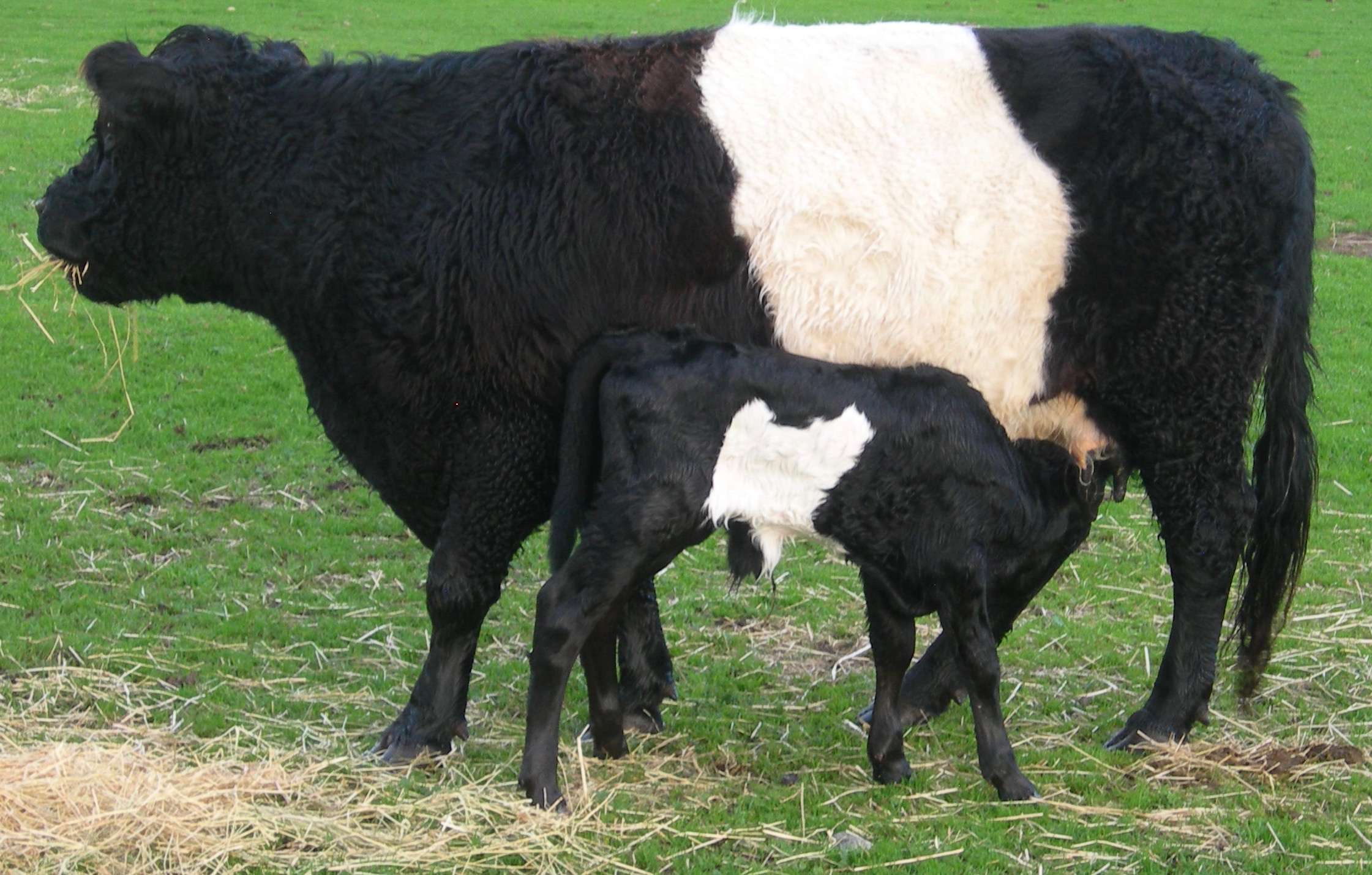
Everything I need to know, I learned in the dairy barn.

I’m not talking about a modern milk factory, but a real, old fashioned 1950s kind of dairy. To find one today, you’d have to go to a third world country.

You’ve all seen milk and yoghurt ads showing perfectly clean, starkly black and white Holsteins standing knee deep in green, green grass. Erase that picture from your mind. It never happened.

Holstein calves come out of the womb clean, but from three days after birth they will never be black and white again. They are brown to the knees from the dust and dirt – and other things – that boil up when they walk. Their tails become a black club of matted cockle burs – and that other thing.

The grass in the ads looks so perfect because no creature is allowed to graze there before the ad is shot. Turn a herd of cattle out and in four days it will be matted, scarred, pockmarked with hoofprints, and covered with steaming piles of the fertilizer which completes the circle of life.

No complaints, you understand. A herd of cattle on a green meadow is beautiful, but the grass will be eaten down, and the ground itself will look like a billion angry golfers have been making divots. It will be nothing like pristine.

It all comes down, finally, to this. Cows produce three things. One is a clear, yellow, somewhat odorous liquid, which they produce in copious volumes. One is a brown to green semi-solid, and they produce mountains of this. One is the thick, white liquid that feeds the nation.

You can’t get the one you want, until you figure out how to handle the other two.

Just like life.
307. Give Me Air

I exist for open spaces. I lived a long time in a small city, but I could walk to the edge of town in five minutes. I spent four years at Michigan State, but that campus was a sylvan paradise. I only lived in a true inner city once, and it almost killed me.

It was Chicago. I know people who love Chicago – Andrew Greeley made a carreer out of loving that city – but they didn’t live where I did. 53rd street, student housing for the University of Chicago, a few blocks from the true south side. The same general area where President Obama got his start.

No, I didn’t meet him. He was in Hawaii, still in middle school, when I was at Chicago.

I never felt more at home intellectually, or more adrift in every other aspect of my life, than the year I spent there. It wasn’t just the dirt and the crowding and the nightly killings. It was that I would have to drive for hours through packed traffic to get to see open space. Without a car, I could have walked until my heart broke and never have reached the open sky.

I left after nine months with a master’s degree and a permanent case of cold chills.

When Keir Delacroix, in the novel Cyan, finds himself stranded on Earth after returning from exploring that virgin planet, I knew how he felt, and I knew where I had to put him. Chicago.

* * * * * * * * * *

The sky was slate gray to match Keir’s mood.    

Snow had been trickling down from ruptures in the sooty sky since noon, and now the dark of evening was upon him. He squatted against the bole of a smog blasted tree, staring at the house where he had been born. It was a half century older now than it had been then, although Keir was only thirty-nine. Even then, it had been old; a two story cottage subdivided to hold a dozen apartments. Now it had endured fifty more years of smog, fifty new layers of winter soot from a thousand chimneys, and half century more of the assault of air borne chemicals from the steel plants.

The orbital factories around L-5 were supposed to have removed the stigma of pollution, but even they were unable to cope with the needs of an Earth groaning under the weight of twenty billion people.

Someone came out the front door. Like Keir, he was bundled against the cold and he kept his right hand in the pocket of his coat. He looked around uneasily, saw no one but Keir, and advanced across the lawn. The grass was dead and brown, withdrawn from the sidewalk near the street to leave a barrier of frozen mud.

Keir drew a deep lungful of cannabis and threw the drag away.

The man was lean to the point of emaciation. His eyes were sunken in deep hollows. Keir nodded a greeting, but he only responded, “What do you want?”

“Nothing,” Keir answered. “Not a damned thing in this world!”

It was not the answer the stranger had looked for, but Keir let it hang between them for a moment before he went on, “I was born in that house – grew up there. In the little apartment to the left at the head of the stairs.”

“Who are you?”

“Keir Delacroix.”

The man knew him; it was written on his face. “What do you want with us?” he demanded. His voice was as tight as his face, all hard edges and deep hollows.

Keir sighed and shook his head. “Like I said; nothing. I don’t even know you.”

“I think you had better move along.” The stranger gestured with the hand in his pocket, and Keir finally decided that he did not have a gun. It was a foolish and dangerous bluff. Keir rose stiffly and threw back his shoulders to ease the strain of sitting too long in one position. The man stepped sharply backward toward safety.

Keir only shook his head and turned away.

306. White Men Only

Mostly, A Writing Life is a look at science fiction and writing in general. However, I am an American, and my country did something seventy-five years ago that needs to be remembered. See also Monday’s and Tuesday’s posts.

The Naturalization Act of 1790 stated that citizenship was available to “any alien, being a free white person”. That set the tone for the future. When the law was amended after the Civil War, it’s new iteration was taken to mean that Chinese were not eligible for citizenship.

Economic reality brought them to America anyway, where their children became citizens by birth, even though their parents could not be naturalized. The Chinese importance to the transcontinental railroad is well known. When the golden spike was driven, Chinese by the thousand were thrown out of work, and in the years that followed, downturns in the American economy were blamed on cheap Chinese labor. By 1882, Chinese were forbidden entry into the United States, a condition that continued until the 1940s.

In 1880, only 148 Japanese were living in the United States. Between 1885 and 1894, the need for cheap labor in Hawaii coupled with economic difficulties in Japan led 25,000 Japanese to emigrate to Hawaii. Many of those later moved on to the mainland.

During the last quarter of the nineteenth century, particularly during the Alaskan gold rush, there was a need for cheap labor all over the American west. Chinese were prohibited from entering the US, but Japanese were not. The result was predictable; between 1901 and 1908, 127,000 Japanese entered the United States. Many entered the fishing industry. Many were skilled in a kind of small scale, intensive agriculture that was new to the United States. All came from a culture that emphasized the entrepreneurial spirit.

Like the Chinese before them, the Japanese immigrants were denied citizenship, but their children became citizens at birth.

Most of these Japanese settled in California, where they formed a tiny minority. By 1941, only a small minority of that minority were both native born and of voting age, leaving the Japanese politically voiceless.

Throughout the half century before Pearl Harbor, the Japanese, especially in California, were subject to virulent racism. Repeatedly, the California legislature made it illegal for Japanese to lease or own land, but these were poorly conceived laws that were universally evaded. Japanese children were segregated out of public education.

It is a familiar pattern. Most ethnic groups endured it when they first came to America – then used the same tactics against whoever came after them. Like hazing at West Point, it is a long-standing American tradition.

Then came Pearl Harbor. Unfounded fears of the Japanese led to Executive Order 9066, and in 1942 the American military moved 120,000 Americans from their homes and incarcerated them thousands of miles away in “relocation centers”. I call them Americans because they were either actual citizens or long time residents who intended to live out their lives in their new country, but were prevented from receiving citizenship because of their race.

Much is made of the harshness of the centers, but that is not the point. Tens of thousands of GIs lived in barracks identical to those that made up the relocation centers. There was one difference, however, that does matter. The GI barracks were not surrounded by barbed wire fences, with guard towers manned by soldiers with guns.

And those GIs who made it back from the war, returned to their homes. The homes, farms and businesses of the Japanese were largely taken by the neighbors who had sent them away.

* * * * * * * *

I said in the beginning that I would not shove conclusions down your throat. I will, however, leave you with this quotation from Personal Justice Denied, p. 28:

(Japanese relocation) is the bitter history of an original mistake, a failure of America’s faith in its citizens’ devotion to their country’s cause and their right to liberty, when there was no evidence or proof of wrongdoing.

For me, 2017 is beginning to look a lot like 1942. Decide for yourself.

305. Relocation – or not

Mostly, A Writing Life is a look at science fiction and writing in general. However, I am an American, and my country did something seventy-five years ago that needs to be remembered.

I have been aware of the relocation of the Japanese for a very long time, but in preparing these posts, I put on my historian’s hat and did my research. The final word (or as close to a final word as ever exists in history) comes from the government commission empaneled to investigate the matter in 1980. Their report, Personal Justice Denied, is available on line at https://www.archives.gov/research/japanese-americans/justice-denied

*************

Executive Order 9066 began with these words:

Whereas the successful prosecution of the war requires every possible protection against espionage and against sabotage to national-defense material, national-defense premises, and national-defense utilities . . .

Certainly, no one could argue with that. The devil was in the details of how Executive Order 9066 was carried out.

There were four groups of American residents who were affected by this order, in two categories – Japanese, German, Italian, and Aleut. The Aleuts were living in a war zone on distant Alaskan islands and had to be removed for their own safety. Their story is not a happy one, but their removal was necessary.

Our concern is with the other three groups, residents and citizen descendants from the three countries against which America was at war.

Italians were dismissed by the government and military as of no danger. They were so little regarded, that it almost seems embarrassing in retrospect. FDR called them “a lot of opera singers” and they were quickly removed from the category of “aliens of enemy nationality.” Whatever distrust individual citizens may have had, the government did not move against them, even though Executive Order 9066 allowed it to do so.

Germans were also treated differently than the Japanese in spite of the powerful pro-Nazi movement among German Americans before the war. The Bund rally for Hitler in New York in 1939 drew 20,00 people, and Bund membership nationwide was more than 200,000.

Of course, mass exclusion of Germans and Italians would have required dealing with a million detainees. And they were white, which Japanese were not, by the standards of the day.

Nevertheless, German and Italian individuals were at risk. Military commanders used their powers to exclude many individual citizens of German or Italian ancestry from the areas under their command. Many non-citizens were arrested and brought before INS hearings, where they were not allowed lawyers and could not object to the questions put to them. Any issues of loyalty were decided in favor of the government. By three months after Pearl Harbor, 1393 Germans and 264 Italians had been incarcerated by this system

Everyone knows that Japanese were relocated en masse, but there is a twist to the story. Not all Japanese were treated equally, either. Japanese from the west coast were the ones relocated. That means mostly California, Oregon, and Washington – Hawaii was only a territory at that time.

The Japanese in Hawaii were not relocated. Why? There is no single, simple answer. At least part of the reason lies in the fact that Hawaii was tightly under martial law. Part of the reason lies in the personalities of the regional generals, Emmons in Hawaii and DeWitt on the west coast. Part of the answer lies in sheer numbers. In 1942, 35% of the population of Hawaii was of Japanese ancestry.

However, most of the reason lies in years of racism in the western part of America. We will look at that tomorrow.

304. Another Day In Infamy

Seventy-five years ago yesterday, FDR signed Executive Order 9066 which allowed the Army to remove tens of thousands of American citizens from their homes and place them in relocation camps. America has long recognized the error of this action. Now, more than ever, we need to look at how it came about – not only because of the anniversary, but because of what is happening in our country today.

First, however, an aside. This is not a reaction to Donald Trump and his travel ban or his planned expulsion of undocumented residents. I’ve been planning this series of posts for over a year. I announced them in early December (See 266. The Other War), and I would be writing the same series of posts if Donald Trump had never existed.

Nevertheless, these posts do shine a sidelight on his policies.  You can make the comparisons for yourself.

* * * * * * * *

Executive orders are neither good nor bad, as a class of action. They are just the way legislation gets fine tuned and enforced. There are times when a president oversteps his authority and gets slapped down by the courts. There are times when a president should act, but does not. It would be easy to find citizens who applauded Obama’s executive orders and hate Trump’s – and just as easy to find the reverse.

Every executive order has to be seen on its own merits, even executive orders by the same president. Although Roosevelt’s Executive Order 9066 will receive harsh criticism here, we should also remember his Executive Order 8802, which prohibited racial discrimination in the defense industry. There are very few full time villains, and probably no full time heroes. That’s why, in a democracy, we choose our leaders carefully, and watch them just as carefully after they are in office – no matter who they are.

* * * * * * * *

The Japanese attacked Pearl Harbor on December 7, 1941. On December 8, America declared war. On December 12, FDR issued Executive Order 8972 which ordered military guards and patrols within the US to protect national defense areas. The justification was protection of America from domestic sabotage by internal enemies. That would also be the justification for Japanese removal.

On February 19, 1942, FDR issued an additional executive order, number 9066, toward the same end, but this time he called on the military to exclude “any or all persons” from areas of military importance, with wide discretion to decide who this meant and what constituted an area of military importance.

I have placed links to full versions of both orders at the bottom of this post. Here is a cut-down version of EO 9066, for those who don’t care to see the full text:

. . . by virtue of the authority vested in me as President of the United States, and Commander in Chief of the Army and Navy, I hereby authorize and direct the Secretary of War . . . to prescribe military areas . . . to which, the right of any person to enter, remain in, or leave shall be subject to whatever restrictions the Secretary of War . . . may impose in his discretion (and) to provide for residents of any such area who are excluded therefrom, such transportation, food, shelter, and other accommodations as may be necessary . . . I hereby further authorize and direct the Secretary of War . . . to take such other steps as he . . . may deem advisable to enforce compliance with the restrictions applicable . . .

As you begin reading the full text, at first it seems to be an order to do things like keep spies off Navy bases. But then you come to the part which says that “such transportation, food, shelter, and other accommodations as may be necessary” will be provided, and it becomes clear what is really intended.

They called it exclusion, as in being excluded from a Navy base. Today it is called removal, because it was not a Navy base from which these unnamed people were being excluded. It was the entire west coast of the United States. And the people excluded from their homes, farms, and businesses were Japanese Americans.

I know people who have no problem with this, who say we were at war with Japan and who see all Japanese as one. I know some whose hatred of Japan has never died.

Facts don’t support them. The Japanese, who were not a threat, were incarcerated. The Germans, with whose Fatherland we were also at war, had shown massive support for Hitler, but they were not incarcerated. Why? The details of all this will come in the next two posts.

Executive order 8972 https://fas.org/irp/offdocs/eo/eo-8972.htm

Executive order 9066 https://www.ourdocuments.gov/doc.php?doc=74&page=transcript

303. Local Color


dscn4367I first saw California in 1969
,
on my honeymoon. A year later, my wife and I moved here temporarily while I waited to go into the Navy. Then came four years in southern California, stationed at the naval hospital inside Pendleton. Then a year in Chicago for a Masters degree, then back to the central valley.

It took me twenty years to get used to the climate and to feel truly at home.

I became a writer, more or less full time, then eventually, a teacher. I never stopped writing, and about ten years into my day job – which I had for twenty-seven years – I wrote a novel based on my teaching experiences called Symphony in a Minor Key. I presented the Christmas chapter in December of 2015.

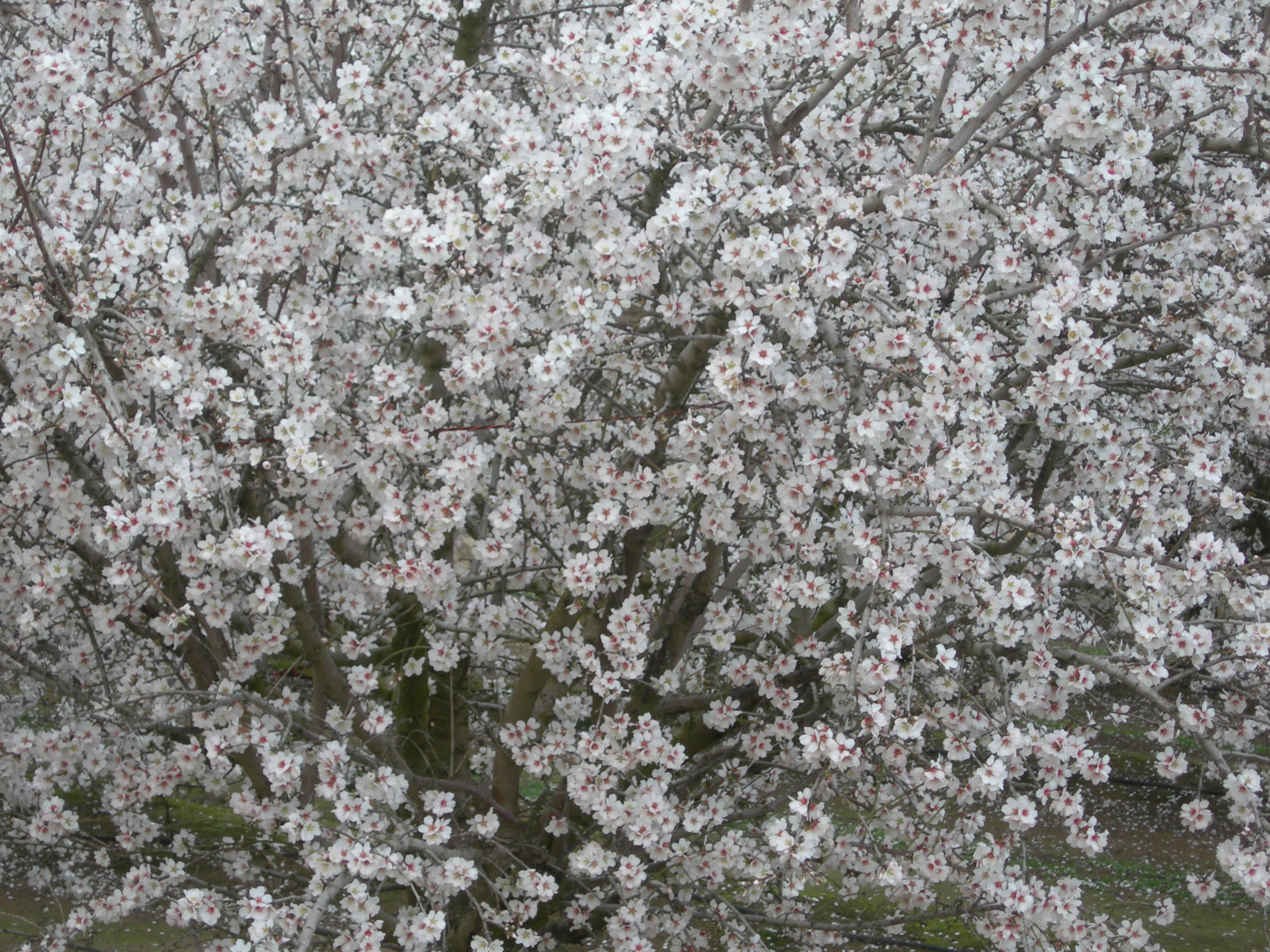
Driving around yesterday I saw the first almond blossoms of the year, and it reminded me of that novel. Within a week, the entire central valley of California will be alive with blossoms, California’s brief efflorescence of spring before the long, harsh days of summer. We have seasons, they’re just skewed early.

Here is a brief almond blossom excerpt.

**********

For the next two days, Neil’s afternoon class moved as smoothly as a well oiled bearing. It was amazing what the absence of one child could do.  When Saturday rolled around, Carmen took Neil for a ride without giving him a hint of their destination.  She had packed a picnic basket, and she set a course that circled northward across the river, then eastward toward Riverbank.

It was February eleventh.  In the midwest, there was a foot of new snow on the ground, but spring had come to California.  Almost overnight, the almond orchards had come to full blossom.  Everywhere Carmen took him, the trees were covered with pure white flowers, and already the wind was shaking the first of them free to cover the ground like a fragrant snowfall.

They stopped half a mile up a dirt orchard road.  Carmen spread a blanket under the trees, in a patch of sunlight.  It was just too chilly to be quite comfortable, so after they ate they put the food away and wrapped the blanket around them as they waited out the day, encircled by ten thousand acres of flowers.

302. The Drought Has Broken

dscn4470What is weather to a writer? If you live in the city, it might invoke a passing mood,. Beyond the city, where I live, it is everything.

I grew up on a farm, living in the glorious outdoors sixteen hours a day for half the year, and the other half freezing my #%*# off six hours a day milking cows. Weather was everything. Through the middle of my life, when I lived in cities, weather was mildly interesting. Now I live on three acres in the Sierra foothills, and weather is back with a vengeance.

I posted a picture at the top. This is an fold in the hills which is dry ninety percent of the year, and recently has been dry all year for half a decade. This is what it looks like now.

The drought has broken. Grass is green and knee deep in my yard. Yesterday was Valentines Day or, as my wife and I call it, the first day of spring.

That began as a joke. When we first came to where we live now, I bought her a tomato plant and we planted it together on Valentines Day, with high hopes and no expectations. A few months later we were eating tomatoes from it.

It doesn’t always work that way. In another year, a hard freeze on April 15th killed everything in the garden. Taxes and a hard freeze on the same day — it seemed appropriate. Life is like that in the real world. Sometimes you get the bear; sometimes the bear gets you.

If all this talk of green grass in February is making you jealous, take heart. By May, the rains will stop and they won’t return until winter. When you are having a picnic in June, on green grass under the trees, with cool breezes, here in the foothills it will be a hundred degrees with dry brown hills in every direction. The rattlesnakes will be carrying their canteens again.

But for now, the drought has broken. The grass is green, the weather is clement, and the lakes are full. And my novel Cyan is due out this summer, after the long dry spell since Jandrax and A Fond Farewell to Dying.

The drought has broken. Finally.

********

I have to offer a PS to my metaphorical connection of our breaking drought and the end of my publishing dry spell. Three days after I wrote this post for today’s release, the Oroville dam about two hundred miles north of here, hit the national news for excessive water and a failing spillway. Be careful what you ask for.

301. Cyan in the Making (2)

This is a continuation of the Cover Design Questionnaire for Cyan.

Describe the main characters and their physical appearances.

Okay, I cheated a little on this one. When I first sat down to outline Cyan, I intended the crew to be truly multinational, and made sure that no two were from the same country. As I continued writing, it became clear that the Earth from which they came would not be that cooperative, so I transferred the crew to a single country, a successor of the US, and that’s how I described them here.

Also, when you see xxxxx xxxxx below, that is me restricting what you can read to avoid spoilers. 

All the ten original explorers are athletic, but normal looking. Like the original astronauts, they are of compact build; none are above 6 feet. They were chosen to be racially mixed, a goal made easy since their home nation is the USNA (formerly USA) after it has absorbed Canada, Mexico, and the Caribbean. The women of the group are independent souls. If an artist were to put one of them in a damsel-in-distress pose on the cover, she would hunt him down and beat the crap out of him.

Keir Delacroix, groundside crew leader, French ancestry, the most physically active crew member, survivalist, a generalist whose main job is keeping everyone else alive

Stephan Andrax, spaceside crew leader, Danish ancestry, more slender, he spends little time on Cyan

Tasmeen Rao, second in command in space and on the ground, Dravidian ancestry, from Trinidad, very dark smoky grey skin, darker than Leia, strong but so slender as to appear frail

Ramananda Rao, meteorologist, married to Tasmeen, similar in appearance, but without her seeming frailty

Leia Polanyi, paleontologist, African ancestry, of medium dark skin (think Uhura), small

Gus Leinhof, biologist, German ancestry, slightly older than the other crewmembers

Uke Tomiki, Japanese ancestry, powerful but slender body of a martial artist

Debra Brunner, biologist, mixed caucasian ancestry, movie star beautiful and hates it because it gets in the way of her work. No hipshot poses if she appears in illustration

Petra Crowley, geologist, xxxxx xxxxx xxxxx xxxxx xxxxx xxxxx

Viki Johanssen, anthropologist, Scandinavian ancestry, 6 feet tall, a powerful, lanky amazon, dirty blonde hair (really blonde, chopped short, and always dirty). xxxxx xxxxx xxxxx xxxxx xxxxx xxxxx xxxxx xxxxx xxxxx xxxxx xxxxx xxxxx xxxxx xxxxx xxxxx xxxxx xxxxx xxxxx

On Cyan, as explorers and later as colonists, they wore khaki and denim, with 12 mm automatic pistols in cross draw holsters on the left side – out of the way but easily accessible. If you need to draw Gus, he also carried a long barreled .22 revolver in an open holster low on his right. As the crew biologist, he used this to gather specimens without blowing them apart. Yes, it is a cowboy look, but it is how field biologists actually used to gather their specimens, before eco-consciousness and electro-miniaturized high tech equipment was available.

Who is your favorite/ Why? I like them all. Even the villain Curran has redeeming characteristics. Tasmeen is the one I would most like to meet, if she were a real person.

What sparked the book? Over the years, tales of exploration have always been my favorite kind of science fiction, but they are rare, and I couldnʼt think of one that took a planet all the way from initial exploration through colonization. It was the book I had always wanted to read, but I had to write it myself.

300. Cyan in the Making (1)

Three hundred posts in A Writing Life. That’s a milestone, more so since there are more than three hundred additional posts over in the companion blog Serial.

This calls for a celebration and, since this blog was begun in support of my upcoming novel Cyan, it seems like a good time to announce the publication dates.

==The dates that were here were accurate==
==when I gave them, but have been changed.==
Click here to go to  post 316 for corrected dates.

I’ve seen the cover and I like it, but I’m not allowed to show it yet. Sorry.

Close to a year ago, my communication with EDGE became more intense. Cyan was scheduled for a near future release, which ended up being delayed, but the back and forth was useful and fascinating. I had no idea that they would ask for so much input. Certainly I had almost no input when Jandrax and A Fond Farewell to Dying were published, long ago. (see 133. and 134.).

One of the questionnaire’s I filled out was on cover design. I’m going to share part of it with you, because it is interesting, and because it is a good teaser for the upcoming novel.

Cover Design Questionnaire (in part)
this was for the editors and to be forwarded to the artist

Primary genre? science fiction

A potential subgenre? hard SF; near neighborhood, near future stelar exploration; SF realism —every company had it own definitions for subgenres. The guiding principle of Cyan was to tell a story about the kind of things that probably will happen in the next century or so.

List three comparative novels for cover suggestions–I went to B&N today to see what this monthʼs crop of covers look like. They are all beautifully done but essentially interchangeable. None of the covers gave much of a clue of what is going on inside the book, with the exception of Kim Stanley Robinson’s Red, Blue, and Green Mars.

My take on covers is that they should give the reader an idea of what he is buying. Cyan is a realistic, day-after-tomorrow story of colonization and exploration, with no battles and no fantasy elements. Most of the covers I saw today could as easily have been put on video games; that wonʼt work for Cyan. Cyanʼs cover should have no Terminator wannabes, no Conan clones, no Frazetta girls, and no Dystopian ruins.

Seven phrases for google searches:

science fiction
Procyon
space exploration, fiction
space colonization, fiction
first contact
recombinant DNA
overpopulation, fiction

Hypothetically, pick a scene for the cover — A lot of things happen in Cyan; there are many scenes that would look good on a cover, but the one that most clearly conveys the overall sense of the book is the first ten minutes the crew spends on the ground. I will enclose the text of the scene. (To the artist, I didn’t enclose it here.)

If you do that scene, here is some backstory on the landing craft. Starships are built in space with unstreamlined, open structures. The landing craft is a squat cone with added complexities. It is fusion powered, so its tanks are small, but it has some cargo space for specimens. The tug, during the colonization phase, is similar in appearance but much larger, with a large cargo hold. Both are VTOL craft, landing upright. This is because of the absence of landing fields, but such craft have also become popular on Earth. Given compact fusion reactors, their inherent inefficiencies are of no consequence.

If you prefer to include the non-human characters, I have included an excerpt of Cyl on the hunt. I have also enclosed further descriptions of the Cyl. (Again,to the artist, not here.) 

this questionnaire excerpt concludes tomorrow

299. I Survived Skylab

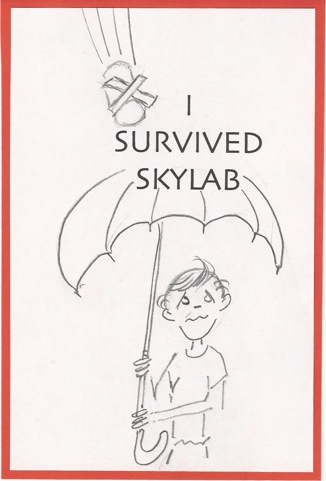
skylabAt the top of this post is a drawing, done with deliberate crudeness. I wish I could have used the original, but it existed before digital cameras and Pinterest. I have searched the internet without success for the image I remember. There are dozens of modern Skylab T-shirts. but none like what you see here.

In 1979, Skylab came crashing back to Earth. NASA knew it was going to happen, but could not prevent the event; it even predicted the date, July 11. The world partied in the face of danger – especially since the chances of being at ground zero were billions to one – and I Survived Skylab T-shirts were worn everywhere. The one I remember had a silly looking cartoon schmuck holding an umbrella over his head while Skylab was flashing down behind him.

If anyone still has a picture of one of those original T-shirts, post it on Pinterest and I’ll provide a link.

No one had intended Skylab to come to such an end. It was in reasonably high orbit, about 275 miles when he last crew came back to Earth. It still contained plenty of air and water, although the gyros were failing. It could have been remanned, and there were tentative plans to shift it to to a still higher orbit. No one took it too seriously, though; the vessel was old and battered, and NASA had turned its attention to the Space Shuttle.

In fact, most people at NASA thought the next Skylab crew would be ferried up by the Space Shuttle.

Nature had other plans.

By 1973, it was predicted that Skylab would deorbit years earlier than NASA was predicting, but NASA failed to listen. Increased solar activity had heated the atmosphere, causing it to expand. Low Earth orbits are still within the tenuous ranges of the outer atmosphere. Although the life of such orbits is measured in years, all things within a few hundred kilometers of Earth eventually come down. Now NASA was facing the fact that the Space Shuttle would not fly before Skylab’s orbit became critical. Not only could Skylab not be saved, it could no longer be equipped for a controlled deorbit.

A Russian Cosmos had crashed into northern Canada only a year before. The second stage of the Saturn which had launched Skylab had remained in orbit two years, then crashed into the North Atlantic in 1975. NASA was aware that the potential for disaster was great. It was predicted that up to 25 tons of debris might survive reentry, and there was no way to determine where it might land.

If Skylab had landed on Omaha – or Paris – we would be living in a very different world, with a very different attitude toward space exploration. In point of fact, Skylab struck the Earth in the desert of western Australia. No one was injured. Property damage was minimal.

The Shire of Esperance sent NASA a fine for littering.

*  *  *  *  *  *  *

Everybody has to carve out his own niche. In my science fiction, I concentrate on the next couple of centuries. In these posts I concentrate on the early space program. I have not yet written about the space shuttle, which always seemed to be like Grandpa’s pickup truck that he bought after he was no longer young and had sold his hot rod. Sorry, my prejudice, which I am sure I will someday reverse without apology.

I am even less interested in the ISS. I remember too well that, during its planning – before the feds told them to shut-their-mouths and not bite the hand that was feeding them – the scientific community complained loudly about all the research that would go unfunded to feed the ISS.

The ISS, symbol of American-Russian friendship, boldly going where everyone has already gone before. Sorry, my prejudice again.

If you are interested in the ISS, there is a plethora of available writing. If you want to know more about early space stations, try to find Living in Space by Giovanni Capara in your local library. Published in 1998, it is a detailed study of all the space stations before ISS.