Tag Archives: americana

Spirit Deer 4

Tim started up the slope and the muley broke from cover.  With surprising speed, it went up the slope on three legs. Tim sighted quickly and squeezed the trigger – but nothing happened! He had forgotten to work the lever after his first shot. He jacked a shell angrily into the chamber and fired, but the deer kept right on going, and he knew he had missed.

Tim topped the skyline fifteen minutes later. Below him was a broad, shallow valley, now lost in shadow, and behind him the sun was setting. The deer was nowhere in sight.

* * *

Tim was in trouble, and he knew it. It was too late to find his way back to the campground before full dark, and he was growing cold, so he built a fire near a circle of junipers. He had slept out many times with his father, but never without a sleeping bag or jacket, and never without food. “Serves you right,” he told himself, bitterly. He fed the fire and squeezed close to it.

Tim could imagine his mother coming home from work, past midnight, and moving about the silent, empty house. She would see his note. If he was really lucky, she would assume that he had decided to spend the night at his grandfather’s house. It would be late, so she probably wouldn’t call. It would probably be morning before she knew he was missing.

If he just had his cell phone he could have told her what happened, although he cringed at how lame the story would sound.

It was a miserable night. Tim dozed in snatches on a bed of dry ferns and needles. Before is was fully light, Tim had already stamped out his fire and started off, but even exercise did little to warm him.

He had a decision to make. Within an hour, his mother would be calling his grandfather, and would find out that he wasn’t there. He didn’t want to worry her, but there was no way to avoid it now. The question was, should he go back immediately and face her, or should he spend a little more time to bring the muley in. He decided to spend one hour looking for the injured muley, then he would have to go back.

The ground was too rocky to take tracks, so he headed for the stream he could see at the base of the valley. It was rocky with only a few patches of dirt, and he found no tracks there, so he worked his way downstream, looking for anything to indicate that the deer had passed that way.

Just when he was about to give up and turn back, he found three-legged deer tracks.

Now Tim was really in a dilemma. He didn’t want his mother to worry, but he didn’t want to leave his wounded deer either. And he certainly didn’t want to have to tell his dad that he had left a wounded animal.

“Just a little longer,” he decided.

Tim followed the tracks down the valley. It was slow work; the tracks only appeared at scattered intervals where the ground was soft enough to hold them. Several times he lost them altogether, but always managed to pick them up again.

The sunny morning was turning into a very cloudy day. Up here snow would be dangerous, and even rain would be a first class misery. At least he had the survival pack his father had helped him put together. It held matches and a plastic poncho, and he never went into the woods without it.

The stream roared in its bed, and towhees darted about, showing him their red sides as the flitted by. Tim was watching them, when he saw his deer. more next week

Spirit Deer 3

He hid his bike in the manzanita a hundred yards from the campground and took his rifle with him. Then he slipped a few cartridges into the magazine, just in case.

He walked into the woods. It was late October and the Sierra Nevada mountains of California were beautiful. The aspens were gold against the deep green of the firs and the air was clear and cool. As the morning slipped by he occasionally heard the shots of other hunters, but he didn’t see any deer.

By mid-afternoon, Tim reached a high valley, cut through by a small, swift brook. There he lay back with the sound of water in his ears. The rifle was across his stomach as his eyes searched the edges of the trees.

Five deer came out of the woods on an eyebrow of trail fifty feet higher up the slope and a long hundred yards away. A four point buck led the way, followed by three does and a yearling. Tim sat up and brought up his rifle. He took up slack on the trigger and squeezed gently, just as his father had taught him.

In the moment that Tim fired, the lead muley caught sight of him and pulled up short, then stumbled. His forequarters failed him and his chest hit the trail as his back legs struggled for balance. Then he was up again and running up the trail.

The other deer were gone. Tim’s attention had been all on the leader and he had not even seen where they went after they disappeared into the forest.

Now he was in a panic. Until he had fired that shot, he had not really admitted to himself that he was out hunting alone. He had just been “taking a walk”. If he turned away and went back down to the campground now, his parents would never know the truth. But Tim would know, and in the hunter’s code his father had taught him, leaving a wounded animal was unthinkable.

Tim plunged into the stream where it ran shallow across a bar of harder rock, holding his rifle high. He scrambled up the talus slope, using rocks and juniper as handholds. When he reached the point where the deer had been, he found the manzanita covered with a fine spray of blood.

Tim turned up the narrow, winding trail in pursuit of the wounded deer. Near the stream there were vines and underbrush, but as the trail climbed, it became more open. The muley was nowhere in sight.

There were a number of tracks on the trail, but only one set going in the right direction. Tim studied them for a moment, looking for some distinctive feature, but he found none. The deer held a grueling pace for more than a quarter of a mile before his tracks showed that he had slowed and begun to limp.

The situation didn’t look promising. The deer had run into an area of broken granite and stunted firs. It was not a place for an inexperienced tracker.

The sun was low, filling the land with shadows and strange suggestions of shapes. It was beginning to get cold, and Tim’s jacket was back at the campground, tied to his bike.

Tim sat down on a rock to scan the slope ahead of him. Finally, almost lost in the tangle of roots at the base of an uprooted ponderosa pine, he thought he saw a set of antlers.

Tim started up the slope and the muley broke from cover. With surprising speed, it went up the slope on three legs. more tomorrow

Spirit Deer 2

Last year, Tim had been allowed for the first time to go with his father on his yearly deer hunt. Then his father had given him a rifle for Christmas, and this year they would have hunted together for the first time. There had never been any open agreement between them – that would have spoiled the whole thing – and his father would never have admitted that these were rewards for good behavior. Good behavior was simply expected. But if Tim hadn’t gotten control of his temper, the rifle and the hunt would not have been his.

Tim picked up an axe and took his anger out on the wood.

* * *

Tim was standing beside the pickup when his parents left the next morning. His dad tossed a worn leather satchel into the back and squeezed his shoulder. “Your mother is going to drop me off on her way to work,” he said. “Maybe I’ll be able to get a day between runs before deer season is over.”

“Now don’t you go driving crazy!” Tim’s mother said.

“You know me, Helen.”

“Yes, I do.” She turned and kissed Tim, and said, “There are leftovers in the refrigerator. You’ll have to make your own supper. I’m taking another double shift while Susan is having her baby. Maybe you ought to bike over to see your Granddad.”

“All right, Mom,” Tim said, but inside he was shouting, Not you too! He knew he shouldn’t be angry at either of them, but he was. After the pickup pulled out of sight, he wandered around the yard, feeling abandoned and feeling sorry for himself.

Eventually, he went to his bedroom and sat down on the bed with his new rifle across his knees. It had never been fired, except on the practice range. He took the shells from the box on his desk and loaded it, then unloaded it again. Finally he dropped a half dozen cartridges into his pocket and picked up his pack. As long as both parents were gone for the night, he figured he might as well spend the time with his grandfather. Maybe he could get in some target practice, or maybe he could get his grandfather to tell some of the family tales about the old Miwuk Indian days.

He left a note for his mother and strapped his rifle across the handlebars of his bike. He turned up the main highway into the mountains, standing on his pedals to make the initial grade. When he got to the turnoff to his grandfather’s place, he hesitated. Up the road, only seven miles further into the mountains, was the campground where he and his father had parked last year when they went hunting. At least he could go there. He had all day.

The road rose sharply for those seven miles, and Tim was thoroughly winded when he arrived at the campground. Half a dozen empty campers were parked there, but there was no one in the campground. Everyone was out hunting.

Tim stood astraddle of his bike for a long time, running his hands across the smooth steel and wood of his rifle. He was sorely tempted to have his hunt anyway, alone. Finally he decided to just walk in the woods for an hour before he went down to his grandfather’s place. He reached for his cell phone to tell his grandfather, then remembered that it was at home.  The one girl he liked least had begun to call him twice a day, so he had stopped carrying it. more tomorrow

Spirit Deer 1

Spirit Deer
by Syd Logsdon

Chapter 1

Tim was packing for their hunting trip when his father came to his room. When he hesitated in the doorway, Tim knew that something was up, and that it wasn’t something good. He shoved another pair of jeans into the pack and said, “What’s the matter, Dad?”

“I just got a call from Mike Conway,” Tim’s father replied.  “He’s come down with the flu.”

Tim stood still with his hands resting quietly on the half filled pack, waiting for the rest.

“I have to drive his rig for him.”

“How far?” Tim asked.

Tim’s father came up and put his hand on Tim’s shoulder. “All the way to Chicago. I’m sorry, Tim”

Tim wished he was twelve years old again, so he could throw a screaming fit. He had been working on his temper these last two years, trying to be fair to his family, trying to be responsible – trying to be more like his dad. If he acted childish now, if he even whined, his father would be terribly disappointed in him. He didn’t want that, so he gritted his teeth and asked, “How soon will you be back?”

“That’s the rest of the bad news. I can’t pick up his load until tomorrow morning. Figure two days each way, and at least a day to unload and load at the other end. Five days; I’ll barely be back in time to make my own next run.”

Tim couldn’t believe it. It wasn’t fair. He had waited all year for this hunting trip and now it was going to be snatched away from him. He said, “I wish we had left two hours ago.”

Tim’s father shook his shoulder in a friendly way. “Then Mike would have driven sick. I’m glad I was here for him. He has been a good friend to all of us.”

It was true. Tim knew that; but inside, the selfish twelve year old he had been was screaming, “I hate it, I hate it, I hate it!” Tim was tired of being fair. His fingers tightened on the pack. He wanted to grab it up and throw it – preferably through a window, or at his dad.

But Tim saw his father’s eyes on him. He knew the look of disappointment that would come into those eyes if he gave in to childishness, and he never wanted to see that look again. His dad said, “Tim, I’m proud of you for taking this like a man.”

Tim couldn’t reply, and he couldn’t stand those eyes on him any longer. He nodded with set lips and left the room. He headed for the woodpile.

Two years ago, the last time he had thrown a tantrum, his father had taken him out to that woodpile. He had given the axe to Tim and had told him to chop wood. After ten minutes, when some of his anger had been drained away by smashing the heavy logs into firewood, his father had said, “Everyone gets angry. Everyone wants to have things go just right, and things never do. Now you’ve got a choice to make. You can cry like a baby when you don’t get your way, or you can act like a man. The next time you find yourself losing control, I want you to get up from whatever you are doing and come out here. Work it out, then come back.”

Tim had spent a lot of time at the woodpile that year. Gradually he had gained control of himself, and as his father grew proud of him, he had grown proud of himself.

It had been nearly a year since he had gone to the woodpile to take out his frustrations, but this was no ordinary disappointment. more tomorrow

357. Mike Mars and Project Quicksilver

If you Google Mike Mars, you’ll get Mick Mars, lead guitarist for Mötley Crüe. In fact, if that is how you got here, sorry about that. The only connection, besides spelling similarity, is that Mick Mars is of the right age to have read Mike Mars when he was a kid.

Our Mike Mars is a fictional astronaut from a fictional project called Quicksilver. The series was written by Donald A. Wollheim.

The eight Mike Mars books were unique in science fiction. They were so tied to the moment that they became outmoded on publication. They were both strikingly accurate and completely false. They were less of an alternative reality than a conspiracy theory version of the early 60s.

Here’s the setup. Project Mercury has selected seven astronauts, who will conquer space for America – ostensibly. They are all military test pilots of great experience. At the same time, a second, secret space program is being formed to duplicate their work, using hot young (read: expendable) pilots just out of fighter training, but no one will know of their flights. And they will do their thing just a hair sooner than the old guys. The project is called Quicksilver.

I look at that paragraph today with awe at how dumb the notion was. When I found Mike Mars, Astronaut on the shelf at the hobby store where I bought my books, I flipped at how cool it all was. It was 1961; I was 13 years old.

Thirteen is the golden age of science fiction. (I didn’t make that up; it’s a well known cliché.) Thirteen is also the age when you like things you wouldn’t even look at a few years later.

Mike Mars is the nickname of Michael Alfred Robert Samson, one of the young pilots chosen to participate in Project Quicksilver. The first novel takes him through selection and early training until he is chosen as one of the young astronauts. It also includes a murderous saboteur and makes the reader aware that one of the seven, Rod Harger, is a traitor. After all, this is a book for boys, designed to sit on the shelf beside the Hardy Boys and Tom Swift, Jr.. Just being an astronaut isn’t exciting enough to give a climax every fifth page.

In Mike Mars Flies the X-15, the seven Quicksilver astronauts get glide flights in the X-15, and one of them will get to make a powered flight into space. (Guess who gets the powered flight.) We become more aware that six of the young astronauts are patriotic team players, but Rod Harger is in it for the power and the fame, and his father has thugs at the ready to tip the scales his way. This sets the pattern for the books — about half an accurate portrayal of training and flights and about half Hardy Boys style chasing crooks through empty hangers.

In Mike Mars at Cape Canaveral, Mike rides a Redstone rocket in a sub-orbital flight, after spending half the book fighting off more saboteurs.

In 1961 Yuri Gagarin became the first man in orbit, followed shortly by John Glenn. The Russian’s had won — except that those of us reading the Mike Mars series knew that Mike beat both of them in Mike Mars in Orbit. But, of course, he could never tell.

(True believers like me knew that Rick Brant had beaten all of them into space, back in 1958 aboard the Pegasus in The Scarlet Lake Mystery, but that was an accident and, of course, he could never tell either.)

In Mike Mars Flies the Dyna-Soar (see 342. Dyna-soar) Wollheim finally ran out of reality. The first four books had involved real hardware, but the real-life Dyna-soar was never finished. Space kids all over America forgave him however, as we flew with Mike to rescue a fellow astronaut in the coolest spacecraft that was never built.

There were three additional books, Mike Mars, South Pole Spaceman, Mike Mars and the Mystery Satellite, and Mike Mars Around the Moon. They never came to my hobby shop bookshelf, so I never saw them. It would be pointless to seek them out now. Within five years, alternative versions of early space travel had gone from unthinkable to not worth thinking about. NASA and the Russians made the conquest of space real, and I had grown beyond kiddy books.

But God the ride was fun while it lasted.

_____________________

Meanwhile, back in the real world, the secret military space drone, X-37b, recently landed at Kennedy Space Center after it’s longest flight to date. We will see how the Air Force is still trying for a Mike Mars reality in tomorrow’s post.

352. A Modern Maverick

The old TV show Maverick has been on local channels lately. It was one of my favorite programs when I was twelve years old, but I’ve pretty much outgrown it. I don’t watch the reruns, but they started me thinking about an American archetype — the lovable con man.

There are a lot of them in literature, and a lot more moving among us in our everyday lives. You know him, weird Uncle Bob who always has a beer in his hand but never buys drinks. Or Uncle Jim who thinks it is wonderful that you are planting trees in your mother’s yard, and drives home to get his favorite shovel, but never comes back.

What all these slick dealers have in common is that they are funny, charming, and it is almost impossible to stay mad at them. They’ll steal your beer, or steal your heart, or steal your money, and leave you laughing at how easy you were to take.

In the movie version of Maverick, he says, “There is no more deeply moving religious experience, than cheating on a cheater.” Cute, but in point of fact, Bret and Bart and Beau cheated everybody. It doesn’t matter though, because they were charming.

There were others before Maverick. Starbuck, in The Rain Maker, teaches Lizzie that she is beautiful, but she marries her home town swain. Good thing. If she had run off with Starbuck, it would not have ended well.

Harold Hill, in The Music Man, made a career of separating suckers from their money. He was charming and slick and thinks faster than the locals. When he falls in love with the librarian, it changes his attitude. She reforms him. Okay, fine, but for me that doesn’t saves the movie; the line that saves the movie is when he tells Winthrop, “I always think there’s a band.”

See, he didn’t mean it. He thinks he’s giving something back. He’s a good Joe at heart.

If a con man believes his own lies, does that make us forgive him? In the movies it frequently does. But what if a real Marian the librarian married a real Harold Hill. We would probably find her later with eight kids, hungry and living on skid row, after Harold Hill moved on. I like the movie version better.

Does our charming American con man believe his own lies? Does he even know himself where the truth is? Does it matter to him? Does it matter to us?

If he is slick enough, and fast enough, and plausible enough — if he can tell one lie to cover another until we get lost in the shell game — there is no limit to how far he can go.

He could even become President.

327. The Lone Hero

bks275-1

                         A note before we start  ——

     Yesterday, someone searched on the sub-title of this blog (be not ashamed . . .) but my software doesn’t tell me who. For your information, unknown and curious person, I explained my relationship to this poem on the last day of 2015, and included a copy of the poem the same day.

     And now to our regularly scheduled business ——

===============

In my youth, before Star Trek and Star Wars and computer generated effects, the typical movie hero was a cowboy, riding into town alone, beholden to no one, ready to stand or fall on his own.

Even the word “beholden” seems old fashioned. Ancient. Outmoded — like the western hero himself. And to be fair, he never really existed. If you spend any time at all reading histories of the old west, you’ll find out that things were done by groups, not by lone heroes. When the Dalton gang tried to hold up two banks at once in Coffeyville, Kansas, it wasn’t a John Wayne figure standing tall in the street that stopped them. It was a dozen or so armed citizens that blew them out of the saddle from windows and doorways. Same story in Northfield, Minnesota when the James gang bit the dust.

I called them armed citizens. That sounds pretty good. Put them up on horses with Winchesters and send them as a posse after the bad guys. It still works — unless you are the one they are after. Call them vigilantes, and some people will start to feel uncomfortable, but not everyone. Call them a gang and people will start thinking about locking their doors.

Put them in white hoods. What do you think of them now?

It’s all a matter of perspective, isn’t it?

The lone, self-sufficient individual or small family did exist. There were soddies on the Kansas prairie miles from the next settler. Or log cabins in the deep woods of Ohio and Indiana — back when Ohio and Indiana had deep woods. And there were the mountain men. You can’t get more independent than that — except that they moved across the prairie in companies, and only dispersed once they were in the mountains.

One thing is certain. The idea of the loner was always there.

I wrote my first book, a young adult novel called Spirit Deer, with the idea of the loner front and center. The young man Tim — he didn’t need a last name — got lost in the Sierras while deer hunting and found his way out without help despite innumerable trials and tribulations. You can still sell that kind of book (see Two Hands and a Knife), but they are becoming rare. Today’s YA novels seem to be about how to get along in the world.

There’s nothing wrong with that. It better fits the world today’s youth live in. The — ask a friend, seek companionship, don’t rock the boat, politically correct, do no harm, love yourself, make no judgments, everything is morally right as long as you don’t hurt someone’s feelings — world.

Granted, there is much good in these “civilized” changes, but whatever happened to standing up on your hind feet and saying, “I don’t agree. That’s not for me.” There’s nothing wrong with having an opinion different from the crowd.

No wonder Trump won.

He’s as fake as Rooster Cogburn, but he represents something Americans have come to miss. The cowboy hero, riding into town alone, beholden to no one, ready to stand or fall on his own.

There is one thing to remember though. When the smoke cleared and the sound of six guns faded at the end of that movie, half the town was dead in the street. That may work when you can leave the theatre and drive home to your secure suburban house. It doesn’t work so well when you have to pick up a shovel and go bury your dead.

The self-certain loner and the soft spoken conformer. As Kirk said to Spock, “The truth probably lies somewhere in between.”

308. All I Really Need to Know

dscn4338All I Really Need to Know I Learned in Kindergarten

All I Really Need to Know I Learned from my Dogs

Please don’t throw rocks at me, but that kind of prissy, perfect, and pretentious tag line activates my gag reflex. Let me suggest a different, more realistic take on life.

Everything I need to know, I learned in the dairy barn.

I’m not talking about a modern milk factory, but a real, old fashioned 1950s kind of dairy. To find one today, you’d have to go to a third world country.

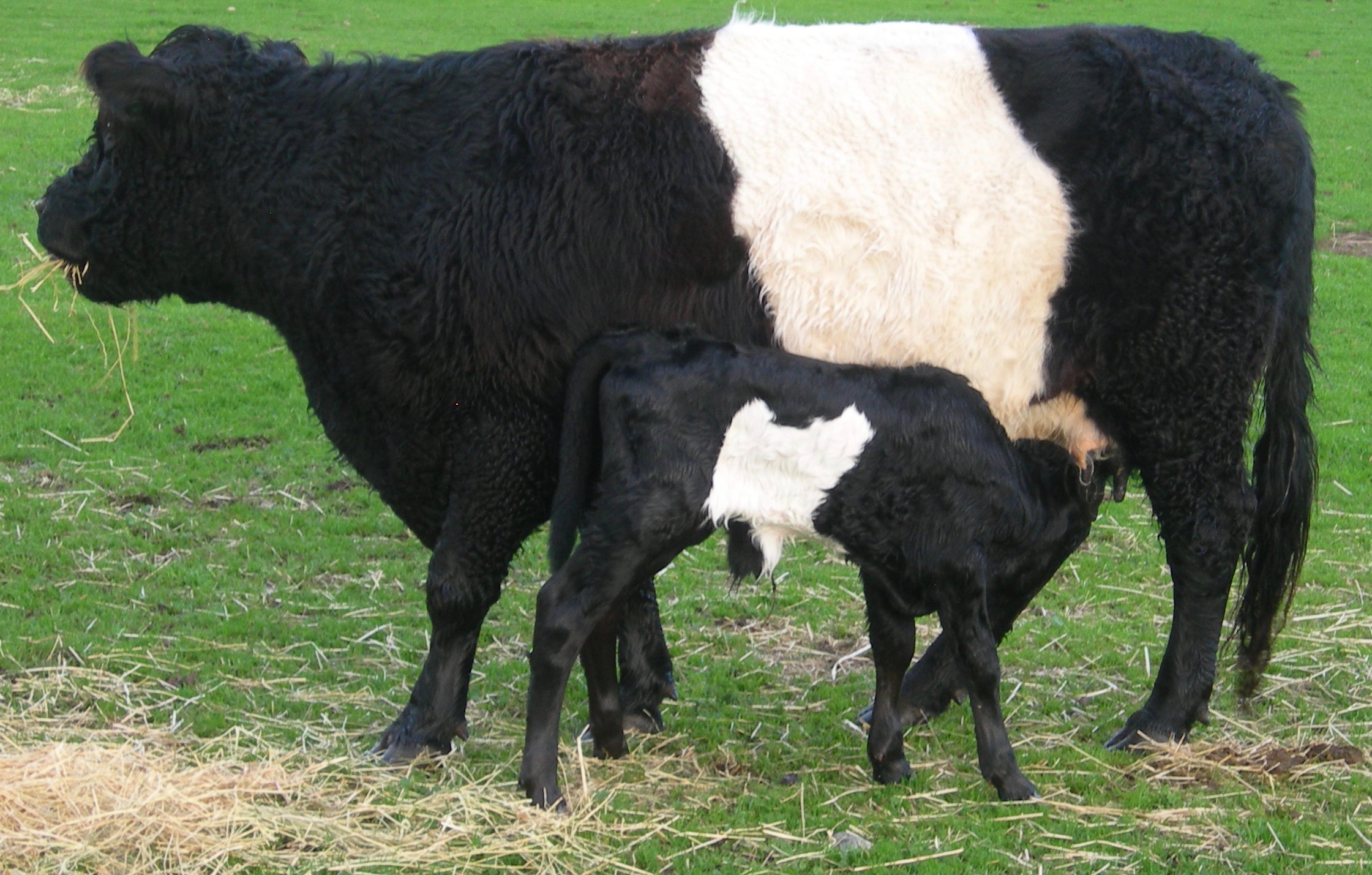
You’ve all seen milk and yoghurt ads showing perfectly clean, starkly black and white Holsteins standing knee deep in green, green grass. Erase that picture from your mind. It never happened.

Holstein calves come out of the womb clean, but from three days after birth they will never be black and white again. They are brown to the knees from the dust and dirt – and other things – that boil up when they walk. Their tails become a black club of matted cockle burs – and that other thing.

The grass in the ads looks so perfect because no creature is allowed to graze there before the ad is shot. Turn a herd of cattle out and in four days it will be matted, scarred, pockmarked with hoofprints, and covered with steaming piles of the fertilizer which completes the circle of life.

No complaints, you understand. A herd of cattle on a green meadow is beautiful, but the grass will be eaten down, and the ground itself will look like a billion angry golfers have been making divots. It will be nothing like pristine.

It all comes down, finally, to this. Cows produce three things. One is a clear, yellow, somewhat odorous liquid, which they produce in copious volumes. One is a brown to green semi-solid, and they produce mountains of this. One is the thick, white liquid that feeds the nation.

You can’t get the one you want, until you figure out how to handle the other two.

Just like life.

292. I’m back

dscn5448I’m back.

It’s been a weird month. Every two years my wife and I organize her guild’s quilt show. It’s a big deal and the amount of detail work is massive, but I won’t give any details. This is a blog about A Writing Life, not about the personal, private, non-writing life that sometimes jumps in with both feet. I did put in a photo of some of the quilts from the show as a teaser.

Things are progressing with Cyan, and I’ve been working hard to keep everything moving smoothly. One of the side effects of the excess of non-writing obligations is that I haven’t been able to work as unhurriedly on Cyan as I would prefer. I hate deadlines, and I am living in the middle of a snarl of them.

On January fifth I saw the first “rough” draft of Cyan’s cover. Excellent, exciting, and it looks like it will sell some books. That is of first importance. As much as we authors complain when covers are inaccurate, a naked female that sells books is always better than an accurate depiction that leaves books unsold.

By the way, this cover is not a naked female. It is a Cyl – and a rather well envisioned one at that – in a desert landscape looking up a the landing craft from the Darwin. It will all make sense when you read the book.

In the “rough” draft – which was slick, professional, and not rough at all – the Cyl was looking down toward stage left and there was no landing craft. On the more finished version I saw next, the Cyl had turned his head slightly left to look at the landing craft.

So what? So this was done by a skilled digital artist, using a high-end illustration program. You couldn’t turn the head of such a sophisticated image in a painting without starting from scratch. I know a little about this. I have been using graphics programs almost daily since the late eighties, making drawings of things I was about to build in the woodshop, drawing illustations for my science class, and designing dozens of oddball musical instruments and hundreds of quilts. I never had the opportunity to work with a really high-end program, nor had the time to spend on their leaning curve, but I recognize quality when I see it.

Even though the image looks finished, there are still a few tweaks coming, so EDGE is not letting me show you yet. As soon as I can, I will.

I have also been told that although Cyan will be an ebook, it will also be available in print-on-demand format. I’ll tell you more as things progress. It looks like the full release will be about the time of Westercon. For those of you in the eastern half of the US and the rest of the world, that is July fourth weekend.

So, I’m back, ready to pick up where I left off with a diverse mix of posts. Tomorrow we’ll look at the contributions of Gene Cernan, the astronaut who died two weeks ago.

271. Here Comes Santa Claus

This is the last of three posts based on The Battle for Christmas, a book by Stephen Nissenbaum. You should read them in order.

Now we are on the verge of Christmas as we know it. Good old Santa Claus is about to take the stage. His midwife will be a group of stodgy old men who hated the rise of the common man, and longed for good old days that never were. Washington Irving was their leader, but a one-poem wonder named Clement Moore would be the one to change the world.

St. Nicholas and his companion delivered presents or coal to the children of Holland, but he never crossed the Atlantic to New Amsterdam. The notion that he did is a common myth, reading subsequent events backward.

John Pintard, founder of the New York Historical Society, played a role in establishing the Fourth of July and several other events as national holidays. He also brought St. Nicholas to the attention of America when he tried to make him the patron saint of New York City. In 1810, he published a broadside that showed a picture and accompanying poem with St. Nicholas delivering presents to children on St, Nicholas Day, Dec. 6.

Washington Irving’s Sketch Book came along a decade later. Everyone knows that Rip van Winkle, from that book, fell asleep and woke to a different era. Not many people remember that he hated the new America he found upon waking. So did Washington Irving and his cohorts, who called themselves the Knickerbockers, and patterned themselves after the old Dutch burghers they imagined to have inhabited New Amsterdam — all based on Irving’s fanciful Knickerbocker’s History of New York.

In the Sketch Book, Irving portrayed Old Christmas in England as a joyful celebration between good masters and their servants. In Knickerbocker’s History, he related a dream which included:

. . . and, lo! the good St. Nicholas came riding over the tops of the trees, in that self-same wagon wherein he brings his yearly presents to children. . . .  And when St. Nicholas had smoked his pipe he twisted it in his hatband, and laying his finger beside his nose, gave the astonished Van Kortlandt a very significant look, then mounting his wagon, he returned over the treetops and disappeared.

St. Nicholas, giver of presents to children, had won over a group of grumpy old men, but the rest of America did not know him yet. He was still confined to the Knickerbockers who, despite their fantasies, were of British heritage, not Dutch, and were High Church Episcopalians, not post-Puritan religious conservatives.

Clement Moore changed that, not overnight, but over about a decade. He was not the first poet of St. Nicholas. You will find the text of an earlier poem near the bottom of one of last year’s posts. If you check it out, you will agree that it would never have taken the world by storm.

If you read A Visit from St. Nicholas (which I have tacked onto the bottom of this post in case you don’t have it handy), you will see that almost the whole modern Santa is there, repackaged from the Knickerbocker mold, and made charming and familly friendly. It would be wrong to say Moore invented Santa, given St. Nick’s Dutch origins and his twenty year history with the other Knickerbockers, but it would be hard to imagine Santa conquering the world without Moore’s poem.

The only major thing missing is his red suit. We can thank Thomas Nast and Coca-Cola for that.

Could even so charming a poem have so changed the world by itself? It is doubtful. It is more reasonable to see it as a perfect summing up of forces already at work. Wassailing had turned to riot, tinged with felonious assault. Peasants wandering from door to door had become masses of overcrowded urban poor spilling wildly into the streets. A few tipsy peasants had, by sheer population growth, turned into a dangerous mob.

The middle class was rising. Respectability had become something to strive for. Falling from middle class respectablity had become something to fear. Children were no longer just a source of free labor, but were quickly becoming the center of the family. Clement Moore’s poem rode that wave of change into the hearts of America.

Bacchus was still God of the street, but Santa was becoming God of the hearthside. Frankly, I like it better that way.

Postscript: They do it differently in Shetland. I’ll tell you that story on December 26th.

A Visit from St. Nicholas (AKA The Night Before Christmas)
by Clement Moore

‘Twas the night before Christmas, when all through the house
Not a creature was stirring, not even a mouse;
The stockings were hung by the chimney with care,
In hopes that St. Nicholas soon would be there;
The children were nestled all snug in their beds;
While visions of sugar-plums danced in their heads;
And mamma in her ‘kerchief, and I in my cap,
Had just settled our brains for a long winter’s nap,
When out on the lawn there arose such a clatter,
I sprang from my bed to see what was the matter.
Away to the window I flew like a flash,
Tore open the shutters and threw up the sash.
The moon on the breast of the new-fallen snow,
Gave a lustre of midday to objects below,
When what to my wondering eyes did appear,
But a miniature sleigh and eight tiny rein-deer,
With a little old driver so lively and quick,
I knew in a moment he must be St. Nick.
More rapid than eagles his coursers they came,
And he whistled, and shouted, and called them by name:
“Now, Dasher! now, Dancer! now Prancer and Vixen!
On, Comet! on, Cupid! on, Donner and Blitzen!
To the top of the porch! to the top of the wall!
Now dash away! dash away! dash away all!”
As leaves that before the wild hurricane fly,
When they meet with an obstacle, mount to the sky;
So up to the housetop the coursers they flew
With the sleigh full of toys, and St. Nicholas too—
And then, in a twinkling, I heard on the roof
The prancing and pawing of each little hoof.
As I drew in my head, and was turning around,
Down the chimney St. Nicholas came with a bound.
He was dressed all in fur, from his head to his foot,
And his clothes were all tarnished with ashes and soot;
A bundle of toys he had flung on his back,
And he looked like a pedler just opening his pack.
His eyes—how they twinkled! his dimples, how merry!
His cheeks were like roses, his nose like a cherry!
His droll little mouth was drawn up like a bow,
And the beard on his chin was as white as the snow;
The stump of a pipe he held tight in his teeth,
And the smoke, it encircled his head like a wreath;
He had a broad face and a little round belly
That shook when he laughed, like a bowl full of jelly.
He was chubby and plump, a right jolly old elf,
And I laughed when I saw him, in spite of myself;
A wink of his eye and a twist of his head
Soon gave me to know I had nothing to dread;
He spoke not a word, but went straight to his work,
And filled all the stockings; then turned with a jerk,
And laying his finger aside of his nose,
And giving a nod, up the chimney he rose;
He sprang to his sleigh, to his team gave a whistle,
And away they all flew like the down of a thistle.

photo by By Sander van der Wel from Netherlands (Intocht van Sinterklaas in Schiedam 2009) [CC BY-SA 2.0 (http://creativecommons.org/licenses/by-sa/2.0)%5D, via Wikimedia Commons