Tag Archives: americana

270. Colonial Christmas

puritanchristmasbanThis is the second of three posts based on The Battle for Christmas, a book by Stephen Nissenbaum. You should read yesterday’s post first.

The Battle for Christmas is not about the worldwide history of Christmas, but about American Christmas. The origin of the cult of St. Nicholas, the Christkindl, the black companion to Holland’s Sinterklass, Germanic Christmas trees and the rest are outside its view.

The Puritans of New England disliked Christmas. In fact, they outlawed it. The birth of Christ was of no particular interest to them. They were focused on his death and resurrection, and what that meant for sinners.

That was also the attitude of my childhood church. We had no Christmas services; if Sunday fell on Christmas, the sermon would begin with the story of Jesus’ birth, but would quickly turn our attention to his death and resurrection, with a full complement of fire and brimstone, and Hell to come for any who did not believe.

In point of fact, however, what the Puritans focused on was not their real problem with Christmas. They didn’t like it because it was a drunken party, with sex besides.

It comes back to leisure, full larders, and full kegs, and to the fact that the food and drink did not belong to the poor. It was the larders of the rich which were full. It was the poor who wanted some.

In agricultural times in Europe, it could be said that they wanted their share, because they had traditional rights to handouts during the season. There may have been a time when it was all respectful and friendly, as Washington Irving tried to portray it in Old Christmas (an excerpt from his Sketch Book), but the exchange was always tinged with threat, as in:

Come butler, come fill us a bowl of the best
Then we hope that your soul in heaven may rest
But if you do draw us a bowl of the small
Then down shall go butler, bowl and all

This, of course is wassailing, but it reeked of uppity servants, harrassment of their masters, and a general overturning of authority. Which was part of the point.

In Puritan days in New England, nobody was celebrating the nativity. The Puritans were going about their work, soberly and solemnly, with no acknowledgement of the day. The lower orders, especially the sailors down by the harbor, were making merry. Very, very merry, and the Puritans didn’t like that. They made the celebration of Christmas against the law, and you never make a law unless someone is already doing what you want to forbid.

The Puritans didn’t last, but the raucous celebrations they hated did. Newer, more liberal churches began holding religoius services on Christmas day. That didn’t last long either, the first time around.

A good, old fashioned Christmas is what a lot of people think they want today, but the real old fashioned Christmas looked a lot like what we now do on New Year’s Eve.

It got worse. As society moved from an agricultural base to an industrial one, the distance between the classes increased. The upper classes were less inclined to provide the handouts that the lower class demanded. What had looked like harmless, low level intimidation — not unlike today’s trick-or-treaters — began to look like a social revolution, especially in New York City shortly after the founding of the United States.

The rich stayed home on Christmas and feasted with their friends. It was an adult celebration; children were not yet the center of Christmas. The poor took to the streets. Where else would they have to go? Their all night, loud, drunken partying brought fear to the respectable upper crust. Gentlemen spoke of riots when they referred to the raucous Christmas season celebrations by the poor.

Riot is actually not a bad description of the state of affairs.

These poor were the mob that sometimes worried the staid burghers who wrote the Consititution. They were good at killing the British during the Revolution, but they weren’t respectable. By the late 1820s, the backwoods unwashed would put Andrew Jackson into the White House, and change the future of America. Decades earlier, their urban counterparts were already making life rough for respectable rich folks in New York City and elsewhere.

These rampaging mobs frequently broke into respectable homes, harassed the homeowners, and demanded food and, especially, drink. Wassailing, yes, but carried to a new level. One old wassailing song said:

We are not daily beggars
That beg from door to door;
But we are neighbours’ children,
Whom you have seen before.

These new urban mobs could not say that. click here to continue the story

269. Old European Christmas

DSCN1839In Dickens’ A Christmas Carol, when confronted by the Ghost of Christmas Past, Scrooge says, “Long past?”, and the ghost replies, “No, your past.” We’re going to turn that on its head. You already know about your childhood; you don’t need me for that. During the next three posts, we are going to travel several hundred years into the past and watch Christmas evolve into what we enjoy today.

Last night I watched a DVD of Santa and Pete, in which Saint Nicholas leaves Amsterdam to visit the New World. There he finds his red hat and coat, learns to come down chimneys, trades his horse for reindeer, and they learn to fly after drinking an old African potion. It’s a sweet movie, but it has nothing to do with reality.

Christmas has a real history, which is not as sweet, but is absolutely fascinating. Our guide for this will be an academic history of Christmas called The Battle for Christmas, written by Stephen Nissenbaum, which I first mentioned last year in A Christmas Booklist.

Some historians are dry as dust: others have a novelists touch and bring history to life. Nissenbaum is one of the latter. If you like Christmas and you like history, you can look forward to a good time with him if you seek out the book for yourself. Of course, he is a historian, so the book is dense.

*             *              *

I imagine that everyone knows that many of the traditions of Christmas, like holly and the yule log, are pagan in origin. It is also widely known that the date of Jesus birth is not found in the Bible. Put those two ideas together, and it is no surprise that the Puritans did not celebrate Christmas in early New England. It’s all very logical, but it isn’t the whole reason – probably not even the major reason.

Puritans were little worried about Paganism itself. Odin and Balder did not enter into their thinking. Their world was strung between two poles – God on the right and the Devil on the left. They weren’t afraid of holly and evergreens, but they were afraid of disorder. And disorder was always waiting in the wings, locked into the agriultural cycle.

All across northern Europe, both before and after Christianity, fresh foods were available in spring and summer, and into autumn. Grains were planted in spring and harvested in fall. Some was kept to be ground into flour for winter bread. Some was preserved by fermentation to form a variety of beers. Cabbage was fermented into sauerkraut, which kept millions of German peasants alive through the winter.

In America, as late as the Revolution, apples were preserved as hard (fermented) cider which would store through the winter. Most of the excess grain grown anywhere west of the Appalacians went to market as the portable and storable product called whiskey. Alcohol may bring a tipsy smile, but it is also a food that does not spoil.

From peasants in the Middle Ages until the Industrial Revolution, the only leisure for the European lower classes was in winter, when farm work could not be done. Early in the winter, the season’s barley had become beer, the extra animals who could not be kept alive through the winter had been slaughtered, and the pantries were as full as they would ever be. It was time for a party.

*              *              *

When I first read The Battle for Christmas about ten years ago, finding this tie to seasonality was like meeting an old friend. I spent my youth tied to the Oklahoma-farmer version of agricultural seasonality, with planting times and harvest times, with putting up vegetables for the winter for the family and putting away grain and hay for winter feed for the animals. The season of cattle breeding was keyed to bring on late fall births, so there were new calves and new milk just in time to provide work and income during the winter when no grains were growing.

I had already based the entire Menhir series on a hero who grew up tied to the agricultural cycle in a land of peasants and lords, where drought and overpopulation made life a struggle for food. In such a place, early winter is a time of relative plenty and late winter is the starving time — a subject I will address here next month in an excerpt from those books.

*              *              *

So we have the onset of winter, enforced leisure, plenty of food and beer (at least for a while). The celebrations of this point in the year were raucous, with plenty of drunkenness and, no surprise, plenty of sex.

Along came Christianity — always the enemy of a good time — and tried to Christianize the holiday by tying it to Jesus birth. It didn’t work. click here to continue the story

264. Last Christmas

DSCN1839Welcome to my favorite season.

Last Christmas, this blog was only a few months old, but I still enjoyed writing Christmas themed posts. I would have enjoyed it more if I had thought anyone was listening.

I could recycle, but that seems like cheating, and besides, I have new things to say. How about a compromise? Here are tags which will take you to six of last year’s posts, then tomorrow we will move on into the future.

DSCN3975

*

62. A Christmas Booklist – plenty of Christmas reading.

DSCN1795

*

*

*

63. ‘Twas the Season (post 1) – Christmas in Oklahoma during the fifties.  

DSCN1841

*

*

*

*

  64. ‘Twas the Season (post 2) – Christmas in Oklahoma during the fifties.

DSCN3975

*

*

*

*

66. Five by Dickens – Dickens wrote more than A Christmas Carol.

220px-Diedrich_Knickerbocker

*

67. ‘Twas the Night . . .  – the story of The Night Before Christmas, extended  version.

Dec 25th

*

*

*

68. Nostalgia – some personal reflections on what Christmas means to me. 

259. Turkeys Under the Oak Tree


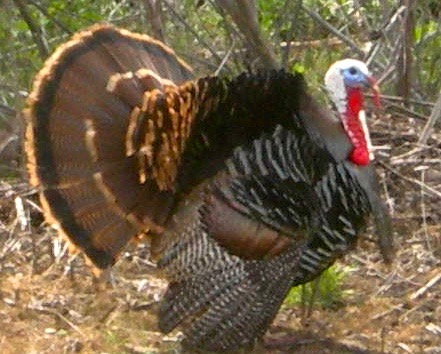
dscn0719dscn0693These birds were photographed on a spring drive through the foothills, about twenty miles from my house. The puffed up, greeting card version is what the males look like in season, when they are strutting their stuff and looking for love. The other bird is what most turkeys look like, most of the time.

You are reading this on Thanksgiving, but I am writing on September 27, about something that happened yesterday. My wife came to the door of the little building out back where I work and said, “Come here. Quietly.” There were ten wild turkeys eating bugs and acorns along the east side of the house.

We don’t get turkeys very often right up to the house, although seeing them in the neighborhood is a common occurrence. We stood for twenty minutes watching in the hundred degree heat of the tag end of summer before they casually wandered off.

Turkeys are the symbol of Thanksgiving, but I was thankful to see them because wild things fill my life with joy.

I grew up on a farm in Oklahoma in another century. I worked long hours when I was growing up, but I worked outdoors, so it might have well have been play. The music that filled my life was the churr of cicadas on summer evenings and the howl of coyotes echoing through the frosty night air in winter.

I left the farm for college, then spent my adult life in a small city, and moved to the foothills when I retired. Now my human neighbors are near enough for help in emergencies, but far enough away that I don’t hear them when they fight. I don’t even know if they fight.

Several times I have seen packs of coyotes running through my yard. Once a mother duck with nine ducklings following single file paraded through. Deer come in from time to time. They mostly prefer the low ground, and we live on a hill, but they come for water as the long days of summer dry out the last of their water holes. I keep water in bird baths for the birds, and water basins on the ground for everybody else.

The deer also have an uncanny knack of knowing when the tomatoes are ripe. Oh, well.

I see a bobcat about once a year, somewhere nearby. Twice they have come into our yard. Once I looked out the window to see a bobcat in the fenced back yard where stray cats stay out of reach of coyotes. My wife and I watched out the window as he sauntered along, unaware of us, then casually jumped the six foot fence without touching it.

We were even visited one holiday by the Christmas Pig. It was a three hundred pound porker who had obviously escaped from some farmer. I saw him several times after, so I’m maintaining hope that he was never found, and escaped becoming bacon and sausage.

So, happy Thanksgiving to you. And also to the turkeys and ducks and bobcats and raccoons and possums and the one lone pig.

In my house, Thanksgiving means turkey (from the supermarket, of course), stuffing, cranberries and pumpkin pie. Being thankful means looking out my window and never knowing what kind of critter might be looking back.

251. Night at the Movies

Over in Raven’s Run in Serial today, Ian Gunn is reminiscing about:

The feeling in a night drive —- the humming of tires; the warm heaviness of the air, the darkness beyond the car —- when you were a child in the back seat —- and the thick air slid in and out of your throat like oil.

That description is pure memory.

Oklahoma is the edge of the South, with thunderstorms, tornadoes, and hot, humid summers. Air conditioner country – but I lived there before people has air conditioners. Days over a hundred were common, and the nights brought thick, moist, warm air. There were scraggly trees in the creek beds and flattish land between that was half native grass pastures and half grain fields.

Was. Now it grows houses, and people live indoors with the AC running, but in the fifties people were sparse on the ground and they spent most of their time outdoors.

I spent my summer days driving a tractor. There were no air conditioned cabs – no cabs at all, actually – but it wasn’t bad. There was an umbrella clamped to the seat, and as long as I was moving, which was at least ten hours a day, there was a breeze.

Nevertheless, nights were a pleasure by contrast. After the cows were milked, we sat in the living room with the west windows open to the wind. My parents watched TV (black and white, two channels). I joined them, or read a book. Once or twice a year, we would all go see a movie.

Those same years, my wife-to-be lived in Saginaw, Michigan. She used to walk to Saturday matinees. It’s a common reminiscence, but my nearest theatre was twenty miles away, so going to a movie was a family expedition.

After the day’s work, and milking the cows, and supper, and cleaning up, we would drive to Collinsville as the sun was going down. When we arrived, we went right in. There was only one theatre with one screen, and it changed movies every three days, so you went on the day your movie of choice was there. It didn’t matter what time the movie started; we went in, sat down, and started watching. Then we watched the coming attractions and the cartoon, and pretty soon the next showing started. We watched until my dad said, “Okay, this is where we came in.” Then we left, with no wasted time, because four AM was coming all too soon, and the cows weren’t going to milk themselves.

What I remember best about movie nights, is the ride home – especially when I was ten or so. Twenty miles on a two lane blacktop, lying stretched out on the back seat, reliving the movie, and the coming attractions which were pretty exciting for a ten year old in the fifties. Imitation of Life previews were disturbing, largely because I didn’t understand the premise of the picture (see 95. Literature of Passing). Then there was a scene of a girl wearing only a towel in a cowboy movie preview that revisited my libido for months. Mostly though, I remember a science fiction movie – something I would never have seen outside of previews – with animated pterosaurs and dinosaurs chasing people as they fled in their cars. Tame stuff for the Jurassic Park generation, but scary to me.

Outside the car, the night dampness amplified the smell of grass and weeds. The soundtrack of the night was the humming of tires and the unending churr of cicadas. The air swirling in through the open windows was syrup thick, damp and cool. The vibrations from the road, softened by the seat and transmitted through to my spine, was electric, and the little shocks from potholes were like tiny bursts of pleasure.

All this comfort was balanced by the emotional rush of hearing those imaginary dinosaurs in pursuit, along with the scree of giant pterosaurs flashing overhead.

I’ve forgotten most of the movies we saw, but I will never forget what the night felt like.

246. Unalienable Rights

u-rNext week, we elect a president. Today and tomorrow let’s look at the lives of two of our early ones, Jefferson and Jackson.

Everybody knows the passage in the box above. Thomas Jefferson wrote it. It is logical to think that he believed what he wrote, and yet he held Sally Hemings and his children by her in slavery.

Odd? By the standards of our day, certainly. By the standards of his day, it was odd that he freed any of them. His father-in-law also had a black concubine and children, and freed none of them.

If you have read anything I posted from mid-January to the end of February of this year, you know I am no apologist for slavery, Jim Crow, or resistance to interracial marriage. However, if you plan to understand historical events and beliefs, you have to examine them in their own context. The Sally Hemings story gives us a lens through which to examine both slavery and women as child bearers, whether wife or concubine, in the days when our nation was being created.

The story begins two generations before Jefferson. A slave name Susanna bore a child to a white man named Hemings; the child was named Betty. Both were owned by Francis Eppes, then were inherited by Eppes’ daughter Martha. When Martha Eppes married John Wayles, the slaves, mother and daughter, went with her.

Martha Eppes Wayles had a daughter, also named Martha, before her death. Wayles was widowed twice more, and also had several children by the slave Betty Hemings. The youngest of these was named Sally.

Martha Wayles (the daughter) married Thomas Jefferson. Sally Hemings was her half-sister (they shared a father) and was three-quarters white. When John Wayles died, Thomas and Martha Jefferson inherited his slaves, including Betty and Sally Hemings.

Martha Jefferson had a daughter, also Martha. Thankfully, for ease of reading this post, she was called Patsy. Jefferson’s wife Martha died. When Thomas Jefferson was appointed American envoy to France, he took Patsy with him, and took Sally Hemings as her companion. It appears that the Thomas Jefferson/Sally Hemings affair began in France.

Accurate research is difficult on affairs that are semi-hidden. As best we know, Sally Hemings bore Jefferson six children: two daughters who died in infancy, one daughter and three sons who live to adulthood. All these children were seven-eighths white, and all were slaves.

The children and their mother remained house slaves. They never worked the fields; the male children were given training to become artisans. At age 24, the eldest son was allowed to “escape” to the North. The daughter followed shortly after. The younger sons were given their freedom in Jefferson’s will. Sally Hemings was inherited by Patsy and informally freed.

Why did Jefferson, the champion of unalienable rights, hold his “wife” and children in slavery? Let’s look for answers.

Sally Hemings was legally negro, genetic heritage notwithstanding. That could not be changed. She could have been freed, but Jefferson could not have married her, even if the thought had ever occurred to him. If freed, she would have not become a full citizen of Virginia or of the United States. If freed, she would have passed completely out of Jefferson’s control, and she would also have passed out from under his protection. Which of those two factors weighed more heavily on Jefferson? We cannot know.

We can speculate, however, based on how he treated his children. They were legally negro, although actually seven-eighths white. They could not be given the rights of white children. They could not inherit, which was something of a moot point since Jefferson died deeply in debt and his estate went to his creditors. He allowed his elder two to “escape” to the North after they were adult. He freed his younger two in his will; they were just reaching legal maturity at the time of his death.

He did not free Sally Hemings in his will. Why? Was he unable to let go, or was he depending on his daughter Patsy to take care of her in her old age? She was in her mid-fifties when Jefferson died. Again, we cannot know.

A lot of scholarship has been devoted to Sally Hemings. We know quite a few facts, but from this distance, understanding comes hard. Did Jefferson do the best he could under the circumstances? Do we even have the right to be disappointed that he didn’t do more? We have more questions than answers.

**        **        **

It is important to consider what happened to Sally Hemings’ offspring, but that will require a future post.

244. Walking by Night

outhouseHere in California, Halloween doesn’t look like itself any more. I suspect the same metamorphosis is taking place across the country. Images from the Mexican Day of the Dead are everywhere, competing with Anglo witches, ghosts, goblins, and jack-o-lanterns.

It’s no surprise, really, since Halloween has become a $econd Chri$tmas, in terms of commerce. I have no trouble understanding why retailers are producing big-eyed, flower painted skulls for sale. I have some trouble understanding why anyone is buying them.

As a matter of full disclosure, I don’t care for Halloween, and at both ends of my life I have had little to do with it. In the middle, when I lived in cities, I hosted the trick-or-treaters who came to my door, just like everyone else. I admit the mid-level kids were fun and putting up with a little pleasant extortion was just being a good grown-up. I wasn’t much impressed by the adults with infants in arms, or the overaged teenagers who grunted and threatened like gang bangers. But many Americans have no sense of age appropriateness, so they were no surprise.

Anyway, I would be a hypocrite if I hated trick-or-treaters after all my praise of Christmas last year. After all, trick-or-treat and wassailing are the same ritual.

I haven’t had a trick-or-treater at my door since I retired to the foothills, and that brings me full circle. When I was young – during the fifties in very rural Oklahoma –  we didn’t trick-or-treat. We were simply too spread out. It would have been impossible to walk to anyone’s house, and in those days parents weren’t about to drive their children all over the county just for their amusement.

Instead, the local tradition was ritualized vandalism by teenagers. That was the night outhouses got turned over – and yes, people still used them. Windows got egged, toilet paper got tossed, there was even some graffiti. In Oologah, the next town south, I saw a business sign which had been tagged with Oologah hoars. Vandals couldn’t spell back then either.

As October rolled around, all the adults started telling outhouse stories from their misspent youths, and current youths started planning. I took no part in any of it, but I heard it all, and one story in particular caught my fancy. I think it was true; at least I knew the old lady in question.

She lived in a little house in town, with no plumbing and an outhouse out back. Every year somebody turned it over on Halloween, and she was tired of it. This year, she went out when it was still light and settled in to wait with a shotgun across her knees. Eventually it got dark, and eventually she heard whispers and the first creak as the local teenagers got a grip the outhouse. She threw the door open, leaped out and gave a mighty scream, and fired both barrels into the air. When the echoes cleared, there was no sound but retreating footsteps.

The old woman went to bed with a smile on her face. The would-be vandals, once they recovered from their fright, had the memory of a priceless adrenaline rush and a story to tell for the rest of their lives.

I love it when everybody wins.

207. I Have a Dream

I’ve told my personal story regarding justice for black citizens several times, and I fleshed it out over a month and a half in February and March of this year. Here is a brief reprise for those who weren’t following yet.

I was born and raised in a small Oklahoma town with no blacks in sight. My father was a Baptist deacon and lay minister, and a dominating man. I never disagreed with him – out loud. He did not hate blacks – really, he didn’t. He expected to see many of them in heaven. He did think they had their place, ordained by God, and they would be happy if they only kept to it. He considered Martin Luther King an agitator and an evil man.

I agreed with his views of God and man when I was very young, but by my teen years I was beginning to question both. Silently question, that is. There was no discussion in our house, only my father’s statements ex cathedra and our silent nods. My final conversion away from his thinking on race came when black marchers were washed down the street by fire hoses in Selma and elsewhere.

This Sunday is the anniversary of the March on Washington, and Martin Luther King’s I Have a Dream speech. When it happened, it passed me by. At the time, I was wrestling with my father’s views on God. My change of view on race was a couple of years in my future.

In our house, it was just another speech by that self-serving agitator King.

When I was doing research for posts earlier this year, I became aware of Philip Randolph, who orchestrated the March on Washington. Shamefully, I had never heard of him. At that time I said that I would find out more about him, and I did. His story is worth telling, but it isn’t mine to tell. I had planned a post detailing the March, but that isn’t my story, either. I’ve decided to leave both to those who fought the battles while I was still coming to realize that there was a war.

The story of the March on Washington isn’t mine to tell, but it changed my life, as it changed all of our lives, even if I didn’t know it at the time.

206. Coxey’s Army

“Congress takes two years to vote on anything. Twenty-millions of people are hungry and cannot wait two years to eat.”        Joseph Coxey

This weekend marks the anniversary of the 1963 March on Washington. It wasn’t the first march.

When I was a kid, my father would occasionally say something like, “That kid eats enough to feed Cox’s army!” We’d all laugh. It was just a saying. I was an adult before I realized where the phrase came from, or that “Cox” was actually Joseph Coxey.

Long before our present financial difficulties, even long before the Great Depression, the American economy has had a history of booms and busts. The origins of the Panic of 1893 are complex, but the result was clear. Unemployment rose dramatically – to 25% in Pennsylvania and 43% in Michigan.

There were few resources for the unemployed and hunger spread. Everybody had a theory as to the cause of the problem. Everybody had a different solution. Does this sound familiar?

Among those who spoke out was businessman Joseph Coxey. He called for government expenditures, not for handouts, but for a massive program of public improvements. He was branded as a crank for his position. Thirty years later it became the New Deal.

In order to push his agenda, Coxey organized a march on Washington. Leaving Massillon, Ohio in March of 1894, he and his followers marched approximately fifteen miles a day along the National Road.

The National Road was the first major highway built in the US by the federal government. It represented the kind of public improvement Coxey was calling for. Ironically, construction on the road had been stopped in 1837 by an earlier financial panic.

The press dubbed the group Coxey’s Army, and spread the word. It would be easy to forget, in our cell-phone world, that instantaneous communication is not new. It began in the mid nineteenth century when the telegraph advanced along with the railroads. The railroads had to have the telegraph to coordinate their trains; the newspapers co-opted it to carry local news throughout the nation.

Newspaper reporters followed along, reporting the progress of the march. Local people gave the marchers places to camp and donated food to sustain them. The local unemployed would join the march for a day or so, although few stayed for the whole journey.

A second march, called Kelly’s Army left San Francisco, also heading toward Washington. A few made it all the way by July. Fry’s Army from Los Angeles used a stolen train for part of their attempt to reach Washington.

About 400 of Coxey’s Army reached the Capitol on May first, but were stopped by police. Coxey and a few others climbed a fence and were arrested for trespassing on the Capitol grounds.

Coxey achieved nothing immediate, but began a long tradition of marching on the seat of government. Wikipedia lists well over a hundred marches, calling for everything from jobs, to peace, to abortion rights, to an end to abortion, to labeling on genetically engineered foods.

The most important of these was the 1963 march where Martin Luther King gave his “I have a dream” speech.