Tag Archives: fantasy fiction

700. Double Lives

Double Lives

By 1984, I had published and perished (see the post from November 12th), but I wasn’t about to give up writing. Nevertheless, things were getting tight and something had to change.

I hadn’t left academia because I hated it. I just couldn’t find my place. I missed out on the popularity of ecological studies by just a few years, but that turned out to be a blessing in disguise. I had wanted to study the beautiful symmetry of animal interactions in the wild, but today ecologists study how fast Earth is going down the toilet.

There was one field I had an interest in, but had never studied, and that was History. I was about to change that, for three reasons.

First, I was writing every day, and making progress slowly, but it wasn’t making me any money.

Second, I was able to make a full day’s progress in a few hours. At that point, the well was dry. I had tried to push on past my limits, and that didn’t work. If I forced twice as many pages as came naturally in a day, the next day I was empty. I could write nothing until the well of imagination refilled.

Third, I really missed college. I had always planned on a Ph. D. and I felt empty sitting alone in a room with a typewriter.

And I still had most of my GI Bill.

The original GI Bill was generous. I had used some of it getting my first masters at University of Chicago, but if I worked things right, there was enough left to get a second MA in History. There was a school in easy driving distance, California State College, Stanislaus. A few years later it became California State University, Stanislaus. I was a California resident, so tuition was low. If I took just enough classes to be a full time student, it would take longer to get my new degree, but that was part of the plan. There would be enough GI Bill money left over after books and tuition to fill in some of the blanks in my personal economy, and I could work all day again — half on novels, half on getting my History degree.

The plan worked for several years. I had something new for my brain to chew on in those dead half days when my novel writing had run dry, yet I was still able to make progress on my novels. I wrote fiction all but the few months near the end when I was writing my thesis.

That thesis would be The Crisis in American Shipping and Shipbuilding, 1862 – 1914. Yes, I started out as a dry land Oklahoma boy, but my grandfather in Florida was in the Coast Guard auxiliary. From him I inherited a fascination with all things maritime.

Plan B worked for about three years, and now I had a second MA. But to twist the words of the old country song, even though I wasn’t completely broke, I was still badly bent.

Plan C was more permanent.

I had worked as a substitute teacher and found I really liked middle school kids. No one else seemed to, so there were plenty of jobs available. I went back to school again at the University of the Pacific — my fourth college — for a summer session, took a one year internship, and worked my way into teaching by the back door.

For a while, there was no more writing, but there was money. Teachers don’t make much, but writers often make nothing, so my salary seemed like a fortune.

Most of my effort in the first few years went to learning my trade. You see, what they teach you in Biology is useful, what they teach you in Anthropology will broaden your mind, what they teach you in Social Science is enlightening, what they teach you in History is wonderful. I know. I’ve been through all of them.

What they teach you in teachers school is pure BS, so the first thing I had to learn was how to teach. Fortunately there were plenty of people to help me, experienced teachers who had learned it just like I was, in the classroom.

There was also a lot of delayed life to be lived. Being a writer is a lot like being a monk, and the pay is a lot like being unemployed. When I was a writer, I couldn’t afford a computer. Now that I wasn’t a writer, I could.

After a few years, I was writing again, now part time. My wife and I finally made it to Europe, and that brought about the novel Raven’s Run. Then I wrote a novel about teaching called Symphony in a Minor Key. The Menhir Series kept limping along, slowly growing, book by book. Before it was completely finished, I wrote a sequel in the same world with a different main character called Who Once Were Kin.

I finally solved the conundrum of Cyan, and the second half became a pleasure to write. When Cyan was finished, it sold to EDGE of Canada.

In support of its release, I started this blog.

More about that next Wednesday.

696. Then Life Happened

Then Life Happened . . .

Donald Maass, noted author and literary agent, said that there are many authors who have “both published and perished”, referencing the publish-or-perish dilemma facing young academics.

In 1984 I was one of those authors.

I had been writing full time for about eight years. Just looking at the dates you would say nine years, but I had taken a 15 month hiatus from writing to become Stanislaus County Red Cross Director, a job of massive satisfaction and hair-pulling frustration.

My third novel publication, Todesgesanga, came in 1984. It was a German translation and renaming of A Fond Farewell to Dying. Todesgesanga means Death Song, which I admit is a more accessible title.

Counting a cover novella in Galaxy in 1978, Todesgesanga was my fourth publication, all by major magazines or publishers. David Hartwell was my agent. If you don’t remember him, he was top notch. He was reading everything I sent him.

Life was good, on the surface, but my two ongoing novels were both fighting back.

Cyan was a bigger SF novel than I had yet attempted. The world building was huge, but by 1984 that part was finished and the novel was well underway. My ten explorers had made the near lightspeed journey to the eponymous planet and had completed their year of exploration. They had returned to a much changed Earth where I provided about 30,000 words of near disaster to disrupt their lives before they returned to Cyan with colonists. They were saved on Earth by the villain of the piece, Salomon Curran, but now that they were all back on Cyan, Curran’s presence had become a problem I couldn’t solve.

Curran was so huge to the story, and such a bastard that he would dominate the rest of the novel if I let him. Cyan would become about Curran instead of being about the colonization process, and I couldn’t have that. I finally killed him off, summarily, and submitted to novel to David Hartwell. He rejected it, and he should have. It wasn’t finished; Curran had to die a different way. But how?

I was alternately writing in Cyan and in The Menhir Series. That work was even bigger in concept. I could write scenes in that world all day long, but which scenes? I still have boxes of lovely, useless text that I wrote before I knew what it was that I needed to write.

I was in the middle of world building, and character building, and arms and armor building, and city building, and religion building, and magic building. Even horse-replacement building. I needed all that to write the right words, but writing words was the way to discover all of that. Some of one led to some of the other, which led to some of the first, which led to . . .

Looking back now, I see that I was doing it all correctly. I just didn’t have a clue how long it was going to take.

Basically, my problem was that I wasn’t making a living.

In those days novelists were given relatively small advances against earnings. If the author’s percentage of the publisher’s earnings exceeded his advance, he got paid more. If he had a best seller, he got paid a reasonable amount, and his next book got a larger advance. Several good sellers in a row, and an author could eat, sleep, and pay his rent. Several best sellers in a row and he would be well off.

That rarely happened. The norm was that a book by a non-best-selling author would never pay back the advance. The authors of those books had both published and perished.

For one cover novella, two novels, and a foreign reprint, I made about $10,000. That is for eight years work. Even in 1970s dollars, I could have made more digging ditches, or on welfare.

Something was going to have to change.

— << >> —

But not right now. Next week we have to talk about Trump again. (Sorry!) Then comes Thanksgiving, which will call out two special posts not related to writing. Our present conversation will continue on December third.

695. The Birth of a Series

We interrupt this post . . .

     Today’s post is still here, a few paragraphs down. However, last night Prop 50 passed in California, and I have to address that first.

     Most Trump haters and most Democrats are celebrating. I am not, even though I am as anti-Trump as anybody. I understand the logic of the proposition. I understand why so many supported it. If it helps move Trump out of power, great. But . . .

     Proposition 50 is a blatant gerrymandering of California. It is Trump’s evil, perpetrated by his opponents. It disenfranchises about one-third of California voters.

     When those who oppose Trump look for moral leaders in the days to come, where will they find them? Not among California Democrats.

Now back to the post in progress…

This is a rune board, a device for divination in the World of the Menhir.

The Birth of a Series

For me, the road to becoming a writer was convoluted, largely because becoming a writer was never my goal.

I wrote well, including snatches of fiction that never went anywhere. I wrote college papers by the dozen and my first masters thesis, without ever considering being a novelist. That would take five more years. I’ll have to zip through those years quickly to avoid boring you.

In 1969 I was a senior in college. In the first draft lottery my number was 41. That would mean a letter from Uncle Sam saying, “Greetings, Boy, you are now in the Army.” That notice would come five minutes after I graduated, so I joined the Navy on a delay program.

I spent the next four years as head surgical tech in the dental service of the Camp Pendleton Naval Hospital. I became head tech almost immediately on arrival because I was the only enlisted man with a college education.

I stood across from the oral surgeon handling the suction and handing him instruments as we extracted about a thousand impacted wisdom teeth. (That’s a calculation, but not an exaggeration.) We were getting Camp Pendleton marine recruits ready to go to Viet Nam, where wisdom teeth would be the least of their worries.

After nearly four years of that, the Navy let me go three months early so I could go back to school for a masters degree. The war was winding down and the military was cutting back, so they were happy to see me go.

One thing happened during those four Navy years that would change my life. I just didn’t know it at the time.

My wife worked at the base library, and early on she took a reference librarian class at a local college. It was a night class, so I went along with her when I could. One night in the stacks, with nothing to do but watch her do her homework, I took down a copy of Beowulf and thumbed through it. One short phrase jumped out at me . . .

— all that lonely winter —

. . . and I had a vision of a young boy, sitting at an open wind hole, high in a stone tower. It was quite visual, and it came with a full understanding of his plight. The vision had nothing to do with Beowulf, beyond being vaguely medieval. Beowulf was just the trigger.

The boy was an orphan. His father was a knight who had been killed in battle. The tower was part of the castle belonging to the uncle who had taken him in, and the boy was destined to become a pawn to his uncle’s plans. He would to be raised as a warrior with only one task, to kill the knight who had killed his father.

That man was his uncle’s primary enemy. The boy was a means to remove him, with no repercussions against his uncle. But the boy didn’t want to kill anyone. He only wanted to live his life in his own way, and that wasn’t going to happen.

The next day I went to work as usual. In the afternoon, we had a patient cancellation, so I took that hour to write the opening chapter of a novel that would tell the boy’s story.

That was nothing new for me. I had written many first chapters of novels to nowhere when I was younger, but this one felt different. I wasn’t a writer then, and had no plans to become one, but this felt like the start of real story. The year was probably early 1972.

Three years later I sat down and actually wrote a novel. It went unpublished, as it should have. I a wrote another one — Jandrax — that was published. Then I pulled out the twenty hand written pages about the boy in the tower, typed them fresh, and kept going. By the time I had written a manuscript as long as Jandrax, the story was just getting started. I knew I wasn’t ready yet to write the rest, so I wrote another science fiction novel instead, A Fond Farewell to Dying, which was published in 1981.

Time passed. Lots and lots of time.

On Jun 9, 2021, I finished the boy’s story. Actually, he turned out to be a great deal more than just a boy. I made a note to myself that said, “Finally, after 49 years, I am satisfied.”

The result was one very large novel, or a series of five moderately short ones. It would work either way. I plan to release it through most of next year. Overall, it will be called The Menhir Series. Tentative dates are:

Let me interrupt. This was posted on November 5, 2025. The dates then given will not be met and have been removed. As I said at that time, things are fluid.

My new best estimate of publication dates, as of Dec. 3, 2025, are:

The Morning of the Gods

May 27, 2026

Firedrake

July 15, 2026

The Lost Get

September 2, 2027

Whitethorn

October 21, 2026

The Scourge of Heaven

December 9, 2026
Caveat — everything is still fluid in this relaunch of A Writing Life. These are the new projected dates, but much of what I will have to do to make them happen is new to me. Stick with me and I will explain things as I learn them, just like I did while Cyan was being prepared for publication.

691. Science Fiction Begins

Science Fiction Begins

If you don’t like that title, here’s a longer one.

Science fiction begins as literature, becomes a genre, sinks to a sub-literate state in the eyes of the intelligentsia, regains legitimacy in the Saturday Evening Post, and then consumes the universe.

I like the short one better. And by the way, this is just a quick survey. If you don’t like the way I’ve chopped up history, write your own. After all, most SF “scholars” disagree — on everything.

— << >> —

Science fiction has been around for a long time, although the early stuff is hardly recognizable. You could make the argument that it truly began when writers started using machines instead of supernatural beings to do marvelous things. That is why we look to H. G. Wells instead of Charles Dickens for the beginning of time travel stories.

Scrooge visited the past, present, and future, but it took three spirits (plus Marley) to pull it off. Wells did it with a time machine.

Jules Verne’s Five Weeks in a Balloon (1863) and H. G. Wells’s The Time Machine (1895) are a good enough place to start looking at science fiction. Both were considered literature from the beginning. Verne’s writing style was held up for emulation by the French establishment. H. G. Wells was a respected social commentator. In that same era, Edward Bellamy’s Looking Backward was a call for society to perfect itself — science fiction ideas spoken by the voice of the elite.

But what if you are an outsider, with a coarser voice?

Later, rougher, more exciting writers of science fiction didn’t fit the proper mold. They were frequently not all that interested in uplift, they just liked the idea of the future. Their characters were more likely to carry a ray gun than to address Parliament. Through the early decades of the twentieth century a whole generation of young men (and a few young women) found excitement in reading this kind of science fiction presented in the form of short stories in inexpensive specialty magazines.

This period, beginning in the thirties and lasting until roughly World War II, was often called the Golden Age of Science Fiction. (Remember, golden ages are always in the past somewhere.) A great deal of high quality science fiction was produced, along with the usual kinderdrivel. Science fiction had left the mainstream and become a niche interest, ignored or derided by most people.

Science fiction also acquired its own name. The Time Machine was just called a novel when it was published, but now science fiction had become a genre. Calling it sci-fi was forbidden by those who loved it. Everybody else just considered it cheap trash.

I wasn’t there for all that. For most of the Golden Age, I wasn’t born yet. I saw the science fiction of the golden age when it was reprinted in the paperback books published in the sixties, seventies, and eighties.

My actual connection with Golden Age magazines was brief but exciting. A few of them were still around when I began writing, and my first publication was in Galaxy. It was a novella called To Go Not Gently, and the cover of Vol. 39, No. 6, 1978, showed my character Ram David Singh walking uneasily down the Avenue of Abominations in New Bombay. I was over the moon.

It was also the last issue of Galaxy, although there were later attempts at resurrection.

So science fiction began as just a part of normal literature, then went on the gain an intense fan base as well as the disdain of everyone else. Heinlein and history were about to change that.

The discussion continues next week.

679. The Nightingale Sings Again

I’m not all the way back, although I will be eventually. Even while I am in covid-hiatus, I will have occasional cause to say something that won’t wait for better days, and this is such a case.

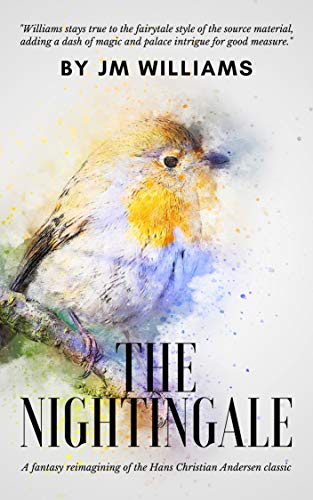
Two years ago, JM Williams produced a new take on an old Hans Christian Anderson story The Nightingale.  I reviewed it  positively at that time. Now he has published a cleaned up version of his novella. The changes in the text are insignificant, but the look of the work is vastly improved.

In the original, Williams said, “There are certain themes in the original story that still resonate . . .” and in the new version he says, “Certain themes in the original story still resonate . . .” In the original he says “ . . . the lie was an integral part of his plan.” and in the new version he says “ . . . the lie was an integral part of his plot.” Those are the kind of tiny changes a careful author makes if he is given a do-over. I know; I drive myself crazy with those kind of changes in my own work.

Such small changes aren’t reason enough to visit the story again, but in the first edition, the formatting got out of hand. Nothing was indented. In chapter three, it went from single space between paragraphs, to double, and then back again. Later the right margin slid to the middle of the page.

I’m sure that some of Williams’s readers must have given up along the way. If so, they really missed out.

Now all this has changed. The new version is a clean and professional as anything out of Doubleday. Nothing stands between the reader and the story, and it is a fine story.

This is what I said about The Nightingale two years ago, except this time I can give it the 5 stars the story deserves.

JM Williams retelling of the classic fairy tale sees the world from the ground up. King Gregor is about to name an heir but villainy is afoot, with two princes and a princess in contention, and magic tipping the scale. Royalty can’t help; instead, the son and daughter of the village blacksmith, with advice from a witch too old to act on his own, have to try to save the day. The characters are warm and relatable, and the action is believable. If you like a slash-em-up, this isn’t for you. If you like real people working to make their world better, give it a try.

While you are at Amazon picking up a copy of The Nightingale (be sure to get the one with the brightly colored bird on the cover) you might as well pick up a copy of Cyan. It’s going to be a long time before we once again complain that we don’t have enough time to read.

Stay well.

678. Taking a Break

I’m going to take a break

Yesterday, here in California, the Governor requested that all people over 65 self-isolate. That makes sense to me, and I passed that milestone seven years ago, so my wife and I are going to hunker down and become temporary hermits. That isn’t too much of a hardship since we live in the country and keep a well stocked larder anyway.

This change shouldn’t bother my blog, but it does. I’m not worried for my wife and myself, but worrying about the rest of the country and the world beyond weighs on me. It has also been getting harder lately to come up with new things to say, especially on subjects that don’t call for hours of research for a post that will be read in three minutes. This is post 678, after all.

So I am going to take a break. I have other things on my mind and I’m sure you do too.

I’ll be back. Whether in two weeks or two months, I can’t say. Meanwhile, I’m going to keep working on my novels, keep my wife company, and keep thinking about all the good people out there beyond my driveway.

Take care, folks. Stay safe.

666. The Beast Crawls Up

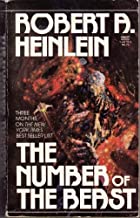
The Number of the Beast is a novel by Robert Heinlein. I have referred to it several times, most recently on the January 13th post when I said that the first hundred pages are “my favorite thing to re-read, but the rest of the book is kinderdrivel”. Yep, that pretty much covers it, but it is a fascinating book to talk about because it generates so much hatred. For example, David Langford said of it:

My (fairly) humble view is that the book says nothing and says it very badly.

I like that — brief and to the point, with nothing held back. I don’t fully agree with it, but I don’t fully disagree with it either. There will be more below, after we put things into some perspective.

There is a long history of science fiction works that treat Christianity as fact, and derive either positive or negative results from that assumption. On the positive side is one of my favorite books from high school, Starship Through Space by Lee Corey (aka G. Harry Stein). Ninety percent of the book details the building of the first starship and its maiden voyage to Alpha Centauri. It was a wonderful book until they arrived to find American Indians reading Genesis waiting to greet them. Dumb! Massively, unforgivably dumb to end a great novel on such a note.

Also from my high school library were the Perelandra books by C. S. Lewis which were a kind of space faring John Bunyan. Not good; I got through them and never looked back. They were allegory and they were tedious, but I could at least respect them.

Most of the SF that sees religion in a negative light concentrates on the practitioners and leaves God himself out of the argument. A Canticle for Leibowitz comes to mind. That’s also what I’ve typically done.

The ones that take on God himself tend to be serious and usually angry. James Blish rewrites the outcome of the Revelation in his After Such Knowledge trilogy. (Doctor Mirabilis, Black Easter and The Day After Judgment.) Arthur C. Clarke’s The Star is disturbing and sad, but his The Nine Billion Names of God simply ends all creation in a mild and matter-of-fact way when Buddhist prophesy comes true.

Heinlein does it all differently. In The Number of the Beast he turns Revelation’s beast into an alien species and turns science fiction into a romp. Or a travesty in the eyes of many reviewers. I’ve read everything RAH wrote, save his first two juveniles, and I can attest that no other work is so completely lacking in seriousness.

For those who see him as a guru or a devil, this must be completely infuriating.

For me, I read the whole thing once and I’m glad I did. I’ve read the first hundred pages several times since, not because it is particularly good, but because it is a silly game, an unexpected vacation with old friends. Who? The Heinlein character, in four variations, making love to its/his/her/their self. If you can read between the lines, I’ll skip the “m” word. Since I’m a classy guy, I’ll just say inner directed and very self-admiring.

I grew up spending endless hours listening to my father and two of his brothers sitting around the kitchen table telling tales out of their childhoods, trying to outdo each other in hyperbole, and having a wonderful time laughing together. Heinlein, to me, is like another uncle. I love to listen to his stories because I love the way he tells them.

What else is there to like? His world building? Yes, if you look at his pre-war short stories, but the world building in his novels typically amounts to one or two pithy sentences per book. His characters? He only has one. His philosophy? Discounting solipsism as his joke on the world, he is a realist totally undercut by his own sentimentality. His political ideas? There are enough so that everyone can find something to hate.

David Langford, quoted above, spent a lot of ink taking The Number of the Beast apart at the seams, which totally missed the point. The Number of the Beast isn’t a novel; it’s post-Heinlein Heinlein. It’s the old man reminiscing about all the books he read as a kid, and all the books he wrote as a man (starring himself) in a relatively clever stroll down memory lane. And we get to go with him, which is why I liked it when I read it. But there is no meat, which is why I haven’t gone back.

If you hate it, you’re right. Heinlein doesn’t care. He’s having a wonderful time.

664. Whose Number is This Anyway?

Post number 666 is coming soon, and there is no way I can ignore it. It stirs things up, three posts worth in fact, so I have to start talking about it today.

Perhaps I should explain the number 666, because many people who read this blog do not live in overwhelmingly Christian countries.

666 is a number that appears in the Christian Bible, in the Revelation, which is its last book. Revelation purports to be prophesy of the last days and the end of the world. Serious Christians spend a lot of time thinking about that and not so serious Christians are fully aware of it. Smart ass kids joke about it; serious kids get freaked out by it. Writers of fantasy use it for inspiration, atmosphere, and images. If you take the time to read Revelation (get the King James version for the full smell of brimstone) you will find that it makes Stephen King sound like Little Lord Fauntleroy. The heavy metal band Iron Maiden rode to fame on it. Nobody ignores it.

Just to make my own position clear, I used to be a Christian and now I’m not. I have a tenuous relations with Christianity since almost all my friends are Christian, many deeply so, and I would not want to offend them. Still . . .

Here is the quotation in question, from Revelation 13:16-18, King James Version:

[16] And he causeth all, both small and great, rich and poor, free and bond, to receive a mark in their right hand, or in their foreheads:

[17] And that no man might buy or sell, save he that had the mark, or the name of the beast, or the number of his name.

[18] Here is wisdom. Let him that hath understanding count the number of the beast: for it is the number of a man; and his number is Six hundred threescore and six.

The beast carried the number 666 in his forehead and all his followers were required to do the same. This quotation is just about the number itself. The rest of the chapter is about the beast, and it is terrifying.

The Revelation’s picture of the last days was deeply disturbing to a twelve year old kid sitting in the back pew of a small Baptist Church, deep in Oklahoma, well into the night service, surrounded by the moist heat of August, with darkness outside and the sweat-soaked preacher thundering from the pulpit as his hour of hellfire preaching reached its crescendo. And it wasn’t an isolated sermon. My church served up hellfire three times a week, and the Revelation was the text for the feast several times a month.

It still gives me a chill, and it makes me understand the almost superstitious revulsion many people have for the number 666.

*        *        *

Thinking about all this brought up a fairly frivolous question — since phone codes are three digit, is there an area code 666? Apparently not, although my authority is the internet, so let’s treat this as hearsay. Apparently the number 666 is “currently not assigned” which means that it is one of those area code numbers reserved for growth. It also means that it could be assigned at any time. Wouldn’t that be interesting?

My wandering through the internet in search of more bits about 666 revealed a lot of facts which may not be so factual. It is said that area code 666 was once assigned to an area in Louisiana and that local Christians petitioned successfully to have it changed. It sounds like something that could have happened, but stories that good are often invented.

There was one Q&A which I can’t resist repeating.

In what state is area code 666 located? Hellsavania.

That’s enough for one post about the infamous number, but the issues have barely been touched on. There’s more. Stand by.

635. That Many?

It’s hard for me to believe that I am two months into the fifth year of this site. On the other hand, it’s hard to believe that I’ve done this much writing in only four plus years.

According to WordPress, this will make 1289 posts. Some were longer, some shorter, a few quite short like this one, and others were quite long. They probably average roughly 700 words. I’ve made a few repeats, so by a rough estimate that’s about 800,000 words.

To be fair, about half of that was material in the form of old stories from my long and checkered past, mostly presented in Serial. Let’s call the rest a bit more than 400,000 new words.

No, I didn’t believe it either, so I checked my figures twice.

That’s the equivalent of three or four modern novels, or about seven novels the length they were when I started writing. Truthfully, it’s easier to write a post than the equivalent number of words from a novel, but still . . .

Oh, by the way, during that time I also spent a lot of effort playing editorial ping-pong getting Cyan into print, and wrote two new novels, The Cost of Empire and Like Clockwork, and to date about twenty percent of the novel Dreamsinger.

Retirement from teaching middle school has been fun, but not relaxing.

All this cogitation came about as I was considering a novel I didn’t write (yet) which I plan to tell you something about on Wednesday.

629. Lord Darcy

First a note for those who got here following the tag steampunk
this isn’t exactly steampunk, but it tastes a lot like it.

It was in the Jokake room, Westercon 70, in Tempe, Arizona. Science and Technology vs. Magic was the name of the panel, and it seemed to falter from the beginning. Some panels are like that. They look good on paper, but in real life they are too cute to live.

I was a panelist, and I was puzzled by what I wasn’t hearing, so I asked, “Doesn’t anybody remember Lord Darcy?”

Some did, and said, “Oh, yeah, I read those.” Most of the audience had never heard of him.

Although the Lord Darcy series was somewhat successful — it got a Hugo nomination — it was too unique, too “in-between”, and it fell into the crack between the sub-genres. It was exactly what the panel planners had in mind, a set of stories based on magic as something that was studied, understood, and put to work by magicians who were trained in its laws — laws which had been meticulously discovered by scientific study.

The Darcy stories were also gloriously filled with in-jokes, with references to popular literature, and most of all they were great fun.

The series is set in modern times (the 60s and 70s, actually) in an alternate universe where King Richard did not die, John did not gain the throne of England, and magic took the place of science. I could say more, but I’m trying to avoid running this up to novella length.

Randall Garrett, the author, was a supreme practitioner of the punster’s art. If he had been writing about a magical object lost at a circus, he would certainly have called it The Adventure of the Rube’s Cube. He didn’t (sadly) write that, but I will dissect one of his real titles below.

Lord Darcy and his colleague Master Sean O’Lochlainn are often described as a kind of Holmes and Watson. That’s relatively fair, but it only scratches the surface. Darcy was of the aristocracy, tall, lean but strong, able with sword and pistol, brilliant of mind, lovely of body — the pluperfect hero. If that sound like Superman in need of a little kryptonite, forget it. You can be that heroic if the stories have an strong undercurrent of humor. Call him James Bond with a brain.

Master Sean, on the other hand, is no Watson. He is as competent in his own realm as Darcy is in his.

Darcy is chief investigator for Normandy, although he is sometimes called to England itself; he finds things out if they depend on actions, motives, and deception. Master Sean is a forensic sorcerer; he finds things out if they depend on magic. They work together seamlessly to solve murders and political crises for (modern day) Prince Richard and occasionally, King John IV.

There is a pattern to the stories. Typically, everybody is running around, wringing their hands and calling the latest crime an act of black magic. Darcy and Sean arrive on the scene; Sean investigates the magic at hand and passes the actual facts on to Darcy; Darcy sees the connections that no one else saw and shows how the murder was committed by purely physical means.

Master Sean explains Darcy’s technique like this:

“Like all great detectives, my lord, you have the ability to leap from an unjustified assumption to a foregone conclusion without passing through the distance between. Then you back up and fill in.”
                    from A Matter of Gravity,
                   but also repeated in several other stories

The only novel, Too Many Magicians, is particularly full of pop culture references of the day, including appearances by Nero Wolfe and Archie disguised as the Marquis de London and his assistant Lord Bontriomphe.

My favorite story title is The Muddle of the Woad. If it doesn’t strike you funny at first, say it fast three times. Woad is the blue dye used by the Picts when they went into battle. A double agent for the King, investigating a cult seemingly devoted to regicide, is found dead in another man’s coffin, stark naked and dyed blue. A warning from the cult? Everybody thinks so but Darcy.

The only thing wrong with these stories is that there are not enough of them. I first read them in the paperback collections Lord Darcy Investigates (which contains A Matter of Gravity, The Ipswich Phial, The Sixteen Keys, and The Napoli Express) and Murder and Magic (which contains The Eyes Have It, A Case of Identity, The Muddle of the Woad, and A Stretch of the Imagination). I read the only novel Too Many Magicians in the Gregg Press version with the excellent preface by Sandra Meisel.

If I had to replace my copies, I would opt for the 2002 edition of Lord Darcy, edited by Eric Flint, because it also contains the two otherwise uncollected stories The Bitter End and The Spell of War.

All these are out of print, but that is what used bookstores and — dare I say it? — Amazon are for.

As it was with Holmes, there were further adventures after Garrett’s death, written by Michael Kurland. They are on my to-read list.