Tag Archives: history

273. Jesus and Joseph

I have a mental image that I would convert into a painting, if I had the skill. I don’t. I can draw; I can paint; but I lack the spark that turns such work into art. It’s frustrating — I’ll have to make do with words.

Imagine the interior of a carpenter’s ship, two millennia ago, somewhere in the middle east. Research won’t help much on this one. The best you can find is a painting from the European middle ages, or the Japanese middle ages, and then you have to reason backward with few facts to help you.

There will be two figures in the painting, and of course, you already know who they are. Joseph is planing a board he has just riven. Jesus is sweeping the floor. From time to time their glances meet, but there is little conversation.

If you have read many of these posts, you know I am not a Christian, but I started out as one, and Biblical images live in my bones. I have always wondered at the strangeness of the Son of God growing up apprenticed to his human father. And I’ve wondered how Joseph must have felt about it all.

Joseph gets little respect. Catholics give their affection to Mary. Protestants ignore him altogether. The ancient Cherry Tree Carol sees him as an insensitive doubter who thinks Mary is carrying another man’s child.

I have also wondered how Jesus must have felt. Even if you believe he was God, he was also a boy, with a child’s limitations, trying to understand his human father.

So . . .   Joseph and Jesus are in the carpenter’s shop. Jesus is sweeping the floor, since he is not yet trained. HIs father is planing the board he has just riven. Jesus looks up from time to time. There is affection in his gaze, even though he knows that his father’s love is limited by Jesus’s own strangeness. Then he drops his eyes back to his sweeping.

Joseph looks up in turn, stern and a little puzzled by the child’s silences. His hands pause a moment at his work. A traditional picture would fill his eyes with wonder. I don’t think so. I see them filled with frustration and resentment. And yet, with affection. The two sides of the moment are at war in his eyes. Then he draws back his hands and the plane moves through another stroke, because, for God or for man, there is always work to do.

Father – it’s a tough job description. Son isn’t much easier.

271. Here Comes Santa Claus

This is the last of three posts based on The Battle for Christmas, a book by Stephen Nissenbaum. You should read them in order.

Now we are on the verge of Christmas as we know it. Good old Santa Claus is about to take the stage. His midwife will be a group of stodgy old men who hated the rise of the common man, and longed for good old days that never were. Washington Irving was their leader, but a one-poem wonder named Clement Moore would be the one to change the world.

St. Nicholas and his companion delivered presents or coal to the children of Holland, but he never crossed the Atlantic to New Amsterdam. The notion that he did is a common myth, reading subsequent events backward.

John Pintard, founder of the New York Historical Society, played a role in establishing the Fourth of July and several other events as national holidays. He also brought St. Nicholas to the attention of America when he tried to make him the patron saint of New York City. In 1810, he published a broadside that showed a picture and accompanying poem with St. Nicholas delivering presents to children on St, Nicholas Day, Dec. 6.

Washington Irving’s Sketch Book came along a decade later. Everyone knows that Rip van Winkle, from that book, fell asleep and woke to a different era. Not many people remember that he hated the new America he found upon waking. So did Washington Irving and his cohorts, who called themselves the Knickerbockers, and patterned themselves after the old Dutch burghers they imagined to have inhabited New Amsterdam — all based on Irving’s fanciful Knickerbocker’s History of New York.

In the Sketch Book, Irving portrayed Old Christmas in England as a joyful celebration between good masters and their servants. In Knickerbocker’s History, he related a dream which included:

. . . and, lo! the good St. Nicholas came riding over the tops of the trees, in that self-same wagon wherein he brings his yearly presents to children. . . .  And when St. Nicholas had smoked his pipe he twisted it in his hatband, and laying his finger beside his nose, gave the astonished Van Kortlandt a very significant look, then mounting his wagon, he returned over the treetops and disappeared.

St. Nicholas, giver of presents to children, had won over a group of grumpy old men, but the rest of America did not know him yet. He was still confined to the Knickerbockers who, despite their fantasies, were of British heritage, not Dutch, and were High Church Episcopalians, not post-Puritan religious conservatives.

Clement Moore changed that, not overnight, but over about a decade. He was not the first poet of St. Nicholas. You will find the text of an earlier poem near the bottom of one of last year’s posts. If you check it out, you will agree that it would never have taken the world by storm.

If you read A Visit from St. Nicholas (which I have tacked onto the bottom of this post in case you don’t have it handy), you will see that almost the whole modern Santa is there, repackaged from the Knickerbocker mold, and made charming and familly friendly. It would be wrong to say Moore invented Santa, given St. Nick’s Dutch origins and his twenty year history with the other Knickerbockers, but it would be hard to imagine Santa conquering the world without Moore’s poem.

The only major thing missing is his red suit. We can thank Thomas Nast and Coca-Cola for that.

Could even so charming a poem have so changed the world by itself? It is doubtful. It is more reasonable to see it as a perfect summing up of forces already at work. Wassailing had turned to riot, tinged with felonious assault. Peasants wandering from door to door had become masses of overcrowded urban poor spilling wildly into the streets. A few tipsy peasants had, by sheer population growth, turned into a dangerous mob.

The middle class was rising. Respectability had become something to strive for. Falling from middle class respectablity had become something to fear. Children were no longer just a source of free labor, but were quickly becoming the center of the family. Clement Moore’s poem rode that wave of change into the hearts of America.

Bacchus was still God of the street, but Santa was becoming God of the hearthside. Frankly, I like it better that way.

Postscript: They do it differently in Shetland. I’ll tell you that story on December 26th.

A Visit from St. Nicholas (AKA The Night Before Christmas)
by Clement Moore

‘Twas the night before Christmas, when all through the house
Not a creature was stirring, not even a mouse;
The stockings were hung by the chimney with care,
In hopes that St. Nicholas soon would be there;
The children were nestled all snug in their beds;
While visions of sugar-plums danced in their heads;
And mamma in her ‘kerchief, and I in my cap,
Had just settled our brains for a long winter’s nap,
When out on the lawn there arose such a clatter,
I sprang from my bed to see what was the matter.
Away to the window I flew like a flash,
Tore open the shutters and threw up the sash.
The moon on the breast of the new-fallen snow,
Gave a lustre of midday to objects below,
When what to my wondering eyes did appear,
But a miniature sleigh and eight tiny rein-deer,
With a little old driver so lively and quick,
I knew in a moment he must be St. Nick.
More rapid than eagles his coursers they came,
And he whistled, and shouted, and called them by name:
“Now, Dasher! now, Dancer! now Prancer and Vixen!
On, Comet! on, Cupid! on, Donner and Blitzen!
To the top of the porch! to the top of the wall!
Now dash away! dash away! dash away all!”
As leaves that before the wild hurricane fly,
When they meet with an obstacle, mount to the sky;
So up to the housetop the coursers they flew
With the sleigh full of toys, and St. Nicholas too—
And then, in a twinkling, I heard on the roof
The prancing and pawing of each little hoof.
As I drew in my head, and was turning around,
Down the chimney St. Nicholas came with a bound.
He was dressed all in fur, from his head to his foot,
And his clothes were all tarnished with ashes and soot;
A bundle of toys he had flung on his back,
And he looked like a pedler just opening his pack.
His eyes—how they twinkled! his dimples, how merry!
His cheeks were like roses, his nose like a cherry!
His droll little mouth was drawn up like a bow,
And the beard on his chin was as white as the snow;
The stump of a pipe he held tight in his teeth,
And the smoke, it encircled his head like a wreath;
He had a broad face and a little round belly
That shook when he laughed, like a bowl full of jelly.
He was chubby and plump, a right jolly old elf,
And I laughed when I saw him, in spite of myself;
A wink of his eye and a twist of his head
Soon gave me to know I had nothing to dread;
He spoke not a word, but went straight to his work,
And filled all the stockings; then turned with a jerk,
And laying his finger aside of his nose,
And giving a nod, up the chimney he rose;
He sprang to his sleigh, to his team gave a whistle,
And away they all flew like the down of a thistle.

photo by By Sander van der Wel from Netherlands (Intocht van Sinterklaas in Schiedam 2009) [CC BY-SA 2.0 (http://creativecommons.org/licenses/by-sa/2.0)%5D, via Wikimedia Commons

270. Colonial Christmas

puritanchristmasbanThis is the second of three posts based on The Battle for Christmas, a book by Stephen Nissenbaum. You should read yesterday’s post first.

The Battle for Christmas is not about the worldwide history of Christmas, but about American Christmas. The origin of the cult of St. Nicholas, the Christkindl, the black companion to Holland’s Sinterklass, Germanic Christmas trees and the rest are outside its view.

The Puritans of New England disliked Christmas. In fact, they outlawed it. The birth of Christ was of no particular interest to them. They were focused on his death and resurrection, and what that meant for sinners.

That was also the attitude of my childhood church. We had no Christmas services; if Sunday fell on Christmas, the sermon would begin with the story of Jesus’ birth, but would quickly turn our attention to his death and resurrection, with a full complement of fire and brimstone, and Hell to come for any who did not believe.

In point of fact, however, what the Puritans focused on was not their real problem with Christmas. They didn’t like it because it was a drunken party, with sex besides.

It comes back to leisure, full larders, and full kegs, and to the fact that the food and drink did not belong to the poor. It was the larders of the rich which were full. It was the poor who wanted some.

In agricultural times in Europe, it could be said that they wanted their share, because they had traditional rights to handouts during the season. There may have been a time when it was all respectful and friendly, as Washington Irving tried to portray it in Old Christmas (an excerpt from his Sketch Book), but the exchange was always tinged with threat, as in:

Come butler, come fill us a bowl of the best
Then we hope that your soul in heaven may rest
But if you do draw us a bowl of the small
Then down shall go butler, bowl and all

This, of course is wassailing, but it reeked of uppity servants, harrassment of their masters, and a general overturning of authority. Which was part of the point.

In Puritan days in New England, nobody was celebrating the nativity. The Puritans were going about their work, soberly and solemnly, with no acknowledgement of the day. The lower orders, especially the sailors down by the harbor, were making merry. Very, very merry, and the Puritans didn’t like that. They made the celebration of Christmas against the law, and you never make a law unless someone is already doing what you want to forbid.

The Puritans didn’t last, but the raucous celebrations they hated did. Newer, more liberal churches began holding religoius services on Christmas day. That didn’t last long either, the first time around.

A good, old fashioned Christmas is what a lot of people think they want today, but the real old fashioned Christmas looked a lot like what we now do on New Year’s Eve.

It got worse. As society moved from an agricultural base to an industrial one, the distance between the classes increased. The upper classes were less inclined to provide the handouts that the lower class demanded. What had looked like harmless, low level intimidation — not unlike today’s trick-or-treaters — began to look like a social revolution, especially in New York City shortly after the founding of the United States.

The rich stayed home on Christmas and feasted with their friends. It was an adult celebration; children were not yet the center of Christmas. The poor took to the streets. Where else would they have to go? Their all night, loud, drunken partying brought fear to the respectable upper crust. Gentlemen spoke of riots when they referred to the raucous Christmas season celebrations by the poor.

Riot is actually not a bad description of the state of affairs.

These poor were the mob that sometimes worried the staid burghers who wrote the Consititution. They were good at killing the British during the Revolution, but they weren’t respectable. By the late 1820s, the backwoods unwashed would put Andrew Jackson into the White House, and change the future of America. Decades earlier, their urban counterparts were already making life rough for respectable rich folks in New York City and elsewhere.

These rampaging mobs frequently broke into respectable homes, harassed the homeowners, and demanded food and, especially, drink. Wassailing, yes, but carried to a new level. One old wassailing song said:

We are not daily beggars
That beg from door to door;
But we are neighbours’ children,
Whom you have seen before.

These new urban mobs could not say that. click here to continue the story

269. Old European Christmas

DSCN1839In Dickens’ A Christmas Carol, when confronted by the Ghost of Christmas Past, Scrooge says, “Long past?”, and the ghost replies, “No, your past.” We’re going to turn that on its head. You already know about your childhood; you don’t need me for that. During the next three posts, we are going to travel several hundred years into the past and watch Christmas evolve into what we enjoy today.

Last night I watched a DVD of Santa and Pete, in which Saint Nicholas leaves Amsterdam to visit the New World. There he finds his red hat and coat, learns to come down chimneys, trades his horse for reindeer, and they learn to fly after drinking an old African potion. It’s a sweet movie, but it has nothing to do with reality.

Christmas has a real history, which is not as sweet, but is absolutely fascinating. Our guide for this will be an academic history of Christmas called The Battle for Christmas, written by Stephen Nissenbaum, which I first mentioned last year in A Christmas Booklist.

Some historians are dry as dust: others have a novelists touch and bring history to life. Nissenbaum is one of the latter. If you like Christmas and you like history, you can look forward to a good time with him if you seek out the book for yourself. Of course, he is a historian, so the book is dense.

*             *              *

I imagine that everyone knows that many of the traditions of Christmas, like holly and the yule log, are pagan in origin. It is also widely known that the date of Jesus birth is not found in the Bible. Put those two ideas together, and it is no surprise that the Puritans did not celebrate Christmas in early New England. It’s all very logical, but it isn’t the whole reason – probably not even the major reason.

Puritans were little worried about Paganism itself. Odin and Balder did not enter into their thinking. Their world was strung between two poles – God on the right and the Devil on the left. They weren’t afraid of holly and evergreens, but they were afraid of disorder. And disorder was always waiting in the wings, locked into the agriultural cycle.

All across northern Europe, both before and after Christianity, fresh foods were available in spring and summer, and into autumn. Grains were planted in spring and harvested in fall. Some was kept to be ground into flour for winter bread. Some was preserved by fermentation to form a variety of beers. Cabbage was fermented into sauerkraut, which kept millions of German peasants alive through the winter.

In America, as late as the Revolution, apples were preserved as hard (fermented) cider which would store through the winter. Most of the excess grain grown anywhere west of the Appalacians went to market as the portable and storable product called whiskey. Alcohol may bring a tipsy smile, but it is also a food that does not spoil.

From peasants in the Middle Ages until the Industrial Revolution, the only leisure for the European lower classes was in winter, when farm work could not be done. Early in the winter, the season’s barley had become beer, the extra animals who could not be kept alive through the winter had been slaughtered, and the pantries were as full as they would ever be. It was time for a party.

*              *              *

When I first read The Battle for Christmas about ten years ago, finding this tie to seasonality was like meeting an old friend. I spent my youth tied to the Oklahoma-farmer version of agricultural seasonality, with planting times and harvest times, with putting up vegetables for the winter for the family and putting away grain and hay for winter feed for the animals. The season of cattle breeding was keyed to bring on late fall births, so there were new calves and new milk just in time to provide work and income during the winter when no grains were growing.

I had already based the entire Menhir series on a hero who grew up tied to the agricultural cycle in a land of peasants and lords, where drought and overpopulation made life a struggle for food. In such a place, early winter is a time of relative plenty and late winter is the starving time — a subject I will address here next month in an excerpt from those books.

*              *              *

So we have the onset of winter, enforced leisure, plenty of food and beer (at least for a while). The celebrations of this point in the year were raucous, with plenty of drunkenness and, no surprise, plenty of sex.

Along came Christianity — always the enemy of a good time — and tried to Christianize the holiday by tying it to Jesus birth. It didn’t work. click here to continue the story

266. The Other War

dscn5408

I was once interviewed, while in high school, for a summer internship in science. I had expected science questions, but they turned out to be philosophical. I suppose they wanted to see what kind of citizens we would be.

I was asked what I thought of the decision to drop the bomb on Hiroshima. I said that it shortened the war, saved American and Japanese lives (based on estimates of casualties incurred in taking Japan by conventional warfare), and was not essentially different from the firebombing of Dresden, which went mostly unquestioned because it was not nuclear.

I have become much more liberal since that faraway interview, but I still hold those same views. I mention that to point out that I am not a knee-jerk liberal who always assumes that America is wrong. I also don’t assume she is always right.

On December 7, 1941 – seventy-five years ago today – the Japanese attacked Pearl Harbor. You might expect me to write about that, but instead I intend to remind myself and my readers that, although war with Japan was necessary and right, the war waged against Japanese-American citizens at home was not.

On December 8, America declared war on Japan. On February 19, FDR signed executive order 9066, which led to the internment camps. I will say more about that in later posts, but today I want to show you some photos from a memorial on the Merced County Fairgrounds, near where I live.

dscn5410Between May and September of 1942, nearly five thousand Japanese-Americans were rounded up and sent to an assembly camp on the Merced County Fairgrounds, before being dispersed to relocation camps away from the West Coast. Today there is a memorial to that event. The photo above shows the top half of one of the plaques that were placed there. It takes six tall, bronze tablets, with closely spaced lettering, to hold all the names.

The first plaque is headed by the instructions given to the detainees. The last one contains the statement Never Again . . . May We, As A Democratic Society, Never Forget the Injustice.

dscn5406

The sculpture that stands before the wall of names tells the story in its own way.

The internment of the Japanese residents of America was a racial act, aimed at a group whose hard work and success had engendered jealousy among their neighbors. Citizens and non-citizens alike were caught up in the event. Older, non-citizen residents and their American born offspring were both at risk.

Families were not torn apart. Rather, they were moved intact out of their homes and their communities, both non-citizens and their citizen children.

Sounds a little familiar, doesn’t it? Even contemporary? What was it the last plaque said? Oh, yes — Never Again . . . May We, As A Democratic Society, Never Forget the Injustice.

265. The Last Day of Peace

Tomorrow is the seventy-fifth anniversary of the attack on Pearl Harbor. It was the last day of a peace which American’s had clung to even while war surged across Europe, North Africa, and Asia. The next day came war, and after the war was over America found herself to be a super-power engaged in a cold war with the USSR. Nothing would ever be the same.

I had intended to write a post giving a picture of that last day of peace, but when I began my research, I found that it had already been done, and done well. Here are two examples:

Roosevelt to Japanese emperor: “Prevent further death and destruction”

The day before infamy: December 6, 1941.

There have been other last days of peace. No one needs to be reminded of the day preceding 9/11. We probably ought to remember March 19, 2003, the day before we invaded Iraq in search of weapons of mass destruction that never existed. We might also consider Viet Nam, but there is no “day before” to a war we stumbled into one foolish step at a time.

The most poignant last day of peace in American history is November 6, 1860. That was the election day which gave us Abraham Lincoln. By December, South Carolina had seceded. By January, Mississippi, Florida, Alabama, Georgia, and Louisiana had followed suit. By May the rest of the South had also broken off, and the Civil War was already underway.

As I write this protesters are in the streets carrying signs that say “Trump is not my President”. They haven’t seceded yet, although there are many who would like to. Yesterday I saw a petition for California to withdraw from the Union.

I opposed Trump. I could write thousands of words telling you why, but that time has passed.

Some of what Trump said during the campaign made sense, if you stripped away the racism, the insensitivity, and the bombast. It was no accident that people voted for him. We were all faced with choosing the lesser of two evils.

The time has come to regroup and become what the Brits call “the loyal opposition”.

Loyal.

And opposed. Oh, yes, very much opposed to the part of his message which was racist, exclusionary, and backward looking. That was the bulk of his message, but it wasn’t all. Not quite.

250. 2020: the vote

I’m writing this on the third of September. Here in the foothills of the Sierras, the temperature has dropped to the eighties, but the relief is temporary. Heat will return. There is still a lot of hot air ahead in the Presidential race as well.

By the time you read this, it will all be over. Take a deep breath; the 2020 campaign will begin before the day is out.

By now you know who won this time around – hopefully. The possibility of a tie throwing the election into Congress still exists as of today, but seems unlikely. As of today, Hillary’s win seems certain if she doesn’t stumble, but she stumbles a lot. It could still be Donald. You know the outcome. So do I, but I didn’t when I wrote this.

Here is what I do know, now, September third. Whoever was elected yesterday will be a one-term president.

You’ve heard every talking head for the last year say that no two candidates in history have been so hated and feared as Donald and Hillary. Almost everyone dislikes one or the other; a sad majority dislikes them both.

So the question arises:  who will win the Presidency in 2020? You can be sure it won’t be Donald or Hillary, no matter who won yesterday.

If your candidate lost yesterday, take heart. Whoever your party chooses in 2020 will win – barring another match-up of turkeys, and what are the chances of that happening again?

If your candidate won yesterday, tough luck.

I’ve been registered independent since I was 21 (eighteen year olds couldn’t vote back in the pre-Cambrian). I’m willing to vote for either party in 2020, if one of them gives me a non-turkey to vote for.

You Democrats and Republicans could even give us two non-turkeys and let us choose the better man or woman. Wouldn’t that be refreshing?

So go out and find yourself a candidate who has both a brain and morals. It doesn’t much matter to me which party he – or she – comes from. Tell him or her that it’s time. 

247. The People’s President

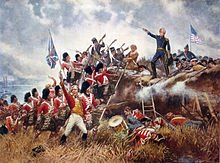
220px-battle_of_new_orleansSince my dad’s younger brother was named Andrew Jackson Logsdon, you might guess that Andrew Jackson was well thought of in my family. He is well thought of by most Americans as the first people’s president, a man who went to Washington, overthrew the elites, and returned the country to its democratic roots. A champion of the common man.

I disagree.

As a person trained in both anthropology and history, I have to declare my biases. Jackson was an important president, with much to his credit. I grant that. But he was also the leader of a successful movement to drive out the legal residents who were owners of vast tracts of land throughout the South, to make way for his white followers.

By the way, I plan to use the word Indian. It’s a description, not an insult, and it is the word that was used in the 1800’s. When Jackson finally sent the native people west of the Mississippi, he settled them in Indian Territory, not Native American Territory.

Jackson led an unapologetically racist movement, but there was no racial purity about it. The whites who moved into the vacated lands took their black slaves with them, and many of those slaves were partly white. (See yesterday’s post and numerous posts last January and February. Go to the tag cloud and click race.) The Indians who were moved out were frequently partly white, and took their black (and mixed) slaves with them when they went.

There is an argument that, morality notwithstanding, a stone age people had to give way before an industrialized one. Even if that idea has merit elsewhere, it does not apply to the frontier South in the early 1800s. The region was not industrialized, although gin-separated cotton would bring organized agriculture in the form of the plantation system during the next two decades. It was a land of small farmers (white or Indian), mostly engaged in subsistence agriculture (white or Indian), dotted with small towns (white or Indian) and few cities. White society and Indian both maintained slaves. Both traded with the larger world, mostly England, for manufactured goods.

White society, however, was under pressure from growing population beyond the Appalachians. Call it greed, or call it need, the whites wanted what the Indians had, and they took it. Jackson played a key roll in it all.

Jackson first came to public attention as an Indian fighter in the Creek War. It didn’t start out as a war between the Creeks (a historically imbedded term for the Muscogee tribe) and the Americans, but as a civil war between the lower Creeks who had made peace with the dominance of whites and the Red Stick faction which had not. Some whites were killed, militia units were organized, and Jackson became their leader. The regular American army was unavailable; they were fighting the British along the Atlantic coast. The War of 1812 was underway, and the Red Sticks were receiving British arms.

Jackson proved to be an effective general, tough and uncompromising. This is the period that gave him his nickname Old Hickory for those qualities. The Red Sticks were crushed and the entire Creek nation lost half their land at the end of hostilities. That was the pattern of frontier Indian fighting.

Next, Jackson defended New Orleans (brilliantly, to give the man his due) and emerged a Washington-like American hero. His road from New Orleans to the White House was long and rocky, but he became President in 1828 and won reelection in 1832.

Jackson was dedicated throughout his life to the removal of Indians from their lands in the South for resettlement them beyond the Mississippi. Toward that end, he effected passage of the Indian Removal Act in 1830.

This act required Indian tribes to sign treaties exchanging their original lands for new lands west of the Mississippi. Most tribes resisted, and the saga of bribery, coercion, and trickery that brought about the change would fill volumes. Among the Cherokee, for example, a small faction was bribed into signing a treaty which was then enforced on the whole tribe. Anger over this betrayal led to political assassinations among the Cherokee once they reached the new Indian Territory.

16,000 Cherokees were removed for the Indian Territory. 4000 died along the way. Jackson retired after his second term and died eight years later. By that time tens of thousands of non-citizens who had been resident in America for generations had been deported – excuse me, I meant removed – to beyond the borders of the United States.

**         **         **

We’ve looked at Andrew Jackson and Thomas Jefferson, two Presidents from the first half of the nineteenth century. We’ve seen what Jackson did about the non-citizens living in America. We’ve seen how different thinking was then on race and gender, even for someone like Thomas Jefferson. It’s good that we have progressed.

Or have we? I guess we’ll find out on Tuesday.

246. Unalienable Rights

u-rNext week, we elect a president. Today and tomorrow let’s look at the lives of two of our early ones, Jefferson and Jackson.

Everybody knows the passage in the box above. Thomas Jefferson wrote it. It is logical to think that he believed what he wrote, and yet he held Sally Hemings and his children by her in slavery.

Odd? By the standards of our day, certainly. By the standards of his day, it was odd that he freed any of them. His father-in-law also had a black concubine and children, and freed none of them.

If you have read anything I posted from mid-January to the end of February of this year, you know I am no apologist for slavery, Jim Crow, or resistance to interracial marriage. However, if you plan to understand historical events and beliefs, you have to examine them in their own context. The Sally Hemings story gives us a lens through which to examine both slavery and women as child bearers, whether wife or concubine, in the days when our nation was being created.

The story begins two generations before Jefferson. A slave name Susanna bore a child to a white man named Hemings; the child was named Betty. Both were owned by Francis Eppes, then were inherited by Eppes’ daughter Martha. When Martha Eppes married John Wayles, the slaves, mother and daughter, went with her.

Martha Eppes Wayles had a daughter, also named Martha, before her death. Wayles was widowed twice more, and also had several children by the slave Betty Hemings. The youngest of these was named Sally.

Martha Wayles (the daughter) married Thomas Jefferson. Sally Hemings was her half-sister (they shared a father) and was three-quarters white. When John Wayles died, Thomas and Martha Jefferson inherited his slaves, including Betty and Sally Hemings.

Martha Jefferson had a daughter, also Martha. Thankfully, for ease of reading this post, she was called Patsy. Jefferson’s wife Martha died. When Thomas Jefferson was appointed American envoy to France, he took Patsy with him, and took Sally Hemings as her companion. It appears that the Thomas Jefferson/Sally Hemings affair began in France.

Accurate research is difficult on affairs that are semi-hidden. As best we know, Sally Hemings bore Jefferson six children: two daughters who died in infancy, one daughter and three sons who live to adulthood. All these children were seven-eighths white, and all were slaves.

The children and their mother remained house slaves. They never worked the fields; the male children were given training to become artisans. At age 24, the eldest son was allowed to “escape” to the North. The daughter followed shortly after. The younger sons were given their freedom in Jefferson’s will. Sally Hemings was inherited by Patsy and informally freed.

Why did Jefferson, the champion of unalienable rights, hold his “wife” and children in slavery? Let’s look for answers.

Sally Hemings was legally negro, genetic heritage notwithstanding. That could not be changed. She could have been freed, but Jefferson could not have married her, even if the thought had ever occurred to him. If freed, she would have not become a full citizen of Virginia or of the United States. If freed, she would have passed completely out of Jefferson’s control, and she would also have passed out from under his protection. Which of those two factors weighed more heavily on Jefferson? We cannot know.

We can speculate, however, based on how he treated his children. They were legally negro, although actually seven-eighths white. They could not be given the rights of white children. They could not inherit, which was something of a moot point since Jefferson died deeply in debt and his estate went to his creditors. He allowed his elder two to “escape” to the North after they were adult. He freed his younger two in his will; they were just reaching legal maturity at the time of his death.

He did not free Sally Hemings in his will. Why? Was he unable to let go, or was he depending on his daughter Patsy to take care of her in her old age? She was in her mid-fifties when Jefferson died. Again, we cannot know.

A lot of scholarship has been devoted to Sally Hemings. We know quite a few facts, but from this distance, understanding comes hard. Did Jefferson do the best he could under the circumstances? Do we even have the right to be disappointed that he didn’t do more? We have more questions than answers.

**        **        **

It is important to consider what happened to Sally Hemings’ offspring, but that will require a future post.

235. 1989 Revisited

This follows Tuesday’s post. 

In the early nineties, my wife and I were traveling on a train in Germany, where we found ourselves sharing a compartment with a young German college student. We congratulated her on Germany’s recent reunification. She became flustered and could not understand why we, as Americans, could be concerned with the reunification of her little country.

Germany is not a little country. It fought the British Empire to a standstill in WWI, then conquered essentially all of mainland Europe in WWII, and today is a leading state in a more-or-less united Europe. But this young woman would have been the granddaughter of people who were there at Germany’s defeat in 1945, and her parents would have grown up in the western half of a nation, whose eastern half had been gobbled up by the Soviets. Her humility made sense, at that moment in history.

Germany was divided in 1945 and reunified in 1990, but the real year of change for Germany and the rest of eastern Europe was 1989. That is why I slid Raven’s Run into that year when I began to post it in the twenty-first century.

**       **       **

On February 14, 1989, Ayatollah Khomeini declared a fatwa (death sentence) against Salman Rushdie. Even before a year of great progress in international relations had fully begun, the sound of the coming world challenges were echoing in from the Middle East. The next day, the Soviet Union announced that the last of its troops had left Afghanistan, ending a fruitless nine year war that some called Russia’s Viet Nam. Unfortunately, America didn’t get the message about the fruitlessness of trying to change Afghanistan.

The Warsaw Pact alliance was getting shaky. For forty five years Russian had maintained its dominance over eastern Europe by military might. It had cost them, in rubles, in the lost productivity involved in maintaining a huge standing army, and in the growing recalcitrance of the peoples under their domination.

There had been other risings during that near half century – in East Germany in 1953,  and in Hungary and Poland in 1956. But by 1989, conditions within Russia itself had deteriorated badly. Russia’s new leader Mikhail Gorbachev was ready for change. When mass protests occurred in Hungary in March, he allowed reforms to begin. It was a far cry from the Russian tanks and guns of 1956.

The Hungarian revolution of 1956 had been put down ruthlessly. Officially, it was not seen as a Hungarian uprising, but as something orchestrated by the West. Now the story was changed, and it was officially accepted as a popular movement. Soon the Hungarians began tearing down the fence that closed off the Austrian border, which eventually had major consequences for East Germany.

Germany was partitioned in 1945 and Berlin, inside the Russian sector, was also partitioned. The two Germanies were fenced apart, and between the two Berlins the East Germans, at Russian insistence, built a massive concrete barrier. The Berlin Wall became the visible symbol for the separation of Europe.

By stealth and guile, innumerable refugees fled from East Germany to the west, but no defections got as much attention as those that broke through, over, and under the Berlin Wall.

With loosening of restraints in Hungary, East Germans defections intensified. For decades, they had vacationed in Hungary. Now they went to Hungary by the thousands and crossed from there to Austria. By September, 30,000 had escaped. When the East German government closed that route, East Germans flocked to Czechoslovakia where they descended on the Hungarian and West German embassies. In October, the East German government closed the border with Czechoslovakia. Those East Germans who had not been able to escape, turned to protests, which grew weekly in size. A shoot to kill order was given, then retracted under pressure from Gorbachev. By late October, the crowds of demonstrators numbered in the hundreds of thousands.

The East German government relented and opened the Berlin wall. East German people then tore it down.

Throughout eastern Europe, variations on the theme played out. Dozens of countries were freed from Soviet domination, but there was one massive casualty. Yugoslavia, a conglomeration of smaller states since WWI, disintegrated shortly after the breakup of the Warsaw Pact nations, leading to wars throughout the nineties.

Germany reunified in 1990 and the Soviet Union dissolved into its component states in 1991.