Tag Archives: history

522. First Black Astronauts

Dr. Ronald McNair, Guion Bulford, Frederick Gregory
I recently saw Leland Melvin’s new book Chasing Space and got a chance to look it over. It’s a good book, although in full disclosure I won’t finish it. I read and write for a living. so my time is limited. Additionally, I have already read more than dozen astronaut bios, so this one lacks newness for me, even though it might be just what you are looking for.

It got me thinking about the first black astronaut, if there were such a thing. We all know who the first woman astronaut was — Sally Ride. That is, if we continue our cold war prejudice against the Russians and ignore Valentina Tereshkova.

It would be neat and tidy if there were a first black astronaut, but it isn’t that simple. If you type the question into Google, it will return Guion Bluford. We’ll talk about him in a second, but there were others that came before him.

Ed Dwight was chosen by John F. Kennedy to join the astronaut corps. He was an Air Force test pilot with a degree in aeronautical engineering. While in training, he was the target of racism. When Kennedy was assassinated, Dwight withdrew from the astronaut program. A few years later, continued harassment led him to retire from the Air Force altogether. He became a noted sculptor in a second career.

Robert Henry Lawrence Jr. was the next African-American astronaut. At Edwards Air Force Base, Lawrence investigated unpowered glide return characteristics using an F-104 Starfighter, contributing greatly to knowledge necessary to the Space Shuttle program. He was assigned to the Air Force’s Manned Orbiting Laboratory program, but before he flew in space, he was killed in a crash landing while acting as a pilot instructor to a trainee. When the MOL project was abandoned, many of it’s astronauts transferred to NASA, where they became the backbone of the early Space Shuttle missions. Lawrence would almost certainly have been among them.

The “first black astronaut” falls out this way.

Ed Dwight was the first black astronaut trainee.

Robert Lawrence Jr. was the first black working astronaut. Remember that most of any astronaut’s time is spent in training and on-the-ground research. Actual flight in space makes up a tiny fraction of an astronaut’s career. Lawrence was as much a real astronaut as Roger Chaffee who died in the Apollo One fire just before his first flight.

Guion Bluford was the first black astronaut to actually fly in space in 1983 aboard the Challenger. He participated in four shuttle flights.

We also have to add Ronald McNair to the list of firsts. He was the first black astronaut to die on a space mission, when Challenger exploded. It was his second space shuttle mission.

Before 1978, there had been fifty-some American Mercury, Gemini, and Apollo astronauts and an additional few dozen assigned to other missions. Of, these only Lawrence had been black and there had been no women.

An up-to-date list of black astronauts can be found here. There are fourteen: Guion Bluford, Ronald McNair, Frederick Gregory, Charles Bolden, Mae Jemison, Bernard Harris Jr., Winston Scott, Robert Curbeam, Michael Anderson, Stephanie Wilson, Joan Higginbotham, Alvin Drew, Leland Melvin (whose book started this post), and Robert Satcher.

There are an additional eight who, for various reasons, never flew is space. Lawrence and Dwight are on that list.

509. Kidnapped and Catriona (2)

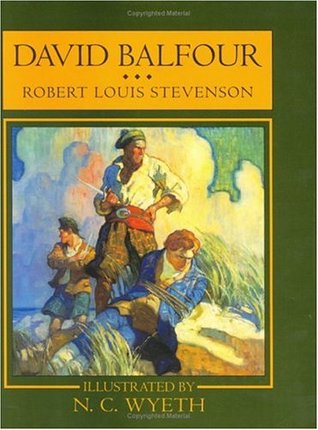
Catriona, aka David Balfour, continues the story begun in Kidnapped. I prefer the former title, probably because it was the title of the library copy I first read. I have headed this with a David Balfour cover, because all the Catriona covers I found were artistically inferior. By either name, this is quite a different kind of book. The balance between action and moral dilemma has shifted hard to the right.

Kidnapped had too much meat to be properly called a boy’s book, but it fell into that category among booksellers largely because it didn’t have sex or even romance. In Catriona, there still isn’t any sex — it was published in the Victorian era, after all — but it does have romance. Catriona is David’s love interest from early in the novel, and he wins her at the end. But the path of that romance is so slow, self-consciously moral, and tedious that it wouldn’t work as a modern girl’s book either. (Assuming anyone would dare to use that phrase any more.)

I recommend both novel and sequel to adults who are willing to take a journey, not only to another land, but also to another time. It’s easier to follow the lowland Scots dialect than it is to understand why David is so backward in his pursuit of Catriona. Once you get past that, you will be closer to understanding the era.

The book is in two parts. In the first, David is trying to get his friend Alan to safety overseas, and trying to get a chance to testify that James of the Glen cannot have committed the Appin murder. The latter turns out to be no easy task. The level of bias and corruption is astounding, on both sides of the political spectrum. (Sound familiar?) Shenanigans abound; David is kidnapped, again, this time by his friends and held captive on Bass Rock to keep him from the trial. He manages to get there anyway, after the trial is over, but before the verdict is announced. He falls in with those who are James friends, and finds them as blind to justice and reason as the ones who want James dead. David says:

And it was forced home upon my mind how this, that had the externals of a sober process of law, was in its essence a clan battle between savage clans.

There were no quotations in the last post, but Catriona is a garden of quotations, so brace yourself as David tells you what happened in his own words.

. . . in course of time, on November 8th, and in the midst of a prodigious storm of wind and rain, poor James of the Glens was duly hanged at Lettermore by Balachulish.

So there was the final upshot of my politics! Innocent men have perished before James, and are like to keep on perishing (in spite of all our wisdom) till the end of time. And till the end of time, young folk (who are not yet used with the duplicity of life and men) will struggle as I did, and make heroical resolves, and take long risks; and the course of events will push them upon the one side and go on like a marching army.   . . . (James) had been hanged by fraud and violence, and the world wagged along, and there was not a pennyweight of difference; and the villains of that horrid plot were decent, kind, respectable fathers of families, who went to kirk and took the sacrament!

What follows immediately thereafter is perhaps my favorite quotation from all of literature.

But I had had my view of that detestable business they call politics–I had seen it from behind, when it is all bones and blackness; and I was cured for life of any temptations to take part in it again.

David may have accomplished nothing, but he has given a moving example of decency in his attempt.

The last third of the book is a romance, mixed with more intrigue. Alan appears again, David ends up as the temporary guardian of Catriona, which makes him morally bound to say nothing about his feelings for her, since she is in his power. It is all very touching, frustrating, and Victorian. I would not blame a modern reader for wishing David would just say, “Hey, Babe, we’ve got a problem here, let’s talk about it.” But of course, he can’t. Living through his misery with him is the price we pay for diving deep into a historic culture, told through the words of a man who lived it.

Spoiler alert: all comes well in the end.

In his dedication to David Balfour/Catriona, written in Samoa, RLS revealed his affection for both books and added:

And I have come so far; and the sights and thoughts of my youth pursue me; and I see like a vision the youth of my father, and of his father, and the whole stream of lives flowing down there, far in the north, with the sound of laughter and tears, to cast me out in the end, as by a sudden freshet, on those ultimate islands. And I admire and bow my head before the romance of destiny.

Kidnapped might be mistaken for a boy’s book; RLS suggested it himself. Catriona, or Kidnapped/Catriona seen as a single story, is an adult look at a very different world.

508. Kidnapped and Catriona (1)

This is a double homage to Robert Louis Stevenson’s Kidnapped and to David Balfour or Catriona, the alternate titles of its sequel. It is a follow-on to 504. Homage to Robert Louis Stevenson.

Kidnapped was published 132 years ago, so there are bound to be some problems with language and culture. If it were being read by adults familiar with how historical novels function, there would be no issue, but Kidnapped is seen as a boy’s book.

It isn’t. Kidnapped is a Bildungsroman, a coming of age novel in which the main character faces moral choices. Kidnapped and Treasue Island are often lumped together, but they are quite separate species. Consequently, Kidnapped does not get the respect it deserves.

David Balfour is off to seek his fortune, shortly after his father’s death. He is going to see a rich Uncle Ebenezer, without knowing that he has a claim on his uncle’s fortune. At his uncle’s connivance, he is kidnapped onto the brig Covenant and shipped off to the America’s as a slave.

Complications ensue. David falls in with Alan Breck, the Covenant is wrecked off the west coast of Scotland, and David and Alan find their way back to Edinburgh. Along the way, they witness the murder of Colin Roy Campbell, a matter of great political importance in the days shortly after the Jacobite uprising.

Alan Breck Stewart, which is the full name of David’s companion, was based on the real historical character who was implicated for the murder (also real), tried in absentia, and sentenced to death. The sentence was never carried out and the real Alan disappeared from history, leaving a trail of local stories about what happened to him.

RLS took the Appin murder, as the incident was called, as the backbone of his story, not only in Kidnapped, but also in its sequel.

There is plenty of adventure, danger, and intrigue to carry the novel to its conclusion, but its quality lies in the view David gets of both sides of the recent war, and the moral decisions he constantly faces. David is a lowlander, a conservative, and a supporter of King George II; his companion Alan is in rebellion, on the run, and collecting rents which will go to support his King, Charles Edward Stuart. Patriotism would have David turn Alan in; their friendship, and the fact that each has saved the other’s life during their journey, will not allow him to do so. David knows that Alan is innocent of the murder, but he can’t testify to this without revealing that Alan is a traitor in the eyes of the British and already condemned, while throwing away his own future for consorting with King George’s enemies.

At the end of Kidnapped, David overcomes his uncle, then shows him mercy, gains his proper inheritance, and is in the process of helping Alan escape to France. As many critics have pointed out, the novel ends short of completion, with Alan still waiting for passage and James of the Glens was still in jail awaiting trial for a murder he did not commit. RLS himself admits this and hoped to make things right if Kidnapped were successful. I would give it to you in his words, but I haven’t been able to find the quotation. It comes of reading too many books in a lifetime, and not being organized enough to write down every quote I like.

Kidnapped was successful, and he did write a sequel, called Catriona in Britain and David Balfour in the US. The sequel never got the acclaim of Kidnapped. I find that unacceptable, so stay tuned for a look at Catriona on Thursday.

Kidnapped is not on the list for The Great American Read, as I discussed a week ago.

The fans of Kidnapping — they are legion — have arranged a walking trail in Scotland that follows David’s path from the shipwreck to Edinburgh. You can find information here. I’ve added it to my bucket list.

504. Homage to Robert Louis Stevenson

I can’t remember the first time I read Kidnapped, but it stayed with me. When I took a class on children’s literature as I was preparing to become a teacher, Kidnapped was the book I chose for a report. I read it again before going to Scotland for the first time, and have read it additional times since.

I have also read a half dozen other works by RLS, but Kidnapped began it and remains my lodestone in things regarding the author.

Robert Lewis Balfour Stevenson was born at N. 8 Howard Place, Edinburgh, on the 13th of November, 1850.

That is a quotation from RLS’s cousin and first biographer Graham Balfour. While RLS was still a child, his father changed the spelling of his name to Louis, without adopting the French pronunciation, because he was angry with a contemporary politician named Lewis. RLS himself dropped the Balfour to make his name shorter for his literary works.

Balfour was his mother’s maiden name. Despite dropping it, RLS was fond and proud of his maternal ancestors — so much so that he used the name for the main character David Balfour in Kidnapped.

Two recent things brought my long time fascination with RLS to the surface for these posts. First, a character in my latest novel is his doppelgänger. My character Balfour is — and is not — RLS. He has been “transmigrated”, for want of a better word, into an alternate London. He has minimal memories of RLS’s life and death, and is trying to recover them. Like most of the rest of the characters in Like Clockwork, he spends the novel trying to figure out what the hell is going on.

To tell more would be a spoiler, and besides, Balfour only explains things to me as he learns them, and the two of us haven’t reached the end of his book yet.

The second thing that brought RLS to the fore was The Great American Read on PBS. I watched the premier and looked at the 100 books on offer to be crowned as America’s favorite book. RLS was nowhere to be seen. How could this be? Surely either Kidnapped or Treasure Island should have made the cut. And if not, what about The Strange Case of Dr. Jekyll And Mr. Hyde?

I’ll say more about The Great American Read in a later post.

All this sent me in search of a more comprehensive biography of RLS than the one I had picked up in Scotland. I had avoided too much research when I began Like Clockwork, but by the time The Great American Read reignited my curiosity, my Balfour had become an established separate entity in my mind. I no longer had to worry about being sidetracked by an excess of reality.

I went to my favorite underfunded library where they never throw books away — because they can’t afford new ones — and found volume II of the Graham Balfour’s 1901 biography. Volume I was missing, although I eventually got a look at it online. It was a bit dense, as well as being too old fashioned even for me. Also Graham Balfour was a cousin, writing under the eye of a very protective family.

I ended up with the Pope-Hennessy biography, a work that is thinner, more up to date, and not written by a relative. Pope-Hennessy has an honest reputation and gives a balanced view.

RLS’s life was a bit of a soap opera, so I will stick to the highlights. The first key to understanding him is that he was sickly from birth, and his mother was sickly before him. His father was a robust engineer, who carried on the family business of building lighthouses.

RLS’s schooling was late starting and continued irregularly. Bouts of ill health punctuated his whole life. In fact, part of his appeal during the Victorian era was his illness. In that era, it was romantic to be clinging to life, or falling to suicide, and tuberculosis was a particularly romantic way to go.

The elder Stevenson intended him to follow in the family business, but RLS chose from an early age to be a writer. His father, fearing that he would become dissolute, restricted his allowance to such a degree that RLS lived a strange life of poverty throughout his young manhood, alternating with travel and convalescences that would only be available to the wealthy.

Shortly after writing his first book, Inland Journey, in 1878, he met Fanny Osbourne, an American woman who was separated from her unfaithful husband. RLS’s love for her was instant, intense, and permanent. When she returned home, he followed her to America where he almost died in Monterey before moving to San Francisco, all in pursuit of Fanny. She eventually received a divorce and they were married. During this time RLS was constantly writing, receiving positive reviews, but little money.

RLS, Fanny, and her two children returned to England, but could find no place suited to RLS’s ill health. During this period he wrote his best loved works, Treasure Island, Kidnapped, and The Strange Case of Dr. Jekyll and Mr. Hyde, but could find no easing of his tuberculosis.

In 1888, RLS, Fanny, and her two children, now financially secure from his novels, left for the South Pacific. They never returned. This was the first place that had allowed RLS to gain the health that had eluded him throughout his lifetime, and he was unwilling to leave it. He settled in Samoa, where he lived his last years, dying at forty-four. By that time he had written many works I have not had space to mention, and left the novels St. Ives and the Weir of Hermiston unfinished.

I future posts, I will talk about some of those works.

==================

Biographies — Graham Balfour, The Life of Robert Louis Stevenson, 2 volumes, 1901.   James Pope-Hennessy, Robert Louis Stevenson, 1974. Forbes Macgregor, Robert Louis Stevenson, 1989. The last is a an excellent summary biography in 29 pages, shown at the head of this post. It is sold in Edinburgh to tourists who probably never read it. Interestingly, the author’s name is buried at the bottom of the last page. Writer’s get no respect, even when they are writing about other writers.

503. Colliding Conventions

On the fourth of July weekend in 1939, the first World Science Fiction Convention (Worldcon) was held in New York City. 200 people attended. It has met yearly since, except during WWII.

Despite its name, Worldcon didn’t leave the United States until 1948, when it was held in Toronto. It didn’t leave North America until 1957 when it was held in London. It didn’t leave the English speaking world until 1970 when it was held in Heidelberg.

Worldcon is best known for the fact that it gives out the Hugo Awards.

In 1948 the LA Science Fantasy Society started a west coast convention (Westercon) for those who couldn’t afford to go east for Worldcon. This competing event also meets yearly.

In those years when Worldcon meets outside North America, a North American Science Fiction Convention (NASFiC) is held somewhere in the US.

This year’s Worldcon 76 will be held in San Jose, California August 16-20. In 2019, Worldcon will be held in Dublin, Ireland, so a NASFiC should be held. The bid, which will be decided in San Jose, is for Layton, Utah on July fourth weekend.

This year’s Westercon starts tomorrow in Denver. Next year it will be in Utah — Layton, Utah, to be precise.

Yes, you did see them palm that ace.

In 2019, Westercon, which began as an alternative to Worldcon, and NASFiC, which occurs only when Worldcon is somewhere else in the world, will be the same convention. I wonder how that is going to work out?

Just fine, I would imagine.

I attended Westercons 33 and 34 in Los Angeles and Sacramento shortly after my first two novels came out. I attended Westercon 70 in Tempe last year just after Cyan was published.

In preparation for that convention, I made eighteen posts here on a number of subjects that would be covered on panels in Tempe. If you missed them, or if you want to see “How to Build a Culture” which I presented at Westercon 34, click on Westercon in the menu bar at the top of this page.

This year I am skipping Westercon 71, Denver, for my first Worldcon, just down the hill a hundred miles or so in San Jose. This should be fun.

498. Living in the Promiseland

There is a winding road across the shifting sand
And room for everyone living in the promiseland
Willie Nelson

I began this website in the fall of 2015. It was to be about writing, particularly about writing science fiction, and I had no intention of responding to political events.

Fat chance of that happening, given what has happened in America since.

In fact, I had written about twenty numbered posts when events in the world forced me to stick some personal political comments in between posts 10 and 11. It was called Walls Against the World. It wouldn’t be the last time I had to interrupt my regular programming to speak out.

That was the day after Hungary closed it’s borders to Syrian refugees. It reminded me too forcibly of the Russians closing Hungary’s borders in 1956, to keep Hungarian refugees from reaching the west and freedom.

East Germany had built a wall across Berlin in 1961, and then-candidate Trump was running on the promise to build a wall across the border with Mexico. I didn’t buy in. At the time I said, “Hitler would be proud. East Germany would understand. Russia is laughing.”

Was that only thirty-three months ago? Time flies when you are running from a forest fire.

I opened that post with these words:

          Have you ever asked yourself, “How could Germany have been fooled into following Adolph Hitler?” The answer is on your television this morning, and it is Donald Trump.
          I’m not saying that Trump is a Nazi. I don’t see him as evil, merely foolish. But the techniques that have brought him to prominence are the same techniques that Hitler used.

Then Trump won and here we are. I have tried since then to be fair and at least somewhat balanced. After all, he was elected by the American people (aided by Putin and Comey) and the Democrats hadn’t given Americans much of an alternative.

I have resisted calling Trump evil, and I have resisted refusing to see why many Americans chose to vote for him. I understand them; I just don’t understand him. I have not called him by the H****r word, even as Trump has become increasingly dictatorial. I have tried to avoid pointing out that Hitler was initially elected to office, before he took over everything.

All that was before Trump opened concentration camps on the Mexican border in the name of Zero Tolerance. We haven’t seen this in America since 1942.

Maybe I’ll send the White House a copy of Willie Nelson’s Living in the Promiseland. At least I would if I thought it would do any good.

Give us your tired and weak and we will make them strong
Bring us your foreign songs and we will sing along
.               from Living in the Promiseland

Serial Education

Continued from last week, when I started to talk about what has already appeared in Serial.

Starting January 20, 2016, I presented a long fragment of the unfinished novel Voices in the Walls. I won’t give details, since you can read for yourself, but it was a teaching event. I interlaced the novel fragment with a chance to look over my shoulder as I worked. That turned it into a how-to for new writers.

#           #           #

Here is a bit of unavoidable nerdishness. I should have transferred Voices to Backfile. I didn’t. Time is short and work is long, and I never found the time to get it done.

You can still read old multiple posts, but it can be a major PITA (pain in  . . . ) because they are presented in archives last-first, and you want to read them first-first. Worse still, archives does not distinguish between AWL posts and Serial posts, so you have to read every alternate one.

It isn’t really hard if you know the secret. Here’s how it is done. At the bottom of each post are right and left arrows to the next/previous post. If you start with the first post of VITW, read it, then click the right arrow, it will take you to the next post. Unfortunately, in my world that will be the same-day post over in AWL. Slide down through that post and click the right arrow to go to the next day’s post of Serial. And so forth.

It goes quickly after a few clicks to get into rhythm. Try it. VITW is worth your time.

#           #           #

The entire novel Jandrax followed. It was and is available in used bookstores both locally and on Amazon, so it was not a lost work, but I included it with annotations. If you just want to read Jandrax, buy a used copy. Clicking through 92 posts isn’t worth 95 cents. But if you want to read the annotations in which I discuss why I did what I did, and confess to my screw-ups, it’s all there for you to enjoy.

more tomorrow

485. Uhura With a Dagger

Imagine Lieutenant Uhura in a different outfit, with a dagger at her belt, looking even sexier than usual. Actually, you don’t have to imagine, just check out Mirror, Mirror, which is simultaneously a pretty good piece of original Star Trek and one of the worst Star Treks ever.

How’s that? From the viewpoint of drama Mirror, Mirror is good television. From the viewpoint of logic, it stinks. Even though the alternate universe version of the Federation is completely changed and utterly barbaric, every member of the Enterprise crew is still at the same post, and the Enterprise is still in orbit of the same planet, going about the same business on the same day. Really?

Usually I don’t worry too much about accuracy in Star Trek. It is best viewed as  allegory, or as an attempt to make a decent SF program with minimal cost. I forgive a lot, but this one keeps me groaning more loudly than most.

#                #                #

As Mirror, Mirror shows us, building an alternative universe is no occupation for the lazy. But it sure can be fun. And if that universe has a steampunk attitude, all the better.

I spent the last half of last year writing a steampunk novel called The Cost of Empire, set in an alternate world in “the Year of Our Lord 18—, and of the Reign of Queen Victoria, year forty-seven”. It could be called an alternate history, but I made sure that most of the alternatives taste like steampunk, even though it doesn’t have werewolves or zombies or Jack the Ripper. Or automatons, although the sequels will. In fact, the whole intent was to provide a steampunk world that doesn’t depend on magic or unsupportable science.

Here’s the setup. After the Austro-Prussian War (real, 1866), a ruthless English businessman named McFarland (imaginary) stole an obscure type of engine (real, but forgotten today) which allowed him to produce useful dirigibles long before the Germans. He also started an organization of spying, disinformation, and assassination (imaginary, we hope) which allowed him to provoke and win a war with newly unified Germany, bringing England to universal power. In the process of suppressing German inventors, McFarland has skewed the course of science, prolonging the age of steam and clockwork.

To make this work, I had to shift a few dates, but not many and not by much. That is the reason, besides mimicking Victorian style, for the vague 18— date in the quotation. The challenge I gave to myself was to make big changes through the introduction of a single character.

So our story begins with England as the world’s most powerful nation (even more and sooner than in our reality) but hated by everyone, and with a fatal hidden flaw at its heart. England’s fleet covers the oceans, with dirigibles as eyes-in-the-sky above.

Our hero is about to fall afoul of the secret organization of assassins, escape, and spend the rest of this and hopefully several other novels fighting to free his nation from their grip.

The next two weeks will be devoted to the opening pages of that novel here in A Writing Life. As has happened a few times before, Serial will be tied up with other things.

484. Steampunk Anglophiles

I have come to the conclusion that most steampunk fans are also Anglophiles. That isn’t really surprising, but it puts me in a bit of an odd position, since I am not.

It’s not an aversion to England; I’ve been there several time and it is full of wonderful things. However, I have a disinterest in many of the things Anglophiles find interesting. Downton Abbey bores me silly. I don’t care who lives Upstairs or who lives Downstairs, and I really couldn’t care less about Elizabeth Bennet and Mr. Darcy.

One reason for my disaffection with a certain kind of English literature comes from being forced during high school to read Great Expectations. It was enough to put a person off reading altogether. With some exceptions (to be fair, probably quite a few), the recommended cannon of English literature, 1750 to 1900, is a litany of insipid characters, dull plots, uninteresting situations, and tales of a tedious and self-destructive culture. Thank God for Shakespeare and science fiction, or I might be illiterate today.

English history is fascinating, but I found my interest in English literature only on the periphery. First came Robert Louis Stevenson. I’m not talking about Treasure Island, which made him rich and famous. I mean, primarily, Kidnapped, and its almost forgotten sequel David Balfour (also published as Catriona). They are two halves of the same story and form a true classic. Critics see them as children’s books, but together they are the tale of a young man who successfully fights his way to become a morally responsible and honorable adult.

Of course, Kidnapped/Catriona is really a Scottish novel.

As an undergraduate, I studied India, one of England’s major victims. That inoculated me against Kipling style jingoism. My wife’s ancestors were Scottish and that led me into a study of Scottish-English relations — another complicated and ugly story. It also led me to two incredibly talented Scottish authors, Neil Gunn and George Mackay Brown.

Nevertheless, I did find English literature to love — even Victorian/Edwardian English literature to love — but not in the official cannon. First came Sherlock Holmes. I found a copy of the two volume Doubleday version when I was in my twenties and I have read it to shreds. I really need a new copy. That led me to Chesterton’s Father Brown; the real one, not the imposter on PBS.

Through my interest in small boats, I stumbled onto Riddle of the Sands, with two of the most English, most honorable, most fun heroes ever. I also found author John Buchan, who now occupies two feet packed tight on my library shelf. Buchan finally showed me inside the minds of some British imperialists whom I could respect, and even identify with.

Finally, the musical Scrooge led me to the non-musical adaptations of A Christmas Carol, and they led me to the novella itself. What a revelation. Dickens is wonderful, despite the agony of being force-fed Great Expectations while still too young.

So I ended up with a balanced view of England. England is the origin of our civilization and also the meanest SOB on the block. England both destroyed and preserved the great civilizations of the past wherever they conquered; and that was pretty much everywhere. English literature is both fascinating and as dull as a downstairs maid polishing the silver. England brought modern mechanized civilization and increased poverty to most of the world.

So I came to steampunk from out of left field and it shows in my new steampunk novels.

In The Cost of Empire (written in 2017 and looking for a publisher as we speak) the hero is a farmer/fisherman from the fens who is on the rise as an officer in Her Majesty’s Air Service (dirigibles, of course). He is a defender of the empire, but he begins to have doubts when he comes to know Amir Kalinath, an advocate of Indian independence. I have a long excerpt from the opening chapter scheduled here shortly.

And Like Clockwork, presently more than half finished, is a deeply weird take on Old London. It started out by imagining what would happen if the toy shop in Scrooge (the musical) was real, and it’s proprietor had built those incredible clockwork toys himself. I’ll say no more, since even I am not sure how this one is going to turn out.

480. Mairi at Culloden

272 years ago today, the last battle took place on British soil. Followers of Charles Edward Stuart (aka Bonnie Prince Charlie) met British forces under the Duke of Cumberland on Culloden moor. Like all battles, it was a confusing, bloody mess, but it had the virtue of being decisive. The reprisals which followed brought highland culture largely to an end.

The mists of nostalgia roll over the Battle of Culloden, casting it in a romantic light as the last day of Scottish independence from the English. Sorry, but it was nothing like that. There were Scots on both sides of the fight. The “champion of the Scots” was the grandson of a deposed British king, born in Rome and raised in France, now fighting to regain his grandfather’s throne in London. The highlanders who followed him were despised by the lowland Scots who fought on Cumberland’s side — but the lowlanders’ descendants now claim clan membership and wear kilts — even though kilts hadn’t been invented yet in 1756.

I would have sworn that I would never write about Culloden, until I saw a brief note in an article about the history of oats in Scotland which described the actions of a Scotswoman who sat down beside the road leading from Culloden and cooked oat cakes for the soldiers, knowing they would need food to survive. Her simple and humane reaction to the conflict moved me to write this poem.

Mairi sat down by the side of the road

The night was filled with the sound of men
And the moan of wind in the heather,
As Mairi’s kinsmen went south toward the field,
That Charlie had set for the meeting.

Three sons of Mairi came out of her hut
And kissed her cheek as they left her
With Ross the youngest trailing along
To see what the battle would bring.

Mairi took oats from the pantry shelf,
There was not enough to please her,
So she dragged in a sack from the loft of the ben,
Took peats, and salt, and her griddle.

Then Mairi went down to the side of the road,
Built a peat fire and kneaded the grain,
Heated her griddle and cooked fat cakes,
To stack for the coming of day.

“They will come,” she said, “in the morning,
And all through the rest of the day,
Strutting proud or running scared,
Theyʼll be hungry either way.”

The oat cakes sizzled; the smell was fine;
She flipped them and stacked them and listened
To the musket fire from Cumberlandʼs men
And the deeper roar of his cannons.

The cries that went up as the claymores flashed
Were too distant for Mairi to hear,
But Ross would come back from where he watched
To tell how the Scotsmen had fared.

Then a sudden wind, and the fire flared up,
She shivered as pain rushed through her.
Three quick shocks in her empty womb,
And her heart in her breast went numb.

Her hands dug deeper into the oats,
And flew at the task of the kneading,
The stack of bannocks at her side grew tall
For she knew now that they would be needed.

Then Ross came running from the battlefield
He could only come out with a groan.
But Mairi knew without any words
That his brothers would not return.

******

The first man she saw was limping hard
With his leg bound up in a rag.
A highland face, with matted red hair,
He was lean as an iron bar.

A hungry man with a strangerʼs face;
Mairi gestured to the cakes.
He picked one up, took a bite, and sighed.
“God Bless you,” he said, and moved on.

The second man was a stranger, too,
He said, “Mother, it was awful.”
“Eat,” she said, “and move along,
I’ll pray that you find safety.”

The third was young, more a boy than a man,
With face flat and eyes that were dry.
Half held up by a second youth
Who coughed along along at his side.

“Take cakes and eat,” Mairi started to say.
But the coughing youth shook his head.
“I thank you, Mother, but let them go
To living men instead.

My friendʼs bled dry; thereʼs a ball in my lung;
Weʼre as dead as the ones behind.
Just show us a hidden place to crawl in,
And a quiet place to die.”

Mairi worked on, with a clenched up heart
While Ross fed peats to the fire,
Saving the lives of the fleeing men,
For hungry men soon tire.

All through the morning and the afternoon,
Those who lived to flee streamed by them,
Mairi rolled dough in her aged hands
As she mourned for the dead and the living.

For even these battered and tattered men,
Who would leave the field still living
Had lost more than battle, kinsmen, and sons.
A whole way of life had died with them.

And Mairi knew, with foresight clear,
That the winners would fare no better.
That the losers had lost, and the winners would lose,
All except for the rich and the English.

Then the last cake was gone, and Ross was gone,
Sent on with the last survivor.
Up past the river and into the hills.
To hide for a while in the heather.

Down the road she saw them, a mile away,
The Redcoats at last were coming,
Marching proud with bloody swords.
                Mairi stood up and put out the fire.