Tag Archives: history

565. Great (?) Men

This post was begun December 5, 2018, before the shutdown, right after watching President Bush’s funeral. Most of the posts from that time until now were already written to make time for some non-writing activities, so I watched the Federal shut-down from the sidelines. I will summarize my take in one sentence.

Another damn-fool stunt by the Damn-Fool-in-Chief.

Now back to December fifth.

=========

As I watched President Bush’s funeral this morning, I was once again struck by an understanding of how Trump became president. I am not going to offer similarities between the two men; I would be hard pressed to find any. I will suggest instead that the nation’s response to Bush One’s death tells us uncomfortable things about hero worship, individual liberty and responsibility, and America’s closet love affair with The Great Man.

America threw off a king in 1776, and has been in the habit of electing would-be kings to the presidency ever since.  They even asked George Washington to become king. He refused. If there has been a president since who didn’t want the powers of a king, I apologize for lumping him in with the rest. I don’t think I will have to apologize to many. Maybe none.

I get that. I also get that without a combination of arrogance and obstinance, and a massive need for power, no candidate would ever get through a campaign. Obama strikes me as a nice guy, someone I would like to know personally, but he had the need. Bush II was touted as the candidate you would most like to have a beer with — and I would, even though I never considered him competent. Vote for Bush II, hell no; share a laugh with him, of course. Bush II had the need. Bush I had the need. They all had the need for power.

You can be pretty sure that any humility shown by any president is feigned. Was Lincoln humble? He appeared humble, but I seriously doubt that he was. Overwhelmed and saddened by what fate had saddled him with, certainly, but a truly humble man would have withdrawn in favor of someone more qualified.

But Presidents don’t believe anyone else could be more qualified; if they did, they would never make it to the White House.

I understand the motivation of Great (?) Men; I don’t really understand why Americans, who otherwise cling to their liberties, continue electing them. Perhaps they are convinced that the alternative to the Great (?) Man is the wimp. Or maybe it’s just the John Wayne syndrome gone wrong.

Here’s what happens. There is trouble in the town. Every man knows what needs to be done. But only one man has the fastest gun and the toughest fists. So (the Lone Ranger) (John Wayne) (Chuck Norris) (millennials, fill in your own selection, I’m out of touch with current heroes) takes care of business because he is The Great Man.

That’s adequate for TV, but not for governing America. Presidential power has been growing at Congressional expense for several decades. Why? Maybe at the core it is because the President is one man and Congress is many. Is it just part of the American myth that the individual stands up to the mob?

Maybe.

I get it — but I don’t buy it.

561. Great (?) Books

The Great Books of the Western World.
Taken 16 February 2005 by User:Rdsmith4

“Here are the most admirable and varied materials for the formation of a prig.”      James Payn, speaking of the Great Books of the Western World.

A prig (in case you didn’t know) is a self-righteously moralistic person who behaves as if superior to others.

=========

If Aristotle said it, it must be true, right? Maybe. Of course, Aristotle’s ideas about physical science held Europe back from progress for a couple of millennia, so maybe not.

According to Aristotle’s view of forced motion (as opposed to natural motion) a body would stop moving when applied forces was removed. This caused his followers much work trying to explain why an arrow didn’t stop moving as soon as it left the bow.

I think we can cut the old guy some slack. Pioneers never get things completely right. On the other hand, too much reverence for old things can really slow progress. Case in point: The Great Books.

When The Great American Read hit PBS, it sent me looking at some old lists of great books, although, to be fair, the GAR was not about great books, but popular books, which is a whole different perspective.

Among the books of lists I checked out was A Great Idea at the Time by Alex Beam, about Encyclopedia Britannica‘s Great Books of the Western World. That consisted of fifty-four volumes containing 443 works by seventy-four authors, all dead, white, and male. I recommend Beam’s humorous look at the intersection of prissy scholarship with American huxterism.

Meanwhile, let’s look at the same issue from a broader perspective. There is a prejudice among the educated that finds wisdom only in great or serious books. If Charles Dickens says it, it is wisdom. If Gordon Dickson says it, it is entertainment.

I don’t buy that. Never did. Don’t plan to in the future. I stand with Brian and Mike Hugg’s song You’re A Better Man Than I . . .

Could you tell a wise man
By the way he speaks or spell
Is this more important
Than the stories that he tells.

While I was researching all this, I ran across a Goodreads review of one of the books I had mentioned, The Novel 100, which included this sentence: “It contains a lot of my own personal favorites, while also including books that I should read.”

Should? Why should? Why read the Great Books, and for that matter, why capitalize them as if they were the Holy Bible?

Robert Hutchins, who was instrumental in producing the Great Books of the Western World (in part to make Great Profits), put it this way:

Until lately the West has regarded it as self-evident that the road to education lay through great books. No man was educated unless he was acquainted with the masterpieces of his tradition. There never was very much doubt in anybody’s mind about which the masterpieces were. They were the books that had endured and that the common voice of mankind called the finest creations, in writing, of the Western mind.

Yeah, right! If it was so “self evident” why was there such a giant fight to decide which books were great enough to go into the Great Books of the Western World?

In terms of ubiquity in the works of later writers, the greatest of the Great Books was the Bible. Adam, Eve, and the Garden — you might be Charles Darwin, and those names and their implications would still be understood. Only Shakespeare comes close to such instant recognition.

Today, it would be hard to find any author with recognition that is both widespread and lasting. Maybe Tolkien; maybe not. There are plenty of writers that everybody reads today, who will be forgotten in a decade. There are probably a few authors whose fame will never die with a small group of readers, but that would  be hard to nail down.

In the “good old days” there was a bit of unanimity on quality (less than Hutchins would have you think), but today’s society has opened outward to diversity in such a way that, while there will always be great books, there will probably never again be Great Books.

Greece and Rome may lie at the foundations of Western Civilization, but really, who has more to offer modern America, Marcus Aurelius or Maya Angelo.

560. We All Learn

Race has a persistent and powerful influence on America for something that really doesn’t exist.

Take the whitest non-albino in America and stand him on the western border of Kansas. Take the blackest black in America and stand him on the eastern border of Kansas. Now line up all the rest of us in a single line, whitest to blackest, in between those two. There would be no break in the continuum.

That should be no surprise to anyone. We have had black slaves (and their descendants) and white immigrants in America rubbing up against one another for four hundred years.

For four hundred years, white DNA patterns have been entering black America through force and black DNA patterns have been entering white America by passing. Lately, that DNA has been going both directions for kinder, gentler reasons.

It’s all been a giant blender — powered at first by hatred and eventually by love —- mixing up the vanilla with the chocolate. There is no use pretending that we are two races any more.

Right!

Try telling that to a white guy. Or try telling it to a black guy.

Clearly, there’s more to the story.

============

When I was growing up in rural Oklahoma in the fifties, the idea of two separate races seemed real and normal, but theoretical.

In my small town and the countryside around there were no black folks. Also no Jews. Nor Mexicans. No Italians either, come to think of it. There was one Catholic family who lived there briefly, but they didn’t last.

It was white, white, white, and Protestant, for as far as the eye could see, with one exception, —— Eddie. I’ll leave it to you to guess what word went into the blank; hint, it began with “N”.

The gentleman didn’t live in my community, but we saw him driving by in his pickup from time to time. He lived somewhere north; I never knew where. I never met him. I only knew him as a blurred, black face in a passing vehicle.

All the adults knew him and spoke well of him. He minded his own business; he took care of his family; he was a good farmer (wherever his farm was); he was quiet and he went his own way.

Now, if I weren’t talking about race, that would sound like a description of The Quiet Man. The archetype. The lone cowboy who rides into town, minds his own business and bothers no one. But don’t cross him because he takes no guff from anybody.

Nope, that’s not it at all. Not even close. But take away the last sentence — the one about “don’t cross him” — and change it to “gives no offense to anyone but quietly backs away”. Now you are closer to the truth. You have just defined the difference between The Quiet Man and Uncle Tom.

The Quiet Man knows his worth; Uncle Tom knows his place. Even growing up in whiteland, with no blacks around, I knew the difference.

============

In my childhood, the only black folks I saw other than a blur on the highway, were on television. They were marching in Selma and across the South. And yes, now we are getting to why this post is coming on Martin Luther King Day.

My father called them troublemakers. He liked the phrase “outside agitators”, as well. I disagreed. I looked at the black people being washed down southern streets by fire hoses and said, “They’re right. We’re wrong.”

I didn’t say it out loud. I didn’t say much of anything out loud in those days except, “Yes, sir.” But a few years later when I escaped to college, I had decided for myself that black folks were as good as I was.

Now that may seem a rather obvious decision to you, but a lot of people from my generation and the one that followed never got the message. You see a lot of them now at rallies for a certain orange faced politician.

Martin Luther King and the tens of thousands he represented showed me an alternative to my father’s thinking. I thank them for giving me another option.

552. Links to Christmas

Tomorrow is the big day, when nobody should be on the internet, so I’ll have my say today. This is the fourth Christmas season since I began this website, and every year I say the same thing. I love Christmas.

I stand with Dickens, who called Christmas “a good time; a kind and forgiving, charitable, pleasant time; the only time I know of, in the long calendar of the year, when men and women seem by one consent to open their shut-up hearts freely.”

Over the years, I have posted many Christmas or Midwinter posts. If you are new to this site, here’s your chance to check some of them out.

My first year I posted a list of Christmas books, covering pretty much every aspect of the holiday. That same year, I talked about Dickens’s five Christmas novellas. Everybody knows A Christmas Carol; here is your chance to check out the rest.

When the ghost of Christmas Past appeared, Scrooge asked, “Long past?” and was told that she meant his past. My own early Christmases on the farm wouldn’t make a Christmas card, but I told about them in Twas the Season, posts 1 and also 2. I also talked about the Nostalgia for those days that never were .

Everyone talks about Mary and Jesus, but what about Jesus and Joseph?

Christmas itself has a history beyond the biblical story. It has always fascinated me, and I summarized what I have learned in three posts from 2016, Old European Christmas, Colonial Christmas, and Here Comes Santa Claus.

In 2016 and 2017, Christmas was overshadowed for my Latin friends by a grinch with an orange face and wild yellow hair. I wrote about Christmas for Lupe two years ago and about Jose, Maria, y Jesus in Trumpland last year. I didn’t have the heart to tackle the current occupant one more time this year. Maybe by next year I won’t need to.

Anyway, whether you check out any of these links or not, Merry Christmas.

551. Apollo 8

photo taken from Apollo 8

Things always look different in the rear view mirror.

If I were telling the story of Apollo 8 as it was understood when it was happening, it would be a different story than what it looks like today. We in the US knew what we were doing. We suspected what the Russians were doing, and our actions were based on those suspicions.

We were wrong. Here’s what was going on that we did not know then.

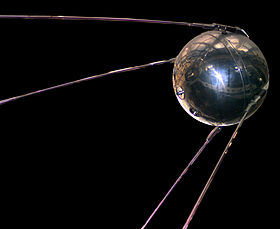
The Russians were developing a rocket, the N1, similar in size to the Saturn V. It was designed to carry two men into lunar orbit and allow one of them to land. America was aware of the existence of the N1, but not in any detail. It had been seen by reconnaissance satellite (shown here), but little else was known. Russia looked much closer to reaching the moon than the facts warranted.

In fact, the first N1 launch attempt came two months after Apollo 8, and was a disaster. There were four launch attempts in all, the last in November 1972, almost three years after Apollo 11. All ended in massive explosions and the N1 program was cancelled.

We didn’t know any of this until decades later. Based on our assessment, the Russians seemed to be on the verge of reaching the moon first, particularly after the delays that followed the Apollo One fire.

The LEM was not ready for use. The next mission was supposed to be in high Earth orbit, but NASA decided to go for broke instead. They changed the Apollo 8 mission, with only a few months to go, from an Earth orbit mission to a circumlunar mission.

On December 21, 1968 — fifty years ago this Friday — Frank Borman, James Lovell, and William Anders launched from Kennedy Space Center.

For anyone younger than sixty, it is impossible to recapture the feeling of the moment. We all know how the story came out, and that will be true over the next few years as a whole batch of fifth anniversaries come and go. At the time these spaceflights took place, no one knew if any of the astronauts would return to Earth alive.

The launch occurred at about eight AM, EST. The first and second stages burned their fuel and fell away. The third stage placed the craft in Earth orbit and remained attached.

The craft spent nearly three hours in near Earth orbit. This was standard; it allowed a full post-launch check before the craft’s irreversible journey to the moon began. Return to Earth from an aborted mission remained a possibility until the third stage fired again.

Once the third stage had fired, the CSM separated and rotated to have a view of the third stage and the retreating Earth. Having the spacecraft and the unmanned third stage on the same orbit was no part of the plan, so after five hours, the third stage vented its remaining fuel changing it to a different orbit that would not get in the way of the CSM.

The rocket in the Service Module was not used on the way to the moon. It could not be, for reasons that will be explained when we look at Apollo 9 in late February.

After nearly three days, Apollo 8 reached the vicinity of the moon. The Service Module engine fired for the first time, slowing the craft to place it in lunar orbit. The famous Earthrise photo at the top of this post was taken shortly thereafter. During the next twenty hours, Apollo 8 orbited the moon ten times. Then the Service Module engine fired again, sending them back to Earth to land in the Pacific on December 27th.

The lunar orbits took place on Christmas Eve and Christmas day. While in orbit, the astronauts read the first ten verses of the book of Genesis in a TV broadcast to Earth.

I have never been comfortable with that action. I recognize the need to comfort and unify the country at the end of a troubled year, and the need to set America apart from Russia. After all, Khrushchev had stated the Russian position when he said, “Gagarin flew into space, but didn’t see any god there.” And, despite those of us who disagree, America is demographically and historically a Christian country.

Nevertheless, why Genesis, the part of the scriptures most quoted by those who would hold back science? They would have been better to follow the lead of Linus van Pelt and quote Luke 2: 8-14. It was Christmas, after all.

The went, they orbited, and they returned. It doesn’t sound like much if you put it that way, but there was an additional factor. What if they didn’t make it back?

By the time of Apollo 8, eight astronauts had died in training or in on the launch pad. All those deaths were virtually instantaneous, but death in space could come another way. Astronauts could become stranded, unable to return.

That problem had been well understood from the first. During John Glenn’s first flight, my father, an Oklahoma farmer who considered the space program a complete waste of time and money, left his tractor in the field and went in to sit for hours in front of the television. He said later, “I just had to get that old boy back on the ground before I could go back to work.”

America had held its breath before, but going to the moon upped the ante. The possibility of three men being trapped in lunar orbit and unable to return was on everybody’s mind during Apollo 8. With subsequent moon landings, everybody worried about men being trapped on the moon, and unable to return.

It all turned out well; we know that now. But to have a sense of how it felt to those of us who watched it in real time, you have to factor in the fear of complete disaster.

549. The Saturn Rockets

Saturn V

This post is called The Saturn Rockets, plural, because there were two if you speak loosely, or three if you are picky. If we were looking at all of the rockets of the Apollo program, we would have to add Little Joe. Getting men to the moon was a complex operation.

The pre-Apollo manned missions used modified military missiles as launch vehicles. Atlas was designated for Mercury, but delays in achieving reliability caused the first two Mercury flights to be sub-orbital on Redstone missiles. Gemini used Titan II missiles throughout the program.

The Saturn rockets are often said to be designed from the start as space launch vehicles, not military missiles. That is a somewhat limited view. The program that eventually produced the Saturns began in 1956 and ran through an amazing number of paper iterations before anything ever left the ground. “Saturn” development was simultaneous with the developments of Atlas, Titan, and other military missiles, and kept changing as those other missiles refined rocket technology.

The same infighting family of scientists and engineers developed Saturn and all American military missiles, the same set of companies built them, and the same government paid for it all. Saturn was developed through NASA and was never planned to carry warheads, but the entire American manned space program was a child of the cold war. The civilian vs. military distinction is a bit of sleight of hand.

By 1959, the possible types of Saturn rockets had been reduced to eight configurations. Eventually three were built.

Saturn I was designed to put spacecraft into low Earth orbit. Saturn V was designed to put men on the moon, and later tasked with launching Skylab. See 297. Skylab 1 and 298. Skylab 2.

Remember Little Joe? That was an existing rocket that was used early to test out the Apollo capsule’s abort mechanism.

Ten Saturn I rockets flew;. Five were in Saturn development flights. Five others carried early, unmanned versions of Apollo spacecraft, as well as Pegasus micrometeorite satellites.

The Saturn I was replaced by the more powerful Saturn IB (shown at left) in 1966. Saturn IB became a workhorse for heavy, low Earth orbit launches.

The first Saturn IB topped by an unmanned CSM was launched in a mission then called Apollo 1. Later, after the deaths of three astronauts in the capsule fire, there was a mass renumbering of past flights in order to call their mission Apollo 1. It was an entirely understandable gesture, but it causes confusion to this day.

Two more Saturn IBs were launched in 1966, then the first Saturn V was launched. The next launch was to test an unmanned LEM in low Earth orbit. That flight fell to the Saturn IB which had been involved in the “Apollo One” disaster, since the capsule fire had not damaged the launch vehicle. Another Saturn V launch in 1968 completed the unmanned phase of Apollo.

On October 11, 1968, the first manned Apollo craft achieved orbit. Manned missions are what we all remember, but by that time there had been seven abort tests, sixteen launches of Saturn I, IB, and V vehicles, and twelve major ground simulation tests.

Apollo 7 was the only manned Apollo mission to use a Saturn IB. Apollo 9 was also a flight to low Earth orbit, but it used a Saturn V because it was  a full, close-in dress rehearsal and first launching of a manned LEM.

The other ten Apollo mission used the Saturn V, cementing a picture of that rocket into everyone’s mind.

After the end of Apollo, a Saturn V launched Skylab. Three subsequent launches of Saturn IBs took up the astronauts who manned it.

The last manned use of Saturn IB was to carry an Apollo CSM to rendezvous with a Soyuz vehicle in 1975.

548. Victorian Steampunk?


Please note that Serial is back temporarily, to present the short story by Dickens which was a predecessor to A Christmas Carol. It starts today. Check it out.


=======

The Victorian era — was there such a thing?

Victoria became Queen in 1837 and died in 1901, a reign of just short of sixty-four years. Everything in Britain changed in that time except the Queen, so does the phrase Victorian Era have any real meaning?

If you are going to write steampunk, that is a fair question. Of course steampunk usually takes place in an alternate Victorian era — sometimes extremely alternate — but you have to have at least a reasonable knowledge of the original if you are going to mimic it.

Most of us get our history everywhere but a history book, so let’s see what fiction we can use to subdivide the era. Jane Austen, the Brontes, and the Queen were born only a few years apart, so if you enjoy those authors, you are reading about the early Victorian period. Not my wheelhouse, but to each his own.

More to my taste, Charles Dickens’s first novel was published in 1837, the year Victoria became queen. His last novel (uncompleted) and his death took place in 1870. At that time Victoria still had three decades to live.

The Dickensian era is almost as widely known as the Victorian. In full disclosure, I have read all of Dickens’s Christmas novellas — A Christmas Carol several times — but his larger works tend to defeat me. I think I was inoculated against them by being force-fed Great Expectations at too young an age.

Not everyone reads Dickens by choice, but everyone knows what Dickensian means. Judith Flanders in The Victorian City, said:

Today “Dickensian” means squalor . . .(Dickens was) the greatest recorder the London streets has ever known — through whose eyes those streets have become Dickensian . . .

She got it right for her literary audience, but wrong for those who never read a Dickens novel that they weren’t forced to read. Dickensian, to the average Joe (or Joan) means carolers in fancy dress, Scrooge redeemed, Tiny Tim getting a second chance at life, and a village of quaint houses for the Christmas mantle. The actual harshness of Dickens’s other novels is excluded.

The squalor and the sweetness: that is the dual heritage that steampunk authors have to work with if they set their works in variations of the early Victorian period.

As I explained last Wednesday, Like Clockwork is derived from A Christmas Carol, although it morphed into something very different from a Christmas novel. I don’t think Dickens would recognize my London at all.

========

From 1870 when Dickens died, until 1901 when Queen Victoria died, the world became a very different place from the home of Scrooge, Tiny Tim, and Oliver Twist. The industrial revolution changed the world into something much closer to the present.

You might choose Jules Verne as the author that most represents this era, but not if you are concentrating on England. Verne would be the right literary reference for a steampunk novel set in the La Belle Époque, Paris. If you know of such a work, send me the author and title. I would love to read it.

My earlier steampunk novel, The Cost of Empire, travels across five continents by dirigible, but much of the action takes place in London. For that time period in London, there is only one literary creature who is in everyone’s DNA; not an author, but a character who is more real to most of us than the author who created him — Sherlock Holmes.

Holmes first case, A Study in Scarlet, was published in 1887, and there were flashbacks to earlier cases. His Last Bow was on the eve of World War I. This neatly fills in the rest of the Victorian era and spills over into the Edwardian.

Gender gets involved here. Dickens appeals, or doesn’t appeal, to men and women alike. The rest of British popular literature, contemporary to the era (not historical fiction) is largely gender biased, with Austen and the Brontes for the gals, Kipling, Buchan, and Conan Doyle for the guys.

In other words, if you are a guy (guilty as charged) and you consider Victorian characters, you are more likely to think first of Sherlock Holmes than of Elizabeth Bennet — or even Mr. Darcy.

When I first became involved in the Victorian era, after becoming interested in steampunk, my knowledge of everyday life in London came largely from multiple readings of the canon. That is what Holmes fans call the fifty-six stories and four novels written by ACD himself.  My internal vision of Victorian London was that which could be seen from 221b Baker Street, even though Sherlock himself never makes an appearance in my writings.

Yet.

========

If you want a reference book for each era, I recommend:

For the early Victorian period — The Victorian City by Judith Flanders. She gives a modern scholar’s look at the reality behind the world that Dickens wrote about.

For the late Victorian period — Sherlock Holmes: the Man and his World by H. R. F. Keating. He provides commentary on Holmes’s world, with contemporary photographs of scenes from the canon.

Back for Now

On September fifth I temporarily closed out Serial. The reason was:

It has been three years, almost to the day, and I’m out of stuff.

I’m still out of stuff, since all my recent writings are looking for more traditional publishing opportunities, but I reserve the right to bring Serial back to life  long enough to bring in ringers like:

The Story of the Goblins Who Stole a Sexton
by Charles Dickens

This is the short story that later became A Christmas Carol. I will be presenting it in Serial in eight installments, starting Monday.

546. Where Do You Get Your Ideas (1)

Everybody who doesn’t write, wants to know where writers get their ideas. Everybody who writes knows the answer is, “Everywhere,” and also knows that answer won’t satisfy anyone.

I think that those who ask really want to know is where we get the initial idea, the one that sets everything in motion. For instance, I have one like that which I haven’t used yet. It’s a winner for sure. It has hippies and drugs and the . . . nope! I might still write that one, so I’m keeping it to myself.

I’ve actually already told the origin stories of one novel, one series and one fragment. You can check them out if you want. I have one more answer that covers four stories, and that answer is Scrooge.

My fascination with Dickens’s classic began during the Christmas season of 1970. I was a new college graduate, married, waiting for my date to enter the Navy. My immediate future looked grim, and possibly short.

The musical Scrooge was released that year and it went straight to the heart when my wife and I saw it in the theatre. I immediately bought the videotape, even though I had no way to play it at the time. I knew I didn’t want to lose that powerful story of redemption.

In the  years that followed, I read the original story several times, along with the other four Christmas stories that Dickens followed up with in later years. I also made a collection of other Christmas Carol movies, some good, some dull, some awful. Every actor seemed to want to play Scrooge.

Five years after the release of Scrooge, I started writing novels. I concentrated on science fiction and fantasy, but deep down I wanted to write my own Christmas classic. And yes, I know, there are ten million other writers who have had the same idea.

I won’t go into detail, but over the years the idea grew from one story to three.

Nathaniel Gunn returns from a long voyage on a trading ship to Philadelphia in 1791 to find his wife dead from disease and his two children apparently dead as well. Throughout the following Christmas season he gives away his money to the needy around him, but it does his heart and soul no good until he has to give away the one thing that means the most to him.

The children, who are not really dead, make their painful way back from their uncle’s farm toward Philadelphia. Along the way they find themselves taking shelter with a family of Moravian’s, the Christian sect that was that era’s the strongest advocate of Christmas, long before it’s celebration became generally accepted.

These two stories are bracketed by a later story. Nathan, the son, finds himself in New York in 1823 where he befriends the despondent Clement Clarke Moore.

Those stories grew out of a desire to bring early Christmas to the new world, and tie the birth of Christ to the birth of the nation. (The first congress met in New York in 1789 and Philadelphia in 1791, before moving on to the newly built Washington City.)

It needs writing. Maybe someday if I can find the time . . .

Those were literary and historical ideas. Meanwhile, there was a purely visual idea that also came out of Scrooge. I’ll tell you about it in two days.

Continued Wednesday.

545. Lottery Day at the Big Casino

Rep. Pirnie draws the first number.

The place was a class at Michigan State University, just about this time fifty years ago. I wasn’t in the room, so I may be wrong on a few details, but the basic story spread quickly all over campus.

The professor was a young radical. There were a lot of those at MSU in the late 60s. Finals were near when he announced that grades would be given out a little differently this year. He opened a notebook and began to call roll. As he did, an assistant drew notes from a bowl. The professor read, “Adams.” The assistant took a folded paper from the bowl, opened it, and said C. The professor read, “Baker,” and the assistant said F.

As you may guess, it left the room in an uproar. I’m sure the actual grades were given in the normal manner, but the young professor had made his point.

About a week later, a similar lottery took place nationwide, televised, and determined life or death for thousands of young Americans. I was listening closely, because I was a contestant. It was the first draft lottery since World War II.

There were three of us paying attention, my two college roommates and I. One of them didn’t have to worry; he had blown his knee out as a high school wrestler and was 4-F. That’s a medical deferment. The other roommate and I were on student deferments, but we were both going to graduate in June. He drew a high number and never served. I wasn’t so lucky.

I have said often that the draft leveled the playing field. It was a favorite saying in that era that Viet Nam was a war where black people were sent to kill yellow people for the sake of white people. Without the draft, that would have been even closer to the truth.

I wasn’t feeling so charitable when that bastard got to my birthday and pulled a 41.

Ain’t it fun to gamble in the big casino?