Tag Archives: immigrants

699. Thanksgiving Prayer

Dear God,

We thank you for the food before us,
We thank you for those who grew the food,
We thank you for those who keep us safe,
We thank you for our freedom,
         and for our Constitution.

Forgive us for the ways in which we have failed you
          by failing our fellow man.

Help us reunite the families we have separated.
Help us succor the allies we have abandoned.
Help us accept our own children,
          born beyond the border,
          but ours since childhood.
Help us to accept the refugees,
          crying out just beyond the wall.
Help us to free those incarcerated,
          guilty of believing
          that we would give them
          the refuge we had promised.

Help us to see clearly
          all the ways that we have failed you
          by failing our fellow men.

And forgive this nation.
          God knows we need it.

698. Who Slammed the Door?

During the first iteration of Trump, I wrote a poem in response to what he was doing to immigrant refugees. The title of the poem was Who Slammed the Door? Of course Trump was the primary answer to that question, but the people who voted their agreement with Trump’s statement that these “illegals” were rapists and murderers were also responsible.

The poem tried to replace that image with something closer to reality.

Now Trump is back and things are even worse. It is time to print the poem again, especially as we reach the season of Thanksgiving.

Not everyone in America can give thanks this year.

Who Slammed the Door?

Land of the free,
Home of the brave,
What happened to your courage?

We have walked a thousand miles toward freedom.
Where did freedom go?

It is not trivial
that they come in the night.
It is not trivial
that they rape and kill.
It is not trivial
to be hungry.
It is not trivial
to be afraid.
It is not trivial
to see your father disappear
to see your mother disappear
to know that you are next.

Would you walk a thousand miles
for a trivial reason?

In our homeland, they throw us in jail.
In America, they throw us in jail.

In our homeland, they take parents
from their children in the night.

In America, they take children
from their parents in broad daylight.

Land of the free,
Home of the brave,
What happened to your courage?
Your compassion?
Your understanding?
Your humanity?

Land of the free,
Home of the brave,
Who slammed the door on freedom?

697. Trump Looks at Borders

Attribution: Nabokov at English Wikipedia  

Trump Looks at Borders

I started this blog on the twenty-ninth of August, 2015. At that time, I had no political agenda for the blog. I had plenty of political opinions, but the blog’s only purpose was to support my coming novel Cyan and write how-to and behind the scenes posts for young writers.

Less than three weeks later, Donald Trump entered my consciousness. I didn’t take him seriously at first — almost no one did — but the things he said and the positions he took were not something I could ignore.

So, on Sept. 15, 2015, I interrupted myself to write the post I am partially reprinting here. It was my first statement on Trump, and pretty much my first awareness of him. I said . . .

— << >> —

This is not normally a political blog, but as I am a citizen, there are times to speak out.

Have you ever asked yourself, “How could Germany have been fooled into following Adolph Hitler?” The answer is on your television this morning, and it is Donald Trump.

I’m not saying that Trump is a Nazi. I don’t see him as evil, merely foolish. (That was a decade ago. His Nazi leanings and deep evil is no longer in question.) But the techniques that have brought him to prominence are the same techniques that Hitler used.

First, appeal to a country’s deepest fears.

Second, claim to be the only one to have the answer.

Third, claim that your opponents are all cowardly and incompetent or, to use Trump’s favorite word — stupid.

The tactics are false. But the fears are real, so Trump promises his followers a wall to keep the world out. There is no wall strong enough to do it.

— << >> —

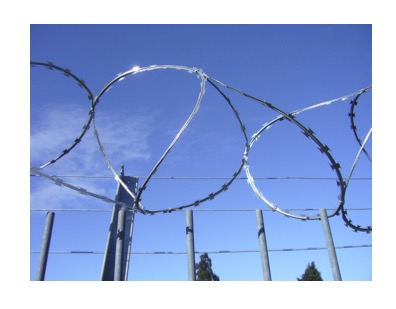
That same morning, September 15, 2015, Hungary closed its borders against middle-eastern refugees with a wall of razor wire.

I have a strong feeling for Hungary. The Hungarian Uprising of 1956 forms my first political memory. I was eight, and I remember sitting in front of the TV with my parents watching the streams of refugees escaping Soviet reprisals. Eventually 200,000 Hungarians fled their homeland. That memory makes it particularly hard for me to watch Hungary put up a wall against Syrian refugees fleeing genocide.

In another time and place, backed by Russia, East Germany built a wall across Berlin in 1961. It slowed the flow of refugees escaping from tyranny, but it did not stop them. And it didn’t stop the later fall of East Germany.

There is a fence across our southern border of the US that doesn’t stop those hungry enough to jump it. Trump wants a wall to hold out “illegals” and a massive sweep through our country to deport the “illegals” who are already here. He wants to declare that the 14th amendment doesn’t really mean what it says, in order to authorize the deportation of American citizens, born her just like you and I were.

Hitler would be proud. East Germany would understand. Russia is laughing.

— << >> —

Looking back, it is clear that the Trump agenda we see in 2025 was already his plan in 2015. I just couldn’t imagine him becoming President.

No one could imagine that he would win, then lose, then win again.

— << >> —

So my blog for new writers is back, and Trump is back. I wish I could spend all my time talking about writing, but times are too dangerous for that.

There is a lot I plan to do and say about writing. I will be releasing a five book series of novels next year, and two books on writing in 2027. You will hear all about them in this blog.

But we also have to talk about Trump, in this post, in two posts of poetry next week, and in many other posts sandwiched between more pleasant things. I wish times were better, but everyone has to deal with reality.

363. Masters: Coming to America

What sort of country would (the United States) have now if the Indians had had an Immigration Service when the Pilgrims set out in 1620?
John Masters

When I first read John Masters, something he said stuck with me. Before going to Westercon this year, I wanted to run down that quotation, and in doing so I found much more worth sharing. What he said about writing will appear here later, but today I want to give his insights on immigration, or, as he called it, his Seven Year’s War with the U. S. Immigration authorities.

For reasons detailed in his book, John Masters decided that, though he was an Englishman, there was no life for him in England, and that America should become his home. He applied for an immigrant visa, knowing that the British yearly quota of 65,000 was never filled. His reactions to the questions asked on the application form were humorous, but too long to place here. Apparently the questions were as inane then as they are now. (see 329. Green Card Blues and 361. Take This Test)

A week or so later, he was told that he would have to wait about four and a half years. He had been placed on the Indian quota. He went back to inquire and was told that American law only recognized the place of his birth, not his actual citizenship. Never mind that he was born in a British military hospital. Never mind that he was born of a British mother and a British father, stationed in the British army in a British controlled area. Never mind that a child born of an American parent (and it only takes one) anywhere in the world is an American citizen. Never mind that he was born in 1914, and India didn’t become a country until 1947. He was born in India, so he was on the India quota.

It was a good thing he hadn’t been born while his father was stationed in Greece. The Greek quota was eighty-one years. (Yes, that is not a misprint. 81 years.)

Masters decided to withdraw his application for an Immigrant visa, get a visitor’s visa, and work things out later. That was not allowed. Since he had applied for an immigrant visa, he was no longer eligible for a visitor’s visa. Too many others when facing impossible waits had made that same move, then disappeared once they were in America.

As you might guess, as a British Army officer with plenty of friends, he was eventually allowed a visitor’s visa, came to America, and managed to stay permanently, although with many additional bureaucratic battles.

Good thing he wasn’t actually Indian.

More to the point in 2017, good thing he wasn’t Mexican, or poor, or not a native English speaker.

Master’s comments on writing will come in later posts.

362. Masters of India

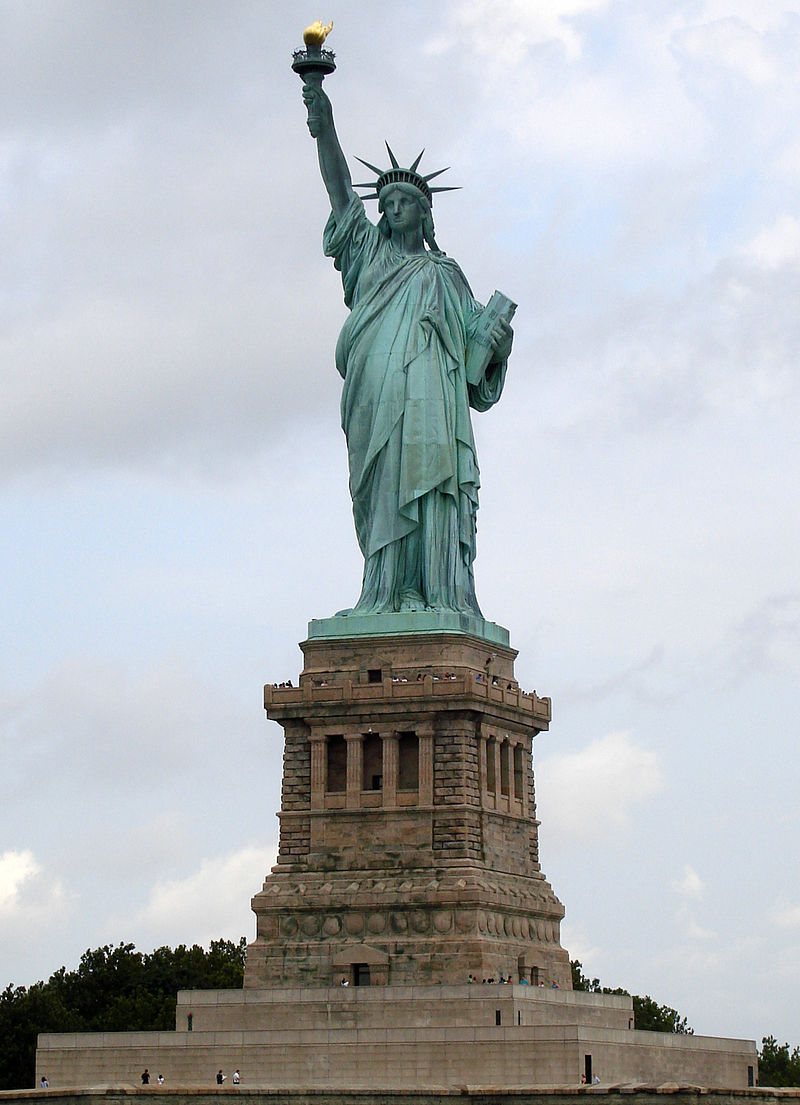
     Wasn’t it barely a week since I had thrilled to learn what was inscribed on the base of the Statue of LIberty:
          Give me you tired, your poor,
          Your huddled masses yearning to breathe free . . .
     What generosity, I had thought, what a marvel of welcome!
                         John Masters

We’ll let that quotation hang there, and return to it later. This post, and several more, are connected to John Masters’ third installment of autobiography, Pilgrim Son.

I read the first installment of his autobiography, Bugles and a Tiger, during the 1970s. Normally a military biography would be the last thing to interest me. Furthermore, I was in the Navy against my will at the time, it that made it even more unlikely. However, Masters was a famous novelist specializing in India, so I read Bugles . . ., and I was impressed.

I had just finished four years studying South Asia and was about to return to another year of the same. My experience had shown me that there is wisdom (and stupidity) in writing on all sides of any issue. Wiser’s The Hindu Jajmani System (anthropologist), Nehru’s The Discovery of India (nationalist agitator, then national leader) and Masters’ various works (officer in the British Army in India) all showed accurate views from different perspectives.

I skipped Masters’ second autobiography, The Road Past Mandalay because I had no interest in sharing the horrors of WW II’s Burmese campaign, but Pilgrim Son was about the start of his life as a writer. I was beginning to write, so I ate it up.

That was nearly four decades ago. One particular story from that book stayed with me, and sent me back to seek it out again. I found that the whole book was a gem, far better than I remembered, and with more than one brief bit worth sharing.

For one thing, Masters had a lot to say about immigrants. That had not stuck in my memory because it was not an issue in the early eighties when I first read Pilgrim Son.

I have to set the stage by reminding American readers, whose world historical knowledge is typically shallow, that India is an ancient culture, but is new as a nation. Until mid-last century, it was controlled by Britain. In 1947, what was then India was partitioned into India and Pakistan, and each part became a self-governing nation. Decades later, Pakistan also split, into Pakistan and Bangladesh. What had once been a more-or-less uniform culture divided into hundreds of petty kingdoms, was first unified under British rule, then split into three modern nations.

After several hundred years, members of the British Army and of the British governing class, many of whom had lived in India for generations, had to take ship for England. John Masters was one of those Englishmen who was born in India, had lived his life there, and now found himself an immigrant to his other homeland. He soon found that there was nothing for him in England, and became an immigrant to America, where he began his writing career. more tomorrow