
Tag Archives: literature

Voices in the Walls 10

Chapter one, concluded

“But we will have to fight for our freedom,” I said, “and I could hardly call myself a man if I let others do my fighting for me!”

“I understand your feelings, but listen: Lincoln doesn’t become president until March. The southern states won’t wait for that to happen. They will begin to secede immediately, and it is possible that President Buchanan will let them go with only a token show of resistance. It could all be over before Lincoln ever comes to the Presidency.”

“I don’t see how that changes anything.”

“Son, you are still fifteen. Give me your word that you will stay with your sister in Gettysburg until your sixteenth birthday, and I will release you from any further obligations. By that time we will know better what is to happen, and I will trust you to act on your own conscience.”

???make this 16 & 17???

(I love computers. They allow me to drop little “notes to self” right into the text where I can’t forget them. Of course this would be a disaster if you were the type to send off first drafts unchecked.)

I did not want to give my word. The South had no navy. That meant that if it came to war, they would be fitting out privateers and I wanted to be in on the action. If my father’s predictions were right, I might miss the whole thing by waiting until April to enlist.

Yet, when I looked at my father’s face, I could not refuse him. I said, “I will wait.” He shook my hand on it. Then he reached into the side pocket of his coat and handed me a package wrapped with paper.

“Don’t open that until you get to Pennsylvania,” he cautioned, “and then do so in secret. You will find a pistol, caps, power, and shot inside. Load it, then hide it. Don’t let your Aunt Rachel know about it. As a Quaker, she is not supposed to force her ideas on anyone, but she might refuse to have it under her roof. She is a strong willed woman, and a foolish one sometimes. If you ever need to defend your sister or yourself, I want you to have the means.”

I slipped the heavy package into my pocket. More than anything so far, it brought home the seriousness of our situation. I said, “When will we see you again?”

“When God wills it, if he ever does.”

Then he put his arms around me briefly, and I confess that I had to wipe moisture from my eye before I turned to face Sarah again.

*****

So ends chapter one. I’ve reread the chapter dozens of times, tweaking little things, and I am still not satisfied with it. It is full of exposition necessary for the coming story, and full of conversation between a father and son who are just a bit stiff and distant with one another, during a formal historic era.

If this were science fiction, or fantasy, or a thriller, I would chuck the whole chapter and start over. Or, to be more precise, I would have written it differently in the first place.

There are two things at play here. The story I am trying to tell in a tale of morals, and much of the most important action is internal. Nevertheless, the story has to move, or readers will simply close the book and go on to something else.

Beginning with chapter two, things speed up a bit. When I complete Voices, I will leave chapter one as is and drive on the the last page. Events that have yet to be written may change my view of this first chapter and make changes easier.

Here is a rule to live by: Chapter one doesn’t have to be perfect while you are writing a book, but it had better be perfect before it heads for the publisher.

Chapter two is two posts away. Next post, a diversion.
Voices in the Walls 9

Chapter one, continued

Eventually the tour ended and Sarah was brought out. She ran into Father’s arms, then greeted me with a curtsey and a shy smile.

Sarah was six years younger than me, so I had rarely played with her when we were young. The Kemp twins from the plantation just down the river were my age, and we spent our childhoods together, with no time for little sisters.

Sarah was a baby and I was six when mother died. Father was a U. S. Representative by that time and had little time for us, so Sarah went to live with Father’s sister in Richmond and I was sent to a boarding school in Williamsburg. Father would bring us both back to Waterside with him when Congress was not in session. That remained the pattern of our lives for a decade.

Sarah was my sister, but she was a stranger. Except for our few months at Waterside each season, I had not lived in the same house with her for some years.

Now I looked closely at her. Her hair was blonde and done up in ropy curls. Her eyes were more gray than blue. The dress she wore was tight in the bodice and flared at the hip, well tailored and trimmed with lace. Her clothing, her stance, and the look on her face were all designed to make Mrs. Davison feel that she had produced a perfect little girl. I had no idea what was really going on inside her head. I’m sure Mrs. Davison knew even less than I did.

We went out to the carriage with Sarah between us, holding each of our hands. She was chattering gaily, but after the first five minutes I stopped listening. It was all about the life she lead at Mrs. Davison’s and the daily crises and intrigues of her playmates. James took the reins, snapped the horses into motion, and we pulled away. Sarah had both of Father’s hands in hers now, as if she were trying to squeeze the juice out of every second she would be with him.

At the train station, Father left Sarah with James long enough to take me aside. “Son,” he said, “I don’t know what the future holds for any of us, but it does not look pleasant. It will certainly be war. The question is how hard and how long the North will fight. I am hoping that the whole thing will be over by mid-summer. I would prefer that you stay out of the fighting if you can.”

I knew that my father had been no war hawk, but this advice sounded strange to my ears. I said, “Father, that hardly seems honorable.”

Father frowned and asked me, “Do you remember Representative Collins?”

I did. Collins was from Ohio; he and Father had been friends for years and he had visited Waterside several times, although they had drifted apart recently.

“Arthur Collins has a son just your age. I would not care to have you looking down a rifle barrel at his son, nor would I want his son firing at you. We have been members of the same nation, however quickly some men forget.”

“But we will have to fight for our freedom,” I said, “and I could hardly call myself a man if I let others do my fighting for me!”

Voices in the Walls 8

Chapter one, continued

Father had much to say to me. He was telling me the things I would have to know if he died before we met again, and we both knew it.

When I finally made it up to my room, I was drugged with sleep and sadness. All my life, I had planned to go to sea. It was a family tradition. My great-grandfather had been captain of a privateer during the Revolutionary War. Our plantation was bought with prize money from his three cruises. My grandfather was a lieutenant on the Constitution when she captured the HMS Java in 1812. Even Father had served on coasting bugeyes when he was a boy, before he had run for office. I had been about to follow in their footsteps. With an appointment to the Naval Academy, the dream had been so close I could almost touch it. To lose it now seemed too much to bear.

But . . . when the southern states seceded, they would surely need a navy. That thought cheered me considerably.

(Even though it doesn’t seem so now, this is a precursor of things to come. The fact that Matt’s family has seen a world beyond the South is instrumental in preparing for his later change of heart. He will contemplate this himself, in coming chapters. Having this paragraph here both shows his present state of mind and prepares the reader for changes which are to come later.)

*****

The next morning James readied the carriage and drove Father and me across town to the boarding school to pick up Sarah. Until a few months ago she had stayed with Father, but during the hopeless battle to keep Lincoln from being elected President, he had not had time for her.

Apparently Father had sent instructions ahead, because there was a pile of trunks on the ground outside the carriage house. We left James and one of Mrs. Davison’s slaves to load them while we went inside. (We associate Washington, D. C. with Lincoln and the Union, but at this time it was a city full of slaves.) The house was full of the early morning sounds of young girls awakening and getting ready for the day. We could hear scurrying and laughter in the rooms above, and the hallway where we waited was full of the pleasant smell of bacon and grits.

Mrs. Davison was short and round, in a hoop skirt that made her look rounder still. Cosmetics made her cheeks red and her eyelashes long and black, even so early in the morning, and her hair was elaborately done up. She was full of sighs and flutters, gesturing with her fan and declaring how she “didn’t know what she was going to do without Sarah. The girl was such an angel!” If she had been twenty years younger and sixty pounds lighter, she would have been the picture of a southern belle; instead she was a parody of one.

Since Sarah was still eating, Mrs. Davison took us on a tour of the lower part of her house. Father endured it gracefully, but I could see it was hard for him to listen. The nation was falling apart around him; all he wanted was to see his little girl off on her way to safety so he could get back to the business of saving what could be saved. Father’s strained courtesy made Mrs. Davison even more silly in my eyes.

Eventually the tour ended and Sarah was brought out. To my relief, she was sensibly dressed for traveling, in a dark dress of linen with no hoops to get in her way. She ran into Father’s arms, then greeted me with a curtsey and a shy smile.

89. Guess Who’s Coming to Dinner

You can learn a lot from television, if you are alert, and usually not what they want you expected.

My local oldies station has been running Guess Who’s Coming to Dinner incessantly for about a month. I’ve watched the whole thing several times and bits and pieces here and there as well. If you don’t remember the story, in 1967, a very handsome, very black man (Sidney Poitier) wants to marry a very pretty, very blonde white girl (Katherine Houghton). They spring this on her liberal parents and complications ensue.

I like the movie despite its obvious problems. I even forgive that it ends with a fifteen minute monolog by the grumpy, old white guy (Spencer Tracy), as he puts everybody else in their places.

The movie is dated and excessively, even simplistically, sweet. It is unrealistic that the black guy in question is such a moral superman and so terminally handsome. Never mind; the movie’s heart was in the right place and it probably did some good. And it was 1967, after all.

But there’s something else to be learned from this movie beyond what the producer intended. The next time you see it, take a look at Dorothy (no last name, played by Barbara Randolph), a minor character, assistant housekeeper and a drop-dead gorgeous black girl.

Or is she? Stand her up in your imagination half way between Poitier and Houghton. She is half as black as he is, and half as white as she is. How did that happen! And why do we accept her as black without even thinking about it?

The whole movie is based on the shock that everyone feels when Poitier and Houghton decide to marry, but no one even takes notice of the obvious product of four hundred years of interracial sex, married or otherwise, strutting her stuff in the background.

Hummmm!

Voices in the Walls 7

Chapter one, continued.

Father led me back into the parlor and motioned me toward a chair. “You know Lincoln was elected. You know war is coming.”

“Yes, I know, but might be a year before it begins. Or President Buchanan may let the South go peaceably, before Lincoln is even inaugurated.”

“Perhaps, but I doubt it. And Lincoln will fight.” 

There were men who would welcome this war. Senator Jacobs was such a man, but my father was not.

“What do you want me to do?” I asked.

“I am sending your sister to stay with your aunt in Pennsylvania. I want you to take her there and stay with her. I want you to protect her.”

“Pennsylvania! In the North! What about Waterside. Why aren’t you sending us back home?”

Father said, “Waterside will be a battleground when war comes. All of Virginia will be. There will be no safety there as long as the fighting continues.”

He looked sharply at me and said, “Matt, you are the only one I can depend on to keep Sarah safe.”

I was hurt by his doubt. I said, “You know that I will keep her safe. I would keep her safe wherever we were, in Waterside as well as in Pennsylvania.”

“How, Boy? If I sent you back to Waterside, how would you keep her safe from Federal troops? How would you explain to our neighbors if you stayed at Waterside while all their sons were going off to war? How could you resist when they came to recruit you? Could you stand by when they called you a coward?”

He was right. I could hardly stand hearing the word here, now, from my father. I could certainly never stand to have it hurled at me in anger by a neighbor. For a minute there was no sound in the room but the ticking of a clock. Then I said, “If I go North with Sarah, won’t that be the act of a coward?”

“No. You will just be taking your sister to safety.”

“And I will be taking myself to safety,” I answered. “I can’t do that. You wouldn’t do it! Father, I have always done what you said, but this time you are asking too much. Tell me why you are sending me away from my home to live with the enemy when war is coming. Convince me that you have good reason and I will go, but I won’t go just because you tell me to. Not this time.”

There was irritation in his face, but some pride, too. He said, “Yes, you may have to fight. But not yet. The war is not here yet. Take your sister to your aunt’s and stay there with her as long as you feel that you can. See to her safety, and then do what you must.”

He had much more to say to me. We sat for hours as he brought me up to date on the details of Waterside. He told me what fields were under what crops, how the shipyard on the James River was doing, and what slaves he had assigned to which jobs. It chilled me to listen. He was telling me the things I would have to know if he died before we met again, and we both knew it.

88. John Henry

I have always wondered why John Henry is a folk hero.

Maybe it’s just a folk song. Maybe it isn’t supposed to make sense. I never worry about the fact that Stewball “never drank water, he only drank wine”; I do have a tendency to overthink things.

But let’s look at the facts. John Henry is big, strong, uneducated and very black. Symbolically black, even. As a ”little bitty baby” he picks up a hammer and accepts his fate. He works himself to death for white folks, while they stand around and bet against him. Then his wife takes over when he’s dead, and the story goes on unchanged.

Sounds pretty damned Jim Crow to me.

A technical point here, so it all makes sense. As a “steel drivin’ man”, John Henry is not spiking down rails to ties. He is digging tunnels. He is swinging a doublejack, a two handed medium weight sledge hammer. He is hitting a star drill, which is a steel rod about a yard long ending in a hardened cross bit. Every time John Henry hits the drill, another inch of rock is pulverized in the bottom of a hole. Between each stroke, his assistant turns the drill an eighth of a turn.

Men with John Henry’s job spent their days drilling holes in the face of a tunnel. Those holes were then filled with black powder or dynamite, depending on the era, and blasted. Then the drill men moved back in to do it all over again.

Imagine working in near darkness, covered with sweat and stone dust, breathing in the fumes from the last blast, damp and cold in winter, damp and hot in summer. Tough for John Henry; terrifying for his assistant, holding the drill steady, turning it only in that moment when the hammer is drawn back, and knowing that if John Henry ever misses, he’s dog meat.

It gets worse.

It is useful to those in power to have a large population of the powerless and hungry. Slaves fit that bill very well; so do new immigrants. Today we have the working poor, who are kept humble by the myth that if you can’t make it in America, it’s your own fault. You aren’t working hard enough (see post 5.).

Immediately after the Civil War, white southerners found a way to get back some of their power and some of their slaves. They simply arrested and imprisoned newly freed blacks, then rented them out. They invented the chain gang. If you are trying to find historical reasons why blacks fill our prisons and why our police are so often corrupt, chances are pretty good your research will lead you to those events.

What does this have to do with John Henry? In searching for the man behind the legend, writer Scott Reynolds Nelson’s* discoveries suggest that John Henry was one of these convict-slaves.

John Henry was a man who could not break his chains, but was still a man for all that. His status as a black hero makes sense.

Still . . ., if I were borrowing all this to make a story, I would rewrite it so that John Henry used his hammer to brain the overseer. But, of course, the real John Henry could never do that, and today’s black community would not accept such a cheap answer, or such an easy road to freedom. It would not match up with their own experiences.

History is usually uglier than anything we novelists can invent.

*Scott Reynolds Nelson. Steel Drivin’ Man: John Henry, the Untold Story of an American Legend.

Voices in the Walls 6

Chapter one, continued.

“Mr. Lincoln been elected.”

It was like walking down a staircase and finding a step missing. I couldn’t believe it. But here was James with a message from my father that I had to obey.

It would mean war.

“The extra horse is for me?” I asked, and James nodded. “Well, the horses will need to rest and so will we. Go out and put them in the barn. You’ll find some corn in the feed box. Rub them down well, mind you. Then come up to my room and help me pack. You can sleep on the floor when we’ve finished.”

Mr. Harding had come in, looking a little sleepy in rumpled nightclothes. I said to him, “Sir, I am afraid I have to leave you. Congressman Williams needs me more than I need Latin, at least for the moment. I can’t say when I will return.”

“So I overheard. Well, Matthew, we all have our duties. Come back when you can. I’ll have Mrs. Brown prepare a breakfast about daybreak.”

“An hour before, if it is convenient. And now, if you will excuse me . . .”

“Of course.”

I turned back up the stairs to pack. I had remained calm. I had kept my voice even and low, just as Father had taught me. But inside I was crying out at the shambles fate was making of my life.

*****

James and I held the horses to a steady pace all the way back to Washington City. Father had rented a small house a few blocks from the Capitol. There were two house slaves and James took care of the horses. Otherwise, Father lived alone.

It was well past ten at night when we rode in, but Father was not alone. I could hear angry voices raised in argument in the formal parlor and the smell of cigar smoke rolled through the half open door. I knew Senator Jacobs voice – he was often a visitor at home at Waterside. The others were strange to me, but I could hear enough to know that they were discussing Lincoln’s election. Loudly.

I sent James upstairs with my bag and went to the kitchen. By the time I had finished eating, I could hear Father seeing his visitors to the door. When he returned from the porch, I was waiting in the hallway. He held out his hand and smiled.

I don’t think he felt like smiling, or that he had felt like smiling for a long time. I could tell that he was full of anger. I asked, “Father, why have you called me back?”

He led me back into the parlor and motioned me toward a chair. “You know Lincoln was elected. You know war is coming.”

*****

This is not a thriller, so it can’t be started at a full gallop. The tone and pace of this opening chapter are correct for the kind of book Voices is setting out to be. Nevertheless, after reading it back at the end of the first day of writing, I knew that it needed something to hook the reader’s attention.

Also Matt isn’t much of a person yet. The reader is likely to give us a little time to correct that. Readers tend to like people named “I” until something happens to change their mind.

If you didn’t just start reading Voices today, you know that Matt is going to undergo some major changes in his outlook. Even a reader of the finished book would know something of that from the prolog. He doesn’t yet look like a candidate for that change, but his personality will unfold over the first few chapters, and readers tend to give us time to let that happen.

Even at this point in the writing, I knew I was going to need a prolog to hook the reader.

87. Gemini

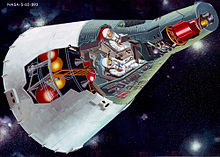
220px-Gemini_spacecraftToday I want to share with you a book you are unlikely to see. Few libraries have it and it commands unreasonable prices in used books stores. It’s writing style is not artistic. Yet it is a moving book, because of its subject, its author, and its timing. The book is Gemini, by Virgil “Gus” Grissom.

Every American knows something about Apollo. Most have at least heard of Mercury, but the Gemini program has been largely forgotten. That is reasonable enough; youth looks forward. At the time, however, Gemini saved America’s faith in the space program at a time when Soviet advances had made us look foolish and hopelessly outclassed.

Here is a brief summary for the terminally young: the Mercury program, consisting of two sub-orbital flights followed by four orbital flights, put America into space, but the one man capsules – not yet called spacecraft, for good reason – were largely occupied rather than flown. Gemini was a two man spacecraft which could change orbits, meet up with other orbiting objects, and was fully under control of its pilots.

If Mercury was a Volkswagen and Apollo was a Winnebago, Gemini was a sports car.

Mercury capsules had windows in the hatch, only placed there at astronaut insistance. Astronauts could look out, but not forward. Gemini’s viewports were moved to a front facing orientation, like the eyes of a predator. It’s pilots had to see where they were going, because they were actually flying their space craft.

For Apollo to do its job, NASA had to learn to rendezvous, dock, and perform EVAs (extra vehicular activities – space walks) and provide a cadre of astronauts who had proven their ability to do these things. That was the purpose of Gemini.

Grissom was the second American in space and the command pilot of the first manned Gemini mission. He provides a first hand look at the program through it’s brief five year span. The book was written just after the last Gemini flight.

Speaking of 1965, Grissom says: ”We had put ten men and five spacecraft into space and returned them safely, performed EVA, and achieved rendezvous. It was a pretty good record for a program that only two years before had appeared to be foundering.” Eventually sixteen astronauts flew on ten manned Gemini missions.

Grissom’s book is an excellent summary. His style charmingly represents a working astronaut who is not a writer. Nevertheless, the book is haunted. We know that, in the words of Grissom’s editor and friend Jacob Hay, “Within weeks after completing the first draft manuscript of this book, Lieutenant Colonel Virgil Ivan Grissom was dead, killed with his colleagues Lieutenant Colonel Edward M. White, and Lieutenant Commander Roger B. Chaffee, in a flash fire aboard the Apollo spacecraft they were scheduled to take aloft in its first manned flight on Feburary 21, 1967.”

The launchpad fire occurred on January 27, 1967, forty-nine years ago today. For details, see Jay Barbree’s Live from Cape Canaveral (2007), especially chapter nine, ”I’ve got a fire in the cockpit!” Also see post 27, That Was My Childhood.

The book Gemini would have been hard to read when it came out shortly after the fire. It is even harder to read today, given our understanding of the incompetence that led to the disaster. Knowing that the primary cause was flammable materials in an all oxygen atmosphere, it is hard to hear Gus admit that, “For their part, the medical people weren’t really entirely happy over out 100 per cent oxygen supply.”

Still – the book is joyful, and clearly written my a man who loved what he was doing. Gus says he was writing the book for his sons, and the sons and daughters of the other astronauts, and for other sons and daughters throughout America. He meant me (I was senior in high school when the book was published), and he meant you, whatever your age.

Grissom’s book Gemini is largely forgotten, but what he and his fellow astronauts did will not fade from our memories.

Voices in the Walls 5

Chapter One

On the evening of November sixth, 1860, I had studied Tacitus until almost midnight. I had just started preparing for bed when I heard the clatter of hooves in the yard. As I looked out the window of my tiny second story room and down upon the carriage house, I saw a negro on a lathered horse, leading a second horse with an empty saddle. He looked like James, my father’s groom, so I dressed quickly and went down.

At the time I was living with Mr. Harding, a thin, quiet man who tutored Latin, while I prepared for the Naval Academy at Anapolis. He had a windy old house off the main street of Baltimore where five students boarded. We all needed Latin, and he had agreed to drill it into us no matter how thick our skulls.

James was having an argument with Mr. Harding’s housekeeper when I came down the stairs. “Massa Matthew,” he said with some relief, “this woman won’t let me in. I told her I come for you.”

“It’s all right, Mrs. Brown,” I reassured her. “James belongs to my father.”

“Massa Williams sent me,” James said. “He wants you to pack your bags and come to Washington City right away, tomorrow.”

“Why?”

“Mr. Lincoln been elected.”

It was like walking down a staircase and finding a step missing. I couldn’t believe it. But here was James, rumpled and a little scared, coming in out of the night with a message from my father that I had to obey.

It would mean war.

*****

Yikes. Page one and I’m already in trouble.

These are the first few paragraphs of Voices in the Walls, as written. I’ve cleaned up any grammatical and spelling errors, but otherwise it is just as it came from the keyboard. And as it will stand, as well.

But it hurts my ears, grinds my gears, and makes my stomach ache. The problem is the word Massa.

For me, Massa is more offensive than nigger. You can call a man a nigger, but that doesn’t make him one. But if a man – or a character you are writing – says Massa, it is degrading. He is saying, “I am less than a man.” He is saying, “You’re the boss. Whatever you say goes, and I don’t have any say in the matter.”

But I can’t substitue a less offensive word for the one that would actually be used. I have a solemn compact with my readers to tell the truth.

Voices in the Walls 4

I don’t like dealing with the Civil War. I understand its pivotal role in American history, but I have no understanding of those who spend their career studying it or writing about so repulsive an event.

In Voices in the Wall I’m telling the story of one young man’s coming to terms with race, and with the way in which his understanding of the world has been wrong. If I were to set that during the Civil War, the blood and guts would get in the way. Voices is actually a hopeful story, and nothing hopeful came out of the Civil War. Slavery was ended, of course, but only at the cost of hardening the attitudes of the South and bringing about a hundred plus years of Jim Crow.

The novelist’s solution is to set Voices close to, but not during the Civil War. This was also a practical necessity, since the “voices” of the title are the voices of slaves escaping via the underground railway. So Voices is set in that brief period between Lincoln’s election and the attack on Ft. Sumter.

Unless you completely compartmentalize your visits to this website, you know by now that over in A Writing Life I am doing about six weeks on the subject of race. It is the American preoccupation, and my early rejection of racism set the tone for the rest of my life. I owe a lot to the people of the Civil Rights movement. I have said that repeatedly, and I will continue to do so.

Voices was my way of coming to terms with the racism of my childhood, just as A Fond Farewell to Dying was my way of coming to terms with religion. The fact that Voices stalled when it did, tells me I have some work left to do, on myself as well as on the novel.

I am sharing this for a number of reasons: 

  • Although it is not finished, even this fragment is worth reading for it’s own sake.
  • It will become a tutorial on planning a novel. I taught middle school for twenty-seven years, and I can’t shake the habit of teaching.
  • It will serve as a companion piece and counterbalance for the posts on race which are occurring over in A Writing Life.
  • It will serve as a forum on the moral responsibilities of writing, including getting your facts right and not shooting your mouth off about things you don’t understand.

more tomorrow as we begin Chapter one

BIG SPOILER ALERT.

In about a month, you will get to the end of the fragment. You will not get to read the rest of the novel until I finish it – and I have half a dozen novels in the queue waiting to be written – and I’m 68 years old . . .

YOU HAVE BEEN WARNED.