Tag Archives: literature

Voices in the Walls 6

Chapter one, continued.

“Mr. Lincoln been elected.”

It was like walking down a staircase and finding a step missing. I couldn’t believe it. But here was James with a message from my father that I had to obey.

It would mean war.

“The extra horse is for me?” I asked, and James nodded. “Well, the horses will need to rest and so will we. Go out and put them in the barn. You’ll find some corn in the feed box. Rub them down well, mind you. Then come up to my room and help me pack. You can sleep on the floor when we’ve finished.”

Mr. Harding had come in, looking a little sleepy in rumpled nightclothes. I said to him, “Sir, I am afraid I have to leave you. Congressman Williams needs me more than I need Latin, at least for the moment. I can’t say when I will return.”

“So I overheard. Well, Matthew, we all have our duties. Come back when you can. I’ll have Mrs. Brown prepare a breakfast about daybreak.”

“An hour before, if it is convenient. And now, if you will excuse me . . .”

“Of course.”

I turned back up the stairs to pack. I had remained calm. I had kept my voice even and low, just as Father had taught me. But inside I was crying out at the shambles fate was making of my life.

*****

James and I held the horses to a steady pace all the way back to Washington City. Father had rented a small house a few blocks from the Capitol. There were two house slaves and James took care of the horses. Otherwise, Father lived alone.

It was well past ten at night when we rode in, but Father was not alone. I could hear angry voices raised in argument in the formal parlor and the smell of cigar smoke rolled through the half open door. I knew Senator Jacobs voice – he was often a visitor at home at Waterside. The others were strange to me, but I could hear enough to know that they were discussing Lincoln’s election. Loudly.

I sent James upstairs with my bag and went to the kitchen. By the time I had finished eating, I could hear Father seeing his visitors to the door. When he returned from the porch, I was waiting in the hallway. He held out his hand and smiled.

I don’t think he felt like smiling, or that he had felt like smiling for a long time. I could tell that he was full of anger. I asked, “Father, why have you called me back?”

He led me back into the parlor and motioned me toward a chair. “You know Lincoln was elected. You know war is coming.”

*****

This is not a thriller, so it can’t be started at a full gallop. The tone and pace of this opening chapter are correct for the kind of book Voices is setting out to be. Nevertheless, after reading it back at the end of the first day of writing, I knew that it needed something to hook the reader’s attention.

Also Matt isn’t much of a person yet. The reader is likely to give us a little time to correct that. Readers tend to like people named “I” until something happens to change their mind.

If you didn’t just start reading Voices today, you know that Matt is going to undergo some major changes in his outlook. Even a reader of the finished book would know something of that from the prolog. He doesn’t yet look like a candidate for that change, but his personality will unfold over the first few chapters, and readers tend to give us time to let that happen.

Even at this point in the writing, I knew I was going to need a prolog to hook the reader.

87. Gemini

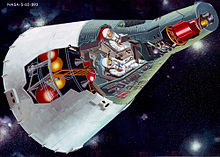
220px-Gemini_spacecraftToday I want to share with you a book you are unlikely to see. Few libraries have it and it commands unreasonable prices in used books stores. It’s writing style is not artistic. Yet it is a moving book, because of its subject, its author, and its timing. The book is Gemini, by Virgil “Gus” Grissom.

Every American knows something about Apollo. Most have at least heard of Mercury, but the Gemini program has been largely forgotten. That is reasonable enough; youth looks forward. At the time, however, Gemini saved America’s faith in the space program at a time when Soviet advances had made us look foolish and hopelessly outclassed.

Here is a brief summary for the terminally young: the Mercury program, consisting of two sub-orbital flights followed by four orbital flights, put America into space, but the one man capsules – not yet called spacecraft, for good reason – were largely occupied rather than flown. Gemini was a two man spacecraft which could change orbits, meet up with other orbiting objects, and was fully under control of its pilots.

If Mercury was a Volkswagen and Apollo was a Winnebago, Gemini was a sports car.

Mercury capsules had windows in the hatch, only placed there at astronaut insistance. Astronauts could look out, but not forward. Gemini’s viewports were moved to a front facing orientation, like the eyes of a predator. It’s pilots had to see where they were going, because they were actually flying their space craft.

For Apollo to do its job, NASA had to learn to rendezvous, dock, and perform EVAs (extra vehicular activities – space walks) and provide a cadre of astronauts who had proven their ability to do these things. That was the purpose of Gemini.

Grissom was the second American in space and the command pilot of the first manned Gemini mission. He provides a first hand look at the program through it’s brief five year span. The book was written just after the last Gemini flight.

Speaking of 1965, Grissom says: ”We had put ten men and five spacecraft into space and returned them safely, performed EVA, and achieved rendezvous. It was a pretty good record for a program that only two years before had appeared to be foundering.” Eventually sixteen astronauts flew on ten manned Gemini missions.

Grissom’s book is an excellent summary. His style charmingly represents a working astronaut who is not a writer. Nevertheless, the book is haunted. We know that, in the words of Grissom’s editor and friend Jacob Hay, “Within weeks after completing the first draft manuscript of this book, Lieutenant Colonel Virgil Ivan Grissom was dead, killed with his colleagues Lieutenant Colonel Edward M. White, and Lieutenant Commander Roger B. Chaffee, in a flash fire aboard the Apollo spacecraft they were scheduled to take aloft in its first manned flight on Feburary 21, 1967.”

The launchpad fire occurred on January 27, 1967, forty-nine years ago today. For details, see Jay Barbree’s Live from Cape Canaveral (2007), especially chapter nine, ”I’ve got a fire in the cockpit!” Also see post 27, That Was My Childhood.

The book Gemini would have been hard to read when it came out shortly after the fire. It is even harder to read today, given our understanding of the incompetence that led to the disaster. Knowing that the primary cause was flammable materials in an all oxygen atmosphere, it is hard to hear Gus admit that, “For their part, the medical people weren’t really entirely happy over out 100 per cent oxygen supply.”

Still – the book is joyful, and clearly written my a man who loved what he was doing. Gus says he was writing the book for his sons, and the sons and daughters of the other astronauts, and for other sons and daughters throughout America. He meant me (I was senior in high school when the book was published), and he meant you, whatever your age.

Grissom’s book Gemini is largely forgotten, but what he and his fellow astronauts did will not fade from our memories.

Voices in the Walls 5

Chapter One

On the evening of November sixth, 1860, I had studied Tacitus until almost midnight. I had just started preparing for bed when I heard the clatter of hooves in the yard. As I looked out the window of my tiny second story room and down upon the carriage house, I saw a negro on a lathered horse, leading a second horse with an empty saddle. He looked like James, my father’s groom, so I dressed quickly and went down.

At the time I was living with Mr. Harding, a thin, quiet man who tutored Latin, while I prepared for the Naval Academy at Anapolis. He had a windy old house off the main street of Baltimore where five students boarded. We all needed Latin, and he had agreed to drill it into us no matter how thick our skulls.

James was having an argument with Mr. Harding’s housekeeper when I came down the stairs. “Massa Matthew,” he said with some relief, “this woman won’t let me in. I told her I come for you.”

“It’s all right, Mrs. Brown,” I reassured her. “James belongs to my father.”

“Massa Williams sent me,” James said. “He wants you to pack your bags and come to Washington City right away, tomorrow.”

“Why?”

“Mr. Lincoln been elected.”

It was like walking down a staircase and finding a step missing. I couldn’t believe it. But here was James, rumpled and a little scared, coming in out of the night with a message from my father that I had to obey.

It would mean war.

*****

Yikes. Page one and I’m already in trouble.

These are the first few paragraphs of Voices in the Walls, as written. I’ve cleaned up any grammatical and spelling errors, but otherwise it is just as it came from the keyboard. And as it will stand, as well.

But it hurts my ears, grinds my gears, and makes my stomach ache. The problem is the word Massa.

For me, Massa is more offensive than nigger. You can call a man a nigger, but that doesn’t make him one. But if a man – or a character you are writing – says Massa, it is degrading. He is saying, “I am less than a man.” He is saying, “You’re the boss. Whatever you say goes, and I don’t have any say in the matter.”

But I can’t substitue a less offensive word for the one that would actually be used. I have a solemn compact with my readers to tell the truth.

Voices in the Walls 4

I don’t like dealing with the Civil War. I understand its pivotal role in American history, but I have no understanding of those who spend their career studying it or writing about so repulsive an event.

In Voices in the Wall I’m telling the story of one young man’s coming to terms with race, and with the way in which his understanding of the world has been wrong. If I were to set that during the Civil War, the blood and guts would get in the way. Voices is actually a hopeful story, and nothing hopeful came out of the Civil War. Slavery was ended, of course, but only at the cost of hardening the attitudes of the South and bringing about a hundred plus years of Jim Crow.

The novelist’s solution is to set Voices close to, but not during the Civil War. This was also a practical necessity, since the “voices” of the title are the voices of slaves escaping via the underground railway. So Voices is set in that brief period between Lincoln’s election and the attack on Ft. Sumter.

Unless you completely compartmentalize your visits to this website, you know by now that over in A Writing Life I am doing about six weeks on the subject of race. It is the American preoccupation, and my early rejection of racism set the tone for the rest of my life. I owe a lot to the people of the Civil Rights movement. I have said that repeatedly, and I will continue to do so.

Voices was my way of coming to terms with the racism of my childhood, just as A Fond Farewell to Dying was my way of coming to terms with religion. The fact that Voices stalled when it did, tells me I have some work left to do, on myself as well as on the novel.

I am sharing this for a number of reasons: 

  • Although it is not finished, even this fragment is worth reading for it’s own sake.
  • It will become a tutorial on planning a novel. I taught middle school for twenty-seven years, and I can’t shake the habit of teaching.
  • It will serve as a companion piece and counterbalance for the posts on race which are occurring over in A Writing Life.
  • It will serve as a forum on the moral responsibilities of writing, including getting your facts right and not shooting your mouth off about things you don’t understand.

more tomorrow as we begin Chapter one

BIG SPOILER ALERT.

In about a month, you will get to the end of the fragment. You will not get to read the rest of the novel until I finish it – and I have half a dozen novels in the queue waiting to be written – and I’m 68 years old . . .

YOU HAVE BEEN WARNED.

Voices in the Walls 3

Prolog

The smoke of battle had cleared long since, and even the smell of death had become faint in the hills around Gettysburg. Long rows of crosses, raw wood under fresh paint, regimented the fields where the Union dead lay buried. The clouds were low and gray, a sky for weeping over a land shocked numb. For a hundred years it had been a land of farms and families and ordinary life until Time and History had staggered in on horseback. Men armed with rifles and gatling guns had lifted Gettysburg forever from the ordinary, and had set its name on every lip.

I was a thousand miles west that day, also fighting. It is an irony of war that an event as important as the fall of Vicksburg should be overlooked because it happened the same day as the battle of Gettysburg.

Stepping down from the train, I knew that I had come home. Since Waterside had been destroyed, my Aunt Rachel’s old farmhouse, where I had lived in three short weeks in the autumn of 1860, was the only spot on Earth I could call my own. Here I had begun the journey that would lead me to manhood – a convoluted journey that had taken me into that strangest of countries, my own childhood seen through newly opened eyes.

It had begun with the sound of horses hooves in the night, and a summons from my father; and with that summons, all that had been was no more, and my life was changed forever in the blink of an eye.

It had begun with the sound of horses hooves in the night, and a summons from my father that had changed my life in the blinking of an eye.

I put that memory aside when I saw the two women waiting on the wagon seat.

Aunt Rachel stepped down and Sarah followed her. It was as if time had turned back upon itself. Tall, rawboned, and blonde; plainly dressed and smiling a welcome that still reminded me of my mother, Rachel Pike strode across the platform to greet me. She was small in the circle of my arms, but the change was not in her; it was all in me. Then Sarah stepped up, shy and smiling, and she had changed the most of all. She had been a child when I left and now she was a young woman, and a stranger again, as she had been throughout our childhood. My sister, whom I had never really known.

I put my arms around them both, remembering . . .

*****

This was not the original beginning of Voices. I first began with that “summons in the night” and moved ahead with straightforward chronology. It didn’t quite work for me.

I wanted Matt to mature through the novel, but that is always a bit tricky. You expect callowness at the beginning of a young adult novel, but adult readers generally want maturity from the very beginning.

Bracketing can solve that problem. It allows you to show the protagonist at a later stage of his development, musing about the events the reader is about to see. It works here, but I didn’t write this prolog until the novel was well advanced. I wouldn’t have know enough about events or tone when I began writing.

This bracket is particularly effective because it will pick up again after the last chapter as an epilog. This is one thing I knew from the beginning – that I was going to end the novel at the wind-down of the Civil War, with a cameo of Lincoln at Gettysburg.

You might have noticed that paragraphs four and five need to be collapsed. That is the kind of thing I would see but ignore, leaving the final tweaking until the whole novel is finished.     more tomorrow

Voices in the Walls 2

Yesterday I told you how Voices in the Walls began, then stalled. Part of the problem lies in what I would call my philosophy of fiction, if I were inclined toward formality and talked like a critic.

I don’t think first in terms of plot and action. Before I know the details of my story, I get to know my main character. I get to know his strengths and – more importantly – his weaknesses. I don’t care as much how he is going to get from A to B, as I care why he wants to get from A to B.

Of course, that isn’t the whole story or I would be writing sermons instead of novels. How a character achieves his goals, or fails to achieve them, is the backbone of fiction. I work very hard to make the plot move forward through scenes which are both exciting and believable. But that is the job of day to day writing. I don’t want to know the details of what is going to happen the my people too far in advance.

I usually know generally where my novel is going, and I know exactly why it is going there. I know in some detail the events of the next few chapters, but the rest of the story is as much a surprise to me as it is to my characters.

Did I mention that I rewrite a lot?

*****

My main character, Matt Williams is a personal surrogate. That’s a bit more than saying that he is based on my personal experiences. He exists to work out the same issues I had to work out when I was his age.

My personal story – on the surface anyway – would freeze me at the keyboard, unable to type because of sheer boredom. The issues that moved me, however, are important. I can off load them onto Matt, then dump him into the last days of peace just before the beginning of the Civil War, and now we’ll have a story people will read.

As I explained Monday over in A Writing Life, I was raised white in a white town, with no black people in sight. I had no opinions of my own on race, but the opinions around me were all negative. When the civil rights movement began, what I saw on television convinced me that everyone around me was wrong, and the black people were right.

That’s a story worth a novel, but not the kind of novel I write. I lived it, but I wouldn’t want to read it.

Dumping it onto Matt Williams’ head, however, changes everything.

*****

Enough chit chat for now. Tomorrow we’ll look at the prolog to Voices, and talk more later.     more tomorrow

Voices in the Walls 1

I began the post Serial on August 31, 2015 because I had a backlog of short material I wanted to share. That well has run dry, but I still have a stock of novels and fragments.

Today the next phase begins, with a long fragment worth reading on it’s own merit, which is also tied closely to the next six weeks of posts in A Writing Life and offers a look over my shoulder at a work-in-progress.

NOTE – I said fragment. You might find this to be an Edwin Drood kind of experience. Don’t say I didn’t warn you.

I know that Serial is supposed to be fiction, but you are going to have to put up with some reminiscence to set the stage for the weeks that follow.

How often do you get to see an author’s work in progress? Steinbeck gave a fascinating and unique vision in his Journal of a Novel which detailed his thoughts on the novel East of Eden, but I can’t think of another instance.

I know that I would not be able to keep up an ongoing self-commentary while I am working on a novel. While in progress, novels are all consuming. Afterward, the work itself remains but the act of writing fades. Right now, I have a hard time remembering what year I wrote which part of some of my novels.

Some writers begin by knowing where their story will end, then write a gripping hook, and proceed from A to Z in a logical manner. If you are a would-be writer out to build a career, I suggest that you emulate this logical pattern.

I don’t. I am slow planner, a fast writer, and an unending tweaker, tinkerer and re-writer.  If I could manage to fully outline a novel at the outset, I wouldn’t be able to write it. There would be no fun left in the project, just the literary equivalent of paint-by-numbers.

Which brings us to Voices in the Walls, a fragment I plan to use for several purposes over the next several weeks. I need to explain why I have such a fragment.

As I explained in post 55 (also called Voices in the Walls), a tour guide at the Washington Irving mansion in New York said that the house had been a station on the underground railroad, and that the family could sometimes hear noises through the walls while escaping slaves were hiding in the basement. I heard the story in 1986. Some time in the next year, as best I can remember, I roughly laid out the sequence of events that would make up the story and began writing. After a month or two, on page 45, I stalled. It should have been a temporary cessation, but events intervened.

This was a busy time in my life. After years of writing-induced poverty, I had begun teaching, had settled into that life, and was finally able to take long vacations during the summer. My wife and I spent the summer of 1986 touring the east coast by car where we heard the Washington Irving story, then we spent the summers of 1987 and 1988 in Europe. We were able to do that on a teacher’s salary because we had no kids and because we were cheap. We slept in a tent, ate bread and apples, and lived like teenagers (or homeless people) even though we were both forty.

This was the period during which I wrote my teaching novel Symphony in a Minor Key (post 35, and as a Christmas excerpt here in Serial). As soon as I had finished Symphony, I turned our experiences living close to the ground in Europe into Raven’s Run (post 24), a contemporary thriller. Since I was teaching full time and catching up on living, those two and a fragment novels took about a decade to complete.

By that time I was hungry to get back to science fiction and fantasy, so Voices continued to lie fallow.     more tomorrow

from Spoon River

hiatusSpoon River Anthology: Lucinda Matlock

Edgar Lee Masters is not overlooked, and his Spoon River is well known, but not well enough. It would be hard for it to have its due, since it is, for my taste anyway, one of the crowning achievements of American literature.

Masters lets his 200 plus characters speak their minds without authorial censorship. They are grave, gay, kind, angry, cynical, full of love, full of hatred, spewing venom and offering forgiveness. Masters never tries to arbitrate. He simply lets them tell their stories from the grave, but he does juxtapose. Tom Merritt tells of being killed by his wife’s lover, then his wife tells her story, then the killer tells his. Three stories on three pages, but with viewpoints so different they could be in different universes.

Choosing a poem to illustrate Spoon River could become an exercise in choosing what I believe, thus skewing the picture. Spoon River is huge in variety. Like the Bible, you can find arguments somewhere in it to bolster any position.

Instead, I’ll give you what seems to be Masters’ favorite, the story of his grandmother, given under another name.

Lucinda Matlock
from The Spoon River Anthology
Edgar Lee Masters – 1915

I went to the dances at Chandlerville,
And played snap-out at Winchester.
One time we changed partners,
Driving home in the moonlight of middle June,
And then I found Davis.
We were married and lived together for seventy years,
Enjoying, working, raising the twelve children,
Eight of whom we lost
Ere I had reached the age of sixty.
I spun, I wove, I kept the house, I nursed the sick,
I made the garden, and for holiday
Rambled over the fields where sang the larks,
And by Spoon River gathering many a shell,
And many a flower and medicinal weed —
Shouting to the wooded hills, singing to the green valleys.
At ninety-six I had lived enough, that is all,
And passed to a sweet repose.
What is this I hear of sorrow and weariness,
Anger, discontent and drooping hopes?
Degenerate sons and daughters,
Life is too strong for you —
It takes life to love Life.

Hiatus, sort of ends today. The fantasy short story Prince of Exile will begin here Monday.

71. New Year, New Century

DSCN4794The end of the year is my favorite season. Whether you are Christian or not, the story of the birth of the Christ child is also the birth of hope, the birth of joy, and the birth of innocence. We need all those things in our world. I have come to love this season more now than I did when I was a child.

Add a sense of the world’s renewal at the turning of the year that comes to us from the pagan roots of our Christmas festivals, and it all becomes pretty magical.

I have already spent time celebrating the year’s end as we Westerners see it. Now, on the last day of the year, I would like to turn toward the East, to a land beyond the land of the Magi.

*****

Rabindranath Tagore is a Bengali writer who won the Nobel prize for literature in 1913. He is largely unknown in America, and for good reason. His work is hard going – not because of difficuty of language (there are plenty of translations), but because it is the product of a spiritualism that is beyond the American norm. America loves it’s gurus; we all know that. But the ones who make it here tend to have a gift for sound bites, an easy pop-psych message, and a face the camera loves.

Tagore was glitz free.

When I was studying Anthropology, my subject area was South Asia. I ran across Tagore’s poem Sunset of the Century in a textbook, and was so taken by it that I quoted part of it when I wrote A Fond Farewell to Dying, and quoted it again as the sub-title of this website.

At sunset, December 31, 1899, Tagore looked at his land, crushed under a hundred and fifty years of British domination, and looked forward to the new century which he hoped would bring India its freedom.

Here is the excerpt I quoted in Fond Farewell:

Be not ashamed, my brothers, to stand before the proud and the powerful.
With your white robes of simpleness.
Let your crown be of humility, your freedom the freedom of the soul.
Build God’s throne daily on the ample bareness of your poverty.
And know that what is huge is not great and pride is not everlasting.

That last line is probably my favorite quotation of all time. The complete poem is in today’s Serial post.

Sunset of the Century

hiatusToday, in A Writing Life, I explain my connection to this poem. You can take a look there; I won’t repeat myself here.

Sunset of the Century
Rabindranath Tagore
(Written in the Bengali on the last day of 1899.)

 The last sun of the century sets amidst the blood-red clouds of the West and the whirlwind of hatred.
The naked passion of self-love of Nations, in its drunken delirium of greed, is dancing to the clash of steel and the howling verses of vengeance.
The hungry self of the Nation shall burst in a violence of fury from its own shameless feeding.
For it has made the world its food,
And licking it, crunching it, and swallowing it in big morsels,
It swells and swells
Till in the midst of its unholy feast descends the sudden heaven piercing its
heart of grossness.

 The crimson glow of light on the horizon is not the light of thy dawn of peace,my Motherland.
It is the glimmer of the funeral pyre burning to ashes the vast flesh, – the self-love of the Nation, – dead under its own excess.
Thy morning waits behind the patient dark of the East,
Meek and silent.

 Keep watch, India.
Bring your offerings of worship for that sacred sunrise.
Let the first hymn of its welcome sound in your voice, and sing,
‘Come, Peace, thou daughter of God’s own great suffering.
Come with thy treasure of contentment, the sword of fortitude,
And meekness crowning thy forehead.’
Be not ashamed, my brothers, to stand before the proud and the powerful
With your white robe of simpleness.
Let your crown be of humility, your freedom the freedom of the soul.
Build God’s throne daily upon the ample bareness of your poverty
And know that what is huge is not great and pride is not everlasting