Tag Archives: military

432. The Making of a Navyman

I am writing a steampunk novel called The Cost of Empire. Here is a quote:

        He was a patriot. Unit A should have seen that. Patriots are not to be trusted; they act by their own lights, and they don’t always follow orders.
        Too bad for Unit A. Too bad for Daniel.

Actually, I’ve said that before, a year and a half ago. Here is a repost:

====================

The military has no use for patriots, because patriots think for themselves. In combat, a soldier who shouts, “We must not do this,” is likely to get himself and his teammates killed. He has to go on, following orders.

So how do we turn patriots into yes-men? Boot camp. That’s what it’s there for.

Boot camp is not seen as something important, or morally debilitating. And, I suppose, compared the things that happen later in the field, it isn’t that important. But . . . without boot camp to turn patriots into soldiers, those later events could never happen.

This isn’t about me. I went through boot camp in neutral mode, observing, remembering, and trying not to feel. I wan’t always successful, but I was successful enough to survive intact. I was changed, of course, but by my own experiences, not by pre-programmed manipulations.

This also isn’t about the eighteen year old children who made up most of the recruits, who were eager to follow the path their elders had set, and ready to go over and kick some commie ass. (It was 1971) This is about one young man, and those he represents. He came into boot camp a patriot, ready to serve his country, full of love and compassion, but ready to do his duty. They broke him. I can still see him standing in the barracks before lights out, talking to his friends, saying, “This isn’t right. I joined up to fight for my country. Why are they treating us like this?” His friends laughed at him and told him that this was nothing, it was just getting him ready for what was to come.

It wasn’t nothing, but it was getting ready for his life to come. That was the point.

I never talked to him. There was nothing I could say. He was learning in front of my eyes what I had learned years before, at other hands, under other circumstances. But I never forgot him.

Boot camp is what in Anthropology we call a liminal experience, one that tears down an old identity in order to build a new one. The folks at boot camp are really good at this, even in mild boot camps like the one I experienced at the San Diego Naval Training Center. We could see the real thing across the fence at the Marine boot camp, and we thanked God every day that we weren’t Marines. While I was there, a Marine recruit who could no longer take the daily abuse, ran off and stowed away on a jet liner at the civilian airport just over the fence. Hours later the jet landed at his home town on the east coast and he fell out of the wheel well, frozen, asphyxiated, and dead. The Marines said good riddance. We worms (as Navy recruits are called) laughed. Learning to laugh at the death of others is part of the boot camp experience.

It was all choreographed indignation, play-acting inflicted onto a captive audience. They said that if we didn’t keep our barracks clean enough or our socks rolled tightly enough, the Trouble Shooters would come.

“You worms have been given socks to roll! That’s all we trust you with now! How can we trust you with nuclear bombs once you’re on an aircraft carrier if you can’t roll socks now!”  Every word was delivered at a shout.

Of course, the Trouble Shooters came. They always do. They came in the night, screaming in manufactured rage and tearing the barracks apart while we stood at attention in our shorts at the foot of each bed.

Near-naked, helpless, frightened into immobility, knowing that the only way to survive was to  let the insanity happen. Civilian identities dying; new, military identities growing.

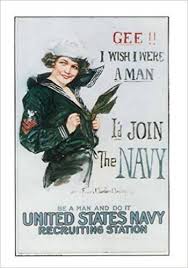
The making of a Navyman. You could put it on a poster.

431. The Other Veterans

This is an update of a post I wrote for Veteran’s Day 2015. Not many were reading yet, so I could simply repost, but a lot of things have changed since then. The new writing is indented.

I am an American; I vote. During my nearly thirty year career as a school teacher, I always went to the polls early and wore my ”I have voted, have you?” sticker throughout the day. Children would ask me, “Who did you vote for?” I never told them. Sometimes they would ask me, “Are you a Democrat or a Republican?” I never told them.

Teachers have a responsibility to be involved and have political opinions, because they are citizens. But they also have a responsibility to avoid shoving those opinions down the throats of their captive audience.

You are not a captive audience. You get both barrels.

I am one of the other veterans, the ones who went, did their job, and moved on. I don’t march in parades. I love America, but I still have a love/hate relationship with the flag. It stands for aspirations toward universal freedom, and when I think of it like that, I love it. But it also stands for the darkest of horrors.

For twenty-seven years, I had to endure the flag salute five days a week in my classroom. Understand, there were days when I said it with my whole heart. There were also days when I could only remember the dead on both sides in that useless war in Viet Nam; on those days, I said the words through clenched teeth.

But I said them. I could have refused. I might have been fired, or I might have won my case on first amendment grounds. Either way, the children I was there to teach would have had their education disrupted. It was my problem, not theirs, so I gritted my teeth and said the words.

Even the words “under God”, notwithstanding that I stopped believing in God when I was fifteen. But every time I said them, I thought of the children who have to pray five times a day facing Mecca.

NFL players, I get it. I support your right to protest. I agree that the situation you are protesting is unacceptable. Nevertheless, I think you are making a mistake. The people who see you kneeling can’t get past the flag. You are alienating the people you need to convince.

My draft number was 41.

Heinlein said slavery is not made more appealing by calling it Selective Service. I agree, mostly; however conscription levels the field. Without conscription, the white and the rich would not have protested so loudly as they (we) did, and the Viet Nam war would have gone on much longer.

When I got to boot camp, I was surrounded by whites, blacks and variations. There were only two who stood out — me, and one other guy. I was 24, mature, married, and with enough life experience to resist brainwashing. The others were all malleable, except for one recruit. I’ll tell you his story on Monday.

During my last year in college I signed up for a term in the Peace Corps. Then Nixon did away with the Peace Corps deferment. The Marines were drafting, so I joined the Navy.

I wasn’t trying to avoid death; I was young enough to foolishly assume I wouldn’t get killed. I just didn’t want to shoot anyone who was defending his homeland.

Four years later I was a civilian again, the Viet Nam war was over, and the general opinion had shifted. Most Americans had come to believe that the war was a mistake.

Thirty years later Bush Two sent troops in to find weapons of mass destruction that never existed, as if we had learned nothing.

I am a veteran; I believe in defending my country against real enemies. But I’m also a retired teacher. When I see starry eyed children who can’t wait for their chance to plunge into battle –- well, pardon my lack of enthusiasm.

There will be three more veterans’ posts next week.

430. The Rocket’s Red Glare

from Congreve’s original work.

“Oh, say can you see . . .”

No, this is not going to be about the NFL. It’s going to be about the rockets which figure into the anthem, into history, and into the steampunk novel The Cost of Empire, which I am now writing.

Rockets got their start in China, where they were used as fireworks and as military weapons. Just keep that in the back of your mind. We are going to start in the present and move backward in time, but not all the way to China.

When the average American sings the Star Spangled Banner — or mouths it, since it is a hard song to sing — it is unlikely that the image in his mind looks anything like the rockets which actually burst in air over Fort McHenry. My generation has V-2 rockets in our DNA, largely because early SF films used actual films of V-2 rockets as stand-ins before special effects were perfected. A later generation has Saturn-V rockets imprinted on their brain. To both, rockets are pointy ended cylinders with the flames coming out of the bottom.

Not so in 1814. The rockets that rained down on Fort McHenry looked more like fireworks rockets. They were called Congreves and a page of drawings of them is given at the top of the post. Some were explosive tipped. Some were parachute flares, which “gave proof through the night that our flag was still there.” All were guided, more or less, by a long stick that acted like a rudder, similar in function to the fins on a V-2.

They were nothing like accurate. That was the way of things before modern times. If you recall the battle of Agincourt in the movie version of Henry V, the English longbow men drew back together and fired hundreds of arrows simultaneously at a high trajectory, which rained down en masse on the French. The battle of Hastings was lost when King Harold Godwinson looked up at a bad moment and caught such an incoming arrow in the eye. Muskets in that era were also nothing like accurate, so lines of musket men firing together in the same direction managed to hit somebody, but probably not the targets they were aiming at.

William Congreve (not the playwrite and poet) gets credit and naming rights for the Congreve rocket, and he did make improvements, but his work was based on rockets captured in India.  Which brings me to why I’m writing this post. Here is a quote from The Cost of Empire. An Englishman who has gone native in India is speaking:

“About a hundred years ago this whole region was called Mysore and Hyder Ali was in charge. He fought the British and all the Indian princes around that kept shifting from the British side to his and back again. After he was killed, his son Tipu Sultan took over and formed an alliance with the French.

“It’s an old story. The same pattern happened all over India, as we British took over one region at a time. But this story has a kicker. Rockets.

“Rockets came from China. Everybody knows that, but they were widely used in India as well. Hyder Ali and Tipu Sultan used them extensively; some of their rocket brigades had over a thousand men. Rockets were made that exploded, that set fires, and even that had sword blades attached so when they came down spinning, they made a bloody mess of British ground troops.

“When the Mysore wars were over, the winners sent hundreds of captured rockets back to England. Congreve studied them and replicated them. The Congreve rockets we used all throughout the Napoleonic wars were just English versions of what Hyder Ali had used against us.”

The old guy is telling this story because a group calling themselves the Sons of Hyder Ali have built an arsenal full of rockets. They have bad feelings toward the British and a plan concerning the flotilla of dirigibles our hero is serving on.

I would tell you more, but that would be a spoiler.

414. Day Jobs

I  have had a lot of jobs in my life. The shortest lasted one day. I took a job as a rough carpenter, and spent a day putting blocking between rafters. I had a rough time of it. I had just spent four years indoors working in a naval hospital followed by a year in grad school, and I was out of shape by the standards of the farm boy I had once been. It was a hot summer day in California and I probably wasn’t worth my wages that day, but I would have gotten better. I had the skills for the job, but it was a physical challenge and I was up for it. Unfortunately, at the end of the day, the boss said that tomorrow I was to go to a site in Sonora to work. That was a town fifty miles away, not the state in Mexico. I realized that if I had to drive my dying car that far every day to get to work, it would cost me more in gasoline and repairs than I would make at minimum wage.

If you end the day with less money than you started, that isn’t a day job. That’s a mistake. However, when you write your first about the author for your first book or for your website, having worked at a lot of day jobs is an asset. It makes you look worldly and interesting.

Farm worker. That’s a job I didn’t get paid for at all. I started at age eleven and continued until I escaped to college.

Trim carpenter. That sounds skilled, and I am that skilled now. I wasn’t when I did the job, one summer between college terms. I was hired because the wages were so low that people who had the skills wouldn’t apply. I took the job because I was newly married and needed money to carry me through my last year of college.

Horticultural agent, peace corps. That’s a job I applied for, was accepted to, and really wanted, until Nixon did away with the deferment and I had to face my low draft number. I can’t count that one, since I never made it to India, to my eternal disappointment.

Cabinet maker. Another minimum wage job in a local shop to keep body and soul together while waiting for the Navy.

Surgical technician. Yes, really. I spent my naval career in the dental service of a naval hospital, stateside during the Viet Nam war, and happy not to be shot at. Since I was the only enlisted man with a college degree (the recruiter said, “College man? We’ll make you an officer.” Riiiiight!), I became head surgical tech. That meant standing across from the oral surgeon during about 2000 extractions of wisdom teeth.

Surgical nurse. I never count that one, because no one would believe me. The person who stands next to the doctor and hands him his instruments during an operation in the main OR is written down on the report as surgical nurse, whether they are a nurse or just have OJT. I did that maybe two hundred times while I was in the navy, usually on broken jaws, but occasionally on some pretty sophisticated maxillofacial reconstructions. Fascinating, but it didn’t make me a real nurse.

Writer. Nope, not a day job. A lifetime job, but you don’t make minimum wage.

County Red Cross Director. I earned that job. I had become a full time unpublished writer when I started as a Red Cross volunteer. I became a first aid and CPR instructor and taught hundreds of students, then became a member of the board of directors, and finally went full time for fifteen months. There weren’t a lot of applicants, since the job didn’t pay much above minimum wage. Non-profits are like that; they have to get money from donors, and it goes mostly to providing services, not cushy salaries — and that’s as it should be.

I was proud to work for the Red Cross and considered making it a career, but the bureaucracy is brutal. Besides, my first novel came out from Ballantine and I thought I was going to make a living at writing.

Stop laughing. It seemed possible in 1978. more on Wednesday

391. Pilgrim Son (3)

Continuing Pilgrim Son from yesterday —

Masters says:

I began preparation of the first novel. (ultimately titled The Nightrunners of Bengal)  The subject must be the most powerful to my hand: the Indian Mutiny. I spent two days wondering whether I could afford to start with another, for the Mutiny was so great a subject that I really ought not to tackle it until I was better equipped to do so. But a man being charged by a tiger is wise to use his biggest gun the first time, there may not be a second. So the Mutiny it was.

. . . What was the natural second level (story behind the story) of the Mutiny? That stuck out a mile: the fact that good men on both sides were turned into beasts . . .

The next problem was research: now or later? I knew the principal events of the Mutiny, and more important, I knew roughly why it had come about, and what most British and Indians felt about it at the time. If I did a lot of research, I would dredge up more detailed information. I would find out what young ladies wore at formal balls in 1857, what was the correct way to address a deposed Rajah, the names of Havelock’s aides. But it was not certain that I would want to use any of that information, so the collection of it might be a waste of time. I also knew, from correcting Staff College papers, that once a man has done research, he has a strong tendency to make his reader swallow the fruits of it. I could see the danger. After all, it would seem a criminal waste, once I had with so much effort dug up the fact that Tippoo Sahib used to give his pet pug dog champagne for supper, not to use it. To hell with the architectural line and ornament plan of the book — stick it in.

I decided to leave research to the end. If my broad plan was not right, I had no business writing the novel in the first place. After I had done the first or second draft, I would find out whether the greased cartridges were introduced on April 1 or March 1, and I would make out a calendar for the year 1857 so that my Sundays fell on the right dates . . . important because on Sundays the British troops went to church, leaving their arms behind, until they learned better.

Research costs time, which is money, and sometimes travel, which is also money. I wrote Spirit Deer first because I could dive in with only a minimum of research. I also wrote science fiction and fantasy first, not only because they are my first love, but because I simply could not afford to write anything else. (See 208. The Cost of Research)

#                       #                       #

Masters says that critics of a certain type, in the early fifties, believed that writers should take sides in the political problems of the day . . .

I did not. I had come to believe that the writer’s duty, as a writer, is to offer some effectively worded insight into the human condition. If anything else, a particular situation, for example, is at the center of his work — that is, if the situation and not the humans are the essentials of it — it will not last, because all situations change. It is for this reason that Of Mice and Men is a greater work than The Grapes of Wrath. The Depression has long gone; George and Lennie live forever.

I don’t fully agree (not that Masters expects me to). George and Lennie types and Depression type economic disruptions both, sadly, live forever. The Joads were stopped at the California border and undocumenteds are stopped at the Southern U. S. border. There is no essential difference.

It is certainly true that novelists who treat events through the actions of people with whom we can have sympathy, will get their point across better than propagandists. Uncle Tom’s Cabin started the Civil War by making northerners care about particular, fictional slaves. I have always had strong feelings about overpopulation, but I could not write with any effect until I wrapped the problem into the story of the colonization of Cyan, by people we could care about.

If these three posts have seemed a bit disjointed, remember that my intention has been to give bits and pieces of Masters’ advice to an audience that otherwise might never see them. The entire books is worth reading, if you have the time and patience.

390. Pilgrim Son (2)

Continuing Pilgrim Son from yesterday —

Masters dictated an outline of Brutal . . . and sent that with the first two chapters. Dial Press, who had asked for Brutal . . .  in the first place, was impressed, but wanted another reading. Two weeks later, they passed on the book.

Masters was not like you and me; he had friends in high places, so he could find out what went wrong. It turned out that a famous publisher had advised them not to publish anything by an ex-British Indian officer, and they caved to pressure.

Nothing personal, but your book does not meet our current needs. Does that sound familiar?

Masters returned to what he had written, and found it different than any book of its type and better than most. He decided to finish it and send it on its rounds to publishers on spec.

He finished it. He sent it out. It came back. He sent it out again —

As is the manner of things in publishing, rejections began to pile up. A friend of Masters’ gave this advice: (page 127)

A writer’s time is always valuable. If you don’t write anything, I can’t sell anything.  While Brutal is going around the publishers, you should be starting something else. . . .  Why don’t you write a novel? You could, you know.

Master’s says, “The writing of Brutal . . . had given me confidence that the mere mass of works in a full-length book was nothing to be afraid of.”

I offer you that quote here for the express purpose of adding, “AMEN!” Spirit Deer did that for me.

As usual, Masters approached the question with deep thought. Write a novel, or become a novelist? It isn’t exactly the same thing. Masters was looking of interesting work to fill the rest of his life, and provide security for his family. Writing one novel would not further that end. Becoming a novelist — producing novel after novel — would.

He would become a novelist, but what kind. He wrestles with this for many pages, starting on 128, before he decides what we already know. He will write historical novels about India, from the viewpoint of Brits who are half inside and half outside the culture of India. By page 138, he is ready to say:

I listed thirty-five areas of conflict about which I felt I could write novels. They covered the whole period from 1600 to 1947. Taken as a whole, they would present a large canvas of the British period in India. The British would be in the foreground, as they had been in actuality, yet I thought the canvas would show how they were controlled by their environment — India — even while they were ostensibley directing it.

(to provide unity to the project) . . . I thought that the only course left open to me was to put into the foreground of each book some member of a single continuing family.

And that is exactly what he did, through more than twenty novels.

Through all this, and other chapters besides, he interrupts his memoir with short paragraphs like:

John Day rejected Brutal. They said they already had a writer on Oriental subjects. . . .  and  . . . Little, Brown rejected Brutal. It was very well written and eminently readable, they said, but the couldn’t think what category to publish it in, as it contained elements of travel, belles-lettres, adventure, and military history, as well as autobiography.

I also remember those days of frustration. Now rejection slips are kind, vague, and always contain something like, “not for us, but try elsewhere.”  They do not cause hurt feelings, but they also don’t give any useful feedback.

Back in the day, I was once turned down on an outline that my agent was excited about, because the novel, on the subject of Shah Jehan’s reign, was “too Indian”. Imagine that. A novel about historical India that was too Indian. Another novel was highly praised by a publisher, who ended by saying, “But I can’t take it because men’s adventure books are no longer selling.”

Maybe its better when we don’t know why.  Pilgrim Son review continues tomorrow.

389. Pilgrim Son (1)

Pilgrim Son by John Masters is the third in a trio of memoirs. The first two are about his life in the British Indian army, the last is about becoming a writer.

As I said earlier, I first read Pilgrim Son in the late 70s, about the time I was writing Spirit Deer. I was impressed by Masters professionalism. I expected professionalism from the publishing industry —  the phrase publishing industry suggests that it is run in a businesslike manner. Within a few years, I decided that was a myth.

I recently went back to Pilgrim Son and reread it, looking for the point at which he rails against the industry for not recognizing that his first novel would be successful. I spent many hours and did not find the quotation, so I will tell you that he said something like this: If Nightrunners was good enough to be chosen for book clubs, then why did every editor who read it fail to know this? Quote, more or less.

Pilgrim Son is 383 dense pages, much of which is dedicated to Masters observations on becoming an American in the late 40s and early 50s, while living in a colony of bohemian artists and writers. That world no longer exists.

I can’t recommend the book to everyone. Nevertheless, if you are a serious would-be or beginning writer, you could do worse. For you, I will drop approximate page numbers from time to time in order to help you find the parts of the book which will be most useful to you.

The book Masters was writing at the beginning of Pilgrim Son was Bugles and a Tiger; its original title was Brutal and Licentious, part of a then well known quotation. I will call it Bugles  . . . or Brutal . . . as he does, according to which part of Pilgrim Son I am referring to at the moment. Sorry if that confuses you.

#                             #                            #

Around the beginning of 1948, John Masters had settled down to write. This included discussing his prospects with several editors of his acquaintance, and receiving their advice.

Beginning writers will now be reaching for their favorite means of suicide or homicide at the notion that Masters got to talk to and receive advice from editors before he had written anything. It does help to have friends in high places — or so I am given to understand. I never had any myself.

Those editors suggested that he begin with a memoir of his life in India, somewhat following the pattern of Lives of a Bengal Lancer. (page 106, but also check out pp. 104-5) Masters disliked that book, but took what he could from it in planning his own. Planning was second nature to him, learned as a British Army officer, so he soon knew what every chapter of Brutal . . . was going to contain. Then it was time to write.

Masters says: I pulled myself together. The first chapter was only going to be twenty-five pages and I could manage that. The the next . . . and the next . . . One chapter at a time, I could do it. The book as a whole and each chapter had been shaped by the master plan. Now I must concentrate on each page, each line.     page 112

Masters finished the first draft and read it through. He didn’t like it. Lots of beginning writers have reached that stage. Masters had learned that an excellent plan does not always result in excellent execution.

It’s what he did next that makes him interesting. In his own words, somewhat shortened:

A more experienced author might have been able to avoid these errors, but for me there was no way but to replan in the light of what was there on paper. …. Find out how it happened, first, and then remedy it.

I divided several sheets of paper into lines and columns and went carefully through the MS, grading each sequence in three ways: by length, by type, and by merit of its type. It soon developed that almost every sequence could be classified as Action, Explanation, Color, Characterization or Thought. When the job was done, and it took several day’s hard work, my new charts revealed a very lumpy texture in the book. Page followed page of action, with no explanation and little color. Color was not used as a background to action or as a perimeter to characterization, but haphazardly, as the pictures had come to me. Although I could grade some sequences A, too many were B’s and C’s: not good enough for a professional.

 . . . Using my charts to correct the early faults, I rewrote the first two chapters.  . . . .  

I’ve never been quite that organized myself, but I have gutted and rebuilt many hundreds  of pages. Pilgrim Son review continues tomorrow.

361. Take This Test

Berlin WallMexican Wall

TAKE THIS TEST TO SEE IF YOU ARE FIT TO BE AN AMERICAN

Have you ever knowingly committed any crime for which you have not been arrested? [Never mind the fifth amendment. It does not apply here.
Have you ever been arrested? [Whether convicted or acquitted.]
Have you ever received public assistance?
Are you likely to receive public assistance in the future? [As if you could know that.]
Have you ever gambled illegally? [Yes, the Super Bowl counts.]
Have you ever encouraged an act of illegal immigration? [Yes, that includes hiring the maid who cleans you toilet, cooks your meals, and babysits your kids.]
Did you smoke pot before it was legal?
Have you ever been a member of the Communist Party? [Yes, Joe McCarthy is dead, and yes, the question can still be asked, and no, you can’t refuse to answer.]
Did you, in support of the Nazi party, aide in the persecution of any person because of race, religion, national origin, or political opinion. [If such aid was to the KKK, answer no.]
Have you ever assisted any organization engaged in kidnapping, political assassination, or any other form of terrorist activity. [If that organization was the CIA, answer no.]
Have you ever left the U.S. to avoid the draft?
Have you ever served in the armed forces?
Have you ever been a police officer?
Have you ever been a prison guard?
Have you ever been been a Boy Scout?

If you answered yes to any question above, you may not be eligible to enter the United States.

If you could not read any question above, you may not be eligible to enter the United States.

If you could not afford a lawyer to help you answer any question above, you may not be eligible to enter the United States.

If you were too repulsed to finish the test, you may not be eligible to enter the United States.

Finally: List your present and past membership in or affiliation with every organization, association, fund, foundation, party, club, society, or similar group in the United States or in other places since your 16th birthday. Include any military service in this part. If none, write “None.” Include the name of each organization, location, nature, and dates of membership. If additional space is needed, attach a separate sheet of paper. If you are unable to remember and list these affiliations, you may not be eligible to enter the United States.

—————-

All of these questions were drawn, with snide but accurate rewording, from Form I-485, Application to Register Permanent Residence. If you think this is a joke, click here to read the actual form.

Aren’t you glad you are an American citizen? If you weren’t, we probably wouldn’t let you in.

358. X-37b

This picks up where 343. Black Shuttles leaves off.

The Air Force has wanted space for a long time, since it’s beginning actually. NASA took its MISS program and turned it into Mercury. The Air Force wanted the Dyna-soar, but Gemini beat them out in a fight for appropriations. The Air Force coopted Gemini for a manned reconnaissance station, but unmanned satellites did the job sooner and cheaper. There were rumors that Skylab was largely an Air Force observation post disguised as a science station. Possibly true, but it seems doubtful. Finally they got the Space Shuttle, at least part time, but civilian cautions after the Challenger disaster threw off the Air Force schedule and they fell back on their own resources.

Luke Skywalker got to fly a spaceplane and blow up the Deathstar. The Air Force never did. Okay, maybe the Aurora will change that, if it exists.

(What the heck is Aurora? It is either a follow on to the SR-71 or a myth. Conspiracy theorists believe in it, and the rest of us aviation and space crazies want to. I’ll do a post on it some day.)

What the Air Force ended up with was a highly capable unmanned vehicle called the X-37b. So far it has only flown four missions, but they are all long duration. The latest ended early this month, May 7th, when the craft landed at the Kennedy Space Center in Florida after a mission of 718 days.

What can I tell you about the mission? That is a lot like the Aurora. Except for the fact that X-37b does exist, and the Aurora may not (probably doesn’t) exist, everything else is classified.

I gave you a link in Black Shuttles for more information, and warned you that it would be frustrating because of the secrecy involved. I have no such link for X-37b. Google it and chase down the conspiracy sites if you want entertainment. If you want facts, join DARPA. Then maybe you can find out which building houses the facts, but they still won’t tell you about them.

I can tell you a bit about the craft itself. It looks like a miniature space shuttle, about 29 feet long, about 10 feet tall, with a 15 foot wingspan. It is launched inside a streamlined shroud on top of an Atlas 5 missile. It has a payload bay about equivalent to a medium pickup bed.

The program started in 1999 and is closely linked to the X-40, which ultimately became a drop-model test bed for data needed to build the X-37b. NASA transferred the project to the military in 2004 and it disappeared into the black world.

X-37b is a scaled up version of the X-40, so early versions had to undergo additional drop tests, this time using a Scaled Composites White Knight (mother ship for the SpaceShipOne program).

To date, there have been four missions, all launched from Cape Canaveral. The first three landed at Vandenberg. The fourth mission landed on the old Space Shuttle runway at Kennedy Space Center.

The future of manned space fighters does not look promising. Most of the new X craft (X-40 through X-57, so far) are unpiloted, but that is simply a cost issue. However, the X-45/46 and X-47 are pilot programs (yes, pun intended) for unpiloted operational fighter jets.

Would-be Luke Skywalkers need not apply. Sorry.

357. Mike Mars and Project Quicksilver

If you Google Mike Mars, you’ll get Mick Mars, lead guitarist for Mötley Crüe. In fact, if that is how you got here, sorry about that. The only connection, besides spelling similarity, is that Mick Mars is of the right age to have read Mike Mars when he was a kid.

Our Mike Mars is a fictional astronaut from a fictional project called Quicksilver. The series was written by Donald A. Wollheim.

The eight Mike Mars books were unique in science fiction. They were so tied to the moment that they became outmoded on publication. They were both strikingly accurate and completely false. They were less of an alternative reality than a conspiracy theory version of the early 60s.

Here’s the setup. Project Mercury has selected seven astronauts, who will conquer space for America – ostensibly. They are all military test pilots of great experience. At the same time, a second, secret space program is being formed to duplicate their work, using hot young (read: expendable) pilots just out of fighter training, but no one will know of their flights. And they will do their thing just a hair sooner than the old guys. The project is called Quicksilver.

I look at that paragraph today with awe at how dumb the notion was. When I found Mike Mars, Astronaut on the shelf at the hobby store where I bought my books, I flipped at how cool it all was. It was 1961; I was 13 years old.

Thirteen is the golden age of science fiction. (I didn’t make that up; it’s a well known cliché.) Thirteen is also the age when you like things you wouldn’t even look at a few years later.

Mike Mars is the nickname of Michael Alfred Robert Samson, one of the young pilots chosen to participate in Project Quicksilver. The first novel takes him through selection and early training until he is chosen as one of the young astronauts. It also includes a murderous saboteur and makes the reader aware that one of the seven, Rod Harger, is a traitor. After all, this is a book for boys, designed to sit on the shelf beside the Hardy Boys and Tom Swift, Jr.. Just being an astronaut isn’t exciting enough to give a climax every fifth page.

In Mike Mars Flies the X-15, the seven Quicksilver astronauts get glide flights in the X-15, and one of them will get to make a powered flight into space. (Guess who gets the powered flight.) We become more aware that six of the young astronauts are patriotic team players, but Rod Harger is in it for the power and the fame, and his father has thugs at the ready to tip the scales his way. This sets the pattern for the books — about half an accurate portrayal of training and flights and about half Hardy Boys style chasing crooks through empty hangers.

In Mike Mars at Cape Canaveral, Mike rides a Redstone rocket in a sub-orbital flight, after spending half the book fighting off more saboteurs.

In 1961 Yuri Gagarin became the first man in orbit, followed shortly by John Glenn. The Russian’s had won — except that those of us reading the Mike Mars series knew that Mike beat both of them in Mike Mars in Orbit. But, of course, he could never tell.

(True believers like me knew that Rick Brant had beaten all of them into space, back in 1958 aboard the Pegasus in The Scarlet Lake Mystery, but that was an accident and, of course, he could never tell either.)

In Mike Mars Flies the Dyna-Soar (see 342. Dyna-soar) Wollheim finally ran out of reality. The first four books had involved real hardware, but the real-life Dyna-soar was never finished. Space kids all over America forgave him however, as we flew with Mike to rescue a fellow astronaut in the coolest spacecraft that was never built.

There were three additional books, Mike Mars, South Pole Spaceman, Mike Mars and the Mystery Satellite, and Mike Mars Around the Moon. They never came to my hobby shop bookshelf, so I never saw them. It would be pointless to seek them out now. Within five years, alternative versions of early space travel had gone from unthinkable to not worth thinking about. NASA and the Russians made the conquest of space real, and I had grown beyond kiddy books.

But God the ride was fun while it lasted.

_____________________

Meanwhile, back in the real world, the secret military space drone, X-37b, recently landed at Kennedy Space Center after it’s longest flight to date. We will see how the Air Force is still trying for a Mike Mars reality in tomorrow’s post.