Tag Archives: military

586. Slogging Toward Space

One of the things I have to offer is a viewpoint that reaches back half way through the twentieth century. That can be a problem, actually. I don’t want to talk about the good old days. Fortunately, I never thought the good old days were all that good. They were, however, both exciting and hard.

It has become almost cliché to point out how little computing power the Apollo 11 computer had, but there are a thousand other instruments which we take for granted now, which were also not available during the early space program. I used a few of them myself, early on.

Some of these instruments became fossilized into early science fiction, as in Slip-stick Libby, one of Heinlein’s regular characters. Slip-stick was a slang term for a slide rule, an instrument of sliding scales which was used in computation. It was only good for estimating to about three significant figures. I learned to use one in high school in 1966. Early Texas Instrument portable calculators made them obsolete a few years later, although you will still see them in use at Mission Control when things began to go bad in the movie Apollo 13.

Another nearly obsolete instrument from the Apollo era is the theodolite. I learned to use one in the same class. We took it out to the back lot of the school for some practical examples of the uses of trigonometry. We didn’t call it a theodolite, however. We called it a transit, which is somewhat less accurate. Real surveyors called it a gun.

A transit measures elevations and angles. You level the instrument on its tripod and align it to true north, then you look through a telescopic sight, with crosshairs, at a distant target, usually a rod with red and white inch markings.

(We’re talking sixties here — everything in America was in inches, feet, and miles.)

This instrument was used in surveying everything from house foundations to radar installations before lasers replaced them. It gave you direction. It didn’t give you distance. For that you walked, dragging a measuring device called a chain.

The dictionary will tell you that a chain is a unit of length equal to 66 feet, subdivided into 100 links. It may not tell you that a chain (of length) was represented by a heavy, physical, steel chain that the rod man dragged behind him — for thousands of miles during a career.

Today, laser radar does it all.

An alidade or plane table worked like a transit except that it was attached to a narrow steel plate which moved freely on a plywood table. It was used for mapping. You would slide the alidade around on the table, over a sheet of paper, take your sightings, and use the edge of its base as a ruler. It allowed you to  draw a map as you went. I used one of them two years after high school at an archaeological site in Bay City, Michigan.

To fully understand what a tremendous undertaking the space program was, you should remember that a line of radio/radar stations was built all around the world to track spacecraft in orbit. At the same time, the same Russian missiles which scared American into the space race had to be watched for. A line of radar installations (the DEW — distant early warning — line) was built across Canada for that purpose.

The building of these two sets of installations was an immense undertaking. Even before the first foundation was laid, the positioning of these instruments had to be determined to the highest possible tolerances. This was done by survey engineers working with transits and doing their calculations by hand, with rod men dragging chains. A slide rule might provide estimates, but after that it was paper, pencil, and mathematical tables — which had themselves been calculated by hand.

The word calculator first meant a person who calculated such tables. By hand.

These engineers didn’t all come from Harvard, or other prestige colleges. There were thousands of them, possibly tens of thousands, and they came from every college in America. Bear that in mind as we contemplate the present college entry cheating scandals.

Speaking of which — prestige colleges my &#^$%!  Math is math, whether you learn it at USC or Palomar Junior College.

===============

I want to introduce you to a survey engineer you have never heard of. He is a distant in-law, a fine man I only met once. I ran across a decades old newspaper clipping of his obituary the other day, and it triggered this post.

I’m appending a copy of that clipping, minus family matters, to give you an idea of how the space race, and the missile defense of America, looked from the mud below. The gentleman’s name was William Mussetter.

===============

Mr. Mussetter graduated from Willmington College in 1917 and also attended Haverford College in Haverford, Pa. He retired after working 40 years in government service as an astronomical geodetic engineer. He served with the US Coast and Geodetic Survey, Army Map Services, InterAmerican Geodetic Survey United States Department of Foreign Services where he worked in many different countries.

Mr. Mussetter was a veteran of World War I, serving as a second lieutenant. In World War II he served as a captain and taught artillery.

At the end of the World War II, Mussetter received a call from Washington, D. C. He was assigned to head a survey group to be based in Panama and to work in south America, principally on the west coast of Chile, Peru, Ecuador, Columbia to Venezuela. This project lasted four years.

The Mussetters came home to Wilmington and he worked with the Ohio State University doing contract research for the U.S. Air Force. There was a need to connect the continents of the world, locating them with respect to each other, then to lay out guided missile courses from Cape Canaveral to the Bahamas. [This means during the early testing of IRBMs and ICBMs, before they began to be used to launch space vehicles. The same tracks were used through Mercury, Gemini, and Apollo. See 578. That Odd Spiral.]

In 1953, he transferred to the U.S. Army Corps of Engineers to define the Earth’s parameters, its diameters, flatness at the Poles and other data. [We are talking about building the DEW line here.]

He worked with a survey team measuring the arc of the Meridian at 30 degrees East Longitude from the Mediterranean Sea at Egypt to South Africa, down through Egypt, the Sudan, Uganda, Belgian Congo, Tanganyika, and into North Rhodesia; 4800 miles. [Many of these names no longer exist.] He also did some survey work for the Aswan Dam on the Nile River.

In 1964 he was sent to Antarctica, to Byrd Station, and the South Pole.

He had retired in 1964, but during the last four months of 1964, he worked in Peru, S. A. on a contract for a hydro-electric project; and in 1966 he was sent back to Afghanistan for three months, to inspect the work that was begun in 1961, and complete the Tri-lateration of Afghanistan.

===============

All this without a computer. Imagine that.

583. Mutually Assured Destruction

I taught middle school science for twenty-seven years, and every year I taught the manned space program. It was never called for in the required curriculum, but I always managed to shoehorn it in while still teaching everything I was required to. It wasn’t just because I loved the subject, although I did. There were plenty of things in science that I loved but never mentioned.

The plain fact is that seventh graders don’t listen unless you excite them, and the manned space program was exciting.

Here is a schtick I used in my middle-school classroom all through the eighties and nineties. The subject was, “What motivated Americans who didn’t care about space to spend billions to outrun the Russians in the Space Race?”

I would choose two pushy, self-assured young guys and call them to the front of the room. I would put them face to face, about ten feet apart, and say, “Now, imagine each of you has a .45 automatic, and each of you hates the other one. We’ll call one of you America and the other Russia. I don’t want to insult you, so I won’t say which is which.

“Point your guns at each other. (They would gleefully assume the position.) If either one of you fires, the other will have just time enough to pull the trigger, too. You will both go down. If you sneeze, though, you’re a goner. If you blink, you’re a goner. If you look away, same thing.

“Now hold that pose for fifty years.”

Clearly, I couldn’t get away with that today, but this was pre-Columbine. My kids were thinking about cops and robbers, not  a terrorist who was out to kill them.

Do I have to point out that the guns represented the American and Soviet nuclear armed arsenal of missiles? It was a demonstration of Mutually Assured Destruction, also known by its entirely appropriate acronym MAD. If either side had attained an overwhelming superiority in number of missiles, the delicate balance would have been disrupted. Witness the Soviet’s parading their missiles in Moscow, and taking them several times around the block to look like they had more than they did.

The balance could be disrupted by having missiles closer to the enemy than the enemy did to us. Witness secret American missile bases in Turkey, on the Soviet border, which led them to put missiles in Cuba. The Cuban Missile Crisis was not an unprovoked Soviet threat.

The balance would have also been disrupted by an effective missile defense system. There is no such thing as defensive in the MAD scenario.

What does this have to do with space travel? Two things, one positive and one negative. The entire business was a race for the nuclear high ground. If either side had managed to put an orbital missile platform into orbit, it would have been bad news for the other side. That was not possible, so each side tried to maximize their capabilities in space while proving to the hundred plus other nations on the Earth that they were the firstest with the mostest.

I would repeat that in Russian if I could write Cyrillic.

All this turned into the Space Race, culminating in a manned lunar landing, It’s nice that something good came out of all that nonsense.

The other side of the coin was a reinforcement of fear of nukes, whether it was bombs, powerplants, or space drives. In the fiction of the sixties, the solar system was filled with nuclear powered spacecraft. In the real world, fear killed the idea.

Should we have nuclear spacecraft? I think so, but it isn’t for me to say. It isn’t for you to say, either. It isn’t even for the people to say.

Why? Because we’ve shifted our focus from the Russians to the Chinese.

If history is a guide, we will have a nuclear spacecraft — a few years after the Chinese launch their first one. We’ll be running behind and playing catch-up as usual.

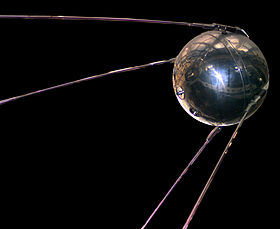
Remember Sputnik?

571. Nothing New Under the Sun

There is nothing new under the sun, but the old things keep coming back to poke you in the eye, and it all seems interconnected.

On MLK day I talked about growing up and shaking off racism. Then I talked about America’s love affair with great men who really aren’t all that great.

That led to a back and forth in the comments in which I talked about trying to teach truth in American schools, by using the space program as an example. Meanwhile, I’ve been trying to remind my younger readers of the incredible reality of what was happening fifty years ago in space exploration.

On President’s Day and we looked at the last half century’s sad and depressing crop of leaders.

Then it all came together in one coincidental discovery. I bought a copy of Apollo in Perspective by Jonathan Allday to fill in some gaps in my knowledge, and found this inserted as an epilog:

Men who have worked together to reach the stars are not likely to descend together into the depths of war and desolation. Lyndon B. Johnson, 1958

I need to insert three paragraphs of blank space here, to express my incredulity.

In 1958, Sputnik had just been launched. America was in a panic. The bureaucrats and the military were fighting (as usual) and the result was that American satellites were not being launched. The space program had begun in fear, riding on rockets which had been designed to carry nuclear warheads, and fueled by the terror those same warheads represented. Men were not working together to reach space; countries were working against each other for the best capacity to wage war.

Not only was every word in the quotation a lie, it was all a set of lies that no one could have believed, even then. Every word was the exact opposite of the truth, even as contemporary Americans understood the truth.

And all this from Lyndon Johnson, who would, a decade later, give us the Viet Nam war.

It seems that the greatest of our achievements and the most poignant of our failures remain inexorably intertwined. I guess that’s the human condition, but it’s hard to take sometimes.

568. Presidents Day

I agonized over this post more than any in memory. I am not completely cynical, and the presidents I address, even the worst of them, also did things worthy of the office. I came back to this post a dozen times after I wrote it to ask myself, “Do I really want to say these things?” The answer is, “No.” But I will say them anyway, because the truth is the truth.

===========

Presidents Day. Humm.

We used to celebrate Lincoln’s birthday and Washington’s birthday, and ignored the rest of them. That wasn’t such a bad system. It allowed us to avoid linking Andrew Jackson with his betters.

How about our recent Presidents? Should we celebrate them?

John Kennedy. I have a friend who grew up in Boston and would punch out anyone who spoke against JFK, but let’s tally up what he really did. He lost the Bay of Pigs by abandoning the Cuban insurgents he had encouraged. He faced Khruschchev over the Cuban Missile crisis so let’s give credit for that, but he also sent Americans to Vietnam. Kennedy supporters claim he would have pulled out, if he had lived, but who knows. The jury will always be out of what might have happened.

Lyndon Johnson. He has massive accomplishments pushing through Kennedy’s programs and his own War on Poverty, but he also lied to the American people, lied to Congress, and conducted a secret war including massive bombings outside Vietnam. He, and Nixon after him, are responsible for over three million unnecessary  deaths. There is no responsible way to avoid calling him a war criminal.

Richard Nixon. Watergate, of course; it hardly needs repeating. He also opened up China and got us out of Vietnam by declaring that our defeat was a victory, and then running like hell. I really don’t know what else anyone could have done by that time, but why did he wait all those years and waste all those lives before telling the Big Lie? Maybe to win a second term?

Gerald Ford. They say his pardon saved the country from division and heartache. I say it only gave later Presidents bad ideas that should have been squelched fifty years ago by trying Nixon for his crimes.

Jimmy Carter. An attack on an embassy is an attack on American soil, but Carter sat impotent in the White House through the Iran hostage crisis.

Ronald Reagan. Tax cuts for the wealthy. Trickle down economics that never trickled down. Also the Iran-Contra affair in which Regan himself avoided punishment but fourteen members of his administration were indicted.

George H. W. Bush. “Read my lips.” Actually, going back on his promise regarding taxes was an act of courage that probably cost him a second term. That honorable act was sullied when he pardoned those convicted in Iran-Contra.

Bill Clinton. Plenty of good ideas, but we just remember him as the man who couldn’t keep his hands to himself.

George W. Bush. “Brownie, you’re doing a heck of a job”, and other stumble-statements too numerous to list and too painful to remember.

Barack Obama. I like the man, but I spend eight years cussing under my breath at some of the foolish things he did.

Donald Trump. I once said I didn’t consider Trump evil, just foolish. Subsequent events suggest that I was probably wrong. His fake declaration of emergency pretty much clinches matters.

Were these the best men in America?

Let’s celebrate President’s Day by taking a hard look at what’s coming our way in 2020. They don’t all look good. Let’s vow to make better choices for the future.

Lincoln and Washington, where are you?

545. Lottery Day at the Big Casino

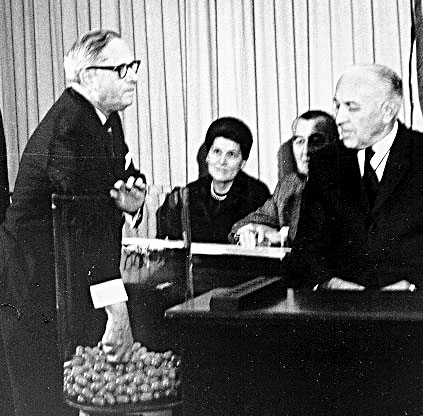
Rep. Pirnie draws the first number.

The place was a class at Michigan State University, just about this time fifty years ago. I wasn’t in the room, so I may be wrong on a few details, but the basic story spread quickly all over campus.

The professor was a young radical. There were a lot of those at MSU in the late 60s. Finals were near when he announced that grades would be given out a little differently this year. He opened a notebook and began to call roll. As he did, an assistant drew notes from a bowl. The professor read, “Adams.” The assistant took a folded paper from the bowl, opened it, and said C. The professor read, “Baker,” and the assistant said F.

As you may guess, it left the room in an uproar. I’m sure the actual grades were given in the normal manner, but the young professor had made his point.

About a week later, a similar lottery took place nationwide, televised, and determined life or death for thousands of young Americans. I was listening closely, because I was a contestant. It was the first draft lottery since World War II.

There were three of us paying attention, my two college roommates and I. One of them didn’t have to worry; he had blown his knee out as a high school wrestler and was 4-F. That’s a medical deferment. The other roommate and I were on student deferments, but we were both going to graduate in June. He drew a high number and never served. I wasn’t so lucky.

I have said often that the draft leveled the playing field. It was a favorite saying in that era that Viet Nam was a war where black people were sent to kill yellow people for the sake of white people. Without the draft, that would have been even closer to the truth.

I wasn’t feeling so charitable when that bastard got to my birthday and pulled a 41.

Ain’t it fun to gamble in the big casino?

540. Where Are the Vets?

Here are some statistics, tailored for those who read this blog. I know most of you are young. I see your pictures on your likes, and I check out your websites.  I’m not young, so I see changes you may not be aware of.

Harry Truman, Dwight Eisenhower, John Kennedy, Lyndon Johnson, Richard Nixon, Gerald Ford, Jimmy Carter, Ronald Reagan, and both presidents Bush all served in the military in wartime. Regan and Bush Two served stateside in wartime; the others all saw combat.

Bill Clinton, Barack Obama, and Donald Trump did not serve.

In the current House of Representatives only 70 of 435 have served in the military. In the current Senate, only 13 of 100 have served. Those numbers will go up slightly with the incoming congress.

Veterans were not so under represented in previous congresses.

These figures relate the the reduced number of persons in the military. That is not quite the same as a smaller military, since the persons now serving tend to spend more years in service. Draftees from previous eras tended to go home as soon as they were allowed to do so.

I come from a long line of draftees. My father served in Europe in WW II, was wounded, and remained during the occupation of Germany. His younger brother was drafted, trained, and was on a ship “heading for Japan to die” (his words) when the US dropped the A bomb. He ended up in the occupation of Japan. I joined the Navy, Vietnam era, but not by choice. My draft number was 41, which meant my number was up (in both senses of the word) before I finished college. And no, I did not see combat.

I hated the draft and I still do, but it had one positive aspect. It leveled the playing field. More Americans had to step up, whether they wanted to or not, and that led to more protests. Without the draft, we would have been in Vietnam much longer.

Today is the hundredth anniversary of the end of WW I. All those veterans are gone. WW II ended in 1945. Very few of the vets from my father’s generation are still around.

America left Vietnam in 1973. Any vet who saw that day at age 18 would be 63 today. That was also the last  year American’s were drafted.

I’m not suggesting a return to the draft, God forbid. I have no particular agenda at all; I just want to give you this to think about.

A country which everyone has to defend, or at least has to stand in jeopardy of military service, is a very different thing from a country that depends on a volunteer military.

Better? Worse? That will be your decision going forward.

======

The numbers in this post come from PBS.

521. The Eve of Battle

I was cleaning my computer of half started blog posts when I came across this quotation. It comes from the last pages of Scourge of Heaven, the sequel to Valley of the Menhir. This excerpt comes from a time when most of the action is over, when the godly battles have been won and lost, and the only task left for Tidac is stopping the human armies that have gathered in the Mariatrien Plains to do battle.

By this time Tidac is in full possession of his power. He lets his ai move from mind to mind, considering those who will stand on the verge of death when the morning comes and the armies move against each other.

============

Limiakos was king. He strode where others walked. He kept his head high, while those around him bowed. He looked at the men before him and knew that they would do what he told them to do. He walked with armed men at the left of him and armed men at the right of him, and all men feared him.

Limiakos and his kind are rare among men. If they seem common, it is only because they always make themselves so visible. Tidac had no use for them.

Such men are the leavening; they are not the loaf. Tidac set them aside and touched the others, those common men who make up the bulk of armies, and the bulk of mankind. Men neither overpoweringly good nor overpoweringly evil; men with mild ambitions and small accomplishments. Men herded to battle and taught to hate a faceless enemy. Men who die without any real understanding of the issues they decide.

For such men, the movement of nations has no reality beyond the slogans they are taught. The rise and fall of dynasties has only dim and distant meaning for them. To such men, this is reality — a woman in the night, a meal when they are hungry, a warm fire, a dry place away from the rain and perhaps, if they are among the lucky ones, a child to protect and teach.

To such men, death is the reality. The last reality they ever confront and its lessons live through eternity. If such men knew while still living, that which they learn in the moment of their deaths, there would be no wars.

514. Space Force

As a die-hard space fan you might think I would like Trump’s Space Force idea, but I’m too much wedded to reality. This is just another publicity stunt, although there is a real history behind it.

The Russians had an independent Space Force from 1992 to 1997, and again from 2001 to 2011. Then they gave it up and made it a sub-set of the Russian air force. That’s not as sexy, but it makes more sense. It is also the way we have things organized here in the United States.

The poor Air Force! They have made a career out of trying to make space their domain, only to be slapped in the face by bureaucracy. Do you remember project MISS? No? Nobody else does either. MISS (Man In Space Soonest) was a plan to put a man in a capsule and shoot him into space on top of a converted ICBM. Now does it sound familiar? It was an Air Force project that was handed over to NASA and became Project Mercury.

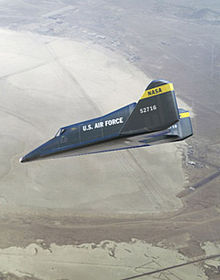
The Air Force followed up with project Dyna Soar, which would have put a winged vehicle on top of a rocket. It was cancelled because the money was needed for NASA. At the top of the post that is an artist’s impression of Dyna Soar landing at Edwards AFB after a mission.

Then the Air Force designed the Manned Orbital Laboratory, a black program which would have been America’s first space station. Cancelled; this time not by bureaucracy, but because of unexpected advances in unmanned satellites which made it obsolete before it flew.

The Air Force did provide input into the design of the Space Shuttle, and got to do some black missions. What were they? Beats me; they were secret.

The Air Force had a hand in several post-shuttle projects which never went to completion and finally got their own space ship in the X-37b. Sadly, it was unmanned.

As you can see, I’ve been writing a lot about all this. If you click on these four links, you will have a thumbnail history of NASA vs. the Air Force in a battle for space.

Now Trump wants to take space away from the Air Force altogether, but don’t blame him. He probably knows less about this than I do, and I am just an amateur enthusiast. Maybe he should click four times.

Enough of the latest publicity stunt. In Cyan, my explorers coming back from the Procyon system also faced a conflict that had been going on between NASA and a military space force while they were away. Here’s a quote:

All seemed well, on the surface, but something profound was happening to the people of Earth. They were waking up to reality. When interstellar exploration had begun, few had taken it seriously. Now the process was flushed with success, and that success carried the seeds of its own downfall.

Suddenly, all over Earth, people who had been indifferent to space travel, except to mutter about a waste of resources, became truly aware of what was happening. And they didn’t like it. In the vague common mind of the beast, numbers began to move in slow, painful calculations.

A few thousand colonists; billions of the rest of us.

They — the rich, the powerful, the smart, the educated, the lucky — they will go to the stars and walk the green valleys of paradise. We — the downtrodden, the ordinary, the workers, the plodders, the ones who really make things happen, the ones who always get screwed — in short, you and me. We will stay behind.

In the general elections of 2103, and in a hundred scattered elections and revolutions in 2104, the people of Earth turned on their leaders and said with a loud voice that the spacers who brought in the ore from the belt, and the workers of L-5, and especially those who were finding new worlds, were no longer heroic friends but dangerous enemies. They would no longer be given freedom to do as they pleased, but would be harnessed to the common good.

This was the Earth Darwin returned to in 2105. When Tasmeen signaled Ganymede Station, she received a taped reply.

“Welcome home, Darwin. You will find the language of this year somewhat different from when you left. When the Dog Star returned in 2088, we found that it would be best to train comtechs in the jargon of your departure year, and that is the reason for this tape.

“The biggest change you will have to be ready for is that NASA no longer exists … because after the general elections of 2103 the people of North America decided to combine all space efforts into one military organization. You are all now members of the Federated Space Service.”

Tasmeen said, “I have a bad feeling about this.”

Yeah, Tasmeen. Me, too.

480. Mairi at Culloden

272 years ago today, the last battle took place on British soil. Followers of Charles Edward Stuart (aka Bonnie Prince Charlie) met British forces under the Duke of Cumberland on Culloden moor. Like all battles, it was a confusing, bloody mess, but it had the virtue of being decisive. The reprisals which followed brought highland culture largely to an end.

The mists of nostalgia roll over the Battle of Culloden, casting it in a romantic light as the last day of Scottish independence from the English. Sorry, but it was nothing like that. There were Scots on both sides of the fight. The “champion of the Scots” was the grandson of a deposed British king, born in Rome and raised in France, now fighting to regain his grandfather’s throne in London. The highlanders who followed him were despised by the lowland Scots who fought on Cumberland’s side — but the lowlanders’ descendants now claim clan membership and wear kilts — even though kilts hadn’t been invented yet in 1756.

I would have sworn that I would never write about Culloden, until I saw a brief note in an article about the history of oats in Scotland which described the actions of a Scotswoman who sat down beside the road leading from Culloden and cooked oat cakes for the soldiers, knowing they would need food to survive. Her simple and humane reaction to the conflict moved me to write this poem.

Mairi sat down by the side of the road

The night was filled with the sound of men
And the moan of wind in the heather,
As Mairi’s kinsmen went south toward the field,
That Charlie had set for the meeting.

Three sons of Mairi came out of her hut
And kissed her cheek as they left her
With Ross the youngest trailing along
To see what the battle would bring.

Mairi took oats from the pantry shelf,
There was not enough to please her,
So she dragged in a sack from the loft of the ben,
Took peats, and salt, and her griddle.

Then Mairi went down to the side of the road,
Built a peat fire and kneaded the grain,
Heated her griddle and cooked fat cakes,
To stack for the coming of day.

“They will come,” she said, “in the morning,
And all through the rest of the day,
Strutting proud or running scared,
Theyʼll be hungry either way.”

The oat cakes sizzled; the smell was fine;
She flipped them and stacked them and listened
To the musket fire from Cumberlandʼs men
And the deeper roar of his cannons.

The cries that went up as the claymores flashed
Were too distant for Mairi to hear,
But Ross would come back from where he watched
To tell how the Scotsmen had fared.

Then a sudden wind, and the fire flared up,
She shivered as pain rushed through her.
Three quick shocks in her empty womb,
And her heart in her breast went numb.

Her hands dug deeper into the oats,
And flew at the task of the kneading,
The stack of bannocks at her side grew tall
For she knew now that they would be needed.

Then Ross came running from the battlefield
He could only come out with a groan.
But Mairi knew without any words
That his brothers would not return.

******

The first man she saw was limping hard
With his leg bound up in a rag.
A highland face, with matted red hair,
He was lean as an iron bar.

A hungry man with a strangerʼs face;
Mairi gestured to the cakes.
He picked one up, took a bite, and sighed.
“God Bless you,” he said, and moved on.

The second man was a stranger, too,
He said, “Mother, it was awful.”
“Eat,” she said, “and move along,
I’ll pray that you find safety.”

The third was young, more a boy than a man,
With face flat and eyes that were dry.
Half held up by a second youth
Who coughed along along at his side.

“Take cakes and eat,” Mairi started to say.
But the coughing youth shook his head.
“I thank you, Mother, but let them go
To living men instead.

My friendʼs bled dry; thereʼs a ball in my lung;
Weʼre as dead as the ones behind.
Just show us a hidden place to crawl in,
And a quiet place to die.”

Mairi worked on, with a clenched up heart
While Ross fed peats to the fire,
Saving the lives of the fleeing men,
For hungry men soon tire.

All through the morning and the afternoon,
Those who lived to flee streamed by them,
Mairi rolled dough in her aged hands
As she mourned for the dead and the living.

For even these battered and tattered men,
Who would leave the field still living
Had lost more than battle, kinsmen, and sons.
A whole way of life had died with them.

And Mairi knew, with foresight clear,
That the winners would fare no better.
That the losers had lost, and the winners would lose,
All except for the rich and the English.

Then the last cake was gone, and Ross was gone,
Sent on with the last survivor.
Up past the river and into the hills.
To hide for a while in the heather.

Down the road she saw them, a mile away,
The Redcoats at last were coming,
Marching proud with bloody swords.
                Mairi stood up and put out the fire.

477. They Never Flew (2)


NASP

Continuing from 472. Teaching Space and 474. They Never Flew (1), this post will discuss three manned space programs that never happened.

Eisenhower, Kennedy, Johnson, and Nixon were the presidents who took us into space. Whatever you think of any of them, they will always have that marked down on the positive side of their ledger.

Other presidents aspired to join them. How much of their thinking was patriotic for America, patriotic for all of mankind, or pure political calculation, is way outside the realm of my knowledge. I’m going to give them all benefit of the doubt and just talk about the programs themselves. You can spin motives any way that suits you.

Regan proposed NASP, the National AeroSpace Plane, also called the X-30. In his 1986 State of the Union, he said that we should produce a vehicle which would be “a new Orient Express that could, by the end of the next decade, take off from Dulles Airport and accelerate up to twenty-five times the speed of sound, attaining low earth orbit or flying to Tokyo within two hours.” It was an exciting idea, coming out of DARPA where it had begun as a black project.

NASP was supposed to produce two prototype planes, but neither was ever built. That doesn’t mean that it was a political scam. The technological difficulties of the project were staggering.

In detail, NASP was cutting edge. As an idea, the horizontal launch of a spacecraft was old in science fiction. There it was usually accomplished by electromagnetic technology, with ground based and powered launchers and only maneuvering fuel on the vehicle itself. See many early Heinleins, especially Starman Jones and The Moon is a Harsh Mistress.

One reason rockets take off vertically is to get mostly out of the atmosphere before achieving speed. That way, massive friction is only a reentry issue, when it can be used to advantage.

NASP was a jet, not a rocket. It had to operate primarily inside the atmosphere. This has the advantage of avoiding carrying oxidizer, but has a series of disadvantages. Friction heating is an obvious one. In addition, its engine would have to operate in three modes — as a relatively conventional jet at takeoff, as a ramjet once sufficient speed had been achieved, then as a scramjet (supersonic ramjet) once it passed the speed of sound.

At that time, no one had successfully built a scramjet, and NASP didn’t make it happen. The first scramjet, the X-43, made a brief flight in 2001, eight years after NASP was cancelled.

No one has successfully built a skin that can withstand reentry level heating on a continuous basis, either. NASP was too far ahead of its time. I spent a few years explaining to my kids how it was supposed to work — before it didn’t work, and silently crept away.

Then came Venturestar, which, if it had been successfully completed, would have done what the Space Shuttle was originally designed to do. It was to be a vertically launched, completely reusable, single stage to orbit vehicle with a wider and more efficient lifting body that would have allowed it to land, in emergencies, on shorter runways than the Space Shuttle.

To do all this, it would require new and untested technologies, including composite material LH tanks, a new tile-free heat resistant skin, and an aerospike engine. The project was divided into two parts. To demonstrate the feasibility of the new technologies, a one-third size, unmanned model of the VentureStar, called the X-33 was to be built and tested, and only then was a full sized VentureStar to be constructed.

Things did not go well. When the X-33 was partially completed a version of its composite LH tank was tested and failed to hold pressure. Alternatives existed, but the decision was made to cancel the project. The funding for the X-33 was a complex mixture of commercial and governmental funds, and continuation depended on all parties agreeing. That didn’t happen. The Air Force was still part of the mix, as with MISS and the Dyna-Soar, as with the black missions by the Space Shuttle, but their request for continued funding was denied. The Air Force eventually got the X-37b instead. The X-33, and with it the VentureStar, disappeared. For a view that the cancellation should not have happened, click this link.

From the perspective of a science teacher, VentureStar had been a godsend, full of all the excitement the Shuttle and NASP had lacked. Once it failed, my kids had no future in space that they could personally dream about.

Then came Project Constellation. By that time, my days as a teacher were coming to a close, so I did not have to face the daunting task of generating enthusiasm for a cobbled up rerun. Ares I, the small booster, was built out of Space Shuttle leftovers and Ares V, the large booster looked suspiciously like a Saturn V reboot. The Orion Crew Exploration Vehicle was an oversized Apollo capsule and the Altair moon lander was a LEM on steroids. Not only was Project Constellation going to do again what had been done forty years earlier, it was going to use essentially the same hardware.

I didn’t buy it. I didn’t try to sell it to my kids. It died four years after it was floated.

The future isn’t dead. The Space Launch System continues where Constellation failed and private enterprise has more strongly entered the mix. Today’s science teachers should be able to say, “You might be the first person on Mars,” with a straight face. I continue to hope.