Tag Archives: politics

441. The Last Apollo

“We leave as we came, and, God willing, we shall return, with peace and hope for all mankind.”        Cernan’s closing words on leaving the moon at the end of Apollo 17

Forty-five years ago, at 12:33 AM Eastern Time, the last manned moon flight took off from Cape Canaveral.

It was a stunt from the get-go. Kennedy’s speech, setting a goal of landing a man on the moon and returning him safely to the Earth, was a Trump-worthy brag. If we had failed, it would be laughed at today as just another empty promise made by a politician.

One man laid down the challenge and thousands of men and women carried out the promise.

But it was still a stunt. When Kennedy made his speech on May 25, 1961, Russian had put a man into orbit. We had not, although we had managed a sub-orbital flight. Atlas boosters were still blowing up on launch, so a smaller Redstone was used for Alan Shepard’s flight on May fifth.

NASA had only been in existence for three years. By any real or imagined yardstick, the Russians were far ahead in space.

By herculean efforts, NASA forged ahead through Mercury and Gemini. The fire aboard “Apollo One” set American efforts back significantly, and when launches began again, it looked like the Russians were going to land on the moon first.

There were Soviet problems however, particularly the repeated failure of their N-1 rocket. These doomed their attempt to reach the moon first, but NASA was not aware at the time.

NASA had problems of its own. The lunar lander was not ready when Apollo 7, the first actual manned Apollo flight, left for low Earth orbit in October of 1968. Only a year remained on Kennedy’s timeline, and the Soviets — we thought — were poised to land on the moon ahead of us. Something had to be done.

That something was the Apollo 8 journey to and around the moon, without a lander, for the Christmas season of 1968. We had been to the moon first (by an ad-man’s stretch of the truth), even if the Soviets became the first to land.

Apollo 9 tested the lunar lander in low Earth orbit. Apollo 10 (the most frustrating almost in human history) returned to the moon, deployed the lunar lander, and flew it to within wishing distance of the moon without landing.

Apollo 11 landed a man safely on the moon, and returned him safely to the Earth.

Now what?

For the Soviets, the answer was to turn away from the moon. Their N-1 mega-rocket had failed, and their manned modules and lander were stored away. The Soviets began a series of long flights and space stations, studying space from low Earth orbit.

For NASA there were nine more Saturn V rockets waiting to launch Apollo 12 through 20. It didn’t turn out that way. Apollo 12 landed in a different part of the moon, Apollo 13 suffered and explosion, didn’t land, and barely made it home.

Even before Apollo 13, Apollo 20 was cancelled so its Saturn V could be used to launch Skylab. Even before Apollo 14 landed, Apollo 18 and 19 were cancelled. Why? Because it was a stunt from the get-go. Apollo 11 met the deadline. To coin-counting bureaucrats, that was enough.

For those of us who see space exploration as the future of humanity, Apollo 11 was only the  beginning. Lunar exploration, a moon base, Mars. Venus — there should have been no end.

Bureaucrats did not agree. On Thursday, 1972, at 12:33 AM Eastern Time, the last manned moon flight took off from Cape Canaveral.

more next Thursday, the anniversary of the last liftoff from the Moon

439. Jose, Maria, y Jesus in Trumpland

[Don’t expect even handedness here.]

In English we call him Joseph, in Italian he is Giuseppe, in Basque he is Joseba, in Spanish he is just plain Jose.

In English we call her Mary, in Hebrew she is Miryam, in German she is Maria, and also in Spanish.

In English he is Jesus, in Cornish he is Jesu, in Italian he is Gesu, and in Spanish he is Jesus again, but pronounced Hey-sous.

We are going to walk with these three in this sermon for the Christmas season.

And it came to pass in those days, that there went out a decree from Caesar Augustus, that all the world should be taxed. And all went, every on into his own city. And Jose also went up from Galilee, out of the city of Nazareth, into Judaea, unto the city of David, which is called Bethlehem, to be taxed with Maria his espoused wife, being great with child.

Of course that could be written as Joseph and Mary, but surely they are the same couple, in any language. Jose was a carpenter. He built things out of wood to feed his family, and he paid his taxes like everybody else. All the world was to be taxed, and he had to go back to the place from which his people came.

Where would that be? Perhaps a land with cities named Sacramento for the Holy Sacrament, or maybe Atascadero, Alameda, Camarillo, El Segundo, or Escondido. Perhaps cities like Fresno, La Mesa, Madera, or Mariposa show where his people once lived. Certainly they must have lived in cities like Los Angeles, Merced, Paso Robles, Salinas, or San Francisco. Even if his people no longer own the land, certainly the city named after him, San Jose, must once have belonged to his people.

And so it was, that, while they were there, the days were accomplished that she should be delivered. And she brought forth her firstborn son, and wrapped him in swaddling clothes, and laid him in a manger, because there was no room for them in the inn.

I think Luke shortened this a bit. Was there only one inn in Bethlehem? We can see the young couple, going from place to place, Jose leading, Maria on a burro since she cannot walk so late in her pregnancy. Everywhere they are turned away. Are all the sleeping places truly full? It may be. Or perhaps something about the two of them, perhaps the color of their skin, makes the innkeepers turn them away. Luke does not tell us.

I see migrant housing everywhere I go in California and I think, perhaps, a manger was preferable.

Now they are in a place where their people once lived, but to which they are no longer welcome. And here, their son is born.

Donald Trump would call Him an anchor baby. I wonder what He will call Trump, when they finally meet.

And there were in the same country shepherds abiding in the field, keeping watch over their flock by night. And, lo, the angel of the Lord came upon them, and the glory of the Lord shone round about them: and they were sore afraid. And the angel said unto them, Fear not: for, behold, I bring you good tidings of great joy, which shall be to all people.

To all people. ALL people. Imagine that!

=============

Luke’s story is complete, but ours is not. It is up to every one of us to see that it turns out right.

428. Ve Speak Goot English

This is from today’s post in Serial:

(Language), Neil knew, was a real problem for those families who went back and forth between Mexico and the United States. The brightest children leaned to speak, read, and write English, but they were illiterate in Spanish. They could speak the lower class Spanish used in their homes, but they usually could not read or write it. Worse, their dialect was no more suitable for a good Mexican school than an American hillbilly dialect would have been suitable for a high school in Boston.

Fiction has its place. It can make us think and care, but plain old non-fiction can sometimes get things across more quickly. To wit:

We are a nation of immigrants. Everyone knows that.

Spanish is an immigrant language. Yep. Everyone knows that, too. However, so is English. If we we spoke a language that isn’t an immigrant language, we would all be speaking Cherokee, or one of several hundred other native tongues. Aztec, anyone?

English got here first. No, actually it didn’t. Of European languages, Old Norse got here first with the Vikings, but it didn’t last. Spanish got here second. English, French, Portuguese, German, Swedish — the list could get tedious if we let it — are all late comers.

English won.

Now we are zeroing in on the truth. The French gave up the right to provide the language of choice for about half of the USA when Napoleon sold Jefferson the Louisiana Purchase. Spanish lost out as the language of choice in Florida, Texas, New Mexico, Utah, Nevada, Arizona, part of Colorado and Louisiana, tiny corners of Wyoming, Mississippi, Alabama, Kansas, and Oklahoma, and all of California at the point of a gun. Or, a bunch of guns. That’s roughly a third of the lower forty-eight.

Like it or not, it happened, and it is irreversible. English is the language of the US, despite the innumerable other languages spoken by our immigrants. They came here, procreated, the original speakers died, and their offspring now speak English.

So why are the Spanish speakers different? It is certainly not because of anything wrong with them. It’s quite simple. When Germans immigrated, they didn’t go back. Modern immigrant Spanish speakers, primarily Mexican, documented or undocumented, go back and forth.

Migrant labor is typically seasonal. Besides, wouldn’t you rather spend winter in Mazatlan than Minnesota if you could? Hordes of Anglos do it, and they don’t even speak the language.

Not all people of Spanish background move back and forth. Many of them came to the US and stayed. Tens of thousands of them were already here to greet the Anglo pioneers when they arrived. See map above! Millions of them don’t speak any Spanish, just as Nils Hansen of Kenosha, Wisconsin (hypothetical person) doesn’t speak Danish. There is a word for these people — Americans — and they don’t pose any language problem in the schools.

Those who do go back and forth are not going to stop doing so. It works for them. Summer labor in the US, then back to Mexico for its mild winters and lower costs is not just logical, it’s capitalism. It’s entrepreneurship. It’s survival for the Mexican families and cheap food for you. Drive by any field in California at harvest time and count the Anglos bending their backs in the sun. Your total will be zero.

A wall won’t change it. A path to citizenship won’t change it, either. The idea of a hermetically sealed border is a Trumpean delusion.

So where does that leave the children of migrants? In a tough spot, to be sure. They often don’t spend the whole school year in schools in America, and they often don’t enroll while they are in Mexico. Many don’t learn to speak, read, and write English as well as their Anglo or permanent Mexican American classmates. Some barely speak, read, or write English at all. They speak Spanish, but they often don’t read or write it.

Solutions? That would take a shelf of books, not a post.

424. Arthur C. Clarke and Russia

(Written last Thursday) This morning’s news brings new revelations about what Russia is doing to America through the internet. Or are they new? Didn’t Arthur C. Clarke warn us all that this was coming back in 1960 in his short story I Remember Babylon? Of course he did; Arthur has always been ahead of the curve.

I Remember Babylon? is actually dated and struck me as a bit naive when I first read it, but you might want to check out Arthur’s prescience as he gives you today’s headlines 57 years before they happened. After its original appearance in Playboy, the story was reprinted in Tales of Ten Worlds, available in your local used bookstore or on Amazon.

402. Nuclear Spacecraft

I taught middle school science for twenty-seven years, and always, whether I was supposed to or not, I taught the space program.

I grew up with space travel, first in fiction, then in fact. I loved it, and the kids I taught loved it, too. How much of that rubbed off from me, I’ll never know.

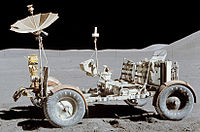
By the time I started teaching, the big show was over. When Gene Cernan stepped back into his LEM in 1972, it was the high water mark of manned space exploration. It’s been downhill since.

In the classic science fiction novel I had planned to serialize, Rip Foster is heading out toward the asteroid belt on the nuclear powered spacecraft Scorpius. That’s how we all thought the future would look. That’s how the future should have looked. Chemically powered rockets are simply not sufficient for exploring the solar system.

We have have nuclear power plants for electricity, nuclear submarines, nuclear aircraft carriers, even a nuclear cargo ship. Why not nuclear spacecraft? Weight? Do you really think we couldn’t have overcome that problem? Maybe it was the danger, but . . .

Here is a quiz for you. How many nuclear submarines are lying on the bottom of the ocean, tombs for sailors and ecological time bombs for the rest of us? Two from America and six from Russia. An additional Russian nuclear sub sank twice, but was raised both times.

How many nuclear and thermonuclear bombs have gone missing? The U.S. admits to eight. How many more are hidden under the umbrella of security? Your guess is as good as mine. How many have the Soviet’s lost? You ask them, I’m keeping my head down.

Did I mention Chernobyl and Fukushima?

Let me put it another way. When the Soviets launched Sputnik and initiated the space race, then followed up with a man in orbit before we could even launch a sub-orbital flight, we did an end-around and went to the moon.

If the Soviets had launched a nuclear powered space craft, we would have launched a nuclear powered space craft. Technology would not have stopped us. Fear of radiation would not have stopped us.

That was then, this is now. The best thing for manned space exploration today – though not for American interests or world peace – would be for the Chinese to launch a nuclear powered space craft. It wouldn’t even have to be a good one. Just the threat would be enough, and in a few decades ships like the Scorpius would be filling the solar system.

387. Buchan the Racist

Getting ready for Westercon, I prepared a set of notes, placed as posts, for the panel What made the golden age golden? I was under the impression that it would be history and homage, and made notes appropriate for that. I was wrong, and it isn’t the first time I have spent time off track by starting before I had full information. When i’m ready to start a project, I’m ready, and sometimes I pay the price.

After I had posted my notes-to-self, but long before Westercon, I received this description of the panel:

Heinlein and Asimov are two pillars of the Golden Age of Sci-Fi. But reading those works with modern eyes can reveal attitudes that would be unacceptable in modern times. What can we learn from the classics when we look past the sexist and racist attitudes that pervaded the works of that time? Can we still appreciate works that present unacceptable ideologies?

Well, that’s a bit of a different story. No problem. I am always ready to fight the forces of political correctness.

I’ve been to this rodeo before. Once, several years ago, I was looking at on-line reviews of John Buchan’s The 39 Steps. I don’t remember why, but I do remember a review that ripped Buchan as a racist for seemingly anti-Semitic statements in that novel. I wrote a counter-review; both have since disappeared.

For those who don’t know him, John Buchan was a popular British novelist of the early twentieth century. He is very much a pro-British patriot, with the prejudices that implies. Think Kipling light. And he was a racist, but not an anti-Semite. I say that not as a scholar, but as a fan, who has read and re-read his works.

If you read him at length, his distaste for African blacks comes through loud and clear. His Jews, on the other hand, show up as both heroes and villains, just like his Germans and his Englishmen. But if you only read a little, you can be fooled.

#                #                #

To follow through on this, I used one of my favorite techniques. I recommend that you put this into your bag of tricks. I went to Project Gutenberg, downloaded The 39 Steps in Rich Text format, then cut and pasted that into my word processor. Now I had all 41,264 words in a searchable form.

One more hint. RTF will be hard to read because its wide line-length makes it look like bad modern poetry. Just switch your word processor to horizontal format and it will be much easier to work with.

The reviewer who started this controversy had complained about Buchan because of the words of one of his characters, Scudder. If you don’t know the book, Scudder is a kind of amateur spy who finds out that bad people are about to start World War I, and catch England off guard. This is what Hannay, the main character, says, quoting Scudder:

The Jew is everywhere, but you have to go far down the backstairs to find him. Take any big Teutonic business concern.  If you have dealings with it the first man you meet is Prince von und Zu Something, an elegant young man who talks Eton-and-Harrow English.  But he cuts no ice.  If your business is big, you get behind him and find a prognathous Westphalian with a retreating brow and the manners of a hog.  He is the German business man that gives your English papers the shakes.  But if you’re on the biggest kind of job and are bound to get to the real boss, ten to one you are brought up against a little white-faced Jew in a bath-chair with an eye like a rattlesnake.  Yes, Sir, he is the man who is ruling the world just now, and he has his knife in the Empire of the Tzar, because his aunt was outraged and his father flogged in some one-horse location on the Volga.

Wow! That sounds pretty anti-Semitic, and the reviewer who started this conversation took it as proof positive. But let’s wait a minute. Assume that the character Scudder is the worst anti-Semite since Hitler — does it follow that Buchan hated Jews? I wrote a mass murderer into Cyan — does that mean I approve of mass murder?

You can’t read the words of a fictional character as the opinion of the author, especially if you are looking at a minor character of questionable honesty.

Scudder dies in chapter one and his quest is taken over by Richard Hannay, the actual main character in this and several other novels. If you look closely at the character of Hannay and a dozen other lead characters in two dozen other novels, then you will come closer to having a fair and defensible picture of Buchan’s attitude.

In point of fact, not only was Scudder a minor character, he was also a liar. The reviewer who cried bigot never found this out because he quit the novel early. I knew that he was, but I needed a quote as proof. To find this, I searched for the word Scudder in my Find and Replace function. His name appears 65 times in the book because Hannay keeps thinking about him. Click and read. Click and read. Click and read. I found the passage I remembered at the beginning of chapter four.

The little man had told me a pack of lies.  All his yarns about the Balkans and the Jew-Anarchists and the Foreign Office Conference were eyewash . . .

Hannay worries at Scudder’s diary, taken off his body, because it seems odd, almost as if it were a cypher, and Hannay is good at cyphers. Sure enough, the Jew-Anarchist plot is just a cover for a much deeper plot (not by Jews), which Hannay foils by the end of the book.

So, everybody was a nice, unbigoted person and it was all a misunderstanding? If it were only that simple.

Reread the first quote, if you can stomach it. How would that passage play in a book published in 2017? When it was published in 1915, the book was a hit. Nobody minded that passage at all.

After Hitler and the holocaust, anti-Semitism fell out of favor. Before that, it was everywhere, in Europe and America. An actually anti-Semitic book in England in 1915 would have raised no eyebrows.

Was Buchan a bigot? Yes and no. He was not anti-German, he was not anti-Semitic, but he was anti-African. How do I know? I have read more than a dozen of his books, some multiple times. You can’t know from assumptions, and you can’t know from reading one book.

Bringing this back to the Golden Age of science fiction, we should be able to read and appreciate authors like Heinlein when he depicts mannerisms that are foreign to us. (Or to be fair, foreign to you; I grew up in the same era and it all seems normal to me, even when I disagree with it.) The fact, for example, that Joan Freeman in Lost Legacy is the object of mild sexist teasing should not mask the fact that she is a full participant in the action.

Nevertheless, understanding is one thing, enjoyment is another. There is a limit, and it varies with each of us. For me, Heinlein sometimes seems silly, but I still read and enjoy everything but Farnham’s Freehold. That one goes on my never-again list, along with John Buchan’s anti-Black tirade Prester John.

POSTSCRIPT: As it turned out, everyone on the panel ignored the description and we just talked about how great the golden age was. The forces of political correctness never raised their heads.

386. Chief Seattle

Beware, I occasionally rant. Like today.

If this post had a descriptive sub-title in the nineteenth century style, the full spread would be:

Chief Seattle: White Man’s Indian
or, how a movie took a fine old man and turned him
into a puppet and a joke

How’s that for laying out a political agenda for all to see?

Yesterday and today I presented an ersatz Miwuk legend. Ersatz is a fancy word for “I just made it up”. I don’t apologize for that. Spirit Deer is a work of fiction, and I used Miwuk Indians as the basis for Tim’s knowledge because they were the resident Native American’s in the places he finds himself. (When I wrote the book in 1975, it wasn’t yet a crime to say Indian instead of Native American.) Later, I will also have a “family story” about his grandfather’s grandfather. That is also made up, to meet the needs of the novel. Again, no apologies. Fiction is fiction. Historical fiction has some responsibility for maintaining accuracy, but Spirit Deer isn’t even subject to that.

I wrote this novel, all of it, including the legends and family stories. It’s fiction, okay. If it were ever to be published, I would make sure that those facts were clearly stated.

Actually, that’s what I’m doing here.

There is a point to all this, beyond simply taking responsibility for what I have written. When I was a teacher, I came across a book called Brother Eagle, Sister Sky: A Message From Chief Seattle and also the supposed text of Chief Seattle’s speech. This took place decades ago, and I can’t remember which I saw first, but my Hemingway style “writer’s shit detector” went off like a siren. I was sure that this was another white guy putting words in an Indian’s (excuse me, Native American’s) mouth, after he was long dead and couldn’t set the record straight.

It turns out, I was right. The version of Chief Seattle’s speech in question, which comes complete with the statement, “I have seen a thousand rotting buffaloes on the prairies left by the white man who shot them from a passing train,” was written by screenwriter Ted Perry for the 1971 film Home. Those buffaloes were killed and rotted decades after Chief Seattle made his speech, and half a continent away. To be fair to Perry, he tried for years to claim credit for the speech and counter its false historicity, to no avail.

Actually, as fiction, or as a soupy environmental statement, it is a powerful piece of writing. But it has nothing to do with Chief Seattle.

The publication of Brother Eagle, Sister Sky led to a 1992 Newsweek article that named Perry as the author of the speech. In researching for this post, I also found a more complete article from the New York Times. You can check them out for yourself.

All this slapped me in the face four ways.

As a writer, I work hard to keep my fiction from telling lies, either morally or factually. I am a long time student of ecology, and I abhor the way a hard-edged science gets turned into a set of slogans. As an anthropologist (B.S., M.A., and two summers on archaeology digs), I hate the way Native Americans are rarely seen for themselves, but as savages or saints, according to whatever is the current fashion. I am a student of history as well, and . . . you get the picture.

You might have guessed by now that I can be irritated by lies, and seeing a screenwriter’s version of “Chief Seattle’s” speech accepted as history grinds all my gears.

363. Masters: Coming to America

What sort of country would (the United States) have now if the Indians had had an Immigration Service when the Pilgrims set out in 1620?
John Masters

When I first read John Masters, something he said stuck with me. Before going to Westercon this year, I wanted to run down that quotation, and in doing so I found much more worth sharing. What he said about writing will appear here later, but today I want to give his insights on immigration, or, as he called it, his Seven Year’s War with the U. S. Immigration authorities.

For reasons detailed in his book, John Masters decided that, though he was an Englishman, there was no life for him in England, and that America should become his home. He applied for an immigrant visa, knowing that the British yearly quota of 65,000 was never filled. His reactions to the questions asked on the application form were humorous, but too long to place here. Apparently the questions were as inane then as they are now. (see 329. Green Card Blues and 361. Take This Test)

A week or so later, he was told that he would have to wait about four and a half years. He had been placed on the Indian quota. He went back to inquire and was told that American law only recognized the place of his birth, not his actual citizenship. Never mind that he was born in a British military hospital. Never mind that he was born of a British mother and a British father, stationed in the British army in a British controlled area. Never mind that a child born of an American parent (and it only takes one) anywhere in the world is an American citizen. Never mind that he was born in 1914, and India didn’t become a country until 1947. He was born in India, so he was on the India quota.

It was a good thing he hadn’t been born while his father was stationed in Greece. The Greek quota was eighty-one years. (Yes, that is not a misprint. 81 years.)

Masters decided to withdraw his application for an Immigrant visa, get a visitor’s visa, and work things out later. That was not allowed. Since he had applied for an immigrant visa, he was no longer eligible for a visitor’s visa. Too many others when facing impossible waits had made that same move, then disappeared once they were in America.

As you might guess, as a British Army officer with plenty of friends, he was eventually allowed a visitor’s visa, came to America, and managed to stay permanently, although with many additional bureaucratic battles.

Good thing he wasn’t actually Indian.

More to the point in 2017, good thing he wasn’t Mexican, or poor, or not a native English speaker.

Master’s comments on writing will come in later posts.

362. Masters of India

     Wasn’t it barely a week since I had thrilled to learn what was inscribed on the base of the Statue of LIberty:
          Give me you tired, your poor,
          Your huddled masses yearning to breathe free . . .
     What generosity, I had thought, what a marvel of welcome!
                         John Masters

We’ll let that quotation hang there, and return to it later. This post, and several more, are connected to John Masters’ third installment of autobiography, Pilgrim Son.

I read the first installment of his autobiography, Bugles and a Tiger, during the 1970s. Normally a military biography would be the last thing to interest me. Furthermore, I was in the Navy against my will at the time, it that made it even more unlikely. However, Masters was a famous novelist specializing in India, so I read Bugles . . ., and I was impressed.

I had just finished four years studying South Asia and was about to return to another year of the same. My experience had shown me that there is wisdom (and stupidity) in writing on all sides of any issue. Wiser’s The Hindu Jajmani System (anthropologist), Nehru’s The Discovery of India (nationalist agitator, then national leader) and Masters’ various works (officer in the British Army in India) all showed accurate views from different perspectives.

I skipped Masters’ second autobiography, The Road Past Mandalay because I had no interest in sharing the horrors of WW II’s Burmese campaign, but Pilgrim Son was about the start of his life as a writer. I was beginning to write, so I ate it up.

That was nearly four decades ago. One particular story from that book stayed with me, and sent me back to seek it out again. I found that the whole book was a gem, far better than I remembered, and with more than one brief bit worth sharing.

For one thing, Masters had a lot to say about immigrants. That had not stuck in my memory because it was not an issue in the early eighties when I first read Pilgrim Son.

I have to set the stage by reminding American readers, whose world historical knowledge is typically shallow, that India is an ancient culture, but is new as a nation. Until mid-last century, it was controlled by Britain. In 1947, what was then India was partitioned into India and Pakistan, and each part became a self-governing nation. Decades later, Pakistan also split, into Pakistan and Bangladesh. What had once been a more-or-less uniform culture divided into hundreds of petty kingdoms, was first unified under British rule, then split into three modern nations.

After several hundred years, members of the British Army and of the British governing class, many of whom had lived in India for generations, had to take ship for England. John Masters was one of those Englishmen who was born in India, had lived his life there, and now found himself an immigrant to his other homeland. He soon found that there was nothing for him in England, and became an immigrant to America, where he began his writing career. more tomorrow

361. Take This Test

Berlin WallMexican Wall

TAKE THIS TEST TO SEE IF YOU ARE FIT TO BE AN AMERICAN

Have you ever knowingly committed any crime for which you have not been arrested? [Never mind the fifth amendment. It does not apply here.
Have you ever been arrested? [Whether convicted or acquitted.]
Have you ever received public assistance?
Are you likely to receive public assistance in the future? [As if you could know that.]
Have you ever gambled illegally? [Yes, the Super Bowl counts.]
Have you ever encouraged an act of illegal immigration? [Yes, that includes hiring the maid who cleans you toilet, cooks your meals, and babysits your kids.]
Did you smoke pot before it was legal?
Have you ever been a member of the Communist Party? [Yes, Joe McCarthy is dead, and yes, the question can still be asked, and no, you can’t refuse to answer.]
Did you, in support of the Nazi party, aide in the persecution of any person because of race, religion, national origin, or political opinion. [If such aid was to the KKK, answer no.]
Have you ever assisted any organization engaged in kidnapping, political assassination, or any other form of terrorist activity. [If that organization was the CIA, answer no.]
Have you ever left the U.S. to avoid the draft?
Have you ever served in the armed forces?
Have you ever been a police officer?
Have you ever been a prison guard?
Have you ever been been a Boy Scout?

If you answered yes to any question above, you may not be eligible to enter the United States.

If you could not read any question above, you may not be eligible to enter the United States.

If you could not afford a lawyer to help you answer any question above, you may not be eligible to enter the United States.

If you were too repulsed to finish the test, you may not be eligible to enter the United States.

Finally: List your present and past membership in or affiliation with every organization, association, fund, foundation, party, club, society, or similar group in the United States or in other places since your 16th birthday. Include any military service in this part. If none, write “None.” Include the name of each organization, location, nature, and dates of membership. If additional space is needed, attach a separate sheet of paper. If you are unable to remember and list these affiliations, you may not be eligible to enter the United States.

—————-

All of these questions were drawn, with snide but accurate rewording, from Form I-485, Application to Register Permanent Residence. If you think this is a joke, click here to read the actual form.

Aren’t you glad you are an American citizen? If you weren’t, we probably wouldn’t let you in.