Tag Archives: race

247. The People’s President

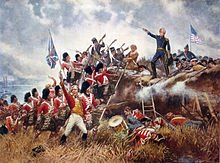
220px-battle_of_new_orleansSince my dad’s younger brother was named Andrew Jackson Logsdon, you might guess that Andrew Jackson was well thought of in my family. He is well thought of by most Americans as the first people’s president, a man who went to Washington, overthrew the elites, and returned the country to its democratic roots. A champion of the common man.

I disagree.

As a person trained in both anthropology and history, I have to declare my biases. Jackson was an important president, with much to his credit. I grant that. But he was also the leader of a successful movement to drive out the legal residents who were owners of vast tracts of land throughout the South, to make way for his white followers.

By the way, I plan to use the word Indian. It’s a description, not an insult, and it is the word that was used in the 1800’s. When Jackson finally sent the native people west of the Mississippi, he settled them in Indian Territory, not Native American Territory.

Jackson led an unapologetically racist movement, but there was no racial purity about it. The whites who moved into the vacated lands took their black slaves with them, and many of those slaves were partly white. (See yesterday’s post and numerous posts last January and February. Go to the tag cloud and click race.) The Indians who were moved out were frequently partly white, and took their black (and mixed) slaves with them when they went.

There is an argument that, morality notwithstanding, a stone age people had to give way before an industrialized one. Even if that idea has merit elsewhere, it does not apply to the frontier South in the early 1800s. The region was not industrialized, although gin-separated cotton would bring organized agriculture in the form of the plantation system during the next two decades. It was a land of small farmers (white or Indian), mostly engaged in subsistence agriculture (white or Indian), dotted with small towns (white or Indian) and few cities. White society and Indian both maintained slaves. Both traded with the larger world, mostly England, for manufactured goods.

White society, however, was under pressure from growing population beyond the Appalachians. Call it greed, or call it need, the whites wanted what the Indians had, and they took it. Jackson played a key roll in it all.

Jackson first came to public attention as an Indian fighter in the Creek War. It didn’t start out as a war between the Creeks (a historically imbedded term for the Muscogee tribe) and the Americans, but as a civil war between the lower Creeks who had made peace with the dominance of whites and the Red Stick faction which had not. Some whites were killed, militia units were organized, and Jackson became their leader. The regular American army was unavailable; they were fighting the British along the Atlantic coast. The War of 1812 was underway, and the Red Sticks were receiving British arms.

Jackson proved to be an effective general, tough and uncompromising. This is the period that gave him his nickname Old Hickory for those qualities. The Red Sticks were crushed and the entire Creek nation lost half their land at the end of hostilities. That was the pattern of frontier Indian fighting.

Next, Jackson defended New Orleans (brilliantly, to give the man his due) and emerged a Washington-like American hero. His road from New Orleans to the White House was long and rocky, but he became President in 1828 and won reelection in 1832.

Jackson was dedicated throughout his life to the removal of Indians from their lands in the South for resettlement them beyond the Mississippi. Toward that end, he effected passage of the Indian Removal Act in 1830.

This act required Indian tribes to sign treaties exchanging their original lands for new lands west of the Mississippi. Most tribes resisted, and the saga of bribery, coercion, and trickery that brought about the change would fill volumes. Among the Cherokee, for example, a small faction was bribed into signing a treaty which was then enforced on the whole tribe. Anger over this betrayal led to political assassinations among the Cherokee once they reached the new Indian Territory.

16,000 Cherokees were removed for the Indian Territory. 4000 died along the way. Jackson retired after his second term and died eight years later. By that time tens of thousands of non-citizens who had been resident in America for generations had been deported – excuse me, I meant removed – to beyond the borders of the United States.

**         **         **

We’ve looked at Andrew Jackson and Thomas Jefferson, two Presidents from the first half of the nineteenth century. We’ve seen what Jackson did about the non-citizens living in America. We’ve seen how different thinking was then on race and gender, even for someone like Thomas Jefferson. It’s good that we have progressed.

Or have we? I guess we’ll find out on Tuesday.

246. Unalienable Rights

u-rNext week, we elect a president. Today and tomorrow let’s look at the lives of two of our early ones, Jefferson and Jackson.

Everybody knows the passage in the box above. Thomas Jefferson wrote it. It is logical to think that he believed what he wrote, and yet he held Sally Hemings and his children by her in slavery.

Odd? By the standards of our day, certainly. By the standards of his day, it was odd that he freed any of them. His father-in-law also had a black concubine and children, and freed none of them.

If you have read anything I posted from mid-January to the end of February of this year, you know I am no apologist for slavery, Jim Crow, or resistance to interracial marriage. However, if you plan to understand historical events and beliefs, you have to examine them in their own context. The Sally Hemings story gives us a lens through which to examine both slavery and women as child bearers, whether wife or concubine, in the days when our nation was being created.

The story begins two generations before Jefferson. A slave name Susanna bore a child to a white man named Hemings; the child was named Betty. Both were owned by Francis Eppes, then were inherited by Eppes’ daughter Martha. When Martha Eppes married John Wayles, the slaves, mother and daughter, went with her.

Martha Eppes Wayles had a daughter, also named Martha, before her death. Wayles was widowed twice more, and also had several children by the slave Betty Hemings. The youngest of these was named Sally.

Martha Wayles (the daughter) married Thomas Jefferson. Sally Hemings was her half-sister (they shared a father) and was three-quarters white. When John Wayles died, Thomas and Martha Jefferson inherited his slaves, including Betty and Sally Hemings.

Martha Jefferson had a daughter, also Martha. Thankfully, for ease of reading this post, she was called Patsy. Jefferson’s wife Martha died. When Thomas Jefferson was appointed American envoy to France, he took Patsy with him, and took Sally Hemings as her companion. It appears that the Thomas Jefferson/Sally Hemings affair began in France.

Accurate research is difficult on affairs that are semi-hidden. As best we know, Sally Hemings bore Jefferson six children: two daughters who died in infancy, one daughter and three sons who live to adulthood. All these children were seven-eighths white, and all were slaves.

The children and their mother remained house slaves. They never worked the fields; the male children were given training to become artisans. At age 24, the eldest son was allowed to “escape” to the North. The daughter followed shortly after. The younger sons were given their freedom in Jefferson’s will. Sally Hemings was inherited by Patsy and informally freed.

Why did Jefferson, the champion of unalienable rights, hold his “wife” and children in slavery? Let’s look for answers.

Sally Hemings was legally negro, genetic heritage notwithstanding. That could not be changed. She could have been freed, but Jefferson could not have married her, even if the thought had ever occurred to him. If freed, she would have not become a full citizen of Virginia or of the United States. If freed, she would have passed completely out of Jefferson’s control, and she would also have passed out from under his protection. Which of those two factors weighed more heavily on Jefferson? We cannot know.

We can speculate, however, based on how he treated his children. They were legally negro, although actually seven-eighths white. They could not be given the rights of white children. They could not inherit, which was something of a moot point since Jefferson died deeply in debt and his estate went to his creditors. He allowed his elder two to “escape” to the North after they were adult. He freed his younger two in his will; they were just reaching legal maturity at the time of his death.

He did not free Sally Hemings in his will. Why? Was he unable to let go, or was he depending on his daughter Patsy to take care of her in her old age? She was in her mid-fifties when Jefferson died. Again, we cannot know.

A lot of scholarship has been devoted to Sally Hemings. We know quite a few facts, but from this distance, understanding comes hard. Did Jefferson do the best he could under the circumstances? Do we even have the right to be disappointed that he didn’t do more? We have more questions than answers.

**        **        **

It is important to consider what happened to Sally Hemings’ offspring, but that will require a future post.

221. The Wall

This post carries a poem at the bottom. Pardon me while I set the stage for it.

I wrote this poem years ago, when Trump wasn’t even a blip on anyone’s radar. It isn’t about him, but he eventually came to symbolize what the poem spoke against. When he started talking about a wall, I published the post repeated below, back in September of 2015. AWL was a new blog then, and no one was reading, so once again . . .

Have you ever asked yourself, “How could Germany have been fooled into following Adolph Hitler?” The answer is on your television this morning, and it is Donald Trump.

I’m not saying that Trump is a Nazi. I don’t see him as evil, merely foolish. But the techniques that have brought him to prominence are the same techniques that Hitler used.

First, appeal to a country’s deepest fears.
Second, claim to be the only one to have the answer.
Third, claim that your opponents are all cowardly and incompetent or, to use Trump’s favorite word – stupid.

The tactics are false. But the fears are real, so Trump promises his followers a wall to keep the world out. There is no wall strong enough to do it.

*****

This morning, September 15, 2015, Hungary closed its borders with a wall of razor wire. By the time this post reaches you, it will have been breached. Count on it.

The Hungarian Uprising of 1956 forms my first political memory. I was eight, and I remember sitting in front of the TV with my parents watching the streams of refugees escaping Soviet reprisals. Eventually 200,000 Hungarians fled. That memory makes it hard for me to watch Hungary put up a wall against Syrian refugees fleeing genocide.

Backed by Russia, East Germany built a wall across Berlin in 1961. It slowed the flow of refugees escaping from tyranny, but it did not stop them. And it didn’t stop the fall of East Germany.

There is a fence across our southern border that holds back no one hungry enough to jump it. Trump wants a wall to hold out “illegals” and a massive sweep through our country to deport the “illegals” who are already here. He wants declare that the 14th amendment doesn’t really mean what it says, in order to authorize the deportation of American citizens, born here just like you and I were.

Hitler would be proud. East Germany would understand. Russia is laughing.

*****

Poetry should stand without explanation, but, like anything else, it can be misused. So, be notified! This is not a right wing call to man the barricades to keep the enemy out, but a cautionary tale about what it will cost us if we don’t find real solutions.

Hungry

We who horde the common wealth
Upon this crowded planet,
Must look to see what lies beyond
Our barricaded borders.

The world stares back,
Unblinking eyes — prepared
To eat us all alive, and still be hungry.

                              It’s happened all before.

Once, seven in a cave drove out the eighth
With stones and fire-sharpened sticks,
Because the antlered carcass on the ground
Was not enough to feed them all.

And then in ancient days when kings and priests
Invented both religion and the law,
To fill their coffers so that they could eat
While those who raised the food went hungry.

Or yet again, when men of white
Despised the black, and black despised the gray.
And those whose colors ran together were disowned.
Color was enough to make them hate
But hunger taught them how and why
A thousand years ago.

Yet still we breed and laugh,
And play at deafness, though an angry sound
Declares the world is poised to seize its bread.

They will march like locusts through the earth,
And eat us all alive, and still be hungry.

This world is troubled. We are surrounded by people hungry for bread and freedom. Pointing a finger at them and saying, “It’s your fault!’ won’t solve our problems.

And a wall won’t do it. Never has; never will.

I’ll have more to say on this tomorrow.

205. Detroit Riots

This won’t take long.

People thirty to forty years younger than I am may see the Civil Rights movement as history – possibly even ancient history. Unless you are black, or very liberal, chances are you really only know one civil right leader – Martin Luther King.

Martin Luther King was an advocate of non-violence and his commitment to that position helped keep the civil rights movement from becoming bloodier than it was. Nevertheless, he was not loved in my home when I was growing up. My father didn’t hate him – as a Christian, he wasn’t allowed to hate anybody – but his eyes narrowed and his face grew grim whenever he read in the Tulsa World about whatever latest thing Martin Luther King had done.

Martin Luther King was the white man’s friend, but my father couldn’t see that.

When the Detroit Riots occurred 1967, I was a thousand mile away from Oklahoma, spending my college sophomore summer working as an archaeologist in Bay City, Michigan. We were about a hundred miles away from Detroit, and saw nothing of the riots except what was on television, but we were scared. I was pro-Black, pro-Civil Rights, pro-Martin Luther King, and I was scared.

Martin Luther King surely hated the violence that summer, but it was a wake-up call to complacent white America. I’m glad I wasn’t home to see my father’s reaction to the event. Both men hated the violence, but from polar opposite perspectives.

And yet . . .

Recently, I saw a bumper sticker or a passing car. I can’t  quote it, but here is what I remember:

Violence never solved anything – except for ending slavery, ending Fascism, saving the remaining Jews, and keeping America safe at home.

Hmmm?

Now blacks are being killed with depressing frequency by police (Or were they always being killed, and we are just now becoming properly aware of it?), and police are being gunned down in turn. Do I approve? Of course not, not in either case. But I am not surprised.

Do I want to see black violence against whites? Good God, no. Violence brings reprisals, which hurts everybody. Besides, to be personal and selfish, I would be a big white target.

Still, I remember Detroit, and I remember my father’s willingness to turn his back on events and let them pass him by, as long as they didn’t disturb his little world.

I hate that this is true, but fear motivates.

144. Who Said You Were Mexican?

Happy May fifth, although I’ve already covered Cinco de Mayo in a sneaky way in my post on Saint Patrick’s Day. This last post for Teacher Appreciation Week is also about teaching Mexican-American students.

I was once asked to chose the races of my students.

If you’ve followed A Writing Life at all, you know my belief that we are all one gene pool.  All “blacks” have some “white” ancestors, and all “whites” have some “black” ancestors. There may be a few statistical anomalies that fail to bear this out, but probably not.

Look at any post between January 18 and February 18 of 2016, and you will find out more than you want to know on the subject.

If this is true of the USA, it is doubly true of Mexico. The English came to America as families, and avoided Indians or fought with them. The Spanish came to Mexico as soldiers and married the native women. That’s painting with a broad brush, but it’s a reasonably accurate overview.

Back to the story. When I was a relatively new teacher, I was preparing to administer the yearly state-wide standardized test to my students. I was given a computer printout with their names and told to fill in the appropriate race for each. White, hispanic, black, eskimo . . .  You’ve probably seen similar lists.

I asked how I was to know? I didn’t get a good answer, but it was apparent that I wasn’t supposed to ask the kids themselves. Given the history of Mexico, the Mexican-Americans were all white, at least partially, but that would not have been acceptable.

Okay, there they sit. Help me choose.

What about using skin color as a criterion? I had no student that year that anyone would have called black, so that simplifies things. What about that boy? Is he Mexican, or did he just spend the summer playing shirtless in the sun? What about Khrishna Srinivas; he’s dark enough?

Maybe names will tell us. What about Maria de la Rosa, that pale blonde whose parents just moved here from Madrid? If I don’t put her name down, anyone who just reads these names will think I cheated.

What about Paul Rogers, son of Bill Rogers and Delores Sandoval? White, of course.

But what about his cousin Raul? His father is Jorge Sandoval, Delores’s brother, and his mother is Beth Rogers, Bill’s sister.

Raul Sandoval – Mexican, of course.

If you don’t find this humorous, don’t worry; neither do I. The event actually happened. I made up the examples, but there were real ones I could have used.

This all happened thirty years ago. Things are better now, aren’t they? Maybe? Try this on for size. The man on the six o’clock news says that the latest poll determined that 73 percent of Latinos prefer Hillary Clinton.

Really? How does he know?  Who said the members of the survey group were Latinos? Who set up the criteria for what it takes to be a Latino?

And doesn’t this all sound just a little absurd?

139. D-i-v-o-r-c-e

DIVORCE

If you don’t recognize the reference, D-I-V-O-R-C-E, sung spelled-out with a powerful twang, was a country western song from my childhood. It dealt with the horrors of divorce as a sad lament. If you wonder what it has to do with science fiction or A Writing Life, hang on until I set the stage and I’ll tell you all about it.

I have been married forty-six years (so far) to the love of my life. My marriage is the most important thing to me – more than my writing, my education, or my teaching career.

I equally believe, firmly and unalterably, in the healing power of divorce.

I was twenty-one when we married. It was the end of the sixties. People were beginning to live together without marriage. If we had done that, we would still be together. We stayed together because we wanted to, not because we had to.

Marriage between the right two people is the greatest thing on Earth. Marriage between the wrong two people is sheer hell. I’m sure you’ve seen examples of both.

***

When the issue of gay marriage arose, I was largely unmoved. Of course I thought, “Yes!” It seemed inevitable and right. It reminded me of arguments about racially mixed marriages during the sixties and seventies. What was shocking then, goes unnoticed today.

However, in those states where gay couples had all meaningful rights except the name marriage, I had to shake my head at all uproar. Advocates of gay marriage and those opposed to gay marriage both seemed to be missing the point.

After gay marriage, then what? Triads? Quartets? Hockey teams?

And if marriage is a bond between one man and one woman, then what man and what woman? Siblings? First cousins? Second cousins? Blacks and whites? Catholics and protestants? Jews and Muslims? 49er fans and Raider fans?

The plain fact is that when any two people say marriage, chances are they are talking about two different institutions. Marriage is undefined – or rather, it has a thousand definitions.

It’s all about property . . . and children . . . and wills, and power of attorney , and hospital visitation and . . . and sex . . . and infidelity. It’s about growing old together . . . or not. It’s about financial rights while you’re married, and who get’s the dog when you divorce. Or who gets the kids. Or which kids inherit when you die. (Remember that old fashioned term illegitimate child?)

There are rules about this, but they vary from state to state and from decade to decade. When Heinlein and his wife-to-be Virginia  were essentially married while waiting for his divorce from his previous wife, they had to hide out because it was illegal to have sex with someone you weren’t married to, and getting caught at it would have screwed up the divorce. This was not that long before Stranger in a Strange Land, the sixties, and free love.

Polygamy was once such a horror to “right thinking Americans” that the Mormon church removed it from its doctrines. Then the sixties came along and any number could play, as long as you didn’t get married.

Talk to any woman old enough to have fought her way through the feminist movement about what marriage meant in 1916. You will hear horror stories of domestic slavery, about an absence of financial rights, an absence of the rights to have or not have children, and about laws that did not consider forced sex to be rape, as long as it was done by the husband. The next time you hear the words traditional marriage, think back more than a decade or two.

Talk to any man who has divorced outside of a no-fault state, and he will tell you that marriage is still slavery of a financial kind. But don’t mention the word alimony.

There is an answer to all this confusion, but it doesn’t have emotional resonance, so it’s a hard sell. Marriage has two components. It has the deep seated comfort and life affirming excitement of loving people sharing their lives. And it has the rights and obligations that go along with the joy, which have to be spelled out during marriage, and litigated if the marriage ends. In my opinion, only the latter is the business of the government.

It’s time to stop pretending that one size fits all, that traditional marriage ever existed as a stable entity, or the the government can define the undefinable. Let there be contracts with choices of clauses to protect the rights of those involved. Let them be written down, debated, agreed to, and ultimately, signed or refused. Call them what you want, but don’t call them marriage.

Then let let every Baptist and Jew and Muslim and Catholic and unreconstituted hippie call whatever floats their boat marriage if they want to. Let them wrangle and argue to their heart’s content, but outside of the courts.

Do you think that will ever fly? I don’t. People would rather pretend that their answer is the answer, and force everyone else into their mold.

If it did fly, then two women, three men, and a transgender going either direction could write a contract that met their needs and call it marriage. Others could disagree as a loudly as they wanted. The Catholic church could excommunicate them, the Baptists could damn them to Hell, and it wouldn’t matter. The contract would go on independent of the in-fighting, spelling out and protecting the rights of those in the group.

137. We Reserve the Right

we reserveIt’s Sunday morning, April 10, 2016. I’ve been watching the news, and that always stirs me up. I refuse to get sidetracked into politics again, but I am a science fiction writer, after all, so I’m going to give you a time travel story. Let’s go a year into the future, on a timeline where Ted Cruz wins the presidency, a grandson of Oral Roberts becomes a Supreme Court Justice, and the North Carolina Religious Liberty law is not found unconstitutional.

A few news reports from
Sunday, April 9, 2017
timeline HAB38766J.

Protesters spent a tenth day in front of a bakery in mid-town today. The proprietor, a devout Muslim, continues to refuse service to women who try to enter his shop with their heads uncovered, citing his religious liberty to refuse service to those who do not follow appropriate behavior. “They are scandalous, and I will not allow them in my establishment,” Mr. Hamid said. Sign carrying members of the local Christian Interfaith community said that they would continue to march in protest indefinitely.

***

Anderson’s Pharmacy on the west side continues its controversial policy of requiring all patrons to have proof of their religious affiliation on file. Mrs. Anderson, the owner, said, “I don’t care who buys opiates, or bandaids, or foot powder, but I won’t fill prescriptions for contraceptives intended for Catholics. All the other religions can go to Hell however they please, but I won’t help Catholics defy the Pope.”

***

Owens, Jennings, and Philbrick Bank on the south side defied Federal authorities again today over their lending policies. “The Bible is very clear,” said Enos Philbrick, “that a woman should be subservient to a man. Federal regulators have been giving us trouble, trying to deny us our God-given constitutional rights, by saying we won’t lend to women. That is utter nonsense. Any woman who wants a loan is welcome in our bank, as long as her husband is willing to co-sign the loan.

Of course we don’t think divorced women are a good risk. It’s simple logic; if they ran out on their husbands, they would probably default on a loan.

Unmarried women? They need to get married, not get a bank loan.”

***

On a recent radio interview, Harvey Carter said, “Of course I’m not a racist. Any black man, or woman, or family can come and sit down in my restaurant any time they want. They’re all welcome. And any white man, or white woman, or white family – they’re equally welcome. There’s no prejudice here. But if a black man wants to sit down with a white woman, well that’s just wrong. God said stay with your own kind, and I’m not going to serve any mixed race couple. It’s my God-given right!”

A follow-up caller asked the radio station if the restaurant owner was white or black, but they had to admit that they did not know.

***

Okay, I think I’ve heard enough from that timeline. How about you?

132. Emancipation

Saturday, April 16 is Emancipation Day, a holiday which is actually celebrated on different days throughout the South, depending on when emancipation came to different regions. In Texas it is celebrated on June 19th, called Juneteenth. This name and date have gained popularity beyond Texas. It would not be surprising if June 19th eventually supplants April 16 as the day we celebrate the end of slavery.

Emancipation timeline.

On April 16, 1862, slaves were freed in Washington, D. C.

On September 22, 1862, Lincoln issued a preliminary proclamation, stating that he would free slaves in states which did not return from rebellion. None returned.

On January 1, 1863, Lincoln issued the Emancipation Proclamation. Since it was issued as a war act, slaves were only freed in those areas which were then in active rebellion. It became a practical reality only as those areas were conquered by Union forces.

On December 18, 1865, the Thirteenth Amendment, banning slavery everywhere in the United States, was proclaimed. 

By the President of the United States of America:
A Proclamation.

“That on the first day of January, in the year of our Lord one thousand eight hundred and sixty-three, all persons held as slaves within any State or designated part of a State, the people whereof shall then be in rebellion against the United States, shall be then, thenceforward, and forever free; and the Executive Government of the United States, including the military and naval authority thereof, will recognize and maintain the freedom of such persons, and will do no act or acts to repress such persons, or any of them, in any efforts they may make for their actual freedom.

“That the Executive will, on the first day of January aforesaid, by proclamation, designate the States and parts of States, if any, in which the people thereof, respectively, shall then be in rebellion against the United States; and the fact that any State, or the people thereof, shall on that day be, in good faith, represented in the Congress of the United States by members chosen thereto at elections wherein a majority of the qualified voters of such State shall have participated, shall, in the absence of strong countervailing testimony, be deemed conclusive evidence that such State, and the people thereof, are not then in rebellion against the United States.”

Now, therefore I, Abraham Lincoln, President of the United States, by virtue of the power in me vested as Commander-in-Chief, of the Army and Navy of the United States in time of actual armed rebellion against the authority and government of the United States, and as a fit and necessary war measure for suppressing said rebellion, do, on this first day of January, in the year of our Lord one thousand eight hundred and sixty-three, and in accordance with my purpose so to do publicly proclaimed for the full period of one hundred days, from the day first above mentioned, order and designate as the States and parts of States wherein the people thereof respectively, are this day in rebellion against the United States, the following, to wit: (a list follows)

And by virtue of the power, and for the purpose aforesaid, I do order and declare that all persons held as slaves within said designated States, and parts of States, are, and henceforward shall be free; and that the Executive government of the United States, including the military and naval authorities thereof, will recognize and maintain the freedom of said persons.

And I hereby enjoin upon the people so declared to be free to abstain from all violence, unless in necessary self-defence; and I recommend to them that, in all cases when allowed, they labor faithfully for reasonable wages.

And I further declare and make known, that such persons of suitable condition, will be received into the armed service of the United States to garrison forts, positions, stations, and other places, and to man vessels of all sorts in said service.

And upon this act, sincerely believed to be an act of justice, warranted by the Constitution, upon military necessity, I invoke the considerate judgment of mankind, and the gracious favor of Almighty God.

In witness whereof, I have hereunto set my hand and caused the seal of the United States to be affixed.

Done at the City of Washington, this first day of January, in the year of our Lord one thousand eight hundred and sixty three, and of the Independence of the United States of America the eighty-seventh.

               By the President: ABRAHAM LINCOLN
               WILLIAM H. SEWARD, Secretary of State.

Voices in the Walls 34

6 of 6 of an outline of the remainder of Voices in the Walls.

One of the slaves is young, powerful, and pushy. He has always resented the whites above him; he is happy now to treat Matt as an underling. Matt is not about to buy that, and there is a lot of testosterone fueled head butting, complicated by black-white tensions.

Of course, this brings an image to mind – a white guy handcuffed to a black guy, running through the swamps ahead of the law. We’ve seen this show before, in any number of B movies. It will take careful writing to acknowledge that these emotions have to play out, without having the incidents take over the novel.

Eventually, Matt will have a climatic scene where he has to choose between the life of a white man and the freedom of a black man. The whole book points to this moment. It can’t come too soon, nor be delayed too long, but he finally has to take that pistol, given to him to protect his sister, and use it to protect one of the escaping blacks. Which white he shoots has to be carefully chosen. Not Meeker, that would be too pat. Not someone who is a complete innocent, nor a complete villain. The black he rescues is equally important. Probably not Alice – too easy and pat again, as well as being a sexual instead of a racial act. Not his black adversary among the runaways, that would be unbelievable. Probably Ben Sayre. Possibly one of the lesser characters among the runaways.

(Need I point out that this scene will be an obvious metaphor for the entire coming Civil War?)

This climax needs to come shortly before they all reach the Waterside area. There Matt will meet up with the old slave who taught him how to swing and axe and adz at his father’s shipyard. He has to experience again the servility that the old man offers him, and reject it.

Matt and his group steal a bugeye, an inshore vessel which Matt understands well. They work their way down to the Atlantic at night and out into a storm, then turn north and sail to freedom.

I’ve wanted to write this scene since I saw reference to an actual event years ago, long before I got the idea of Voices. A vessel designed for other purposes is exposed to a storm, and weathers it, to the surprise of those who thought they knew its capabilities. Like Matt. The storm is a massive threat from the outside, overshadowing white-black differences, and forcing them to work together or perish. And finally, the land is ripped apart by men in warlike contention, while the sea (aka nature) offers challenges men can overcome if they work together.

Yes, critics, writers are aware of the symbolism in their books. Readers, too. They don’t need you to point them out.

This also prefigures what Matt will do in the years to come. We find in the epilog, as he and Rachel and Sarah listen to Lincoln’s Gettysburg Address, that he will spend the war in the Northern navy and will be in command of a river steamer with a black crew which is lost at the siege of Vicksburg.

In the final scene Alice comes by with her child at her side and is embraced by Rachel. She and Matt face each other; he nods, she smiles, but they do not – cannot – embrace. Matt realizes, sadly and with feelings of personal inadequacy, that he still can’t treat Alice as he would a white woman, and he predicts in his thoughts – as Lincoln’s words echo in the background – that although the slaves are freed, it may take a hundred years before his kind can bring themselves to treat them as equals.

Voices in the Walls 33

5 of 6 of an outline of the remainder of Voices in the Walls.

I’ve even considered dumping the Alice altogether and having Saul be the one captured, but I can’t believe the story told that way. Maybe if Saul were five years old, but adult-saves-child is too easy a moral path for Matt.

I want Matt to change his feelings for a race, not an individual. Matt is young, good looking, and with a full complement of hormones. That means horny; it isn’t emphasized, but the reader knows. The girl is young, good looking, and forbidden fruit for two reasons. Young men of that era were supposed to save it for marriage, however often they didn’t. And slave owners – even ones like Matt and his father who strive for the moral high ground – would have been pulled two ways. Their “racial superiority” would tend to make them keep their distance, while knowledge that they could do as they pleased would tempt them to take those women who were unable to resist.

You could write a thousand stories out of that swamp of emotions: comedies, tragedies, or stories of moral affirmation and moral downfall. But those aren’t the story I’m trying to tell.

Matt is going to go into this rescue with massively mixed feelings. I want those feelings to be slave-owner vs. friend of a good, old black man. I’m afraid his inevitable sexual attraction to Alice will skew everything.

Nevertheless, logic notwithstanding, my gut tells me Alice needs to be in the story. The only way out of my conundrum may be to buckle my seat belt and write my way through the dilemma. If it fails, it won’t be the first couple of hundred pages I’ve thrown away.

So, let’s move on with the story. Alice gets rescued, and complications ensue.

For reasons I have yet to plot out, when Matt and Ben spirit Alice away, they are joined by a small group of other slaves who either have been planning an escape, or just take advantage of the situation. It may be that Alice invites them along, risking her life and freedom for strangers she had just come to know. That would be just like her.

Matt, Ben, Alice, and the others find themselves on the run. Matt has been found out. He can no longer pass as a southern gentleman. He has become a slave-stealer and his hosts know it. A hue and cry is raised. The road north is blocked.

They must now turn east and south, following a path that will eventually lead them to the tidewater region.

Here is a sidenote, concerning research: The journey from Gettysburg to the plantation where Alice is rescued has to take long enough for all the planned moral and personal dilemmas to play out. The distance from that plantation to the coast has to be be long enough for the remaining plot events to occur, but not be so far that the journey seems impossible for escaping slaves to accomplish. Beyond the linear distance, there is also the issue of time. Matt’s story begins with Lincoln’s election, and the number of weeks in Gettysburg, plus the trip south, plus the escape to the coast will probably push the end of the escape beyond the opening battles of the Civil War. All this has to be worked out in detail.

Accurate historical fiction is a lot harder than science fiction and fantasy.

From the beginning, I have planned for Matt to return to his own home, Waterside, passing through as a fugitive in the night. I want him to be fully committed to his new people by the time he gets there, and to fully realize what his change of heart has cost him; and to accept the change and the cost.

But before he gets there, he and his new people have to undergo a great deal of hiding, running, sneaking, a batch of close calls, a lot of fear, and a lot of interactions within the group, most of them harsh. Matt is no longer the man looking down from above. The slaves don’t know him and don’t trust him, and he is out of his element. He is not a city boy, but he isn’t Davy Crockett either. The knowledge the slaves bring with them is at least as useful as anything he knows.