Tag Archives: review

517. The Three Stages of Heinlein

This is one of the fifteen that hit the sweet spot.

As I look back over my five hundred plus posts, I find Heinlein mentioned more than any other writer. I’m not going to repeat all that I have said, but I will provide links for you to see for yourselves.

You might think RAH is my favorite, but he isn’t. That would probably be Zelazny. When I was new to science fiction, in the fifties and sixties, it would have been Andre Norton. However, Heinlein is the one I most enjoy reading. His prose sings, but in an odd kind of way. He is like a weird uncle who sits by the fire telling lies and funny stories, occasionally laughing out loud at his own jokes, and getting serious just often enough to keep from looking like a clown.

But he does it so well.

Heinlein has been through three stages as an author. At first he was the master of compact, carefully plotted works, both short stories and novels. That was what publishers demanded at the time and he produced some masterpieces. I reviewed five of them in one post.

Then came Stranger in a Strange Land, his most popular book, and a dud, for my taste. That was the start of his inflated period, which continued until his death, as his books got longer and more discursive. He gets a lot of criticism for long windedness, and deserves all of it, but some of those works are my favorites.

Alongside his early work, Heinlein produced a number of juveniles (as they were called then) and some of them were of top quality. I reviewed several briefly, just this month. At the end of his list of juveniles is the book that Scribners rejected, Starship Troopers. It is another favorite of many, myself decidedly not included.

Heinlein had a thing for group sex and a short but pleasant relationship with the rock group Jefferson Starship.

Actually, I’ve talked about RAH more than I had realized. Maybe I need to give him a rest for a couple of years.

516. 15 Best Stories

I’ve been reading people’s lists of favorites just about as long as I can remember. It’s a great game — pitting their best list against my best list. They always lose.

So I decided to make my own best 100 list, but it didn’t work. I stalled at sixteen. Then I looked again at some of those favorites that I hadn’t read for a while, and the number dropped to fourteen. Then I remembered another long un-read classic and the number went up to fifteen.

The small number is partly because I am picky, and partly because I can’t remember every book I’ve ever read. Nevertheless, the ones I remember deserve a shout-out, and I guarantee they are an eclectic group. They do have one unifying characteristic — they all sing.

That they sing is the only real criterion for greatness in my universe. This means finding the precise balance between workaday language and the kind of overblown language that is too precious to live. That point of balance depends in part on the story being told. Hemingway, Roberts, and Le Guin, three authors from the list, are quite different from one another but each strikes the precisely right note for the story he or she is telling.

Here is the list. Six of the entries have been covered already in previous posts. I have keyed most of them with a link at the bottom of this post so you can check them out. The remaining nine will show up as individual posts over the next couple of months.

These are a mixture of novels, novellas, compilations of linked short stories, and series of novels. Some are the best or most accessible books that stand for a writers whole body of work. One represents a brilliant writer whose career was cut short before he wrote a single SF or fantasy novel.

Works that hit the sweet spot.

Nine I haven’t yet written about.

The Old Man and the Sea               Ernest Hemingway
Pavane                                               Keith Roberts
A Wizard of Earthsea                       Ursula LeGuin
The Road to Corlay                          Richard Cowper
Lensman Series                                E. E. Smith
Jack of Shadows                               Roger Zelazny
Davy and
The Trial of Calista Blake               Edgar Pangborn
The Traveler in Black                      John Brunner
Highland Laddie Gone                   Sharyn McCrumb

Six I have written about

Hunter, Come Home                     Richard McKenna
Richard McKenna had one novel in his short career, The Sand Pebbles, a best seller but not science fiction. He also wrote a number of short science fiction pieces including this one.

A Prince of the Captivity               John Buchan
John Buchan is most famous for his novel The 39 Steps. My selection is a less well known work.

The Riddle of the Sands               Erskine Childers
Erskine Childers wrote this, the first modern spy novel.

Kidnapped/Catriona                    Robert Louis Stevenson
There are two posts on this, 508 and 509, both just last month.

A Christmas Carol, et al              Charles Dickens
Altogether, Charles Dickens wrote five Christmas novels.

The Three Stages of …                Robert A. Heinlein
No link here. Check Wednesday’s post.

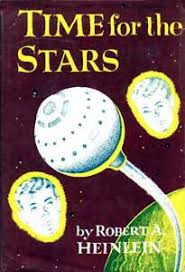
513. Heinlein’s Time for the Stars

Yesterday (June 25) I had a request from a reader for advice on which Heinleins to read after Stranger and Starship Troopers. I replied that my favorites were Door into Summer for the old compact Heinleins, Time Enough for Love for the later, long-winded ones, and Time for the Stars among the juveniles.

The exchange reminded me of a post I had written but not published, because I had an excess of Heinlein related posts going at the time. Here it is, slightly updated and finally published.

===============

Time for the Stars is one of my favorite Heinlein juveniles. I am using it here as a foil to Spirit Deer, in talking about core stories.

Spirit Deer was my first novel, written for adults but very short. I later stripped it of wife and adult friends, and turned into a juvenile. It appeared in Serial between June 5th and August 10th of last year. See 364. The Core Story and 398. Summing up Spirit Deer.

If you strip Time for the Stars and Spirit Deer both down to the core, and they are quest stories. The explorers on the torch ship Lewis and Clark are ostensibly seeking knowledge, but for the young communication techs (i.e. telepaths) that quest in inextricably bound up with a search for maturity. Tim, in Spirit Deer, is seeking survival, and a return to normalcy, but he cannot achieve that without finding maturity.

If you haven’t read Time for the Stars (and why haven’t you?), here is a brief summary.

Tom and Pat Bartlett are twin brothers who are part of an experiment to see if telepathy exists. They go along as a joke, and find that it is not a joke. The “secret language” they have used all their lives turns out to actually be telepathy. What they think other people can’t understand, they in fact cannot hear.

The discovery that makes this more than a parlor trick is that true telepaths can communicate long distances — proven as far as Pluto — and their contact does not show a speed of light time lag. Now relativistic starships can go out from star to star without having to return home to bring back their data.

Tom goes to space and Pat, the dominating twin, stays behind. Tom learns to assert his independence, especially as his stay-behind twin ages much more rapidly. The trip is grueling, the exploration dangerous, and eventually Tom returns home, still young while his twin has grown old.

That is all the summary I can give without spoilers, but how much do you need?

The voyage of the Lewis and Clark is a long trip away and a quick return. Tim, in Spirit Deer, has a quick plunge into the wild and a long return. They differ in detail, but the arc is home — away — home again.

There aren’t more than a billion stories with that arc, significantly including the Heinlein juveniles Starman Jones, Tunnel in the Sky, and Have Spacesuit — Will Travel, all of which are excellent. Upon returning home, these story’s characters characters are changed by their experiences. Jones’ life is most changed, with some losses and great gains. Rod Walker of Tunnel finds a career. Kip Russell of Spacesuit gets on with plans for his life, but his options are immensely augmented.

All four are Heinlein at his best.

510. Books About Books

The Great American Read sent me scurrying to my personal library to review some books about books. That is an odd sub-genre, but not a small one.

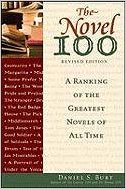
From my library (i.e., room-filling book pile) I pulled out The Novel 100 by Daniel Burt, The 100 Most Influential Books Ever Written by Martin Seymour-Smith and Twenty-five Books That Shaped America by Thomas C. Foster. I have certainly read many others over the years, picked up while wandering through libraries. I own these three because they were on remainder lists, which made them cheap enough to buy.

I also have A Great Idea at the Time by Alex Beam, which deserves a whole ‘nother post, later. (See the aside below before you write me about my bad grammar.)

Why do we read these books on books? For the lists and for the opinions. Everyone who writes one of these books is highly opinionated. They have to be, since there are no real criteria for making these choices. It’s all very subjective. One person’s Great is another person’s Crap.

It might be interesting to read a few dozen of these lists and see what books, if any, end up on all of them. Moby Dick, might qualify; everyone admires it from afar, although few read it. Still, I wouldn’t bet money on any title ending up on every list.

The best of these authors admit that their picks are personal, and could have gone a different way on a different day. They defend their choices with humor, which is always welcome. A good book-on-books is fun to read. Even when the prejudice is potentially offensive, we get to laugh at academics looking like red-necks without realizing it. And, no, I’m not going to admit which one of the above I’m talking about.

The criteria for inclusion are also different from book to book. The Novel 100 is based on pure quality, and on continuing to be recognized as fashions change. Daniel Burt begins with 1. Don Quixote and carries though 100. Gone With the Wind. Then he adds an appendix called the second hundred. The reader gets a two-fer.

Seymour-Smith skips great books which were not influential on other writers or the culture in general, and includes books which were influential, even if they were inherently bad. Calvin’s Institutes of the Christian Religion is an example of the latter. Seymour-Smith’s list runs from 1 The I Ching through 100 Beyond Freedom and Dignity. Mercifully, he does not provide a second hundred.

Foster writes with a light tone, sometimes slipping too far into flippancy, and only gives us twenty-eight books. His twenty-five include a two-fer of short books of poetry and a trilogy of novels. He also provides a list of fifteen runners-up.

If I wanted to collate the books in these three collections, throwing out the duplicates, the number would probably be close to 300. Am I going to read them all? Not in this lifetime, but I can read these reviews and come away with at least an idea of what I am missing. I can also garner a much smaller list of ones I actually might read some day.

========

Aside. If you are a writer, you must ponder the weird cock-ups where grammar meets usage. Take the phrase I used humorously, a whole ‘nother post.

Another post makes sense. If you add the modifier whole, the phrase falls apart. In another whole post , whole seems to modify post when it is meant to modify another. That is, it seems to say an additional post instead of a very different post.

It is similar to German, which has two words for another. Noch eine Bier means “Bring me an additional beer”, but ein andera Bier means “Bring me a different beer, I don’t like this one.”

You might try to break another into an other so you can squeeze in the additional modifier closer to its referent. But that doesn’t work either. You end up with—

An whole other post. That puts an instead of a in front of a consonant. So you try—

A whole other post. But that doesn’t work either, because you have lost the “n“, which leaves your reader muttering under his breath, “A other post? That’s not right!”

So you end up splitting another in a different place, ending up with a nother. Put that back into the phrase, and you get a whole ‘nother post which sounds right, even though it’s wrong.

Ain’t English fun?

This brings up Writers Rule # 1, to wit: If that which is grammatically correct looks bad, use a different sentence altogether.

You might also call it the “There are things up with which I will not put!” rule.

509. Kidnapped and Catriona (2)

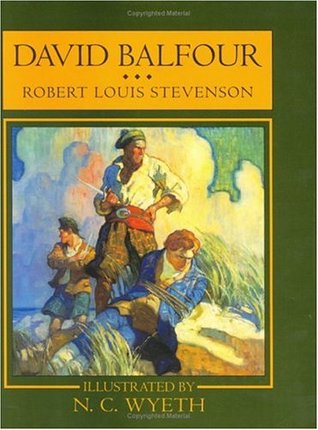
Catriona, aka David Balfour, continues the story begun in Kidnapped. I prefer the former title, probably because it was the title of the library copy I first read. I have headed this with a David Balfour cover, because all the Catriona covers I found were artistically inferior. By either name, this is quite a different kind of book. The balance between action and moral dilemma has shifted hard to the right.

Kidnapped had too much meat to be properly called a boy’s book, but it fell into that category among booksellers largely because it didn’t have sex or even romance. In Catriona, there still isn’t any sex — it was published in the Victorian era, after all — but it does have romance. Catriona is David’s love interest from early in the novel, and he wins her at the end. But the path of that romance is so slow, self-consciously moral, and tedious that it wouldn’t work as a modern girl’s book either. (Assuming anyone would dare to use that phrase any more.)

I recommend both novel and sequel to adults who are willing to take a journey, not only to another land, but also to another time. It’s easier to follow the lowland Scots dialect than it is to understand why David is so backward in his pursuit of Catriona. Once you get past that, you will be closer to understanding the era.

The book is in two parts. In the first, David is trying to get his friend Alan to safety overseas, and trying to get a chance to testify that James of the Glen cannot have committed the Appin murder. The latter turns out to be no easy task. The level of bias and corruption is astounding, on both sides of the political spectrum. (Sound familiar?) Shenanigans abound; David is kidnapped, again, this time by his friends and held captive on Bass Rock to keep him from the trial. He manages to get there anyway, after the trial is over, but before the verdict is announced. He falls in with those who are James friends, and finds them as blind to justice and reason as the ones who want James dead. David says:

And it was forced home upon my mind how this, that had the externals of a sober process of law, was in its essence a clan battle between savage clans.

There were no quotations in the last post, but Catriona is a garden of quotations, so brace yourself as David tells you what happened in his own words.

. . . in course of time, on November 8th, and in the midst of a prodigious storm of wind and rain, poor James of the Glens was duly hanged at Lettermore by Balachulish.

So there was the final upshot of my politics! Innocent men have perished before James, and are like to keep on perishing (in spite of all our wisdom) till the end of time. And till the end of time, young folk (who are not yet used with the duplicity of life and men) will struggle as I did, and make heroical resolves, and take long risks; and the course of events will push them upon the one side and go on like a marching army.   . . . (James) had been hanged by fraud and violence, and the world wagged along, and there was not a pennyweight of difference; and the villains of that horrid plot were decent, kind, respectable fathers of families, who went to kirk and took the sacrament!

What follows immediately thereafter is perhaps my favorite quotation from all of literature.

But I had had my view of that detestable business they call politics–I had seen it from behind, when it is all bones and blackness; and I was cured for life of any temptations to take part in it again.

David may have accomplished nothing, but he has given a moving example of decency in his attempt.

The last third of the book is a romance, mixed with more intrigue. Alan appears again, David ends up as the temporary guardian of Catriona, which makes him morally bound to say nothing about his feelings for her, since she is in his power. It is all very touching, frustrating, and Victorian. I would not blame a modern reader for wishing David would just say, “Hey, Babe, we’ve got a problem here, let’s talk about it.” But of course, he can’t. Living through his misery with him is the price we pay for diving deep into a historic culture, told through the words of a man who lived it.

Spoiler alert: all comes well in the end.

In his dedication to David Balfour/Catriona, written in Samoa, RLS revealed his affection for both books and added:

And I have come so far; and the sights and thoughts of my youth pursue me; and I see like a vision the youth of my father, and of his father, and the whole stream of lives flowing down there, far in the north, with the sound of laughter and tears, to cast me out in the end, as by a sudden freshet, on those ultimate islands. And I admire and bow my head before the romance of destiny.

Kidnapped might be mistaken for a boy’s book; RLS suggested it himself. Catriona, or Kidnapped/Catriona seen as a single story, is an adult look at a very different world.

508. Kidnapped and Catriona (1)

This is a double homage to Robert Louis Stevenson’s Kidnapped and to David Balfour or Catriona, the alternate titles of its sequel. It is a follow-on to 504. Homage to Robert Louis Stevenson.

Kidnapped was published 132 years ago, so there are bound to be some problems with language and culture. If it were being read by adults familiar with how historical novels function, there would be no issue, but Kidnapped is seen as a boy’s book.

It isn’t. Kidnapped is a Bildungsroman, a coming of age novel in which the main character faces moral choices. Kidnapped and Treasue Island are often lumped together, but they are quite separate species. Consequently, Kidnapped does not get the respect it deserves.

David Balfour is off to seek his fortune, shortly after his father’s death. He is going to see a rich Uncle Ebenezer, without knowing that he has a claim on his uncle’s fortune. At his uncle’s connivance, he is kidnapped onto the brig Covenant and shipped off to the America’s as a slave.

Complications ensue. David falls in with Alan Breck, the Covenant is wrecked off the west coast of Scotland, and David and Alan find their way back to Edinburgh. Along the way, they witness the murder of Colin Roy Campbell, a matter of great political importance in the days shortly after the Jacobite uprising.

Alan Breck Stewart, which is the full name of David’s companion, was based on the real historical character who was implicated for the murder (also real), tried in absentia, and sentenced to death. The sentence was never carried out and the real Alan disappeared from history, leaving a trail of local stories about what happened to him.

RLS took the Appin murder, as the incident was called, as the backbone of his story, not only in Kidnapped, but also in its sequel.

There is plenty of adventure, danger, and intrigue to carry the novel to its conclusion, but its quality lies in the view David gets of both sides of the recent war, and the moral decisions he constantly faces. David is a lowlander, a conservative, and a supporter of King George II; his companion Alan is in rebellion, on the run, and collecting rents which will go to support his King, Charles Edward Stuart. Patriotism would have David turn Alan in; their friendship, and the fact that each has saved the other’s life during their journey, will not allow him to do so. David knows that Alan is innocent of the murder, but he can’t testify to this without revealing that Alan is a traitor in the eyes of the British and already condemned, while throwing away his own future for consorting with King George’s enemies.

At the end of Kidnapped, David overcomes his uncle, then shows him mercy, gains his proper inheritance, and is in the process of helping Alan escape to France. As many critics have pointed out, the novel ends short of completion, with Alan still waiting for passage and James of the Glens was still in jail awaiting trial for a murder he did not commit. RLS himself admits this and hoped to make things right if Kidnapped were successful. I would give it to you in his words, but I haven’t been able to find the quotation. It comes of reading too many books in a lifetime, and not being organized enough to write down every quote I like.

Kidnapped was successful, and he did write a sequel, called Catriona in Britain and David Balfour in the US. The sequel never got the acclaim of Kidnapped. I find that unacceptable, so stay tuned for a look at Catriona on Thursday.

Kidnapped is not on the list for The Great American Read, as I discussed a week ago.

The fans of Kidnapping — they are legion — have arranged a walking trail in Scotland that follows David’s path from the shipwreck to Edinburgh. You can find information here. I’ve added it to my bucket list.

506. The Great American Read

The Great American Read or
What is that book doing on the list,
and where is my favorite?

If you want to start a fight, make a list of great books, then step back while every reader on Earth disagrees with you.

When the Great American Read was announced, I couldn’t wait to see the list. I love lists of great books. It turned out, however, that these weren’t great books, but favorite books. That is a major distinction. Great books or influential books would include the Koran, The Wealth of Nations, Das Kapital, and a raft of works everybody has heard of, but few have read. That list would not include Fifty Shades of Grey or The Martian.

It reminded me of a collection called Best Remembered Poems which included a selection of Purple Cow poems but did not contain Andrew Marvell’s To His Coy Mistress. Popularity and quality are different categories.

As I worked my way deeper into the GAR, I found that the original list of 100 came from a group of readers carefully selected for diversity. That’s all very twenty-first century, but it is likely to find oddball books as well as good ones.

Not that I am complaining. If I made a list of my 100 favorite books, no one would else like all of them either. That’s just the nature of the game.

The GAR people ask, “Which book is your favorite?” I read the list and didn’t find my favorites. A Wizard of Earthsea wasn’t there, which was criminal, but not surprising. Kidnapped wasn’t there, nor was anything else by Robert Louis Stevenson. That was surprising. What about Treasure Island and The Strange Case of Dr. Jekyll and Mr. Hyde?

As a side note, in 2014 The Guardian did a list of the 100 best novels and Kidnapped came in number 24.

So I looked at the list and started to make notes.

There were 8 books I had read and liked — Tom Sawyer, The Call of the Wild, The Count of Monte Cristo, Dune, The Hunt for Red October, The Lord of the Rings, Siddhartha, and The Sun Also Rises. None of these were my favorites, and only Tom Sawyer and Siddhartha would be runners-up for that title.

I won’t identify those I didn’t read or didn’t like, but . . .

There were 4 I read but didn’t like.
There were 4 I read part way through and tossed.
There were 3 I knew enough about to avoid.
There were 2 I read, but found them to be nothing special.
There were 8 I had not read, but I had read other books by the same author. This included authors I had liked and ones I had disliked.
There were 3 which were on my to-read list. I subsequently read one of these and demoted it to nothing special.

There was also one book — Moby Dick — that I read as a child in an abridged version, and plan to read in its entirety when I have a spare decade.

Looking at my tally, you might think I’m picky. That’s probably true, but there are a thousand books in my read-and-liked category that weren’t on this list. I just don’t seem to read what everybody else reads.

How about you? There is a reply button at the top of the post.

———:::———

The original question was, what is your favorite. For me, out of this list, it would be The Adventures of Tom SawyerThe Lord of the Rings beats it for scope, The Sun Also Rises beats it for gravitas, but it seems to me the only way to choose from such a varied list is to judge a book on how well it does what it sets out to do. For that, TS beats them all.

If I didn’t have to choose from their hundred, I think I would choose The Old Man and the Sea.

504. Homage to Robert Louis Stevenson

I can’t remember the first time I read Kidnapped, but it stayed with me. When I took a class on children’s literature as I was preparing to become a teacher, Kidnapped was the book I chose for a report. I read it again before going to Scotland for the first time, and have read it additional times since.

I have also read a half dozen other works by RLS, but Kidnapped began it and remains my lodestone in things regarding the author.

Robert Lewis Balfour Stevenson was born at N. 8 Howard Place, Edinburgh, on the 13th of November, 1850.

That is a quotation from RLS’s cousin and first biographer Graham Balfour. While RLS was still a child, his father changed the spelling of his name to Louis, without adopting the French pronunciation, because he was angry with a contemporary politician named Lewis. RLS himself dropped the Balfour to make his name shorter for his literary works.

Balfour was his mother’s maiden name. Despite dropping it, RLS was fond and proud of his maternal ancestors — so much so that he used the name for the main character David Balfour in Kidnapped.

Two recent things brought my long time fascination with RLS to the surface for these posts. First, a character in my latest novel is his doppelgänger. My character Balfour is — and is not — RLS. He has been “transmigrated”, for want of a better word, into an alternate London. He has minimal memories of RLS’s life and death, and is trying to recover them. Like most of the rest of the characters in Like Clockwork, he spends the novel trying to figure out what the hell is going on.

To tell more would be a spoiler, and besides, Balfour only explains things to me as he learns them, and the two of us haven’t reached the end of his book yet.

The second thing that brought RLS to the fore was The Great American Read on PBS. I watched the premier and looked at the 100 books on offer to be crowned as America’s favorite book. RLS was nowhere to be seen. How could this be? Surely either Kidnapped or Treasure Island should have made the cut. And if not, what about The Strange Case of Dr. Jekyll And Mr. Hyde?

I’ll say more about The Great American Read in a later post.

All this sent me in search of a more comprehensive biography of RLS than the one I had picked up in Scotland. I had avoided too much research when I began Like Clockwork, but by the time The Great American Read reignited my curiosity, my Balfour had become an established separate entity in my mind. I no longer had to worry about being sidetracked by an excess of reality.

I went to my favorite underfunded library where they never throw books away — because they can’t afford new ones — and found volume II of the Graham Balfour’s 1901 biography. Volume I was missing, although I eventually got a look at it online. It was a bit dense, as well as being too old fashioned even for me. Also Graham Balfour was a cousin, writing under the eye of a very protective family.

I ended up with the Pope-Hennessy biography, a work that is thinner, more up to date, and not written by a relative. Pope-Hennessy has an honest reputation and gives a balanced view.

RLS’s life was a bit of a soap opera, so I will stick to the highlights. The first key to understanding him is that he was sickly from birth, and his mother was sickly before him. His father was a robust engineer, who carried on the family business of building lighthouses.

RLS’s schooling was late starting and continued irregularly. Bouts of ill health punctuated his whole life. In fact, part of his appeal during the Victorian era was his illness. In that era, it was romantic to be clinging to life, or falling to suicide, and tuberculosis was a particularly romantic way to go.

The elder Stevenson intended him to follow in the family business, but RLS chose from an early age to be a writer. His father, fearing that he would become dissolute, restricted his allowance to such a degree that RLS lived a strange life of poverty throughout his young manhood, alternating with travel and convalescences that would only be available to the wealthy.

Shortly after writing his first book, Inland Journey, in 1878, he met Fanny Osbourne, an American woman who was separated from her unfaithful husband. RLS’s love for her was instant, intense, and permanent. When she returned home, he followed her to America where he almost died in Monterey before moving to San Francisco, all in pursuit of Fanny. She eventually received a divorce and they were married. During this time RLS was constantly writing, receiving positive reviews, but little money.

RLS, Fanny, and her two children returned to England, but could find no place suited to RLS’s ill health. During this period he wrote his best loved works, Treasure Island, Kidnapped, and The Strange Case of Dr. Jekyll and Mr. Hyde, but could find no easing of his tuberculosis.

In 1888, RLS, Fanny, and her two children, now financially secure from his novels, left for the South Pacific. They never returned. This was the first place that had allowed RLS to gain the health that had eluded him throughout his lifetime, and he was unwilling to leave it. He settled in Samoa, where he lived his last years, dying at forty-four. By that time he had written many works I have not had space to mention, and left the novels St. Ives and the Weir of Hermiston unfinished.

I future posts, I will talk about some of those works.

==================

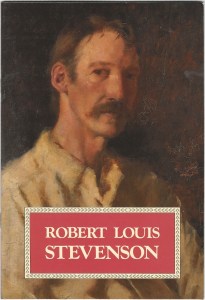
Biographies — Graham Balfour, The Life of Robert Louis Stevenson, 2 volumes, 1901.   James Pope-Hennessy, Robert Louis Stevenson, 1974. Forbes Macgregor, Robert Louis Stevenson, 1989. The last is a an excellent summary biography in 29 pages, shown at the head of this post. It is sold in Edinburgh to tourists who probably never read it. Interestingly, the author’s name is buried at the bottom of the last page. Writer’s get no respect, even when they are writing about other writers.

502. Harlan Ellison

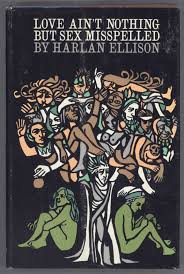
When his book Love Ain’t Nothing But Sex Misspelled came out in 1968, Harlan Ellison said that the title “reflects an attitude toward reality I would dearly love to see come to pass”. I disagreed — I still do — but it didn’t matter.  Ellison was out there kicking American culture in the shins, and that was good enough for me. He was an angry man in an angry era.

I never met the man and I stopped reading him after about 1970, so this is about early Ellison. He was a major part of my life through his short stories, still some of the best ever written, but I lost track of him about the time he went to Hollywood.

I read him through the time when I dumped God, watched blacks being fire-hosed in the deep South, escaped my parents, met up with the rest of the world, watched Americans on TV burning Viet Nam to the ground, and sat listening to the first draft lottery. My number was 41, by the way. Yikes! Everybody was angry on one side or the other of every issue (sound familiar?).

Through all this, Harlan Ellison was writing stories that kicked ass and took names. He was the perfect writer for the era.

He died yesterday (June 28th). I saw it this morning on a trailer sliding by under pictures of the latest atrocity on my morning news cast. I haven’t checked out the details yet. I don’t need to before writing this, because this is bibliography, not biography.

There were a lot of angry people writing things in the sixties. Most of them have been forgotten. Harlan is remembered because he made the things he wrote come real and resonate at a level beyond the moment. His short stories were the best I ever encountered, occasional clunker notwithstanding.

I went to my bookshelf and pulled out Paingod, I Have No Mouth & I Must Scream, The Beast that Shouted Love at the Heart of the World, From the Land of Fear, Earthman, Go Home, and Love Ain’t Nothing but Sex Misspelled. The first five are paperback. You can write them down when you finish reading and go to your neighborhood used book store, where the best in literature resides.

I say that because I just took a moment to check my local library’s online catalog. There are twelve entries on Ellison, all from late in his career, or things for which he wrote introductions. When he was hot, he was a newsstand sensation.

Newsstand: a place to buy newspapers, magazines, and paperback genre fiction. In other words, ephemera. You would never find War and Peace at a newsstand. You also wouldn’t find any of these books five months after they were published.

You will also find Ellison in a lot of anthologies beginning with the word Best . . .. He won a lot of Hugos and Nebulas, not always for his best work.

That’s it. The rest is a laundry list and the admonition to seek these out and read them. You’ll never find better.

Get Love Ain’t Nothing but Sex Misspelled and read it all, but pay particular attention to the Preface, and Pretty Maggie Moneyeyes. If you want to read the most honest writer’s autobiography ever submitted under the name of fiction, try Final Shtick.

Get as many of the others as you can still find. There will be some overlap since Love Ain’t . . . was mostly a self-chosen best-of. The gems awaiting you are not only the rest of the stories, but all of the highly personal introductions that never made it into Love Ain’t . . ..

I particularly recommend that you look at Earthman, Go Home to see what bad editing can do to a good writer. Not only was the original title Ellison Wonderland changed from something charming to something thumb-fingered dumb, but the cover contains every robot cliché that Ellison would never have used.

496. Bob Dylan, Nobel Laureate

There is something about blogging that I didn’t expect when I started. Since these posts are opinionated, but not totally opinion, I find myself doing research from time to time to keep my facts straight. That means I occasionally learn things I would never otherwise have known.

It’s a major bonus.

I was aware of Bob Dylan’s selection by the Nobel committee, and his reticence regarding the event, but I didn’t know the full outcome. I wanted to make an off-hand comment about it in another post, but didn’t want to make a fool of myself, so I checked out the facts.

The Nobel committee awarded Dylan the prize for literature last October “for having created new poetic expressions within the great American song tradition.”

Can a song be true literature? I would say yes, although rarely; about as often as a poem is or a novel is. Does Dylan’s work rise to that level of gravitas. Again, my answer is yes; the only other songwriter who comes to mind who worked at that level was Leonard Cohen. Paul Simon just misses the cut.

Dylan took a very long time replying to the committee, fueling speculation that he would refuse the honor, but he finally complied, and eventually provided his Nobel lecture, which is the only requirement attached to the prize.

His lecture was also my prize for checking out the facts. It is superb. I’ve provided a link below.

The lecture, actually more of a biographical essay, is written in the same intelligent but not over-educated voice that we hear in his songs. This is entirely appropriate; it is pure Dylan. He tells of the early impact of Buddy Holly, and then of American folk, then shifts to a personal analysis of three classic books, Moby Dick, All Quiet on the Western Front, and the Odyssey. He presents their complexity, their unflinching view of the rough truths of life, and the manner in which each makes statements which require the readers engagement. Much in these books is not spelled out and nailed down, just as much in his songs is not. These three books are offered for their influence on Dylan’s work.

I found the essay intelligent and moving, and instead of providing a blow by blow, I recommend that you use the link below to read it for yourselves.

I will only quote one short passage, from near the end:

Our songs are alive in the land of the living. But songs are unlike literature. They’re meant to be sung, not read. The words in Shakespeare’s plays were meant to be acted on the stage. Just as lyrics in songs are meant to be sung, not read on a page. And I hope some of you get the chance to listen to these lyrics the way they were intended to be heard.

I hope you will take the time to read the whole essay. Meanwhile, I think I’ll go dig up some of those old LPs I bought while I was in college during the sixties. He has a rough voice and I don’t like his harmonica playing, but oh, those words!