Tag Archives: science fiction

118. Jandrax redux

I originally wrote this when I had barely begun blogging, to introduce myself and one of my novels. I am presenting it again because no one was listening back then, and because Jandrax is now available to be read in its entirety, over in Serial.

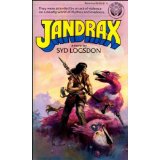
Jandrax

Here is a story so old that I have no idea where it originated. A group of Irishmen were sitting in a bar, solving the world’s problems. One of them asked the rest, “If a cataclysm were to destroy all the poets in Ireland, how many generations would it take to replace them?” One of the others simply held up his hand with a single finger raised. (If you know the origin of this, let me know.)

You will note that this is not an ethnic joke, but a comment on how the Irish view themselves. It is also true – and not only about Irish poets, but about any of those human traits that lie latent in all of us until circumstances call them forth.

That includes the capacity for religious controversy.

Before Martin Luther made his opinions stick, there was a long history of dissent within the Catholic Church. Dissenters were called heretics, and they were usually burned at the stake. Look up Jan Hus (AKA John Huss). Once Luther opened the floodgates, here came Zwingli, Calvin, Knox, and good old Henry VIII with his political and personal agenda.

Quakers, Shakers, Anabaptists, Methodists – you get the picture. As someone once misquoted scripture, “Wherever two or three of ye are gathered together, there will be a fight.”

When I needed a religion for my first science fiction novel Jandrax – available battered and cheap in used bookstores everywhere – (And now available over in Serial.) I came upon Joseph Campbell’s Hero With a Thousand Faces. I read the introduction, saw the notion of the monomyth, and the entire religion I needed exploded in my mind, complete in a heartbeat. I closed the book and never went back to it, not wanting to dilute the purity of that flash of inspiration.

Some hundreds of years in the future, Louis Dumezil, a scholar with a self-imposed mission of peace, collates all the world’s religions, winnowing out the common core, and setting it down in his Monomythos. His hope is that a common religion for all men, carved out of mankind’s various faiths, will bring an end to sectarian fighting. Fat chance. In fact, Dumezil unwittingly sabotages his own work by coming out with later, updated editions of his Monomythos.

You can guess the result. His initial success at setting up a pan-human religion based on the Monomythos breaks down into warring sects killing each other over which Monomythos is the correct one.

In Jandrax, the title character is a disillusioned former zealot who lost his religion in the sectarian fighting on Hallam’s world, and now finds himself marooned on an unexplored planet with a shipload of purists.

Jandrax 2

51jbN0bvqRL._AA160_Jandrax began with a one page prolog designed to set the scene.

A sphere floating in space, silver against a backdrop of stars.

The stars shift their colors, doppler down, out. The sphere hangs alone in darkness where here and there are concepts yet unborn. Six antennae project; it is not so much moved as displaced. First it is here, then it is there, but it never crosses the space between here and there.

Within the sphere, eight souls are busy taming the nether energies, the Synapse, so that they might emerge from otherwhere in the place of their choosing. One prowls restlessly in a place foreign to his nature, and one moves quietly in the darkness with certainty in his mind and death in his right hand.

The dark figure paused outside the room where the computer split seconds into their million component particles and prepared to extract them from netherwhere. He watched the stars fade out on the screen past Dennison’s sandy head. Only a moment would pass until the stars returned and New Harmony lay below. Synapse drive can cross the galaxy in a heartbeat.

He released the trigger and hurled the grenade.

The explosion echoed through the sphere; Jan Andrax ran toward it. The bomber was gone when he reached the computer bay. Flames roared in the confined space as Staal staggered out, his clothing afire. Jan beat out the flames and leaped in to rescue his partner.

In the control room, Captain Georg Childe heard the explosion and shouted into the com. There was no answer. He tried again, then aborted without further hesitation and the stars returned.

Strange stars.

Synapse drive can cross the galaxy in a heartbeat.

Four seconds had passed.

*****

A lost and stranded starship is not a new concept. MZB used it in Darkover Landfall, her prequel to the Darkover series. Heinlein used it in Starman Jones, although he managed to let his young hero save the day and bring back his ship.

For me it was just a concise way of setting up a situation I wanted to explore. I gave about twenty minutes thought to Synapse drive, whatever that is, because it doesn’t figure into the story after it fails. If I ever need to write another story in this universe and time period (Cyan shares the universe, but takes place before the Synapse is discovered or invented), I’ll have to actually work out how it functions.

Incidentally, did you catch the beginners goof? Between paragraphs three and four I switched from present to past tense for no good reason. Jandrax continues next post.

117. Seven and a Half Months

On September 2, 1975, I had a year to spare and an itch to see if I could write a novel. As is common with first novels, it never sold.

On September 2, 2015, forty years later, I wrote a blog entry about the experience. It was the third entry on a new blog, so nobody read it.

Today, things are better. This twin blog site has been in place for seven plus months, with a total of just under 300 posts. My new novel Cyan will be out soon from EDGE.

Today over in Serial, I am beginning the serialization of my novel Jandrax, which was published by Ballantine in 1978. It is still available in used bookstores, and I hope that a new generation of readers will discover it.

The rest of this week in A Writing Life will be taken up by talk about Jandrax, but first I would like to rerun the post that tells how I started writing, forty and a half years ago.

It Was Forty Years Ago Today
first posted Sep. 2. 2015

I feel guilty of bait and switch. This post isn’t about the Beatles, or Sgt. Pepper, or the Summer of Love. It actually was forty years ago today that I first sat down to see if I could write a novel.

Would-be writers should take note. This was a controlled experiment. I wasn’t writing from the depth of my soul, nor writing the books that had been burning a hole in my brain for years. That came later. This was simply to answer a single question – could I sit down every day and write, or would my well run dry after the first week.

September 2, 1975 was the day after Labor Day that year, and I was at loose ends. My wife and I were had just rented a tiny house in the poorest part of town; she had a new job as a picture framer. She proved to be very good at it, and ended up managing the gallery for most of the next decade. If my writing experiment hadn’t worked, I would have gone to graduate school the next fall.

Writing a science fiction novel or a fantasy novel would have called for a lot of time spent in world building. That wouldn’t tell me what I wanted to know. A historical novel would have called for even more research, and a detective novel would have called for crafting a complex puzzle. I wasn’t worried about any of those skills. I just wanted to know – could I write word after word after word, day after day, week after week.

I needed a no-research story, so I decided to send my protagonist on a deer hunt, where he would get lost. I would set it in autumn, in a part of the Sierras I could drive to in a day if I needed to be on the scene. I would roll in a storm, with low hanging clouds so he couldn’t find north and couldn’t send up smoke. I intended to let him get out on his own. Over the weeks I piled misery after misery on the poor guy’s head.

GPS? Cell phone? Don’t be silly; this was 1975, when lost meant lost.

That was the setup. Here is the payoff – I wrote the novel. There is nothing exciting to say about sitting down every day and pounding the keys of a typewriter. (1975, remember; no computers.)

There were no exciting stories to tell my wife at the end of the day, but inside my head I was having a ball. Getting lost in the woods and finding my own way out was infinitely exciting, and every night I could go to my comfortable bed while my protagonist tried to sleep on the frozen ground. I was hooked. I never went back for my Ph.D..

I did go back a few years later for a second BA and MA in History, while I was writing, but that’s only because I love learning almost as much as I love novels. It had nothing to do with career plans.

The novel, Spirit Deer, was only 141 pages, far too short to publish. It turned out better than I had expected, and its core story was not age specific. A few years ago I got rid of Tim’s wife, his best friend, the forest ranger, the old hunter, and even Tim’s last name, and turned Spirit Deer into a young adult novel. It’s looking for a home. If it finds one, I’ll let you know.

Jandrax 1

51jbN0bvqRL._AA160_We are just coming off Voices in the Walls, which, if you missed it, was a fragment of a novel presented with commentary. It was intended to provide young writers with a chance to look over my shoulder.

Like most experiments, I didn’t know if it would fly, but I think it worked out quite well. Now I intend to expand the idea by presenting Jandrax, my first published novel, as a serial, with commentary on world building, person, publishing, writing style (Be careful how you write, it will still be around to haunt you in your old age!), and changes in the world of fiction from then to now.

In August of 1978 I received this letter, which changed my life.

August 8, 1978

Mr. Syd Logsdon
(address)

Dear Mr. Logsdon:

I have just read Jandrax, the novel you sent to my  husband.  Lester handles the fantasy for the list, and I take care of the science fiction.

I like the book and would very much like to publish it–probably in the Spring.

I offer you (monetary and rights details, very modest)

If these terms are satisfactory, get back to me, and I will get a contact prepared.

Is this your first novel? It reads well, and I would hope to see many more from you.

Would you prepare a 200-word About The Author (in the 3rd person) to run in the book and send that along in the next few weeks.

I think readers like to know something about new authors.

I shall look forward to hearing from you.  Welcome to Ballantine.

Cordially,

Judy-Lynn del Rey
Editor-in-Chief
DEL REY Books

P.S. I’m not sure I love the title. Can you come up with something a little jazzier that captures the spirit of the book?

If you are a would-be writer – and why would you be reading this if you were not – you probably already know what a rejection letter looks like. I had certainly seen dozens by the time Jandrax was accepted. I’ve seen hundreds since.

Acceptance letters are a different breed of cat. This one hangs, framed, above my desk. I look at it from time to time to remind myself that I am a published author, when current events make that seem fantastic. I have had a few more acceptances, which are filed, not framed, because only the first one gives you that maximum heart thump.

Jandrax begins tomorrow

114. Einstein Got It Wrong

As I said in the first post of this blog, way back in August, we are the last generation of writers who will have the privilege of putting the planets which suit our stories around nearby stars. It’s already too late for our solar system. Heinlein could not write Stranger In a Strange Land today; in fact, he eventually had to shift it to another timeline where Martians with their canals and cities still exist.

Answer this: if you read stories from the 60s and 70s, how many of them were set on planets around Alpha Centauri? Dozens, at least. Soon scientists will know what Alpha Centauri’s actual planets look like, and that party will be over.

The slowing of time at relativistic speeds – Heinlein got a lot of mileage out of that in Time For the Stars, as have many other authors. But not so much lately; these days, everything seems to move at warp speed.

The next real-world century will be exciting, but science fiction has largely moved on to the far future. Cyan, due out soon as an e-book from EDGE, explores that near future.

*****

Standard Year 594
Anno Domini 2086
from the Log of the Starship Darwin,
en route to Procyon system,
S.Y. 594, Day 167 (corrected),
entry by Stephan Andrax, Captain

Einstein got it wrong.  He took Newton’s tidy world and turned it inside out, ousted common sense from physics, and gave us the bomb, bent light, and all the rest.  So what?

The speed of light is not the central fact of the universe.  I am.  Not, “I, Stephan Andrax, am the center of the universe.”  The I which speaks when any one of us utters an ultimate truth . . .

I hunger.

I hurt.

I love.

I am.

That I is the center. Everything else is fantasy.

There are two chronometers on the bulkhead. One forges forward at the speed of Everyday, ticking off seconds and minutes and hours and days that make sense to the body and soul. The other races. Seconds flitter by. A new day is born every three hours and twenty-two minutes. Einstein told us this would happen, a century and a half ago; when an object approaches the speed of light, time slows down.

Beside the chronometers is a viewport and beyond it are dopplered stars which sweep through my field of vision as the ship spins. We are nearly six years into our journey. Half way through our journey. Yet, for me, only a year and a half have passed.

And through all the years and hours of our journey, the smaller, fleeter chronometer will rush ahead at Earthtime while our time is slowed. All those I knew and loved, except my companions here on the Darwin, are aging seven times faster than I am. When we return, my agemates could be my parents, and my parents will be dead.

The mind perceives what the heart cannot comprehend.

111. Our Neighborhood in Fiction

Gordon Dickson’s list of works is huge, but for some of us they all boil down to the Childe Cycle, known to us mortals as the Dorsai books. At some future date I plan a series of posts in appreciation of them, but for now the issue is his use of the local stellar neighborhood.

Dickson provided us with fifteen extrasolar planets circling seven nearby stars. His primary interest wasn’t in planet building, but he had an ability to paint a planet with a broad brush, then close in and give telling details about those local scenes where the action was taking place. It worked; it was just enough world building to carry each story forward.

Since the Childe Cycle consumed twelve novels over forty-seven years, there was plenty of time to visit each world at some time during the series. Some of the worlds, the Dorsai world in particular, were instrumental in shaping the character of the actors, but for the most part, Dickson’s focus was on a larger issue.

Even though the Childe Cycle featured a form of FTL almost from the first, Dickson’s characters never ventured beyond the local neighborhood. The overarching story he was telling concerned man’s early venturing into space, which led to the formation of three splinter cultures, and the semi-mystical forces which were attempting to reintegrate them into the mainstream.

(Yes, Dorsai Irregulars, I know that is an inadequate rendering, but you try putting fifty years of another man’s sophisticated thoughts into one sentence.)

The Friendlies (religious fanatics or men of faith, depending on who was writing the description, and not really that friendly at all) inhabited the planets Harmony and Association under Epsilon Eridani. The Exotics (scientists of the mind, following a believable mash-up of psychology and zen) inhabited Mara and Kultis under Procyon. Dorsai, the warrior world, lay under Fomalhaut. Incidentally, the phrase under (a star’s name) was one Dickson used often. I find it charming, and presume he was exporting to the stars the notion that there is “nothing new under the sun”.

The rest of his planets were well thought out and inhabited by humans who were not of one of the splinter cultures.

Wikipedia has a nice summary of the Childe Cycle, including a full list of Dickson’s planets. Better still go to your used bookstore and start reading.

*****

At the risk of arrogance – a risk any author is always willing to take – I’ll add my own fictional view of the local neighborhood.

My first science fiction novel, Jandrax, used a sabotaged FTL drive to set things in motion, stranding a group of colonists on an unknown planet. The only thing they – or I –  knew about their location was that it was far beyond the limits of exploration, and that none of them were ever going to return.

Cyan was going to be different. I wanted it to exploit the plot possibilities of relativistic flight, and to be a part of the exploration of the local neighborhood. I worked out this backstory as I wrote:

Early in this century, science makes a discovery that allows total conversion of matter to energy, providing the power to reach the stars at relativistic speeds. A multi-ship expedition to Alpha Centauri finds that the planet around Alpha Centauri A which should have been in the habitable zone, actually has an orbit so erratic that it is alternatively fried and frozen. However there is a barely habitable planet circling Alpha Centauri B. They name it Cinder and begin limited colonization.

Every novel of my childhood found an Earth-like planet around Alpha Centauri A; I had to break the pattern.

The second expedition, to Sirius, finds an Earth sized planet in a reasonable orbit for life, but this time the planet Stormking has a Uranian inclination. There is life, but it is basically uninhabitable. This sets up a future novel with an orbiting civilization made up of refugees from the inhabitants of Earth’s asteroid belt. They have chosen Sirius because it doesn’t have a habitable planet. They use Stormking as a prison, which set up the moral basis of the plot.

Three third-generations starships are built in orbit. The first two set out, one for Epsilon Eridani and one for Tau Ceti. A year later, the third set out for Procyon. This is the voyage which is the focus of the novel Cyan. When the explorers return to Earth, they find that the other two expeditions have both found prime planets, Haven and Elysium. Preparations to colonize them are taking all Earth’s resources; Cyan is not to be colonized, which sets up the events of the second half of the novel.

The starship which carried explorers to Cyan now goes on with a new crew to explore Epsilon Indi, before events which I can’t (spoiler alert) tell you about bring this stage of human exploration to a close.

Check out Cyan, due for release in a month or so, for details.

110. Our Stellar Neighborhood (post 2)

In the science fiction books of my youth, no one ever mentioned heading out into the universe already knowing what planets would be circling the stars they would visit. Even when I began Cyan, no one was thinking like that, so the first thing my explorers do is to map Procyon’s solar system and discover the eponymous planet which they will explore.

Alpha Centauri A is a near twin of our sun, as well as the closest to us. It used to be logical to assume that we will visit there first. That is no longer true. By the time we find the breakthroughs that will allow even relativistic speeds, we will probably have a full inventory of the nearby cosmos, and our first star journeys are likely to be to relatively well known destinations.

I really hate that. What fun would Columbus have had, if he had seen the National Geographic special first?

Where were we? Ah, the neighborhood.

Ignoring the various stellar specks out there, these are the stars we might have interest in, in order of closeness to Earth.

Alpha Centauri – luminosity 1.0 – 4.4 light years from Earth – already covered yesterday.

Sirius – luminosity 23.0 – 8.6 light years from Earth – is the brightest star in the night sky, as seen from Earth, due both to its inherent brightness and to its closeness to us. Sirius is a binary star. Sirius A is extremely bright and hot; Sirius B is a white dwarf.

Epsilon Eridani – luminosity 0.25 -10.5 light years from Earth – is the closest star which has a reasonably well confirmed planet, a giant thought to be about 3.4 AUs out. An AU (astronomical unit) is the distance from the Earth to the Sun, making it ideal for a quick mental picture of distance. The presence of a giant planet at that distance leaves us free to postulate smaller, more human-friendly planets closer in.

Procyon – luminosity 5.8 – 11.4 light years from Earth – is another binary. Procyon A is hot and white (but nowhere nearly as bright at Sirius) with an even fainter white dwarf companion, Procyon B.

Epsilon Indi – luminosity 0.12 – 11.8 light years from Earth – has three-fourths the mass of the sun and a much lower luminosity. Any human-habitable planets would be close in, with a very short year. If it has a decent tilt, its seasons could go by quite rapidly, leading to interesting story possibilities.

Tau Ceti – luminosity 0.36 (newer figures suggest .55) – 11.8 light years from Earth – Tau Ceti is a slightly smaller Sol type star. It is the nearest single star to so resemble our sun.

When I worked out the backstory for Cyan, I only considered stars within 5 parsecs; I will add two more to this list because Gordon Dickson used them in his version of the neighborhood, which we will see in tomorrow’s post.

Altair – luminosity 11 – 16.7 light years from Earth – is a slightly variable blue white star with a rapid rotation (about 9 hours, compared to the sun’s 25 days) which gives a pronounced equatorial bulge.

Fomalhaut – luminosity 16.6 – 25 light years from Earth – is also blue-white with one known planet called Dagon. The size, nature and composition of Dagon is highly controversial, but it seems to be visible to the Hubble telescope only because it is surrounded by a dust cloud many times larger in diameter than the planet itself.

109. Our Stellar Neighborhood (post 1)

FTL is the break point of science fiction. Without a faster than light drive, exploration is restricted to the local area, and that’s fine with me. I take satisfaction in building planets within the constraints of known stars. But beware, the party is nearly over. We now have the capacity to discover extrasolar planets, and new ones are found every year. Fortunately for latecomers to the planet builders guild, megaplanets are easier to find that Earth sized ones, and NASA keeps cutting funding. Still, it won’t be too many years before you can’t decide for yourself where, within the limits of orbital mechanics, you want the planets of Alpha Centauri or Procyon to be.

When I began world building, the prime reference was How to Build a Planet by Poul Anderson. I also had an article from Sky and Telescope titled Stars Nearer than Five Parsecs. Today the internet provides an embarrassment of riches, including planet building apps. Apps? Where’s the fun in that?

What I am about to present will be old knowledge to some of you, so forgive me. Not everybody can be a nerd on everything. There are plenty of people, including would-be science fiction writers, who only want a primer on the local neighborhood, because their passions lie elsewhere.

What is the star closest to Earth? The sun. That’s a gotcha riddle among middle school students. The sun’s luminosity is generally given as 1.0, which makes the luminosities of other stars easy to understand by simple comparison.

Okay, what star is next closest, Alpha Centauri or Proxima Centauri? The P- word gives it away, but it isn’t really that simple.

Alpha Centauri isn’t a star, it only seems to be one to the naked eye. A moderate telescope resolves that dot in the sky into three dots. Alpha Centauri is a triple star, or maybe  a double star with a third star wandering through the area. Astronomers haven’t decided yet.

Alpha Centauri is the largest “star” in the constellation Centaurus. Centaurus has moved southward since the ancients named it, so that Alpha Centauri is no longer visible from the northern hemisphere. I had to wait decades to see it, on my first trip to Australia. There you don’t look for Centaurus, you look for the Southern Cross, a kite shaped constellation within Centaurus.

Alpha Centauri is just a dot in the sky, but I was thrilled to finally see the star which was the setting for so many science fiction stories from my youth.

The two stars of the binary pair are named Alpha Centauri A and Alpha Centauri B. The third star is sometimes called Alpha Centauri C, but more often Proxima Centauri because it it slightly closer to Earth. Beta Centauri is something entirely different. The second brightest dot in Centaurus, Beta Centauri is a star system 525 light years from Earth – not in the local neighborhood at all. Beginners sometimes say Beta Centauri when they should be saying Alpha Centauri B.

The naming convention is widespread, but not universal. Many stars have names given to them by the ancients. Many more are simply alpha-numeric designations, following the conventions of published star charts or inventories by observatories.

*****

Click here for a Wikipedia article that will list 56 of the nearest stars, followed by maps. The first map will give you some idea of where these stars lie in relation to each other.

Tomorrow we can look at some of the rest of the nearby stars, concentrating on those which might have planets useful for human real estate.

107. Codger’s Law

There are laws which govern human behavior. No matter how chaotic things become, somebody will take what he sees and codify it. Science fiction is no different.

Asimov gave us the three laws of robotics:

1. A robot may not injure a human being or, through inaction, allow a human being to come to harm.
2. A robot must obey the orders given it by human beings except where such orders would conflict with the First Law.
3. A robot must protect its own existence as long as such protection does not conflict with the First or Second Laws.

Asimov himself worked those laws to death, and provided countless plot ideas for other authors.

Since so many science fiction authors are scientists or engineers, laws from the “real” world permeate writings in the field. We frequently see references to the three laws of thermodynamics, the three laws of motion, and the three laws of planetary motion. Three is a happy number for codifiers, but sometimes it just isn’t enough. Both robotics and and thermodynamics needed to add a zeroth (but not a fourth) law.

Arthur C. Clarke also committed three laws:

1. When a distinguished but elderly scientist states that something is possible, he is almost certainly right. When he states that something is impossible, he is very probably wrong.
2. The only way of discovering the limits of the possible is to venture a little way past them into the impossible.
3. Any sufficiently advanced technology is indistinguishable from magic.

Asimov’s laws were for fictional robots; Clarke’s laws are more about how the real world works.

Everybody knows Murphy’s Law, “Anything that can go wrong, will go wrong”. It is a favorite of engineers, but it works equally well in almost any human situation. It has variants and corollaries. Sod’s and Finagle’s variants add, “. . . at the worst possible time” or “. . . with the worst possible outcome.” Some even say that “Murphy was an optimist,” but that may be stretching things a bit.

Related, and not a law but a test, is the matter of the half-glass. Optimists say the glass is half full; pessimists say the glass is half empty. At my house, given a 50% glass, my wife will say it’s nearly full and I’ll say it’s almost empty, but that could be an extreme case.

Of all the “laws”, Sturgeon’s is my favorite. Wearying of critics of science fiction who claimed that ninety percent of science fiction is crap, Sturgeon replied, “Ninety percent of everything is crap.” I’ve never heard anyone disagree, expect those who would have a higher percentage, or who substitute an even more disreputable excremental material.

Finally, not to be outdone, I want to add my own bit of codification. I came to this idea when comparing Dorsai! and The Final Encyclopedia, two of my favorite science fictions novels. They come from early and late in Gordon Dickson’s career and are so different in style that, brilliant as they both are, they could have been written by two different authors. I have seen the same phenomenon in the work of other writers. Possibly even in my own.

Codger’s Law: “The older the writer, the longer the manuscript.”

87. Gemini

220px-Gemini_spacecraftToday I want to share with you a book you are unlikely to see. Few libraries have it and it commands unreasonable prices in used books stores. It’s writing style is not artistic. Yet it is a moving book, because of its subject, its author, and its timing. The book is Gemini, by Virgil “Gus” Grissom.

Every American knows something about Apollo. Most have at least heard of Mercury, but the Gemini program has been largely forgotten. That is reasonable enough; youth looks forward. At the time, however, Gemini saved America’s faith in the space program at a time when Soviet advances had made us look foolish and hopelessly outclassed.

Here is a brief summary for the terminally young: the Mercury program, consisting of two sub-orbital flights followed by four orbital flights, put America into space, but the one man capsules – not yet called spacecraft, for good reason – were largely occupied rather than flown. Gemini was a two man spacecraft which could change orbits, meet up with other orbiting objects, and was fully under control of its pilots.

If Mercury was a Volkswagen and Apollo was a Winnebago, Gemini was a sports car.

Mercury capsules had windows in the hatch, only placed there at astronaut insistance. Astronauts could look out, but not forward. Gemini’s viewports were moved to a front facing orientation, like the eyes of a predator. It’s pilots had to see where they were going, because they were actually flying their space craft.

For Apollo to do its job, NASA had to learn to rendezvous, dock, and perform EVAs (extra vehicular activities – space walks) and provide a cadre of astronauts who had proven their ability to do these things. That was the purpose of Gemini.

Grissom was the second American in space and the command pilot of the first manned Gemini mission. He provides a first hand look at the program through it’s brief five year span. The book was written just after the last Gemini flight.

Speaking of 1965, Grissom says: ”We had put ten men and five spacecraft into space and returned them safely, performed EVA, and achieved rendezvous. It was a pretty good record for a program that only two years before had appeared to be foundering.” Eventually sixteen astronauts flew on ten manned Gemini missions.

Grissom’s book is an excellent summary. His style charmingly represents a working astronaut who is not a writer. Nevertheless, the book is haunted. We know that, in the words of Grissom’s editor and friend Jacob Hay, “Within weeks after completing the first draft manuscript of this book, Lieutenant Colonel Virgil Ivan Grissom was dead, killed with his colleagues Lieutenant Colonel Edward M. White, and Lieutenant Commander Roger B. Chaffee, in a flash fire aboard the Apollo spacecraft they were scheduled to take aloft in its first manned flight on Feburary 21, 1967.”

The launchpad fire occurred on January 27, 1967, forty-nine years ago today. For details, see Jay Barbree’s Live from Cape Canaveral (2007), especially chapter nine, ”I’ve got a fire in the cockpit!” Also see post 27, That Was My Childhood.

The book Gemini would have been hard to read when it came out shortly after the fire. It is even harder to read today, given our understanding of the incompetence that led to the disaster. Knowing that the primary cause was flammable materials in an all oxygen atmosphere, it is hard to hear Gus admit that, “For their part, the medical people weren’t really entirely happy over out 100 per cent oxygen supply.”

Still – the book is joyful, and clearly written my a man who loved what he was doing. Gus says he was writing the book for his sons, and the sons and daughters of the other astronauts, and for other sons and daughters throughout America. He meant me (I was senior in high school when the book was published), and he meant you, whatever your age.

Grissom’s book Gemini is largely forgotten, but what he and his fellow astronauts did will not fade from our memories.